Andy McCree Hern took my mother’s Benfield Family photo around 1980.
Growing up as the son of a pastor and a mother who supported his work, I was surrounded by people who genuinely cared about others. My parents weren’t just interested in names or titles—they were interested in gifts, talents, and the unique ways people could serve God. They asked questions, noticed details, and encouraged those around them to step into their calling. From a young age, I saw the power of paying attention to people beyond the surface.
At the same time, my experience as someone with autism shaped how I interacted with the world. I identify strongly with the Asperger’s description—often more comfortable observing than immediately joining in, drawn to patterns, and deeply focused on understanding details that others might overlook. While this could make social interactions challenging, it also gave me a unique lens through which to see people.
That lens became even more refined through my work as a photojournalist. My job was to capture a person’s story through images—to see the life behind the face. This required more than technical skill; it required listening, paying attention, and asking questions in ways that allowed someone to open up. Over time, I learned that when people feel truly heard, when their story is sought and valued, something remarkable happens—they feel seen.
Today, I notice that even in small conversations, I carry this same curiosity. I want to know people’s stories, not just their jobs, hometowns, or favorite sports teams. I’ve noticed that few people seem genuinely interested in these deeper layers, but when I take the time to ask and listen, the conversation transforms. People respond differently—they open up, relax, and share parts of themselves that rarely come out in casual chatter.
This approach doesn’t just apply to photography or formal interviews. It’s how I try to live my life: with curiosity, patience, and a genuine interest in others. I’ve found that this practice, shaped by my upbringing, my autism, and my photojournalism work, creates connection in a way that surface-level conversation rarely can. It’s not about extracting information; it’s about honoring the person in front of me and the story they carry.
In a world that often rushes through interactions, I’ve learned the value of slowing down, listening, and letting people be seen. And the more I do this, the more I realize that connection—the kind that leaves a mark—comes not from talking, but from listening.
Our family photo from Easter 1999 at my parents’ home in Kinston, North Carolina.
Many of us who love photography have a favorite niche that sparks our creativity. Some chase sunsets and misty mornings. Others lose themselves in macro details or the thrill of sports action. We pick up a camera because something in the world catches our imagination… yet, ironically, the people closest to us are the ones we often photograph the least.
I get it. Photographing family can feel complicated—busy schedules, wiggly kids, relatives who “don’t like how they look in photos.” It’s easy to default to landscapes, birds, waterfalls, or anything else that doesn’t talk back.
But here’s the truth: family photos matter in a way no other genre can touch. They anchor us. They tell our story. They become the visual legacy that outlives us all.
Family eating out at the Boundary House in Calabash, NC, for Bonita Leary’s birthday.
A Legacy You Can Hold
When I photograph my family, I’m not just making pictures—I’m building a family archive. Long after the moment fades, those photos help us remember what truly matters. They remind us of relationships, milestones, seasons of life, and even the tiny quirks we forget over time.
Every family has a story, and the photos we make become the chapters future generations will hold onto. They won’t care how “perfect” the shot was. They’ll care that it exists.
Emerald Isle Leary Reunion 2023
The Value of a Few Formal Group Photos
I always encourage families—mine included—to pause for a few organized group photos. They don’t have to be stiff or overly posed. They need to get everyone together in the same frame.
Why? Because life changes quickly.
One day, these photos will become the way we remember:
Four generations in one place
A holiday gathering that didn’t happen for years
A season when all the cousins were small
Loved ones who shaped our lives
These aren’t just “nice to have” images. They become reference points for your family’s story. They show who was there, how people connected, and how your family evolved through the years.
David Leary
Simple Portraits Go a Long Way
Beyond group shots, take a few individual portraits. Not studio-perfect—just honest. These portraits capture personality, style, and spirit at any age or stage.
Families use these more than you might expect:
Printed and framed in homes
Added to scrapbooks
Shared with relatives who live far away
Held close when someone travels, moves, or passes on
Portraits tell each person, “You matter. I see you.”
Visiting Emma & Chad Miller to give presents to their son, Valor, and Titus.
Don’t Forget the Candid Moments
If group photos and portraits are the structure of a story, candids are the heart.
Candid photos preserve:
Laughter around the kitchen table
Kids playing together
Quiet conversations on the couch
The small, unscripted moments that reveal who people really are
These images are the ones that get passed around the most. They show relationships, emotion, and connection in a way posed photos never can.
Why This Matters Deeply to Me
As someone on the autism spectrum, I sometimes find it challenging to express how much my family means to me in words. Photography becomes the way I communicate those feelings.
When I photograph my relatives, I’m telling them:
“You’re important to me. I love you. You’re part of my life and my story.”
Family photos give me a way to show affection and connection, even when I might not say it out loud. And years from now, when people look back at these pictures, I hope they’ll feel the same love I was trying to express through the lens.
Pick Up Your Camera for the People You Love
So the next time you’re tempted to grab your gear only for landscapes, macros, or sports, take a moment and turn that camera toward your family too. It doesn’t have to be fancy. It just needs to be intentional.
The photos you make today will become the treasures your family returns to tomorrow.
And in the end, that might be the most meaningful work we ever create.
If you’re a freelancer right now, you already know the landscape has shifted. Companies are pulling back, budgets are tightening, and many of us are staring at calendars that look far emptier than we’re used to. It’s easy to wonder if the effort we’re pouring in—updating portfolios, reaching out to clients, practicing new skills—makes any difference at all.
I’ve found myself in that space more than once. But in moments like these, my faith keeps calling me back to a simple truth:
I may not control the results, but I can control my faithfulness.
Doing the Work Even When It Feels Small
There’s a story in Scripture that has shaped the way I navigate seasons of uncertainty—the moment when a young boy handed Jesus five loaves and two fish (John 6). It was nothing compared to the size of the need. Yet it was everything he had to give.
Sometimes freelancing feels the same way.
We bring the little we have—our time, our skill, our effort—and it just doesn’t look like enough.
But the boy didn’t multiply the bread.
The disciples didn’t multiply the bread.
Jesus did.
Our responsibility is to offer what’s in our hands.
A man fly fishing on the Chattahoochee River in Roswell, Georgia.
Faithfulness as an Act of Worship
When work slows down, the temptation is to freeze—do nothing until someone calls, until a contract lands, until things feel “worth it” again.
But I’ve learned (the hard way) that this waiting posture often shrinks our creativity and steals our hope.
Instead, I’ve chosen to treat my effort as an act of worship:
Updating galleries anyway
Writing proposals anyway
Reaching out anyway
Studying anyway
Improving techniques anyway
Showing up to work even when the work isn’t showing up for me
Not because it guarantees new assignments, but because it keeps my heart tethered to the One who multiplies what I offer.
Crew Clubs on the Chattahoochee River
Offering What Little I Have
There are days when the “work” feels like five loaves and two fish—far too small to matter. Yet over and over again, God reminds me:
Please bring what you have, and trust Me with what you don’t.
So I pray over the work of my hands. I pray that God will take my small acts of effort—my little bit of creativity, my few hours of outreach, my imperfect steps toward improvement—and breathe life into them.
Not magically. Not instantly. But faithfully.
Blessing Beyond My Effort
I believe God honors the heart that keeps showing up, especially when showing up is hard. He blesses the effort, not just the outcome. He sees the grind no one applauds. He holds the fear we don’t say out loud. And He multiplies what we release to Him in trust.
For freelancers, this is the rhythm:
Do the work. Offer the work. Release the results. Trust the One who multiplies.
It’s not passive. It’s not irresponsible. It’s worship.
A Final Word for Today
If you’re doing all you know to do and the results are slow in coming, you’re not failing—you’re being faithful. And in God’s economy, faithfulness is never wasted.
Your loaves and fish may look small, but they are more than enough in the hands of the One who multiplies.
As we gather for Thanksgiving this year, my family and I are carrying both gratitude and grief. On Monday, we held a celebration service for my mother, who went home to be with the Lord on September 7. It was a beautiful time of remembering, storytelling, and acknowledging what she poured into all of us. In today’s newsletter, I’m sharing a group photo of our family—four generations shoulder to shoulder, holding one another through this season.
Celebration service for Bonita Benfield Leary at First Baptist Church in Morganton, NCKatherine Wolfe
This week has reminded me of something Katherine Wolfe shared during a recent event I photographed and wrote about: that God often hides treasure in the dark places. Not treasure that denies pain or loss, but treasure that emerges because we walk through them. Katherine talked about how hope isn’t the absence of suffering—it’s the courage to look for God’s presence within it. That truth has anchored me these past few days.
Navigating Change When You’re Wired Differently
Many of you know that I’m on the autism spectrum. One of the hallmark traits of autism is difficulty with transitions—especially when they’re sudden, emotional, or open-ended. Changes in routine, environment, or expectations can feel overwhelming because our brains often rely on structure and predictability to stay grounded.
So this season—sorting through my parents’ home, making decisions with siblings and nieces and nephews, facing the reality that life will not look the same going forward—has been particularly heavy. For someone who thrives on clarity and consistency, it’s a lot to process. And sometimes, the hard truth is this: even when you need more time, the moment doesn’t always give it to you. Some things have to be handled now.
When the Story Is My Own
Much of my life is spent helping others tell their stories. I listen. I frame. I guide. I translate real experiences into images and words that help communities understand and connect.
But when the story is my story? That’s a very different journey.
Naming the grief, embracing the change, admitting the discomfort—those things don’t come naturally. Yet they are part of the same honest storytelling I practice with others. And here’s the good news: being open to learning from my own story gives me greater compassion, insight, and patience when I help clients tell theirs. Every struggle I sort through quietly becomes a tool I can use to serve others.
Treasure in the Darkness
So today, as I look at this family photo, I see more than just a moment. I see:
The hope Katherine Wolfe talked about—a hope that exists even in shadows.
The faithfulness of a God who walks us through change, not around it.
The reminder that love binds a family even as roles and routines shift.
The quiet truth is that grief and gratitude can occupy the same room.
My prayer is that as you look at the stories in your own life—especially the hard chapters—you’ll find glimpses of God’s treasure too.
Thank you for being part of my journey and for letting me be part of yours.
Wishing you a meaningful and hope-filled Thanksgiving.
Every Thanksgiving, I try to get at least one good group photo of our crew. This year’s gathering was extra special — we had four generations all together. My dad, Dorie, and I, my sisters and their spouses, their children… and now their children. Seeing that many branches of the family tree in one frame is something I don’t take for granted.
You’d think that with my background in photography, the biggest challenge would be exposure or composition. Not this time. The real challenge? Keeping everyone in the picture long enough to look their best.
The Big Group Shot
We set the camera on a timer, got everyone in place, and parents held on tight to the little ones so they wouldn’t dart off. There’s always that moment of quiet right before the shutter fires — the one where you hope no one blinks, looks away, or suddenly decides they’re done with photos for the rest of their life.
Somehow, we pulled it off.
The Great-Grandchildren Photo…
Then we moved on to the groupings.
That’s when things got lively.
Trying to get all the great-grandchildren lined up with my dad turned into its own event. Some of the kids were old enough to stand tall and smile on cue. Others… well, let’s say they had priorities of their own. Keeping J.D. from sprinting out of the frame was a full-time job all by itself.
And watching my sister work her magic, trying to wrangle the little ones in Hannah’s family? Honestly, it was pure entertainment — the behind-the-scenes that every parent recognizes immediately.
Dorie Captured It All
While I was focused on the still photos, my wife, Dorie, pulled out her phone and captured videos of the entire adventure. Watching them afterward reminded me that half the beauty of a family photo isn’t the final image — it’s the shared chaos, the laughter, and the love that goes into making it.
Here are two clips so you can enjoy the moment with us:
If you’ve ever tried to pull off a multigenerational photo with little ones, you know it’s never “perfect.” But what we did capture was genuine — the joy, the energy, and the blessing of having so many of us together in one place.
And honestly, that’s what makes the photo beautiful.
Katherine Wolfe is a powerful storyteller, speaker, and advocate whose life was forever changed at the age of 26, when she suffered a massive stroke out of the blue. Before that morning in 2008, Katherine and her husband, Jay, lived what she describes as a “charmed life” in Los Angeles—pursuing acting and attending law school while raising their first child. But everything shifted when she collapsed in her kitchen while her infant slept nearby. Rushed into a grueling sixteen-hour brain surgery, she survived but was left with significant and lasting physical challenges.
She spent forty days on life support in the ICU and another two years in a brain rehab facility, relearning how to walk, talk, and eat. Nearly two decades later, she lives with a “new normal”—communicating differently, walking with difficulty, and unable to drive—but she has turned her second-chance life into a mission. Since 2013, she has shared her journey through speaking, writing, and community building, co-founding the nonprofit Hope Heals, which offers camps, inter-ability communities, a coffee shop, and more to help others embrace the truth that life can be good and hard at the same time.
I had the privilege of hearing Katherine speak recently at the Life 2025 event, and her message is one I won’t forget. She offers a perspective on suffering that is both raw and profoundly hopeful, inviting others to see their pain through a different lens.
One of the first images I made of her is a moment I keep returning to. Katherine stood beside her wheelchair, hands lifted high in a visual sign of rejoicing. She wanted to stand—showing that while she relies on her wheelchair to get around, she can still rise and celebrate moments of victory. That simple act set the tone for everything she shared: our trials don’t have to define us; they can reveal resilience, joy, and a deeper kind of strength.
Trials Don’t End—They Transform
“If it could be true for me, could it be true for you?” Referencing Isaiah 45:3—“I will give you treasures hidden in the darkness, riches stored in secret places…”—Katherine reminds us that trials are not just obstacles; they can be opportunities for growth and unexpected blessings.
Life 2025
Joy Isn’t Pain-Free
“Disrupt the idol that joy can only be found in a pain-free life.” She challenges the cultural lie that happiness depends on comfort. Romans 12:2 reminds us to be transformed by renewing our minds. Katherine’s life demonstrates that joy can coexist with struggle, and suffering can refine character, rather than destroy it.
Suffering Can Be a Gift
“My suffering can feel a little more bearable when I love who I’ve become because of it.” Drawing from Isaiah 43:19—“See, I am doing a new thing! Now it springs up; do you not perceive it? I am making a way in the wilderness and streams in the wasteland.”—Katherine emphasizes that our deepest wounds can bring healing to the world.
Perseverance Brings Value
“I can see my suffering as a curse on the people I love, or as an inheritance of breathtaking value.” Referencing James 1:4—“Let perseverance finish its work so that you may be mature and complete, not lacking anything.”—she encourages us to reframe pain as a pathway to maturity and lasting impact.
Hope That Will Not Disappoint
“Suffering produces perseverance; perseverance, character; and character, hope. And hope will not put us to shame.” Romans 5:3 reminds us that hardship, when met with faith, can yield hope and resilience. Katherine’s story is proof that even ongoing struggles can produce beauty, strength, and purpose.
Hearing Katherine speak from her wheelchair was incredibly moving. She doesn’t promise a life free of pain, but she shows that even in the hardest seasons, God can reveal treasures hidden in the darkness—treasures that can transform us and the world around us.
I recently had the privilege of covering a retreat focused on Resting in Jesus, designed for adults who serve nationally & internationally on mission trips—leaders and volunteers teaching others about leadership and servanthood. Events like this are rare opportunities: not only do I get to listen to incredible speakers, but I also get to capture the moments that reveal their personality, conviction, and the more profound truth of their message.
Overcoming soul fatigue begins with release, embracing strength, and trusting in the process. Leaders need rest, too, and today, the room exhaled with relief as Derwin Gray guided us into it.
Dr. Derwin Gray: Overcoming Soul Fatigue
Dr. Derwin Gray reminded us that even those who serve tirelessly need to pause and receive rest. His talk focused on overcoming soul fatigue, drawing on Matthew 11:28-30. He shared a memorable acronym:
R – Release your burdens (1 Peter 5:6-7)
E – Embrace His presence (Psalm 16:11)
S – Strengthen your soul (Ephesians 3:16-19)
T – Trust His leadership (Psalm 23)
Watching Derwin speak, I noticed the way his gestures and pauses gave weight to each step, and how the audience responded—leaning in, nodding, exhaling as he spoke about release. As I photographed those moments, I tried to capture not just the words, but the emotion and relief that came with each step of his message: a visual representation of rest and trust in Jesus.
See clearly. Work diligently. Rest intentionally. Greg Stier’s call to intentional rest reminded everyone that even those who serve tirelessly need to pause and recharge.
Greg Stier: See Clearly, Work Diligently, Rest Intentionally
Greg Stier spoke to leaders and missionaries about maintaining clarity and energy in their work. His framework was profound yet straightforward: See clearly. Work diligently. Rest intentionally.
I watched how his energy drew the audience in, while the pauses reminded everyone that rest is not passive—it’s an intentional act that empowers effective service. In photographing Greg’s talk, I focused on the interactions—the subtle smiles, the quiet moments of reflection—that illustrated how rest fuels mission work. His message resonated deeply with an audience accustomed to constant giving; the photos captured the tension between effort and pause, focus and release.
Beth Yoe showed how Scripture memorization transforms the heart. Capturing the quiet focus of the room, I saw rest in action through reflection and absorption of God’s Word.
Beth Yoe: The Power of Scripture Memory
Beth Yoe shared the transformational discipline of Scripture memorization. Having memorized entire books of the Bible herself, she encouraged us to let God’s Word dwell in our hearts, moving beyond knowledge to transformation.
During her session, I captured moments of contemplation and focus—participants writing verses, quiet recitation, and the way Beth’s calm presence allowed the audience to absorb the Word deeply. For missionaries and leaders, internalizing Scripture is a form of rest, as they trust God’s Word to guide, comfort, and strengthen them as they serve others.
Resting in Jesus includes renewing the mind. Dr. Caroline Leaf’s insights on thought management had the audience leaning in, embracing both mental clarity and spiritual refreshment.
Dr. Caroline Leaf: Renew Your Mind
Dr. Caroline Leaf spoke on the science of the mind, neuroplasticity, and how managing thoughts impacts emotional, mental, and spiritual health. Her strategies for rewiring the mind align beautifully with the retreat’s theme: resting in Jesus involves renewing our thinking, not just our schedules.
I photographed moments where she paused, letting the audience reflect, and the way participants leaned forward, absorbing practical tips for mental rest. These moments visually communicated that rest is more than downtime—it’s an intentional shift in how we think, process, and live in alignment with God’s truth.
Teaching that engages heart and mind transforms service. Dr. Robert Smith Jr. reminded leaders that rest comes when deep understanding meets real-life application.
Dr. Robert Smith Jr.: Heart and Mind in Teaching
Dr. Robert Smith emphasized that Christian teaching must engage both heart and mind, leading to lived transformation, not just intellectual understanding. His message challenged leaders to consider how they teach and model their faith in their mission work.
Behind the camera, I noticed the power of his pauses and the thoughtful reactions from the audience. Capturing those interactions showed how deep doctrine meets real-life application—the essence of resting in Jesus while faithfully leading and serving others.
Life 2025
Life 2025
Life 2025
Life 2025
Life 2025
Life 2025
Life 2025
Life 2025
Life 2025
Life 2025
Life 2025
Life 2025
Life 2025
Life 2025
Kimberly Johnson: From Surviving to Thriving
Kimberly Johnson shared her inspiring story as a stroke survivor, illustrating perseverance, hope, and the importance of living intentionally. She reminded everyone that rest is not about avoiding struggle; it’s about entrusting challenges to Jesus while embracing the present moment.
I captured the quiet intensity of her storytelling—the audience fully engaged, absorbing the vulnerability and strength in her journey. The images reflect that rest is both a matter of trust and courage: giving control to God while moving forward in service.
Final Thoughts
Covering this retreat reminded me why I love what I do. My job isn’t just to record speakers—it’s to translate the message into visual stories. The gestures, pauses, glances, and shared moments between speakers and audience become a story that complements the words being spoken.
For leaders serving around the world, resting in Jesus is not optional—it’s essential. And capturing it visually is a privilege I don’t take lightly: each photo is a moment of truth, a reflection of faith, and a reminder that even those who pour out for others need to receive.
Former Atlanta Mayor Shirley Franklin and historian Dr. Maurice Hobson share the stage during a panel discussion at the Facing History & Ourselves Summit in Atlanta, engaging educators in a robust conversation about leadership, equity, and the lessons history continues to teach today.
Last week, I had the privilege of photographing the Facing History & Ourselves Summit here in Atlanta. As someone whose work spans visual storytelling, brand-building, and consulting, the event reminded me of how deeply connected imagery, narrative, and justice are. It also brought home something I’ve known for decades: the difference between meeting someone and hearing their story.
Conference Snapshot
The Facing History & Ourselves organization brings educators together around key issues:
Helping teachers and school leaders build classrooms and schools with equity and justice at the center.
Enabling educators to identify and challenge antisemitism, both in their classrooms and across communities.
Supporting Jewish-educational settings to deepen Jewish identity, while helping young people strengthen their civic voice.
Integrating Facing History’s pedagogy and rich instructional materials in English Language Arts and Social Studies across school settings.
Their deeply human work aligns with their global commitment to professional learning and instructional resources, creating brave and inclusive learning environments.
As I moved through the halls of the summit, camera in hand, I felt that I wasn’t just photographing faces; I was witnessing a movement. A movement rooted in the lived experience of educators who are asking big questions about History, identity, justice, and what learning looks like when it truly serves all of us.
Keynote Highlights
Four voices stood out to me — each one deeply engaged in both story and action.
Shirley Franklin
Shirley Franklin speaking at the Facing History & Ourselves Summit
Shirley Franklin served as the 58th Mayor of Atlanta from 2002 to 2010, and was the first African American woman mayor of a major Southern city.
During her tenure, she tackled ethics reform, infrastructure, and public-private partnerships, and guided the city through a pivotal period of change.
At the summit, she drew on decades of service to speak about leadership, community, and accountability — and I captured images that reflected her steady presence and commitment.
Maurice Hobson
Dr. Maurice Hobson speaking at the Facing History & Ourselves Summit
Dr. Maurice Hobson is an Associate Professor of Africana Studies at Georgia State University and the author of The Legend of the Black Mecca: Politics and Class in the Making of Modern Atlanta.
His scholarship explores the complexities of Black life, class, politics, and culture in Atlanta. At the summit, he unpacked how educators must reckon with context, History, and identity — not just the “what” of teaching but the “why.” I found myself drawn to the images of him in mid-discussion, capturing that moment when a concept clicks for someone.
Heather McGhee
Heather McGhee speaking at the Facing History & Ourselves Summit
Heather McGhee is a policy advocate, author and former president of the think-tank Demos. Her bestselling book, The Sum of Us, explores how racism and economic inequality affect us all.
She talked about her interactions with Gary in a viral clip on C-SPAN:
During her session, she talked about her research. In her research, Heather McGhie discovered that at the height of America’s post-war public investment era, there were more than 2,000 grand, resort-style public swimming pools across the country. When Black citizens began asserting their right to swim in those taxpayer-funded facilities, many municipal governments responded not by integrating, but by draining the pools, backing trucks of dirt up to the holes, and filling them in with gravel or concrete—a deliberate choice to deny access by all rather than share them under desegregation.
Terrence Roberts
Terrence Roberts speaking at the Facing History & Ourselves – Summit
Terrence Roberts is one of the historic Little Rock Nine — the group of African-American students who, in 1957, braved intimidation and violence to integrate Central High School in Little Rock, Arkansas.
His presence at the summit grounded our work in a legacy of struggle and resilience. The image I captured of him speaking struck me: the story still lives in the room when History walks in.
My Reflection as Storyteller
As a photographer/videographer and brand-story consultant, I’ve been on countless shoots. I’ve met community leaders in their homes, visited people in need, and leaned in with a camera and lens to see what they are doing. My earlier life, thanks to my father being a pastor, gave me access to spaces — some church-based, some home-based — where stories were raw and honest.
But capturing a summit like this, with educators, thinkers, activists, I was reminded: It’s one thing to meet someone, and quite another to hear their story.
Over the last couple of days, I stood in rooms where educators were sharing hard truths: “I saw this in my classroom,” “I felt this in my community,” “What do we do when this is a system, not just one incident?” And I photographed — not just the big moment on stage but the pause between, the whispered comment by a teacher in the hall, the handshake, the emotion in the eyes. That is where the story lives.
For me, my craft isn’t only about making beautiful images. It’s about crafting visual entry-points into deep and meaningful conversations. Whether I’m helping a non-profit define its brand story, teaching videographers how to tell stories with intention, or working solo in a room full of thought-leaders, I come back to this: People want to belong, they want to matter, they want to be seen and heard. And my job is to help reflect that.
Why It Matters
These aren’t abstract ideas. The work at Facing History is urgent. Classrooms are battlegrounds of identity, History, and narrative. When teachers equip themselves with critical tools — whether to address antisemitism, deepen civic voice, or make literature and social studies more inclusive — they create spaces where stories aren’t silenced.
For me, as someone who builds brand stories and helps organizations tell their ‘why’, this summit affirmed something: Story is not an afterthought in communication. It’s the foundation. And when the story is rooted in equity, listening, and community, it moves more than just minds — it invites hearts and brings about change.
What’s Next
I’ll be editing through hundreds of frames from the summit in the coming days — including keynote shots, workshop moments, and candid educator interactions. More than that: I’ll be thinking about how this work might shape what I teach in my next workshop (whether lighting, video, or brand-story). Because a room full of educators asking “How do I help every student feel seen?” is a room full of possibility.
If you are an educator, a storyteller, or a brand builder, I invite you to ask: What story am I telling? Whose voice is silent? And how might I listen first, then frame, then share?
Thanks to the Facing History team for the invitation and trust. It’s always an honor to bring my lens, my heart, and my decades of experience to a gathering like this.
Every fall and winter, my social media feed fills with familiar scenes — families in pumpkin patches, kids bundled up picking out Christmas trees, couples posing in front of twinkling lights. And every year, I see photographers talking about putting their take on these traditions.
Now, there’s nothing wrong with that. In fact, I think traditions are healthy. They give us rhythm and stability — something to look forward to. They help us reconnect with what really matters: the people we love and the memories we make together.
Into The Woods
Test Shots
But I’ve started to wonder if sometimes we blur the line between living a tradition and performing one.
With the pressure to post, share, and show our lives online, it’s easy for even meaningful moments to turn into a kind of performance. Instead of being fully present — smelling the pine, laughing at the cold, helping the kids pick the “perfect” pumpkin — we’re thinking about composition, lighting, and what will look good on Instagram.
As photographers, it’s natural for us to see the world through our creative lens. But I think it’s worth asking ourselves:
“Am I doing this because it brings me joy, or do I feel like I should?”
Alive After Five on Canton Street in Roswell, Georgia
When our traditions become more about keeping up than connecting, we miss the heart of them. Maybe the best photos this holiday season aren’t the ones we plan, but the ones that happen when we’re too busy living to notice.
Last night, I took my gear to cover the exhibition game between Georgia Tech and Auburn under the lights, a perfect challenge for storytelling through sports photography. The high-energy atmosphere, athletic motion, fast plays, and the dim, artificial light all came together to test camera settings, gear choices, and technique — and ultimately deliver images that, while plentiful, required severe narrowing to find the ones that truly tell the story.
Here’s a breakdown of how I shot the game, what gear and settings I used — plus why they mattered — and what I learned for future assignments.
Gear & Setup
I brought my trusted Nikon Z9 body with the Nikkor Z 100‑400 mm f/4.5‑5.6 VR S lens. That combination gives me the reach, autofocus speed, and sensor performance I need for a fast-moving, variable-light sport like softball.
The 100-400 zoom range allowed me to nail tight action shots at the plate or in the outfield and broader sideline/mound views without changing lenses. The lens is highly regarded for sports and wildlife uses — it is sharp throughout the zoom range, has excellent handling, and reduces vibration.
I anticipated entering high ISO territory because it was a night game under stadium lights. So, I set up to give myself the best chance of crisp, usable images.
And for white balance, I used my ExpoDisc 2.0 White Balance Filter to nail a reliable custom white balance before the game started. The ExpoDisc is designed to provide a calibrated reference that the camera uses for a custom white balance setting, especially useful in mixed or artificial light, rather than relying solely on auto white balance.
Settings: Auto ISO, Shutter Speed & Pre-Capture
Because the light levels were relatively low (stadium lights at night), I decided to rely on Auto ISO mode to let the camera handle the sensitivity ramping as needed. That freed me to focus on shutter speed and composition.
I set a fast shutter speed to freeze action — typically in the range of 1/1000s-1/2000s, depending on the play and zoom. With the 100-400 lens and distance from the field, I often zoomed toward 300-400 mm, so the combination of reach + action required shutter discipline.
Because of the light challenge, I found ISO settings mostly around ISO 25600 for much of the game. That’s high, but with the Z9 (and modern mirrorless sensors), you can push high ISO further than in older systems and still deliver usable files. Many hobbyists hesitate at 25600, but I found that I could still get strong results with careful exposure and focus.
For instance, the Z9’s reviews show that noise is well-controlled even at elevated ISO settings: “careful noise reduction lowers it near the point of irrelevance” for high ISO. In forums, sports shooters report confidently pushing the Z9 at night.
I wanted to try out one extra setting: the pre-capture (or pre-burst) option. In the Z9, this allows the camera to buffer a few frames before the shutter button is fully depressed, capturing “what happened just before” you pressed the button. I used this to ensure that unexpected, split-second plays (e.g., a dive, tag, throw) weren’t missed because I hit the shutter just after the action started.
White Balance Strategy
Before the game began, I placed the ExpoDisc over the lens (at wide-angle/view), pointed at the illumination in the stadium (ideally a neutral field area but under the lights), and set a custom white balance in the camera. The ExpoDisc gives a neutral reference so the camera calibrates its white balance to the dominant light source.
Using the custom white balance is especially helpful under stadium lighting, which often mixes metal halide, LED, or other artificial sources with sometimes ambient twilight. If I left the camera on AWB (auto white balance), I might have gotten color shifts (greens/off-greens on the field, skin tones under changing light). By doing the ExpoDisc step, I could start from a known baseline and rely on RAW to refine further in post if needed.
After the custom WB was set, I left the camera in RAW and made minor tweaks in post-processing only where required. A consistent neutral color was beneficial on the night’s images, especially when selecting fewer keepers.
Image Counts & Selection
Over the duration of the game, I captured approximately 3,900 images. That works out to lots of frames — but that’s part of shooting action sports: lots of motion, moments, and misses. From those, I narrowed to 436 usable images — images I considered suitable for storytelling, focus, composition, exposure, and color.
From that 436, I judged roughly 20 images to be at the “wire-service submission level”. These would be the ones I would consider sending in if I were providing coverage for a sports news outlet or wire feed: strong play, crisp freeze-action, good light, telling emotion, minimal noise/color issues.
Insights & Tips for Hobbyists
Since many in my audience are advancing their visual-story skills or covering events for nonprofits/businesses, here are some takeaways:
Don’t fear high ISO: Pushing ISO is often necessary when the light is low. With modern full-frame mirrorless (like the Z9), you can go to ISO 25600 and beyond and still get results you can work with — provided you expose well and manage focus. Underexposure will make noise worse.
Auto ISO is your friend in variable light. Using Auto ISO (with caps or limits) allows you to maintain a consistent shutter (and aperture) while letting the camera compensate for light changes. This is efficient for sports under lights.
Custom white balance saves time: Especially with artificial or mixed lighting, using a tool like the ExpoDisc to set a custom WB before you shoot gives you a color baseline. It reduces surprises in post and frees up more time for narrative, composition, and storytelling.
Pre-capture/buffer functions are valuable: When shooting live action, the difference between hitting the shutter a split-second too late and missing a key moment can be a missed key moment. Using pre-capture (or high-frame-rate burst) functions helps you catch those decisive moments.
Lens choice matters: A zoom like the 100-400 gives flexibility of reach and framing. The specific lens I used is praised for sharpness, handling, and VR (vibration reduction), which are all important in a low-light sports scenario. And when you’re pretty far from the field, reach communicates the story better.
Be ruthless in selection: Shooting nearly 4,000 images and extracting fewer than 500 usable images shows the behind-the-scenes work. As storytellers, we’re not just aiming for images —for those few that tell the story, evoke emotion, show context, and freeze a key moment.
Final Thoughts
Covering the Georgia Tech vs. Auburn exhibition game reminded me why I love sports photography for nonprofits and brand-story contexts: the human emotion (win, loss, effort), the motion, the environment under the lights, and the texture of the moment. With the proper gear setup (Z9 + 100–400mm), settings (Auto ISO + pre-capture), white balance control (ExpoDisc), and an intentional selection process, I was able to generate a gallery of images that don’t just show activity — they tell the story.
If you’re heading out to shoot a night game or event under challenging light, I encourage you to test your gear, consider custom white balance, set smart Auto ISO parameters, be ready to shoot lots, and then pick smartly. The hard work in the gallery is in the editing as much as in the image capture.
Thanks for reading. If you like, I can share a short “behind-the-scenes” video clip or slideshow of highlight frames from this game (with commentary on settings per frame). Would that be useful for your workshop or blog audience?
In February 2006, my first YWAM photography class gathered for a quick group photo—with my son Taylor and Chelle joining in, too! Grateful to have Dorie behind the camera capturing this moment where teaching, family, and storytelling all came together in one frame.
In March 2006, I started this blog with a simple purpose: to give my Youth With A Mission (YWAM) photography students a place to keep learning after class. I was teaching studio lighting and how to build a career in photography, and I wanted to create an online space where they could return for guidance, examples, and encouragement.
At the time, it was mainly about the craft — exposure, light ratios, softboxes, strobes. But over time, something bigger happened. The posts evolved into reflections on storytelling, business, and purpose.
Nearly twenty years later, I’ve written more than 2,000 posts (and trimmed quite a few that didn’t hold up). What’s left is the heartbeat of what I love — helping people grow from amateurs into professionals, from photographers into storytellers.
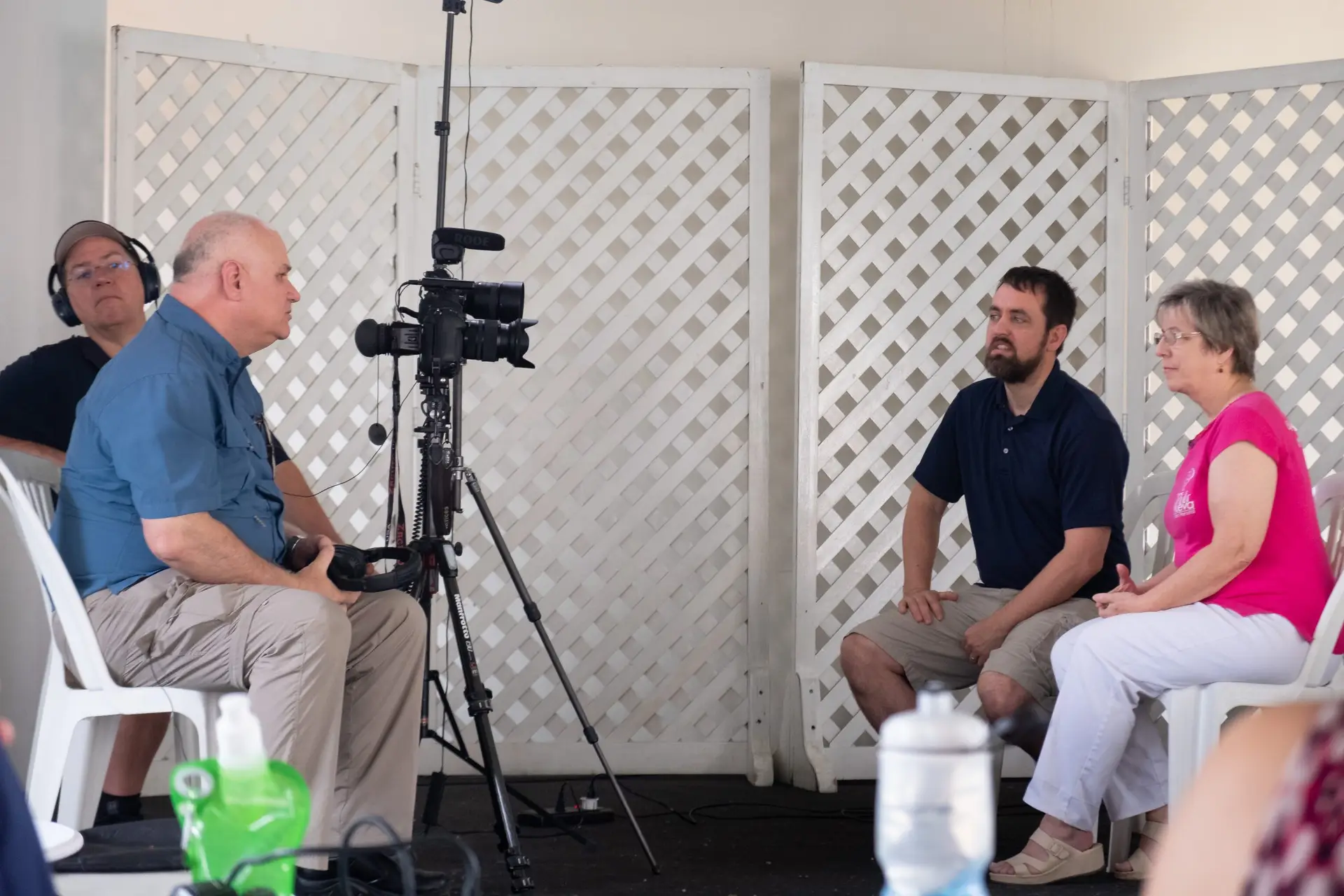
Jeff Raymond, James Dockery and Stanley Leary the leaders of the Storytellers Abroad Workshop in Nicaragua.
Why I Still Love Teaching
Teaching has never been just about technique for me. It’s about watching someone’s eyes light up when they get it — when they finally understand how light shapes emotion, or when they see how storytelling can elevate their work beyond aesthetics.
I’ve had the privilege of teaching students from around the world — in YWAM programs, in my workshops, and through countless one-on-one conversations. Each time, I’m reminded that learning photography isn’t just about mastering light — it’s about finding your voice.
From Photography to Purpose
Over the years, my work expanded beyond just making photos. I began consulting and creating for nonprofits, ministries, and businesses that wanted to connect their audiences through meaningful stories.
Photography became the gateway to something larger: helping people communicate their purpose. That’s what still drives me today — showing organizations and individuals how to use storytelling to make their message stick.
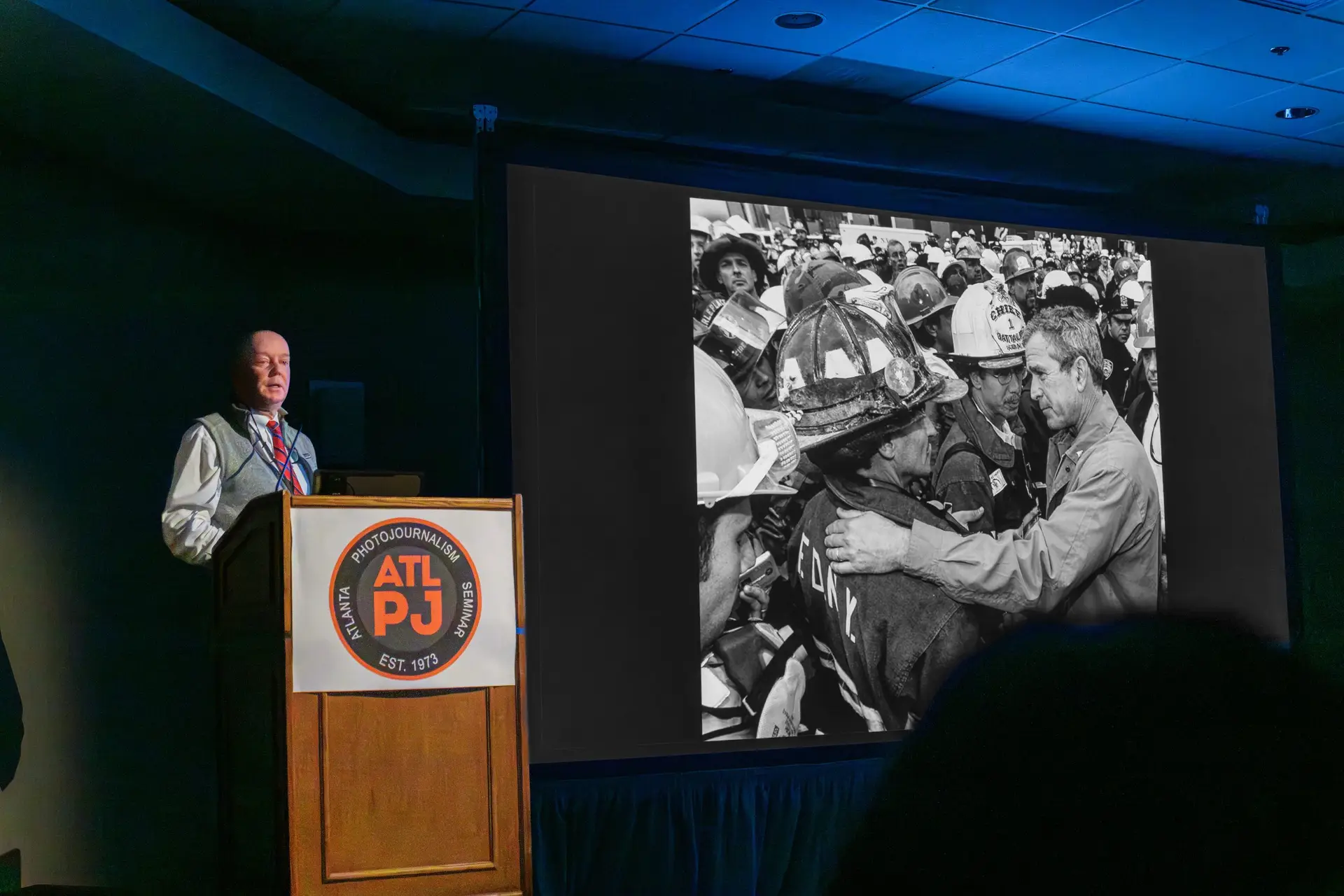
Stanley Leary served as a guest speaker for Mark Johnson’s Advanced Photojournalism class at the University of Georgia’s Grady College of Journalism and Mass Communication.
Looking Ahead — Speaking and Sharing
As I reflect on the journey since 2006, I realize my next chapter is about sharing what I’ve learned — not just about cameras and lighting, but about how to build a life doing what you love.
If you’re planning a conference, retreat, or workshop, I’d love to speak to your group about:
How to turn passion into purpose.
How storytelling can transform your brand.
How amateurs become professionals — and professionals stay inspired.
Photography gave me a career. Teaching gave me a mission. And storytelling gave it all meaning.
Thank You
To everyone who has read, commented, attended a class, or hired me over the years — thank you. You’ve helped shape this journey as much as I have.
Here’s to continuing the work of telling stories that change lives.
A frog, a diaper-clad baby, and a handmaid cross paths at the intersection of Roswell Road and Johnson Ferry Road, their homemade signs waving in the breeze. Over 3,000 people gathered Saturday, honking horns in support, as East Cobb became the stage for a modern-day protest invoking one of America’s oldest principles: no kings.
The “No Kings” protest draws a symbolic line back to the Boston Tea Party, when colonists famously resisted the king’s authority and helped shape a government without a monarch. Today’s demonstrators say they are ensuring that principle continues, expressing concern about actions by the executive branch that they see as consolidating power in the presidency at the expense of Congress and the judiciary. Many participants have cited controversial pardons that challenge judicial decisions as examples of this trend.
A protester in an inflatable duck costume holds a sign reading “Duck Ice, Duck Trump, Duck Kings” while a friend stands beside them with a sign that says “No Ducking Kings” during a “No Kings” rally Saturday at the intersection of Roswell Road and Johnson Ferry Road in Marietta. Many participants created homemade signs combining satire and political commentary.
The rally was a visual spectacle. Many attendees created homemade signs, like “NO KINGS” or “No Ducking Kings,” while others embraced costumes and satire to clarify their message. Inflatable ducks, frogs, diaper-clad political caricatures, and handmaid costumes drew attention and added humor to the protest while underscoring serious points about democratic limits and accountability.
A drone captures the intersection of Roswell Road and Johnson Ferry Road in Marietta during a “No Kings” rally Saturday. Organizers said more than 1,800 people registered for the event, but the crowd appeared to be at least twice that size.
Drone shots captured the crowd from above, revealing an estimated turnout that far exceeded organizers’ registration numbers. Cars passing through the intersection honked in support, amplifying the energy and engagement of those on the ground. Flags reading “We the People: No Kings in America” highlighted the connection to the country’s founding principles and the enduring American emphasis on limiting centralized authority.
These images capture more than a protest—they tell a story of Americans creatively engaging with democracy. From homemade signs to elaborate costumes, the participants used visual storytelling to make their voices heard, reminding us that activism can be playful, pointed, humorous, and deeply serious.
Whether you were there in person or seeing it through photos, the Marietta “No Kings” rally offers a vivid reminder of the power of citizen expression and the creativity that often accompanies it.