Personal stories are the most powerful tool an organization has — but only when they’re told well.
Over the past 40+ years working as a visual storyteller, consultant, and instructor, I’ve learned that most organizations don’t struggle because they lack good work. They struggle because they don’t know how to uncover and shape the stories already inside their mission.
This collection of articles explores what makes a personal story resonate — whether you’re a nonprofit leader, missionary, business owner, or creative trying to communicate impact. You’ll find lessons from the field, reflections from real assignments, and practical insights on how to move from documenting activity to revealing meaning.
If you’re here because you want your communication to connect more deeply — not just inform but inspire — you’re in the right place.
And if you’d like help identifying and shaping the strongest stories inside your organization, let’s talk. The right story, told well, can change everything.
I’m becoming more convinced that the most important work we do in life isn’t our job, our craft, or even our calling.
It’s the work we do on ourselves.
Not in a self-help, navel-gazing kind of way—but in a posture of honest self-curiosity.
Who am I, really? What are my gifts? Where am I weak? Where do I still need to grow?
These aren’t just personal development questions. For artists, photographers, and storytellers, they are foundational to creativity itself.
Self-curiosity is not self-criticism
There’s a difference between beating yourself up and being curious about yourself.
Self-curiosity sounds like:
Why did I react that way?
What do I bring into a room without realizing it?
Why does this kind of story pull me in every time?
Why do I avoid certain subjects—or certain people?
Great artists aren’t just observant of the world. They’re observant of themselves in the world.
Your lens, your framing, your timing, your choice of subject—none of that is neutral. It all flows from who you are, how you see, and what you’ve wrestled with.
The discipline of honesty in the lows
When things fall apart—creatively, professionally, relationally—it’s easy to blame circumstances, clients, algorithms, budgets, or timing.
But the deeper work is asking:
How did I get here?
What patterns do I see repeating?
What was my role in this—not to assign shame, but to gain clarity?
That kind of honesty hurts a little. But it’s also where growth begins.
Avoiding those questions doesn’t protect your creativity—it slowly suffocates it.
The rarely-discussed work: curiosity in the highs
We talk a lot about reflection after failure. Almost no one talks about reflection after success.
But the highs deserve just as much curiosity.
Why did this project work?
What was I fully present for here?
What part of myself showed up at my best?
What do I not want to lose the next time things go well?
Unchecked success can harden into ego just as easily as failure can harden into fear. Curiosity keeps both soft. And softness, paradoxically, is where creative strength lives.
A thought on boredom (and why it matters)
I’ve started wondering if boredom isn’t a lack of inspiration—but a lack of self-discovery.
Maybe boredom shows up when:
We’ve stopped asking new questions of ourselves
Our work has become technically competent but internally stale
We’re producing, but not uncovering anything new
Creativity thrives on discovery. And sometimes the next discovery isn’t “out there” in a new location or assignment—it’s in here, waiting for attention.
Why this matters for storytellers
Every meaningful story begins with awareness:
Awareness of others
Awareness of power, pain, joy, contradiction
And awareness of how you interpret all of that
If you don’t understand yourself, your stories flatten. If you don’t examine your wiring, your blind spots show up in your work. If you stop being curious about who you are becoming, your creativity eventually starts repeating itself.
Working on yourself isn’t a detour from the work. It is the work.
A quiet invitation
If you’re feeling stuck, bored, or restless in your creative life, maybe the question isn’t: What should I make next?
Maybe it’s:
What haven’t I been honest about?
What part of myself have I stopped listening to?
What might I discover if I got curious again?
Your best work has always followed your deepest learning. That hasn’t changed.
There’s a moment many photographers, videographers, and storytellers eventually experience—but almost no one talks about it publicly.
A major client goes quiet. Another one disappears entirely. Calls aren’t returned. Emails go unanswered. Work you assumed would continue… just stops.
I’ve had this happen to me more than once in my career. And I’ve been doing this a long time.
When it happens the first time, it feels personal. When it happens again, it can feel crushing—especially if you’re supporting a family, dipping into savings, or watching your spouse step in to help carry the load.
This post isn’t about quick fixes or spiritual clichés. It’s about what actually helps in seasons like this.
First: This Is Not a Failure of Faith or Talent
Let’s say this clearly.
When a client disappears, it does not mean:
You’ve lost your edge
God is displeased
You missed your calling
Your work suddenly became irrelevant
Creative work—especially storytelling work—lives at the intersection of budgets, leadership changes, economic shifts, and internal politics you will never see.
Silence from a client is often about them, not you.
I’ve learned this the hard way.
Stabilize Before You Spiritualize
Faith and stewardship are not opposites.
Before asking “What is God teaching me?” it’s wise to ask:
What do we actually need to survive the next 3–6 months?
What expenses can be paused, reduced, or renegotiated?
What brings in any income right now?
Temporary or adjacent work is not giving up—it’s buying time.
Scripture is full of faithful people doing practical work while waiting. Paul made tents. That wasn’t a detour from his calling—it was a provision.
Stop Chasing Silence
One of the most emotionally draining mistakes creatives make is endlessly chasing a client who has gone quiet.
Silence is an answer.
Write a clean, professional closure email (not emotional, not accusatory):
“Just closing the loop. If things change in the future, I’d be glad to reconnect. Wishing you well.”
Then stop. Not in anger. Not in bitterness. Just in wisdom. Then mentally and practically release them. This frees energy.
Energy spent chasing ghosts is energy stolen from rebuilding.
Diversify So This Doesn’t Break You Again
Diversify now, not when things feel safe
This season revealed a structural weakness: revenue concentration.
Tangible actions:
Create 3–5 small, clearly defined offers that solve specific problems (not “I do video”).
Example:
One-day brand story shoot
Monthly content package for small orgs
Testimony/interview storytelling for churches & nonprofits
Editing-only services for agencies
Price them so they are easy to say yes to, even if margins are thinner in the short term.
Aim for 10 smaller clients instead of 2 big ones.
Stability often comes from boring consistency, not big wins.
Lean on Relationships, Not Algorithms
Cold marketing drains energy when someone is already discouraged.
This week you should:
Personally contact 10 people you already know (past clients, pastors, comms directors, agency producers).
The message is simple: “I’m taking on new work right now and would love to help if there’s a need. If you know someone who could use storytelling or video help, I’d appreciate a connection.”
No apologizing. No oversharing. Just clarity.
Teach, Consult, or Coach While You Rebuild
Many storytellers forget this:
Your value is not limited to the camera in your hands.
If you’ve spent years learning how stories work, you can:
Consult on story clarity
Help organizations refine messaging
Teach workshops
Coach younger creatives
In difficult seasons, wisdom often becomes income before creativity does.
Guard Your Identity Carefully
This may be the most important work of all.
When income drops, it’s easy to confuse provision with worth. To confuse silence with abandonment. To confuse waiting with failure.
Waiting is not inactivity. It is preparation with humility.
If you’re in this season:
Keep a daily rhythm
Stay connected to people
Let others carry you when you’re tired
This chapter is not the end of your story.
A Final Word From Experience
Every time I’ve walked through a season like this, something painful but necessary happened:
Illusions were stripped away. Clarity increased. My work became more grounded. My faith became quieter—but stronger.
I wouldn’t choose these seasons. But I no longer fear them.
If you’re walking through one now, you are not alone—and you are not behind.
Sometimes the phone stops ringing… not to end the story, but to reshape it.
I recently had the privilege of covering a retreat focused on Resting in Jesus, designed for adults who serve nationally & internationally on mission trips—leaders and volunteers teaching others about leadership and servanthood. Events like this are rare opportunities: not only do I get to listen to incredible speakers, but I also get to capture the moments that reveal their personality, conviction, and the more profound truth of their message.
Overcoming soul fatigue begins with release, embracing strength, and trusting in the process. Leaders need rest, too, and today, the room exhaled with relief as Derwin Gray guided us into it.
Dr. Derwin Gray: Overcoming Soul Fatigue
Dr. Derwin Gray reminded us that even those who serve tirelessly need to pause and receive rest. His talk focused on overcoming soul fatigue, drawing on Matthew 11:28-30. He shared a memorable acronym:
R – Release your burdens (1 Peter 5:6-7)
E – Embrace His presence (Psalm 16:11)
S – Strengthen your soul (Ephesians 3:16-19)
T – Trust His leadership (Psalm 23)
Watching Derwin speak, I noticed the way his gestures and pauses gave weight to each step, and how the audience responded—leaning in, nodding, exhaling as he spoke about release. As I photographed those moments, I tried to capture not just the words, but the emotion and relief that came with each step of his message: a visual representation of rest and trust in Jesus.
See clearly. Work diligently. Rest intentionally. Greg Stier’s call to intentional rest reminded everyone that even those who serve tirelessly need to pause and recharge.
Greg Stier: See Clearly, Work Diligently, Rest Intentionally
Greg Stier spoke to leaders and missionaries about maintaining clarity and energy in their work. His framework was profound yet straightforward: See clearly. Work diligently. Rest intentionally.
I watched how his energy drew the audience in, while the pauses reminded everyone that rest is not passive—it’s an intentional act that empowers effective service. In photographing Greg’s talk, I focused on the interactions—the subtle smiles, the quiet moments of reflection—that illustrated how rest fuels mission work. His message resonated deeply with an audience accustomed to constant giving; the photos captured the tension between effort and pause, focus and release.
Beth Yoe showed how Scripture memorization transforms the heart. Capturing the quiet focus of the room, I saw rest in action through reflection and absorption of God’s Word.
Beth Yoe: The Power of Scripture Memory
Beth Yoe shared the transformational discipline of Scripture memorization. Having memorized entire books of the Bible herself, she encouraged us to let God’s Word dwell in our hearts, moving beyond knowledge to transformation.
During her session, I captured moments of contemplation and focus—participants writing verses, quiet recitation, and the way Beth’s calm presence allowed the audience to absorb the Word deeply. For missionaries and leaders, internalizing Scripture is a form of rest, as they trust God’s Word to guide, comfort, and strengthen them as they serve others.
Resting in Jesus includes renewing the mind. Dr. Caroline Leaf’s insights on thought management had the audience leaning in, embracing both mental clarity and spiritual refreshment.
Dr. Caroline Leaf: Renew Your Mind
Dr. Caroline Leaf spoke on the science of the mind, neuroplasticity, and how managing thoughts impacts emotional, mental, and spiritual health. Her strategies for rewiring the mind align beautifully with the retreat’s theme: resting in Jesus involves renewing our thinking, not just our schedules.
I photographed moments where she paused, letting the audience reflect, and the way participants leaned forward, absorbing practical tips for mental rest. These moments visually communicated that rest is more than downtime—it’s an intentional shift in how we think, process, and live in alignment with God’s truth.
Teaching that engages heart and mind transforms service. Dr. Robert Smith Jr. reminded leaders that rest comes when deep understanding meets real-life application.
Dr. Robert Smith Jr.: Heart and Mind in Teaching
Dr. Robert Smith emphasized that Christian teaching must engage both heart and mind, leading to lived transformation, not just intellectual understanding. His message challenged leaders to consider how they teach and model their faith in their mission work.
Behind the camera, I noticed the power of his pauses and the thoughtful reactions from the audience. Capturing those interactions showed how deep doctrine meets real-life application—the essence of resting in Jesus while faithfully leading and serving others.
Life 2025
Life 2025
Life 2025
Life 2025
Life 2025
Life 2025
Life 2025
Life 2025
Life 2025
Life 2025
Life 2025
Life 2025
Life 2025
Life 2025
Kimberly Johnson: From Surviving to Thriving
Kimberly Johnson shared her inspiring story as a stroke survivor, illustrating perseverance, hope, and the importance of living intentionally. She reminded everyone that rest is not about avoiding struggle; it’s about entrusting challenges to Jesus while embracing the present moment.
I captured the quiet intensity of her storytelling—the audience fully engaged, absorbing the vulnerability and strength in her journey. The images reflect that rest is both a matter of trust and courage: giving control to God while moving forward in service.
Final Thoughts
Covering this retreat reminded me why I love what I do. My job isn’t just to record speakers—it’s to translate the message into visual stories. The gestures, pauses, glances, and shared moments between speakers and audience become a story that complements the words being spoken.
For leaders serving around the world, resting in Jesus is not optional—it’s essential. And capturing it visually is a privilege I don’t take lightly: each photo is a moment of truth, a reflection of faith, and a reminder that even those who pour out for others need to receive.
As I look forward to attending the Atlanta Photojournalism Seminar next week, I’ve been reflecting on the role NPPA plays in the lives of visual journalists. These are just some of my thoughts on how the organization supports photographers—especially freelancers—through connection, community, and collaboration.
The National Press Photographers Association has always been more than an organization—it’s a lifeline for storytellers who often work alone in the field. For photographers chasing a story on their own, deadlines looming, and cameras in hand, the work can feel isolating. NPPA provides connection, guidance, and a sense of belonging, reminding every member that their craft matters and that they’re not alone.
Today, NPPA is entering a new chapter. With fewer paid staff than in the past, much of the work is now carried out by volunteers. This shift naturally raises questions: what happens to the community when the people members once relied on for support are no longer on payroll? The answer is nuanced. While the structure changes, the heart of NPPA remains—members supporting members. Volunteer leadership encourages a deeper, more participatory engagement. It invites members to serve, collaborate, and strengthen the community in ways that a purely staff-led model could never fully achieve.
From Staff to Volunteers: Rethinking the Relationship Between Dues, Service & Membership in the National Press Photographers Association (NPPA)
Historically, NPPA relied on a combination of professional staff and volunteers to deliver services to its members. Staff managed membership, advocacy, and communications, while volunteers supported committees, contests, events, and mentoring. Membership dues helped sustain the professional team, and members expected those services to be delivered.
The shift to a primarily volunteer-led model changes this dynamic. Freelancers and independent visual journalists—who now make up a growing portion of the membership—often feel more isolated than staff photographers ever did. They no longer have daily interactions with a newsroom or office colleagues. NPPA, in its volunteer-driven model, becomes not just a service provider but a hub of connection. Members are called upon to participate actively, share experiences, mentor one another, and maintain the sense of camaraderie that paid staff once helped foster. This new model not only asks photographers to receive support but also to contribute to the ongoing health of their professional community.
Membership Dues, Staff Services & Shared Ownership: A Story of Transition
The transition from paid staff to volunteers is both practical and symbolic. It acknowledges that the landscape of visual journalism has changed—fewer staff positions, more freelance and independent photographers, and new challenges in sustaining a professional association. Membership dues now serve a dual purpose: supporting the core operations and empowering members to take ownership of the organization’s mission.
Shared ownership transforms the experience of membership. Freelancers who may have felt isolated now have the opportunity to step into leadership, mentor their peers, and actively contribute to the community they value. While the number of staff jobs has decreased, NPPA remains steadfast in its mission: fostering a connected, supportive, and professional community. The organization’s evolution demonstrates that even in a volunteer-driven model, it is possible to provide resources, advocacy, and a sense of belonging to members who need it most—those individuals out in the field, telling stories that no one else can tell.
Atlanta Photojournalism Seminar 2024
From Mentorship to Meaningful Relationships: How Experience Shifts What We Seek in a Community
As photographers progress in their careers, the nature of what we need from our professional communities evolves. Early on, mentorship is crucial—guiding your craft, navigating assignments, and learning the unwritten rules of the field. However, as the years pass, the value often shifts from being mentored to building and maintaining meaningful relationships. For me, NPPA has become a place where those relationships thrive. Whether it’s connecting with someone who has faced the same challenging shoot, swapping insights on storytelling, or simply sharing encouragement, these connections sustain both my work and my sense of belonging. Even without a formal mentor, the association reminds me that no matter how experienced you are, the bonds we form with peers are what keep the profession vibrant and connected.
Isolation and Peer Support: For many freelancers, the day-to-day work is solitary—long hours in the field, tight deadlines, and few colleagues nearby to share the triumphs or frustrations. NPPA helps bridge that gap. Even without staff running every program, the relationships formed through committees, contests, or networking events become lifelines. It’s not mentorship in the traditional sense; it’s peer-to-peer support, advice, and encouragement that reminds you you’re not alone in the work you do.
The Role of Shared Experience: As you gain experience, formal guidance may matter less, but the value of shared experience grows. Talking through how someone else solved a tricky shoot, how they approached a challenging story, or even just sharing a laugh about the realities of the job—that’s where NPPA shines. These connections keep the craft alive and remind each of us that while the work can be isolating, we are part of a larger, vibrant community.
From Receiving to Giving: One of the beautiful things about NPPA’s volunteer-driven model is that it encourages experienced members to give back. The relationships aren’t just for personal growth—they’re opportunities to strengthen the profession for others. For me, this means mentoring informally, sharing lessons from decades of assignments, and helping younger or newer photographers navigate the challenges of freelance life. Even without a formal mentor-mentee structure, the community becomes a web of mutual support, sustaining both the individual and the craft.
Southwestern Photojournalism Conference
Finding Your People: Why NPPA Events Are Where Connection Happens Freelancing in visual journalism can feel like a solitary pursuit. Not everyone you meet in the industry is focused on supporting each other, and sometimes personalities don’t click. That’s where NPPA makes a difference. By attending their events—workshops, contests, networking meetups—you’re stepping into a space full of peers who understand the challenges you face and care about building community. You don’t need to find everyone who “gets you”; even finding one person who becomes a collaborator, a sounding board, or a source of encouragement can transform your work and your confidence. NPPA isn’t just about professional development—it’s about creating the environment where those vital connections are possible, where you can finally find the people who will walk alongside you in your storytelling journey.
James Nachtwey speaking at the Atlanta Photojournalism Seminar, 2024. Hearing him share his life’s work reminded me why I chose this profession. His courage, empathy, and relentless pursuit of truth have shaped generations of visual storytellers — myself included. But what James did can’t be repeated. His path was uniquely his — forged by moments, conflicts, and convictions that only he could have lived. The best way we can honor that is not by trying to walk his road, but by finding our own stories to tell with the same integrity and compassion.
I’ve sat through countless presentations by incredible photographers — people whose work makes you want to grab your camera and run out the door to create something just as powerful. But I’ve learned over the years: those speakers aren’t giving you a map to follow. They’re showing you what’s possible.
Their stories are meant to inspire you, not to be copied by you.
Each has walked a road filled with unique experiences, challenges, and opportunities that shaped who they are as visual storytellers. You can learn from their techniques, admire their vision, and even borrow bits of their wisdom — but you can’t (and shouldn’t) try to live their story.
Photography is deeply personal. What you bring to a frame — your perspective, values, and curiosity— makes your work different from everyone else’s.
So as you sit in on talks or workshops, listen closely. Take notes. Let their stories spark something inside you. But when you pick up your camera again, make work that’s true to you.
“Don’t be a second-rate version of someone else; be a first-rate version of yourself.” — Judy Garland
Let their stories light your fire, not draw your outline. Your path will look different — and that’s precisely the point.
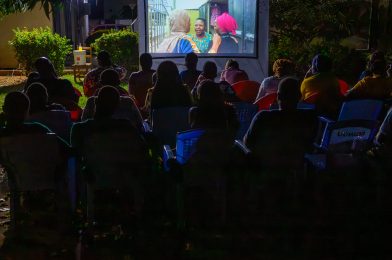
The Grand Premiere night in Dar es Salaam culminated our week-long Storytelling Workshop with ABWE missionaries. Each participant shared their finished video story before an audience filled with their subjects, families, and friends. It’s always a powerful moment when those whose stories were told get to see their lives celebrated on screen, reminding us that authentic storytelling builds real connection and community.
If you’ve ever hesitated to tell your organization’s story because you don’t have the budget for fancy gear, a production crew, or a cinematic edit—take a deep breath. You don’t need Hollywood to move hearts. What you need is honesty.
After 40+ years of storytelling through photography and video, I’ve learned something truer today than ever: authentic stories connect more deeply than polished ones.
The Perfection Trap
Too often, nonprofits get caught up in the idea that their story has to look perfect. You might think you need flawless lighting, scripted lines, or dramatic drone shots to earn attention. But perfection can sometimes create distance.
People don’t connect with perfection—they connect with real people who share their struggles, hopes, and faith.
In today’s world, audiences can spot “overproduced” from a mile away and scroll past it. What stops the scroll is authentic emotion—a real person telling their story.
A woman from the SIFA program watches her story unfold on screen during the Grand Premiere in Dar es Salaam. As tears welled in her eyes, the room felt the weight of her journey and the power of being truly seen. Moments like this remind us why storytelling matters—it honors real people and the impact of God’s work in their lives.
The Power of Imperfect Honesty
When I teach storytelling workshops around the world, I tell my students this: If your video has one thing—authenticity—it has everything it needs.
I’ve seen shaky handheld footage that made donors cry and inspired entire communities to act. I’ve also seen beautifully shot projects that never connected because they felt staged.
The difference isn’t technical—it’s emotional honesty.
Produced by Ken Robinson
What to Do Instead
Here are a few practical ways your nonprofit can tell authentic, heart-moving stories—without a Hollywood budget:
Start with the heart, not the hardware. Before you hit record, know the “why” behind the story. What’s the emotional core? What moment will make people feel something? That’s what matters most.
Let your subjects be themselves. Don’t over-script. Encourage the people you interview to speak naturally, even if they stumble over words. Their pauses, tears, and laughter make the story believable.
Focus on meaningful details. You don’t need a perfect setting—just one that supports the story. Maybe it’s a missionary holding a weathered Bible, or a teacher surrounded by students’ artwork. Real environments carry truth.
Use simple lighting and good sound. Clear audio and natural light go a long way. I often use my LED lights, but I’ll also usually position someone by a window. The goal isn’t drama—it’s clarity and warmth.
End with a personal invitation. Instead of a flashy call-to-action, invite your viewers into the story. “You can be part of this change” means far more than “Click here to donate.”
Audiences Want Connection, Not Perfection
Social media and short-form video have changed the rules. People crave connection, not production. Today’s most successful nonprofits are those that show up as themselves—honest, unpolished, and real.
When you share your story from the heart, your audience won’t remember how cinematic your lighting was. They’ll remember how it made them feel.
A Final Thought
When I think back to the most impactful projects I’ve ever shot, they weren’t the ones with the largest budgets or fanciest cameras. They were the ones where someone trusted me enough to be vulnerable—to share their story, just as they were.
And that’s the real magic of storytelling: not the polish, but the presence.
Over the years, I’ve photographed students, faculty, and campuses at private high schools nationwide. And I must say—it’s some of the work I love most.
Why? Because private schools aren’t just about academics or athletics—they’re about community, character, and stories waiting to be told. Each student has a journey, each classroom has energy, and every campus has a personality. My job as a photographer isn’t just to “take pictures”—it’s to capture those stories in a way that feels authentic, vibrant, and inviting.
When I photograph private schools, I get to focus on the things that make them unique: the quiet moments of a student engrossed in study, the laughter on the sports field, the camaraderie during arts performances, and even the small details that hint at tradition and culture. These are the visuals prospective families connect with—they want to see what life is like, not just a posed brochure.
I’ve found that recruitment photography is best when everyone on campus feels relaxed and natural. That’s why I take the time to build trust, observe fundamental interactions, and let moments unfold naturally. The result is a gallery that not only looks professional but actually communicates the heart of the school.
Over the years, I’ve worked with many schools to create visuals that elevate their recruitment efforts. From day-in-the-life photo sessions to capturing special events, I aim to tell a story that draws viewers in and makes them feel part of the community before they even set foot on campus.
Below, I’m excited to share a few examples from my work—photos that perfectly capture the essence of the schools I’ve photographed. Each image represents not just a moment frozen in time, but a story waiting to be discovered by future students and families.
Photographing private high schools isn’t just a job—it’s a passion. And nothing excites me more than helping these schools show the world who they are, one authentic, compelling image at a time.
This is my favorite photograph by my mentor, Don Rutledge. I love it because the family’s eyes are not on Don’s camera, but on the missionary— their friend—standing just behind him. That simple detail speaks volumes about trust, relationship, and the deeper story behind the lens.
My friend and fellow photojournalist Martin Smith-Rodden recently asked, “What are your favorite historically significant photographs—and why?” This question sent me down a rabbit hole of reflection, not just about which images have shaped history but also about the deeper question: why we make these images in the first place.
Martin’s focus is the “why” as much as the “what” or “when,” and that resonates deeply with me. If we don’t understand the purpose behind our photographs, we’re just making pretty pictures without impact.
Seeing War for the First Time
In Shooting War: Photography and the American Experience of Combat, Susan Moeller reminds us how much the public’s view of war was controlled for decades:
“The importance of editorial decisions in the makeup and layout of a photo-essay cannot be overstated.”
For much of U.S. history, the images the public saw from war were carefully curated, often showing heroism and victory, rarely the cost. It wasn’t until the 1960s, during Vietnam, that Americans were confronted with images of their soldiers injured or dying. That visual truth changed public perception in ways words alone never could.
The Power to Shape Memory
Vicki Goldberg, in The Power of Photography, captures this duality perfectly:
“Photographs change nothing—but spread their influence everywhere.”
Photographs don’t topple governments by themselves. But they can crystallize a moment, amplify injustice, and become part of a collective memory that slowly pushes culture to shift.
Influencers Before Social Media
Before Instagram and TikTok, photographers could still move audiences—if they had the right platform. My mentor, Don Rutledge, was one of them. He spoke at the Atlanta Photojournalism Seminar four times, helped secure other world-class speakers, and influenced countless photographers. His 1970s photo story of a poor Mississippi farmer earned praise and sparked conversation in an era before “viral” was even a word.
When Access Is the Story
Some photographs are even more profound when you understand what it took to get them. Take William Allard’s National Geographic cover of an Amish boy holding a guinea pig. The photo is beautiful, but the real power comes when you realize the trust it took to be welcomed into a community that shuns typical cameras.
The Personal Project Effect
Some of the most powerful images come from personal projects when a photographer is deeply invested in the story. Eugene Richards’s work is almost entirely in this vein. W. Eugene Smith’s haunting image of the Minamata mother bathing her mercury-poisoned daughter remains one of the most affecting photographs ever made.
Accidents and Aftermath
Sometimes a photograph changes history almost by accident. Eddie Adams’s famous execution photo of a Viet Cong prisoner wasn’t staged—it was simply the right (or terrible) moment, captured without knowing it would become iconic.
And sometimes the original intent flips. Many lynching photographs in America were taken by white onlookers, printed as celebratory postcards. Today, those same images stand as damning historical evidence of racial terror.
The Real Question for Young Photojournalists
You can find countless examples of images that have impacted culture. But the deeper question for any young photojournalist is: Why are you doing this?
For me, the answer has never been to glorify the powerful. The stories I feel compelled to tell are of the everyday person struggling to be seen, often because those with wealth and influence refuse to pay honest wages to those whose labor sustains them.
Suppose you know your “why,” your photographs will carry more than just pixels. They’ll have purpose. And that’s what makes an image worth remembering.
Sometimes I think, “What if I were 20 years old today, just starting as a photographer and storyteller in 2025?”
In 1982, when I was 20, I was at East Carolina University. I spent more time in the darkroom than the classroom—working for the school paper and yearbook, shooting black-and-white film and color slides. It was the beginning of everything. I didn’t have a roadmap, but I had a camera and a deep curiosity about people’s stories.
With more than 40 years behind the lens, I wonder what I’d do differently if I were starting right now.
Here’s what I’d tell my 20-year-old self—if that self lived in today’s world.
1. Don’t just shoot—tell stories.
In 1982, I was focused on getting the shot. Today, I’d be focused on what the shot says.
I wouldn’t just learn lighting and composition. I’d study human nature, communication, and why specific images move people. I’d ask, “What story am I helping this person tell?” Not just, “Is this technically correct?”
In 2025, gear is more accessible than ever, but the most valuable skill is empathy.
2. Build a personal brand early.
In college, no one talked about personal branding—we were just trying to meet the deadlines for the yearbook.
If I were 20 today, I’d create a simple website and share my best photos and thoughts. I’d post behind-the-scenes videos, caption stories, and explain my learning.
People don’t hire gear—they employ a person with a point of view. Start showing yours early.
3. Fail faster. Post more.
Back then, failure was expensive. A roll of slide film might cost you a week’s lunch money. Now? You can shoot a thousand photos in an afternoon, edit them that evening, and share a short film before bed.
So if I were 20 in 2025, I’d experiment more. I’d post more. I’d get feedback. I’d try new genres. I wouldn’t worry about being perfect—I’d be focused on growth.
The quicker you get through the bad work, the faster you reach the good stuff.
4. Learn business while you learn photography.
I didn’t learn how to price my work, negotiate a contract, or license an image until I had to. If I were 20 today, I’d take a business course before I bought another lens.
Photographers who succeed long-term aren’t just great with a camera—they know how to run a business. Your creativity gets stuck in a box if you don’t learn both.
5. Find a mentor—and be one.
Looking back, I was lucky to learn from incredible mentors like Don Rutledge. Today, I’d look for someone ahead of me in the field and also look behind me to help someone just starting.
You grow by teaching as much as by doing.
Final Thought: Curiosity Still Wins
No matter what year you’re 20—1982 or 2025—the most powerful thing you can bring to the table is curiosity. Ask better questions. Listen more. Learn from everyone.
Back in college, I had no idea that chasing photos for the school paper would lead me into global storytelling, working with ministries, nonprofits, and major brands. But that same curiosity drives me today.
So if you’re 20 in 2025—lean into the tools, but even more into the people, the stories are still out there. And they still need someone to tell them well.
Now it’s your turn: If you’re in your 20s (or wish you were), what advice would you give your younger self starting in today’s world? I’d love to hear your story.
Instead of spending my workday creating stories or editing videos, I fixed my MacBook Pro. Again.
This morning, I opened my laptop and was greeted with a warning: “Your disk is almost full.” Sound familiar? The crazy part? I had about 1.5 TB of free space on my 2TB internal SSD. So what happened?
Something corrupted the “Macintosh HD – Data” volume like last year. It made the system think I only had 5.8 GB of space left, which locked everything up: no saving or updating. I had a machine with storage, but it couldn’t see.
What I Had to Do
Once this happens, there’s only one way out:
Erase the internal drive. Yep, all of it. Completely reformat the disk.
Reinstall macOS. This part takes a little time, but it’s straightforward.
Restore from a Time Machine backup. This is where having a solid backup plan pays off. I had a full-time machine backup on my NAS (Network Attached Storage) device. A NAS is like your own personal cloud—a hard drive (or multiple drives) that connects to your network and lets you store, access, and backup files from any device in your house or studio.
Restoring from Time Machine is smooth, but it’s not fast. Between all the steps—erasing, reinstalling, and restoring —this whole process takes up most of a workday. That’s time I should’ve spent on client projects; that’s billable time I can’t get back.
Lessons Learned (Again)
If you’re a creative or business professional who relies on your MacBook Pro every day, here are a few takeaways:
Always have a current backup. I recommend a Time Machine backup to a NAS, external hard drive, or both.
Know how to boot into macOS Recovery Mode. Press Command + R during startup.
Plan for lost time. Even when you’re backed up, you’ll likely lose an entire day restoring everything and getting your setup back to normal.
Consider using Disk Utility regularly to check and repair your drive. It might help you catch an issue before it becomes a disaster.
The Bottom Line
You can’t prevent every issue, but you can be prepared. If this ever happens to you—and trust me, it might—having a reliable backup system could be the difference between a quick recovery and a complete meltdown.
I didn’t lose any files, and that’s a huge win. But I did lose a day of productivity. Hopefully, sharing this saves you from the same.
If you’re a photographer trying to stay relevant and profitable in 2025, you already know just being “good with a camera” isn’t enough. The photographers who thrive today aren’t just capturing images—they’re building trust, solving problems, and promoting themselves personally, strategically, and consistently.
As someone who’s spent decades helping others tell their stories, here’s how I’ve learned to successfully self-promote in a way that builds long-term relationships and opens new doors.
Know Your Audience
Start here: Who do you want to reach?
If you’re like me, your ideal clients are nonprofits, faith-based groups, or small businesses that need strong brand messaging. These clients are often overwhelmed, understaffed, and unsure how to communicate visually. They don’t need someone to “take photos”—they need someone to help them connect.
So make sure everything about how you present yourself speaks to that. Your audience needs to know:
You understand their mission.
You’ve helped others like them.
You’re someone they can trust with their story.
When your message speaks directly to their world, it becomes about them, not just you.
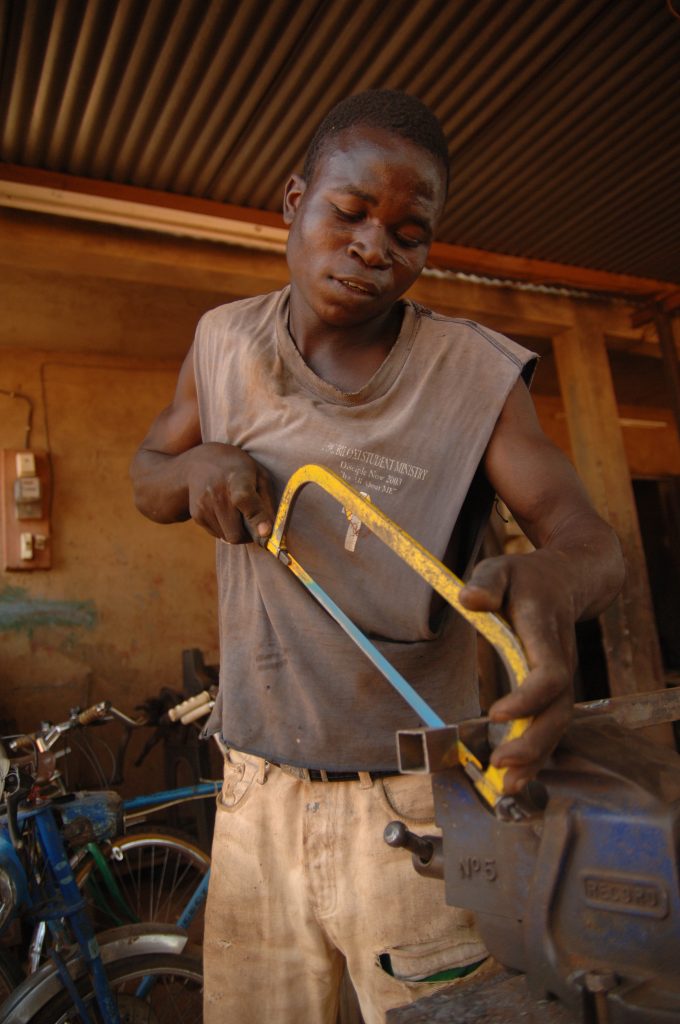
Ya Ya Sebre repairs motorcycles in his workshop in Garango, Burkina Faso. He uses his skills to serve his community and support his family in West Africa.
Identify and Solve Their Problems
A promotion that works starts with empathy.
Think about the actual pain points clients bring to the table. Maybe they’re struggling to get donors to engage, or their social media feels flat. Perhaps they’ve worked with other photographers who delivered technically OK photos, but missed the emotional connection.
What you’re offering is a solution. You’re helping them:
Communicate value to their audience.
Connect emotionally with supporters or customers.
Build consistency across their visual brand.
Your messaging should reflect that on your website, blog, emails, and in person.
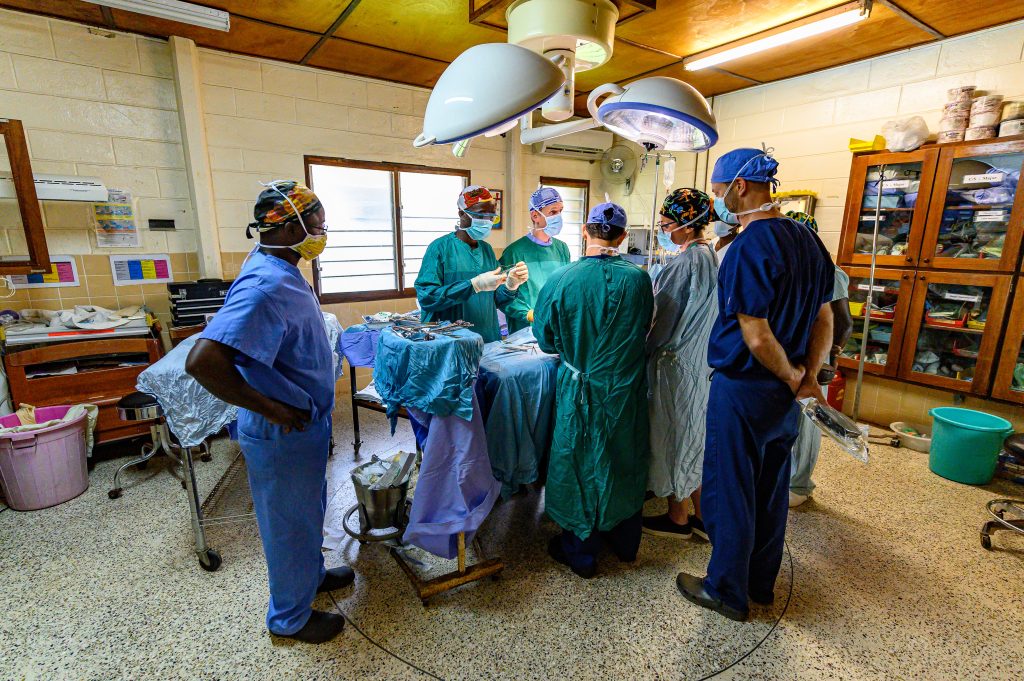
A team of local and visiting surgeons collaborates during a procedure at Hôpital Baptiste Biblique in Togo. This mission hospital blends compassionate care with surgical excellence, serving as a vital lifeline for thousands in West Africa.
Structure Your Portfolio for Their Needs
Most photographers build portfolios that show what they like to shoot. However, effective self-promotion means showing what your clients want to see.
Instead of a general “highlight reel,” think about case studies. Break your portfolio into categories like:
Brand Storytelling for Nonprofits
Faith-Based Projects
Event Coverage with a Mission
Executive and Environmental Portraits
Show variety, but also show depth. For each gallery, include a short paragraph about the client’s challenge, your approach, and the result. A powerful image with a brief story goes much further than a grid of 20 random shots.
Promote Yourself—Consistently and Intentionally
In today’s market, it’s easy to fall into the trap of thinking you must always be everywhere. Instead, aim to be intentional in the ways that matter most.
Snail Mail Surprise still works. A professionally printed postcard with a handwritten note has a much higher open and response rate than another email in their inbox. Use it to highlight a recent campaign or image series relevant to their mission.
Email A well-crafted newsletter—once a quarter or once a month—is a great way to stay top-of-mind. Ensure it’s more than “look at my latest shoot.” Offer value: a quick tip on storytelling, a link to a behind-the-scenes post, or a short story of a client’s success.
Blog and Website Consider your blog your voice when you’re not in the room. Write posts that answer the kinds of questions your clients are already asking:
What makes a good storytelling photo?
How do visuals help with fundraising?
What do we need to do before the shoot?
Ensure your website leads people somewhere: either to contact you, download something helpful, or read more about your process.
Networking and Speaking This still works better than anything else, especially in the nonprofit and small businesses. Offer to give a short talk on storytelling at a local church, business group, or creative meetup. Speak from experience. Don’t sell. Teach.
You’re not just a vendor—you’re a guide. And the more people see you that way, the easier it is for them to say yes.
Golden hour over Ocean Isle Beach, North Carolina—where the Atlantic meets a peaceful island community. This aerial view captures the harmony of coastline, homes, and marshland in one perfect summer evening.
Choose the Right Images to Reinforce Your Message
Images matter as much in your self-promotion as in your client work. Choose photos that reflect both skill and purpose.
Here are the types of images to pull from your website and blog:
Emotion-rich moments from nonprofit or missionary stories. Show connection, not just action.
Before-and-after branding examples—how a campaign improved with visuals.
Behind-the-scenes photos of you working, especially in faith or storytelling contexts.
Photos with real people, real impact—portraits of clients or community members engaging with your work.
Close-up emotional moments that visually reinforce the message of your post.
These aren’t just portfolio pieces—they’re proof of concept. They show that you understand how to capture images that do something.
Final Thought
Self-promotion doesn’t have to feel awkward or self-serving. Knowing your audience and speaking directly to their needs becomes something much more powerful: an invitation to collaborate.
You’re not just saying, “Look at what I’ve done.” You’re saying, “Here’s how I can help you tell your story.”
Friendships aren’t just lovely to have—they’re essential. Research consistently shows that strong social bonds improve physical health, mental well-being, and longevity. Friendships help us live longer, manage stress better, and give us a sense of purpose.
Simon Sinek, the leadership author known for books like Start With Why and Leaders Eat Last, has been thinking a lot about this lately. While he hasn’t yet released a whole book on the topic, he’s shared in interviews and blog posts that he’s become increasingly obsessed with friendship. He discusses how real friendships are the foundation of trust, connection, and good leadership.
As someone who works in visual storytelling, I’ve seen how photography and video can celebrate, reinforce, and deepen those connections. It’s one of the most meaningful uses of our craft—capturing the small, unrepeatable moments that define our closest relationships.
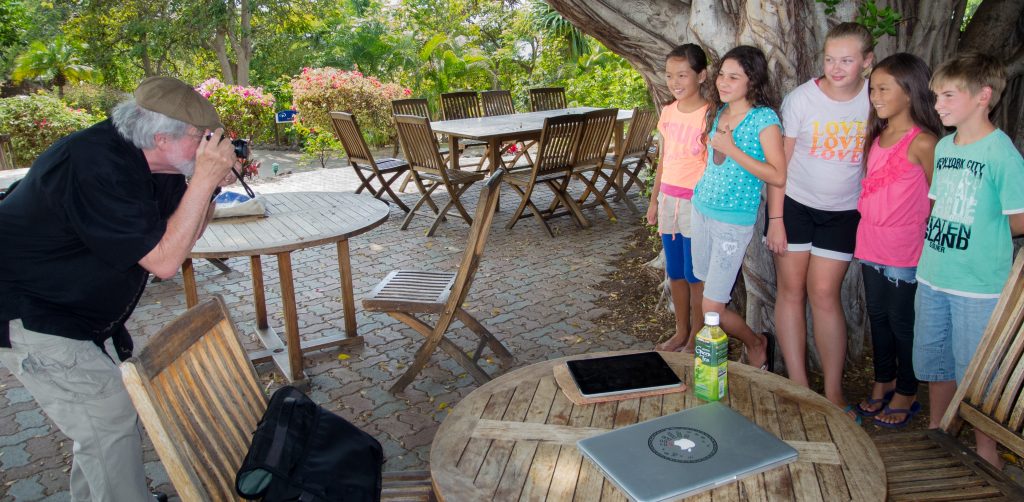
With nothing but his camera and a warm smile, Bill Bangham made instant friends. These kids walked right up to him and offered him tea. Soon after, he captured their portrait—shared moments, trust exchanged, all in a few frames.
Photography: A Celebration of Friendship
Taking photos of your friends isn’t just about making memories. It’s a form of honoring them. It says: “You matter. This moment with you matters.”
Here are some powerful ways photography and video can strengthen and celebrate friendships:
Capture the candid, everyday moments together.
Document your shared adventures—whether a road trip, mission trip, or just a weekend lunch.
Make portraits of each other that you both feel good about.
Show each other how you see one another through your lens.
Create albums or reels that remind you how far you’ve come together.
Revisit old photos to reflect on growth and shared history.
Take video clips of conversations or moments that are often forgotten.
Celebrate milestones together—birthdays, graduations, reunions, or just surviving a hard week.
Turn ordinary hangouts into documentary-style reflections of your friendship.
Being present with a camera says, “This is worth remembering.”
The Real Tip: Photo Reciprocity
Here’s something I’ve learned as a visual storyteller and as someone who archives personal photo collections for families: your collection becomes more powerful when it includes your friends’ perspectives.
Two clients had children who went on the same Spring Break mission trip in 2005. One of the boys gathered photos from all his friends on that trip. I believe he also shared his own with them. Because of this exchange, his family had far more images of their son—photos of him, not just the ones he took.
When we only keep our perspective, we miss half the story. But when our friends take photos and share them with us, we see ourselves through their eyes—and that’s a powerful gift.
So here’s my advice: ask your friends to photograph you. Then swap, trade perspectives, build shared albums, and celebrate each other.
How Sharing Photos Builds Connection
After the rise of Facebook and Instagram, something unexpected happened: we started seeing photos of ourselves we didn’t know existed. Moments from a mission trip, a birthday party, or even just sitting in a coffee shop—all captured by someone else.
This helped us feel more seen, more included. Some studies suggest that people sharing photos with friends feel more connected. Even sharing lighthearted images like pet photos or travel snapshots has increased emotional closeness.
When you see yourself in your friend’s story, something changes. The relationship grows deeper. You start to see how others value you, not just how you see yourself.
Ways to Share Photos with Your Circle of Friends
Here are some easy ways to turn your photo habits into a friendship-strengthening tradition:
Create a shared album where everyone adds their best photos each month.
Host a photo night and swap prints or slideshows.
Send surprise prints in the mail.
Start a digital picture frame rotation where you preload your favorite moments for each other.
Keep a running photo journal together in a private social media group.
Build an annual photo book or scrapbook that you all contribute to.
Celebrating Customers with Photography
This same principle applies in business, too. I’ve visited restaurants that take photos of their guests and hang them on the wall. It’s not just décor—a visual celebration of their community. These walls of smiling faces invite new customers in and remind regulars that they’re appreciated.
Today, that’s moved mostly to social media. Businesses share customer photos online, creating digital versions of that wall.
If you run a business and want to do this well, here are a few tips:
Do:
Always get permission before posting.
Use a consistent style or frame to make your images feel on-brand.
Celebrate your customers, not just yourself.
Refresh your content often so it doesn’t get stale.
Make your customers feel like VIPs when they’re featured.
Avoid:
Posting without consent or using photos out of context.
Letting the feed get outdated or inconsistent.
Posting poor-quality images that don’t reflect well on your brand.
Ignoring customer engagement in the comments or messages.
Done right, these photos can turn casual customers into lifelong fans.
Final Thoughts
As a storyteller and brand builder, I believe professionals don’t tell some of the best stories—they’re lived and captured by friends.
So don’t just take photos of your friends. Ask them to do the same for you. Share them. Celebrate one another. Archive your friendships as you would a legacy—because that’s what they are.
Want to build deeper bonds? Please pick up your camera and hand it to your friend.