When Your Dream Doesn’t Pay the Bills

Reading Time: 4 minutes

Early in my career, I had what I thought was my dream job. I was working for a Christian mission organization doing photography and storytelling—exactly what I believed I was called to do.

Then, giving to the organization declined.

Like many nonprofits during difficult seasons, they had to make cuts. My position disappeared.

One day, I was doing the work I loved. The next day, I was trying to figure out how to pay my bills.

Dream job gone.

That moment taught me something I wish more people pursuing photography, video, and storytelling understood:

Having to take another job doesn’t mean your dream is over.

It may simply mean you’re entering the part of the journey where persistence matters most.

Your Dream Isn’t Dead Because You Took Another Job

Some creatives believe that taking a job outside their field means they’ve somehow failed.

That mindset can trap people.

The truth is simple: adults must provide for themselves.

Rent doesn’t wait for your portfolio to improve. Groceries don’t go on hold while you build your brand. Insurance, gas, and utilities all expect to be paid on time.

Taking a job that pays the bills isn’t quitting your dream.

It’s creating the stability that allows you to keep pursuing it.

Many Jobs That Pay the Bills Aren’t Ideal

Here’s another truth people don’t talk about enough.

Some of the jobs that help you survive financially will not be places you love working.

You may deal with poor management. You may work in environments that don’t inspire you creatively. Some days you may simply be watching the clock.

But those jobs still serve a purpose.

They give you financial oxygen.

One of the most important lessons I learned is this:

Always keep a job while looking for a better one.

When you’re employed, you have options. When you’re unemployed, desperation can lead to poor decisions.

Stability gives you the ability to move forward wisely.

My Detour Back to Stability

After losing that mission job, I needed income.

I worked for Tandy, the parent company of what many people knew as Radio Shack, selling computer systems to businesses for about a year. It wasn’t photography. It wasn’t storytelling. But it paid the bills.

During that season, I made another decision that helped shape my future: I enrolled in seminary to pursue a master’s degree in communications.

For the next three years, I worked full-time while going to school.

First, I sold meat door-to-door out of the back of a truck.

Then I worked at Glamour Shots.

After that, I became an assistant manager at a one-hour photo lab in a drugstore chain. Later, I moved to another one-hour photo lab, where I served as manager.

Those jobs were 40 to 50 hours a week while I was also taking classes.

Were those dream jobs?

No.

But they kept the lights on. They kept food on the table. And they kept me moving forward.

Milestones Help You Keep Going

One thing that saved my sanity during that season was having milestones.

School gave me measurable progress. Every semester meant I was one step closer to where I ultimately wanted to be.

Without those milestones, it would have been easy to feel stuck.

When you’re pursuing a dream that takes time, it helps to create markers that remind you you’re moving forward.

Many Creative Careers Start as Two Jobs

For a season, many photographers, filmmakers, and storytellers live a double life.

A full-time job that pays the bills.

And evenings or weekends spent building their creative work.

That season can feel exhausting.

But it’s also where portfolios are built, skills are refined, and relationships begin to form.

Too many people underestimate how much consistent work over time it takes to build a sustainable creative career.

Passion Alone Isn’t Enough

We often hear the phrase “follow your passion.”

What we hear less often is the other side of that truth.

Passion must be paired with persistence.

The people who eventually succeed in creative fields are rarely the ones who had the easiest path.

They’re the ones who kept going when the dream temporarily disappeared.

They kept learning. Kept practicing. Kept taking the next small step forward.

Wanting It Isn’t the Same as Earning It

Here’s the part that can be hard to hear.

Just because you want to become a photographer, filmmaker, or storyteller doesn’t mean it will automatically happen.

Creative careers are earned.

They’re earned through years of effort, learning, mistakes, relationships, and perseverance.

That process often takes far longer than anyone expects.

But if the calling is real, the work is worth it.

Don’t Quit — Just Be Honest About the Journey

If storytelling is something you truly feel drawn to do, don’t abandon the dream simply because it isn’t paying the bills right now.

Instead, be honest about the path.

Find work that gives you stability.

Take care of your responsibilities.

Then keep building your craft during the time you do have available.

Many people who eventually make a living with a camera didn’t start there.

They started by doing whatever work was necessary to keep moving forward.

Your current job may not be your dream.

But it might be the very thing that makes your dream possible later.
Tagged : /

What Chores Taught Me About Building a Successful Creative Business

Reading Time: 3 minutes

When I was growing up, my parents made sure my sisters and I had chores. Not occasional chores—regular chores.

Some were daily. After dinner, we swept the kitchen and mopped the floor. We cleared the table. Someone fed the dog. Someone took out the trash. Beds had to be made before leaving for school.

Then there were the weekly chores: cleaning the bathrooms, vacuuming, dusting, mowing the grass, and whatever else needed attention around the house.

And there was always one question that determined whether we could go see our friends:

“Have you done your chores up to now?”

If the answer was no, the conversation was over.

Chores Were Necessary…But Not Fun

Let’s be honest. I don’t remember any of those chores being fun.

They were simply part of life. They were necessary for keeping the house running well and making it a healthy place to live.

But looking back now, I realize something important.

Those chores were teaching me lessons I use every single day in my work as a photographer, videographer, storyteller, and business consultant.

The Power of Seeing Something Finished

One of the first things chores teach you is the satisfaction of completing something.

When you mow the grass, you see the difference immediately.

When you vacuum, the lines in the carpet show the work you’ve done.

When you make your bed, the room feels different.

There’s a clear before and after.

That sense of “I accomplished something” is powerful.

As a creative professional, the same principle applies. Whether it’s editing a photo story, organizing files, or delivering a final project, each completed step builds momentum.

Chores Also Teach Creativity

Something else happens when you do chores regularly.

You start figuring out how to do them better and faster.

My mother had a simple quality control system. After you cleaned the bathroom, she inspected it. If it wasn’t done right, you did it again.

It didn’t take long to realize that doing it twice took a lot more time than doing it right the first time.

So I started learning how to work smarter.

How to clean more efficiently.
How to organize the steps.
How to finish faster while still doing it well.

Without realizing it, I was learning workflow.

The Same Lesson Applies to Entrepreneurship

Today, every project I work on follows a workflow.

There are steps that must be done well:

Planning
Capturing the story
Editing
Writing captions
Keywording
Delivering the final files

None of these steps is optional if you want to produce excellent work.

Just as chores in a household keep the household healthy, so too do chores in a business.

And just like my mother inspecting the bathroom, the work eventually gets inspected by the client.

The lesson I learned early was simple:

Do it right the first time.

The “Chores” of Running a Creative Business

Every entrepreneur has parts of the job they love and parts they don’t.

Most photographers love shooting.
Most storytellers love capturing meaningful moments.

But running a successful business includes plenty of tasks that feel like chores:

Accounting
Backing up files
Sending invoices
Writing captions and metadata
Marketing
Answering emails
Following up with clients
Organizing your archive

These things may not be glamorous, but they are essential.

They are the sweeping, mopping, and trash-taking-out of running a business.

What I Tell Myself When Doing the Work I Don’t Love

Over the years, I’ve developed a few simple reminders that help me stay focused when doing the less exciting parts of the job.

1. This step supports the whole story.
Just like a clean kitchen supports a healthy home, the small business tasks support great storytelling.

2. Do it right the first time.
Fixing mistakes later always takes longer.

3. Efficiency creates freedom.
The faster I complete necessary tasks, the more time I have for creative work.

4. Consistency builds trust.
Clients notice reliability just as much as creativity.

5. Speed can set you apart.
A fast turnaround can wow a client just as much as great images.

The Motivation Changes as You Get Older

When I was young, the reward for finishing chores was simple:

I could go play with my friends.

Today, the motivation is different.

Doing the work well means:

A sustainable business
A livable income
Saving for retirement
Being able to take vacations
Having the freedom to choose meaningful projects

The stakes are higher, but the principle is the same.

The Real Lesson My Parents Taught Me

My parents probably weren’t trying to teach me about entrepreneurship.

They were simply teaching responsibility.

But those simple household chores taught something much deeper:

Discipline.
Attention to detail.
Efficiency.
Finishing what you start.

And it turns out those same lessons are exactly what it takes to build a thriving creative business.

So whenever I find myself doing one of the “chores” of running my business, I remind myself of something I learned a long time ago:

Finish the job. Do it right. Then enjoy the freedom that comes afterward.

Tagged : /

Seeing Stories in the Smoke: What the Roswell Citizens’ Fire Academy Is Teaching Me About Storytelling

Reading Time: 6 minutes

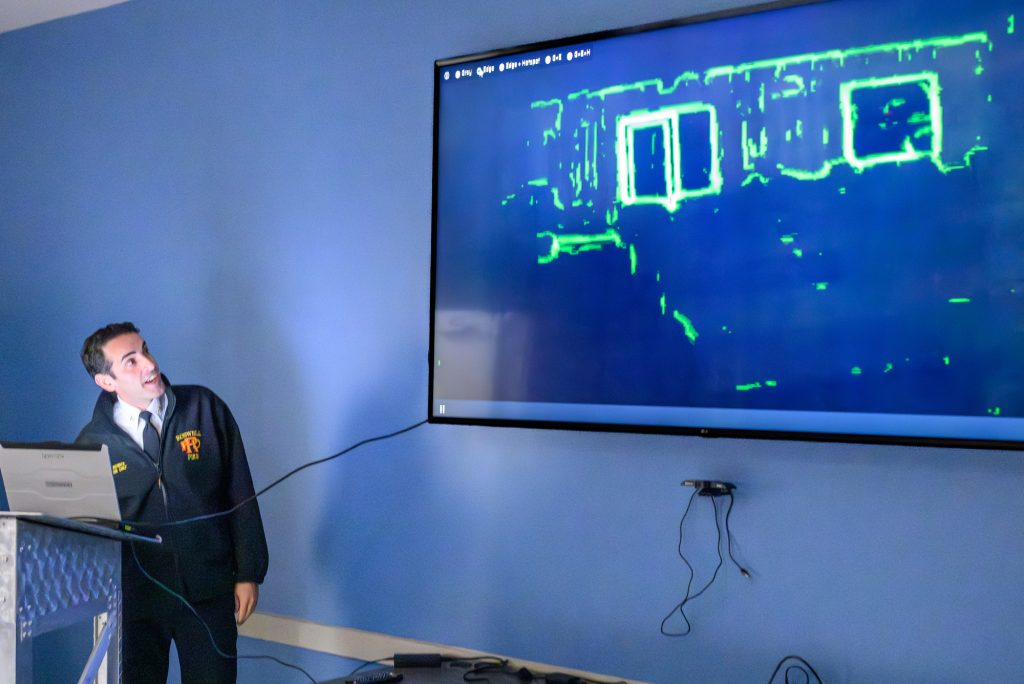
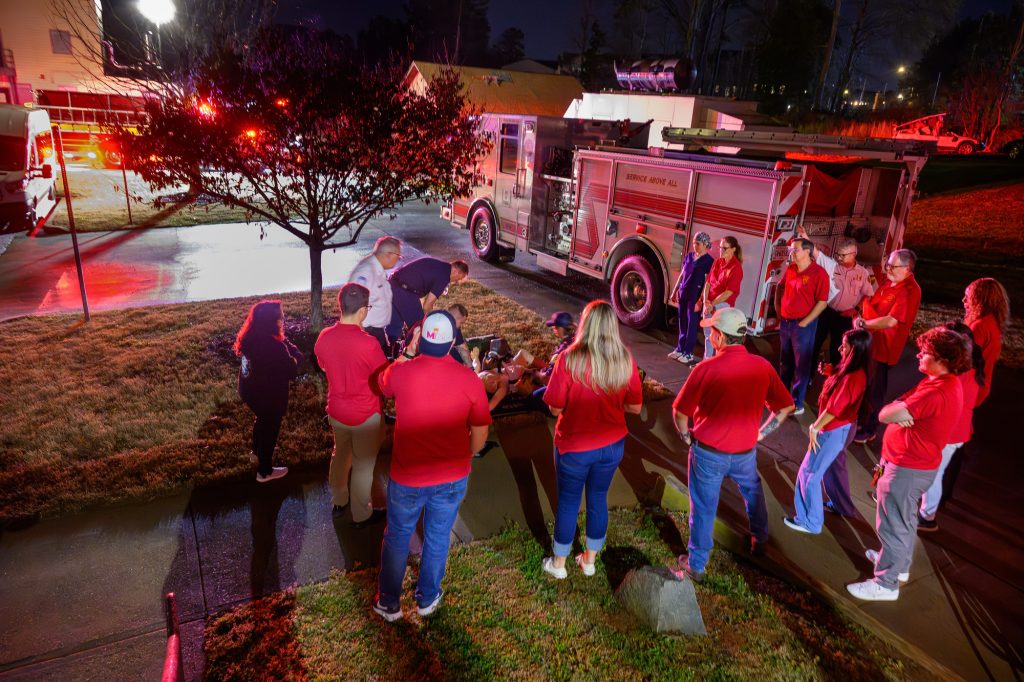
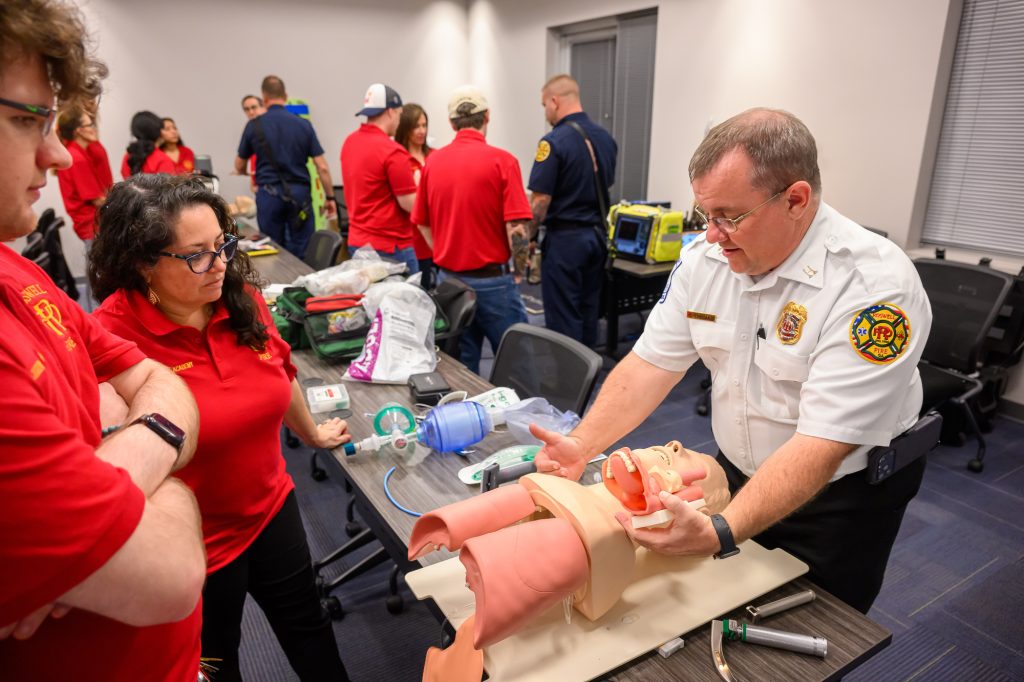
Over the past few weeks, I’ve been attending the Citizens’ Fire Academy with the Roswell Fire Department here in Roswell.

I originally signed up simply because I was curious. Like many people, I see fire trucks rushing past and know that somewhere a team of professionals is responding to an emergency. But I realized I didn’t really understand what happens behind the scenes.

What I didn’t expect was how many stories I would discover.

As a storyteller and photographer, my instincts kicked in immediately. Every session has moments worth capturing—people demonstrating life-saving skills, firefighters explaining how they make decisions under pressure, or technology that feels like it came straight out of science fiction.

So I started doing what I naturally do:
I brought my camera, took photos, and began sharing what I was learning on social media.

And something interesting happened.

Those small posts began to become little stories about the people who protect our community.


A Front Row Seat to the Stories

One evening, we met the command staff and learned how the department operates behind the scenes. I shared this on social media:

Tonight at Fire Citizens’ Academy, we got to meet Roswell’s command staff and dive into how the department protects our community — from reducing homeowners’ insurance risks to keeping us safer in our own businesses and neighborhoods. The crew walked us through their roles, answered every question our class asked, and even delivered a classic long PowerPoint with plenty of humor and real-life stories.

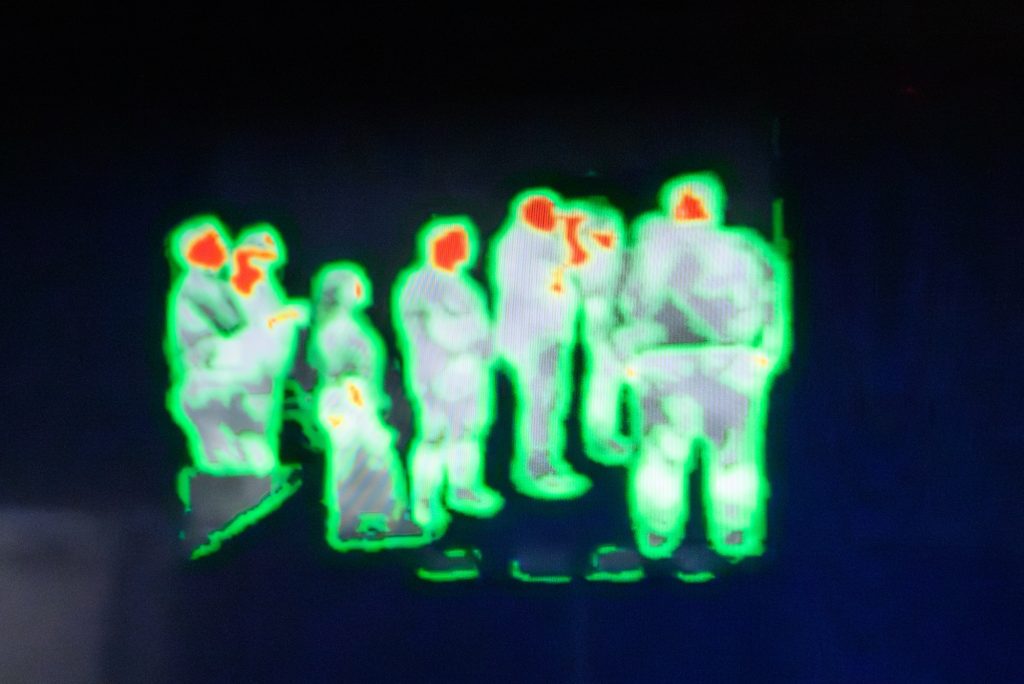
As a bonus, at the end of the night, we saw a demo of the cutting-edge Qwake technology they’re testing — a next-gen helmet system that combines AI, augmented reality, and thermal imaging to help firefighters see through smoke and navigate zero-visibility environments safely. It overlays thermal and edge-detection views directly in the firefighter’s line of sight, helps them locate exits and victims faster, and can stream real-time information back to the incident commander—even to headquarters—improving situational awareness for everyone.

This isn’t futuristic fantasy — departments across the country are already testing this gear as part of early rollout programs. What an incredible glimpse into the future of public safety right here in Roswell!

That night alone could have been an entire article. Instead, it became a short story shared online—one that helped people see their fire department in a new light.


The Human Side of First Responders

Another week focused on emergency medical response. What struck me most wasn’t just the equipment or procedures—it was the depth of training and teamwork required when someone’s life is on the line.

Here’s what I shared afterward:

Over the past two weeks, the Roswell Fire Department Citizens’ Fire Academy has given me a deeper appreciation for the people who show up when someone’s life is on the line.

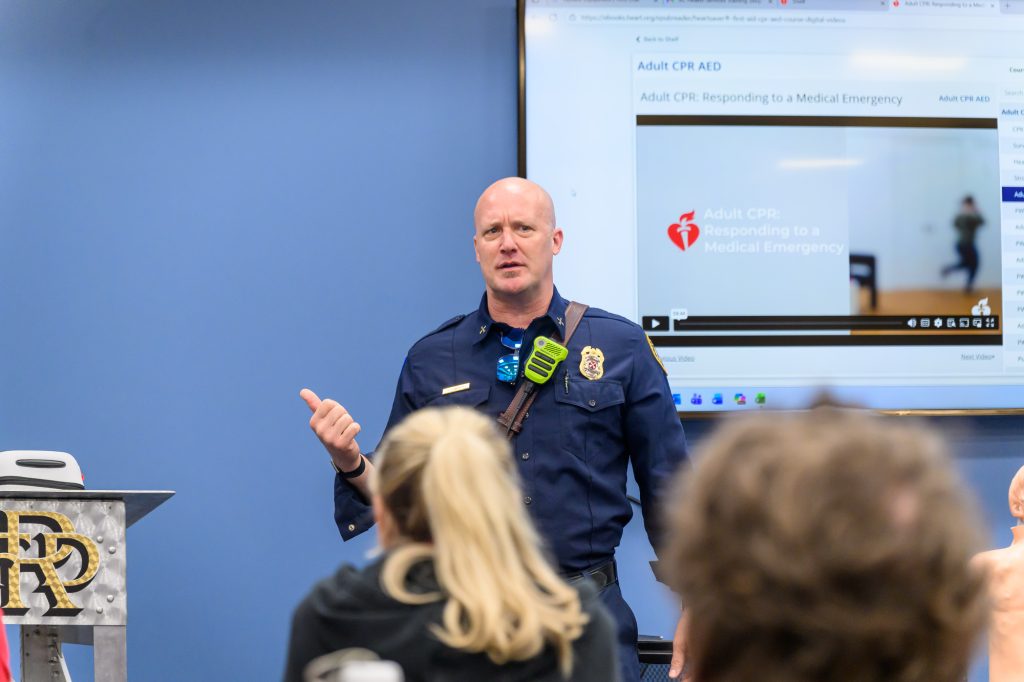
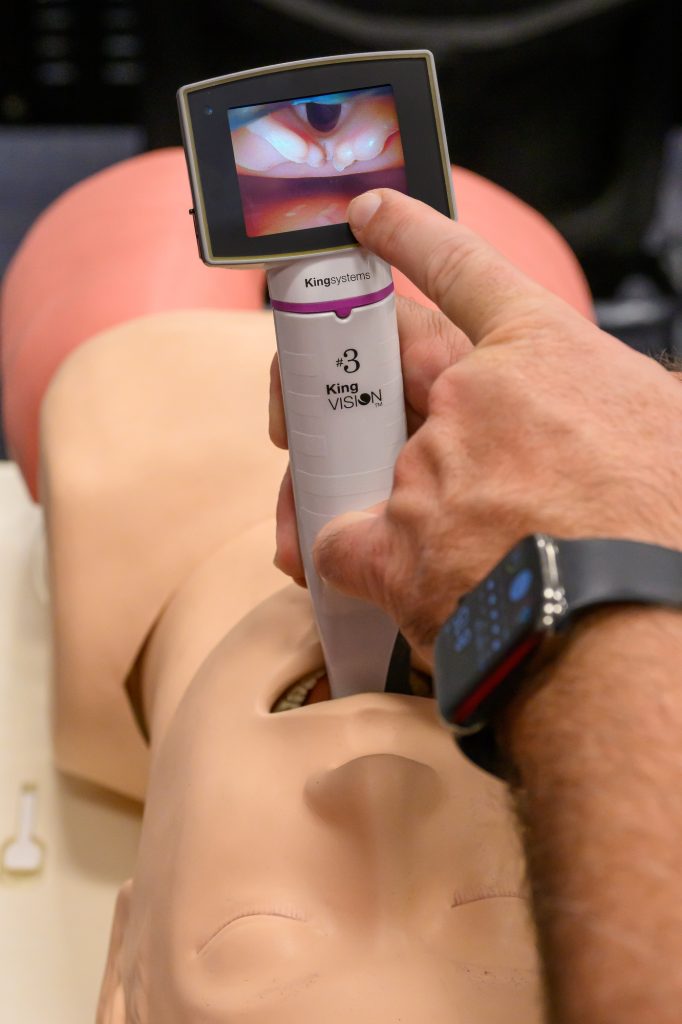
One evening focused on lifesaving basics. Captain Bryan Thomas, Battalion Chief Danny Dwyer, and Battalion Chief & Fire Marshal Chris Archer walked us through CPR, AED use, and airway-clearance techniques. It was practical, hands-on learning that reminded me how important it is for everyday citizens to know what to do before first responders arrive.

The following week shifted to EMS, and what happens when the professionals take over.

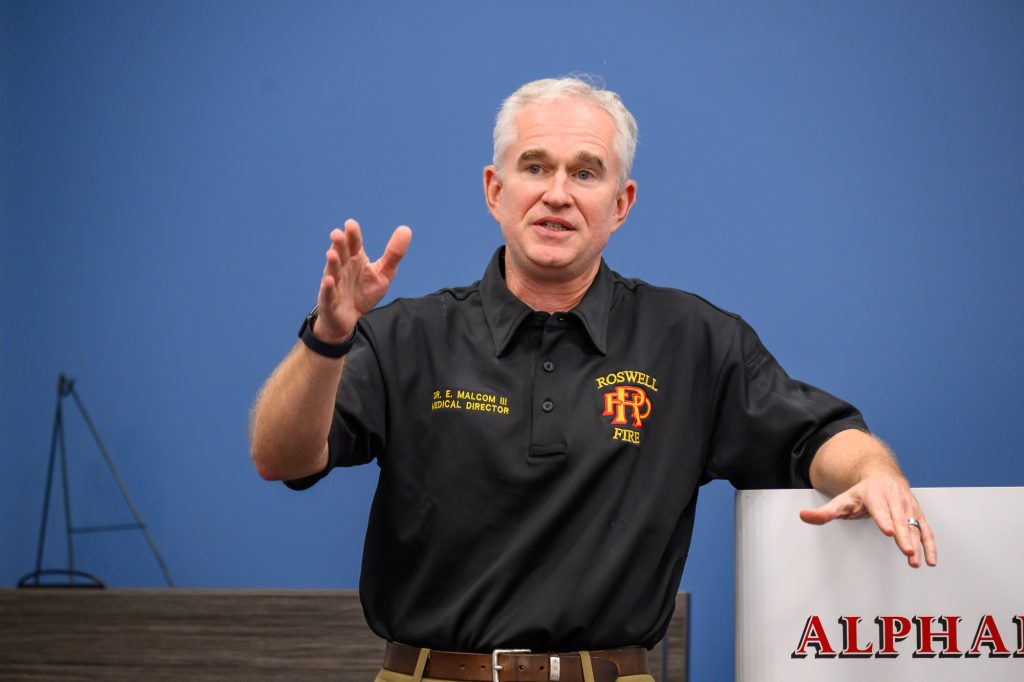
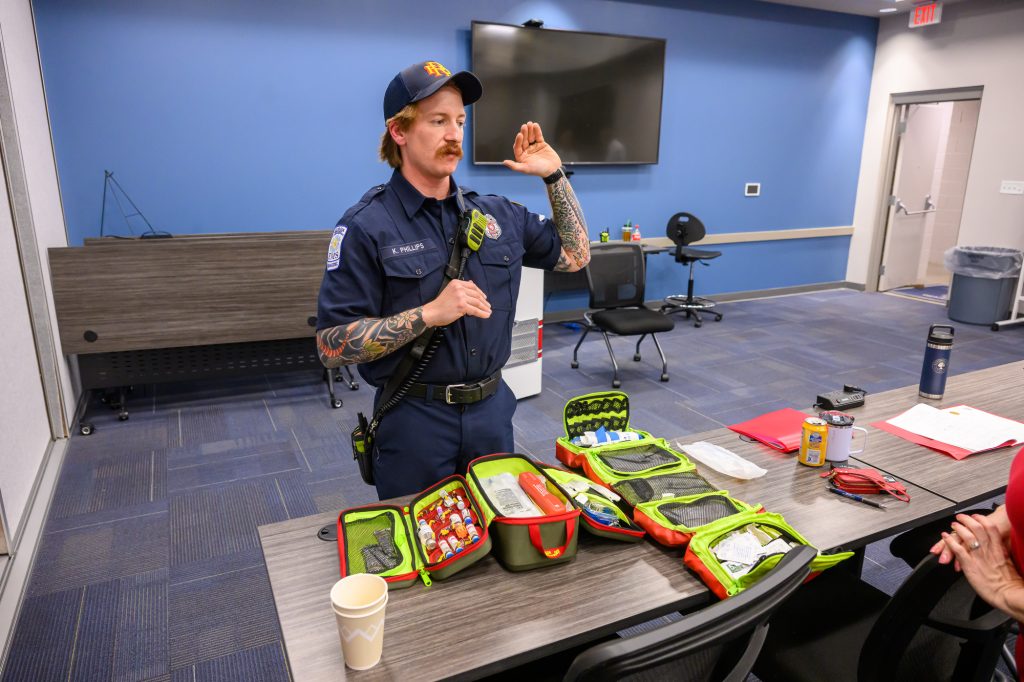
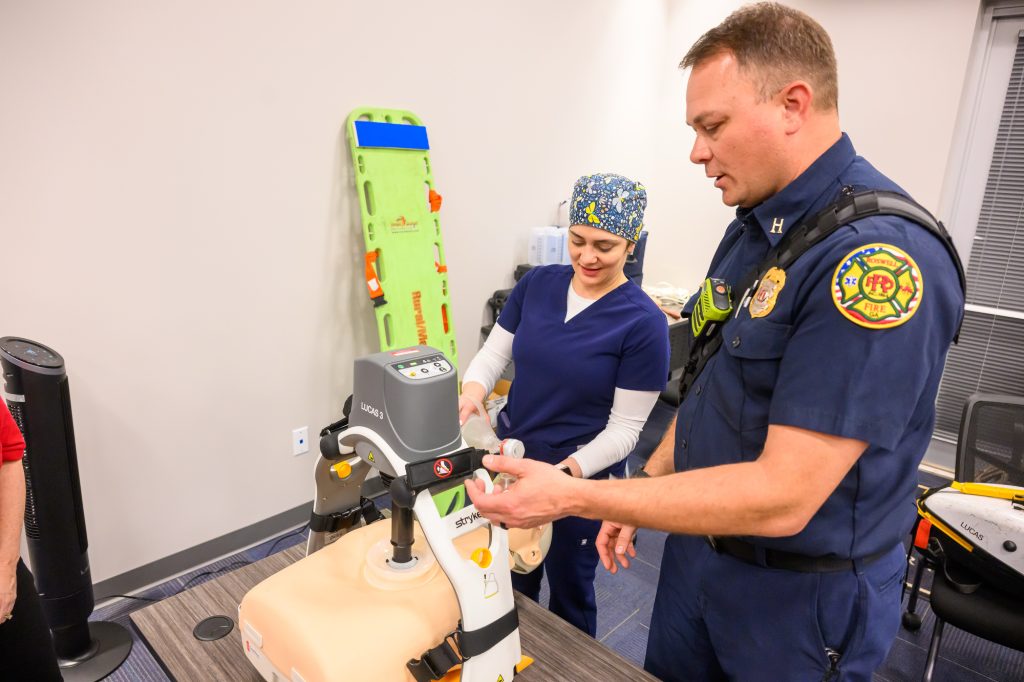
Battalion Chief DeWayne Campbell led the evening with help from the team at Station 22, including Captain Anthony Witchousky, Firefighter Kyle Phillips, Roswell City Nurse Virginia Hames, Captain Bryan Thomas, and others. We also heard from the department’s Medical Director, Dr. E. Malcolm III, who explained the critical role a medical director plays in EMS systems.

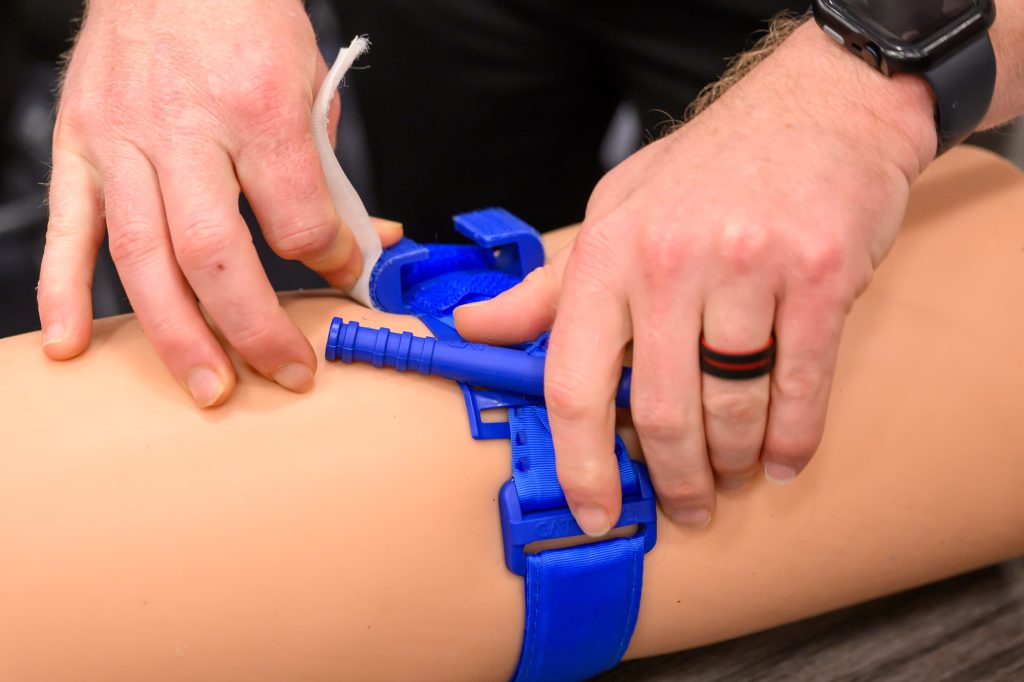
They walked us through the different levels of EMT training and the paramedic level, showed us the tools and medications they use in the field, and demonstrated how they are used during real emergencies. Then we got to try some of it ourselves.

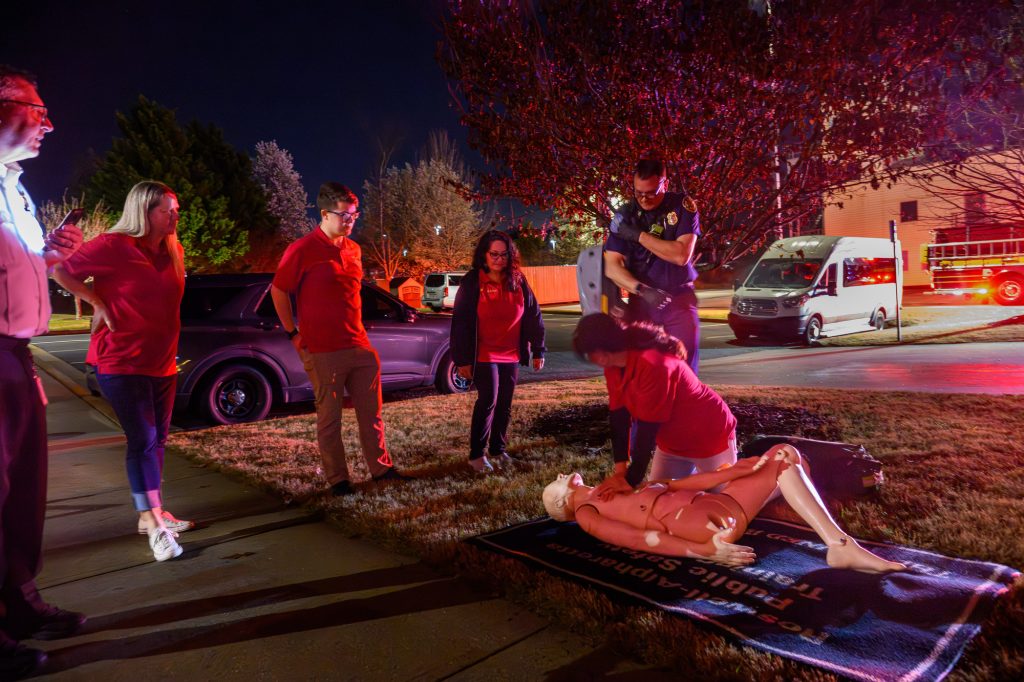
The night ended with a realistic scenario. A person was unconscious, and someone from our class had to take charge—directing one person to call 911, another to retrieve the AED, and starting CPR. As we rotated through roles, the fire engine arrived, and the EMS team took over. Watching them move from assessment to treatment with the equipment we had just learned about was incredibly impressive.

What struck me most was the depth of knowledge and experience these professionals possess. The more questions we asked, the more it became clear how deep their training really goes.

I left feeling grateful—and honestly lucky—to live in Roswell, Georgia, where the first responders are this well-trained and this committed to saving lives.


Why This Matters for Storytelling

This experience has reminded me of something I often teach:

Stories are everywhere—you just have to be paying attention.

The Citizens’ Fire Academy isn’t a marketing campaign. It’s simply a program designed to help residents understand their fire department.

But within every class are:

  • real people
  • real expertise
  • real moments of learning
  • real examples of service

Those are the ingredients of powerful storytelling.

By photographing and sharing these moments, I’m doing two things at once.


1. Helping the Fire Department Tell Their Story

Most organizations—especially public service agencies—are incredibly busy doing their work. Telling their story often falls to the bottom of the list.

By sharing what I’m seeing and learning, I’m helping shine a light on:

  • The training firefighters go through
  • The technology they are testing
  • The professionalism of the team
  • The importance of community preparedness

It’s a small way of giving back to the department that serves our city.


2. Demonstrating My Own Storytelling Skills

At the same time, these posts are quietly doing something else.

They’re showing how I work as a storyteller.

Instead of simply saying, “I’m a storyteller,” people are seeing it in action:

  • Identifying meaningful moments
  • Capturing photos that show what’s happening
  • Turning information into human stories
  • Sharing those stories in ways people want to read

In other words, the best marketing for storytelling is often telling stories.


Marketing Without Feeling Like Marketing

One of the challenges many photographers and communicators face is how to promote their work without constantly talking about themselves.

This experience has been a great reminder that the best marketing often focuses on someone else’s story.

When you highlight meaningful work happening around you:

  • The audience learns something valuable
  • The organization receives positive exposure
  • And your storytelling ability becomes visible in a natural way

It’s authentic, helpful, and far more engaging than simply posting, “Look at what I can do.”


A Grateful Student

I’m only partway through the Citizens’ Fire Academy, and already it has deepened my respect for the men and women who serve our community through the Roswell Fire Department.

It has also reminded me that great stories are often hiding in plain sight—in classrooms, training sessions, community programs, and everyday moments where people are serving others.

Sometimes all it takes is paying attention, picking up a camera, and sharing what you see.

And when you do that well, everyone benefits.

Tagged : /

When Photojournalists Forget the Words

Reading Time: 4 minutes

Over the years, I’ve noticed something interesting when photojournalists present their work at conferences or workshops.

Many of them rely heavily on writers to tell the story.

For this story, I selected photos from two of today’s top photojournalists, Doug Mills and Carol Guzy, who consistently put the subjects first. When they present, they don’t just show images—they tell the story of the people in their photos and then add the context that brings the work fully to life.

That’s not unusual in newsrooms. In newspapers and magazines, the partnership between a reporter and a photographer can be incredibly powerful. The writer provides depth, context, and explanation. The photographer provides the emotional entry point—the moment that pulls the reader into the story.

When it works well, the two are married together beautifully.

But something often gets lost when photographers present their work on their own.

They show powerful images on the screen, but the audience only hears fragments of the story. Instead of hearing about the people in the photos, the presentation becomes more about the photographer’s experience—how they got access, how hard the assignment was, or what challenges they faced making the picture.

Meanwhile, the audience is left trying to figure out what is actually happening in the story.

The problem is simple: the audience never saw the original package.

They didn’t see the full article that the writer produced. They didn’t read the background reporting. They didn’t get the captions in context with the larger narrative.

All they see is the photo.

And if the photographer doesn’t fill in the story, no one else will.

The Photographer Still Carries the Story

Even when a writer originally tells the story in print, the photographer still bears responsibility for it.

Why?

Because the images exist because of the people in them.

Photojournalists aren’t just creating interesting pictures. They are documenting someone else’s life, struggle, celebration, or moment in history. The photos only matter because of the human story behind them.

If we fail to tell that story when we have the microphone, we miss the very reason the photograph exists.

Don’t Let the Photos Become Window Dressing

Sometimes presentations unintentionally turn photographs into visual decoration.

The images serve as slides in the background while the photographer mostly talks about themselves.

But photojournalism was never meant to be about the photographer.

It’s about the subject.

The person whose life intersected with the camera.

When we show our work publicly, we are being trusted again with that person’s story. The least we can do is make sure the audience understands who they are and why their story matters.

Tell the Story First

One simple shift can make presentations far more powerful:

Tell the story first. Then share the backstory.

Introduce the people in the photographs.

Explain what is happening in their lives.

Help the audience understand the stakes, the emotions, and the context.

Once the audience understands the story, then it becomes meaningful to hear how the photographer found it, gained access, or overcame obstacles to document it.

But the story must come first.

Otherwise, the audience is just looking at pictures without understanding why they matter.

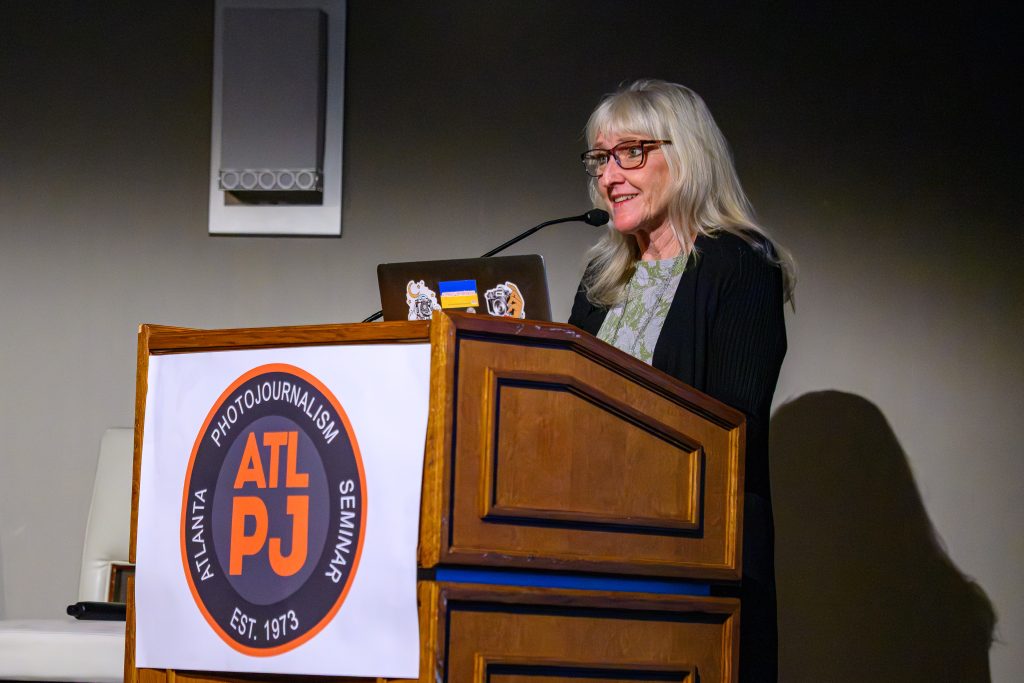
Carol Guzy speaks at the Atlanta Photojournalism Conference 2025, sharing the stories behind her photographs and reminding the audience that the power of photojournalism begins with the lives of the people in front of the lens.

Why Journalists Must Seize Every Opportunity to Tell the Story

Every time journalists speak publicly, they have an opportunity—and a responsibility—to tell the subject’s story.

There are several reasons why this matters.

First, many people will never encounter the original journalism.
Most stories today have a short life in print or online. A presentation may reach people who have never seen the article or publication where the work first appeared.

Second, storytelling preserves the dignity of the subject.
When we tell the full story, we help the audience see the person behind the photograph—not just the moment that was captured.

Third, it keeps journalism focused on its purpose.
Journalism exists to inform the public and help people understand the world around them. If the focus shifts entirely to the journalist, we’ve lost sight of that mission.

Finally, it honors the trust people gave us.
The people we photograph often allow us into vulnerable moments of their lives. When we share those images publicly, we owe it to them to make sure their story is told clearly and truthfully.

The Photograph Is the Doorway

A great photograph is often the doorway into a story.

It grabs attention. It creates curiosity. It invites people to ask questions.

But the photograph alone is rarely the whole story.

That’s where the journalist comes in.

When photographers stand in front of an audience, they are no longer just showing pictures. They are serving as the storyteller who helps the audience understand what they are seeing.

And when we do that well, the photographs become far more than images on a screen.

They become a window into someone else’s life.

Tagged : / /

Celebrating Visual Storytelling at UTC’s 10th Annual Photo Night

Reading Time: 4 minutes

Yesterday I had the privilege of being part of something special at the University of Tennessee at Chattanooga. The Communication Department hosted the 10th annual Photo Night, a celebration of visual storytelling that brought together professional photographers, filmmakers, students, and the Chattanooga community.

The day started with workshops where professionals shared their experiences and insights with students who are just beginning their journeys into visual storytelling. Events like this matter because they create space where working professionals can pass along both the craft and the heart behind the work.

The evening program, held in the Roland Hayes Concert Hall at UTC’s Fine Arts Center, felt a bit like a visual storytelling version of a late-night talk show. Each presenter shared stories from their work, giving the audience a glimpse into the moments behind the images.

The lineup of speakers reflected just how strong the storytelling community is:

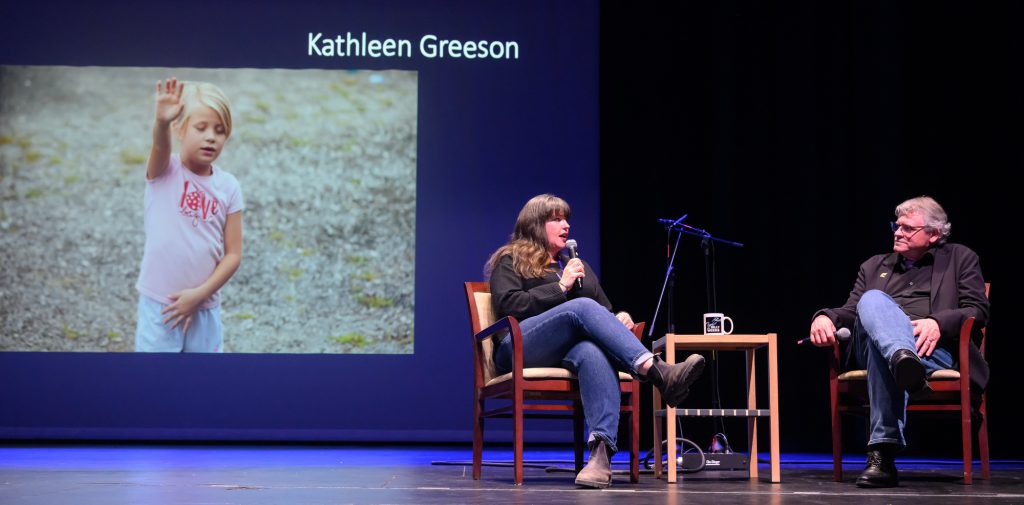
  • Kathleen Greeson, a Chattanooga documentarian and photographer whose work has explored important social issues, including her current long-form documentary project examining rural health and hospital closures in Tennessee.
  • Brynn Anderson of Associated Press, who regularly covers major sporting events around the world, including the Super Bowl, World Series, Olympics, and NCAA Final Four.
  • Chris Shaw, founder of Final Flash Productions.
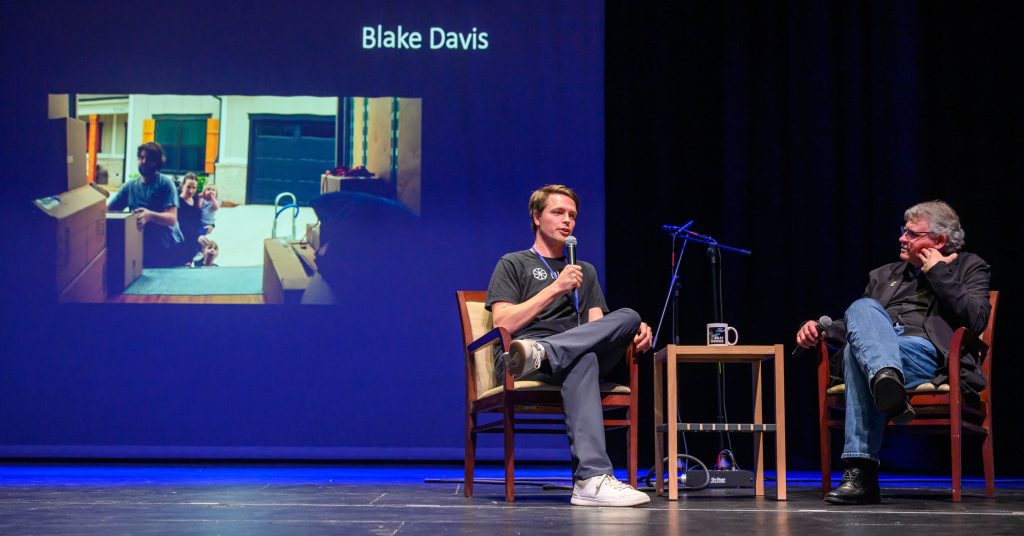
  • Blake Davis, founder of Bloom Video Production.
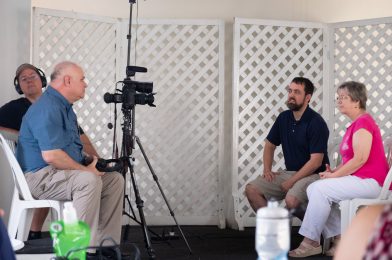
Billy Weeks interviews Chattanooga photojournalist and documentarian Kathleen Greeson during the 10th Annual Photo Night at the University of Tennessee at Chattanooga. Greeson shared insights from her career in visual storytelling and previewed her current long-form documentary project exploring rural health care and hospital closures across Tennessee.

The event was hosted by photojournalist and UTC lecturer Billy Weeks, who founded Photo Night and continues to lead the program. Billy often describes the evening as more of a storytelling show than a lecture, and that description fits perfectly.

But what makes Photo Night unique is that the students are truly the stars.

Billy Weeks interviews Blake Davis, founder of Bloom Video Production, during the 10th Annual Photo Night at the University of Tennessee at Chattanooga. Davis shared stories from his journey building a production company and discussed the creative and technical challenges of producing compelling video content for clients.

Throughout the evening, the audience saw students in UTC’s Rising Rock program produce their work. These stories are powerful examples of what happens when young storytellers are given mentorship, real-world experience, and the opportunity to pursue meaningful stories.

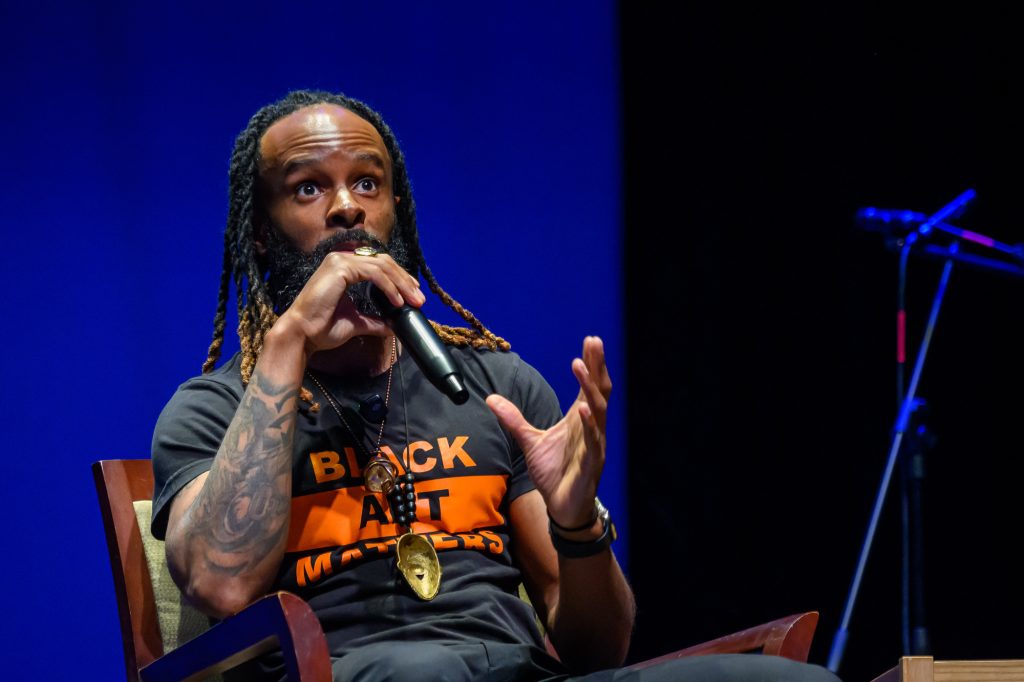
Chris Shaw, founder of Final Flash Productions, shares stories from his work during the 10th Annual Photo Night at the University of Tennessee at Chattanooga, giving the audience a behind-the-scenes look at the creative process and challenges of producing compelling visual stories.

More than 500 people attended the event, filling the hall with photographers, journalists, students, and members of the community. There were moments of laughter, moments of reflection, and stories that clearly moved the audience.

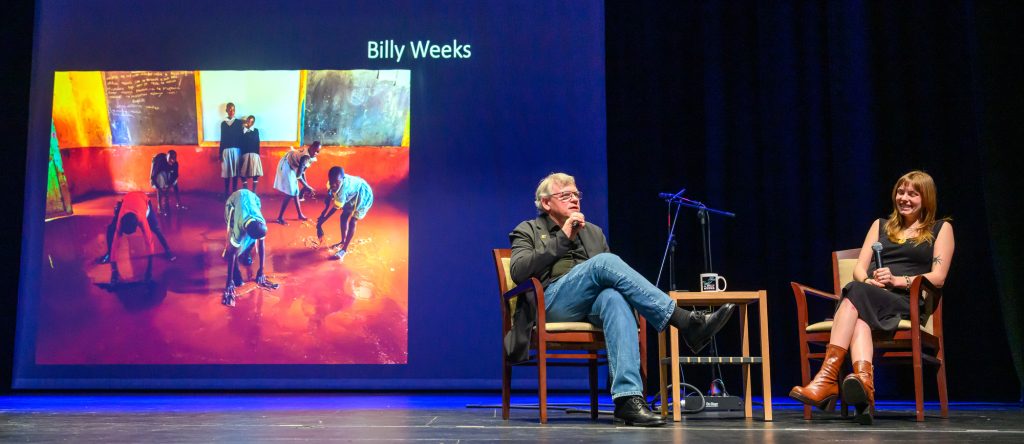
The tables were turned on Billy Weeks and Delaney Holman, head editor for Rising Rock, who interviews him, and here he is talking about a photo he took last summer in Kenya.

Billy summed it up best in a note he sent to the speakers afterward. He wrote that students were still talking the next day about what they saw—but more importantly about what they felt. For those of us who believe in the power of visual storytelling, that’s the real goal.

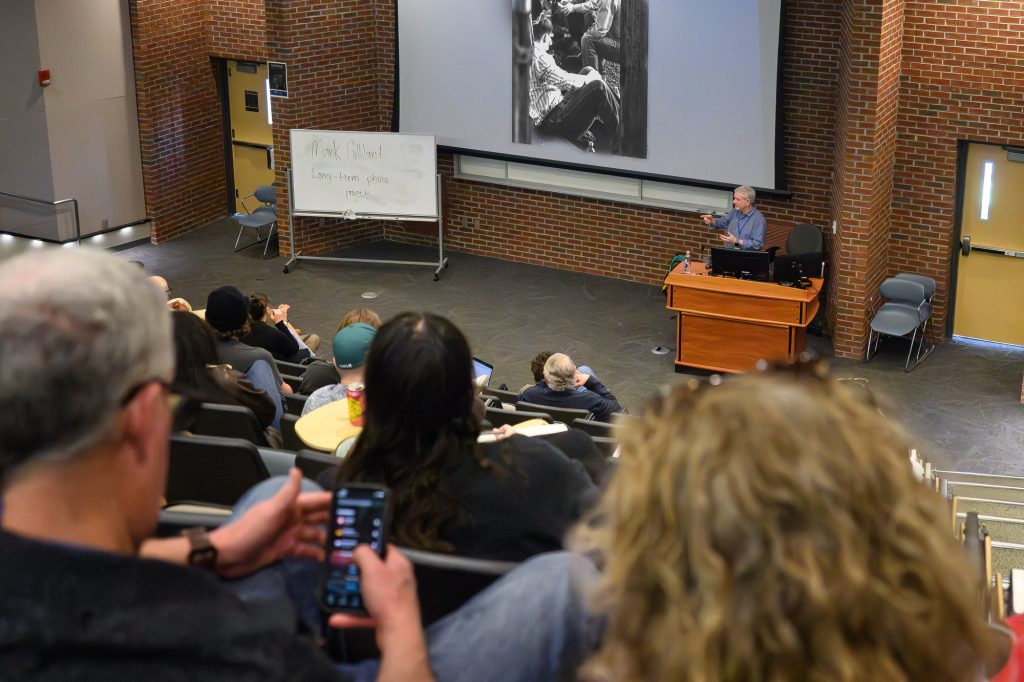
Mark Gilliland discusses his long-term documentary project on the rodeo in the Chattanooga, Tennessee, area over the past 25 years.

For me, it was a joy to share some of my own work and to spend time encouraging students preparing to enter the profession. After more than four decades working as a visual storyteller, I still believe one of the most important things we can do is invest in the next generation.

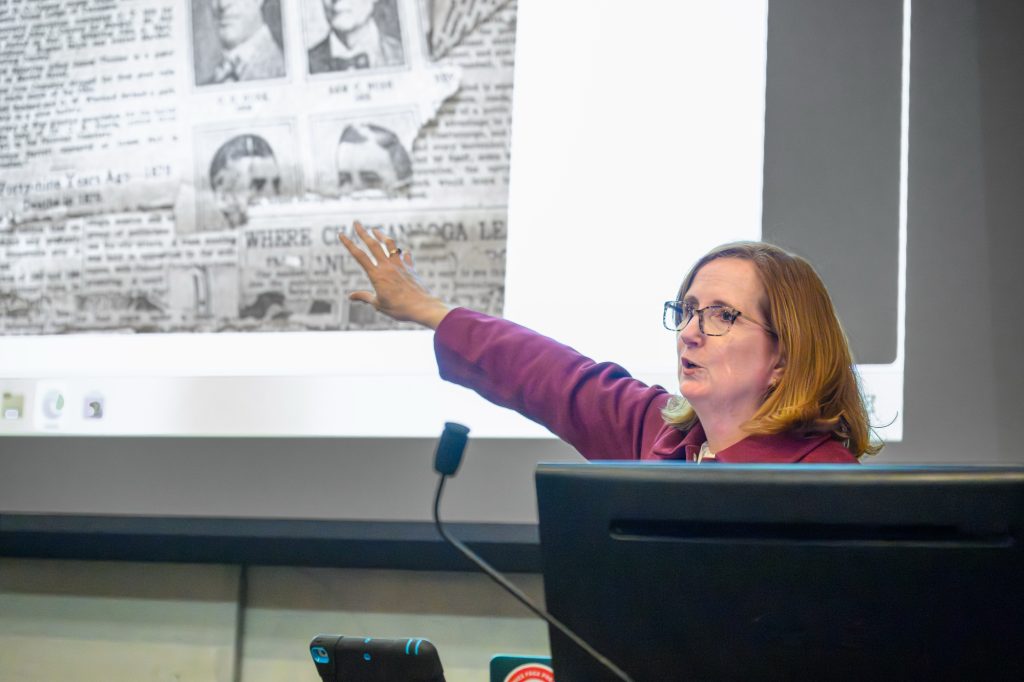
Alison Gerber, the editor of the Chattanooga Times Free Press, talks about where the industry is now in journalism, the emergence of “News Deserts,” and the many ways the industry is exploring to fund journalism going forward.

Photo Night has now celebrated ten years, and if last night was any indication, the future of visual storytelling is in very good hands.

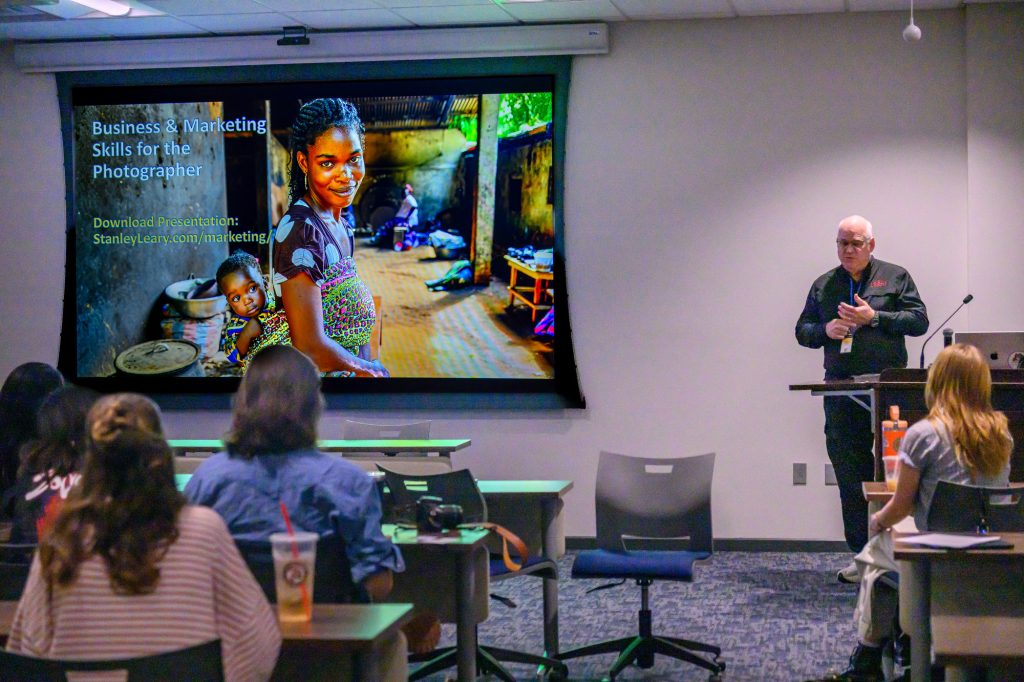
I was the first speaker at 9 am, presenting on Business and Marketing Skills for the Photographer.

Here is a link to the PDF of the presentation I made if you care to see it. https://stanleyleary.com/marketing/

Tagged : / /

What You Should Be Working on to Become a Photojournalist

Reading Time: 4 minutes

If you want to become a photojournalist, you need to understand something up front: this isn’t about taking pretty pictures. It’s about telling stories that make people feel something.

And that requires two things working together all the time—technical mastery and emotional intelligence.

Let’s start with the foundation.


Master the Technical First

Before anyone trusts you with their story, you have to prove you can handle the tools.

You should be completely comfortable with:

  • Shooting in manual mode
  • Working in changing light
  • Using on-camera flash
  • Using off-camera flash
  • Balancing ambient and strobe
  • Freezing action and working with motion blur
  • Exposing for skin tones in difficult environments

Flash, especially, is something many new photographers avoid. Don’t. Learn it. Master it. Understand how to shape light, control direction, and create depth. If you can walk into a dimly lit room and confidently light a scene without overpowering it, you’re already ahead of most beginners.

Technical skill builds confidence. But it doesn’t build a connection.

That’s the next step.


Don’t Just Practice Photography — Create a Photo Story

One of the best things you can do is produce a photo story about something you genuinely care about.

Not because it will go viral.
Not because it will win awards.
But because you care.

People will not hire you to cover their passions until they see that you can cover a story with emotional depth. They don’t want a collection of well-exposed images. They want to see that you understand how to engage a viewer.

And here’s the key:

A photo story is not just a checklist.

It’s not simply an assignment where you gather a few wide shots, a couple of details, and a portrait.

It’s about emotion.

Memorial Day @ Georgia National Cemetery

The Difference Between a Shot List and a Story

Now, let’s be clear—shot lists matter.

A strong photojournalist understands narrative structure and plans accordingly. A solid shot list for a story typically includes:

  • Establishing Shot (Wide Shot): Sets the scene and gives context.
  • Medium Shots: Connects the viewer to the subject and shows activity.
  • Tight/Detail Shots: Adds emotional depth and meaningful context.
  • Portrait(s): Captures the key individual(s), often in their environment.
  • Action/Interaction Shot: Shows movement, behavior, and purpose.
  • Conclusion Shot: Brings closure to the narrative arc.

You also want variety—high angles, low angles, eye level. You research beforehand. You anticipate moments.

That’s good journalism.

But here’s where many beginners stop: they check off the list and think they’ve told a story.

They haven’t.

They’ve gathered parts.

A story emerges when those parts work together emotionally.


Susan Fonseca, who was helping with translations and organization for the President of Honduras, Juan Orlando Hernández, takes a selfie with the CEO of Delta Air Lines, Ed Bastian.

Why Emotion Matters (And What Simon Sinek Teaches Us)

I often think about this through the lens of Simon Sinek and his “Golden Circle” concept—Why, How, What.

He connects this idea to how our brains work:

  • The Neocortex handles rational thought and language. That’s the “What.”
  • The Limbic System drives feelings, trust, loyalty, and decision-making. That’s the “Why” and the “How.”

Here’s the fascinating part: the limbic system has no capacity for language. That’s why we say, “It just feels right,” but struggle to explain why.

When you communicate from the outside in, what do you first appeal to? Logic.

When you communicate from the inside out, why first—you appeal to emotion.

Great photojournalism works the same way.

If your images only communicate the “What,” viewers may understand the information.

But if your images communicate the “Why,” they feel it.

And feeling drives action.

Publications, nonprofits, brands—they all need images that move people emotionally. That’s what influences decisions, donations, loyalty, and trust.


Jesus & Gloria say goodbye to their son before the funeral service for Jesus Fonseca, Jr.

Treat Every Assignment Like a Story

Whether you’re covering a football game, a city council meeting, a nonprofit event, or a portrait session—approach it like an essay.

An assignment is often defined by the client’s needs:

  • “We need a headshot.”
  • “We need event coverage.”
  • “We need photos for the website.”

A story asks deeper questions:

  • What’s at stake?
  • Who is affected?
  • What emotion defines this moment?
  • Why should anyone care?

When I shoot, I absolutely work through the shot list in my head. I want my wide, medium, tight, action, portrait, and closing frames.

But I’m not just checking boxes.

I’m watching faces.
I’m listening to the tone.
I’m paying attention to body language.
I’m waiting for the moment when the story reveals itself.

That’s when journalism happens.


Start Narrow. Then Expand.

Photojournalists are asked to cover everything—politics, sports, features, breaking news, and human interest.

That can feel overwhelming.

Start with one area. Master it. Build depth. Learn how to tell that type of story well.

Then expand.

Over time, your portfolio should show range—but each section should still demonstrate emotional depth, not just technical competence.


The Biggest Thing Missing in Most Beginner Portfolios

If I had to name the number one thing lacking in most new photojournalists’ portfolios, it’s this:

Emotional connection.

The images are sharp.
The exposure is solid.
The composition is fine.

But I don’t feel anything.

The photographer never stepped into the story. They never allowed themselves to feel it first.

You cannot photograph emotion you refuse to experience.

The craft of photojournalism is learning to recognize those emotional beats in real time—and then having the technical skill to capture them when they happen.

That’s the intersection.

Feel the story.
Recognize the moment.
Use your technical mastery to preserve it.

When you can do that consistently, you’re not just taking pictures.

You’re telling stories people can’t ignore.

Tagged : /

When the Phone Stops Ringing: A Hard Season Many Storytellers Face

Reading Time: 3 minutes

There’s a moment many photographers, videographers, and storytellers eventually experience—but almost no one talks about it publicly.

A major client goes quiet.
Another one disappears entirely.
Calls aren’t returned. Emails go unanswered.
Work you assumed would continue… just stops.

I’ve had this happen to me more than once in my career. And I’ve been doing this a long time.

When it happens the first time, it feels personal. When it happens again, it can feel crushing—especially if you’re supporting a family, dipping into savings, or watching your spouse step in to help carry the load.

This post isn’t about quick fixes or spiritual clichés. It’s about what actually helps in seasons like this.


First: This Is Not a Failure of Faith or Talent

Let’s say this clearly.

When a client disappears, it does not mean:

  • You’ve lost your edge
  • God is displeased
  • You missed your calling
  • Your work suddenly became irrelevant

Creative work—especially storytelling work—lives at the intersection of budgets, leadership changes, economic shifts, and internal politics you will never see.

Silence from a client is often about them, not you.

I’ve learned this the hard way.


Stabilize Before You Spiritualize

Faith and stewardship are not opposites.

Before asking “What is God teaching me?” it’s wise to ask:

  • What do we actually need to survive the next 3–6 months?
  • What expenses can be paused, reduced, or renegotiated?
  • What brings in any income right now?

Temporary or adjacent work is not giving up—it’s buying time.

Scripture is full of faithful people doing practical work while waiting. Paul made tents. That wasn’t a detour from his calling—it was a provision.


Stop Chasing Silence

One of the most emotionally draining mistakes creatives make is endlessly chasing a client who has gone quiet.

Silence is an answer.

Write a clean, professional closure email (not emotional, not accusatory):

“Just closing the loop. If things change in the future, I’d be glad to reconnect. Wishing you well.”

Then stop. Not in anger. Not in bitterness. Just in wisdom. Then mentally and practically release them. This frees energy.

Energy spent chasing ghosts is energy stolen from rebuilding.


Diversify So This Doesn’t Break You Again

Diversify now, not when things feel safe

This season revealed a structural weakness: revenue concentration.

Tangible actions:

  • Create 3–5 small, clearly defined offers that solve specific problems (not “I do video”).
    • Example:
      • One-day brand story shoot
      • Monthly content package for small orgs
      • Testimony/interview storytelling for churches & nonprofits
      • Editing-only services for agencies
  • Price them so they are easy to say yes to, even if margins are thinner in the short term.
  • Aim for 10 smaller clients instead of 2 big ones.

Stability often comes from boring consistency, not big wins.


Lean on Relationships, Not Algorithms

Cold marketing drains energy when someone is already discouraged.

This week you should:

  • Personally contact 10 people you already know (past clients, pastors, comms directors, agency producers).
  • The message is simple: “I’m taking on new work right now and would love to help if there’s a need. If you know someone who could use storytelling or video help, I’d appreciate a connection.”

No apologizing. No oversharing. Just clarity.


Teach, Consult, or Coach While You Rebuild

Many storytellers forget this:

Your value is not limited to the camera in your hands.

If you’ve spent years learning how stories work, you can:

  • Consult on story clarity
  • Help organizations refine messaging
  • Teach workshops
  • Coach younger creatives

In difficult seasons, wisdom often becomes income before creativity does.


Guard Your Identity Carefully

This may be the most important work of all.

When income drops, it’s easy to confuse provision with worth.
To confuse silence with abandonment.
To confuse waiting with failure.

Waiting is not inactivity.
It is preparation with humility.

If you’re in this season:

  • Keep a daily rhythm
  • Stay connected to people
  • Let others carry you when you’re tired

This chapter is not the end of your story.


A Final Word From Experience

Every time I’ve walked through a season like this, something painful but necessary happened:

Illusions were stripped away.
Clarity increased.
My work became more grounded.
My faith became quieter—but stronger.

I wouldn’t choose these seasons.
But I no longer fear them.

If you’re walking through one now, you are not alone—and you are not behind.

Sometimes the phone stops ringing…
not to end the story,
but to reshape it.

Tagged : /

Why Being a Great Journalist Doesn’t Automatically Make You a Great Organizational Storyteller

Reading Time: 3 minutes

Back in 2008, when Greg Thompson—then Director of Corporate Communications at Chick-fil-A—asked me to come on as a visual communications consultant, he didn’t just want pretty pictures. He wanted results. And the question he kept asking me until it finally clicked was this:

“How is this proposal going to help operators and Chick-fil-A sell more chicken?”

That’s a tough question for a storyteller whose background was solidly in journalism, where the audience was familiar, and the objective was simply to inform or enlighten. But in corporate and strategic communications, you have to know two things before you ever begin crafting a story:

  1. Who is the audience?
  2. Why should they care?

Without those answers, you’re just creating content for content’s sake.

AJ Harper’s “Reader First” Philosophy

Author and editor AJ Harper teaches a powerful idea in her book Write a Must-Read: Craft a Book That Changes Lives—Including Your Own:

“A book is not about something–a book is for someone.”

That insight is simple, but it’s gold when you apply it beyond books—especially in business communications. AJ’s point is that even if you have a wealth of knowledge or ideas (and most storytellers do), writing for yourself or about your topic isn’t what makes a book transformative. It’s writing for the person whose life you want to change.

Another quote from the book that really applies to corporate storytelling is this:

“You are not the hero of this book. They are. You are not the focus of this book. They are. And they need you to help them get where they want to go.”

Replace “book” with “presentation” or “campaign,” and this becomes a strategic lens for every story you tell for leadership and clients.

Why C-Suite Executives Ask Tough Questions

When a Chick-fil-A operator, or a CEO, asks, “Why should I stop and look at this?”, what they’re really asking is:

  • How does this move the business forward?
  • What problem does it solve?
  • What result does it deliver?

They’re not interested in your genius unless it’s directly tied to something measurable, like revenue, engagement, operational efficiency, reputation, or competitive advantage.

That’s why shifting from what you want to say to what they care about is so valuable.

Applying the “Reader First” Mindset to Strategy Conversations

Here’s how to operationalize AJ Harper’s ideas with executives:

1. Define the audience upfront.
Just like AJ says, you should know your ideal reader before you write a book; you must know the decision-maker and their priorities before you tell a strategic story.

Instead of broad demographics, think about psychographics—their goals, fears, and what success looks like to them. Harper emphasizes this in her work: your reader’s problem, desire, and challenges are what unify them, not superficial traits.

2. Find the strategic hook.
Greg’s question, “How does this help sell more chicken?” was essentially asking for a strategic hook—a clear, measurable reason someone should pay attention. Harper would call this aligning your promise with your reader’s expectations.

3. Ask the right shaping questions.
One of the best habits I picked up was asking teams, “When we’re done, what does success look like to you?” That simple question forces people to define goals before they start shaping content around them.

4. Tell the story that delivers on that promise.
AJ puts a huge emphasis on delivering on your promise—if your book promises transformation and then fails to deliver, readers don’t trust you. The same is true of business stories. If your communications promise clarity, insight, or decision support, your story must follow through, or you lose credibility.

Storytelling That Meets Strategic Needs

Journalists are trained to think about the audience, but in many editorial environments, the audience rarely changes. In higher ed communications, the shift from recruiting to alumni to investors was a step in the right direction. But corporate communications requires an even sharper focus on what a specific stakeholder needs right now.

When you do that, you flip the question from:

“What do I want to say?”

to:

“What do they need to hear?”

And that’s where storytelling becomes a strategic asset instead of just creative output.

Tagged : /

A New Year’s Resolution for Photographers:

Reading Time: 4 minutes

Stop Trying to Get Better Photos and Start Communicating Better Stories

The beginning of a new year is when photographers tend to do two things:

We look at our work from last year with a mix of pride and frustration.
We start wondering what will finally improve our photography this year.

For many, the default answer is familiar—new gear, new presets, new techniques, new inspiration.

But if I had to recommend one New Year’s resolution that will actually move the needle for photographers at any stage, it would be this:

Stop trying to get better photos and start communicating better stories.

That may sound subtle, but it’s a fundamental shift—and it changes everything.


Better Photos Aren’t the Same as Better Communication

Most photographers I meet aren’t struggling with technical competence.
They know how to expose correctly. They understand lenses. They can produce sharp, well-lit images.

Yet the work still feels flat.

That’s because a technically strong photo can still fail to communicate anything meaningful.

As photographer David duChemin puts it:

“A photograph is not made in the camera but on either side of it.”

What happens before and after you press the shutter matters far more than the moment itself.

Better photos don’t come from more megapixels or sharper lenses.
They come from clarity—about what you’re trying to say and who you’re trying to reach.


The Shift Most Photographers Avoid

Photography culture trains us to chase improvement through acquisition:

  • New camera bodies
  • Faster lenses
  • The latest accessory everyone is talking about

There’s nothing wrong with tools. I enjoy good tools.
But tools don’t create meaning—intent does.

Henri Cartier-Bresson said it this way:

“Photography is the simultaneous recognition, in a fraction of a second, of the significance of an event.”

Notice he didn’t say sharpness, resolution, or dynamic range.
He said something significant.

That’s the part most photographers skip over.


Story Is What Gives a Photo Staying Power

A strong story doesn’t just make a photo more interesting—it makes it memorable.

Think about the images that have stayed with you over the years.
They aren’t necessarily the most technically perfect ones.
They’re the images that made you feel something, understand something, or see something differently.

Photojournalist W. Eugene Smith once said:

“I try to let the picture say what it feels like to be there.”

That’s storytelling.
And storytelling begins long before the camera is turned on.


What Communicating Better Stories Actually Looks Like

If this is your New Year’s resolution, it doesn’t mean shooting less seriously.
It means shooting more deliberately.

Here are a few practical shifts that make a real difference:

1. Start Asking Better Questions

Before a shoot—or even before raising your camera—ask:

  • What is this really about?
  • Who is this for?
  • What do I want someone to feel or understand?

Those questions shape your decisions far more than camera settings ever will.


Togo, West Africa

2. Stop Photographing Moments and Start Photographing Meaning

Moments happen constantly. Meaning takes effort to recognize.

Jay Maisel summed it up perfectly:

“You shoot with your eyes and your heart, not with your camera.”

That means paying attention to relationships, tension, emotion, and context—not just what looks interesting on the surface.


3. Edit Like a Storyteller, Not a Collector

One of the biggest breakthroughs for photographers comes during editing.

Storytelling isn’t about how many good images you made—it’s about which images you choose to show and how they work together.

As Ansel Adams famously said:

“Twelve significant photographs in any one year is a good crop.”

Most photographers don’t need to shoot more.
They need to choose better.


Why This Resolution Matters Now

At the beginning of the year, it’s easy to promise big changes:

  • More shooting
  • More posting
  • More productivity

But improvement doesn’t come from doing more.
It comes from doing what you already do with greater purpose.

When you focus on communicating better stories:

  • Your images become more intentional
  • Your work becomes more consistent
  • Your photography starts to serve something beyond itself

And whether you’re a hobbyist, a working professional, or somewhere in between, that’s where real growth happens.


Make This a Foundational Resolution

If you only make one photography resolution this year, let it be this one.

Not:

  • Better gear
  • More followers
  • More likes

But clearer stories.
Stronger communication.
Greater intention.

Everything else builds on that.

And from here, this idea can easily expand into a short January series:

  • How to find the story before you shoot
  • Why editing is where storytelling really happens
  • Learning to see people, not just pictures

But it all starts with this simple shift.

Stop trying to get better photos.
Start communicating better stories.

That’s a resolution worth keeping.

Tagged : /

What Music Taught Me—and What Many Photographers Are Missing

Reading Time: 3 minutes

When I was playing trumpet in school, there was no confusion about where I stood.

We challenged for chairs. First chair, second chair, third chair. Everyone knew their place because we had to prove it. You didn’t get a chair by confidence or by opinion—you earned it by playing better than the person next to you.

And more importantly, you listened.

You listened to the conductor. You listened to the ensemble. You listened to your teacher. If you didn’t, the music fell apart—and everyone knew it.

In college, I became a better trumpet player and found myself surrounded by even better musicians. That environment was humbling, but it was also clarifying. I remember learning Haydn’s Trumpet Concerto. I worked hard, learned the notes, played them cleanly, and brought them to my teacher.

When I finished, he said something I’ve never forgotten:

“Now you’re ready to learn how to play it.”

That moment taught me a lesson that has shaped my entire career, both in music and in photography.

Technical competence is only the beginning.

In music, technical mastery is the price of admission—not the goal.

You don’t get praised for hitting the notes. You get invited into expression, phrasing, tone, and interpretation after you’ve proven you can handle the basics. No one confuses competence with mastery.

Photography, however, often does.

Modern cameras have removed many technical barriers. Autofocus is incredible. Exposure is forgiving. The tools are accessible—and that’s a gift. But it’s also created a dangerous illusion: that making something look “good” means you’ve arrived.

In music, you’d never assume that.

Photography lacks the structure that forms humility

One of the most significant differences between music and photography is structure.

Music has:

  • Auditions
  • Chairs
  • Conductors
  • Ensembles
  • Clear standards
  • Immediate consequences

Photography often has:

  • Likes
  • Followers
  • Algorithms
  • Self-appointed mentors

There’s no equivalent of chair challenges in photography. No conductor to submit to. No ensemble that collapses when one person is out of time or out of tune. Because of that, many photographers never learn to listen—only to assert.

And when you don’t have to listen, you don’t have to grow.

The problem isn’t confidence—it’s formation

This isn’t about ego. It’s about formation.

In music, you are formed by critique. You are shaped by people who are better than you. You are constantly reminded that someone else hears things you haven’t yet heard.

In photography, many skip that stage entirely.

They may call themselves teachers, mentors, or coaches, but they’ve never been intensely mentored themselves. They’ve never submitted their work to rigorous critique. They’ve never stood in a room where they were clearly not the best—and had to learn anyway.

In music, you can’t avoid that.
In photography, you can.

What my photography mentors gave me

The photographers who shaped me most were the ones who functioned like conductors.

They didn’t just teach me how to use a camera. They taught me:

  • How to see
  • How to wait
  • How to listen to a story before telling it
  • How to accept correction without defensiveness

They didn’t flatter me. They challenged me. They told me when something wasn’t working—and why. And they helped me understand that doing something correctly is very different from doing it well.

That mindset came directly from music.

Why so many photographers stall

Many photographers plateau not because they lack talent, but because they’ve never learned to submit to the craft.

They want expression without discipline.
Recognition without critique.
Authority without accountability.

In music, those shortcuts don’t exist.

You don’t get to solo just because you feel called to it.
You don’t lead just because you want to.
You don’t stop learning because you finally hit all the notes.

The lesson music taught me—and photography confirmed

If you’re not listening, you’re not improving.

That applies to musicians.
It applies to photographers.
It applies to storytellers.
It applies to leaders.

The photographers who grow the most are the ones who eventually embrace what musicians learn early: that mastery requires humility, structure, and people who hear what you cannot yet hear.

The rest may make noise.
But they’ll never really make music.

Tagged : /

When Technical Mastery Is No Longer the Differentiator

Reading Time: 4 minutes

When Technical Mastery Is No Longer the Differentiator

There was a time when a photographer’s reputation rose or fell on technical proficiency.

If you could consistently nail focus, exposure, timing, and composition—especially under challenging conditions—you stood apart. Your skill set wasn’t standard, and your results proved it.

Wildlife photography is a perfect example.

Back in the film days, capturing a bird in flight that was sharp, well-exposed, and properly framed was incredibly difficult. Autofocus systems were slow. Film latitude was unforgiving. Motor drives typically gave you five frames per second, if you were lucky. You waited, anticipated, committed—and hoped.

Today? You’re shooting 20–30 frames per second. Eye-detect autofocus tracks flawlessly. Exposure is nailed automatically. From a single pass of a bird, you might come home with 40 or 60 frames that are all technically perfect.

The challenge has shifted.

You’re no longer asking, Did I get it?

You’re asking, Which one says it best?

When Perfect Is the Starting Line

Modern cameras have flattened the technical playing field. Sharpness, exposure, and color accuracy are no longer rare skills—they’re default outcomes. That doesn’t diminish photography, but it does redefine what separates meaningful work from forgettable images.

When everything is technically correct, the question becomes:

  • Does this image communicate something?
  • Does it move the story forward?
  • Does it reveal relationship, tension, purpose, or meaning?

This is where many conversations drift toward “creativity” or “artistry.” And while that’s not wrong, it can be vague and unhelpful.

The Roswell Criterium

As a storyteller, I see the shift differently.

The real differentiator today isn’t creativity for creativity’s sake—it’s intentional storytelling.

Story First, Camera Second

Great storytelling photography starts long before the shutter is pressed.

Memorial Day @ Georgia National Cemetery

It starts with understanding:

  • Who is this story about?
  • What is actually happening beneath the surface?
  • What moments matter most?
  • Where do light, space, and timing intersect with meaning?

Once you know the story, your job is to position yourself—physically and mentally—to capture it.

That means:

  • Choosing light that supports the emotion
  • Selecting compositions that remove distraction
  • Anticipating moments instead of reacting to them
  • Working the scene, not just standing in front of it

Technical perfection gives you freedom. A story gives you direction.

Philip with his grandfather, Floyd Newberry.

Building a Visual Storyline

When photographers think like storytellers, they stop chasing single “hero shots” and start building narratives. This applies whether you’re photographing a nonprofit, a business, a wedding, a mission trip, or wildlife.

Here’s how different types of images work together to tell a complete story:

Opener
Sets the scene. Establishes place, mood, and context. It answers the question: Where are we, and why does it matter?

Decisive Moment
This image can stand alone. One frame that captures the heart of the story—the moment where emotion, action, and meaning converge.

Details
Often overlooked, these images are visual punctuation. They slow the pace, add texture, and support transitions—especially in multimedia storytelling. Details invite viewers closer.

Sequences
A short series of images that shows progression or change. Sequences add rhythm and variety, helping the viewer experience movement and time.

High Overall Shot
Pulls back to show how all the elements relate. This perspective gives clarity and scale, helping the viewer understand the bigger picture.

Portraits
Portraits introduce the characters. They humanize the story and create a connection. Without them, the story lacks an anchor.

Closer
The visual conclusion. It doesn’t have to be literal or predictable. A strong closer leaves the viewer with reflection, resolution, or a sense of continuation beyond the frame.

When you shoot with these roles in mind, you stop overshooting and start seeing.

Memorial Day @ Georgia National Cemetery

Feeling the Story, Not Just Seeing It

What ultimately separates strong storytelling photographs from competent ones isn’t gear, speed, or even experience—it’s emotional awareness.

The most compelling images are made by photographers who are emotionally present.

That begins with empathy. When you genuinely care about the people or subject you’re photographing, you start to anticipate moments rather than chase them. You recognize when something meaningful is about to happen because you understand what’s at stake.

It continues with observation. Emotional moments rarely announce themselves. They show up in small gestures, pauses, expressions, and interactions. Photographers who slow down and truly watch are the ones who catch them.

There’s also an element of self-awareness. The more you understand your own emotions, the better you recognize them in others. Storytelling photography isn’t just about documenting what’s happening—it’s about interpreting it with honesty.

Engagement matters too. When people trust you, they relax. When they relax, real moments surface. Connection creates access.

And finally, there’s presence. Being fully in the moment—undistracted, unhurried—allows you to respond intuitively. Technical mastery fades into the background, and instinct takes over.

The New Measure of Competence

Today, technical skill is assumed.

What clients, editors, and audiences respond to is whether your images mean something.

Can you:

  • Understand the story before you arrive?
  • Recognize the moments that matter?
  • Build a visual narrative instead of a highlight reel?
  • Deliver images that feel honest, human, and intentional?

Modern cameras can do incredible things.

But they can’t listen. They can’t empathize. They can’t understand the purpose.

That part is still entirely up to you.

And that’s where storytelling photographers continue to stand apart.

Tagged : /

How My Upbringing, Autism, and Photojournalism Shaped How I Connect with People

Reading Time: 2 minutes

Growing up as the son of a pastor and a mother who supported his work, I was surrounded by people who genuinely cared about others. My parents weren’t just interested in names or titles—they were interested in gifts, talents, and the unique ways people could serve God. They asked questions, noticed details, and encouraged those around them to step into their calling. From a young age, I saw the power of paying attention to people beyond the surface.

At the same time, my experience as someone with autism shaped how I interacted with the world. I identify strongly with the Asperger’s description—often more comfortable observing than immediately joining in, drawn to patterns, and deeply focused on understanding details that others might overlook. While this could make social interactions challenging, it also gave me a unique lens through which to see people.

That lens became even more refined through my work as a photojournalist. My job was to capture a person’s story through images—to see the life behind the face. This required more than technical skill; it required listening, paying attention, and asking questions in ways that allowed someone to open up. Over time, I learned that when people feel truly heard, when their story is sought and valued, something remarkable happens—they feel seen.

Today, I notice that even in small conversations, I carry this same curiosity. I want to know people’s stories, not just their jobs, hometowns, or favorite sports teams. I’ve noticed that few people seem genuinely interested in these deeper layers, but when I take the time to ask and listen, the conversation transforms. People respond differently—they open up, relax, and share parts of themselves that rarely come out in casual chatter.

This approach doesn’t just apply to photography or formal interviews. It’s how I try to live my life: with curiosity, patience, and a genuine interest in others. I’ve found that this practice, shaped by my upbringing, my autism, and my photojournalism work, creates connection in a way that surface-level conversation rarely can. It’s not about extracting information; it’s about honoring the person in front of me and the story they carry.

In a world that often rushes through interactions, I’ve learned the value of slowing down, listening, and letting people be seen. And the more I do this, the more I realize that connection—the kind that leaves a mark—comes not from talking, but from listening.

Tagged : /