James Nachtwey speaking at the Atlanta Photojournalism Seminar, 2024. Hearing him share his life’s work reminded me why I chose this profession. His courage, empathy, and relentless pursuit of truth have shaped generations of visual storytellers — myself included. But what James did can’t be repeated. His path was uniquely his — forged by moments, conflicts, and convictions that only he could have lived. The best way we can honor that is not by trying to walk his road, but by finding our own stories to tell with the same integrity and compassion.
I’ve sat through countless presentations by incredible photographers — people whose work makes you want to grab your camera and run out the door to create something just as powerful. But I’ve learned over the years: those speakers aren’t giving you a map to follow. They’re showing you what’s possible.
Their stories are meant to inspire you, not to be copied by you.
Each has walked a road filled with unique experiences, challenges, and opportunities that shaped who they are as visual storytellers. You can learn from their techniques, admire their vision, and even borrow bits of their wisdom — but you can’t (and shouldn’t) try to live their story.
Photography is deeply personal. What you bring to a frame — your perspective, values, and curiosity— makes your work different from everyone else’s.
So as you sit in on talks or workshops, listen closely. Take notes. Let their stories spark something inside you. But when you pick up your camera again, make work that’s true to you.
“Don’t be a second-rate version of someone else; be a first-rate version of yourself.” — Judy Garland
Let their stories light your fire, not draw your outline. Your path will look different — and that’s precisely the point.
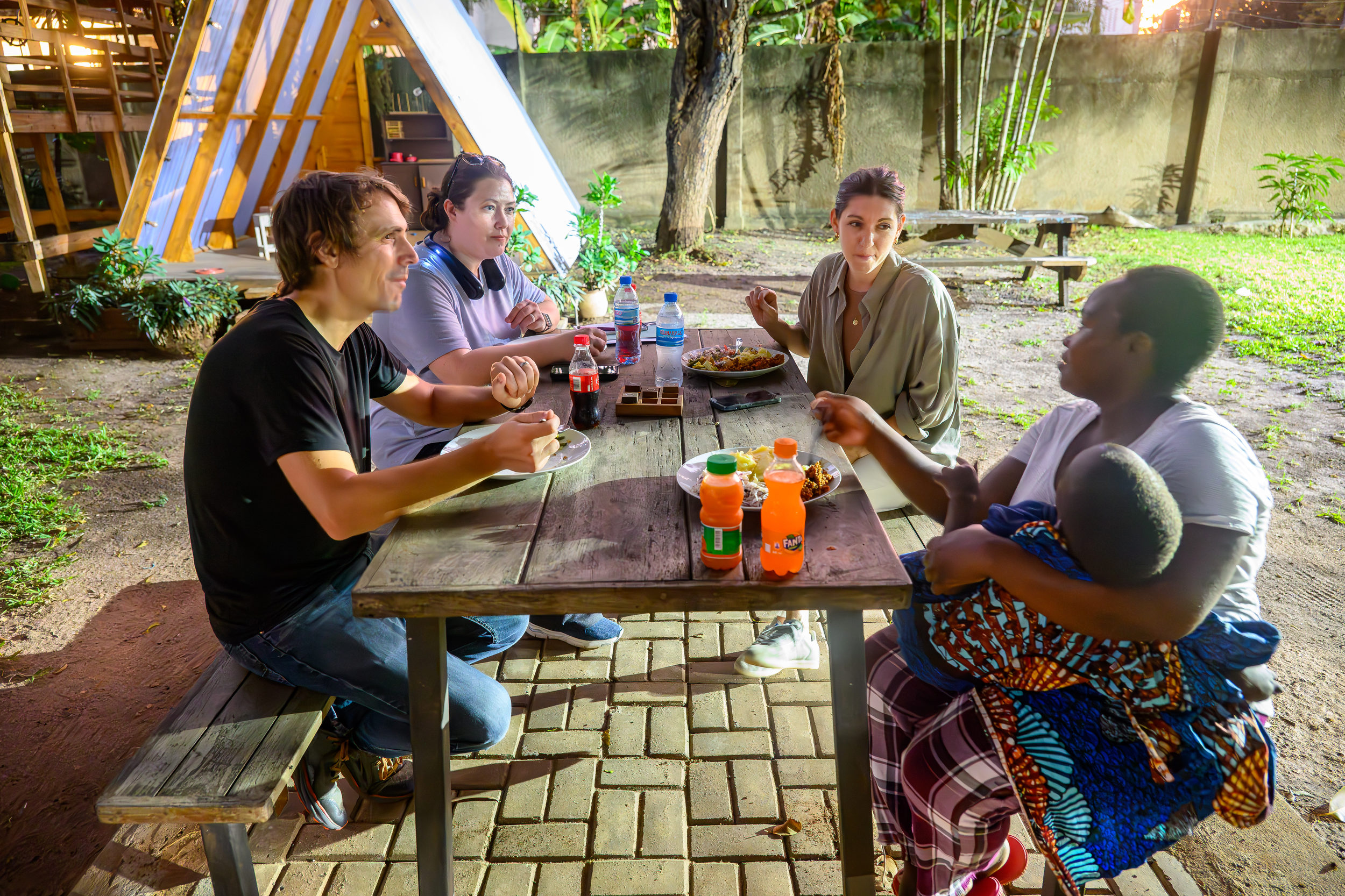
Alicia Sparkman and Jordan Timpy sit down with missionary Brittany James and Mama Daniel for the first time, sharing a meal and uncovering the layers of Mama Daniel’s story. In this heartfelt two-hour conversation, even Brittany learned new details about Mama Daniel’s journey, deepening the connection and setting the stage for the powerful video to come.
In collaboration with the Tanzania Missionary Team, our journey started by defining the ultimate goal of our visit through the Storytellers Abroad Missions Multimedia Workshop. Like many organizations I’ve worked with, their initial desire was to showcase the breadth of their efforts. In this case, they ran six different programs, all worth highlighting.
However, after they detailed all their activities, I asked, “Once people hear this, what do you want them to do?”
That’s when we honed in on the fundamental objectives for the video. The mission team needed ongoing support to keep their families in the field, funding for their main property, and their newly acquired farm, which they hoped would offset operational costs. Additionally, they wanted to raise money for scholarships to extend their outreach further.
Our workshop focuses on creating 70% inspirational and 30% informational videos. We acknowledged that some videos flip that ratio, but our approach emphasizes the human element—evoking emotion before providing information.
One of the key programs they wanted to highlight was the Dar Health Initiative, which addresses various aspects of community health, including education and prenatal care. This led us to an incredible story about Pendo Saidi and her son Daniel, a woman the missionaries had helped through this initiative. The missionaries worked closely with mother and son, providing health care and emotional and spiritual support.
The Story Spine is very much like the ingredients of a cake; the baker still has to make the cake.
After understanding the story, I crafted a Story Spine, or outline, for Alicia Sparkman, one of the participants creating her first video in the workshop. She teamed up with veteran storyteller Jordan Timpy to bring this story to life. Together, they sat down with Pendo Saidi and missionary Brittany James, uncovering more about their journey.
The story immediately touched everyone involved, moving Alicia and the rest of the team to tears. Pendo Saidi’s life—marked by loss, as her husband left her because of Daniel’s condition—could easily be an epic on its own. However, we had a clear focus: The story wasn’t just about Pendo Saidi. It was also about missionary Brittany James’ role in Daniel’s healthcare and Pendo Saidi’s spiritual growth.
While we captured many profound moments, we made the tough decision to trim certain parts, including the emotional scene where Pendo Saidi forgave her husband for abandoning the family. Though it was a powerful moment, keeping it would have extended the video beyond the ideal length for engagement.
Alicia Sparkman works on her video in Adobe Premiere with veteran storyteller Jordan Timpy’s guidance. In our workshops, there’s a lot of back-and-forth with coaches, significantly when cutting content. It’s tough for newcomers to let go of great material, but learning to make those tough decisions ultimately strengthens the story, making it more impactful.
For videos like these, shorter is often better. Based on current trends, most viewers tend to lose interest after the two-minute mark. While more complex stories can stretch to five minutes, we aim for concise, emotionally engaging content.
Our workshop kicked off on Friday with dinner, introducing us to the nationals at the heart of the stories. By Thursday night, we were screening our final videos for the missionaries, the community, and the nationals.
Gathered together for a special evening, missionaries and the communities they serve watched as we unveiled the three stories we created to help them in their marketing. Surrounded by friends and families, the nationals who shared their powerful testimonies took center stage, bringing their inspiring journeys to life on screen—a heartfelt celebration over dinner, united by stories of faith and transformation.
Alicia had the benefit of working closely with Jordan all week, receiving personalized guidance on how to cut unnecessary material and focus on completing a compelling story within our short timeframe. There were many tear-filled moments along the way as we navigated the emotional weight of this story.
Now, I invite you to watch the finished video. I believe it achieves the objectives we set out to accomplish. Let me know what you think, and feel free to share if it resonates with you.
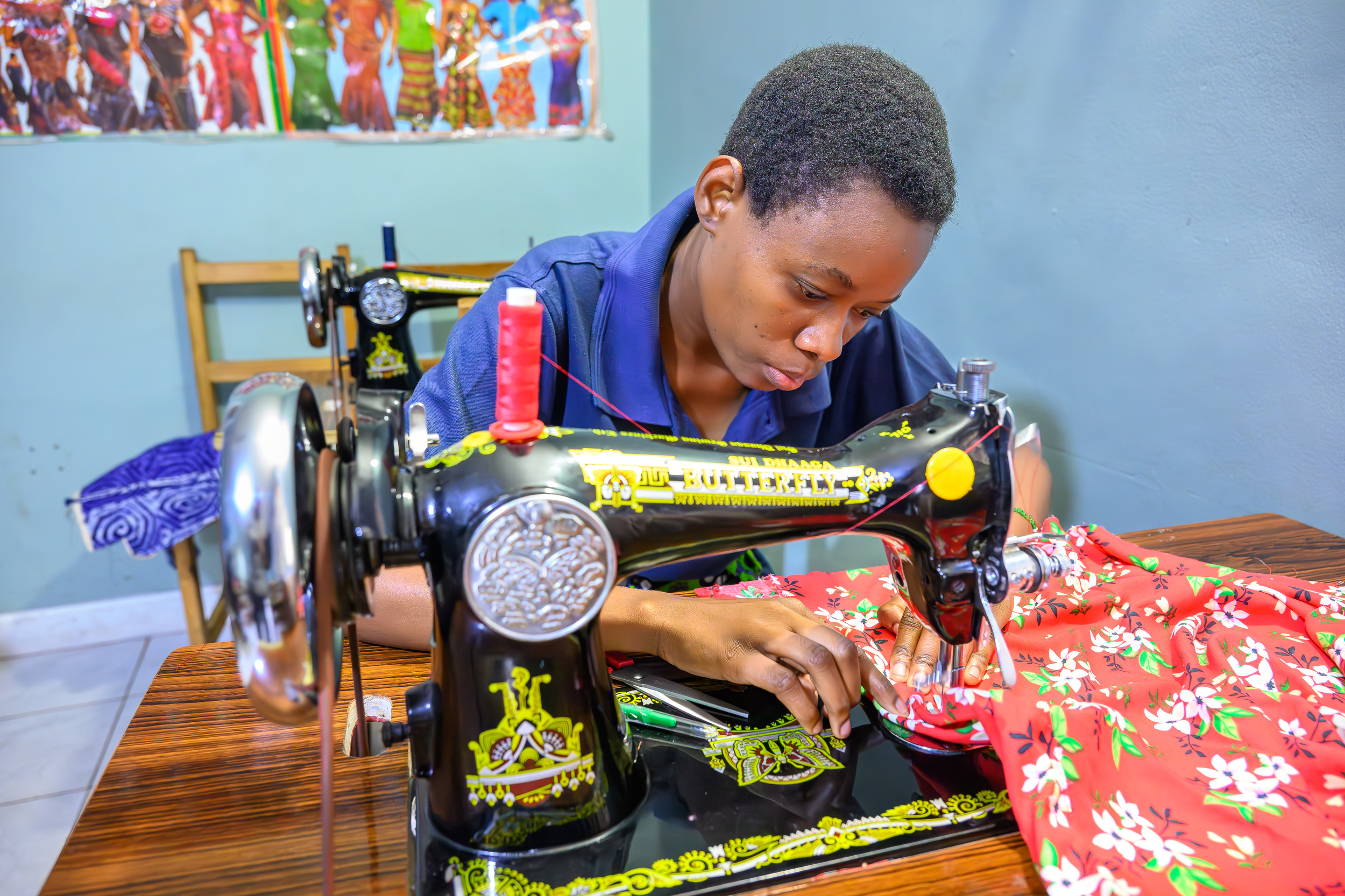
Raysham, hard at work on her sewing machine, is part of the SIFA Program that empowers women to become successful business owners, investing back into their communities. Faith-driven and gospel-centered, SIFA equips women with the tools to transform lives in Dar es Salaam and East Africa.
“Please, God, don’t send me to Africa.”
That’s what Ken Robinson had been saying since feeling a call to missions as a teenager. Yet, just a couple of weeks ago, Ken found himself in Dar es Salaam, Tanzania, with me and six others as part of the Storytellers Abroad Missions Multimedia Workshop.
This is Ken in Santiago, Chile, working on his video in his first ever video and workshop.
Ken’s journey into multimedia began in 2019 when he took a leap of faith and joined our workshop in Santiago, Chile. That’s when I first met him. As an IT professional, Ken has always been deeply connected to technology. He even volunteers at his church, helping with IT and media every Sunday. The technical side of multimedia came naturally to him, but when it came to working with people, that was a different story.
Ken is the kind of person who’s comfortable behind the scenes, ensuring that PowerPoint slides run smoothly and the Wi-Fi is working. Stepping into the world of storytelling, especially getting up close to his subjects, was out of his comfort zone.
Ken & Cassie are polishing his video on Jamilah.
During the Tanzania workshop, we paired Ken with Cassie Timpy, a veteran storyteller, as his coach. Cassie’s mission was to push Ken out of the background and into a more personal space with his subject, Jamilah. Ken had some understandable apprehension, mainly because he was a man telling the story of a single woman. I intentionally paired him with Cassie for this very reason.
As Ken sat down with Jamilah, alongside missionaries Shantelle Meta and Steph Boon, he began to listen and understand her story. Slowly but surely, Ken’s hesitations started to fade. His excitement for the project grew, but Cassie kept encouraging him to move physically closer to capture better, more intimate footage. It was a challenge, but Ken embraced it despite the discomfort.
The result is a touching and powerful video about the SIFA Threads program, one of the many initiatives run by ABWE missionaries in Tanzania to spread the Gospel.
I invite you to watch Ken’s video, Sewing Threads of Hope, and learn more about the incredible work happening through SIFA Threads and how it brings hope to the lives of many in Tanzania.
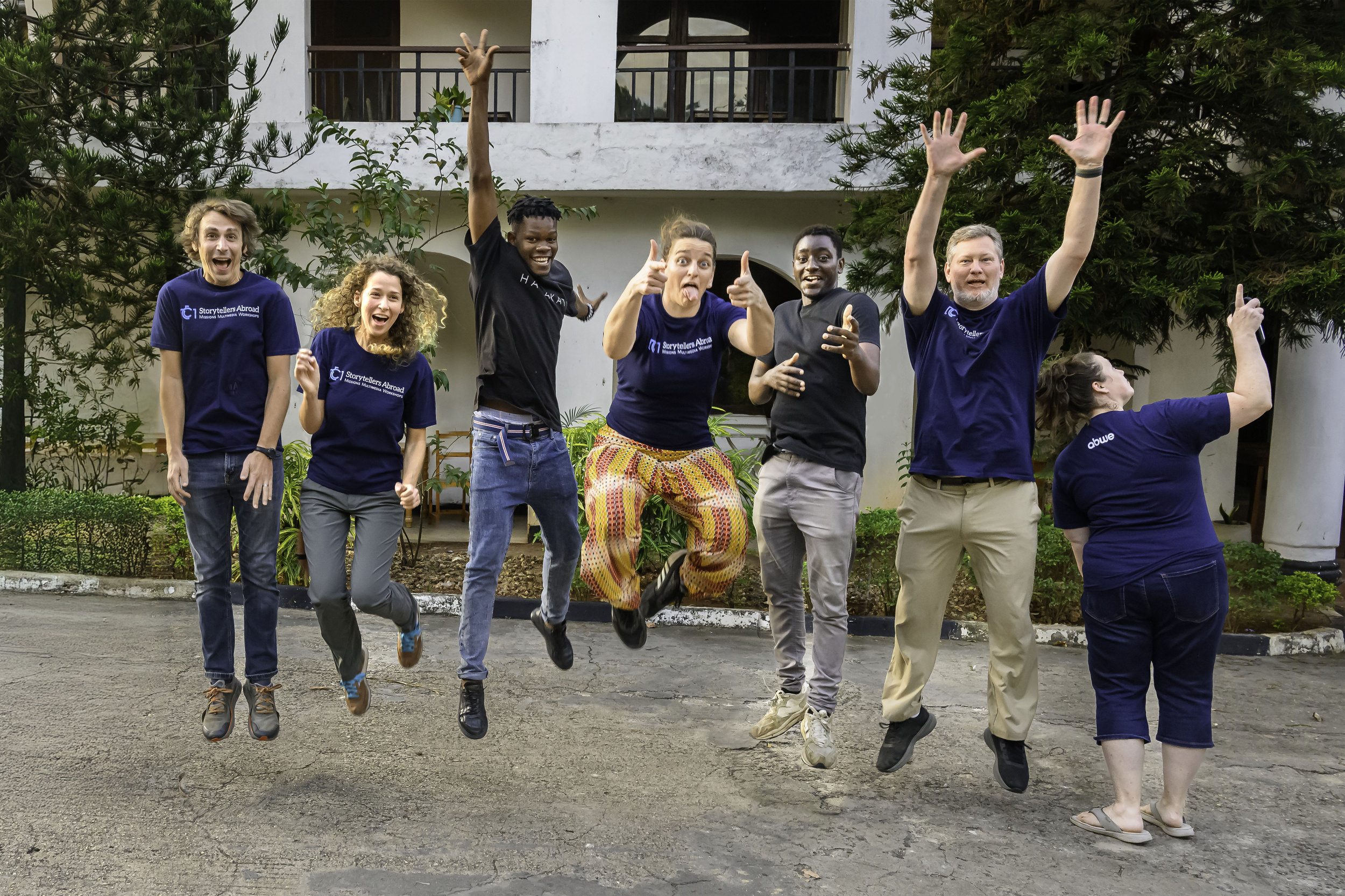
It’s hard to believe that ten years have passed since our first Storytellers Abroad workshop in Lisbon, Portugal. This week, we find ourselves in Dar es Salaam, Tanzania, reflecting on how far we’ve come—and how much we continue to learn with each new workshop.
One of the biggest takeaways from our journey is the importance of continuous improvement. We tweak our process with each workshop based on the lessons learned from the previous one. And this year, we’ve seen the most significant evolution yet.
Children run from their Sunday School class to church in Ilala Municipal, Dar-es-Salaam, Tanzania.
The Power of Preparation: Crafting Story Outlines Early
For the first time, we arrived in Tanzania with a story outline prepared for each storyteller. Having these outlines ahead of time transformed the storytelling process. Before even hitting record, the storyteller, their coach, and the missionary sat down with the story’s subject—one of the local nationals—to connect with them. This wasn’t just about gathering facts and understanding the story’s heart.
After spending two hours building this relationship and getting familiar with the narrative, we scheduled the formal interview for the following day—the depth of connection from that initial meeting allowed for a more authentic and meaningful interview.
These women are learning how to sew to start their businesses. Sifa invests in women so they can become successful small business owners who, in turn, will invest in their communities. We are faith-based, gospel-centered, and driven by a desire to see the tools of Sifa used in the hands of women, churches, and businesses in Dar es Salaam and throughout East Africa.
Bridging Language Gaps: Capturing Authenticity in Translation
Conducting the interviews in Swahili, with missionaries serving as translators, we faced the challenge of ensuring that the essence of the story essence of the story wasn’t lost in translation. In previous workshops, we struggled with software that provided word-for-word transliterations rather than capturing the true meaning behind the words.
This time, we used ChatGPT to translate the Swahili captions into English—and the results were astounding. For the first time, we achieved a translation that didn’t just deliver words but conveyed the heart of the message. The difference between a mere translation and an understanding of intent was pivotal.
Of course, we didn’t stop there. A professional translator reviewed the captions, ironing out minor hiccups, such as stutters or non-verbal sounds.
SIFA Program
Connecting the Audience: Building Bridges Through Storytelling
With the translated interview in hand, we collaborated with the ABWE organization’s editor to ensure that the final story resonated with our intended audience: U.S. church communities. It was crucial to create a narrative thread that linked the missionaries’ work with the nationals’ experiences in a way that would inspire and engage the viewers back home.
Coaching and Crafting the Visuals
Each storyteller worked closely with a coach throughout the workshop, from story inception to the final edit. Now that the stories were captured, the focus shifted to visual storytelling—creating a shot list for B-roll footage. This supporting imagery adds another layer to the story, helping to immerse the audience and visually convey narrative aspects that words alone cannot.
She created a pattern using a stamp, dipping it into wax and putting it over the fabric to keep the dye from staining. After dying, she will wash to remove the wax, giving a beautiful pattern for creating fabric to sew.
Editing on the Ground: Bringing It All Together
We spent the afternoons and full days immersed in Adobe Premiere Pro, editing the stories while still in Tanzania. After an initial round of edits, we will share the videos with the class for feedback. Once any adjustments are made, we will present the final versions to the community.
A Breakthrough Moment
This year, more than ever before, everything flowed. Having clear storylines before filming allowed us to focus on capturing the visuals and creating an emotionally resonant experience for the audience. The clarity and preparation made the entire workshop smoother and more fulfilling than any other.
There’s such joy in witnessing how the power of visual storytelling continues to grow, evolve, and connect people from different walks of life. Here’s to the next ten years of stories yet to be told!
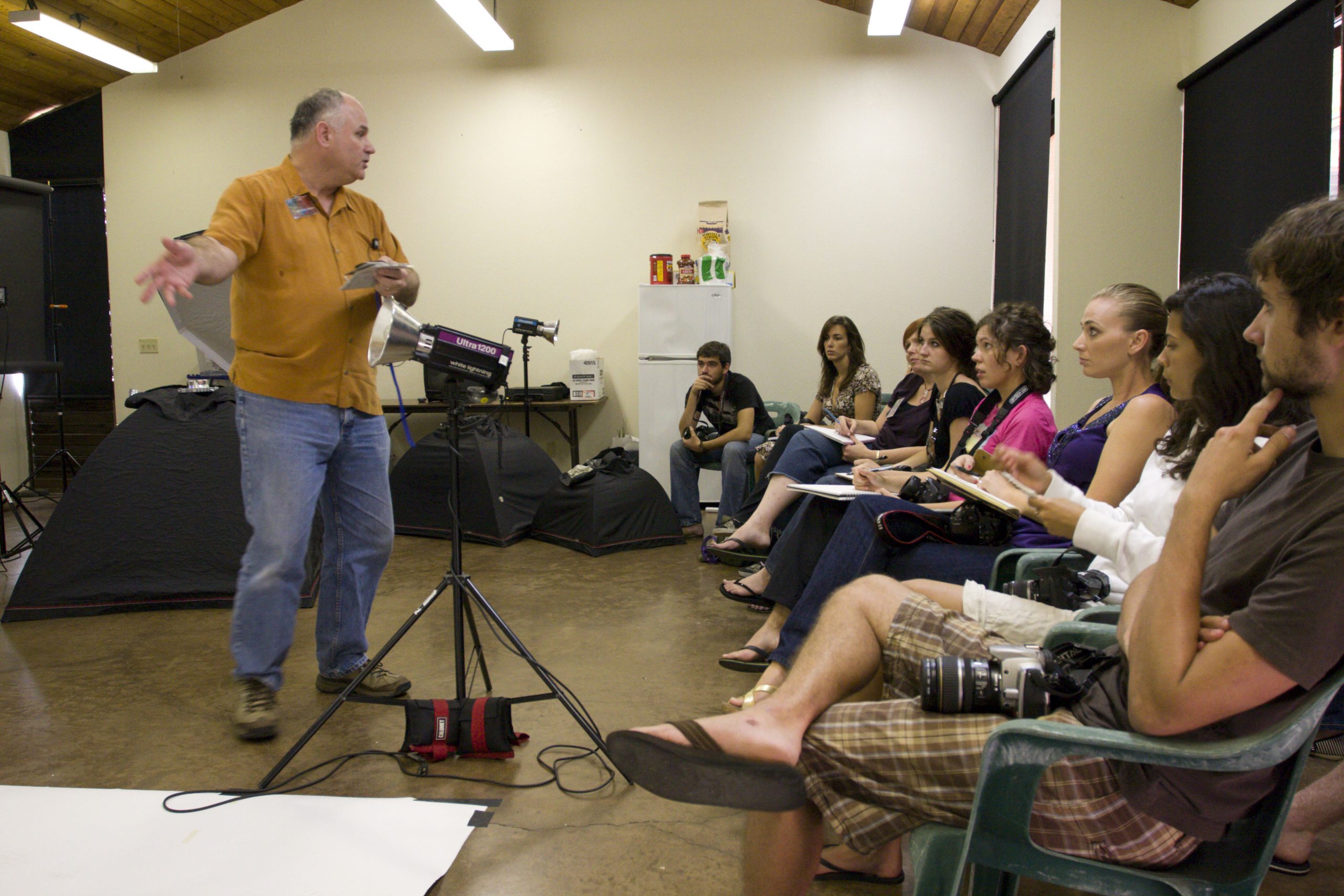
Stanley is speaking to the YWAM School of Photography in Kona, Hawaii. Photo by Dennis Fahringer
When asked to speak to a camera club composed mainly of amateurs, many thoughts run through the mind of a professional photographer. These invitations are both an honor and a responsibility. It’s a chance to share knowledge, inspire others, and give back to the photography community. Here’s a peek into the thought process of preparing for such a talk.
Tailoring the Presentation
One of the first steps is understanding the audience. I always start by asking the organizer:
Which topics do you think your camera club is most interested in hearing from me about? Once you pick, I can send you a synopsis.
Some of the topics I suggest include:
The Power of Storytelling in Photography: This is a central theme in impactful photography and resonates universally.
Lighting Techniques for Impactful Photography: Mastering lighting is crucial, making this a valuable topic for all photographers.
Creating Emotional Connections Through Portrait Photography: Improving portrait skills and capturing genuine emotions is always in demand.
Brand Building Through Visual Storytelling: Essential for those looking to commercialize their photography skills.
Travel Photography: Capturing Stories from Around the World: An exciting topic that appeals to hobbyists and professionals.
The Business of Photography: Practical advice for turning a hobby into a business.
Videography for Photographers: Expanding Your Skills: As videography gains importance, this topic can help photographers broaden their skill set.
Faith and Photography: Using Your Talents for a Greater Purpose: This is particularly meaningful for those interested in faith-based or nonprofit work.
Knowing the Audience
To deliver a meaningful talk, it’s crucial to understand the club’s dynamics:
What do the members like to shoot? This helps tailor examples and anecdotes to their interests.
How often do they shoot? Understanding their commitment level can guide the depth of technical details.
Is the camera club a social group or focused on growth? This insight shapes the tone and content of the presentation.
Crafting the Message
I strive to avoid talking down to the audience. Instead, I share my experiences and the stories behind my epiphanies. Here are additional considerations for a successful presentation:
Engage with Stories: Personal stories and real-life examples make the content relatable and memorable.
Provide Practical Tips: Offer actionable advice that attendees can immediately apply to their photography.
Encourage Interaction: Foster a dialogue rather than a monologue. Q&A sessions and interactive segments can be highly effective.
Showcase a Variety of Work: Diverse examples can inspire and appeal to a broader audience.
Highlight Mistakes and Learnings: Sharing mistakes and lessons learned can encourage and educate amateurs.
Inspiring Improvement
Finally, I aim to inspire and motivate the club members to improve their photography. Here are some tips to achieve this:
Emphasize Practice: Encourage regular practice and experimentation.
Advocate for Feedback: Suggest seeking constructive criticism to grow and improve.
Highlight Learning Resources: Point them to workshops, online courses, and photography books.
Promote Community: Encourage them to engage with each other, share work, and learn collaboratively.
Conclusion
Speaking to a camera club of amateurs is a rewarding experience that requires thoughtful preparation and a genuine desire to share knowledge. A professional photographer can make a lasting impact by understanding the audience, crafting a tailored message, and inspiring improvement. Whether discussing storytelling, lighting, or the business of photography, the ultimate aim is to ignite passion and foster growth among fellow photographers.