Personal stories are the most powerful tool an organization has — but only when they’re told well.
Over the past 40+ years working as a visual storyteller, consultant, and instructor, I’ve learned that most organizations don’t struggle because they lack good work. They struggle because they don’t know how to uncover and shape the stories already inside their mission.
This collection of articles explores what makes a personal story resonate — whether you’re a nonprofit leader, missionary, business owner, or creative trying to communicate impact. You’ll find lessons from the field, reflections from real assignments, and practical insights on how to move from documenting activity to revealing meaning.
If you’re here because you want your communication to connect more deeply — not just inform but inspire — you’re in the right place.
And if you’d like help identifying and shaping the strongest stories inside your organization, let’s talk. The right story, told well, can change everything.
Caption: Media missionary Hannah Strayer extends a hand to Pastor Samweli Chacha in Tanzania, documenting his story — a story shaped by seminary training and agricultural mentorship that now allows him to shepherd his church and sustain his family. Her presence isn’t to take the spotlight, but to help share the light already shining through his leadership.This image captures exactly what the blog is about: Hannah may not have trained Pastor Samweli herself, but by telling his story, she’s helping others understand the long-term impact of leadership training and why that work matters. His story becomes the open door for others to see — and support — the strategic, quiet work that fuels transformation.
Over the years, I’ve seen a growing pattern among organizations that do phenomenal work in leadership development, training, and coaching. These organizations invest time, talent, and long-term commitment into walking alongside local leaders, not to do the work for them but to empower them to do it better. It’s patient, often quiet work that builds capacity, not headlines.
My sister and brother-in-law have served in Eswatini for years, first on the field and now by leading short-term teams who go to serve and train. Their mission is not to replace, but to come alongside — to help local leaders sharpen their vision, grow in confidence, and reach more people in their communities.
Another organization I work with does something almost identical: they provide leadership coaching and team development overseas, where long-term effectiveness often hinges on the strength of the local leadership.
Yet, both organizations are hesitant to lead with a story they didn’t personally “do.” They shy away from telling the emotional, compelling stories of the transformation happening on the ground—the very stories their partners are living out—because they feel it’s not their story to tell.
Here’s the hard truth: that mindset is holding them back.
The Power of the Story Isn’t Ownership — It’s Connection
When you lead with the local impact story — the woman starting a food business in a village after training, the orphanage that now runs sustainably with regional leadership, the youth center transforming a community — you’re not taking credit. You’re amplifying the fruit of the partnership. You’re showing what’s possible when strong leaders are equipped and supported.
And that’s precisely what you do.
Just because your role happens in a workshop or a strategy session, doesn’t make it less important — but it does mean that you need a bridge to help people emotionally care about that work. That bridge is the story. It sets the context for why your role matters. When the emotional story opens the heart, the explanation of your training opens the mind. People begin to see the complete picture of the ecosystem you’re building.
This is exactly what I talked about in my earlier piece, “Don’t Retire Your Strongest Stories.” Too often, leaders doing high-level, strategic work feel like their job isn’t “story-worthy,” but nothing could be further from the truth. The story needs context, and that starts with opening the door emotionally.
Let’s Talk About the Real Elephant: Storytelling Takes Money
Here’s what’s uncomfortable to admit: compelling, ethical, visually strong storytelling—especially across cultures and borders—costs money. Flights, translators, filmmakers or photographers who know what they’re doing—it’s not cheap. But it’s not optional, either.
In a crowded media world, attention is the new currency. If you’re not telling the story, someone else is — and they’re reaching the hearts of your potential supporters, volunteers, and future donors. When storytelling is done well, it doesn’t just “look nice.” It builds trust. It shows accountability. It puts the face to the cause and the emotion to the mission. And that’s what moves people to action.
In short: investing in storytelling isn’t a luxury. It’s a leadership decision.
If you’re working to grow and equip leaders, your communication should reflect that leadership. Set the example by being transparent, strategic, and emotionally resonant in telling your story. Lead with your partners’ stories—they are your story, too. Trust that the more you communicate the impact, the more doors will open for new teams, partnerships, and sustainable transformation.
As someone who’s spent a lifetime listening to people’s stories, I’ve learned that what we often admire most in others—their creative voice, passion, and impact—is born out of pain. It’s not just talent or opportunity. It’s what they do with difficulty.
I recommend a powerful two-part podcast interview with National Geographic photographer Cory Richards, hosted by Simon Sinek. Cory’s story is filled with raw honesty about success, struggle, depression, and finding purpose through a camera lens. It’s not just about photography. It’s about being human.
What stuck with me were Cory’s outlines of a four-part process he’s developed to stay grounded when life—and identity—begin to unravel. He calls it his framework for agency, and it’s something every creative, every missionary, and every person in ministry or leadership could benefit from reflecting on.
Cory Richards’ 4-Point Resilience Framework
1. Agency Is Everything When things go wrong, the temptation is to blame or collapse. Cory talks about choosing not to live as a victim, even when the pain is real. Instead, he focuses on what I can do next. This isn’t about ignoring the hurt. It’s about reclaiming the power to respond.
2. Discovery Demands Discomfort Growth doesn’t happen in our comfort zones. Cory reminds us to lean into the pain—because that’s often where the real learning begins. Whether it’s grief, burnout, or self-doubt, we can’t grow if we don’t face what hurts.
3. Certainty Kills Curiosity The more sure we are, the less we tend to ask questions. Cory points out how dangerous that can be, especially in storytelling. Curiosity—about people, places, even ourselves—keeps our work fresh and connected.
4. Adaptation Leads to Evolution When life changes (as it always does), we have two choices: cling to what was or grow into what could be. After experiencing a personal and professional collapse, Cory learned to reimagine his role and purpose. That’s when transformation began.
Why This Matters for Storytellers
Whether you’re a photographer, filmmaker, missionary, or nonprofit communicator, this framework speaks to more than mental health. It speaks to the soul of why we tell stories in the first place.
Many of us teach, mentor, and work alongside people trying to make a difference. But we can’t guide others if we’re not also doing the work within ourselves. Cory’s process reminds us that even in our lowest moments, we are still capable of purpose.
If you’ve ever felt overwhelmed by the tension of trying to do meaningful work while fighting your own internal battles, I hope this interview gives you language, perspective, and hope. I know it did for me.
Let me know what speaks to you after you listen. This is one of those conversations that lingers.
At the Panaewa Stampede Rodeo, a cowboy’s rope lands true around the steer’s neck—capturing the split-second precision and intensity of this high-stakes moment in Hawai‘i’s rodeo tradition.
We’ve all heard the phrase “seeing is believing.” That idea goes all the way back to the Apostle Thomas, who famously wouldn’t believe Jesus was resurrected until he could see and touch Him for himself.
That moment captures something deeply human. We trust what we see. When it comes to communication—whether in business, education, or ministry—visuals aren’t just decoration. They’re the bridge between information and understanding.
In fact:
Around 65% of people are visual learners.
We retain up to 80% of what we see (compared to 10–20% of what we hear or read).
Our brains are wired to process stories and visuals simultaneously.
So if we know that visual storytelling is one of the most powerful ways to communicate—especially the Why behind what we do—why are so few small businesses and organizations using it?
What Most People Do Instead (And Why It Doesn’t Work)
Instead of storytelling, most people default to facts, features, and benefits. They create:
A list of services
A bullet-point résumé of achievements
A “we’re passionate about excellence” paragraph with no real-life example to back it up
The problem is: facts don’t move people. Stories do.
A list of what you do might check a few boxes, but it won’t build trust, spark a connection, or set you apart. Your potential clients or supporters aren’t just asking, “What do you do?” They’re asking:
“Can I see myself in your story?”
Why Some Storytelling Still Doesn’t Work
Now here’s the part most people miss—and it’s why even those who try storytelling often give up too quickly:
They weren’t strategic about it.
They post a few testimonials or a random behind-the-scenes video. They tell a personal story that matters to them, but doesn’t clarify the value they bring to others. Or they focus on storytelling as a tactic—instead of starting with a strategy.
Effective storytelling requires focus. You need to know:
Who is this story for?
What action do I want the listener/viewer to take?
How does this story reveal our mission, not just our personality?
When businesses skip strategy, they end up with stories that don’t land—and they wrongly assume storytelling just doesn’t work.
This Is Where I Come In
If you’re leading a business, ministry, or creative project and you’re struggling to clearly communicate what makes you different and valuable—I’d love to help.
I’ve spent years not only creating visual stories, but teaching others how to uncover the right stories for the right moment. I don’t just shoot a video or write a caption—I help you think strategically before we create tactically.
There’s a reason your story matters. You just might need help telling it the way people can see it.
📩 Reach out to me if you’re ready to turn your story into something that works—not just something that sounds good.
“People don’t buy what you do; they buy why you do it. And what you do simply proves what you believe.”
—Simon Sinek
In a world bombarded with messages from every direction, it’s easy to feel lost in the noise. But one tool that has always stood the test of time: storytelling. Whether you’re leading a nonprofit, a ministry, or a business, your stories can make all the difference in building lasting, meaningful relationships with your audience.
When we think of storytelling, we often focus on its role in marketing – driving donations, building awareness, or promoting an event. But storytelling goes far beyond that. At its heart, storytelling is about building connections, about creating a space where your audience feels understood, valued, and part of something bigger than themselves.
**Why Relationships Matter More Than Ever ** Let’s step back. Think about the organizations you care about. What makes you stay connected to them? Chances are, it’s not just their products or services, but the relationship they’ve built with you. You trust them. You resonate with their mission. They make you feel like you’re not just a donor, customer, or supporter but part of their community.
For nonprofits and ministries, this relationship-building is essential. You’re not just trying to meet an immediate need; you’re trying to create a lasting impact. You’re cultivating a community that will stand by you through every challenge and every triumph. And the best way to do that? Tell a story that invites your audience into the journey.
Storytelling as a Bridge to Connection
So, why does storytelling work so well for relationship-building? It’s simple: stories are human. They tap into universal emotions like love, fear, hope, and joy. Hearing a story that resonates with their own experiences or values creates an emotional connection. That’s the foundation of any strong relationship – emotional resonance.
Take a moment to think about the stories that have stuck with you. What made them memorable? Was it the plot? The visuals? Or was it the way those stories made you feel? Whetheit’s’s a film, a book, or a personal anecdote, the stories that stay with uaren’t’t necessarily the ones with the most complicated twists or the highest stakesThey’rere the ones that spoke to us on a deeper level, that made us see something in ourselves or the world that we hadn’t noticed before. That’s what storytelling does for your audience. It creates an emotional bond that transcends mere transactions. Your audience will remember how you made them feel, not just the facts or the outcomes. And when you create that connection, your supporters will feel more invested in your cause. They won’t just be passive observers; they’ll be active participants in your mission.
Storytelling as a Tool for Trust
Trust is another essential ingredient in any relationship. People won’t engage with your organization if they don’t trust you, and they won’t stay engaged if they don’t believe in your vision. Stories help build that trust by showing your audience who you are, what you stand for, and why you’re passionate about your mission.
When you share stories about the people you serve, the challenges you face, and the victories you celebrate, you’re being transparent. You’re letting your audience see the real, human side of your work. They get a front-row seat to your journey, with all its ups and downs. This authenticity is what breeds trust. It’s what turns a one-time donor into a long-term supporter.
How to Use Storytelling to Build Relationships: where the rubber meets the road: how can you use storytelling to build stronger relationships with your audience? Here are a few tips:
Focus on the People While your mission is essential, the people behind it are what make it relatable. Share stories about the individuals you serve – their dreams, their struggles, their transformations. Show your audience how their support directly impacts real people, and make them feel like they’re part of those stories.
Be Authentic People can spot a fake story from a mile away. Be honest about your journey – the successes and the failures. Vulnerability builds connection; don’t be afraid to share the challenges and setbacks that come with your work. It’s through those struggles that your audience will relate to you the most.
Use Visuals to Enhance the Story They say a picture is worth a thousand words, and that couldn’t be more true when it comes to storytelling. Powerful imagery can amplify the emotional impact of your story. Whether it’s a photo that captures a meaningful moment or a video that brings the story to life, visuals can create an immediate connection that words alone can’t achieve.
Invite Your Audience into the Story Encourage your supporters to become part of the narrative. Share stories about the impact of their involvement, whether through a donation, volunteering, or simply spreading the word. When people feel part of the story, their connection to your mission deepens.
Be Consistent Building relationships takes time. Make storytelling a regular part of your communication strategy. Whether through social media, email updates, or blog posts, continue to share your story – and ensure it evolves. People want to see how their support is making a difference over time.
The Power of a Good Story
Ultimately, storytelling is not just about sharing information but also about creating a lasting bond with your audience and inviting people to be part of something bigger than themselves. When you build that connection, you make a community that will stand by you, not just for one campaign but for the long haul.
So, the next time you sit down to craft a message, ask yourself: What story am I telling today? And more importantly, how can this story help me build a deeper relationship with my audience? The power of storytelling is not just about marketing; it’s about connection, trust, and creating a community that believes in your mission as much as you do.
As someone who helps businesses and nonprofits tell compelling stories to connect with their audiences, I’ve often wrestled with this question: How frequently should I tell my own story?
When you make a living helping others shine, it can feel awkward—or even self-serving—to turn the camera around and share your journey. But here’s the truth: people don’t just hire my camera or my editing skills. They hiredme. And to make that decision, they need to know who I am.
Your Story Builds Trust
In marketing, trust is currency. And trust is built through consistency, clarity—and a bit of vulnerability. Telling your own story gives potential clients a glimpse of the why behind your work. It lets them see the heart behind the lens, the reason you go the extra mile, the values you bring into every project.
When I share a story about a time I failed and learned something important… Or how a client’s transformation deeply impacted me personally… Or what got me into this work in the first place…
…I’m inviting people into something more profound than just a business transaction. I’m inviting them into a relationship.
But Don’t Overshadow Your Clients
At the same time, the bulk of my work is about highlighting others. And that’s where the balance comes in. I aim to keep my personal storytelling about 20–30% of my public content. The rest focuses on client stories, behind-the-scenes insights, tips for visual storytelling, and case studies that showcase the impact of effective communication.
Why? Because potential clients need to see the results I get for others. They need proof that I can effectively tell their story. But now and then, sharing my perspective reminds them that there’s a real person behind the work.
A Healthy Mix
Here’s the rhythm that seems to work:
Client-focused stories (60–70%): Highlight the people and organizations I serve. This builds credibility and trust through social proof.
Educational content (10–20%): Tips, how-tos, or insights on storytelling and communication.
Personal stories (20–30%): Reflections, lessons learned, or behind-the-scenes peeks that show my journey, values, and style.
If you’re a fellow storyteller, I encourage you to find your rhythm. The key is authenticity. Share when you have something meaningful to say—and when it will help your audience connect the dots between your story and how you can help them tell theirs.
Because at the end of the day, people hire people they feel connected to.
And your story—told at the right moment—might be the reason they choose you.
One of the most valuable advice I give aspiring photojournalists, videographers, and writers is to learn to pitch their ideas well.
It’s not just about having talent—it’s about showing people you can deliver and that you’re the right person to trust with the story.
Relationships Matter More Than You Think
This might be the biggest blind spot for many creatives—thinking that a great pitch or powerful content will speak for itself. The truth is, many projects get greenlit not just because the idea is good but also because of who is behind it.
Editors, funders, and comms directors are far more likely to support pitches from people they know or are highly recommended by someone in their network.
That means you need to do more than email cold pitches. You need to connect with people. Go to workshops, network at events, comment on other people’s work, and reach out with encouragement, not just a request. Build authentic relationships before you need something.
Your idea may be solid, but your reputation and relationships move it forward.
Where to Find Places to Pitch (and Fund) Your Ideas
Now, let’s talk practically: where do you find places that want to hear your idea or fund your story? Here are a few to get you started:
1. Grants & Fellowships
National Geographic Society Grants
Pulitzer Center Grants
CatchLight Fellowship
Open Society Foundations
International Women’s Media Foundation
Rory Peck Trust (for freelancers)
Start by signing up for newsletters from these organizations—they often post open calls or deadlines.
2. Media Outlets & Publishers
Identify outlets that regularly cover the kind of content you’re creating. Look for freelance submission guidelines. Some examples:
The Guardian
BBC Stories
VICE Features
Christianity Today (if faith-based)
Narratively
Hakai Magazine (science and communities)
Local papers or regional magazines
3. Nonprofits & NGOs
Nonprofits always need good storytellers, especially if you already have content that aligns with their mission. Use sites like:
Charity Navigator
Idealist.org
Christian Alliance for Orphans
Your local community foundation website Pro tip: Search nonprofit directories by cause. If you’re passionate about helping people with special needs, look for nonprofits in that space and study their storytelling style.
4. Businesses with a Social Impact Angle
More and more companies are investing in storytelling around their CSR (corporate social responsibility) initiatives. Think beyond NGOs—healthcare providers, tech companies, and educational institutions are telling human-centered stories, too.
Let Passion Guide Your Pitch (Example: Special Needs)
Let’s say you’ve spent time with a family who has a child with special needs, and you’ve captured a few incredible moments on video or in photos. The next step?
Define the Story: What’s the heart of the story? Is it inclusion in schools? Is it a parent’s advocacy journey? Is it about faith and resilience?
Find Aligned Organizations: Search for nonprofits, schools, or government agencies working in that exact space. Ask if they’re interested in collaborating or supporting the story’s completion.
Pitch to Outlets that Cover Human Interest Stories: Consider local TV stations, niche podcasts, or magazines with family or education audiences.
Use Personal Networks: Ask people who work in that space to connect you to others. “Do you know anyone who might want to help share this?”
What If You’re “Late to the Game” on a Topic?
It’s true—some topics are heavily covered: human trafficking, AIDS, immigration, even homelessness. But that doesn’t mean the world doesn’t need more stories. The key is how you frame your approach.
Here’s what to consider:
What’s your fresh angle? Maybe it’s hyper-local, or it’s a lesser-known aspect, or it’s from a voice we rarely hear (like a survivor’s or child’s perspective).
Can you go deeper, not broader? Instead of telling a global story about sex trafficking, say the story of one person, one program, or one surprising solution.
Check what’s trending. Use tools like Google Trends or check what major outlets are covering now. This helps you shape your pitch around current angles.
It’s not always about “new.” It’s about “needed.” Some issues need ongoing visibility. If you can tell a timeless story with emotional impact and strong visuals, it’s worth pitching—even if others have done it.
Final Thought
Pitching isn’t just about sending ideas into the void. It’s about showing up with clarity, creativity, credibility, and connection. Your job is to make it easy for someone to say yes.
And when you combine passion, preparation, and persistence, you’re not just pitching. You’re building trust.
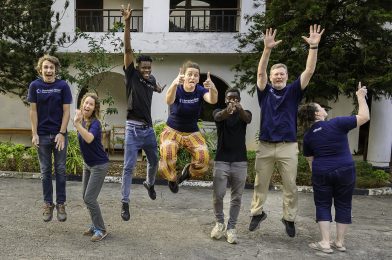
Caption: The storytellers behind the lens—capturing purpose in action. I stayed behind the camera for this one, but this post is all about their stories (and yours).
Not long ago, I encouraged a friend who’s been serving faithfully for years with a missions organization. She’s done everything from writing and photography to mentoring students and even caring for animals on campus. Every time I’ve gone to teach at this organization, she’s been right there helping make it all run smoothly behind the scenes.
Like many in ministry, she recently put out a call for support. She shared her story and included a few links, but mentioned that people weren’t clicking. Donations had come in—thank God—but engagement was low. And that got me thinking about something I’ve seen often over the years:
Even when people know you, they can forget why you do what you do.
That “why” matters. When we don’t communicate our purpose, we risk people viewing our support requests as personal needs rather than an invitation to join a bigger mission.
In my consulting work, I see this all the time. A passionate nonprofit leader or missionary will share their heart, maybe even their backstory, but skip the vital part: What are you doing now? What is God doing through you today—and why does it matter?
Here’s one simple but powerful tip I always give:
🔥 Storytelling Tip: Always connect your past to your present purpose. It’s easy to fall into the pattern of telling how God led us to where we are, but then we forget to say what we’re doing now and how that connects to the bigger mission. Your audience may love your story, but if they don’t know what you’re currently working on—or how it impacts others—they won’t feel invited to join the journey. Always link your background to your current purpose.
I believe support raising is more than fundraising—it’s vision casting. It’s not about asking people to help you, but inviting people to allow God to work through you.
If you’re someone in ministry and you’re not seeing the response you hoped for, take a moment to revisit your story. Is your current mission clear? Are you giving people a way to connect their support to transformation?
That one shift in your storytelling can make all the difference.
At first glance, this topic may seem unrelated to my usual focus on storytelling, photography, and branding. But in reality, it’s deeply connected. Storytelling isn’t just about capturing moments—it’s about understanding humanity. And right now, I see a world that has drifted too far into left-brain thinking, where efficiency and logic have taken over at the cost of creativity, faith, and grace.
As a storyteller, I know that the most potent narratives—the ones that truly move people—come from the right brain. They come from faith, community, and our ability to see beyond ourselves. Without that, we lose not just great stories but the essence of what makes us human.
That’s why I felt compelled to write this.
The Lost Art of Balance: Why We Must Reclaim the Right Brain in Society
Our world has become dominated by logic, data, efficiency, and control—hallmarks of left-brain thinking. While this has fueled remarkable technological progress and problem-solving, it has also come at a cost. In our relentless pursuit of order, we’ve suppressed the right brain—the side responsible for creativity, intuition, faith, and deep human connection.
As a result, we find ourselves increasingly isolated, transactional in our relationships, and starved for meaning. The institutions that once nurtured the right-brain aspects of our humanity—faith, the arts, storytelling, and community traditions—are fading. We are losing the things that help us see beyond ourselves, make sense of suffering, and extend grace to one another.
The Decline of Right-Brain Institutions
Faith, the arts, and communal traditions have helped societies stay balanced throughout history. These were cultural expressions and essential forces in shaping compassion, wisdom, and a sense of purpose beyond personal ambition. Today, many of these institutions are in decline:
Faith Communities: Christianity, Islam, Judaism, and other faiths emphasize themes of grace, mercy, and loving others. Yet, many religious institutions struggle as society leans into hyper-individualism, seeing faith as unnecessary rather than a vital part of human flourishing.
The Arts and Storytelling: Stories, music, and visual arts are essential for conveying human experience, yet they are increasingly undervalued in favor of purely functional or profit-driven pursuits.
Communal Traditions and Rituals: From neighborhood gatherings to shared meals, we’ve lost many simple practices reminding us we belong to something greater than ourselves.
Christianity and the Core of Grace
Christianity’s central message is grace—the unearned gift of love, forgiveness, and mercy. Jesus’ life and teachings were revolutionary because they emphasized that people are valued not by their productivity, achievements, or even righteousness but by the simple fact that they are loved by God.
The parable of the Good Samaritan (Luke 10:25-37) is one of the clearest examples of this grace in action. A Jewish man is beaten and left for dead on the side of the road. Two religious leaders—who should have helped—pass by, prioritizing their legalistic duties over human compassion. But a Samaritan, a member of a group despised by the Jews at the time, stops to help, bandaging the man’s wounds and paying for his care.
This parable challenges us to understand that true faith is not about status, rules, or logic—it is about love, mercy, and action. The Good Samaritan had nothing to gain by helping a stranger. He extended grace simply because it was the right thing to do.
Other faith traditions also embrace this principle:
Islam emphasizes compassion and charity (Zakat), requiring Muslims to care for the poor and vulnerable.
Judaism teaches Tikkun Olam the duty to repair the world through acts of kindness and justice.
Hinduism emphasizes Seva, or selfless service, which means helping others without expectation of reward.
Yet, as we’ve leaned too far into left-brain thinking—prioritizing efficiency, self-sufficiency, and measurable outcomes—our culture has moved away from these values of grace and service. Instead, we often view people in need as burdens rather than opportunities for compassion.
War and Crisis: Society’s Harsh Reset Button
History shows that societies become unbalanced when they lean too far in one direction—whether toward rigid control or chaotic emotion. When this happens, a collapse or crisis follows. Unfortunately, one of the great “reset” moments for societies has often been war.
War forces us to face our mortality and recognize that we depend on one another. After times of great conflict, we often see a resurgence of faith, the arts, and community-building. People remember the importance of grace—not as an abstract concept but as a survival necessity. We reconnect with the right brain because we are forced to do so.
But do we have to wait for a crisis to restore balance?
Reclaiming the Right Brain—By Choice, Not by Crisis
Rather than being forced into grace by war or suffering, we can choose to restore it now. We can:
Reembrace faith and grace: Whether through Christianity or other traditions, faith reminds us that we are more than what we produce. It teaches us to give and receive grace.
Invest in the arts and storytelling: Music, literature, and film help us process our experiences and see the world through different perspectives. They cultivate empathy and wisdom.
Prioritize community and rituals: Shared meals, small gatherings, and storytelling traditions restore our sense of belonging.
Extend grace in daily life: The Good Samaritan didn’t need a policy, a study, or an efficiency metric to justify helping someone. He acted in love. We can do the same—offering kindness even when it’s inconvenient or undeserved.
We have spent decades overcorrecting toward a left-brained world. It is time to bring balance back—not through crisis but deliberate choice.
If we reclaim faith, storytelling, and a culture of grace, we don’t just restore balance to our lives—we help rebuild the foundation of a compassionate society.
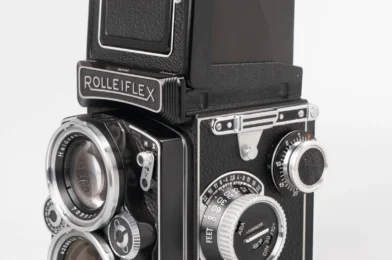
A friend sent me a link to a photographer traveling the country, capturing images with a twin-lens reflex camera on film. It got me thinking about why photographers choose specific tools and how those choices shape their approach to storytelling.
I respect anyone who finds balance and peace in their craft, even if I don’t fully relate to their method. For many, shooting film—especially with older formats like 4×5 or 8×10—forces them to slow down. It demands patience and deliberation, making them ask, Is this moment worth my time?
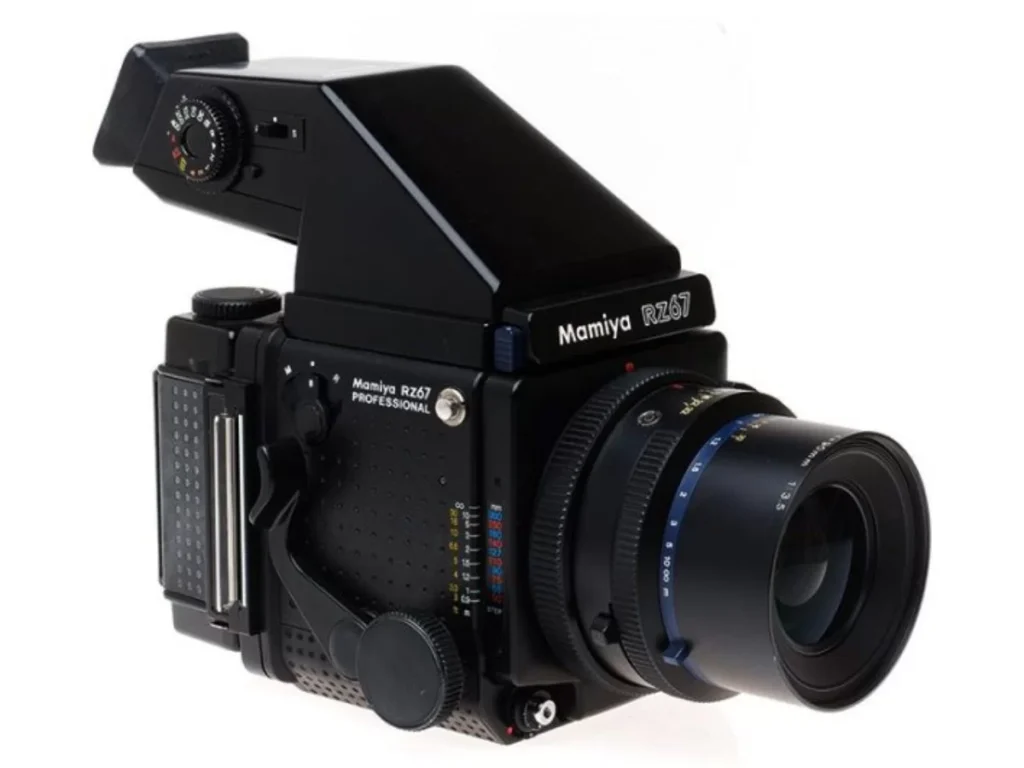
I’ve shot film, but I never gravitated toward twin-lens reflex cameras. I preferred using a Hasselblad or even a Mamiya RZ67 because I liked seeing precisely what the lens was seeing. With a twin-lens reflex, you’re looking through a separate viewing lens, which means what you see isn’t always perfectly aligned with what the camera captures. That disconnect never worked for me. I wanted complete control of my framing and composition, and those single-lens medium format cameras gave me that clarity.
The Importance of Intentionality
The lesson here isn’t about film versus digital—it’s about why we take photos in the first place. Before clicking the shutter, we should ask ourselves:
Is this moment worth preserving?
Why do I want to preserve it?
For some, the answer is personal. They capture moments simply for their enjoyment. However, the process requires more profound thought for those who create visuals to communicate stories and messages. It’s not just about what’s in front of the lens—it’s about crafting an image that conveys meaning.
Vanessa Van Edwards, who teaches body language and human connection, emphasizes how small details—tone, expression, and word choice—shape interactions. As visual storytellers, we communicate similarly through:
Body language – Capturing authentic emotion and gestures
Light – Setting the tone and mood of the story
Lens choice, depth-of-field, and composition – shaping the way an image is perceived
For me, slowing down doesn’t require switching cameras or returning to film. Digital photography offers greater dynamic range and the flexibility to choose between color and black and white in post-processing. The key is not the tool itself but the mindset behind it.
Finding Purpose in Storytelling
When I teach, I encourage discussions on how different cameras and formats influence storytelling. But I’ve also noticed that some people become more attached to the experience of photography than to its impact. The same can be said for missions—too many people engage for personal fulfillment rather than actual service.
Jesus’s life reminds us that purpose isn’t about self-gratification. It’s about sacrifice, about giving of ourselves for the sake of others. When we embrace that, we experience the kind of love that only God can fully give.
So whether we shoot film or digital, the real question remains: Are we simply capturing moments or telling stories that inspire and serve others?
Let’s approach photography with that purpose in mind.
ChatGPT is an excellent tool for photographers, helping streamline tasks like writing captions, generating keywords, and refining storytelling. When used wisely, it can significantly speed up your workflow—but remember, AI isn’t perfect. You must provide it with clear, detailed information to get valuable results and, most importantly, double-check everything it generates. I often find that ChatGPT rephrases or changes my intended message, requiring me to tweak the output to align with my vision. Relying solely on AI to do all the work is a mistake; think of it as an assistant, not a replacement. You’re still the storyteller, and your voice matters most.
Think of it as an assistant, not a replacement.
Photographers know that capturing a stunning image is only half the job. Whether you’re showcasing your work online, submitting it to clients, or building your portfolio, strong captions and effective keywords are essential. Yet, many photographers need help finding the right words to match their visuals.
This is where tools like ChatGPT can be a game-changer. If you’re a photographer looking for feedback, caption help, and keyword ideas, let me show you how AI can help you take your storytelling to the next level.
“I recently learned you can ask it to write alt-text for your photos. So helpful!”
Jaime Rose
Why Captions and Keywords Matter
Captions Tell the Story: A great photo might grab attention, but the story behind the image keeps your audience engaged. Captions provide essential details that a photo alone can’t convey—the who, what, where, when, and why.
Keywords Boost Discoverability: For photographers who upload their work to websites, photo libraries, or social media, keywords are critical for being found. Effective keywords improve searchability, ensuring your photos reach the right audience.
Feedback Improves the Image: When sharing your work for feedback, it’s essential to understand how viewers interpret your image. ChatGPT can provide critique to help you improve your technical and storytelling skills.
How ChatGPT Can Help Photographers
With tools like ChatGPT, photographers can refine their storytelling and marketing by:
Writing Better Captions: ChatGPT can craft detailed, engaging captions if you provide some key details.
Generating Keywords: AI tools can analyze images and suggest relevant, searchable keywords.
Providing Constructive Feedback: By describing your image to ChatGPT, you can get feedback on composition, lighting, focus, and storytelling impact.
What to Provide ChatGPT for Better Captions and Keywords
You must give it the right information to get the most out of ChatGPT. Remember, the AI can only analyze what you tell it—it doesn’t know your photo’s context unless you provide it.
Here are some essential details to include when asking ChatGPT for help:
Who: If people are in your photo, provide their names or roles if possible (e.g., “Sarah, a college student, bowling with friends”).
Where: Share the location. Be specific if relevant, like “Atlanta Bowling Alley” or “Rocky Mountain National Park.”
What: Describe the activity or subject. For example, “a joyful woman mid-bowling throw with friends cheering in the background.”
When: Mention the time of day, season, or event (e.g., “an evening game during a Friday night outing”).
Why: Why did you take this photo? Was it a personal project, a client commission, or part of an event?
Mood or Story: What feelings or story does the image convey? Is it a celebration, a moment of peace, or something more emotional?
By including these elements, ChatGPT can write a caption that complements your photo’s story, making it far more compelling for viewers.
Example Workflow: Using ChatGPT for Feedback
Let’s break it down with a quick example. You upload a photo of someone bowling and provide this:
Photo Description: A young woman bowling with a big smile. She’s wearing a navy shirt and colorful bowling shoes. Her friends are cheering in the background under bright lights. The photo was taken at a local bowling alley during a night out with friends.
What ChatGPT Generates:
Caption: “A joyful moment at the local bowling alley as Sarah celebrates her throw while friends cheer her on during a Friday night outing.”
Keywords: Bowling, celebration, friends night out, group activity, colorful lighting, bowling shoes, happy young woman, fun sports.
Feedback: “The subject’s smile and body language create an engaging focal point. Consider softening the bright background lights for a cleaner look and ensuring the bowling ball isn’t cropped to strengthen the composition.”
Tips for Getting the Best Results
Be Descriptive: The more details you provide, the better the caption and keywords.
Share Intentions: If you want ChatGPT to write for a specific audience (e.g., Instagram, clients, or stock libraries), include that in your prompt.
Request Feedback: Don’t hesitate to ask for constructive feedback on lighting, composition, or storytelling impact.
Iterate: Refine your prompts if the output isn’t quite right. Ask ChatGPT to tweak the tone or add more keywords.
Final Thoughts
Photography is about visual storytelling, but words can elevate your images and expand their reach. ChatGPT is a tool that can help photographers save time, improve captions, and get valuable feedback—but it works best when you provide context.
Next time you’re stuck trying to caption a photo or find the right keywords, turn to ChatGPT, by sharing the who, what, where, and why behind your image, you’ll unlock better captions, more assertive keywords, and more straightforward storytelling.
So, photographers, start using AI as part of your workflow—because great stories deserve to be told visually and verbally!
My Test & Results
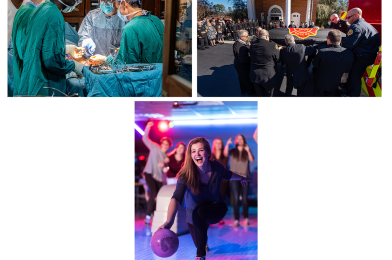
Here are three photos I uploaded to ChatGPT using my simple prompt. You can see the response and how valuable this could be for someone wanting help and feedback.
Give me a caption for the photo, Keywords for the photo, and lastly, critique
ChatGPT said:
ChatGPT
Caption
Firefighters and loved ones honor a fallen hero during a solemn memorial service, showcasing respect, unity, and tradition as the casket is carried toward its final destination.
Keywords
Firefighter Funeral
Honor Guard
Memorial Service
Fallen Hero
Uniformed Ceremony
Fire Rescue Tribute
First Responders
Line of Duty Death
Brotherhood and Tradition
Casket Ceremony
Critique
Strengths:
Composition: The leading lines of the casket and crowd naturally guide the viewer’s eye toward the central focus — the pallbearers and the casket adorned with the “Rescue” emblem.
Emotion: The photo captures a deeply respectful and solemn moment, with participants’ body language and expressions conveying a sense of loss and honor.
Depth of Field: The focus on the pallbearers and casket keeps the scene crisp, while the slightly blurred background provides context without distraction.
Lighting: The natural light illuminates the subjects well, casting soft shadows and adding depth to the photo.
Areas for Improvement:
Cropping/Framing: The red fire truck to the far right dominates part of the image, pulling attention away from the central scene. Cropping slightly or repositioning could better emphasize the emotional focus.
Perspective: A slightly lower camera angle might enhance the sense of grandeur and respect, emphasizing the significance of the procession.
Highlights Control: Bright reflections off uniforms and faces, particularly where sunlight directly hits, could benefit from post-processing adjustments to balance exposure.
Overall Assessment: The photograph beautifully captures the honor and reverence of a firefighter’s memorial, evoking emotion and telling a powerful story of respect and sacrifice. Minor adjustments in composition and post-processing could elevate the image even further.
You said:
Give me a caption for the photo, Keywords for the photo, and lastly, critique
ChatGPT said:
ChatGPT
Caption
A dedicated surgical team collaborates in the operating room, demonstrating precision, focus, and teamwork during a life-saving procedure.
Keywords
Operating Room
Surgical Team
Medical Procedure
Surgeons at Work
Healthcare Professionals
Teamwork in Surgery
Life-Saving Operation
Focused Collaboration
Medical Mission
Surgical Instruments
Critique
Strengths:
Composition: The image has strong framing with the surgeons and patient as the focal points, naturally drawing the viewer’s eye to the surgical scene. The surgical instruments in the foreground add depth.
Lighting: The light source illuminates the surgical area effectively, creating contrast between the bright focus on the procedure and the darker surrounding areas.
Emotion and Storytelling: The teamwork and focus of the surgical team tell a compelling story about dedication and precision in healthcare. The facial expressions and body language of the surgeons convey professionalism and concentration.
Sharpness and Detail: The textures of scrubs, gloves, and instruments are crisp, and the image maintains clarity even in a high-detail environment.
Areas for Improvement:
Foreground Clutter: The table with instruments is prominent, slightly competing for attention with the main surgical team. A slight adjustment to the angle might reduce its dominance.
Lighting Balance: While the surgical area is well-lit, there are parts of the image where shadows could be softened to maintain overall clarity and consistency.
Distractions: The reflections on the right and background cabinet details slightly distract from the central action. A cleaner background or less reflection would strengthen the visual focus.
Overall Assessment: This is a powerful image that effectively captures the intensity and collaboration of a surgical team at work. With slight refinements in framing and lighting balance, the photograph can achieve even greater impact while retaining its storytelling strength.
You said:
Give me a caption for the photo, Keywords for the photo, and lastly, critique
ChatGPT said:
ChatGPT
Caption
A joyful moment at the bowling alley as a young woman celebrates her throw, surrounded by friends cheering in the background.
Keywords
Bowling Alley
Fun with Friends
Bowling Celebration
Sports and Recreation
Group Activity
Happy Young Woman
Bowling Ball and Lane
Celebratory Moment
Night Out Fun
Laughter and Excitement
Critique
Strengths:
Emotion: The subject’s joyful expression and body language convey excitement and fun, making the image relatable and dynamic.
Composition: The central subject is well-placed with a clear focus, while the blurred background adds context without competing for attention.
Lighting: The colorful and dynamic lighting creates a lively atmosphere, enhancing the vibrancy of the scene.
Depth of Field: The shallow depth of field effectively separates the main subject from the background, drawing the viewer’s eye to the action.
Areas for Improvement:
Highlights and Lighting Control: The bright light behind the group in the background creates slight distractions. A softer, more diffused light could reduce its overpowering effect.
Cropping: The lower part of the image, including the bowling ball and shoes, feels slightly cropped. Adjusting the framing to include the full hand and ball could strengthen the overall composition.
Background Distractions: While the blurred background is effective, the lighting and gestures of the friends might slightly detract from the subject. A slight repositioning or angle adjustment could improve focus on the bowler.
Overall Assessment: The image successfully captures an energetic, celebratory moment, showcasing the fun of bowling and shared experiences. The subject’s genuine expression draws viewers in, making it a strong and engaging visual. With minor refinements to lighting and framing, this photo could be even more impactful.
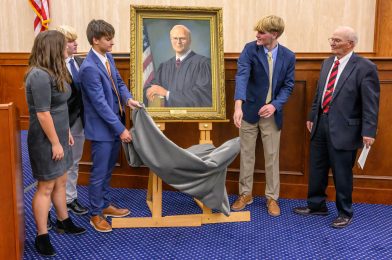
Charlie Jackson, Charlotte Pannell, and twins Billy & Bo Crider unveil the official portrait of their grandfather, Honorable Charles A. Pannell, Jr., now a lasting legacy in the courtroom.
One of the most enjoyable aspects of my work as a professional photographer is being invited to the Richard B. Russell Federal Building in Atlanta. The United States District Court for the Northern District of Georgia often asks me to document judges’ investiture ceremonies or retirements. These occasions, held in the largest courtroom on the 23rd floor, are steeped in tradition, emotion, and, yes, a bit of humor.
This courtroom has hosted some of the most significant cases in our country’s history, including the trial of Eric Rudolph, the Olympic Park bomber. But the atmosphere transforms from serious deliberation to lighthearted celebration during investiture or retirement ceremonies.
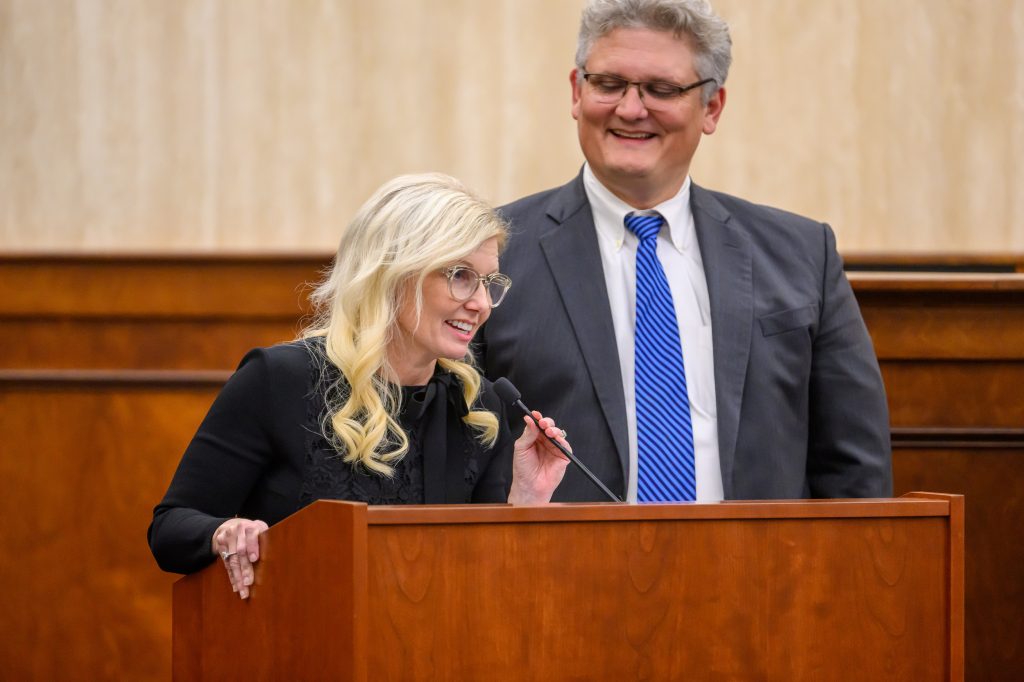
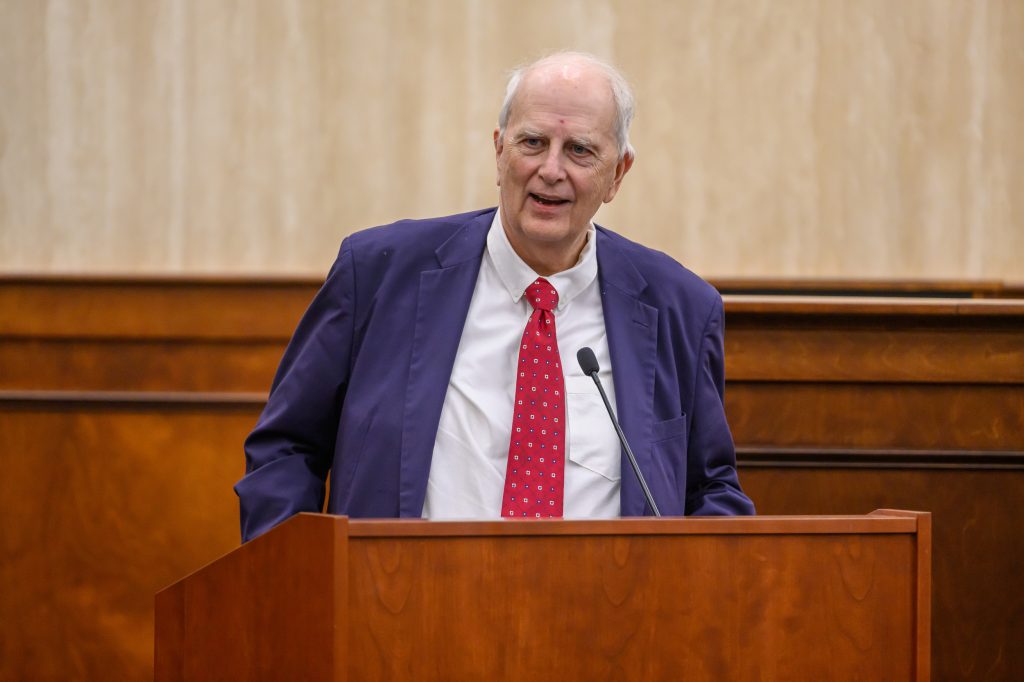
Ruth Ann Pannell Crider tells one of the many stories about growing up with Judge Pannell as her father and her brother, Charles A. Pannell III, look on.
The Unique Joy of Judicial Ceremonies
What makes these events truly memorable are the roasts. Colleagues, friends, and family take turns sharing humorous anecdotes, some of which gently poke fun at the honoree. These moments of levity often provide a unique insight into the judge’s personality, making them all the more enjoyable to capture.
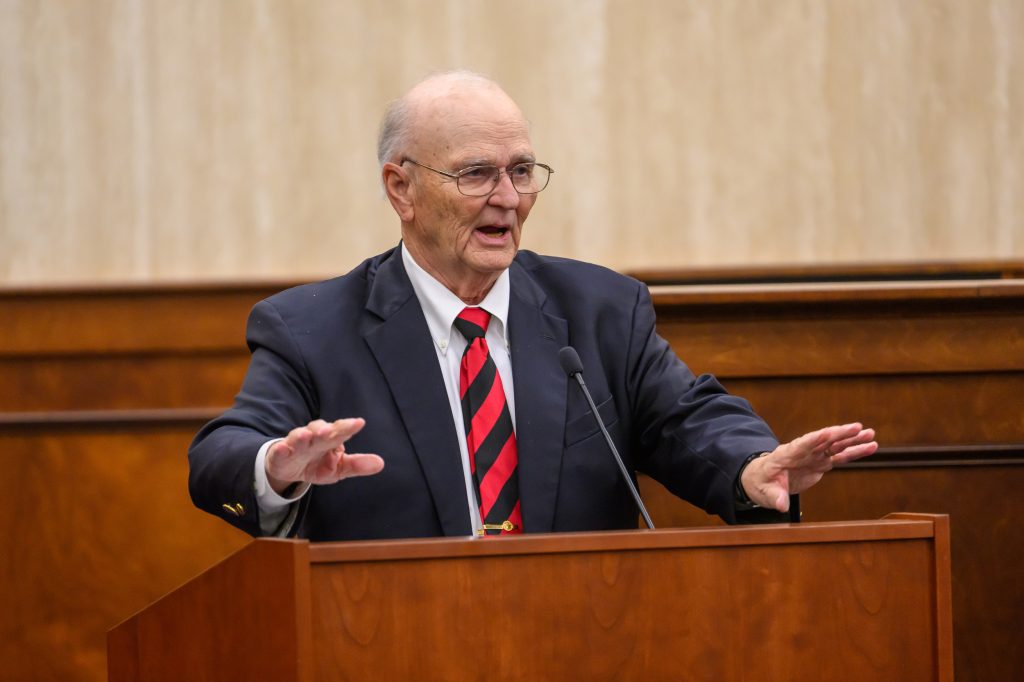
The Honorable Alan J Baverman holds up the transcript of what the Honorable Charles A. Pannell, Jr. said at his retirement. He is ready with some juicy stories to even the match.
I vividly recall Judge Pannell’s Retirement and Portrait Presentation. The ceremony featured some of the best storytelling I’ve ever heard, with former Governor Roy Barnes delivering a particularly entertaining tribute. Judges, as it turns out, are sharp decision-makers and masterful storytellers.
Former Governor Roy Barnes
My role is to capture the day’s emotions: the laughter, the pride, the nostalgia, and sometimes even the tears. These images become treasured keepsakes for the judge, their family, and the court.
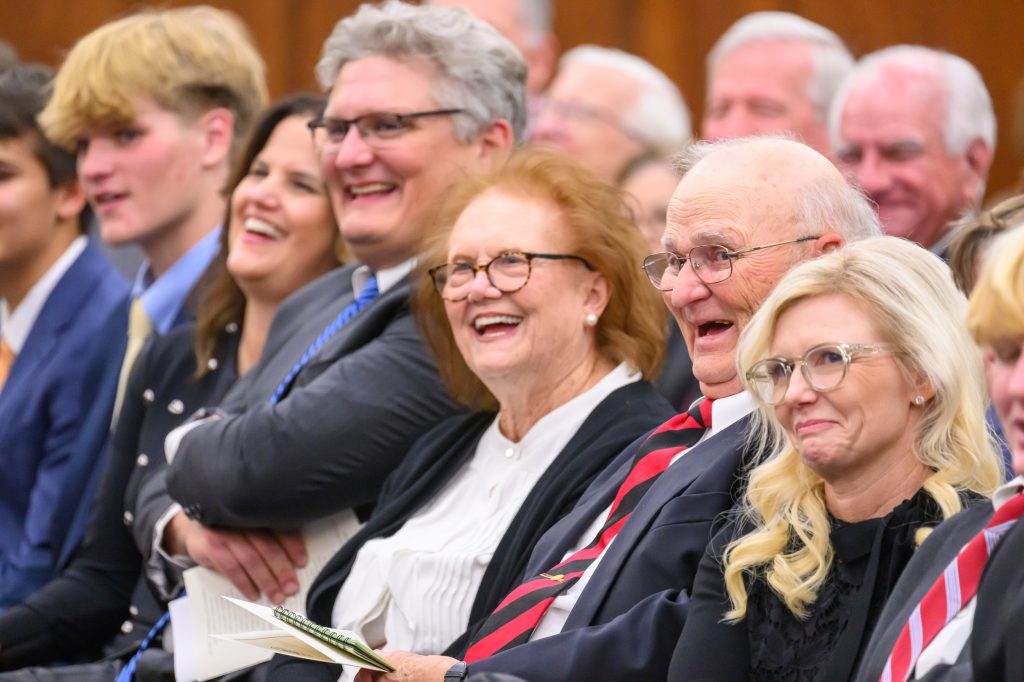
Judge Pannell’s family and himself enjoy a laugh while Roy Barnes roasts.
A Photographer’s Approach to Events
Photographing ceremonies like these requires a thoughtful approach. Here are some ways photographers can ensure they capture the essence of an event:
Anticipate the Moments Listening carefully to speeches and conversations helps you anticipate reactions—a laugh, a smile, or a sentimental glance. The ability to predict these moments ensures you’re ready when they happen.
Work with the Lighting The courtroom on the 23rd floor was recently renovated, so the lighting is pretty good for the available space, so no flash was necessary.
Focus on Expressions Genuine emotions tell the story of an event. I aim to capture the nuances of a judge’s reaction when a funny anecdote is shared or the pride on a family member’s face. These are the images that resonate most.
Frame the Context Including courtroom elements, like the judge’s bench or the iconic seal of the United States Courts, adds depth to the story and reminds viewers of the occasion’s significance.
Capture Group Dynamics The camaraderie between colleagues is a key part of these events. Photos of shared laughs or hugs among the judges and their peers highlight the relationships that make these ceremonies so unique.
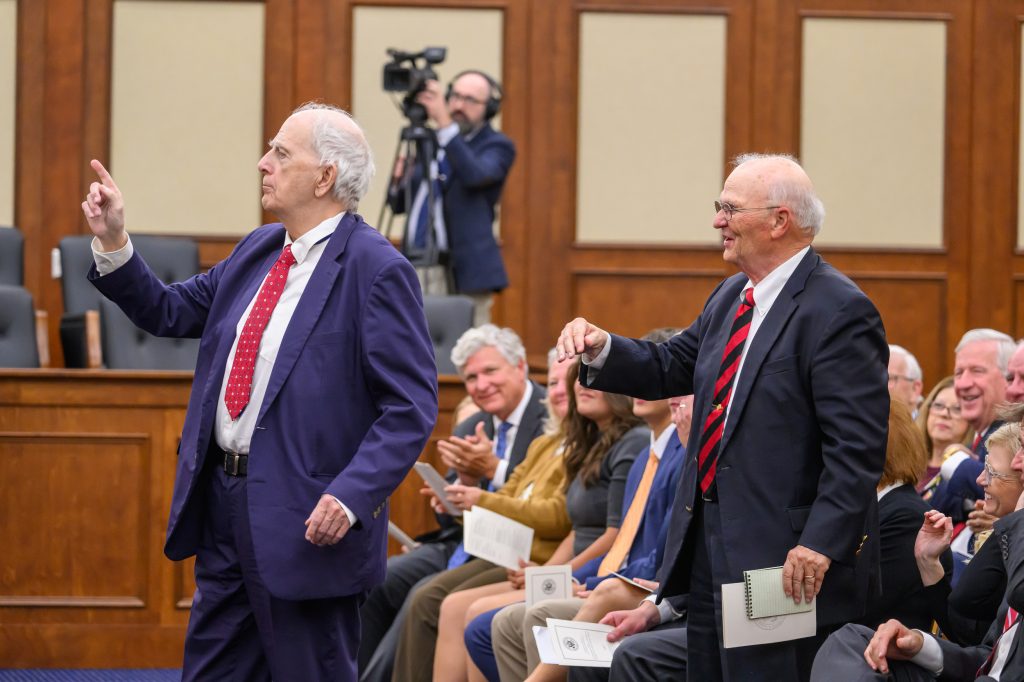
Governor Roy Barnes is asking the Honorable Steve C. Jones asked if he could have a rebuttal after Honorable Charles A. Pannell, Jr. Since the tradition is the honoree gets the last word, Barnes’ request is denied.
Why I Love This Work
It’s a privilege to be part of such meaningful events. Every ceremony reminds us of the importance of storytelling, whether through words or images. It’s an honor to witness history in the making and to document the moments that define it.
The Honorable Charles A. Pannell, Jr. gets his rebuttal from all those friends, former colleagues, and family who told stories of their time with him.
The Richard B. Russell Federal Building holds a special place in my heart, not just for its grandeur or history but for the people who fill it with laughter, camaraderie, and stories worth remembering. Each event I photograph here reminds me why I dedicate my life to storytelling through the lens.
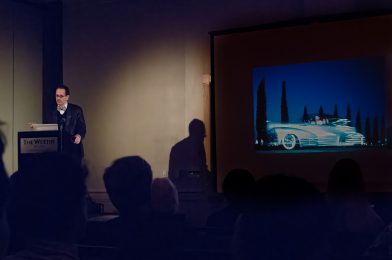
Renowned portrait photographer Gregory Heisler, celebrated for his evocative work featured in Time magazine—including numerous iconic ‘Person of the Year’ covers—shared insights at the Atlanta Photojournalism Seminar on November 16, 2013.
As I look forward to attending the 52nd Atlanta Photojournalism Seminar, I’m reminded of how this event has shaped my career as a visual storyteller. The seminar isn’t just an educational event; it’s a cornerstone for professional growth, networking, and inspiration in photojournalism and visual storytelling. It’s a gathering where photographers and videographers—those driven to capture the stories of our time—meet, learn, and ignite each other’s passion for telling meaningful stories.
The seminar, scheduled for November 15-16 this year, will host an exceptional lineup of speakers, including the legendary James Nachtwey. Known for his fearless dedication to covering conflict and humanitarian issues, Nachtwey’s work is an incredible example of how photojournalism can impact and move people. His presence and those of others will surely fuel conversations and insights that could shape the work of everyone in attendance.
Knolan Benfield
A Legacy That Runs Deep: My Uncle Knolan Benfield
This event holds even more significance for me. My late uncle, Knolan Benfield, was president of the Atlanta Photojournalism Seminar in 1979, a role that aligned with his dedication to advancing the field and supporting other photographers. Knolan’s influence in my life was profound—he taught me the mechanics of the camera, how to use lighting, and, most importantly, how to run a business with integrity. His life in photography wasn’t just about capturing images; it was about capturing truth and communicating it effectively, a legacy I carry forward in my work.
Knolan’s work and passion for photography didn’t just provide me with technical skills; they showed me how to navigate the world of freelance photography with professionalism and a solid ethical foundation. His approach continues to guide me as I work with brands and nonprofits, focusing on stories that have real impact.
Don Rutledge
Don Rutledge’s Mentorship: A Model for Storytelling
Another mentor who played a pivotal role in my career, Don Rutledge, was also involved in the seminar, often helping bring in speakers and sharing his expertise. Don was a speaker in 1972, 1979, 1985, and 1995. Don was a master of capturing subjects within their environments, a perspective that influenced my approach to storytelling. He showed me the power of context in photography, and his dedication to photojournalism illustrated how images could transcend words by evoking genuine, human stories.
The lessons I learned from Don taught me that successful storytelling goes beyond technique. It requires empathy, respect for the subject, and a commitment to authenticity. At events like the Atlanta Photojournalism Seminar, I see that same dedication reflected in the attendees and speakers alike.
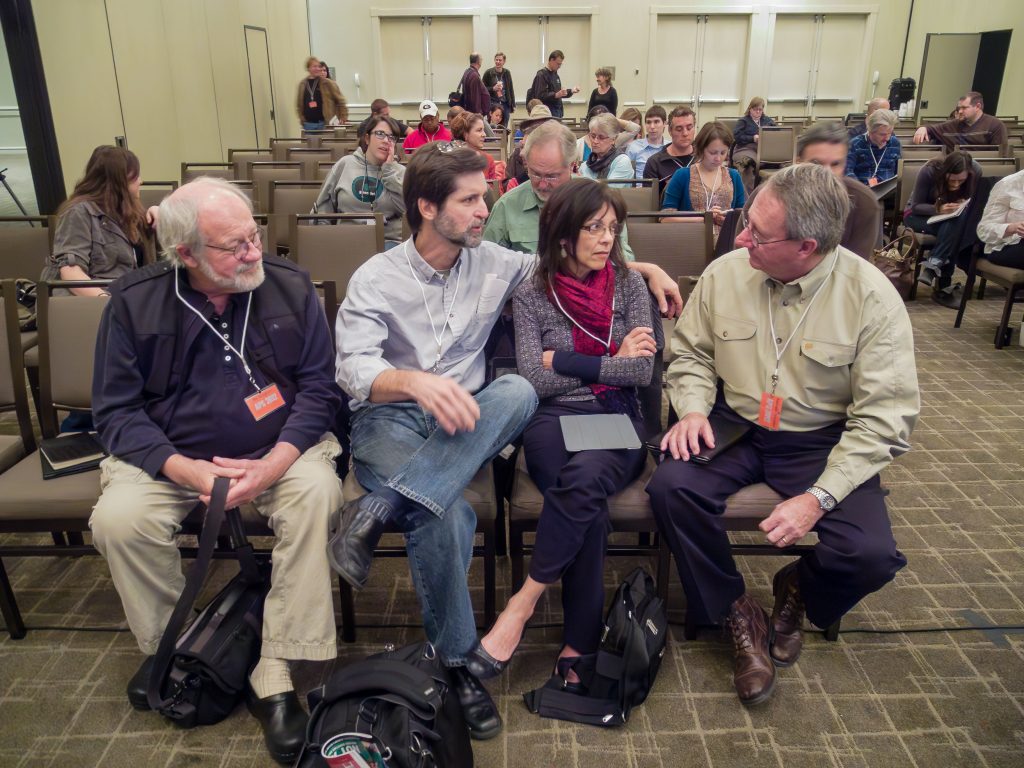
On the front row, left to right, Bill Bangham, Gary & Vivian Chapman, and Ken Touchton are some of my closest friends at the Atlanta Photojournalism Seminar 40th Anniversary December 1, 2012.
Why You Should Attend
Whether you’re just beginning your career or have been at it for decades, the Atlanta Photojournalism Seminar offers something invaluable: a community of like-minded storytellers. Learning from industry giants and engaging with peers passionate about telling impactful stories is transformative. Beyond the sessions and keynotes, the connections you make can be instrumental in helping you navigate your career. Networking with those who understand your journey provides support, insight, and often friendships worth more than words.
If you’re on the fence about attending, consider this: seminars like these are rare opportunities for professional growth. They’re spaces where you can refine your skills, discover new techniques, and gain perspectives that make you a stronger storyteller. In a world where images and stories have the power to move and influence, honing your craft at events like the Atlanta Photojournalism Seminar is not just an investment in your career but a commitment to the power of truth in storytelling.
Join me on November 15th and 16th to learn and become part of a legacy of photographers and storytellers dedicated to making a difference.
Cookie Consent
We use cookies to improve your experience on our site. By using our site, you consent to cookies.