When you travel with Super Stars you need off camera flash to make them look good

Reading Time: 3 minutes
Nikon D4, 14-24mm, ISO 100, ƒ/8, 1/250—Off camera fill-flash using the Nikon SB-900 & SB800.  The Flash is on the Pocketwizard TT5 and being triggered by the Mini TT1 on the Camera with the AC3 to control the output of the flash.

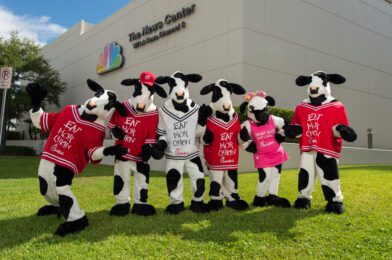
I am traveling with the famous Chick-fil-A Cow Mascots this week. They are traveling around promoting Cow Appreciation Day this Friday.

Click here to learn more

Dress head to hoof as they like to say at Chick-fil-A and get a free meal. Wear some Cow Attire and get a free entree.

Now let me tell you how I made the top photo. I had two VALS holding the two hot shoe flashes on either side of me. [VALS stands for Voice Activated Light Stand]

Without the flashes the cows would have been somewhat silhouetted and by adding the off camera flash I was able to keep the color temperature on them daylight and then also keep them bright enough to keep the rich colors in the background.

Nikon D4, 14-24mm, ISO 100, ƒ/6.3, 1/4—Off camera fill-flash using the Nikon SB-900 & SB800.  The Flash is on the Pocketwizard TT5 and being triggered by the Mini TT1 on the Camera with the AC3 to control the output of the flash.

Very similar lighting setup, just I am have a subject close to me blocking the light to the left. I dragged the shutter to 1/4 to be sure you saw the photo he was making on his phone.

Nikon D4, 14-24mm, ISO 100, ƒ/6.3, 1/4—Off camera fill-flash using the Nikon SB-900 & SB800.  The Flash is on the Pocketwizard TT5 and being triggered by the Mini TT1 on the Camera with the AC3 to control the output of the flash.

Here you can see one of my VALS holding the hot shoe flash. The other VALS is behind me pointing at the cow. If you look at the Cows eyes you can see the reflections of the two flashes. Notice the shadows on the concrete. This tells you they were all backlighted and the flashes made a huge difference.

Nikon D4, 14-24mm, ISO 100, ƒ/6.3, 1/4—Off camera fill-flash using the Nikon SB-900 & SB800.  The Flash is on the Pocketwizard TT5 and being triggered by the Mini TT1 on the Camera with the AC3 to control the output of the flash.

Here I am behind the flashes and you can see the other VALS here in the foreground. The other VALS is further to the left in the photo.

I don’t generally use these last two photos where you can see the flashes, but kept them to show to you so you can see how simple this is to do.
How using portrait in a photo story

Reading Time: 2 minutes

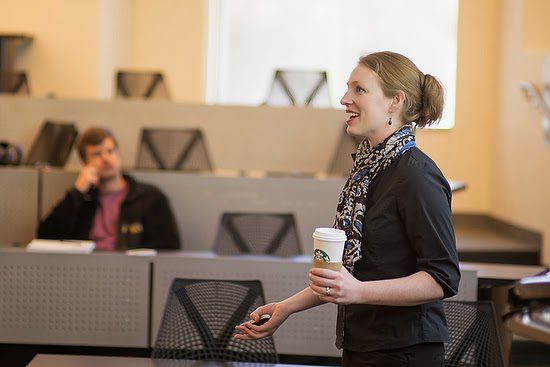
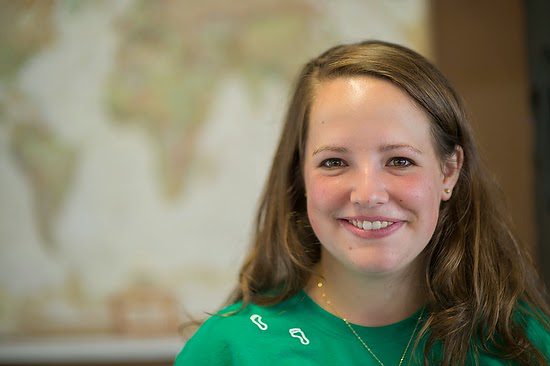
I took three quick photos of a student in class yesterday to show them two things they can do very quickly to introduce a character into the story.

We preferred not to have a posed portrait but rather something of her in action. Therefore, I did not take a photo to illustrate that point, but did want to explain lens choice and aperture.

The first photo has a shallow depth of field at ƒ/1.4. Again, the emphasis is all on the lady.

Nikon D4, 85mm, ISO 12800, ƒ/14, 1/100

I then stopped down the aperture to create a greater depth of field, making the map much sharper.

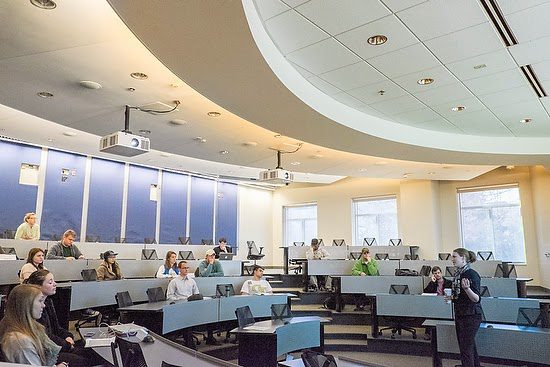
Now I told the class that my purpose was to show the students in a class with photo students, and they would then leave the course and do stories around the world.

Nikon D4, 14-24mm, ISO 9000, ƒ/14, 1/100

For the last shot, I switched to a wide-angle lens and had the class behind her. We talked about how we can then introduce her in our story this way as well.

All three are good photos in their own right, but the question was which one does the best job of helping tell the story.

Today, I will show them another technique, so stay tuned for that example.

When you travel, give yourself a little time to acclimate

Reading Time: 2 minutes
 
Nikon D4, 14-24mm, ISO 100, ƒ/8, 1/500

I am teaching a class with two of my friends Jeff Raymond, from ABWE, and James Dockery, ESPN, this week in Lisbon, Portugal. Our first day of class is Monday, which is today.

Yesterday we let the students shoot around the area just to get acclimated to the time zone change. These photos are while we were going around Lisbon and nearby to see some sights.

Nikon D4, 14-24mm, ISO 100, ƒ/8, 1/500

I shot this one of the palaces while we drove by it. Keeping my shutter speed pretty high helped me not worry about the camera movement due to the van we were in at the time.

Nikon D4, 28-300mm, ISO 100, ƒ/4.5, 1/800

I suggest a little time to acclimate to the location before diving into the story. One of the reasons is if you have never been to that part of the world, you are getting to feel the location and not just react immediately to the subject without context as you would be doing while telling the story.

Nikon D4, 14-24mm, ISO 7200, ƒ/8, 1/100

Here is James Dockey, an ESPN TV editor, enjoying conversing with the lady at the coffee shop and some of the students in the class we are teaching. But, of course, one of the best ways to acclimate is to eat the food and enjoy their coffee.

Nikon D4, 14-24mm, ISO 4500, ƒ/8, 1/100

James is with the ladies who served us the espresso and some pastries. While this was James’ food, I got the same. WOW, that was delicious.

We are now all rested, adjusted to the time zone, and ready to dive into our storytelling on Lisbon for the rest of the week. So stay tuned for some more from Lisbon.

Sigma 70-200mm ƒ/2.8 great lens for party pics

Reading Time: 3 minutes
 
Nikon D4, Sigma 70-200mm, ISO 12800, ƒ/3.2, 1/80 optical stabilization on

I love to watch people and especially across the room. The lens that captures these moments the best for me is the Sigma 70-200mm f/2.8 EX DG APO OS HSM for Nikon. Up to 4 Stops of Optical Stabilization makes hand-holding the lens possible in low light, which I was shooting in tonight.

Nikon D4, 85mm ƒ/1.4 , ISO 450, ƒ/1.4, 1/100

I tried to work the room with the Nikon 85mm ƒ/1.4, but I felt like the lens was too loose most of the time, and since I was further away, the depth-of-field was as silky smooth to me as with the Sigma 20-200mm because I was able to shoot at 200mm and therefore compressed the background.

Nikon D4, Sigma 70-200mm, ISO 12800, ƒ/3.2, 1/50 optical stabilization on

The cool thing is shooting at 200mm, and a wide aperture gives the shallow depth of field, making the subject pop out from the room.

Nikon D4, Sigma 70-200mm, ISO 12800, ƒ/2.8, 1/60 optical stabilization on

While technically, there is a separation of the subject from their environment, you now must wait for a moment where you capture the person’s personality. A technically great photo isn’t what makes the photo, but it just merely helps. It still comes down to capturing the moment.

Nikon D4, Sigma 70-200mm, ISO 10000, ƒ/2.8, 1/100 optical stabilization on

While shooting all these photos, the people know me, but I have been working in the room for a while. I started with 14-24mm and introduced myself to people getting them to know I was here and taking photos.

Nikon D4, Nikkor 14-24mm, ISO 12800, ƒ/3.2, 1/100

I am shooting a full-framed image like the one above, with the 14-24mm putting me less than a foot away from the subjects. After shooting these, I start shooting the tighter shots with the longer lens. So I am now further away and picking moments.

Nikon D4, Sigma 70-200mm, ISO 9000, ƒ/3.2, 1/100 optical stabilization on

Now people are more relaxed at the party. They are now into conversations and enjoying one another. When people are conversing is when I get excellent expressions.

Nikon D4, Sigma 70-200mm, ISO 12800, ƒ/2.8, 1/100 optical stabilization on

I also love creating a layering effect by having something in the foreground and background. I think this helps give more depth to the photo, even with the foreground and background out of focus.

Nikon D4, Sigma 70-200mm, ISO 11400, ƒ/3.2, 1/100 optical stabilization on

I love these expressions. They make you want to know what they are talking about.

Nikon D4, Sigma 70-200mm, ISO 12800, ƒ/3.2, 1/100 optical stabilization on

I love shooting tight and isolating subjects but remember, when I write a blog like this, I teach something. The 70-200mm photos are just part of the coverage; I have plenty of wide-angle lens shots to help capture the context.

I think every photographer would benefit from a 70-200mm ƒ/2.8 lens in their bag. I love my Sigma 70-200mm.

Photographers: Three ways to direct the audience

Reading Time: 5 minutes

Nikon D4, 14-24mm, ISO 1100, ƒ/3.2, 1/100 Custom White Balance with ExpoDisc

Composition/Graphics

You can use compositional elements like leading lines in the photo above to help direct your audience through a scene to where you want them to look. For example, I have the lines from the shirt directing me back into the photograph to the guy talking.

Nikon D4, 14-24mm, ISO 2000, ƒ/6.3, 1/100 with off-camera flash with Nikon SB-900 with MagMod 1/4 CTO Gel being triggered by PocketWizard TT1 and Flex TT5 with AC-3 zone controller

Light

With this photo of the kids watching the balls race each other down the incline, I am using the incline to lead your eye, but I am also now using another element to help direct your attention—light.

By using an off-camera flash, I can put more light on the man at the top of the incline and also light the kids. As the light drops off to the background, it is slightly darker, so your eye doesn’t go there first.

Nikon D4, 28-300mm, ISO 2000, ƒ/6.3, 1/100 with off-camera flash with Nikon SB-900 with MagMod 1/4 CTO Gel and 20º Grid being triggered by PocketWizard TT1 and Flex TT5 with AC-3 zone controller

I knew that if I didn’t use a light on the subject here, holding the weight, you may drift to any one of the people in the background.

Nikon D4, 14-24mm, ISO 2000, ƒ/6.3, 1/100 with off-camera flash with Nikon SB-900 with MagMod 1/4 CTO Gel being triggered by PocketWizard TT1 and Flex TT5 with AC-3 zone controller

In this photo, you can see my photo assistant, a VALS [Voice Activated Light Stand], helping me pop the subject out from the crowd.

Now, I am using a 1/4 CTO gel that works well with the flash’s available light. I started with 1/2 Plusgreen gel, but even with color correcting using the ExpoDisc, the color never looked right on the faces compared to the background.

Nikon D4, 28-300mm, ISO 11400, ƒ/6.3, 1/100 Custom White Balance with ExpoDisc

Color

You can also use color to draw your eye into a photo. Here, the lady in pink draws your attention because she is wearing Pi. The same photo in bland white loses the directing quality of the color.

The Atlanta Science Festival

To make a B&W photo worth, photographers will burn and dodge to direct the eye with available light photography. Here, I have burned in some of the areas of the photo so the lightest area directs the eye.

The Atlanta Science Festival

Light is the most significant influence in photography.

Photography is writing with light. That is what the word means. No, wait a minute. I decided to add light to the situation above. Watch how much I am now directing your eye with the light.

The Atlanta Science Festival

While the lady in pink is attracting some of your attention, I have more information on the scientist holding a brain model.

The Atlanta Science Festival

In black and white, I have now really isolated where I want you to look. I have removed the pink jacket’s color influence, and you are now, because of the introduction of a spotlight on the subject, a way for me to influence where the audience looks.

Put it all together

The Atlanta Science Festival

I used an off-camera flash and a 90 mm lens to get close to the two little girls. Most importantly, I was capturing a moment when their eyes communicated interest, which is the second most important part of a photo—the Moment.

The Atlanta Science Festival

Here, I am using the off-camera flash to light the young boy and make the background darker. The mother’s orange jacket is a complementary color to the blue jacket, and I am also using the color to help direct you. I am using the hand of the scientist holding the brain model while the mother’s hands continue to direct you towards the boy’s expression on his face. His eyes and facial expressions catch this moment of interest. The mom’s expression also complements her son’s expression.

The Atlanta Science Festival

I am again using the off-camera flash to brighten the people in the foreground, and the background is now darker. I am still using composition to help direct you, and most importantly, I am looking for the moment that tells the story. The embroidery on the scientist’s sleeve almost replaces the need for a caption.

The Atlanta Science Festival

Capture a moment with a father and daughter. The photo reads faster than if I had relied solely on composition.

The Atlanta Science Festival

As seen in this last photo, your eye will wander if the photographer doesn’t use all the necessary tools to direct your attention.

When you look back at your photos from an event and nothing stands out, there is a reason. Are you using all the tools at your disposal to capture moments? Of all the tools you can use, an off-camera flash may be your best weapon. Do you know how to use one?

If you would like to master this technique, contact me for a personal class with one-on-one instruction.

Storyline involves a Plot

Reading Time: 4 minutes

Fujifilm X-E2, 18-55mm, ISO 6400, ƒ/3.6, 1/250, custom white balance with ExpoDisc

A plot “ensures that you get your character from point A to point Z.”

The shooting of the story is often not in the order of telling the story. It is standard in Hollywood when they are making a movie to shoot a story all out of order for budget reasons.

You may need to go ahead and shoot the ending because it takes place in the spring, and you are now in the Spring time.

Fujifilm X-E2, 18-55mm, ISO 6400, ƒ/9, 1/45, custom white balance with ExpoDisc

Yesterday I was working with my intern/photo assistant. I sat down for a few minutes to talk about what I was doing and why. He is going to Lisbon, Portugal, with me and will be shooting his own visual story.

One thing I talked to him about was how every situation I shot was as if it were a stand-alone story.

Fujifilm X-E2, Nikon 85mm ƒ/1.4 D AF, using Nikon G to FX adapter, ISO 500, ƒ/1.4, 1/60

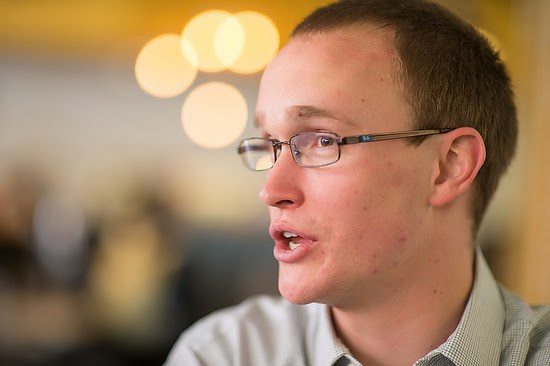
Yesterday I photographed a Georgia Tech Management student. I followed him around for the day. While in the classroom with him, I photographed each situation as if the whole story had to come out. I was shooting stills and videos. I shot an overall shot of the classroom, some of the teacher and some of the students, and everything else you could think of in between.

Nikon D4, Nikon 85mm ƒ/1.4 D AF, ISO 1100, ƒ/1.4, 1/250 Custom white balance with the ExpoDisc

I shot each situation as if it were a stand-alone package because it is easier to sequence the overall package with the best photos to tell the complete story.

Nikon D4, 14-24mm, ISO 12800, ƒ/6.3, 1/500, custom white balance with ExpoDisc

If you didn’t shoot the variety, you might end up with all close-up shots when you finally were editing. Then the array of the photo starts to work against you by shooting to get good tight, medium, and overall pictures and varieties of each of those; you then are picking from each situation and then putting these into a sequence that moves the viewer through the plot of events to tell the story.

Nikon D4, 28-300mm, ISO 8000, ƒ/4.8, 1/250, custom white balance with ExpoDisc

Unlike fiction writers who can create their content, the visual storyteller who captures the story must grasp it before it is sequenced and told. The writer can design and make it work and not worry if they have images to move you through the plot. They create it.

Fujifilm X-E2, 18-55mm, ISO 400, ƒ/10, 1/500

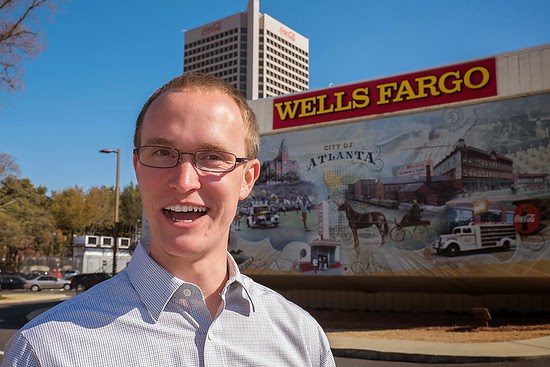
I even did the environmental portrait as a safe shot of the student in front of the Georgia Institute of Technology sign.

During our interview with the subject, he mentioned that he would be working with Wells Fargo Securities this coming summer. So just to have something we could drop in for a visual, we found a sign to put him in front of for the story.

Fujifilm X-E2, 18-55mm, ISO 200, ƒ/10, 1/180 and -1 EV on the pop-up flash

The bottom line is that you need to have a storyline in mind while shooting. Then for each point of the outline, you shoot it like it will be the complete story. Then, you create another sub-outline of the design that makes this a full report.

It is almost impossible to overshoot for a visual storyteller. Those who undershoot will have to rely on other communication like text or audio to help tell the story.

The best way to tell a story is to show the audience rather than say it to the audience. Don’t be caught without enough visuals when putting the final package together.

Photographing the Island Breeze Luau cast on the beach of Hawaii

Reading Time: 4 minutes

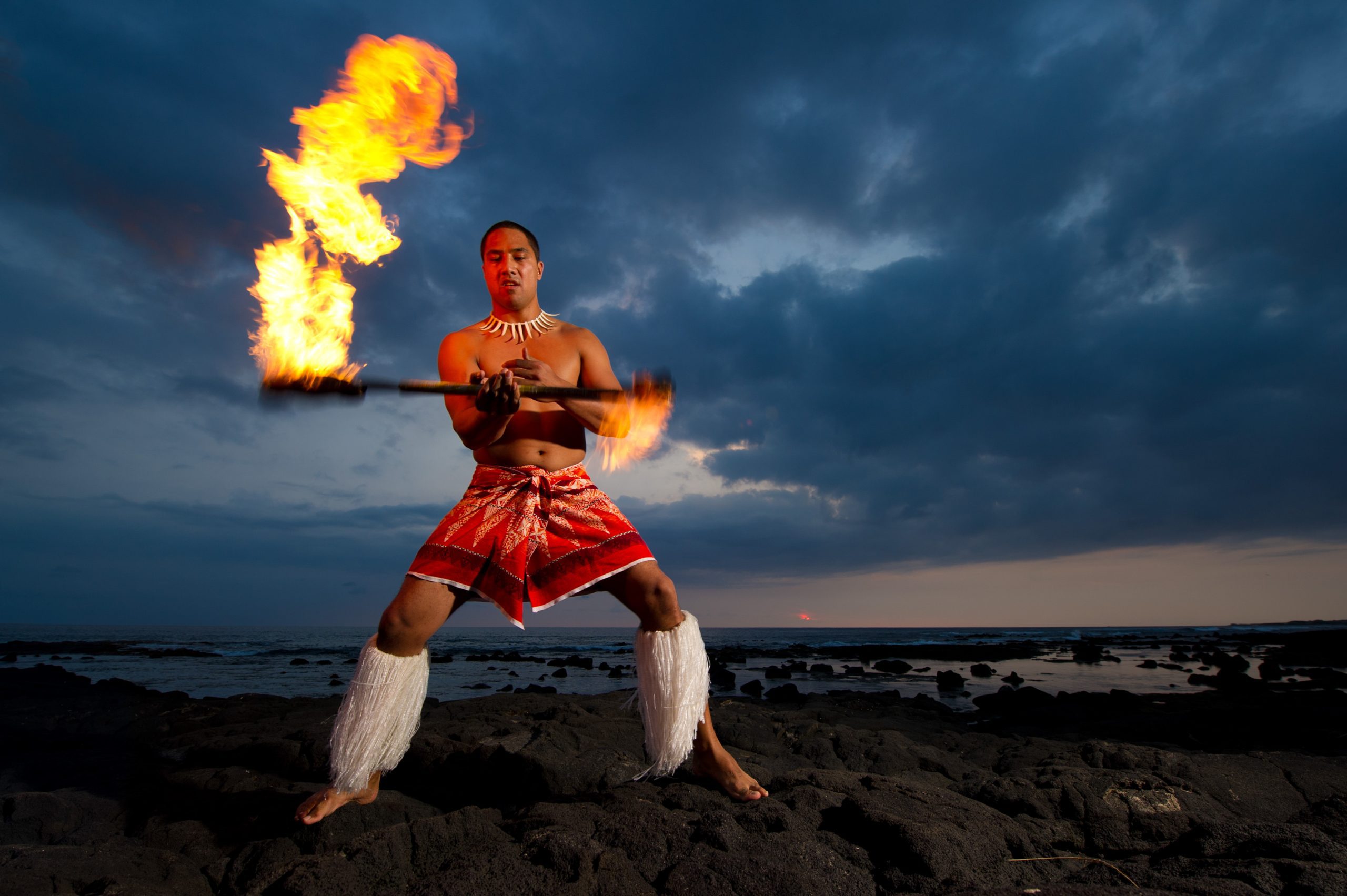
Nikon D4, 14-24mm ƒ/2.8, ISO 200, ƒ/16, 1/200 with 2 Alienbees with CTO 1 for off-camera flash. These are triggered with the Pocketwizard Radio Remotes.

I enjoyed shooting these photos of the Island Breeze Impact Tour cast at the Old Kona Airport State Park on the Big Island of Hawaii. In this setting, I took control of the situation as compared to the night before, when I was photographing them while they were putting on a Luau.

While the stage lighting is excellent, the amount of light they use in the show is minimal.

Fuji X-E2, XF 55-200mm, ISO 6400, ƒ/4.6, 1/125

The show I was shooting at ISO 6400 with ƒ/4.6 and a 1/125 setting compared to the controlled shooting on the beach with ISO 200, ƒ/16, and 1/200.

Nikon D4, 14-24mm ƒ/2.8, ISO 200, ƒ/14, 1/320

I am in Hawaii teaching lighting to YWAM School of Photography students. We went to the beach for them to see me shoot mixed light, where I added light to the scene to help make the photos better.

Nikon D4, 14-24mm ƒ/2.8, ISO 200, ƒ/14, 1/400 no flash

As you can see in the photo, there is no flash; it is more of a silhouette.

Photo by David White

In this photo, you can see it was taken by my assistant David White. First, I set this up using the Alienbees B1600 flash with CTO 1 over the strobes to warm up the subject, and then I color-corrected for the light, which made the sky even bluer.

Two Alienbees B1600 at full power on the right at 45º with CTO Gels.
Nikon D4, 14-24mm ƒ/2.8, ISO 200, ƒ/22, 1/20

Brooke Valle, a former student of mine, is part of Island Breeze and is spinning the POI. I worked with her to have her friends and family in the cast come and help us with the photo shoot.

Brooke is spinning the “POI” [it is the Maori word for “ball” on a cord].

Nikon D4, 14-24mm ƒ/2.8, ISO 200, ƒ/16, 1/400

Due to working around other events, we could not shoot right at sunset. So we shot had to stop about 30 minutes before the sunset. Had we been able to go later, the sky would have been a little darker and more vibrant than in these photos.

I am under-exposing the subject about two stops to get the background to saturate and be darker. I then am overexposing the issue by two stops with the strobes. The combination of the under-exposure on the camera and the overexposure with the lights makes the subject well-exposed; the background is slightly under-exposed and a little more saturated than what the naked eye saw.

Nikon D4, 14-24mm ƒ/2.8, ISO 200, ƒ/8, 1/400

If we had waited a little longer, then flame would also have shown up even more.

Nikon D3S, 14-24mm ƒ/2.8, ISO 200, ƒ/7.1, 1/100

Two years ago, I did a similar shot, and by waiting till the sun dipped below the horizon, I could capture the flame much better because the sky was darker.

The class enjoyed watching and seeing all the lights set up and also taking some of their photos of the cast in costume.

Fuji X-E2, 18-55mm, fill flash -1 EV, ISO 6400, ƒ/5, 1/15

The Importance of a photography community–that you belong to one

Reading Time: 6 minutes

Ben Gray, Visual Manager at the Atlanta Journal-Constitution, was our keynote speaker. [Fuji X-E2, 18-55mm, ISO 6400, ƒ/6.4, 1/110]

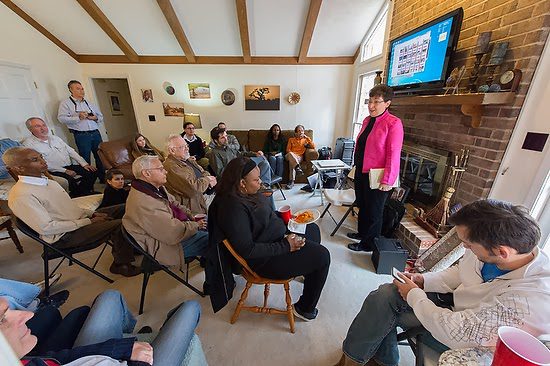
While I have tried for many years to get a large group of photographers together for mainly social time to get to know each other, it has been a struggle. Finally, however, this weekend, we had thirty-two people show up for our meeting of Christian in Photojournalism Atlanta/Southeast at our home in Roswell, GA.

I talked to my friend Ken Touchton, who said he wasn’t surprised because we had created a mini-conference.

Berrie Smith, a camera repairman, who works with Nikon and Canon regularly, was there cleaning people’s camera sensors and doing minor repairs. [Fuji X-E2, 18-55mm, ISO 2500, ƒ/8, 1/125 with a fill-flash set at -1 EV]

We had a keynote speaker, a devotional, camera repairs, and complimentary lunch provided by Chick-fil-A.

Dorie Griggs led our devotional time [Nikon D4, 14-24mm, ƒ/9, ISO 12800, 1/100]

Dorie Griggs reminded each of us while our jobs may isolate us from one another that, we do need to come together and rely on each other for support.

1 Peter 4:10
New International Version (NIV)
Each of you should use whatever gift you have received to serve others, as faithful stewards of God’s grace in its various forms.

The Bible verse she used to remind us that we should use our gifts to reconnect with one another was 1 Peter 4:10.

Craig Carden and John Bazee discover they have a great deal in common. Both have worked for radio stations and love music and photography. [Nikon D4, 14-24mm, ƒ/9, ISO 12800, 1/50]

What was different from most photography communities is we encouraged spouses and significant others to come to the meeting. The reason is they are part of our support system. Those who support photographers also have a lot in common; they found out.

Also, spouses enjoyed meeting their spouse’s colleagues and getting another perspective on someone else doing photography.

Peggy Frazeur and Carrie Carden spend some time getting to know each other for the first time at this meeting.  [Nikon D4, 85mm, ƒ/3.5, ISO 8000, 1/200]

Since I am a photographer more than a writer, I am hoping that these photographs are helping you see the emotional connections and the enjoyment people showed in being in this environment. Most everyone commented how this was a blessing for them.

Coming together and talking to others, and doing photography can dramatically affect our emotional condition. Then, of course, people brought their latest cameras to show each other. We all have to be a gearhead to be a successful photographer, and finding something that is helping us do a better job is so exciting we enjoy sharing it with someone. But, of course, the big hit with most folks was pulling out their mirrorless cameras and showing all these cameras will do that fit in a pocket.

[Fuji X-E2, 55-200mm, ISO 6400, ƒ/4.5, 1/50]

In December, the Atlanta Journal-Constitution laid off all of its ten photographers. They then gave each of them the first shot at one of their seven new multimedia specialist positions. As a result, they no longer have just a photographer position on their staff. Ben is also no longer just at the desk; he is covering breaking news daily. In this role, he is often the only AJC journalist on news scenes and is relied on to provide still photos, video, audio, and reporting with accuracy and immediacy. In addition, he frequently contributes video to WSB-TV and audio to WSB Radio during his work.

We asked him to walk through a typical assignment and how he gathers all this for all those outlets.

Ben’s Breaking News Workflow:

  • Get photos first: He arrived at the airplane crash and knew from experience that he would be moved back by the police as they established the boundaries. “I can get quotes later, but I cannot get the photos later.” So he has an Eye-fi card in the camera. He tags a photo, and the camera automatically sends the picture using his hotspot to the newspaper/radio/TV station, where they can pull those while he continues to work.
  • Shoot Video on iPhone: He shoots 10-second clips that they post to the websites, which WSB-TV can also use. He doesn’t have to send the video if they arrive with a crew.
  • Reporting Role: He gathers audio with his iPhone, and then he sends these interviews by email to the assignment desk, where they have a writer turn this into copy for the web.
  • Touches base with the assignment desk: They may call and ask for more.
  • Formal editing: He will do minor editing of images and captioning to add to the galleries online. He will also check the photos pulled from his pictures that were automatically transmitted. For example, he has pulled photos off the web that accidentally showed a dead person in an image.
Gibbs Frazuer is one of the people who shared their work. We have always given 2 – 5 minutes for anyone to share their work. The short presentation is an excellent way for all of us to see what each other is doing and also a perfect time to practice showing our work. [Fuji X-E2, 18-55mm, ISO 6400, ƒ/8, 1/35]
[Fuji X-E2, 18-55mm, ISO 6400, ƒ/8, 1/25]
Our First Project
I wanted to introduce the idea of shooting a project where we could each find a person and tell their story. So I showed Chick-fil-A’s Every Life Has a Story to introduce the concept.
[youtube https://www.youtube.com/watch?v=2v0RhvZ3lvY]

We will all find a subject and put together a package which we will share at our next meeting. We are hoping to find a space to hold an event where we can invite the subjects and the community to see the stories and maybe for us to leave an exhibit of some prints from those stories.

We are enjoying our Chick-fil-A sandwiches and getting to know one another. [Nikon D4, 14-24mm, ƒ/9, ISO 12800, 1/200]

When we all arrived, everyone was meeting new people for the first time. In one way or another, we asked each other, “So what’s your story?” We all want to connect. We not only want to communicate by getting to know someone’s story, but we also want to share our story.

Dorie Griggs and Laura Espeut wanted a photo together. That is what friends do when they get together–smile. [Nikon D4, 14-24mm, ƒ/9, ISO 12800, 1/80]

Do you have a community? Look for a community to join and if there is not one you can find, then start one yourself.

Remember this is what God intended, as we see in 1 Peter 4:10 “Each of you should use whatever gift you have received to serve others, as faithful stewards of God’s grace in its various forms.”

Once you understand God’s grace, you cannot help but want to pay it forward through service to others.

So, when are you getting together with some photographers?

Photographing school plays

Reading Time: 5 minutes

Nikon D4, 70-200mm, ISO 11,400, ƒ/5, 1/500

Be Prepared

Here are a few tips before you start shooting the performance.

  • Arrive Early—You need some time before the curtain goes up.
  • Fast lens and/or high ISO—You need gear to take low-light photos.
  • Find a good seat—You might think the front row is the best, but sometimes the back row is the best. If it is assigned seating, you might want to go before you buy a ticket to the venue. In general, I find the seats in the center to give you more opportunities than from the side.
  • Test Shots—Often, you can make some test shots to set your exposure correctly.
  • White Balance—Shooting on Auto White Balance for a theater production is the worst possible time to use this setting. Often, the productions use colored lights, which can have your camera correcting, giving your actors funny skin tones. Custom white balance is ideal, and second, you can try some presets like tungsten to get you close.

White Balance

Pleasing skin tones are the number one thing that separates hobbyist photos from pros.

My secret weapon is the ExpoDisc.

 ExpoDisc EXPOD2-77 2.0 Professional White Balance Filter 77 mm, 82mm (Black)

ExposDisc goes in front of the lens and then you use it to get an incident reading rather than a reflective reading of the light.
Notice the direction of the light hitting the subject.  You move to the same position to get the light reading below.
Point the camera toward the direction of the light that is falling on the subject.

If the subject is facing me and the light is from the side, I face the camera with the ExpoDisc on it so it is pointing toward the camera position.  The chart above is to help you understand the concept, but you can modify it.

One way you can modify it is if the light is the same where you are standing, you could cheat and take a reading from where you are.  The problem that can arise is if they are lit by Window light and the camera position is in the shade; your color balance will be off if you do not take it from the subject’s perspective.

Nikon D4, 28-300mm, ISO 3,600, ƒ/5.6, 1/400

If it is supposed to be a silhouette and you get a photo like mine, that’s great. However, if you are supposed to see their faces, you must make some adjustments.

Nikon D4, 28-300mm, ISO 4,500, ƒ/5.6, 1/320

There are a few ways to adjust to get a good exposure to skin tones. First, use spot metering if your camera has it. On the Nikon D4, I can choose selective focus and spot metering. I then have 51 different points to move the focus/spot metering to take the photo.

Using spot metering and selective focus with the Nikon D4, I have red brackets to move where I want the focus and exposure to be set.
Nikon D4, 28-300mm, ISO 12,800, ƒ/5.6, 1/320

Waiting for the light

While waiting for the peak moments in the scene, you also have to wait for the best light. For example, this witch’s hat had her face in the shadows most of the time she was on stage., but when she was singing those dramatic high notes, she put her head up and said, you have your shot.

Post-production is critical.

Nikon D4, 70-200mm, ISO 1,2500, ƒ/2.8, 1/500

No Flash—That is the rule for stage performances; therefore, you are at the mercy of what stage lighting you see. Unless your small town has some incredible endowment for the arts, your lighting on the stage will not look like Broadway or TV shows.  Throughout this production, the light value on one person would look great, and the other person was blown out or silhouetted.

This is where taking the photo into either Adobe Lightroom or PhotoShop can help salvage a photo. This is one of the rare moments I have to fix photos in post-production. It isn’t because I screwed up, it is because the lighting just isn’t even or at least acceptable for photos.

This is the photo before I cropped it or made changes in post-production. Notice that the kneeling actress is well-exposed and not blown out. Generally, you can open up the shadows but do very little with something blown out without detail.

Nikon D4, Sigma 120-300mm ƒ/2.8, ISO 2,500, ƒ/2.8, 1/500

Get Close

Don’t shoot the entire stage all the time. Vary your images using long glass, like a 300mm lens or longer, to isolate an actor. The lighting guys do this with a spotlight to make you look at just one place, but you can do it with lens choice.

Nikon D4, Sigma 120-300mm ƒ/2.8, ISO 2,800, ƒ/2.8, 1/500

Think Marching 

Nikon D4, 28-300mm, ISO 7,200, ƒ/5.6, 1/250

The photos look fantastic when you see the military marching in formation or marching bands, and everyone is in sync.  It looks better when everyone is in full stride because it creates motion. Closer the legs are together, they look like they are standing still, even tho they are moving.

Nikon D4, 28-300mm, ISO 4,000, ƒ/5.6, 1/250

Summarizing

Please arrive early, shoot many photos, and plan on doing some post-production to get the quality I am getting here. Your camera phone will not get this quality. Nor will having excellent gear. What gets this quality is experience. So please arrive early to take test shots so you do not need to shoot your first images of the play when it is live.

Off-camera flash and gels for the sky

Reading Time: 2 minutes

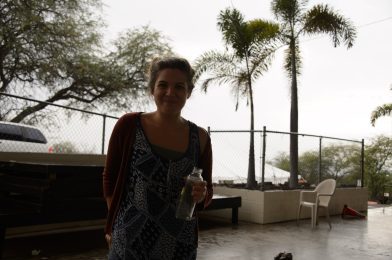
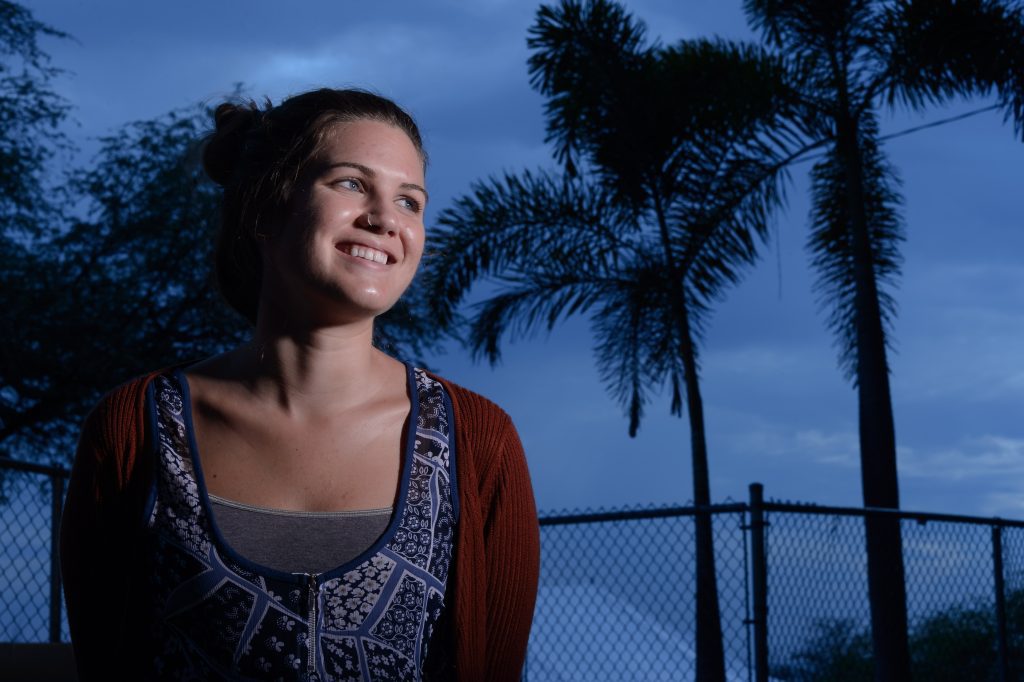
When I get this kind of situation on a cloudy day in Kona, Hawaii, sometimes I fix it with flash.

By using an off-camera flash, I set the flash to be 2 stops over the available light, and the camera I underexposed by -2 stops.

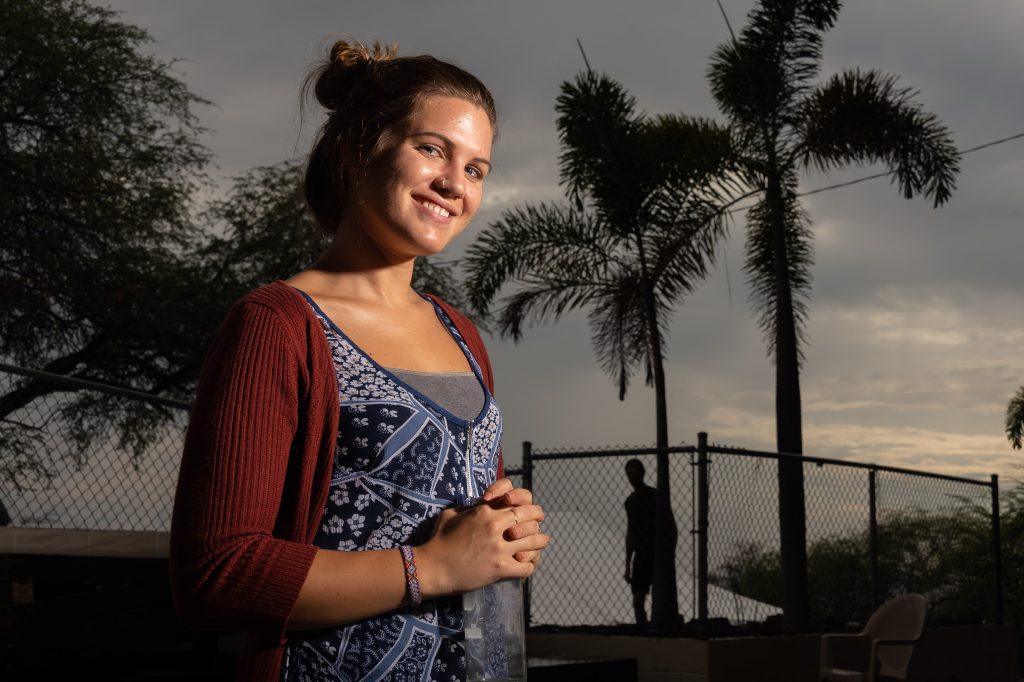
While this made the photo much better, the color didn’t pop in the background.

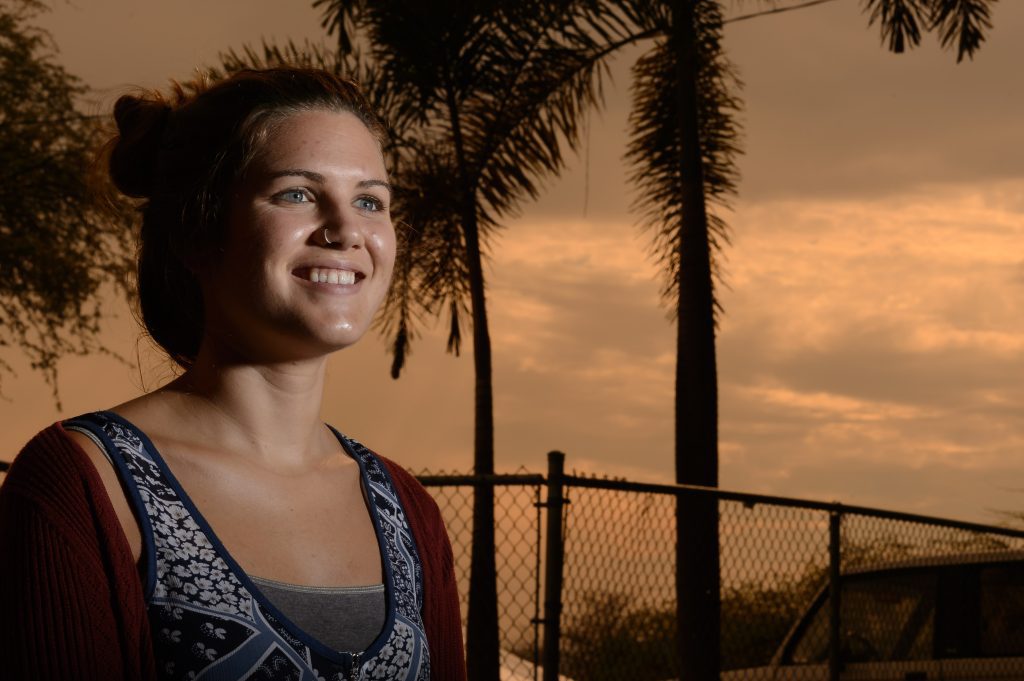
Here I added a CTO +1 and did a custom white balance for the flash on the model’s face. I could have dialed the white balance to tungsten and been very close.

I put a CTB +1 on the flash in the last photo and then did a custom white balance. Because the camera compensates for the blue in a flash, it adds orange to the scene. So where the flash hits the model is now the proper color temperature.

So, which one do you like the best? Do you want a flash or add a blue or orange filter to change the background?

Seven Reasons Not to Become a Freelance Professional Photographer

Reading Time: 3 minutes

7) Not a self-starter—In your first year or so you will be getting up with no photo shoots on your schedule. You must be able to fill your day with something that will be productive. If you are someone that takes initiative and rarely needs someone to tell you what you should be doing at work, then you might make it as a professional photographer.

6) Procrastinator—You may know what you need to do each day, but you can easily get distracted and not stay on task. If you have seen the movie “UP” then you will recognize the comment—Squirrel.  I know a good number of former photographers who just didn’t get around to doing what they should have been working on and now they are no longer working professional photographers.

Nikon D4, 70-200mm, ISO 6400, ƒ/2.8, 1/100–Marc Broussard

5) Hate rejection—If you get easily discouraged then you do not want to go into business for yourself—in any field. Just because your family and friends think you are a great photographer is not the same as everyone lining up to pay you to take photos. If you have people lining up and begging you to shoot things for money—then this is way different and makes you the only person I know to be in that situation. Successful photographers are only selling to 5 – 10% of those people they have contacted. 90 – 95% of the time they are rejected.

4) Poor Negotiator—For the most part photography is not so cookie cutter. This is very true for the commercial photographer. Each job is different from the rest and requires you to price differently. Due to this there tends to be a lot of negotiating with clients. Sometimes this may sound harsh when someone is trying to get you to lower your price.

Nikon D4, Sigma 120-300mm ƒ/2.8 DG OS HSM S, 2X, ISO 10000, ƒ/4, 1/2000

3) Do not like taking direction—many “artists” tend to think they know better what they need to create. Unless you are going to be a “fine art photographer” then you will need to execute other people’s ideas. You will need to learn how to bend to keep a client and get paid.

2) Do not like sitting at a computer for long periods—You will need to spend time editing your work for sure, but you will spend a lot of time connecting with people through emails, website, blogs, creating printed materials and searching the web for clients to name just a few of the things you will need to be doing on a computer.

Nikon D4, 85mm ƒ/1.4, ISO 200, ƒ/1.4, 1/80

1) No business skills—You need to understand pricing of your services that will help you make a profit for the long haul is not easy to do. You also have to be a risk taker in running your own business. Almost nothing is a sure bet and you will have to put money behind ideas that may or may not work. You also need to know how to market yourself to the world.
Now you don’t have to be good at all these things, but they all must be done to remain a professional photographer. You can outsource some of these, but the outsourcing will cost more than if you did them yourself. At a certain point in your growth of your brand you will find it necessary to outsource some of this to grow your business.

You might think of more things to add to this list–but freelancing full-time is not for the faint of heart.

Super simple off camera flash portrait

Reading Time: 3 minutes
Nikon D4, 85mm ƒ/1.4, ISO 200, 1/8000

The key to any good photo is the old KISS rule, which is: Keep It Simple, Stupid.

For this portrait of my dad, I chose to shoot outside and use some of the sunny weather we were having down at the beach. We shot this outside on the balcony of our cottage. The location was chosen because it was the fewest steps I needed to make to get a good photo.

Start with the sun backlighting the subject.

One of the reasons I always start with the sun on the back of the subject and not where it is lighting their face has to do with expression. I find i  almost impossible for getting a good expression when people are squinting and straining due to the sun being directly in their eyes.

The benefit of backlighting the subject is that you get a good rim light around it, which will help you separate it from the background.

Look for a darker background.

I like to find a simple background without blown-out highlights. I normally look for a much darker background than I chose here. My point is to be careful, or your blinking highlights will be in the background and distracting rather than complementary to the subject.

Choose a shallow depth-of-field

I am using my favorite portrait lens, my Nikkor 85mm ƒ/1.4, for this photo. When shooting with this lens, you need to be sure that the eyes are the sharpest point in the photo. I still recommend having the eyes be where you focus, even if you shoot this at ƒ/22.

In general, if you are doing a portrait of a person and not an environmental portrait, then the background and surroundings are not really that important. Since that is the case here for this photo, I threw that background way out of focus by shooting at an aperture of ƒ/1.4.

Fill Flash

I love to use an off-camera flash as my fill/main light outside for portraits. Here is a diagram showing where the sun was and the off-camera Nikon SB-900 speedlight placement for this photograph.

You can trigger the off-camera flash in many different ways. I often use the Nikon SU-800, which uses infrared to trigger the off-camera flash. I chose to use the PocketWizard Mini TT1 on the camera with the AC3, which lets me alter the power of the flash from the camera and not the flash itself. This saves you a lot of steps back and forth for tweaking those fine adjustments.

The Nikon SB-900 has the PocketWizard FlexTT5 on it, which receives the signal and talks to the camera’s TTL system to give consistent exposures.


I placed the light 45º to the right of the camera and not quite 45º above the eyes. I am a little lower since my subject has deep-set eyes. 

What is the benefit of the flash, say, over a reflector? If I use the reflector, I will be bouncing the sun into their faces and often getting the squint I was trying to avoid.

Second, I get good skin tones by using the flash, and the color temperature of the flash gives it that “pop” I like to see.

Third, I like seeing a catch light in the eyes, and the flash helps me be sure one is there. I think it helps bring the eyes to life.

Go and try this setup yourself. Adjust it to your conditions and the subject, and see what you come up with.