Starting School: Be a Knowledge Seeker

Reading Time: 7 minutes
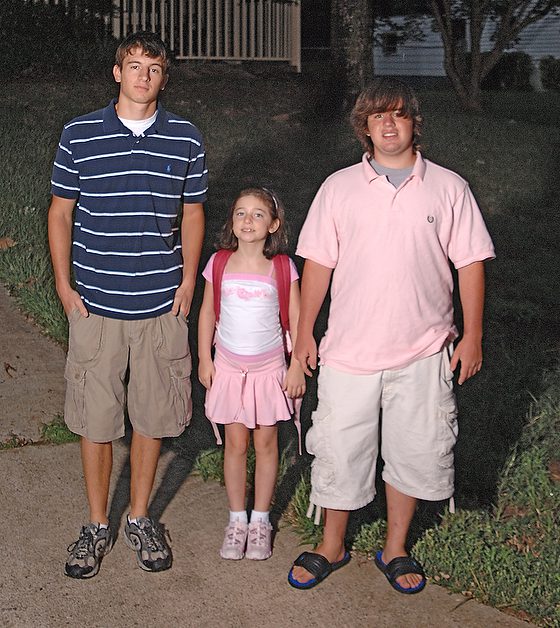
Nelson, Taylor, and Chelle on the first day of school, 6:50 a.m. August 14, 2006. [Nikon D2X, AF Zoom 24-120mm f/3.5-5.6D, ISO 400, ƒ/7.1, 1/40]

The first days of school are happening this month all over our country. Our family always took a photo of the kids on their first day. We were all excited every year for that first.

Watching your child grow in stature through the years was just one way of seeing positive changes for them and you.

Nelson graduated from Roswell High School on May 25, 2007. [Nikon D2X, Sigma AF Zoom 120-300mm f/2.8D, ISO 100, ƒ/2.8, 1/125]

When Nelson, our oldest, graduated from high school, he was now in charge of that next school choice and what he would take. Most of us have fewer choices about what to take up through high school. We had some say in which science course or English course we would take, but we still had few options compared to the next step–college.
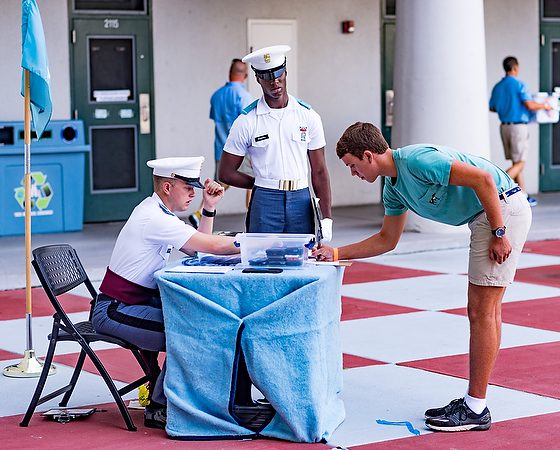
Matriculation Day 2017
The Citadel. [Nikon D5, 85.0 mm f/1.8, ISO 100, ƒ/2.8, 1/500]

When it comes to the first days at college, the experience varies greatly; we came to learn when our oldest, Nelson, decided to enroll at The Citadel. My wife helps other parents each year by assisting them in navigating military college life and teaching them how best to support their students without being helicopter parents.
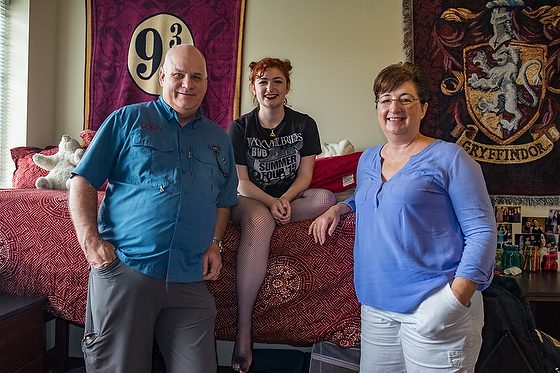
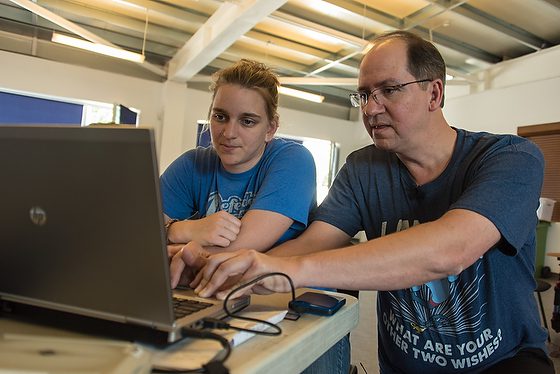
She was moving Chelle into her dorm room for the start of her first year at Columbus State University. She arrived early to participate in Camp Prowl, a freshman experience and the program’s first year. [Fuji X-E2, XF18-55mmF2.8-4 R LM OIS, ISO 3200, ƒ/5, 1/100]

When the youngest, Chelle, went to college, the experience was so different.

Both of them embraced college and all that it entails. They did a great job picking majors that perfectly suited each of them.
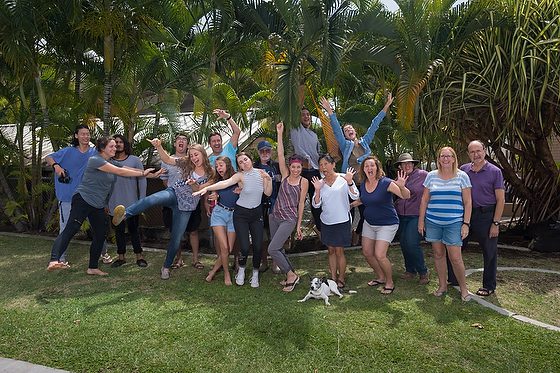
Youth With A Mission Photo School 1 [Fuji X-E3, XF10-24mmF4 R OIS, ISO 200, ƒ/6.4, 1/300]

Others choose alternative education, like YWAM’s University of Nations in Kona, Hawaii. These students take one course at a time for 3 to 6 months. This is a group photo of the class I taught this past February.

Most colleges and universities have some “general education” requirements, forcing students to take at least a few math and science courses. Still, many non-science majors will take the bare minimum and work hard to put those off as long as possible. Disgruntled spring-term seniors who don’t want to be in the course but can’t graduate without it are a regular and unpleasant feature of “Gen Ed” courses.

I had a one-course requirement for statistics that frustrated me to no end. I took the class three times. The professor’s English was complicated to understand my first time taking it. Later, when I retook it, I realized this wasn’t the only reason I struggled with that course.

“Any fool can know. The point is to understand.”

― Albert Einstein

I then retook the class at Brookdale Community College while home from East Carolina University during the summer. I still struggled. I finally passed the course during summer school at East Carolina. My motivation that last time was I needed to graduate.

In college, everyone is looking to take an easy or fun class that counts toward their degree. In these classes, students’ interest in the subject is often better than their interest in a “required” category, but from my experience, this is not much better than where their passion lies.
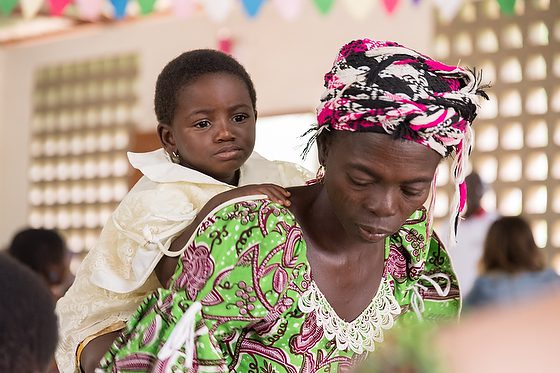
Togo, West Africa [Nikon D5, Sigma 24.0-105.0 mm f/4.0, ISO 5600, ƒ/4, 1/100]

As an adjunct professor, I felt like this mom with a child on the back through the years at different colleges. I was carrying these students way too much. There was little self-motivation on their part.

I stopped teaching in a college’s communications program a few years ago. I had taught there for many years, but the problem was simple: the students didn’t care to master the subject.

However, I continued to teach photography workshops. There was a big difference between the two classes. In the workshops, every student I had wanted to learn the material.
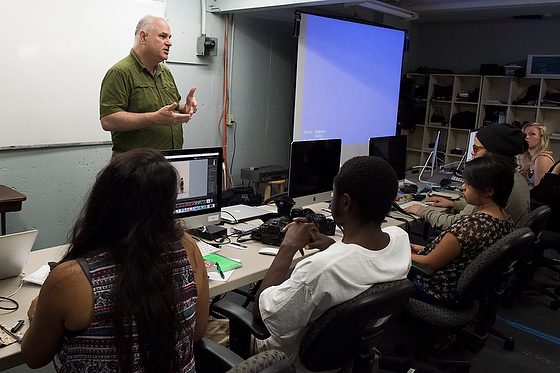
Stanley is teaching at the University of Nations in Kona, Hawaii. photo by Robin Nelson [Nikon D810, 24.0-70.0 mm f/2.8, ISO 3200, ƒ/7.1, 1/60]

I never had a student break down in the “college” courses in tears because they wanted to understand something wrong and were upset they were not comprehending the content. During my first time teaching at the University of Nations in Hawaii, I again fell in love with teaching. I cannot thank Dennis Fahringer enough for inviting me to teach Lighting and Business Practices.

Everyone seems excited when I teach the studio lighting but is not as thrilled with the business practices. Through the years, I have been able to help more of those students jump-start their professional careers as photographers. It had less to do with the lighting and more about the business practices.

“Tell me and I forget, teach me and I may remember, involve me and I learn.”

― Benjamin Franklin

Now, more than 12 years later, I hear that the reputation of the class teaching business practices has many eager to learn this topic. Still, many in the class are not as enthusiastic about it as I wish they would be.
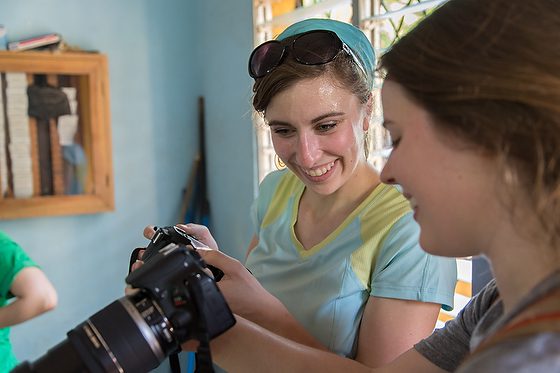
StorytellersAbroad.com in San Benito, Nicaragua. [Nikon D5, Sigma 24.0-105.0 mm f/4.0, ISO 1600, ƒ/4, 1/100]

The best students are those who are “knowledge‐seeking.” These are those who are emotionally engaged in expert work.

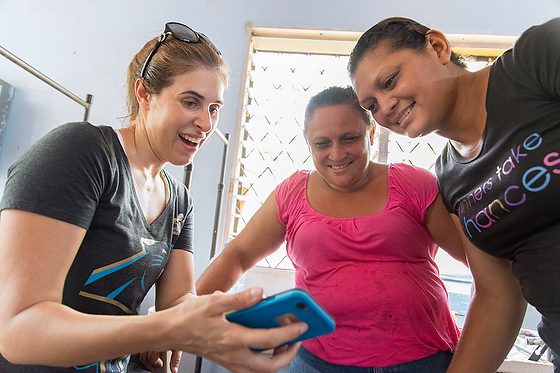
This photo of the two young ladies is so exciting to learn that they shared during their shooting in the Nicaragua workshop I did in the summer of 2016.

Since 2008, I have attended The Grady College of Journalism and Mass Communication at the University of Georgia in Athens, Georgia, to guest lecture on business practices for Mark Johnson. These were so different from the students I had taught at other colleges.

When Mark called me last fall asking if I would teach two sections of Intro to Photojournalism this coming year, I said yes. Since then, I have dug deeper into the program.

I asked if the class students were constantly engaged in the content. You see, that was what turned me off before. An instructor can only do so much to get a student excited. The student must also make an effort, or there will be no success.

Mark told me that there are two classes that they need Intro to Photojournalism to take later before they graduate. In those later courses, they must do photojournalism with videography, writing, layout, design, and posting projects on social media and blogs. If they don’t come out of the Intro class knowing photojournalism well enough to do it professionally, they will not be able to do those classes well.
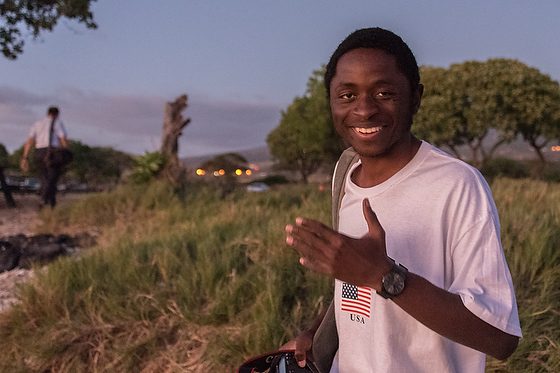
This is to Kongs Shamaki. [Nikon D750, 28.0-300.0 mm f/3.5-5.6, ISO 12800, ƒ/4.5, 1/40]

Some of the students I have taught life worldwide are pretty successful today. Kongs has a successful photography business in Nigeria and West Africa. He was excited to take photography classes and kept in touch, letting me know all he was doing.
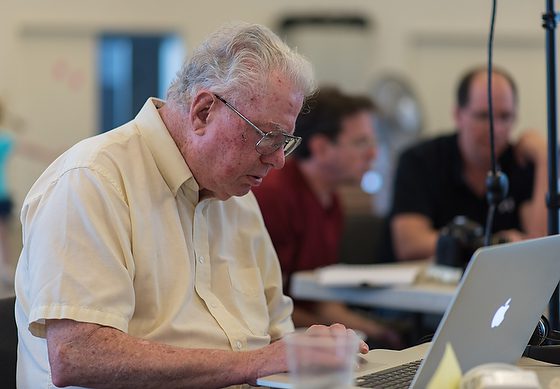
Tom Kilpatrick during the Storytellers Abroad Workshop in Bucharest, Romania. [Nikon D750, 85.0 mm f/1.8, ISO 450, ƒ/1.8, 1/100]

Tom Kilpatrick is an excellent example of how you are never too old to learn. Tom had trained thousands of college students to help young photographers as a newspaper photographer. He taught a few of my closest friends who went to National Geographic.

Going from film to digital was very difficult for Tom. He told me a few times he almost gave up photography because of how complex the new technology was for him to understand.

After finally making the switch, he decided to go to the Storytellers Abroad Workshop at 72 to learn how to do video editing and storytelling in this new medium.

How we value the future affects our desire to learn.

Ever since Dennis Fahringer asked me to teach, I have been working with students who had a passion for using photography as a profession. Extraordinarily, few have ever been gifted and just got the content quickly. Most have a moment where you can see a real struggle with the content on their faces.

There is a fundamental difference between these students who come up against a wall they push through. When I went to pass statistics, I wasn’t interested in ever using it again. These students are overcoming all the struggles of mastering the content because they want to use photography in the future.

“It is not that I’m so smart. But I stay with the questions much longer.”

― Albert Einstein

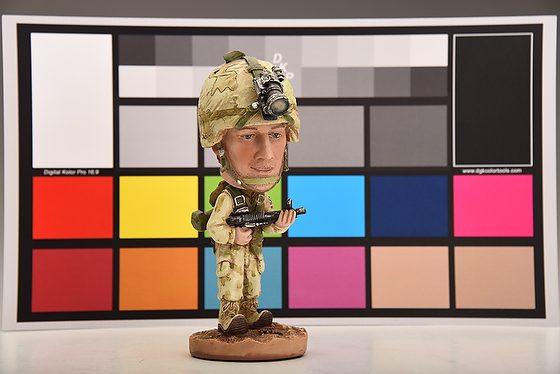
I have autism, and I think Aspergers Syndrome best describes my situation. One of the traits is an obsession with specific, often unusual, topics for those with autism. It was all about G.I. Joe when I was young. Thankfully, I grew out of that obsession.

Over the years, I would find different topics from playing trumpet, chess, toy models, and today, photography.

I was blessed with Autism. This helped me overcome difficulties because my wiring wouldn’t let it go.

Try to learn the content in all your classes this new school year. You may not see it now, but this will help you live a better tomorrow.

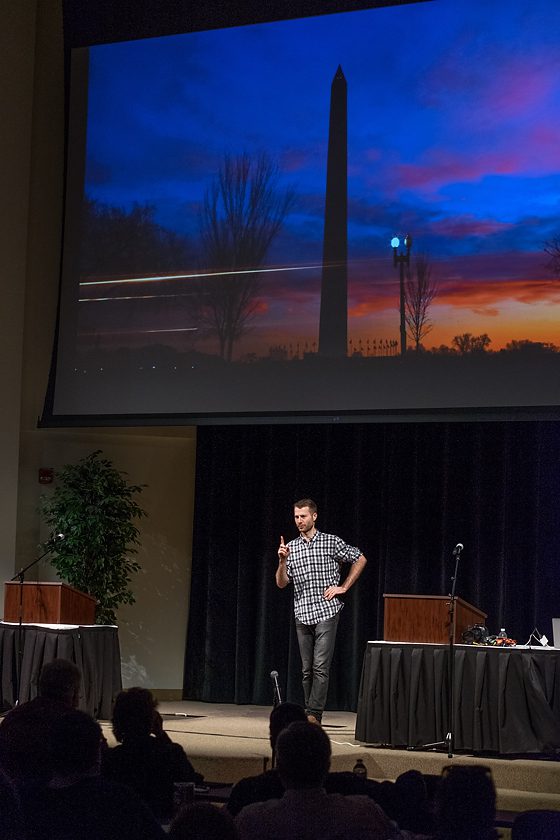
Monday morning pick me up

Reading Time: 5 minutes
Garrett Hubbard speaking at the Southwestern Photojournalism Conference, asked everyone to examine our identity.

“The most powerful words ever said to you are your own,” said Garrett Hubbard. The self-talk we do can be the most damaging or uplifting. We are in charge of which that will be.

Good friend James Dockery [Fuji X-E2, 18-55mm, ISO 400, ƒ/3.6, 1/100]

“Walk with the dreamers, the believers, the courageous, the cheerful, the planners, the doers, the successful people with their heads in the clouds and their feet on the ground.” – Wilfred Peterson.

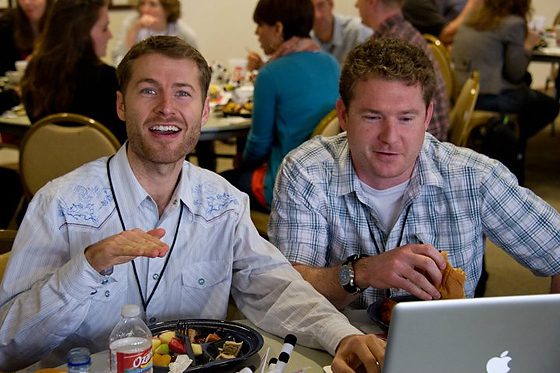
I have some of my best friends. James Dockery, who currently works as a top video editor for ESPN, is leading the way in incorporating innovative editing and communication techniques.

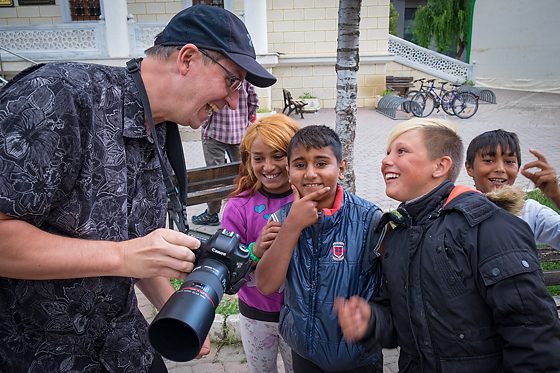
James Dockery enjoys taking photos and showing the boys in the Balkans their photos.

James has me laughing as much as anyone these days. I love his teaching style, and most of all, I love his positive attitude and joy in living.

Stanley and James are enjoying some Macchiatos. [Fuji X-E2, 18-55mm, ISO 400, ƒ/2.8, 1/100]

We didn’t drink all these by ourselves. We had a few students in the workshop help us with all these macchiatos.

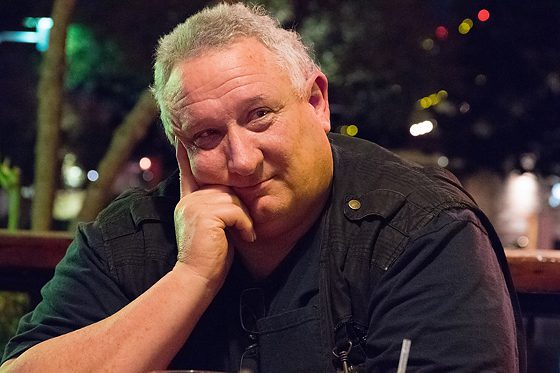
Morris Abernathy, my good friend for more than 30 years

When I first met Morris Abernathy, I knew I had found a good friend. No one has ever had me laughing as hard as Morris. He has helped me see the world in new ways.

Morris provided coverage for the Dallas Cowboys, the Tennessee Titans, the Texas Rangers, California wildfires, the Oklahoma City bombing, 9/11, and five U.S. presidents.

Morris and I have had so many heart-to-heart conversations. He was a good friend who helped me during tough times with work and personal life. He is one of the best listeners I know.
Everyone needs a Morris in their life.

Robin Nelson

For many years my agency was Black Star. Howard Chapnick had told me about Robin Nelson, another Black Star photographer, in Atlanta when I first moved here in 1993, but it would be more than ten years later that we would meet.

Robin has a passion for social justice and human rights issues, which I also have a heart for doing. I quickly realized how outstanding Robin is at capturing people’s stories. Robin always says, “Everyone has a story if you dig deep enough.”

Dorie Griggs

Now my best friend of all is my lovely wife, Dorie Griggs. She has helped me grow in so many ways. Her heart for serving others is truly inspiring.

I have met more interesting people from all walks of life because Dorie has made it her purpose to be inclusive of people from so many different backgrounds.

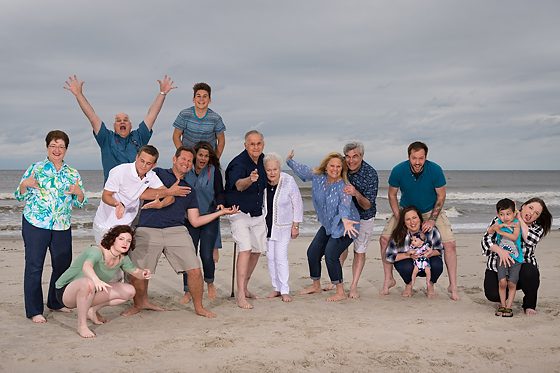
Leary family Family Photo at Ocean Isle Beach, NC. [Nikon D5, Sigma 24-105mm, ISO 100, ƒ/8, 1/250 – (2) Alienbees B1600s triggered with Pocketwizard TT5 & TT1]

Now, my family has also been a great support system for me. My and Dorie’s family have been there for us throughout everything.

Griggs Christmas Family Photo [Nikon D5, Sigma 24-105mm ƒ/4, ISO 400, ƒ/8, 1/200 – (2) Godox V860IIN + Godox X1NT with MAGMOD MagSphere]

Now with all this support, you would think this is the key to success, but people with this type of support and more have been depressed and even suicidal.

Garrett Hubbard [left] at a previous SWPJC.

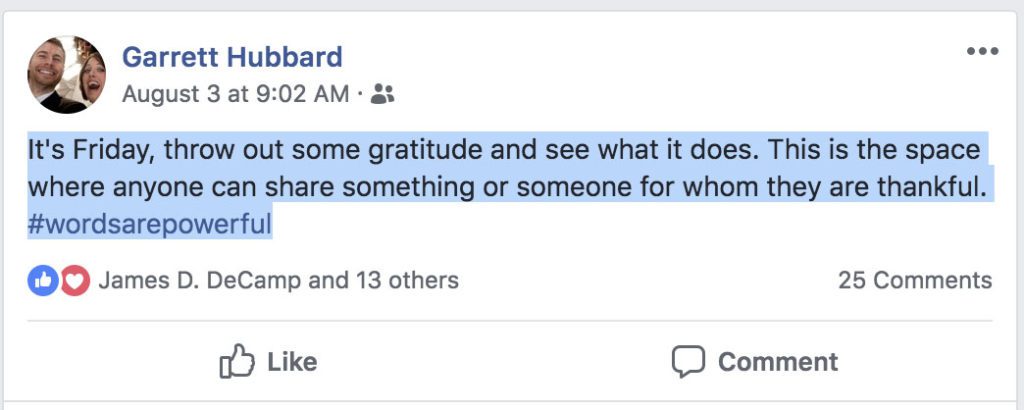
So every Friday on my Facebook feed, I see this:

Garrett continues to build up each other. He knows this can help each of us with our inner voice.

An old Cherokee told his grandson, “My son, there is a battle between two wolves inside us all.
One is Evil. It is anger, jealousy, greed, resentment, inferiority, lies, and ego. The other is Good. It is joy, peace, love, hope, humility, kindness, empathy, and truth.”
The boy thought about it, and asked, “Grandfather, which wolf wins?”
The old man quietly replied, “The one you feed.”

– Author Unknown

If your self-talk is negative, then it needs to change. One of the best ways to do that is to surround yourself with positive people. I have done this all my life.

Whatever you do in life, surround yourself with smart people who’ll argue with you. – John Wooden

Surround yourself with the right people, and realize your worth. Honestly, there are enough bad people out there in the world – you don’t need to be your own worst enemy. – Lucy Hale

“Be a star in someone’s dark sky.”

― Matshona Dhliwayo

While finding your support system, also remember to be the one who lifts others.

“Some say, “Once you learn to be happy, you won’t tolerate being around people who make you feel anything less.” My Christ says, “Your job is to get off your self-righteous butt and start reaching out to the difficult people because my ministry wasn’t about a bunch of nice people getting together once a week to sing hymns and get a feel-good message that you may or may not apply, depending on the depth of your anger for someone. It is about caring for and helping the broken-hearted, the difficult, the hurt, the misunderstood, the repulsive, the wicked, and the liars. It is about turning the other cheek when someone hurts you. It is about loving one another and making amends. It gives people as many chances as needed because God gives them endless chances. When you do this, then you will know me, and you will know true happiness and peace. Until then, you will never know who I am. You will always be just a fan or a Sunday-only warrior. You will continue to represent who you are to the world, but not me. I am the God that rescues.”
― Shannon L. Alder

The True Cost of Great Storytelling: Why Good Journalism Takes Time

Reading Time: 3 minutes

“It’s gonna take time, a whole lot of precious time.”
– George Harrison

In the age of instant everything, speed often gets mistaken for quality. Businesses reward those who can move quickly, and journalism is no different. But when it comes to storytelling—especially in journalism—it is essential to get it right. Speed without depth risks creating shallow stories that lack integrity, like “parachute journalism” and sensationalism. For those who aim to tell impactful, authentic stories, here’s why patience and precision are indispensable.

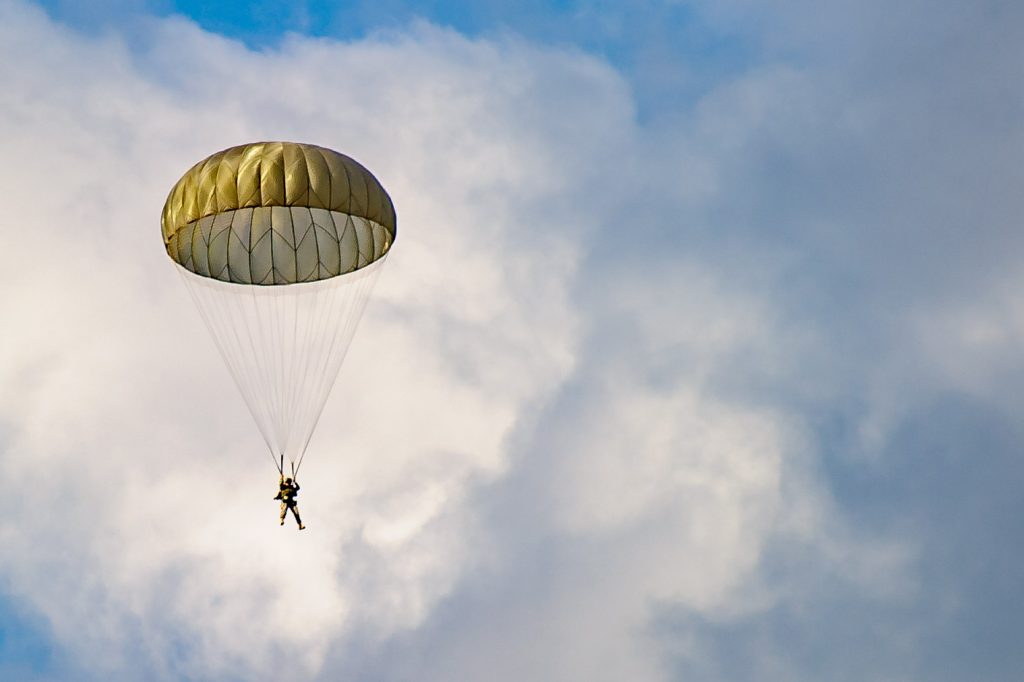
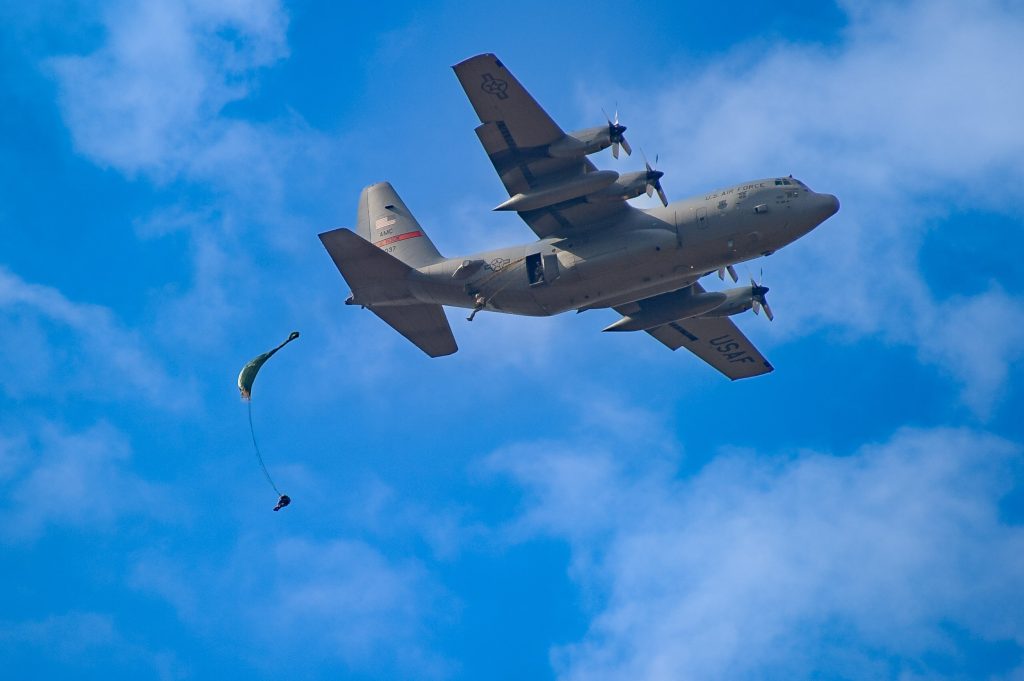
Airborne School First Jump of School

The Drawbacks of “Parachute Journalism”

In the military, airborne troops can be deployed almost anywhere, often with little warning and minimal preparation time. This concept, known as “parachute journalism” in the media, involves reporters dropping into unfamiliar territories and trying to cover stories without in-depth knowledge. This approach, often rushed, can lead to errors, misinterpretations, and a lack of understanding about the community or subject. The result? Stories that miss the mark and ultimately erode public trust in journalism.

Similarly, “yellow journalism” prioritizes attention-grabbing headlines and sensationalism over well-researched, accurate news. While both approaches differ in form, they stem from the same issue—rushing without prioritizing the time and effort needed for accuracy.

Airborne School First Jump of School

Essential Ingredients for True Journalism

True journalism requires far more than quick dispatches and viral headlines. Here’s a breakdown of the vital ingredients that make stories resonate with the public and stand the test of time:

  1. Truth through Verification
    Journalism is built on the professional discipline of assembling and verifying facts. Rushing to publish before verifying can lead to misinformation and damage to credibility. Thoughtful verification is at the core of storytelling that people can rely on.
  2. Commitment to Community
    Great journalism serves the community first, not advertisers or click-through rates. The audience consists of everyday citizens who trust journalists to present facts responsibly. Serving the community over profit helps build credibility and trust in the long term.
  3. Objective Methods
    Journalists must consistently test information objectively. Unlike social media, where “trusting your gut” may prevail, journalism’s backbone lies in systematic verification, minimizing bias to maintain integrity.
  4. Independence in Reporting
    Independence is crucial to avoid bias, whether pressure from influential figures, advertisers, or even internal influences within a newsroom. A journalist’s loyalty should be to the truth, not any organization or crowd.
  5. Watchdog Role
    Journalism is crucial in holding institutions accountable by keeping the public informed. From fact-checking public statements to investigative reporting, the journalist’s role as a “watchdog” helps citizens stay informed about issues that may demand social change.

The Challenge Today: Fighting “Fake News” and Mistrust

With sensational stories and unchecked information rampant online, the public often turns to friends or unverified sources rather than professional journalism. This preference has contributed to a rise in “fake news,” exploiting the erosion of trust in established media. Unfortunately, the actions of a few unethical journalists have cast a shadow over the entire profession, just as isolated scandals have in other fields. Now, many journalists find themselves in an uphill battle to restore trust.

The Takeaway: Great Stories Require Patience

Good journalism doesn’t happen overnight. When you rush, you risk distorting stories and letting assumptions shape the narrative. Take the time to understand the subject, research meticulously, and verify every detail. As George Harrison sang, “It’s gonna take patience and time.” You can only deliver stories that genuinely resonate, inform, and inspire change.

Mother nature continues to destroy lives on Hawaii

Reading Time: 4 minutes
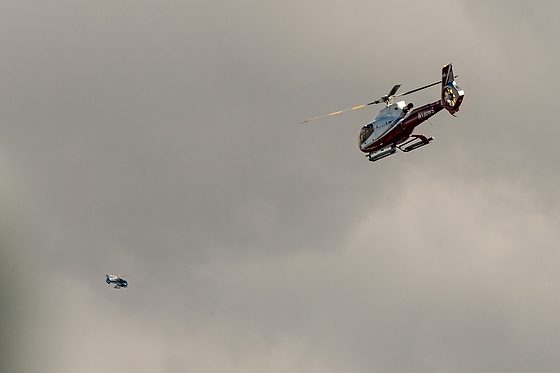
Paradise Helicopter Tour
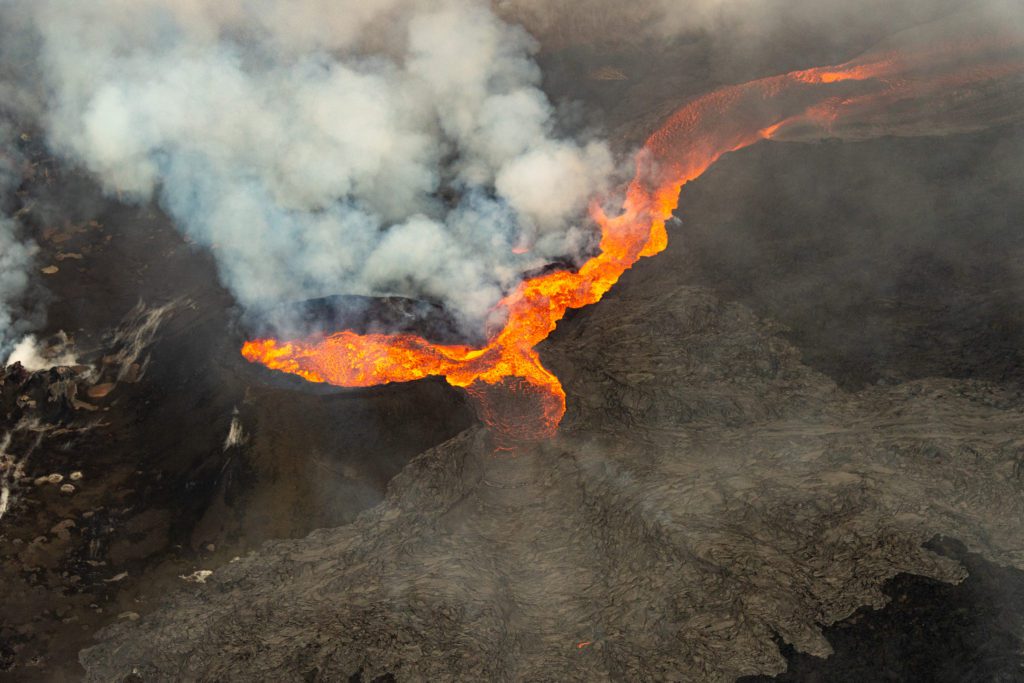
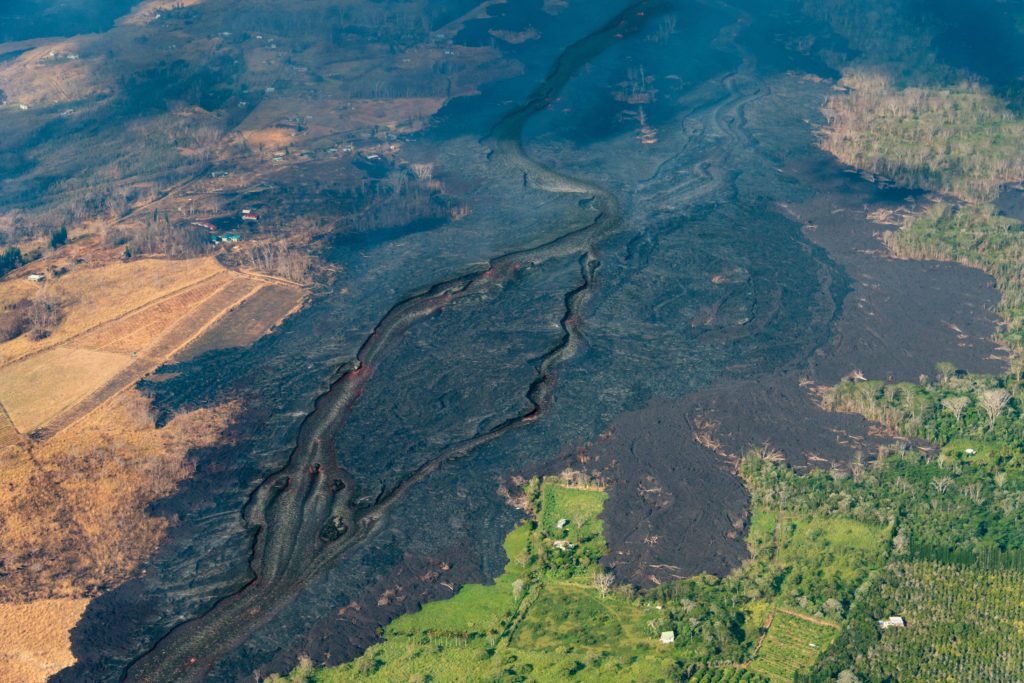
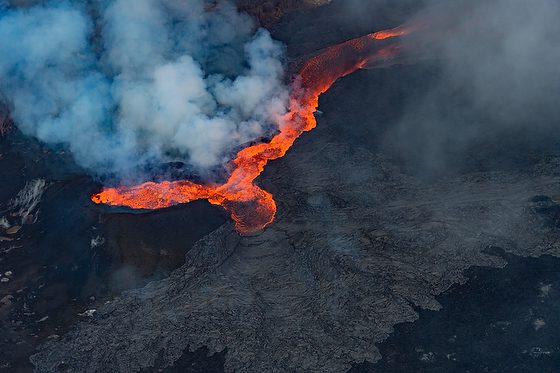
Kīlauea is an active shield volcano in the Hawaiian Islands and the most active of the five volcanoes forming the island of Hawaiʻi. Fissure 8 erupts lava into the perched channel leading northeastward from the vent. Lava levels in the upper channel between Fissure 8 and Pohoiki Rd. are low this morning but are expected to rise after the next collapse/explosive vent at the Kīlauea summit. The channelized ʻaʻā flow west of Kapoho Crater continues to be the main ocean entry at the southern edge of the flow front this morning. Despite no visible surface connection to the Fissure 8 channel, lava continues to ooze out at several points on the 6 km (3.7 mi) wide flow front into the ocean. [Nikon D5, 28-300mm ƒ/3.5-5.6, ISO 1250, ƒ/8, 1/2000]

Over the past few months, the massive destruction of the Kilauea volcano hasn’t been what we expect from Mother Nature.

We don’t expect our homes to be destroyed with no hope of rebuilding.

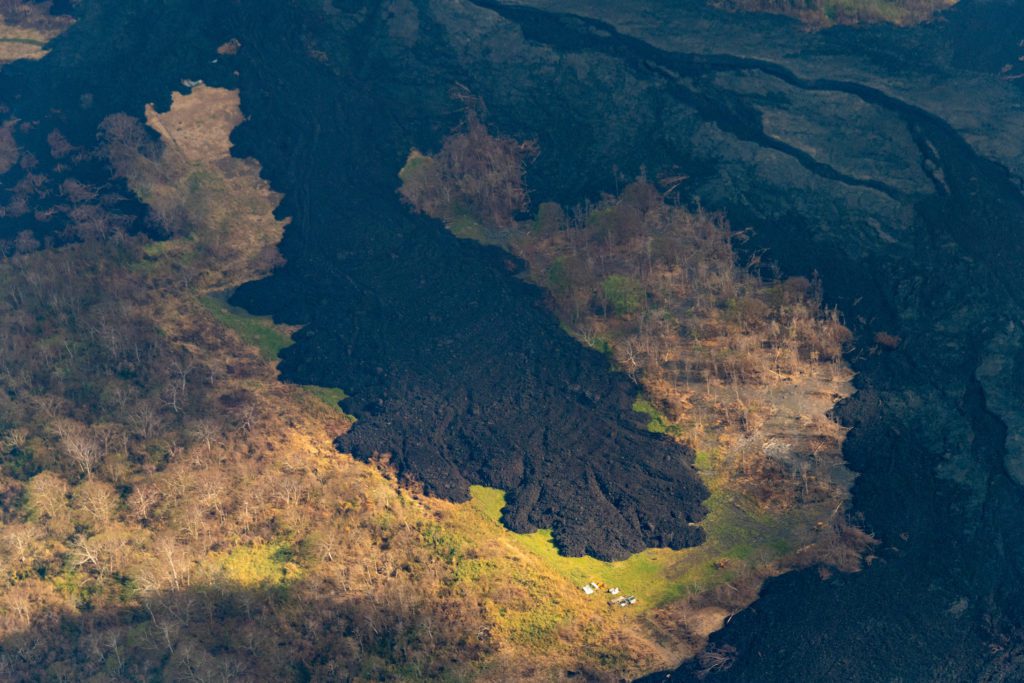
[Nikon D5, 28-300mm ƒ/3.5-5.6, ISO 1800, ƒ/8, 1/2000]

In this photo, you can see the home in the path of the destruction. This looks more like a scene from the 1958 science-fiction-horror film The Blob.

While enjoying my tourist helicopter ride to see the volcano’s power, I wasn’t thinking about the lives being destroyed by nature.

[Nikon D5, 28-300mm ƒ/3.5-5.6, ISO 400, ƒ/8, 1/2000]

I was in the sky with other tourists on numerous helicopters flying over the volcano, being entertained.

The University of Nations in Kona, Hawaii. [Fuji X-E3, 10-24mm ƒ/4, ISO 250, ƒ/16, 1/100]

I was in Hawaii to teach photography at The University of Nations, which is part of Youth with a Mission. The campus is now in the process of seeing how they can help some of the families displaced by the volcano.

I was listening to the founder Loren Cunningham as he talked about the plight of those who have lost their homes to the volcano.

I had been teaching on storytelling and knew that when you tell a good story it actually affects the audiences physical body.

In a good chase scene, you can feel your heart racing. When the main character is hiding and close to being found, your palms may sweat.

The gut-wrenching feeling I get when bills are due and the tight cash flow is how I felt when Loren Cunningham pointed out that these people had not just lost a home but still had to pay on their mortgages. They were now paying for something that they couldn’t rebuild or resell.

This is a different kind of natural disaster than the past fires, tornados, or hurricanes I have experienced. Volunteers organized to help clean up and rebuild the destructed areas during those disasters. They helped to restore people’s lives.

The closest disaster with some similarities was Katrina, where many could not go back and rebuild.

Fissure 8 erupts lava into the perched channel leading northeastward from the vent. Lava levels in the upper channel between Fissure 8 and Pohoiki Rd. are low this morning but are expected to rise after the next collapse/explosive vent at the Kīlauea summit. [Nikon D5, 28-300mm ƒ/3.5-5.6, ISO 800, ƒ/8, 1/2000]

As you watch the updates on the volcano, please keep in mind all those who have lost their homes and are now in financial crisis.

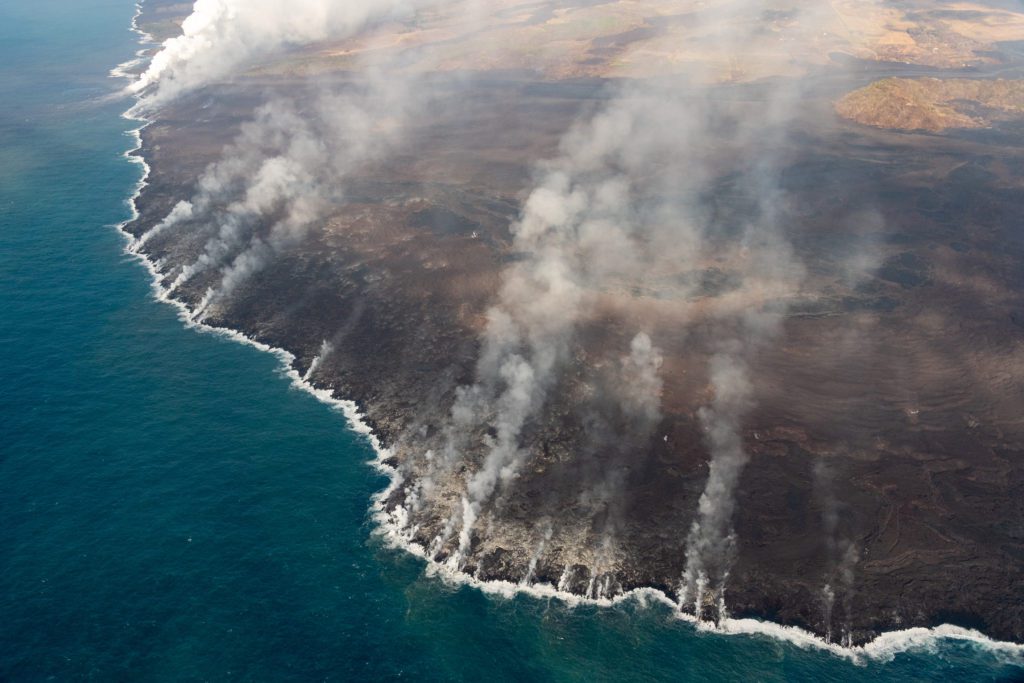
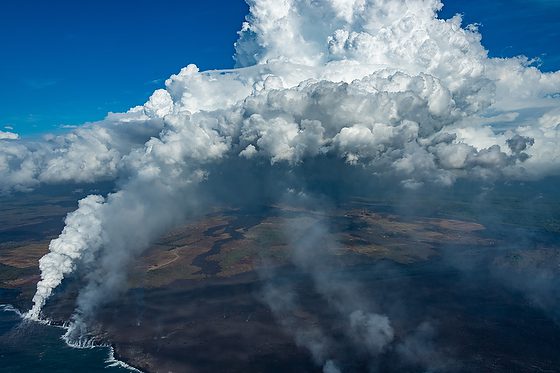
The lava striking the sea is gorgeous — and can be deadly.
     
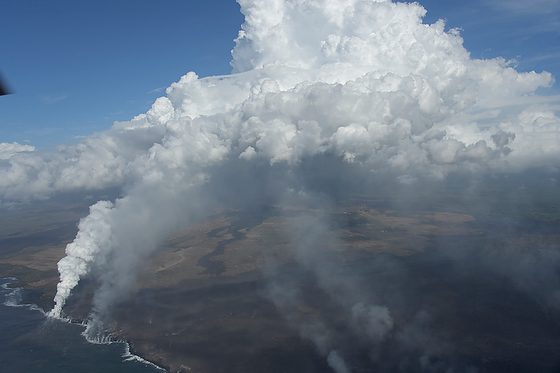
Lava spilling off the southeastern edge of the island of Hawaii is producing a noxious haze where it hits the seawater. Made out of hydrochloric acid, steam, and shards of volcanic glass, the gas is hazardous to anyone who breathes it.
     Laze forms when lava reaching temperatures of around 2,100 degrees Fahrenheit strikes seawater. The heat boils seawater dry — not just boiling away the water but also heating salt molecules the boiled water leaves behind, like magnesium chloride. “The magnesium chloride is pretty reactive,” says volcanologist Simon Carn at Michigan Technological University. “It reacts with the water — the steam in the air.” That makes hydrochloric acid, which probably sounds familiar because it’s the acid in your stomach that melts your food into a soupy pulp. That stuff isn’t good to get in your lungs.
[Nikon D5, 28-300mm ƒ/3.5-5.6, ISO 1000, ƒ/8, 1/2000]
 

Shooting Kilauea Volcano from Helicopter

Reading Time: 3 minutes
[Nikon D5, 28-300mm ƒ/3.5-5.6, ISO 1250, ƒ/8, 1/2000]

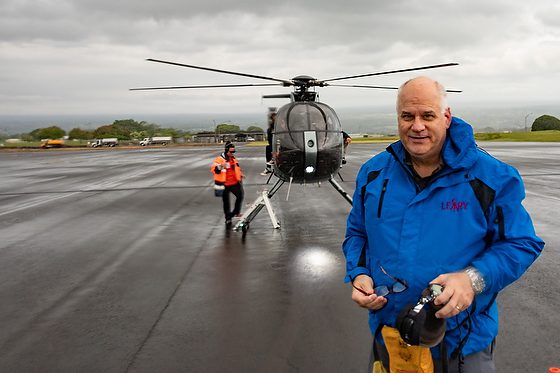
It was a thrill to get the chance to go up in a helicopter and see the lava flowing at the Kīlauea Volcano on the Big Island of Hawaii. Dorie and Chelle gave me this present for father’s day.

While I had been in helicopters many times, clients paid for the experience. This time it was out of our pockets. I had wanted to do this for years.

[Nikon D5, 28-300mm ƒ/3.5-5.6, ISO 1600, ƒ/8, 1/2000]

I have been coming to The Big Island of Hawaii at the invitation of my good friend Dennis Fahringer. I have been teaching photography to his School of Photography students with the University of Nations, which is part of Youth with a Missions.

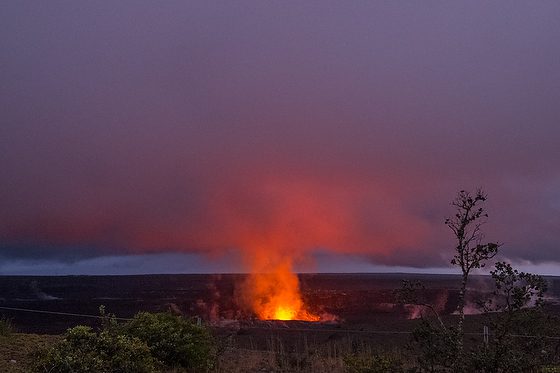
Now for 12 years, I have been driving to the Volcano, hoping for good photos. I have taken some pretty good pictures through the years. Here is one from February this year before they closed the Volcano National park due to the recent activity.

This is the Halema‘uma‘u Crater inside Hawaii Volcano National Park on the Big Island of Hawaii [Fuji X-E3, 55-200mm, ISO 5000, ƒ/6.4, 1/6]

The best way to see the volcano is from the air.

[Nikon D5, 28-300mm ƒ/3.5-5.6, ISO 250, ƒ/8, 1/2000]

This is an untouched photo right out of the camera. I just converted from Nikon NEF to a JPEG.

By shooting RAW, you can work with the photo in Lightroom just like we did in the film days in the Darkroom.

Paradise Helicopter Tour
Kīlauea is an active shield volcano in the Hawaiian Islands and the most active of the five volcanoes forming the island of Hawaiʻi. Fissure 8 erupts lava into the perched channel leading northeastward from the vent. Lava levels in the upper channel between Fissure 8 and Pohoiki Rd. are low this morning but are expected to rise after the next collapse/explosive vent at the Kīlauea summit. The channelized ʻaʻā flow west of Kapoho Crater continues to be the main ocean entry at the southern edge of the flow front this morning. Despite no visible surface connection to the Fissure 8 channel, lava continues to ooze out at several points on the 6 km (3.7 mi) wide flow front into the ocean. [Nikon D5, 28-300mm ƒ/3.5-5.6, ISO 250, ƒ/8, 1/2000]

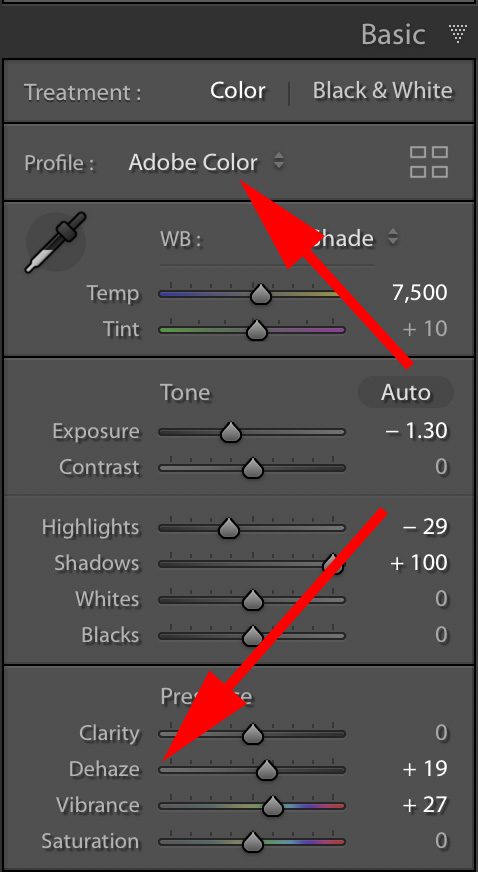
The number one tool that helps you when shooting from a helicopter is the Dehaze Slider.

There is a lot of haze created by the atmosphere, and over the volcano with VOG, you need to use this tool, or the fog clouds the photos.

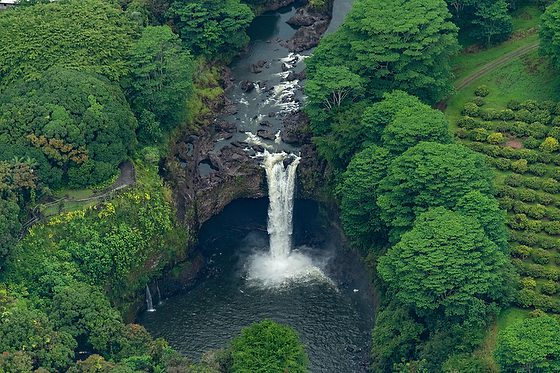
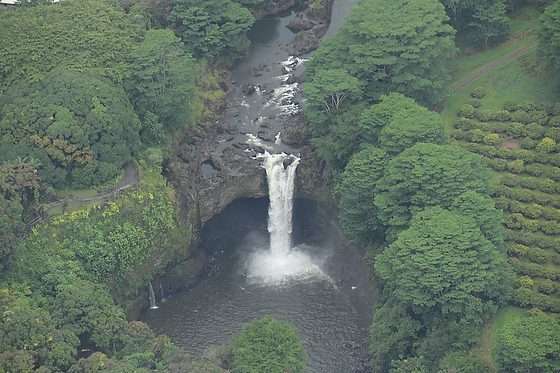
Rainbow Falls from the air in Hilo, Hawaii. [Nikon D5, 28-300mm ƒ/3.5-5.6, ISO 4000, ƒ/8, 1/2000]

Just compare this photo of Rainbow Falls I processed to the unprocessed image.

Now here are two short videos I shot while up as well. I processed these in Final Cut Pro X and corrected the footage for better contrast and color.

Kīlauea Volcano from Stanley Leary on Vimeo.

Kīlauea Volcano Fissure 8 from Stanley Leary on Vimeo.

I hope these tips help you see why shooting RAW and using Lightroom can make a HUGE difference in your photos.

Go to your archives and re-edit old photos with updated Lightroom

Reading Time: 2 minutes
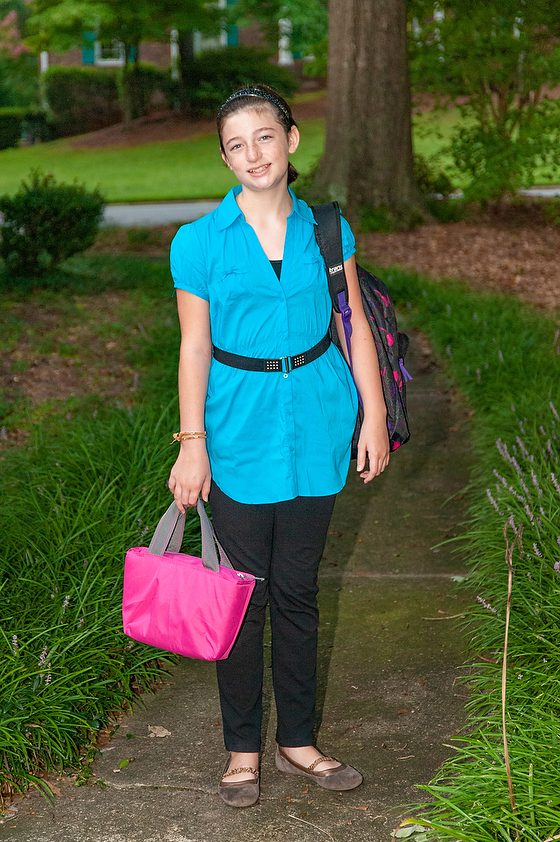
First Day of school for Chelle at the new house. First time riding the bus to school and starting middle school today at Elkins Pointe on August 23, 2010. [Nikon D3, Nikkor 24-120mm ƒ/3.5-5.6, ISO 6400, ƒ/5.3, 1/160]

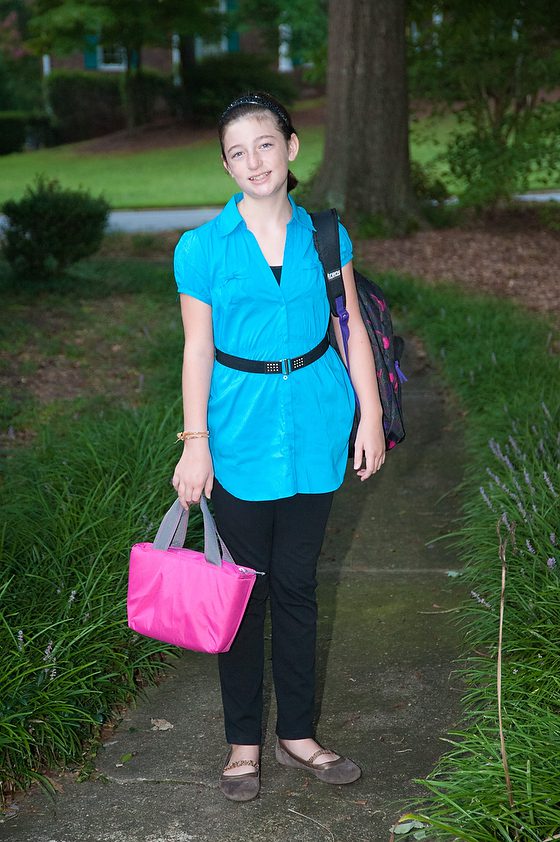
Your old photos can look even better today due to technological advances. I returned to this photo of my daughter’s first day of school ten years ago to re-edit the image in the latest version of Adobe Lightroom.

Original Edit in 2010.

You may like the earlier edit, but there are more possibilities with a few changes in Lightroom. First, they did a significant overhaul of the main engine in the software and then added new tools like Dehaze.

Today you can pick a color profile and use Dehaze; that was not an option in 2010.

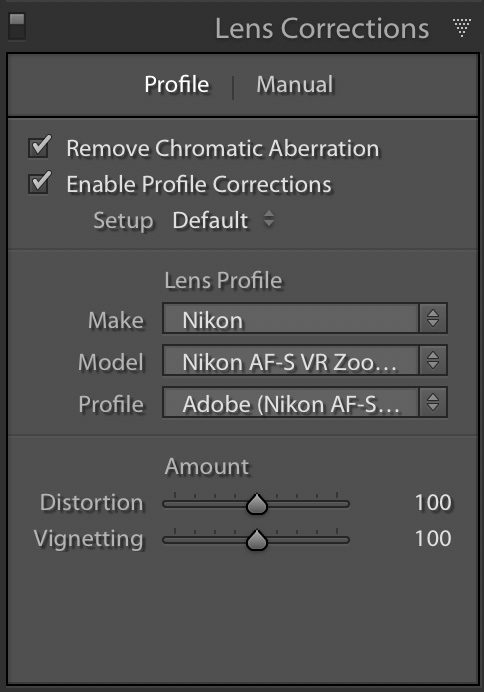
Another control implemented in 2010 was Lens Correction improving all lenses by correcting for their imperfections.

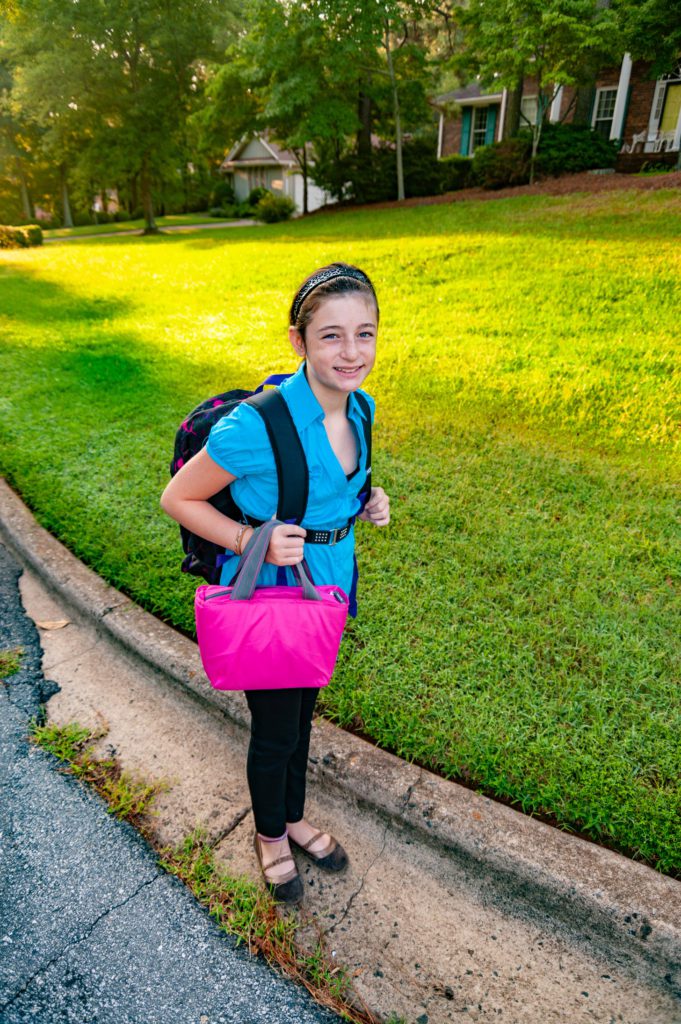
[Nikon D3, Nikkor 24-120mm ƒ/3.5-5.6, ISO 200, ƒ/3.5, 1/125]

Back in 2010, I didn’t even try to edit this photo. With the dehaze control, I could make the background much more accessible than doing this in 2010 would have required.

TIPS

Shoot RAW – you have more information to work with before exporting a JPEG in Lightroom.
Folder for a RAW and separate folder for JPEG – I ingest and put all my RAW files into a folder, and then when I finish editing and exporting, I put those in a different folder JPEG
Archive all photos – Keep the RAW images and your JPEG images. You can later return to these photos and discover some gems due to the software improvements in the future.

Flash can improve your outside and inside photos

Reading Time: 4 minutes
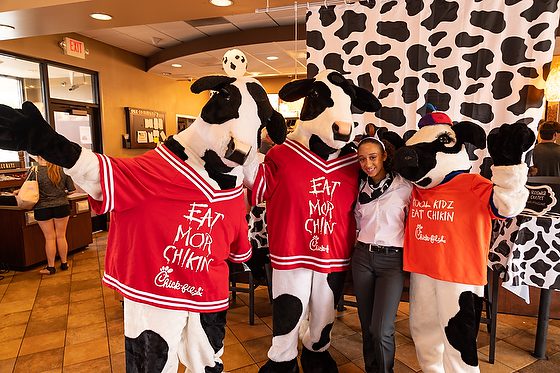
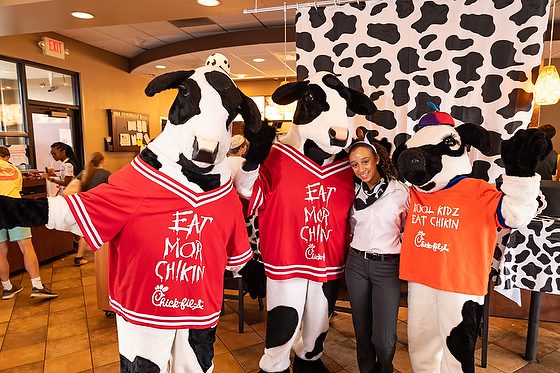
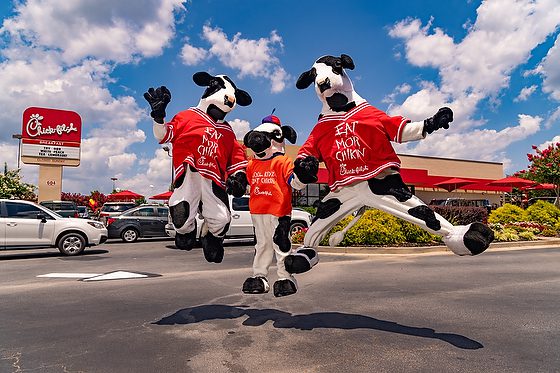
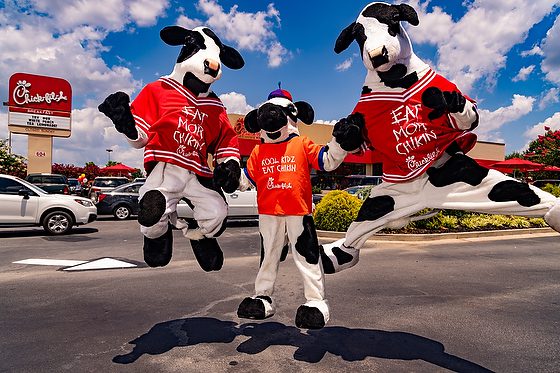
The Cows at Roswell Town Center celebrate Cow Appreciation Day 2018 in Roswell, GA. [Nikon D5, Sigma 24-105mm, ISO 400, ƒ/5.6, 1/3200 – Godox V860IIN + Godox X1NT]

With today’s cameras, you can shoot almost anything without a flash. You know this from using your smartphone. You might not know that professional photographers don’t use flash because there isn’t enough light to complement the light.

Using a flash outside and inside is about knowing why you need the moment and how it can improve the photograph. These photos were from my job yesterday.

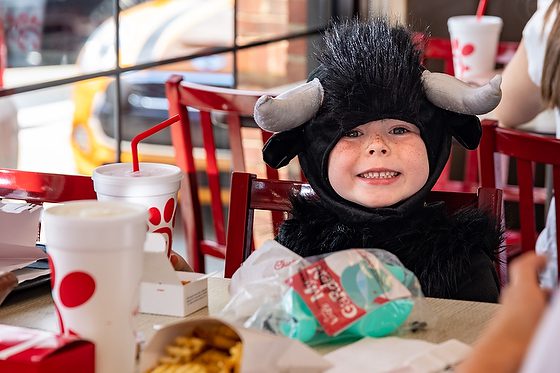
I enjoy Cow Appreciation Day each year. This year I went to five Chick-fil-A restaurants in Metro Atlanta, getting photos of customers dressed up as cows.

Chick-fil-A, known for its iconic “Eat Mor Chikin®” Cows, celebrated the 13th annual Cow Appreciation Day on Tuesday, July 11, 2017. On that day, Chick-fil-A restaurants nationwide offered a free entrée to any customer who visited a restaurant dressed as a cow.

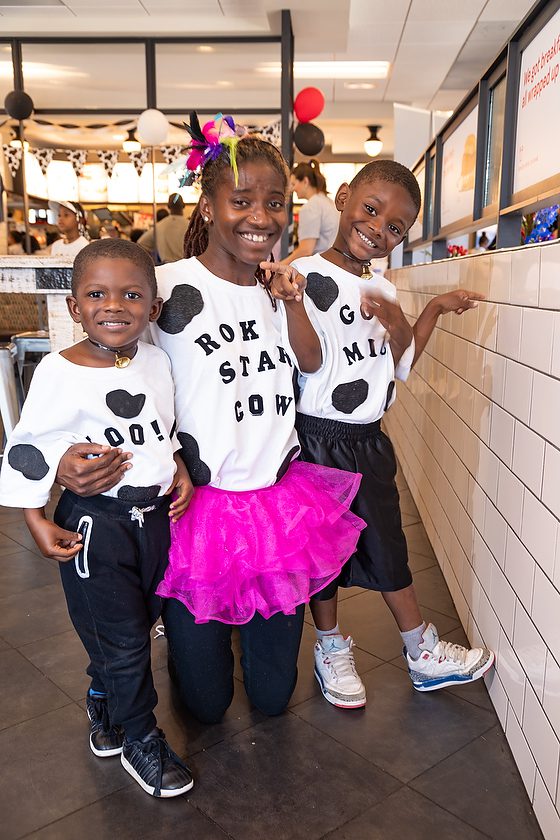
Customers dressed up as cows for Cow Appreciation Day. [Nikon D5, Sigma 24-105mm, ISO 400, ƒ/5.6, 1/50 – Godox V860IIN + Godox X1NT]
I have learned over the years using off-camera flash improves so many photos, especially outside. This one of the customers inside, without the second, the visors would have made their faces much darker. The flash helped open up their faces.

Dorie Griggs, my wife, was my photo assistant for the day. She helped with carrying my light and keeping people from bumping into it, as well as people blocking the flash.

Another super important role she filled was helping me get the all-important Model Release.

A model release form is a legal document between you, the photographer, and the person or the person who owns the property you’re photographing). It is the written form of their permission allowing you to publish their image on your website, blog, and marketing materials.

You need permission to publish the photo for commercial purposes.

The Cows at Roswell Town Center celebrate Cow Appreciation Day 2018 in Roswell, GA. [Nikon D5, Sigma 24-105mm, ISO 400, ƒ/5.6, 1/2500 – Godox V860IIN + Godox X1NT]

When I did the photo at the top, I first shot this photo of the cows jumping. Well, I didn’t expect the cow to leap with the feet that wide, and I cut off the feet.

My wife made a video of me taking this photo where you can see the off-camera flash Godox V860IIN that I am triggering with the Godox X1NT. Watch here, and you can see both images being made.

These flashes let me shoot at any shutter speed. This let me freeze the cows in the air. Remember that one of the best times to use flash is outside in bright sunlight.

Customers dressed up as cows for Cow Appreciation Day. [Nikon D5, Sigma 24-105mm, ISO 400, ƒ/5.6, 1/50 – Godox V860IIN + Godox X1NT]

Now shooting inside the flash will not overpower the available light when set on TTL. The flash fills in and gives that beautiful catch light in the eyes that make them sparkle.

NO FLASH [Nikon D5, Sigma 24-105mm, ISO 400, ƒ/5.6, 1/30]
Zoomed in view

So you can see how the flash adds a little without significantly changing the photo; this first photo of the lady with the cows is without flash. Then look at the one with flash.

WITH FLASH [Nikon D5, Sigma 24-105mm, ISO 400, ƒ/5.6, 1/30 – Godox V860IIN + Godox X1NT]
Zoomed in view

The most significant difference is that the shadows and blacks in the one with flash have more detail.

Customers dressed up as cows for Cow Appreciation Day. [Nikon D5, Sigma 24-105mm, ISO 400, ƒ/5.6, 1/200 – Godox V860IIN + Godox X1NT]

What you do isn’t as important as who you are to be successful in business

Reading Time: 3 minutes
Family Vacation to Universal Studios in Orlando, Florida

Dorie, my wife, knew when making plans for our children when they were young that there was a time limit. It was about 2 hours, and then it was like we hit a wall.

We like being at a fair: there are rides, games, entertaining acts, and tons of food. It’s exciting at first, becomes overwhelming, and finally, makes you sick (and you hate it!).

When you’re sick of something, it shows in your attitude and performance most of the time. Just like our kids would be at places like Disney World.

There is a time for everything, and a season for every activity under the heavens.

Ecclesiastes 3:1

Often we hit the wall in our careers just as we did when we were young. It isn’t fun for us anymore. If you are a freelancer, you can feel that you are just not in step with your client as you once were.

I have discovered this happens with every client I hit a wall with at some point. It is the same feeling that happened with our kids on an outing.

Nikon D5 Video Gear

I think we have become too focused on what we do in our jobs and less on the people we work with in doing those jobs. This can happen to you if you are extroverted or introverted.

Too much focus can be a problem: It drains your brain of energy, makes you care less about people, and prevents you from seeing what is happening around you. When you become more focused on a product that you are producing in a job rather than realizing you are working with other people, they need to enjoy the process and not just the end result.

I came to this conclusion when I found that I must rekindle a working relationship over the years. In the past, I would work on my portfolio or some new skill to talk to my client. I thought the client needed to see my skills were valuable.

While working on some materials for this latest round of rekindling relationships, I realized that no matter what I did, it would look like I was going to do some “Explaining” to the people in the meetings I was setting up.

This approach can be very condescending to others. It undermines the relationship that you are trying to nurture.

Thinking about this, it hit me – I had not worked enough on the relationship with my clients.

Nikon D5, Sigma 24-105mm f/4 DG OS HSM Art Lens, ISO 2800, ƒ/4, 1/100

In your work, have you been measuring using your skills in our work as well as developing relationships?

And let us consider how we may spur one another on toward love and good deeds, not giving up meeting together, as some are in the habit of doing, but encouraging one another—and all the more as you see the Day approaching.

Hebrews 10:24-25

We spend a lot of time at work; nothing is worse than someone who cannot get along with others. It’s essential and involves being helpful, understanding the unwritten rules, and being respectful, reliable, and competent.

Here is a simple way to start this conversation, “We’ve been doing business together for almost a year. I want to take you to lunch to get to know you better.”

The most important thing you can do at a business meal listens. You want to hear what the other person cares about, their interests, and what makes them tick. They need to know you care about them as people, not just the money they give you to pay your bills.

Once we were at Disney, we ran into my daughter’s friend from home. While usually, our daughter would be ready for a break from the theme park, this “Relationship” gave a burst of energy to go through not just our daughter but the entire family.

Theme parks can be like your product in business. At a certain point, this doesn’t keep your client enthused. Remember, friendships do keep your help energize business relationships as well.

4th of July Fireworks with a sense of place

Reading Time: 3 minutes
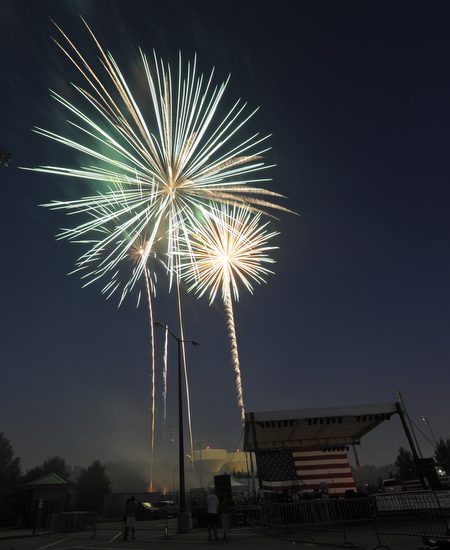
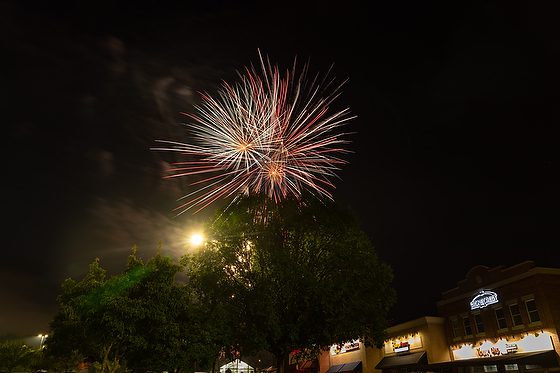
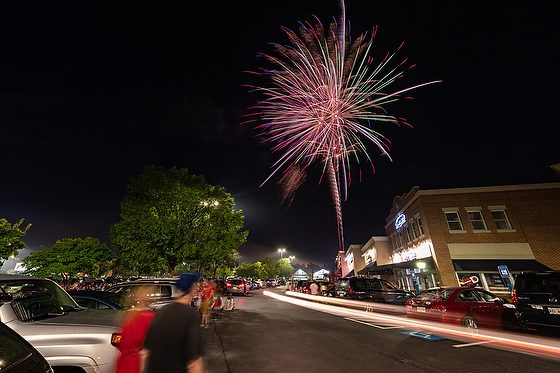
The City of Roswell Fireworks for the 4th of July celebration in Roswell, GA. [Nikon D5, Nikon 14-24mm ƒ/2.8, ISO 100, ƒ/11, 9.1 sec]

The key to fireworks is the foreground. The context helps give a sense of place.

When I started shooting the July of 4th fireworks this year in Roswell, GA, the location was slightly different than years past. I wasn’t sure exactly where they would be in the sky. I had a general idea, but I had a few problems when they started.

[Nikon D5, Nikon 14-24mm ƒ/2.8, ISO 100, ƒ/11, 6 sec]

As the sun set, all the street lights in the parking lot we were in started to come on. When I first started shooting, this is what I was getting. The street light was creatine a flair and wasn’t very interesting. The street lights were distracting.

[Nikon D5, Nikon 14-24mm ƒ/2.8, ISO 100, ƒ/11, 8 sec]

Using a tree in the parking lot to help with the street light also blocked some of the lower flying fireworks.

[Nikon D5, Nikon 14-24mm ƒ/2.8, ISO 100, ƒ/11, 14 sec]

I picked up the tripod, went closer to the shops, and pointed the camera toward the high school where the fireworks were being launched. It gave me the best photos of the fireworks and making the street lights no longer a problem, but you only see a couple in the lower left.

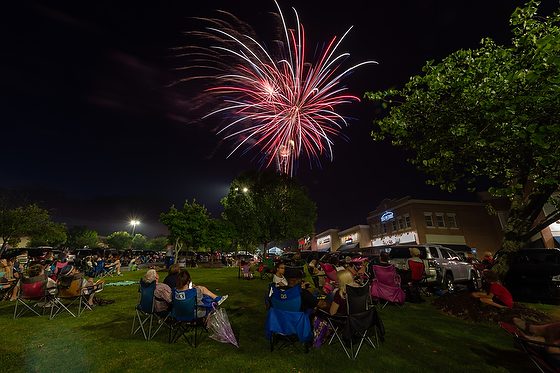
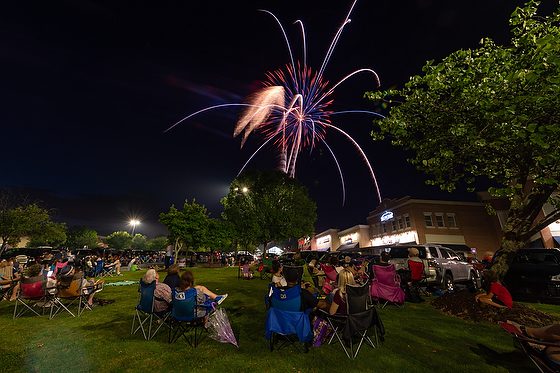
[Nikon D5, Nikon 14-24mm ƒ/2.8, ISO 100, ƒ/11, 10.5 sec]

I determined that the best place was to shoot the fireworks wide with a 14-24mm lens. This let me show all the community that turned out for the fireworks and helped to tell the story.

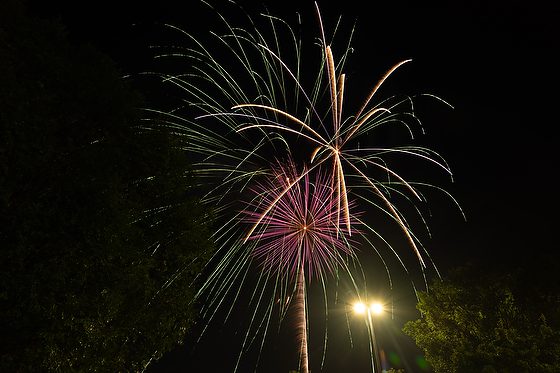
[Nikon D5, Sigma 24-105mm ƒ/4, ISO 100, ƒ/11, 5 sec]

Earlier in the fireworks performance, I shot this with my Sigma 24-105mm ƒ/4 at 58mm. Fireworks look great, but this could be anywhere in the world. The wider shot helped me to show you what it looked like where I was in Roswell, Georgia.

Carry a couple of different lenses so you can change your approach if necessary. Be willing to move to get a different perspective. Most of all, take lots of photos. Only a few will be the keepers that you want.

Technical

ISO:                        100
Aperture:             ƒ/11
Shutter Speed:  5 seconds to 14 seconds [using Bulb]
White Balance: Fluorescent to match the Street Lights

I used a tripod and a cable release. I would start taking photos and stop after 2 to 4 fireworks go off.

Spot on Color

Reading Time: 2 minutes
Nikon D750, 28-300mm, ISO 100, ƒ/9, 1/200 – Soft boxes with Alienbees B1600s

Getting a well-exposed, color-correct photo will bring the most out of any subject.

When your photo is well exposed, you will see all the gradations on a grayscale. When you have your digital camera set to the proper white balance under flash you get the most dynamic range possible.

The color space of flash is dead center in the color wheel. Other lights like Tungsten, Fluorescent, Mercury Vapor, LED, and others are skewed off the center of the color wheel. While you can color correct these images by adding or subtracting colors to try and slide them back to the center, your color is never as good as under pure flash.

I shot this photo outside on the shaded side of my house. I color-corrected using “Custom White Balance.”

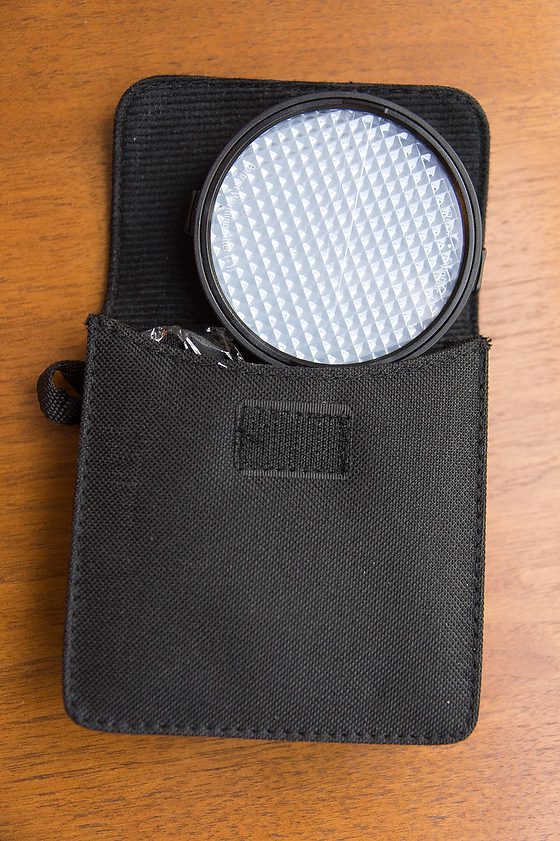
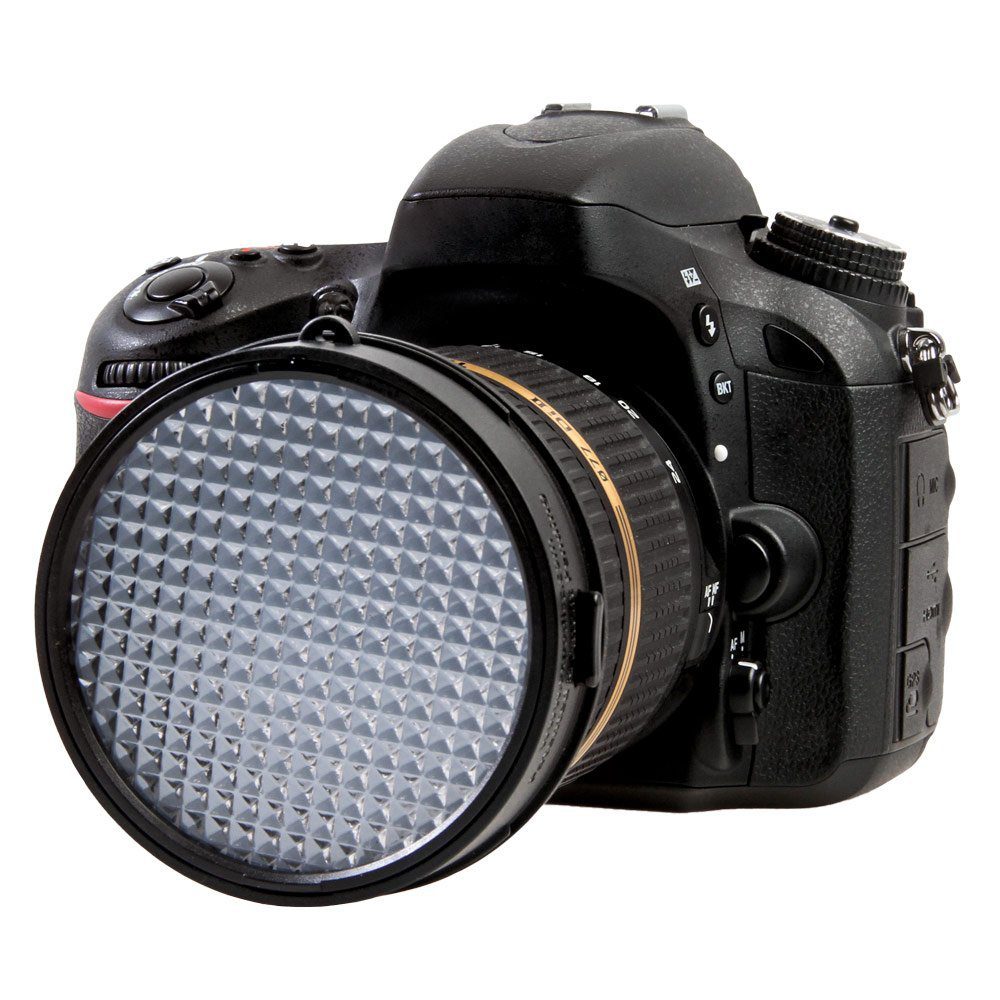
ExpoDisc

Using the ExpoDisc, I put this over the front of the lens and did an incident light reading and custom white balance.

I do this when shooting in the studio because softboxes often have a slight color cast that I can correct.

I cannot stress enough that the one thing that separates the very top photographers from the rest technically usually is white balance.

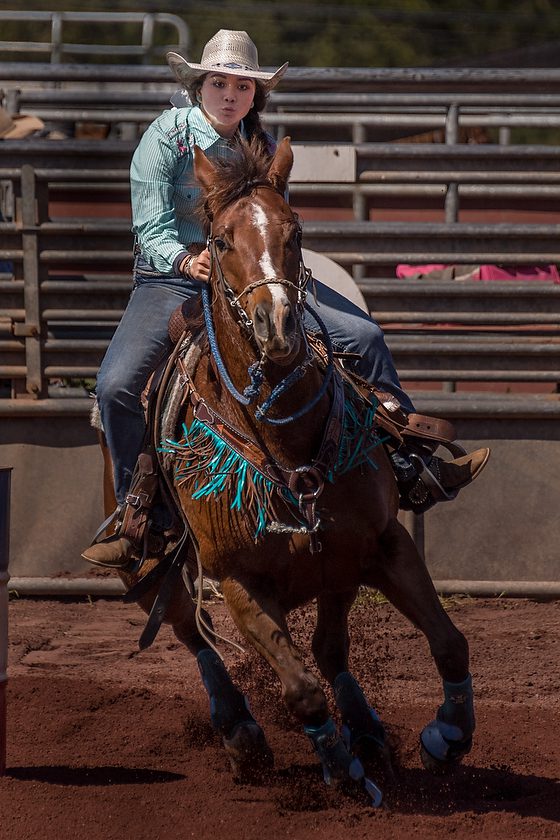
Hawaii High School Rodeo State Finals [Nikon D5, 28-300mm, ISO 1000, ƒ/5.6, 1/4000]

Colors pop when your exposure and color balance are on target.

The Walk & Talk Photo Shoot

Reading Time: 3 minutes
Nikon D3S, 28-300mm, ISO 200, ƒ/5.6, 1/1000

When you use the flash outside, you can get much better lighting on people’s faces.

No Flash

You can see the difference between these two photos. A few years ago, I demonstrated this technique to the YWAM School of Photography class in Kona, Hawaii. I shot this broad so you can see how the assistant must walk with the people and stay slightly ahead but close to them.

Here, I cropped out the assistant, which, when I shoot a job, I have them out of the frame, so I do not have to crop. Hopefully, you can see how the lighting is helping the photo here.

Using Studio Strobe

I showed how to do this with hot shoe flashes and studio strobes. The advantage of the giant strobe was the ability to stay farther away from the subject due to its much more powerful strobe.

Nikon D3s, 28-300mm, ISO 200, ƒ/14, 1/250

Before walking and talking, I showed the class how a fill flash-off camera works. Here, there is no flash, and the subject is backlighted.

Nikon D3s, 28-300mm, ISO 200, ƒ/5.6, 1/8000

Due to the HSS [High-Speed Shutter] technology now available for most cameras, I could shoot at a faster shutter speed of 1/8000 using the hot shoe flash-off camera, which let me darken the sky quite a bit.

I have found that getting the sun behind the subject allows the subject to stop squinting. Then, by adding the flash off the camera, the light creates some modeling of the face and lights up the front.

For the “Walk and Talk,” I ask subjects to stay very close to each other. I even say you should feel the other person touching you every once in a while. I also ask them to make eye contact. I generally have one person talk, and the other person listens.

Try this technique sometimes with your subjects. If you like, you can hire me to teach this in a workshop with you or your group.

You feel depressed? You are not alone.

Reading Time: 3 minutes

SOBERING statistics published earlier this month show that the annual rate of suicide in the US has risen by almost 28 percent between 1999 and 2016.

I believe this is affecting businesses as well as individuals.

Both celebrities, Anthony Bourdain and Kate Spade committed suicide this month and helped open the can of worms many people today are experiencing. That topic is depression.

For this topic, I believe many of us are experts. Almost everyone will go through events that cause upheaval and crisis.

Depression causes one to look for relief. Unfortunately, many who are dealing with addiction start with depression.

I believe that in today’s economy, companies are showing signs of depression.

Today many are trying to be the one-person band and do it all. Just look at some advertising campaigns that are not as cohesive as everywhere.

When you are depressed, you are prone to reach for things that give you pleasure but are not always the best. Ask any addict.

So many of us are looking for Likes or comparing our life to other people’s Facebook feeds.

We have gone from liking a post to loving, laughing, wow, sad, and even mad.

We are losing our compasses on how to navigate life. Instead, we are now looking to measure what is good or bad based on skewed analytics.

Opioids are primarily used for pain relief, including anesthesia. Many in business reach out for things like an opioid to make them feel better. That person has more followers than us. Let’s hire them. They can make it better. Remember, opioids not only can relieve pain, but they can also anesthetize you. I think many in business today are operating in a fog.

Communications departments have moved away from a solid story to choosing to use work based on the content providers’ social media feeds of likes and several followers.

Teaching in college and workshops, I experience more students who feel like they are already good photographers based on their social media likes from friends.

Brandon Stanton, the creator of Humans of New York, said, “Photography felt like a treasure hunt, and even though I sucked at it, I’d occasionally stumble upon a diamond. And that was enough to keep me wanting more.”

Stanton’s success is based on one simple truth–Everyone Has A Story!

People were drawn to his storytelling, which led to his massive following, but he didn’t go out and find someone doing something and copy it. Instead, he just went with his interest in the people on the streets of NYC. At first, he focused on visually exotic people, but slowly he discovered that everyone had a story.

Instead of trying to find the next “Cool Trend,” why not go with storytelling?

Stories allow the listener to learn vicariously and discover lessons seemingly on their own.

Stories make us feel a part of the situation.

Storytelling is tapping into people’s emotions that will help you to influence or persuade them.

Stories build connections between people. Those who tell stories are the ones making solid connections with their audience.

Storytelling is powerful because it engages the entire brain. A story, if broken down into the simplest form, is a connection between cause and effect.

Let me work with you and make your stories visual to be more engaging.