When I first started as a student photographer at East Carolina University, I quickly discovered that I loved working for the newspaper more than the yearbook.
The yearbook was beautiful. It had higher production quality and was designed to become a keepsake people would hold onto for years. But the newspaper had something different. It was alive.
I would walk around campus and see students carrying it, sitting in the student center reading it, or talking about stories they had seen. I wasn’t just taking pictures and turning them in. I could actually see people interacting with the work.
That feeling stayed with me.
As my career progressed, I saw my work published in different places. I enjoyed seeing my photographs in The Commission magazine and seeing stories I covered for the International Mission Board appear in Baptist state papers. While working on my master’s degree, I saw my work in print less often.
Later at Georgia Tech, I again had opportunities to see my work used in recruiting materials and publications such as Research Horizons for the Georgia Tech Research Institute. But even then, it wasn’t like the daily newspaper experience.
As a freelancer, you often see your work even less. Sometimes your images are used in internal communications, annual reports, websites, or marketing materials with a limited audience. I worked for Chick-fil-A, primarily publishing materials internally for operators and support staff. The work mattered, but I rarely saw people engaging with it.
Lately, I have been doing assignments for Appen Media, and it has reminded me of something I had almost forgotten from my first full-time job after college at The Hickory Daily Record.
The reward is not publication itself.
The reward is impact.
One thing I am really enjoying is that before many assignments, I reach out to event planners or people connected to the story. I interview them. I photograph them. Then, after the story is published online, I send them the link.
That simple process has become one of the most rewarding parts of the work.
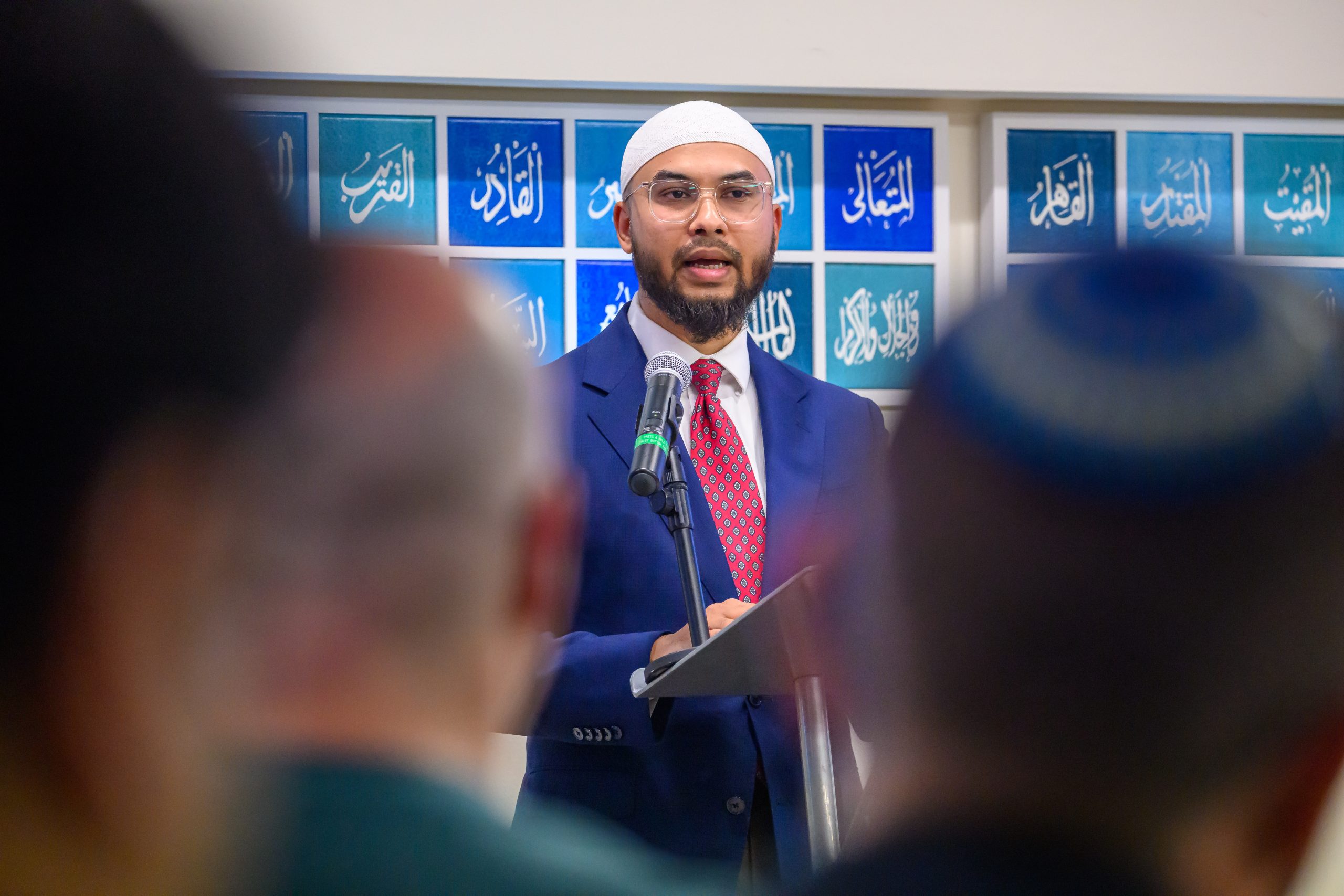
Last night I covered the Roswell Community Masjid vigil. After the story was published, I sent the link to some of the contacts involved. One response came from Shaheen Bharde of the Masjid:
“Thank you for putting together such a beautiful article. Truly appreciate your words and efforts to humanize our community.”
That comment stopped me.
Not because it complemented my work.
Because it reminded me of what photojournalists are supposed to do.
We aren’t simply documenting events.
We help people see one another.
A photograph can cause someone to pause. A story can help someone understand experiences outside their own. Together, they can create empathy and close gaps between communities that might otherwise remain distant.
The best photojournalism does more than tell people what happened.
It helps them understand why it matters.
As photojournalists, we move quickly. We shoot, edit, write, file the story, and then move to the next assignment. Often, we never hear what happened after that. We don’t know whether people connected with the work or simply scrolled past it.
Then occasionally someone responds.
Someone says they felt seen.
Someone says they felt understood.
Someone says you helped others understand them.
Moments like that remind me that the most rewarding part of photojournalism was never publication itself.
When I started my professional career as a photojournalist for The Hickory Daily Record in Hickory, North Carolina, in 1984, my job was pretty simple. I took photographs and gave the reporter enough information to write the captions.
Back then, I was trained to think in shots:
Opener — sets the scene
Decisive moment — the image that can tell the story by itself
Details — visual candy and transitions
Sequences — variety in action
High overall shot — shows relationships and context
Closer — wraps up the story visually
Portraits — introduces characters
Jill Broyles and Misty Martin dress in 1970s attire during Under the Stars — Vibe Fest at Brooke Street Park in Alpharetta on Friday, May 16, 2025.
That approach worked. In many ways, it still works today.
Forty-two years later, I am doing freelance writing and photojournalism for Appen Media, a North Atlanta community news organization that publishes local newspapers and digital news serving Decatur, Alpharetta, Roswell, Milton, Dunwoody, Forsyth, Sandy Springs, Cumming, and Johns Creek.
The editor only asks for about 10 photos from an event with short captions placed in metadata and in a separate document.
I decided to do something different.
If they asked for 10, I tried to deliver 15. Rather than simply submitting captions, I started writing complete 400-word AP-style stories for every assignment.
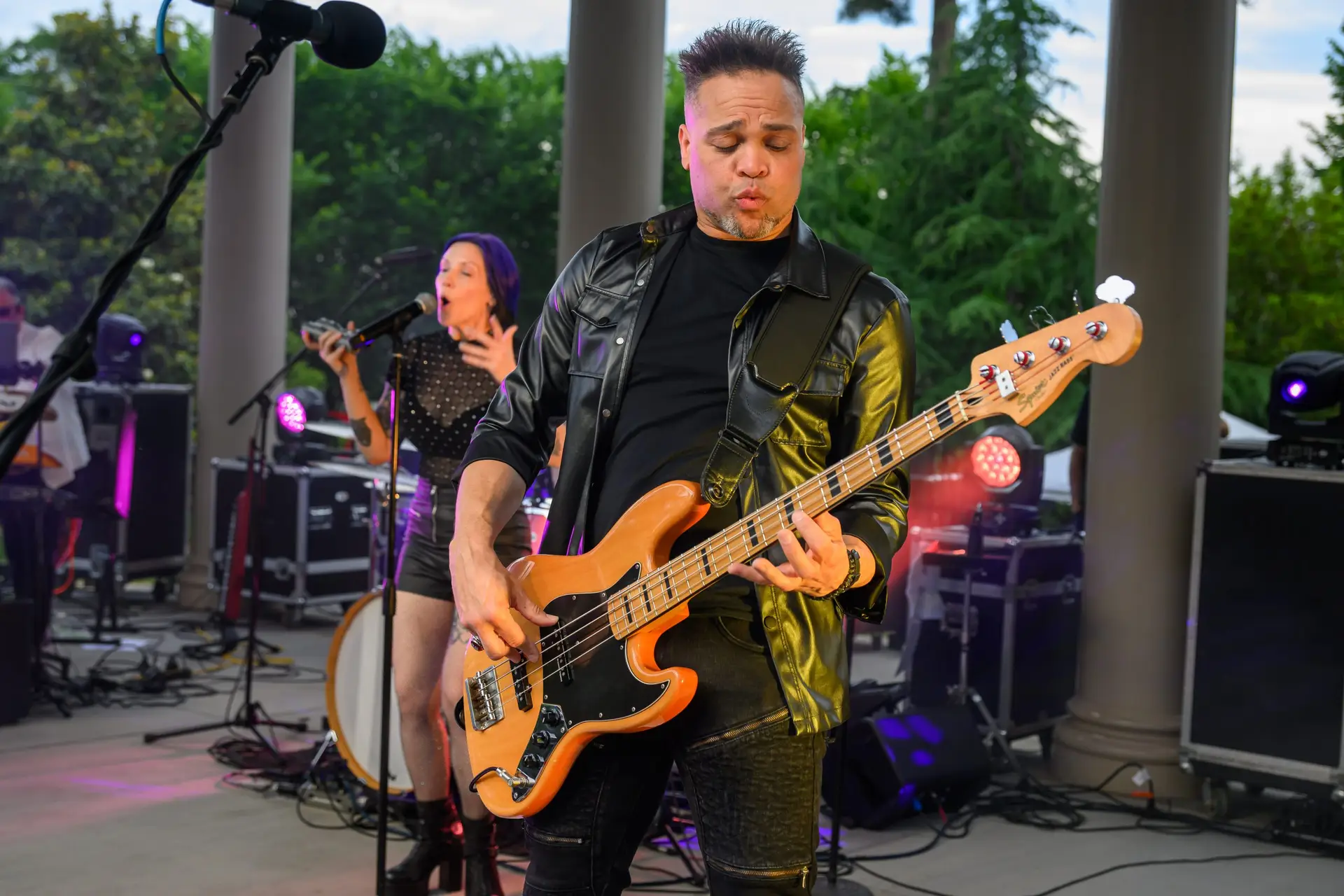
Lead guitarist Todd Goodwin and singer Mandy Guimaraes perform during Under the Stars — Vibe Fest at Brooke Street Park in Alpharetta on Friday, May 16, 2025.
The editor replied:
“Woooowww the writing is good. That’s a pleasant surprise (no offense). I don’t usually have a high level of expectation for photogs when it comes to the wordsmithing, but this is great content for a community newspaper.”
I laughed.
Not because of the compliment, but because it made me realize something.
For years, I had focused on covering events.
Now I was focusing on finding stories.
Amanda and Mark Vail dance with their son, Trip, on his father’s shoulders during Under the Stars — Vibe Fest at Brooke Street Park in Alpharetta on Friday, May 16, 2025.
There is a difference.
Recently, I covered Under the Stars — Vibe Fest at Brooke Street Park in Alpharetta. Years ago, I would have shown up with my mental shot list:
Band photos. Crowd photos. Details. Wide shots.
Instead, before arriving, I started asking:
Doris Nixon, 90, dances with Nicole Fleming on the lawn during Under the Stars — Vibe Fest at Brooke Street Park in Alpharetta on Friday, May 16, 2025.
What is the story?
Why should someone who wasn’t here care?
Suddenly, my questions changed.
Instead of asking:
“Who are you?”
I asked:
“Why does this matter?”
“What brought you here?”
“What memory does this music bring back?”
“Why does this event matter to the community?”
Patrons enjoy reserved tables during Under the Stars — Vibe Fest at Brooke Street Park in Alpharetta on Friday, May 16, 2025. Table sales benefited the Alpharetta Rotary Club.
Those questions changed the story.
They also changed the photographs I needed.
Now I wasn’t simply hunting for a singer at a microphone.
I was looking for nostalgia.
Connection.
Community.
Emotion.
Because photographs and stories work best when they answer the same question.
I often draw on communication principles from the Bible, not just because I’m a professional storyteller, but because faith has shaped much of my life.
I grew up in a pastor’s home. I later attended seminary myself, and my wife also attended seminary and now serves as a chaplain. Alongside my work as a photographer, writer, videographer, and communications consultant, I’ve spent decades immersed in faith communities and studying how people communicate truth, purpose, and transformation.
One of the most powerful communication lessons I’ve learned from Scripture comes from two simple words used repeatedly throughout the Bible:
“So that…”
Throughout Scripture, “so that” is used to explain purpose, intention, and desired outcome.
Jesus taught this way.
Paul wrote this way.
The Gospel writers structured stories this way.
They weren’t just sharing information. They were leading people somewhere.
That matters to photographers, writers, filmmakers, nonprofit communicators, and brand storytellers because too much modern storytelling stops at documentation rather than transformation.
We capture moments. We collect quotes. We gather footage.
But if we cannot answer the “so that” question, the story often lacks direction.
Storytelling With Purpose
Look at how Jesus framed teaching in Matthew 5:16:
“Let your light shine before others, so that they may see your good works and glorify your Father in heaven.”
Notice the structure:
Action
Purpose
Intended result
The action was never the endpoint.
The goal was transformation.
That same principle applies to communication work today.
ANDALUSIA, Al.–Southern Baptist Disaster Relief volunteers Jerry Schleiff, Arkadelphia, and Chris Clark, Hot Springs, are preparing meals for the feeding unit at First Baptist Church, Andalusia, Al.
You photograph a volunteer serving meals…
So donors understand the ministry’s impact.
You interview a missionary…
So that churches can emotionally connect with the people being served.
You create a brand video…
So that potential clients trust the organization enough to engage.
You document a nonprofit’s work…
So that the audience moves from awareness to action.
Without the “so that,” storytelling becomes random content creation.
The “So That” Should Shape Story Selection
One of the biggest mistakes communicators make is choosing stories simply because they are emotional, dramatic, or visually interesting.
But great storytellers ask:
Why does this story matter?
What should happen after someone experiences it?
What is the audience supposed to understand, feel, or do?
The biblical writers were remarkably intentional.
John even explains why he selected certain stories about Jesus:
“These are written so that you may believe…” (John 20:31)
John didn’t include everything.
He curated stories with purpose.
That is exactly what editors, filmmakers, photographers, and writers must do today.
Every assignment needs a “so that.”
Every Creative Decision Should Serve the Purpose
The “so that” doesn’t just shape story selection. It shapes execution.
It affects:
which interviews you conduct,
what photos you make,
what B-roll you gather,
pacing,
music,
sequencing,
captions,
headlines,
and even what you leave out.
Strong communicators understand that every creative decision either supports the purpose or distracts from it.
A drone view shows classic cars lining the streets during the Tin Cup Cruise-In on Thursday evening at City Center in downtown Cumming. The monthly event draws large crowds of car enthusiasts and families, bringing increased foot traffic to restaurants, shops, and businesses throughout the area.
A beautiful drone shot that doesn’t advance the story may impress people, but it may not serve the “so that.”
An emotional quote that creates confusion may weaken the message.
A visually dramatic image that lacks context can actually pull the audience away from the intended outcome.
The Difference Between Content and Communication
There is a difference between producing content and communicating with purpose.
Content says:
“Look what happened.”
Purpose-driven communication says:
Regan Phelps, Erin Allen, Callie Anderson, and Melissa Rose pose with Oliver the horse during the fourth annual Down & Derby fundraiser benefiting Children’s Healthcare of Atlanta at Crabapple Market Green on Saturday, May 2, 2026, in Alpharetta, Ga. The group said they have attended all four years of the event in support of the cause.
“This happened so that…”
The best communicators know where they are leading the audience before they ever press the shutter, hit record, or write the first paragraph.
That doesn’t make storytelling manipulative.
It makes it intentional.
And intentionality is one of the clearest characteristics of both great biblical teaching and great communication.
One of the hardest lessons for organizations to learn is this:
The stories you most want to tell are not always the stories your audience most wants to hear.
That can feel frustrating, especially when you have poured years of work, passion, sacrifice, and resources into something important. But storytelling is not simply about importance. It is about connection.
And connection starts with attention.
If you cannot get people to stop scrolling, pause, lean in, or emotionally engage, then even the most meaningful story may never be heard.
I see this all the time in my wildlife photography hobby.
Over the years, I’ve photographed all kinds of wildlife. Personally, some of my favorite images are not the ones that get the most engagement online. I’ve photographed beautiful shorebirds, songbirds, owls, herons, deer, and countless other animals.
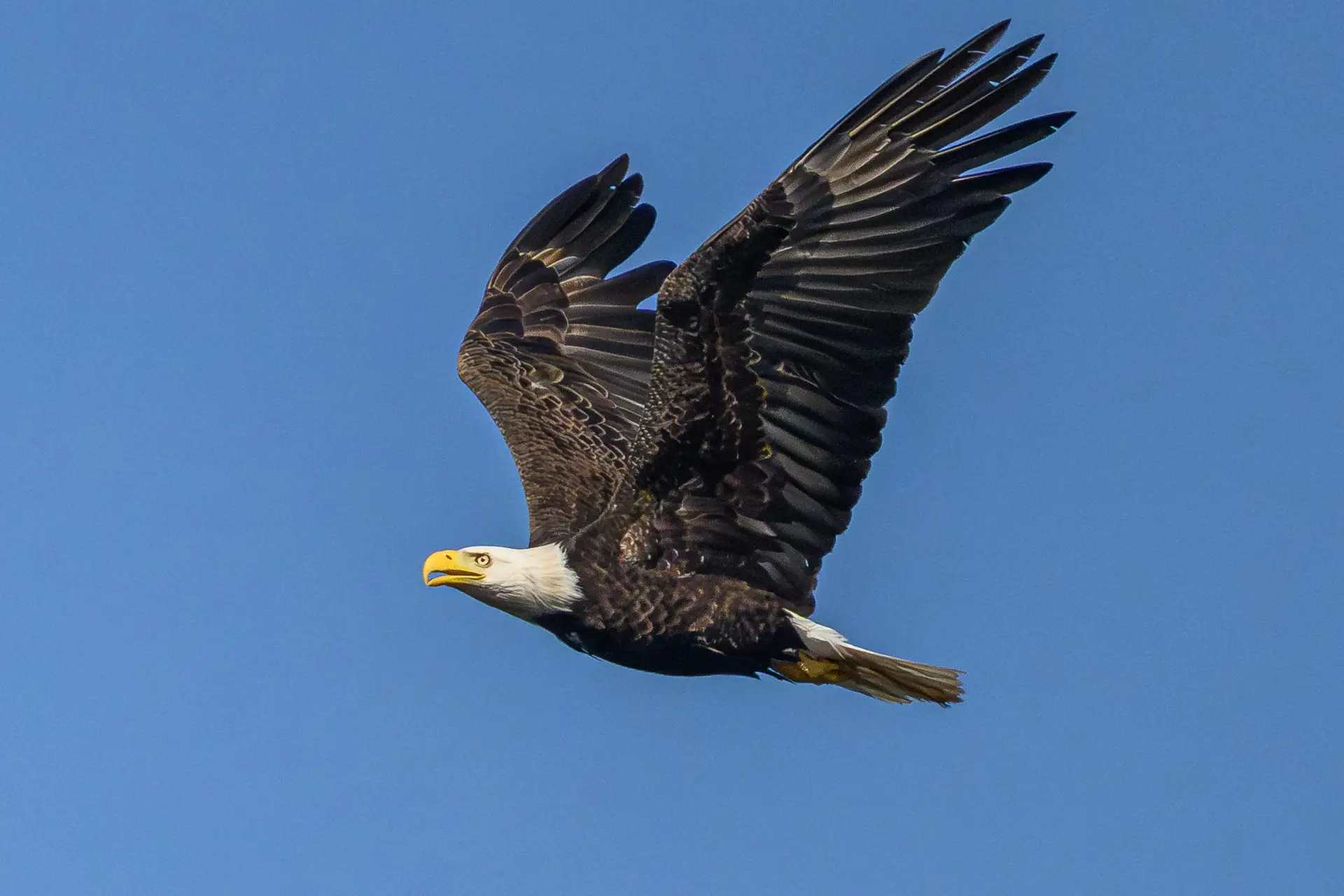
Bald Eagle
But whenever I post a Bald Eagle photo—especially one catching a fish—the response explodes.
People stop. People react. People share. People comment.
Even a simple Bald Eagle in flight will often outperform technically better photographs of less “charismatic” birds.
Why?
Because the Bald Eagle already carries emotional weight with the audience.
It represents strength, freedom, power, beauty, and patriotism. People instantly connect with it emotionally before they even analyze the photograph itself.
Researchers studying “charismatic species” found that people consistently gravitate toward animals that are visually impressive, emotionally powerful, beautiful, rare, or culturally symbolic. Large predators and iconic wildlife dominate public attention.
In other words, some subjects naturally create stronger audience engagement.
That does not make the other animals less important.
It simply means the Bald Eagle is a better hook.
And hooks matter.
Bald Eagle
The Bald Eagle Strategy
Here’s the important part:
I can lead with the Bald Eagle and then bring the audience along to see the other wildlife.
Once people stop for the eagle, they’ll often swipe through the gallery and discover the heron, the egret, the kingfisher, or even the Tufted Titmouse.
But if I lead with the Tufted Titmouse?
Great Blue Heron
Most people may never stop long enough to discover the rest.
This is where many organizations struggle.
They say:
“We’ve already talked about that.” “We want to highlight something new.” “We’re tired of focusing on the same topic.”
But your audience is not living inside your organization every day.
They do not have the same emotional connection or insider perspective you have.
You may be tired of the Bald Eagle story.
Your audience may be hearing it for the very first time.
The Mistake Many Organizations Make
Organizations often choose stories based on:
Internal passion
Senior leadership preferences
Historical importance
Amount of effort invested
What they wish people cared about
The northern cardinal
But audiences respond based on:
Emotional connection
Relatability
Curiosity
Visual power
Human tension
Inspiration
Hope
Surprise
Identity
Those are very different filters.
That’s why a smaller story with emotional resonance will often outperform a larger story filled with facts and significance.
A story can be critically important internally and still fail publicly because it does not emotionally connect.
That does not mean you abandon important topics.
It means you learn how to enter through the audience’s door instead of demanding they enter through yours.
The American Black Bear ranges throughout the forested areas of the United States and Canada.
Start With What Resonates
A conservation organization may want to talk about an obscure but ecologically critical species.
That’s admirable.
But the audience may only stop because they saw the eagle, wolf, whale, tiger, or bear first. Research consistently shows humans are drawn toward “charismatic” wildlife—especially large, visually striking, emotionally symbolic animals.
Smart communicators understand this.
They use the flagship story to create momentum.
Then they educate deeper.
The Bald Eagle becomes the doorway into the broader ecosystem.
The cougar, also known as the mountain lion or panther, ranges throughout the wilderness areas of western America and Canada.
This Applies to Every Organization
Nonprofits, ministries, schools, healthcare systems, businesses, and churches all face this challenge.
The goal is not simply to communicate information.
The goal is to earn attention long enough to create transformation.
Here are some examples:
Nonprofit Example
Mediocre Story: “Our organization distributed 14,000 hygiene kits across three regions.”
Stronger Story: “A 9-year-old girl finally returned to school after receiving basic hygiene supplies that restored her confidence.”
One is statistics. One is human.
The statistics matter more organizationally. The human story matters more emotionally.
Church or Ministry Example
Mediocre Story: “We launched three new discipleship initiatives this year.”
Stronger Story: “After years of addiction and isolation, Michael found community and purpose through a small group.”
Programs matter. Transformation connects.
Healthcare Example
Mediocre Story: “We expanded pediatric surgical capacity by 18%.”
Stronger Story: “A child heard her mother’s voice clearly for the first time after surgery.”
The second story helps people feel the impact of the first.
Stronger Story: “A first-generation student built a robot that solved a problem on his family’s farm.”
One informs. One inspires.
Businesses Make This Mistake Too
Businesses often want to talk about:
Features
Processes
Certifications
Technical superiority
Company history
Customers usually care more about:
Outcomes
Transformation
Relief
Simplicity
Confidence
Identity
People rarely buy the drill.
They buy the hole-in-the-wall.
And even deeper than that, they buy the feeling that comes from solving the problem.
Why Outside Perspective Matters
One reason organizations struggle to find their strongest stories is that they are too close to their own work.
Inside the organization, everything feels important.
That makes prioritization difficult.
An outside storyteller, communicator, consultant, or photographer often sees something leadership misses because they are looking through the audience’s eyes rather than through organizational familiarity.
Sometimes the most powerful story is so common internally that the organization overlooks it entirely.
Meanwhile, the audience sees it as remarkable.
That outside perspective helps answer critical questions:
What would make someone stop scrolling?
What creates an immediate emotional connection?
What story creates curiosity?
What makes this relatable to someone outside the organization?
What earns attention quickly enough to lead people deeper?
Because the greatest story in the world is ineffective if nobody engages long enough to hear it.
Tufted Titmouse & Hairy Woodpecker
Hook First. Teach Second.
This does not mean manipulating audiences.
It means respecting how humans naturally engage.
Jesus often taught this way through parables.
Great journalists do this through compelling leads.
Filmmakers do this through opening scenes.
Photographers do this through the strongest image.
Marketers do this through headlines.
You start with what captures attention.
Then you guide people toward deeper understanding.
The Bald Eagle is not the entire story.
It is the invitation into the story.
And the organizations that understand this are the ones that consistently connect with audiences in meaningful ways.
Mark Romzick, president of the Upper Chattahoochee Chapter of Trout Unlimited, carries his coat back to the car as the day warms up. Romzick said, “I love fly fishing, and this is a way to preserve streams for future generations.”
When I pulled into Chattahoochee Pointe Park to cover a tree-planting event along the river, I already knew something most people don’t think about when shooting outdoors:
I was going to need flash.
That might sound counterintuitive. It was daytime. Plenty of light. A beautiful setting under a canopy of trees. But experience has taught me that available light and usable storytelling light are not always the same thing.
The Assignment
The story itself was strong—volunteers planting native trees to protect the Chattahoochee watershed. Families, conservationists, and community leaders all working together. It had heart, purpose, and visual potential.
Steve Johnson, a member of the Upper Chattahoochee chapter of Trout Unlimited, digs a hole along the Chattahoochee River bank in preparation for planting a tree.
But visually, it also had a challenge:
People bending over, digging holes
Faces angled downward
Tree cover creating uneven light
Hats casting deep shadows across eyes
If I relied only on available light, I’d come back with technically acceptable images—but not images that truly connect.
And for me, that’s the difference.
Flash Isn’t About “Fixing”—It’s About Revealing
Most people think flash is something you use when there isn’t enough light.
I use it when the light isn’t telling the story well.
Here’s what the on-camera flash helped me do in this situation:
1. Open Up Faces in Harsh Shade
Under tree cover, light becomes patchy. Add a baseball cap, and suddenly the most important part of the photo—the eyes—disappear.
A subtle touch of fill flash brings those faces back:
Eyes become visible
Expressions come alive
Viewers can connect emotionally
Without that, you’re just documenting activity. With it, you’re telling a story about people.
L-R Rachel Spagna and her 2-year-old son Archer, along with family member Robin, help Archer put on gloves as the family prepares to plant trees along the Chattahoochee River.
2. Control Contrast in High Dynamic Range Scenes
Outdoor scenes—especially in woods—often have extreme contrast:
Bright highlights filtering through leaves
Deep shadows underneath
Cameras struggle with this more than our eyes do.
Fill flash helps compress that range:
Lifts shadows without blowing highlights
Keeps detail in both bright and dark areas
Produces a more natural, readable image
This is especially important for newspapers, where images are often reproduced smaller and need clarity at a glance.
3. Improve Color Accuracy
One of the biggest hidden problems in wooded environments is color cast.
All that green? It reflects back onto skin tones.
Without flash:
Skin can look greenish or muddy
Colors lose their vibrancy
With flash:
You introduce a neutral light source (around daylight balance)
Skin tones look natural again
Colors pop in a way that feels true to the moment
Heidi Bailey and her children, Shelly and William, carry trees and shovels along a path toward the planting site at Chattahoochee Pointe Park in Forsyth County. “We love trees and plants and know how important they are,” Heidi said.
4. Add Subtle Separation and Depth
Flash—used well—doesn’t look like flash.
It creates just enough separation between subject and background to:
Give dimension
Prevent subjects from blending into busy environments
Guide the viewer’s eye
This is especially helpful in environmental storytelling, where the background matters—but the subject still needs to lead.
5. Freeze Motion Cleanly
Even in daylight, motion can be an issue:
Shovels moving
Dirt flying
Hands in action
Flash adds a crispness to those moments by freezing motion more effectively than ambient light alone.
That means sharper storytelling frames—especially when people are working.
Why This Matters in Today’s Newsrooms
Here’s something I’ve noticed working with newspapers today:
Many staff writers are shooting with phones first—and maybe a camera second.
And almost no one is using flash outdoors.
There’s an assumption:
“If there’s light, you don’t need flash.”
But what I’m seeing—and what my editor is responding to—is that using flash thoughtfully elevates the work.
L-R, Leo, Aurora, Shae and Charlie Hoschek carry trees and shovels about a quarter mile from the parking lot to the creekside planting area at Chattahoochee Pointe Park in Forsyth County.
It’s not about making something look artificial. It’s about making the story clearer.
Faces are readable
Moments feel more immediate
Images reproduce better in print and online
In a world flooded with images, that difference stands out.
My Approach
I’m not blasting flash on everything.
Before I even step out of the car, I’m asking:
Will flash improve the story?
Will it help the viewer connect?
If the answer is yes, I use it.
If not, I leave it off.
That’s the key—intentionality.
The Bigger Picture
For me, this goes back to something I teach all the time:
Great storytelling isn’t about using the latest gear. It’s about using the right tools on purpose.
On-camera flash outdoors is one of those tools that’s often overlooked—but when used well, it can quietly transform an image from “recording a moment” to “communicating a story.”
And in the end, that’s the job.
Why This Matters Even More for Print
Most people today are judging photos on a backlit screen—a phone, tablet, or computer.
That changes everything.
When you’re looking at an image on a screen:
Light is coming through the image
Shadows still have detail because they’re illuminated
Colors feel more vibrant, and contrast feels stronger
But a newspaper is completely different.
It’s reflected light, not transmitted light.
There’s no backlight behind the image—just ink sitting on paper.
The Reality of Dynamic Range in Print
Dynamic range is the difference between the darkest and brightest parts of an image.
On a modern screen, that range is huge:
Deep blacks
Bright highlights
Lots of detail in between
On newsprint, that range shrinks dramatically.
Here’s what happens when your image goes to print:
Shadows block up faster (you lose detail in dark areas)
Highlights flatten out (less separation in bright areas)
Overall contrast gets compressed
Colors become more muted due to ink absorption into paper
And newspapers take it a step further:
The paper is more porous
Ink spreads slightly (dot gain)
Fine detail and contrast are reduced even more
So that beautifully subtle shadow detail you saw on your camera or laptop?
It may completely disappear in print.
Why Fill Flash Makes a Bigger Difference Than You Think
This is where using flash outdoors becomes even more important.
By lifting the shadows in-camera, I’m doing something critical:
Preserving detail before the image ever gets to print
Keeping faces readable even after contrast is reduced
Giving the file enough separation to survive the printing process
If I rely only on available light in a shaded scene:
Faces start out dark
Print makes them darker
And suddenly the subject gets lost
But with a touch of fill flash:
The exposure is more balanced
The subject holds up in print
The story remains clear
Shooting for the Final Medium
This is something I think many photographers overlook today.
We’re often shooting for how images look on our screens—not where they’ll actually end up.
For me, I’m always asking:
Where will this photo live?
If it’s going to a newspaper:
I need stronger midtones
Cleaner separation
More intentional light on faces
Because print is far less forgiving than a screen.
The Bottom Line
Using flash outdoors isn’t just about solving a lighting problem in the moment.
It’s about making sure the story survives all the way to the final page.
What looks “good enough” on a phone can fall apart in print.
But when you shape the light intentionally—right there in the field—you give your images the best chance to communicate, whether they’re viewed on a screen or held in someone’s hands over morning coffee.
Friends dressed in Derby attire attend the fourth annual Down & Derby fundraiser benefiting Children’s Healthcare of Atlanta at Crabapple Market Green on Saturday, May 2, 2026, in Alpharetta, Ga. From left are Daniel and Luz Cardamone, Lindsey Liranzo, Laura Hinchee, Mike Liranzo, and Dan Hinchee.
Covering the Down & Derby event was one of those assignments that reminded me why I approach photography the way I do—not just as a photographer, but as a storyteller.
On the surface, it was a lively community event filled with energy, costumes, laughter, and competition. Like many events of this size, there were multiple photographers on site. Two of them were hired specifically to document the day, and they did excellent work. If I had been the client hiring them purely for event coverage, I would have been pleased with the images they delivered. Their job was to capture beautiful moments for the guests, the sponsors, and the immediate needs of the event.
My role, however, was different.
I wasn’t there simply to collect visually pleasing moments. I was there to communicate the story of the event to people who weren’t there—and to do that in a way that answers the five W’s: who, what, when, where, and why. That changes everything about how I work.
Regan Phelps, Erin Allen, Callie Anderson, and Melissa Rose pose with Oliver the horse during the fourth annual Down & Derby fundraiser benefiting Children’s Healthcare of Atlanta at Crabapple Market Green on Saturday, May 2, 2026, in Alpharetta, Ga. The group said they have attended all four years of the event in support of the cause.
I was also responsible for writing a 400-word AP-style story, gathering accurate names, and collecting quotes that would help bring the experience to life for readers. That means I’m not just looking for “a great shot.” I’m looking for the moment that carries meaning, context, and voice. I’m listening while I’m photographing. I’m observing relationships, reactions, and the small details that help someone outside the room feel like they were inside it.
And because of that, I often don’t get the same photos as someone who is only photographing moments.
They can stay fully in the visual flow—anticipating peak action, clean compositions, and expressive faces. I’m still doing that, but I’m also thinking: What does this moment mean? Who is speaking? What will someone who wasn’t here need to understand this?
That dual responsibility shifts what I notice.
After I delivered the story, I received a note from the media contact for the event, who was also one of the organizers. She wrote:
“Can you hear that? The clapping and cheering? That’s me inside my house reading your article. It’s brilliant. Thank you! 😊”
That kind of response is exactly why I approach my work this way. The goal isn’t just to show what happened. It’s to help someone feel what happened, even when they weren’t present.
Over the years, I’ve noticed something interesting. Ever since I started consistently combining strong writing with still images—or video that includes interviews—the quality of both has gone up. Not because I’m working harder in one area, but because I’m thinking more holistically.
Hope and Will, mascots for Children’s Healthcare of Atlanta, join attendees during the fourth annual Down & Derby fundraiser at Crabapple Market Green on Saturday, May 2, 2026, in Alpharetta, Ga. From left are Hope (CHOA mascot), Chip and Crystal Brackley, Brad and Tricia Rahinsky, and Will (CHOA mascot).
When you’re responsible for telling the story through multiple senses, you begin to ask better questions. You listen differently. You anticipate differently. And you see differently.
The images improve because I’m not just chasing visuals—I’m chasing meaning. The writing improves because I’ve actually been present in the event’s emotional and visual rhythm. And the storytelling becomes stronger because everything is working together instead of existing in separate lanes.
Down & Derby was another reminder that storytelling is never just about capturing what happened. It’s about translating experience—so someone who wasn’t there can still understand, connect, and respond.
And when that happens, well, the story doesn’t just inform.
The first time we’re given a seat at the adult table.
At first, you mostly listen. You laugh when others laugh. You absorb the rhythm of conversation — the timing of a punchline, the pause that makes a story land. You’re surrounded by people who seem to hold attention effortlessly: the natural storytellers in your family, your circle, your life.
Then one day, you try telling your own story.
It’s a little rough. You leave things out. People ask questions. They help you fill in the gaps. And slowly, over time, you begin to understand something: storytelling isn’t just talking. It’s crafting. It’s shaping an experience so others can step inside it with you.
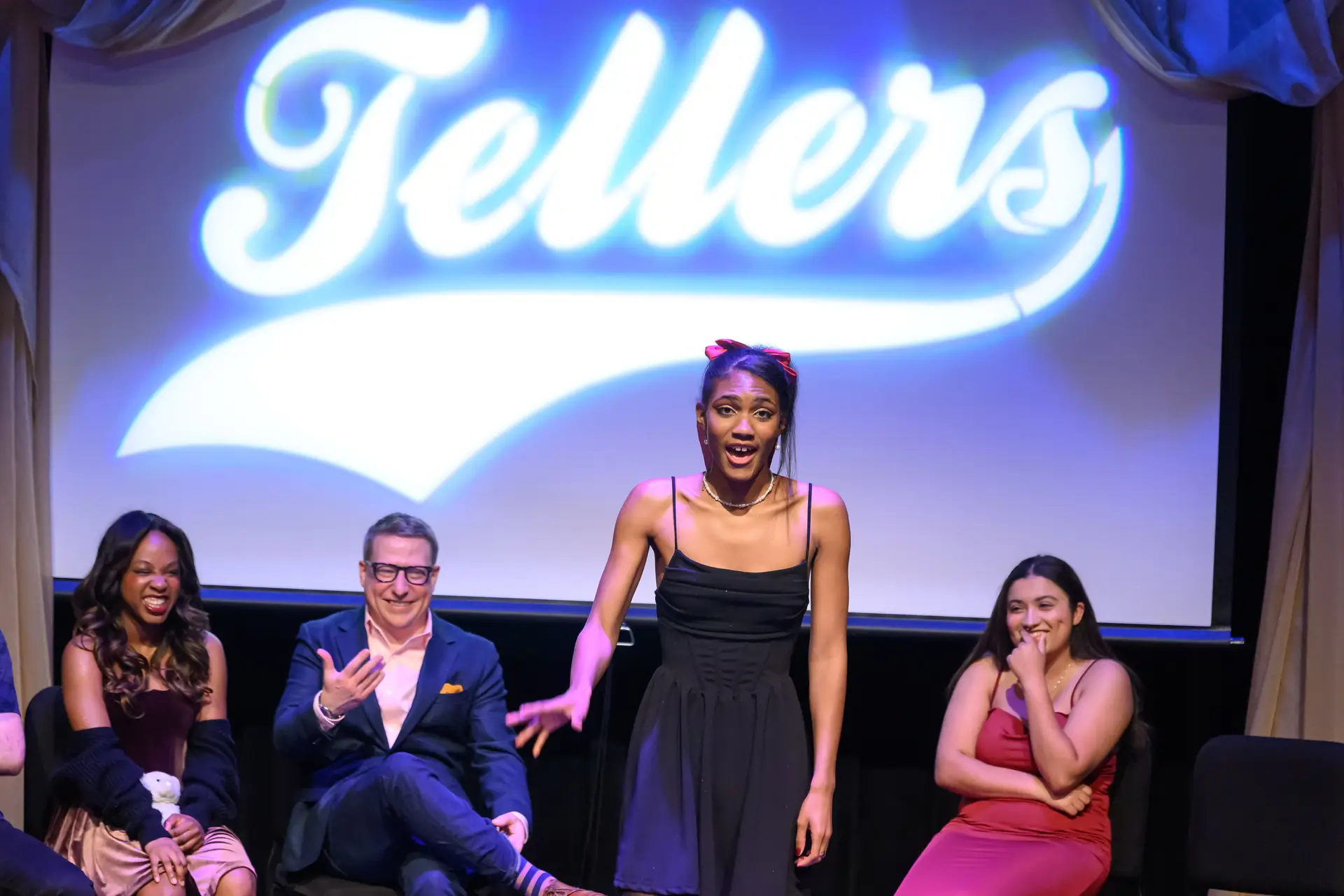
That’s exactly what I witnessed at the KSU Tellers Spring Performance.
KSU Tellers
A class about becoming a storyteller
The KSU Tellers is more than a performance group — it’s a process.
Under the direction of Charles Parrott, students gather every Friday morning from 9 a.m. to noon. But this isn’t a lecture. It’s a workshop in becoming vulnerable, observant, and intentional with your voice.
The journey, from what I saw, begins with learning to open up — and that’s no small thing. Most people don’t walk into a room ready to share something real. But through Parrott’s approach, something shifts. Students start to recognize a truth they hadn’t quite believed before:
People want to hear their stories.
KSU Tellers
Once that realization takes hold, everything changes. The class becomes a collaborative table — each student helping the others discover, shape, and refine the story they’ll eventually bring to the stage.
KSU Tellers
The performance: early craft, real growth
The spring showcase is where those stories meet an audience.
What stood out wasn’t perfection. It was progress.
These are storytellers still early in their journey, and you could see it in the details — in the pacing, the pauses, the moments where a face said everything the words hadn’t quite caught up to yet. Each student brought something different to the stage: their own rhythm, their own perspective, their own way of holding the room.
That’s the beauty of storytelling. There’s no single right way. There’s only an honest one. And every one of them found theirs.
KSU TellersKSU TellersKSU Tellers – Charles Parrott
The Quiet Masterclass Happening in Plain Sight
While the students took turns sharing their monologues, they sat together in a row facing the audience. And seated right there with them was their professor.
This is where something subtle—but powerful—was happening.
Parrott wasn’t just watching.
He was feeling every moment.
You could see it in his reactions—the slight shifts in expression, the timing of a smile, the way he leaned into certain moments. He wasn’t performing, but he was modeling what it means to truly engage with a story.
In many ways, he became the emotional meter of the room.
Where others reacted occasionally, he responded continuously—supporting each storyteller without ever taking the spotlight away.
It was a masterclass, not from the stage, but from the chair.
KSU Tellers
Back to the table
After the performance, the night wasn’t over.
KSU Tellers
Students, alumni, and friends gathered at Miller’s Ale House near campus. And that’s when it all came full circle — because that gathering, right there, is the culmination of the class.
People sitting around a table, sharing stories. Laughing. Reflecting. Connecting.
Looking around the room, you could see it on their faces: these students aren’t just better performers. They’re better communicators. Better listeners. Better at finding their way into a conversation and making it mean something.
KSU Tellers
Why this matters
The KSU Tellers is officially a storytelling troupe within KSU’s Department of Theatre & Performance Studies — focused on personal narrative, solo performance, and devised theatre. They perform at festivals, do community outreach, and grow as artists.
But what I witnessed goes deeper than a program description.
This is about learning to take your own life — your moments, your struggles, your humor — and shape it into something that resonates with another person. It’s about learning when to speak, and how to make it matter when you do.
It’s about earning your place at the adult table.
And maybe more importantly, helping someone else feel like they belong there too.
Cookie Consent
We use cookies to improve your experience on our site. By using our site, you consent to cookies.