ƒ/8 and Be There: The Timeless Advice That Still Wins

Reading Time: 2 minutes

There’s an old saying in photojournalism:

“ƒ/8 and be there.”

It sounds almost too simple—especially in a world filled with cutting-edge cameras, endless YouTube tutorials, and debates about dynamic range and autofocus systems.

But this phrase has survived for a reason.

Because at its core, it’s not about camera settings.

It’s about priorities.


What “ƒ/8” Really Means

Back in the days of film, ƒ/8 was a safe, reliable aperture. It gave you enough depth of field to keep your subject sharp without overthinking every frame.

It meant you weren’t chasing perfection.

You were choosing consistency.

Today, we have incredible tools—eye tracking, ISO performance that would’ve seemed impossible decades ago, and lenses sharper than ever.

And yet…

How many moments are missed because someone was:

  • adjusting settings
  • second-guessing exposure
  • or scrolling through menus

The point of “ƒ/8” isn’t the number.

It’s the mindset:

Know your gear well enough that it disappears.


“Be There” Is the Real Assignment

The second half of that phrase is where the power really lives.

Be there.

Not just physically present—but emotionally, mentally, and relationally engaged.

The best storytelling doesn’t happen because of perfect lighting or flawless composition.

It happens because:

  • You stayed a little longer
  • You built trust
  • You paid attention when others didn’t

In my work with nonprofits and missionaries, I’ve seen this over and over again.

The most meaningful images rarely come from the planned moments.

They come from:

  • The quiet pause after the interview
  • The interaction no one thought to photograph
  • The in-between moments that reveal truth

And those moments only show up if you’re there for them.


Why This Matters More Today

We’re living in a time where it’s easy to confuse technical excellence with storytelling effectiveness.

You can have:

  • The best camera
  • The sharpest lens
  • Perfect exposure

…and still miss the story.

Because storytelling isn’t about perfection.

It’s about connection.

And connection requires presence.


What This Looks Like in Practice

For me, “ƒ/8 and be there” shows up in a few simple ways:

  • I simplify my gear so I’m not distracted
  • I arrive early and stay late
  • I focus on people more than equipment
  • I watch for moments instead of forcing them

And most importantly…

I remind myself that my job isn’t to impress people with my camera.

It’s to help others feel something real.


The Takeaway

If you’re trying to grow as a storyteller, here’s the truth:

You don’t need more gear.

You don’t need a better camera.

You don’t need another tutorial.

You need to:

  • Show up
  • Pay attention
  • And stay present long enough for the story to unfold

Because in the end, the images that matter most…

aren’t the ones that were technically perfect.

They’re the ones that only happened because you were there.
When You Don’t Have the Whole Story (And Why That Matters More Than You Think)

Reading Time: 3 minutes

During week five of the Roswell Fire Citizens’ Academy, we focused on the role of the Public Information Officer. On the surface, it’s about communicating clearly during emergencies. But what struck me most is how the lessons apply far beyond crisis communication—they speak directly to how we all communicate every day.

We started with a simple exercise. We were told a story about five people and asked to rank their characters from best to worst. Everyone made their decisions pretty confidently. Then we were given more information.

And just like that, the rankings changed.

Same people. Same story. More context.

That’s when it hits you—how quickly we form opinions with incomplete information.

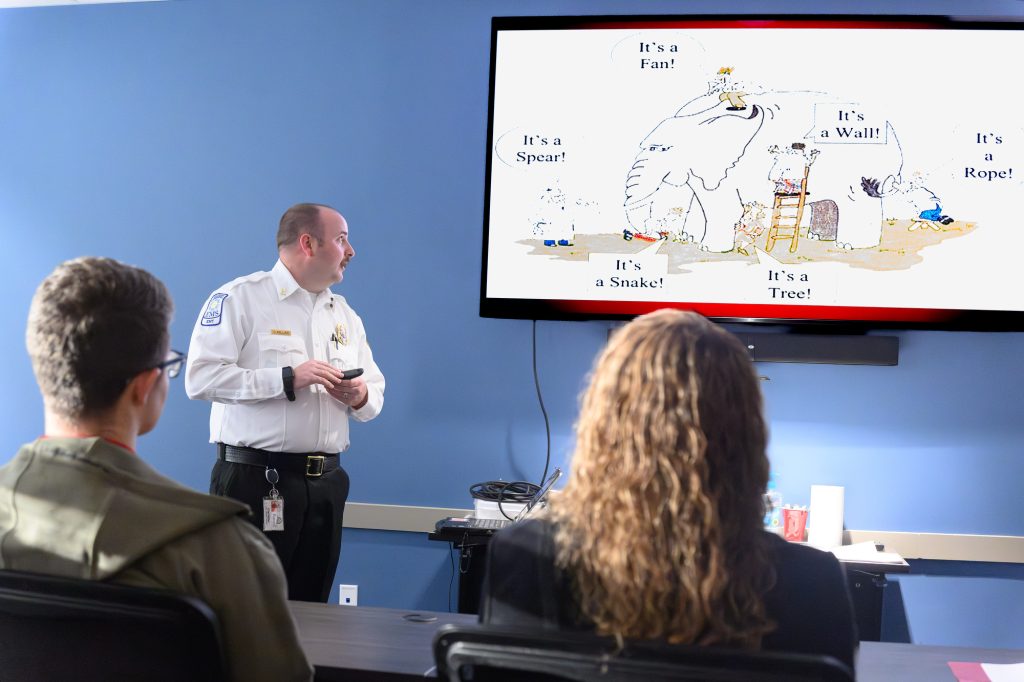
Blindfolded and relying only on touch, each person describes a different part of the elephant—snake, tree, fan—reminding us how easy it is to mistake a partial perspective for the whole story.

Later, Chad Miller, the Roswell Fire PIO, walked us through the classic illustration of blindfolded individuals describing an elephant. One person feels the trunk and says it’s like a snake. Another feels the leg and says it’s like a tree. Someone else touches the ear and describes a fan.

They’re all right… and all wrong at the same time.

Each person is confident in their conclusion because of what they experienced. But none of them has the full picture.

Sound familiar?

We don’t just see this in the media or during major news events. We see it in conversations with our spouses, our kids, our coworkers, and our clients. We hear part of a story, interpret it through our own experiences, and then respond as if we know the whole truth.

And that’s where communication starts to break down.

In the academy, we also looked at how misinformation spreads—often unintentionally. A partial truth gets shared, someone adds their interpretation, and before long, it takes on a life of its own.

Then we stepped into the pressure of it ourselves.

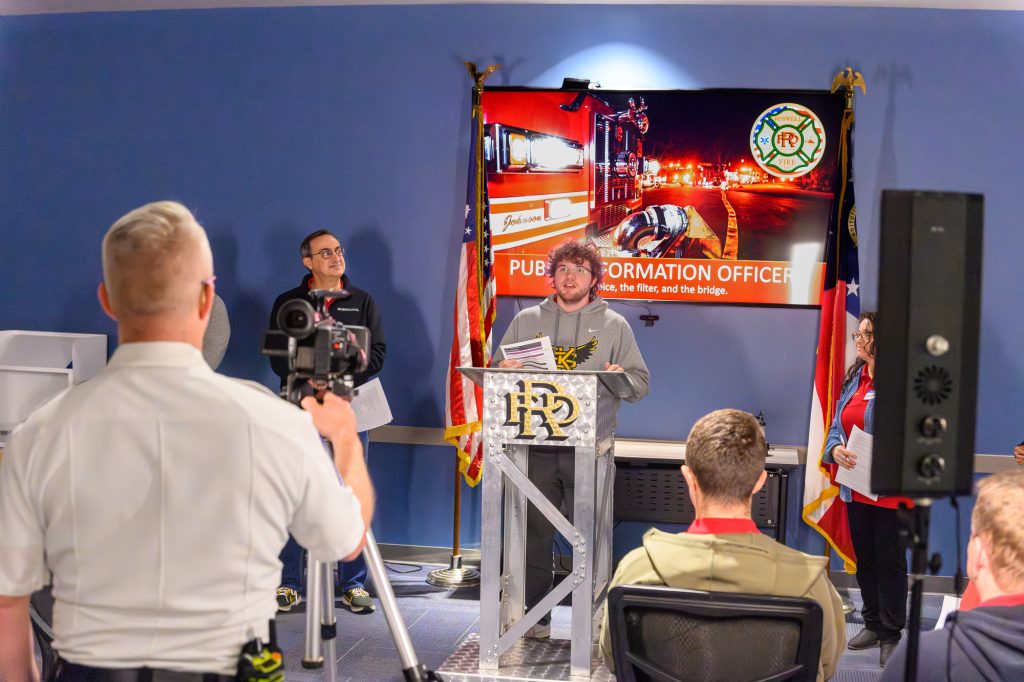
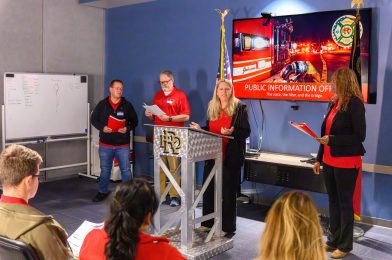
The mock press conference, with a podium, lighting, cameras, and the press, gave us a real-world scenario of what happens behind the scenes and of having to respond on our feet.

We were divided into groups and given crisis scenarios. Each team had to organize a mock press conference, with participants playing roles such as Public Information Officer, Fire Chief, Police Chief, Transportation Director, and Mayor. The rest of the class acted as the media, asking questions.

The biggest takeaway from everyone?

It’s incredibly hard to communicate clearly when:

  • You don’t have all the information
  • The situation is evolving
  • People are demanding answers right now

And yet—that’s exactly where many of us live in our day-to-day communication.

We feel pressure to respond quickly.
We assume we understand what’s going on.
We fill in gaps without even realizing it.

But good communicators—whether in a crisis or in a conversation—do something different.

They slow down.

They ask better questions.

They recognize what they don’t know.

One of the most valuable tools shared in the class was a list of 77 questions journalists commonly ask during a crisis, along with 64 “bridging statements” to help guide responses. The purpose isn’t to dodge questions—it’s to stay grounded in what is known and avoid speculating beyond that.

That’s a powerful principle for all of us.

Because most communication problems don’t come from bad intentions—they come from incomplete understanding.

After years of working as a photojournalist, in public relations, and now teaching storytelling, I’ve seen this play out again and again. The strongest storytellers aren’t the ones who rush to conclusions. They’re the ones who take the time to see the whole picture—or at least acknowledge when they can’t.

So what does this look like in real life?

It might sound like:

  • “I may not have the full story—can you help me understand?”
  • “Here’s what I know so far…”
  • “Before I respond, I want to make sure I’m seeing this clearly.”

Those small shifts can change everything.

Because when we recognize that our perspective is only part of the story, we become better listeners, clearer communicators, and ultimately, more trustworthy voices.

Whether you’re standing in front of a room during a crisis press conference or having a conversation across the dinner table, the principle is the same:

You probably don’t have the whole story.

And that’s not a weakness.

It’s the starting point for better communication.

When Your Dream Doesn’t Pay the Bills

Reading Time: 4 minutes

Early in my career, I had what I thought was my dream job. I was working for a Christian mission organization doing photography and storytelling—exactly what I believed I was called to do.

Then, giving to the organization declined.

Like many nonprofits during difficult seasons, they had to make cuts. My position disappeared.

One day, I was doing the work I loved. The next day, I was trying to figure out how to pay my bills.

Dream job gone.

That moment taught me something I wish more people pursuing photography, video, and storytelling understood:

Having to take another job doesn’t mean your dream is over.

It may simply mean you’re entering the part of the journey where persistence matters most.

Your Dream Isn’t Dead Because You Took Another Job

Some creatives believe that taking a job outside their field means they’ve somehow failed.

That mindset can trap people.

The truth is simple: adults must provide for themselves.

Rent doesn’t wait for your portfolio to improve. Groceries don’t go on hold while you build your brand. Insurance, gas, and utilities all expect to be paid on time.

Taking a job that pays the bills isn’t quitting your dream.

It’s creating the stability that allows you to keep pursuing it.

Many Jobs That Pay the Bills Aren’t Ideal

Here’s another truth people don’t talk about enough.

Some of the jobs that help you survive financially will not be places you love working.

You may deal with poor management. You may work in environments that don’t inspire you creatively. Some days you may simply be watching the clock.

But those jobs still serve a purpose.

They give you financial oxygen.

One of the most important lessons I learned is this:

Always keep a job while looking for a better one.

When you’re employed, you have options. When you’re unemployed, desperation can lead to poor decisions.

Stability gives you the ability to move forward wisely.

My Detour Back to Stability

After losing that mission job, I needed income.

I worked for Tandy, the parent company of what many people knew as Radio Shack, selling computer systems to businesses for about a year. It wasn’t photography. It wasn’t storytelling. But it paid the bills.

During that season, I made another decision that helped shape my future: I enrolled in seminary to pursue a master’s degree in communications.

For the next three years, I worked full-time while going to school.

First, I sold meat door-to-door out of the back of a truck.

Then I worked at Glamour Shots.

After that, I became an assistant manager at a one-hour photo lab in a drugstore chain. Later, I moved to another one-hour photo lab, where I served as manager.

Those jobs were 40 to 50 hours a week while I was also taking classes.

Were those dream jobs?

No.

But they kept the lights on. They kept food on the table. And they kept me moving forward.

Milestones Help You Keep Going

One thing that saved my sanity during that season was having milestones.

School gave me measurable progress. Every semester meant I was one step closer to where I ultimately wanted to be.

Without those milestones, it would have been easy to feel stuck.

When you’re pursuing a dream that takes time, it helps to create markers that remind you you’re moving forward.

Many Creative Careers Start as Two Jobs

For a season, many photographers, filmmakers, and storytellers live a double life.

A full-time job that pays the bills.

And evenings or weekends spent building their creative work.

That season can feel exhausting.

But it’s also where portfolios are built, skills are refined, and relationships begin to form.

Too many people underestimate how much consistent work over time it takes to build a sustainable creative career.

Passion Alone Isn’t Enough

We often hear the phrase “follow your passion.”

What we hear less often is the other side of that truth.

Passion must be paired with persistence.

The people who eventually succeed in creative fields are rarely the ones who had the easiest path.

They’re the ones who kept going when the dream temporarily disappeared.

They kept learning. Kept practicing. Kept taking the next small step forward.

Wanting It Isn’t the Same as Earning It

Here’s the part that can be hard to hear.

Just because you want to become a photographer, filmmaker, or storyteller doesn’t mean it will automatically happen.

Creative careers are earned.

They’re earned through years of effort, learning, mistakes, relationships, and perseverance.

That process often takes far longer than anyone expects.

But if the calling is real, the work is worth it.

Don’t Quit — Just Be Honest About the Journey

If storytelling is something you truly feel drawn to do, don’t abandon the dream simply because it isn’t paying the bills right now.

Instead, be honest about the path.

Find work that gives you stability.

Take care of your responsibilities.

Then keep building your craft during the time you do have available.

Many people who eventually make a living with a camera didn’t start there.

They started by doing whatever work was necessary to keep moving forward.

Your current job may not be your dream.

But it might be the very thing that makes your dream possible later.

Tagged : /

What Chores Taught Me About Building a Successful Creative Business

Reading Time: 3 minutes

When I was growing up, my parents made sure my sisters and I had chores. Not occasional chores—regular chores.

Some were daily. After dinner, we swept the kitchen and mopped the floor. We cleared the table. Someone fed the dog. Someone took out the trash. Beds had to be made before leaving for school.

Then there were the weekly chores: cleaning the bathrooms, vacuuming, dusting, mowing the grass, and whatever else needed attention around the house.

And there was always one question that determined whether we could go see our friends:

“Have you done your chores up to now?”

If the answer was no, the conversation was over.

Chores Were Necessary…But Not Fun

Let’s be honest. I don’t remember any of those chores being fun.

They were simply part of life. They were necessary for keeping the house running well and making it a healthy place to live.

But looking back now, I realize something important.

Those chores were teaching me lessons I use every single day in my work as a photographer, videographer, storyteller, and business consultant.

The Power of Seeing Something Finished

One of the first things chores teach you is the satisfaction of completing something.

When you mow the grass, you see the difference immediately.

When you vacuum, the lines in the carpet show the work you’ve done.

When you make your bed, the room feels different.

There’s a clear before and after.

That sense of “I accomplished something” is powerful.

As a creative professional, the same principle applies. Whether it’s editing a photo story, organizing files, or delivering a final project, each completed step builds momentum.

Chores Also Teach Creativity

Something else happens when you do chores regularly.

You start figuring out how to do them better and faster.

My mother had a simple quality control system. After you cleaned the bathroom, she inspected it. If it wasn’t done right, you did it again.

It didn’t take long to realize that doing it twice took a lot more time than doing it right the first time.

So I started learning how to work smarter.

How to clean more efficiently.
How to organize the steps.
How to finish faster while still doing it well.

Without realizing it, I was learning workflow.

The Same Lesson Applies to Entrepreneurship

Today, every project I work on follows a workflow.

There are steps that must be done well:

Planning
Capturing the story
Editing
Writing captions
Keywording
Delivering the final files

None of these steps is optional if you want to produce excellent work.

Just as chores in a household keep the household healthy, so too do chores in a business.

And just like my mother inspecting the bathroom, the work eventually gets inspected by the client.

The lesson I learned early was simple:

Do it right the first time.

The “Chores” of Running a Creative Business

Every entrepreneur has parts of the job they love and parts they don’t.

Most photographers love shooting.
Most storytellers love capturing meaningful moments.

But running a successful business includes plenty of tasks that feel like chores:

Accounting
Backing up files
Sending invoices
Writing captions and metadata
Marketing
Answering emails
Following up with clients
Organizing your archive

These things may not be glamorous, but they are essential.

They are the sweeping, mopping, and trash-taking-out of running a business.

What I Tell Myself When Doing the Work I Don’t Love

Over the years, I’ve developed a few simple reminders that help me stay focused when doing the less exciting parts of the job.

1. This step supports the whole story.
Just like a clean kitchen supports a healthy home, the small business tasks support great storytelling.

2. Do it right the first time.
Fixing mistakes later always takes longer.

3. Efficiency creates freedom.
The faster I complete necessary tasks, the more time I have for creative work.

4. Consistency builds trust.
Clients notice reliability just as much as creativity.

5. Speed can set you apart.
A fast turnaround can wow a client just as much as great images.

The Motivation Changes as You Get Older

When I was young, the reward for finishing chores was simple:

I could go play with my friends.

Today, the motivation is different.

Doing the work well means:

A sustainable business
A livable income
Saving for retirement
Being able to take vacations
Having the freedom to choose meaningful projects

The stakes are higher, but the principle is the same.

The Real Lesson My Parents Taught Me

My parents probably weren’t trying to teach me about entrepreneurship.

They were simply teaching responsibility.

But those simple household chores taught something much deeper:

Discipline.
Attention to detail.
Efficiency.
Finishing what you start.

And it turns out those same lessons are exactly what it takes to build a thriving creative business.

So whenever I find myself doing one of the “chores” of running my business, I remind myself of something I learned a long time ago:

Finish the job. Do it right. Then enjoy the freedom that comes afterward.

Tagged : /

Seeing Stories in the Smoke: What the Roswell Citizens’ Fire Academy Is Teaching Me About Storytelling

Reading Time: 6 minutes

Over the past few weeks, I’ve been attending the Citizens’ Fire Academy with the Roswell Fire Department here in Roswell.

I originally signed up simply because I was curious. Like many people, I see fire trucks rushing past and know that somewhere a team of professionals is responding to an emergency. But I realized I didn’t really understand what happens behind the scenes.

What I didn’t expect was how many stories I would discover.

As a storyteller and photographer, my instincts kicked in immediately. Every session has moments worth capturing—people demonstrating life-saving skills, firefighters explaining how they make decisions under pressure, or technology that feels like it came straight out of science fiction.

So I started doing what I naturally do:
I brought my camera, took photos, and began sharing what I was learning on social media.

And something interesting happened.

Those small posts began to become little stories about the people who protect our community.


A Front Row Seat to the Stories

One evening, we met the command staff and learned how the department operates behind the scenes. I shared this on social media:

Tonight at Fire Citizens’ Academy, we got to meet Roswell’s command staff and dive into how the department protects our community — from reducing homeowners’ insurance risks to keeping us safer in our own businesses and neighborhoods. The crew walked us through their roles, answered every question our class asked, and even delivered a classic long PowerPoint with plenty of humor and real-life stories.

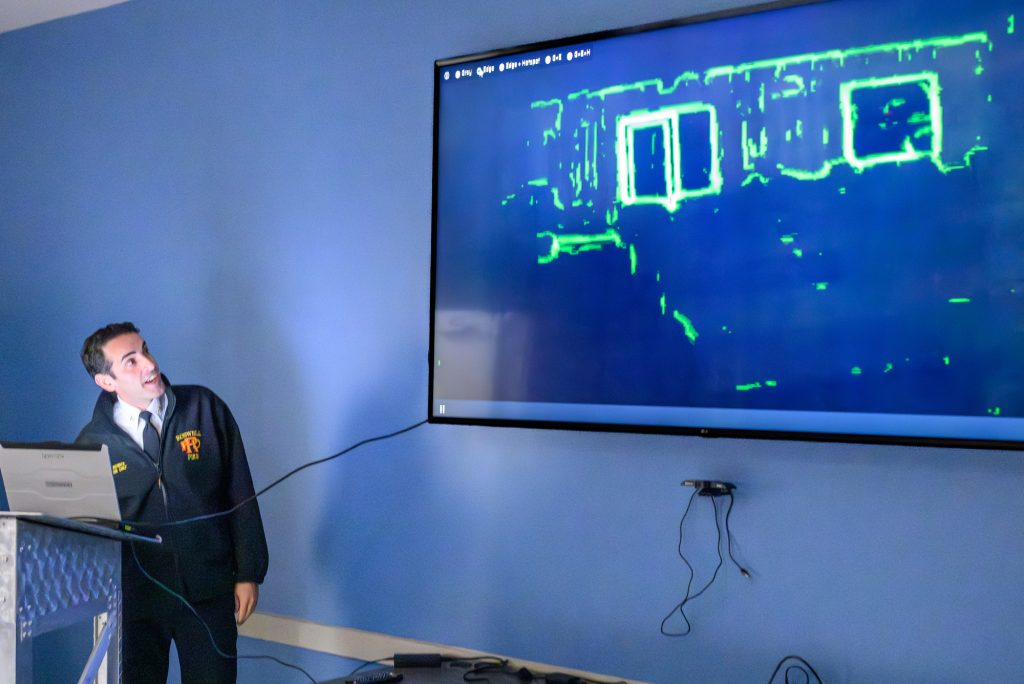
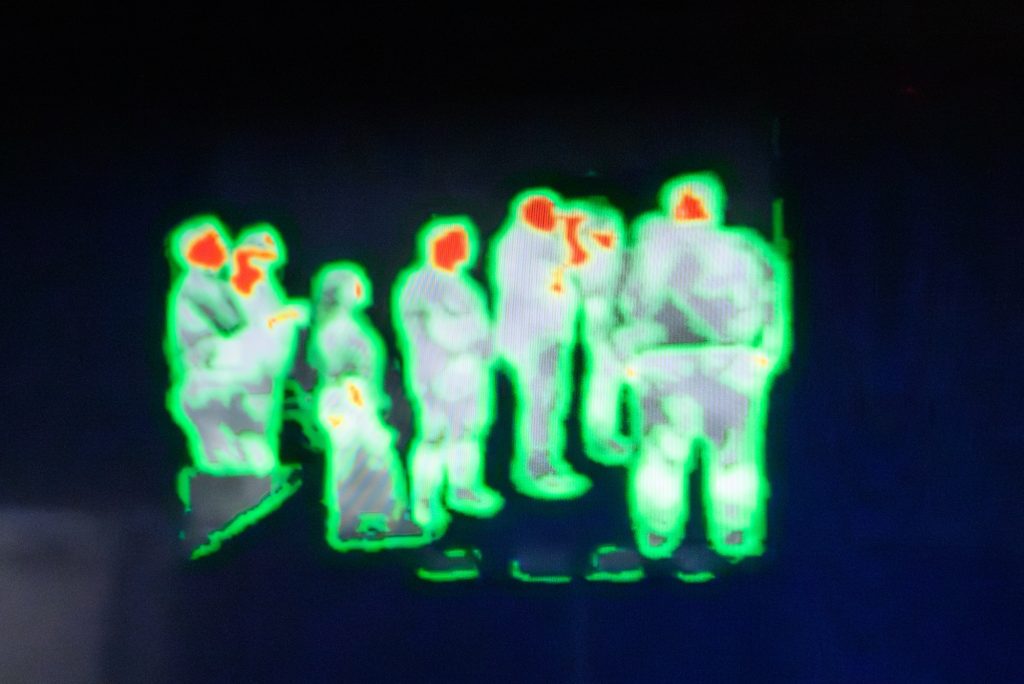
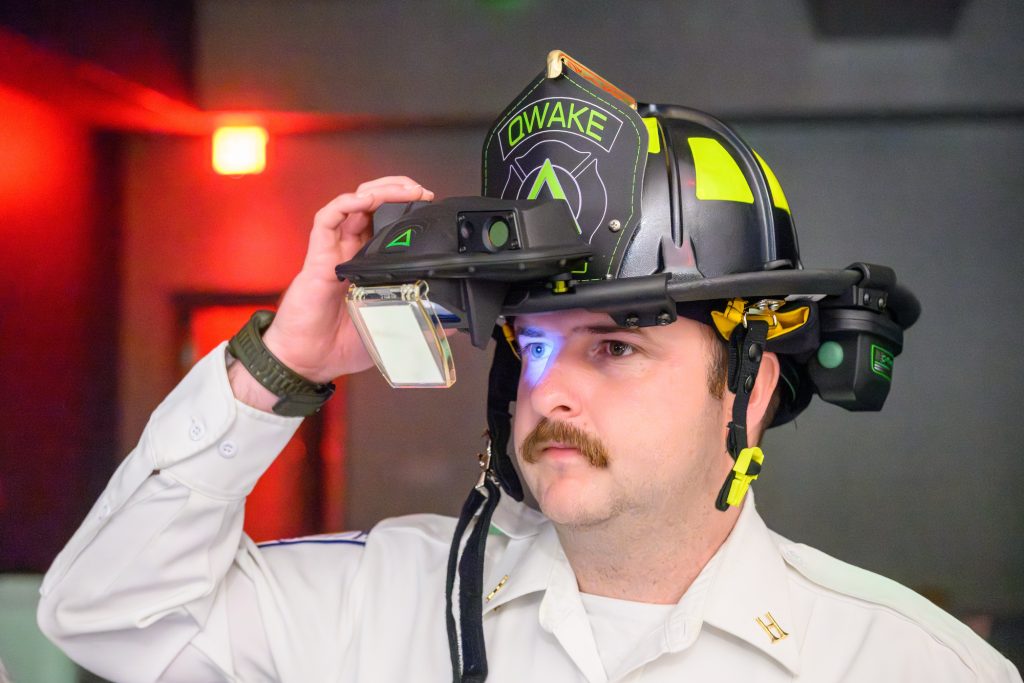
As a bonus, at the end of the night, we saw a demo of the cutting-edge Qwake technology they’re testing — a next-gen helmet system that combines AI, augmented reality, and thermal imaging to help firefighters see through smoke and navigate zero-visibility environments safely. It overlays thermal and edge-detection views directly in the firefighter’s line of sight, helps them locate exits and victims faster, and can stream real-time information back to the incident commander—even to headquarters—improving situational awareness for everyone.

This isn’t futuristic fantasy — departments across the country are already testing this gear as part of early rollout programs. What an incredible glimpse into the future of public safety right here in Roswell!

That night alone could have been an entire article. Instead, it became a short story shared online—one that helped people see their fire department in a new light.


The Human Side of First Responders

Another week focused on emergency medical response. What struck me most wasn’t just the equipment or procedures—it was the depth of training and teamwork required when someone’s life is on the line.

Here’s what I shared afterward:

Over the past two weeks, the Roswell Fire Department Citizens’ Fire Academy has given me a deeper appreciation for the people who show up when someone’s life is on the line.

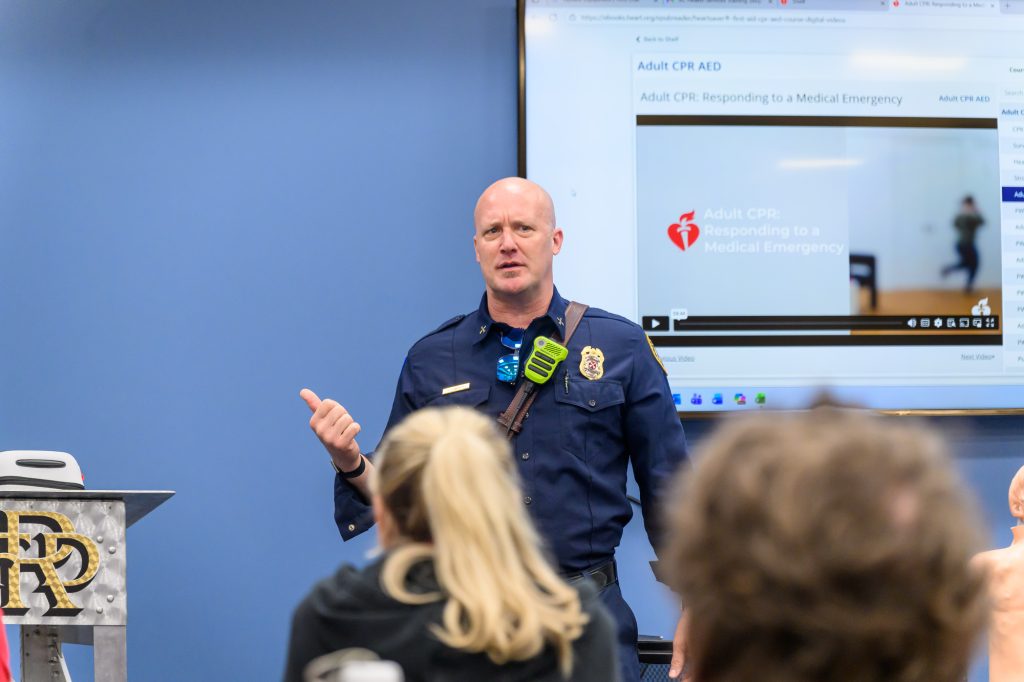
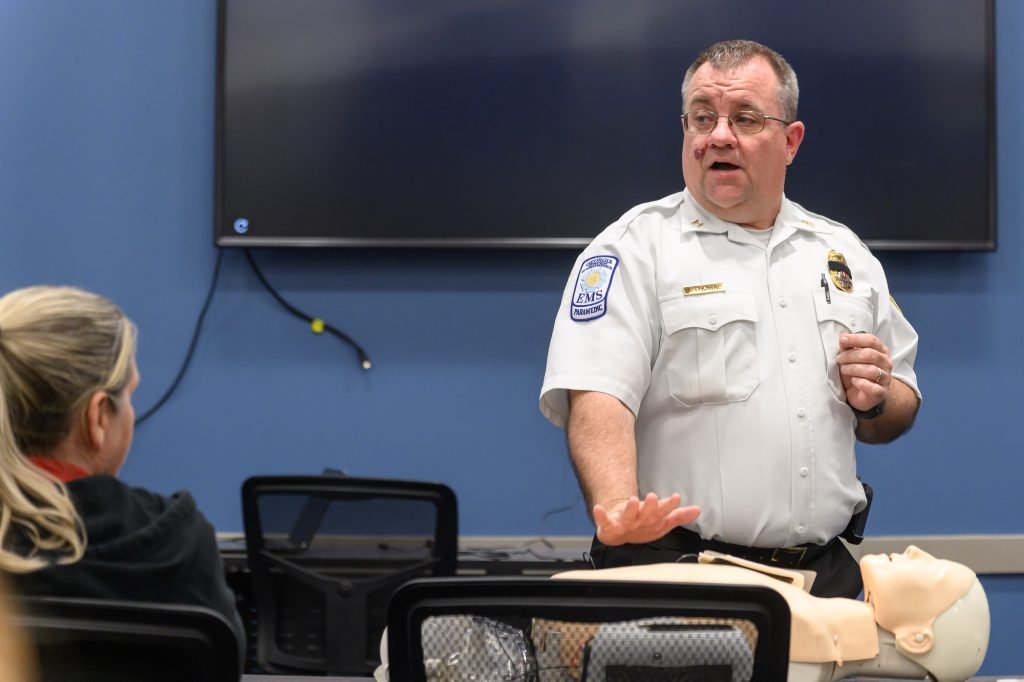
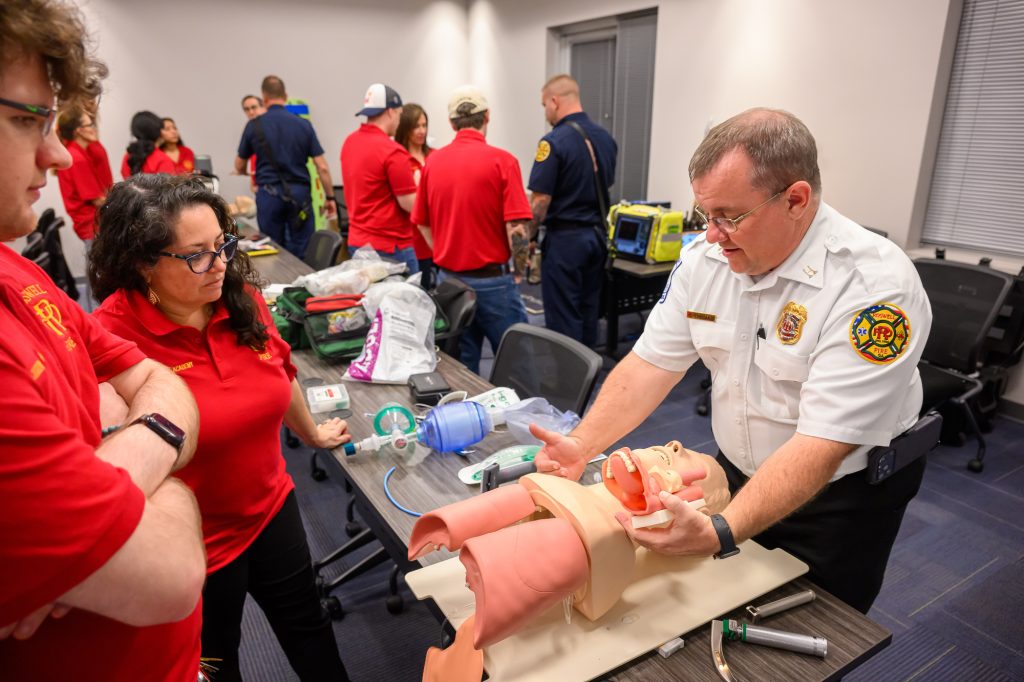
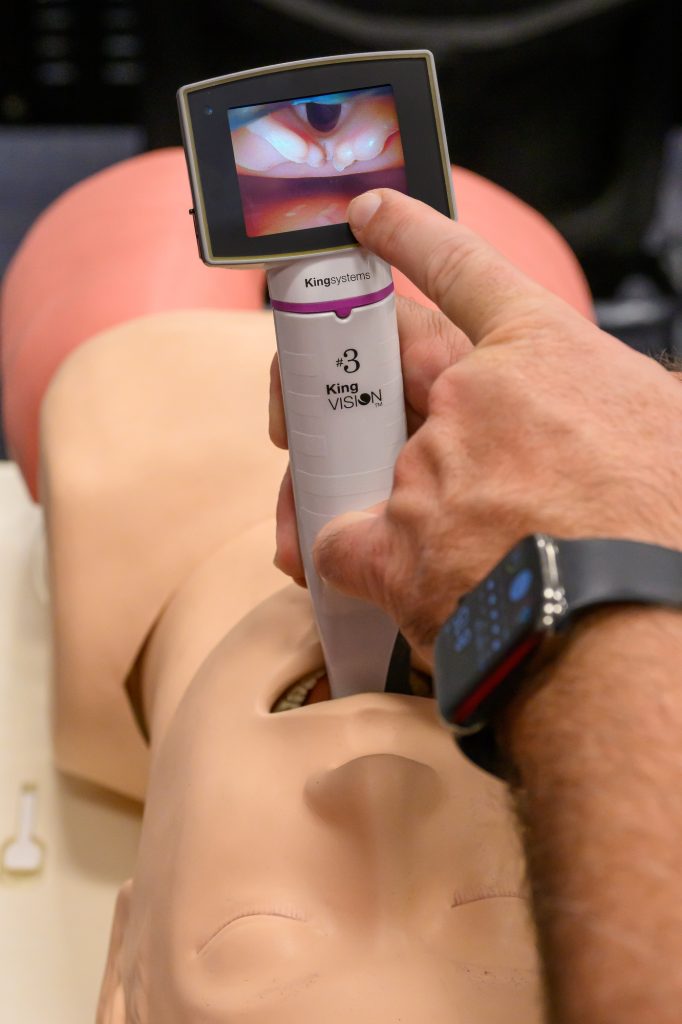
One evening focused on lifesaving basics. Captain Bryan Thomas, Battalion Chief Danny Dwyer, and Battalion Chief & Fire Marshal Chris Archer walked us through CPR, AED use, and airway-clearance techniques. It was practical, hands-on learning that reminded me how important it is for everyday citizens to know what to do before first responders arrive.

The following week shifted to EMS, and what happens when the professionals take over.

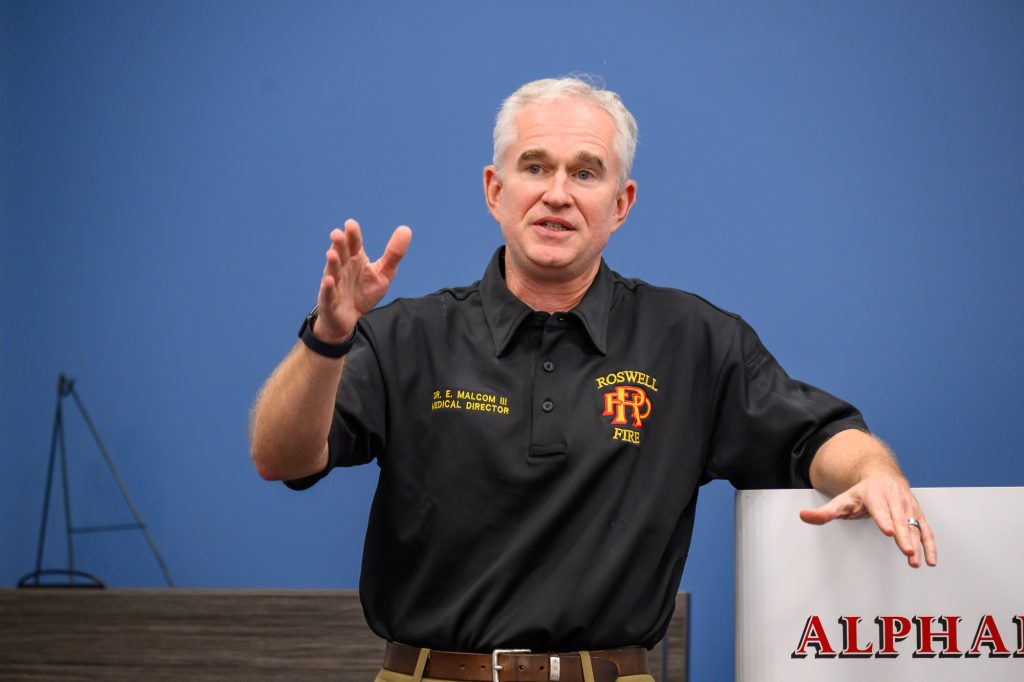
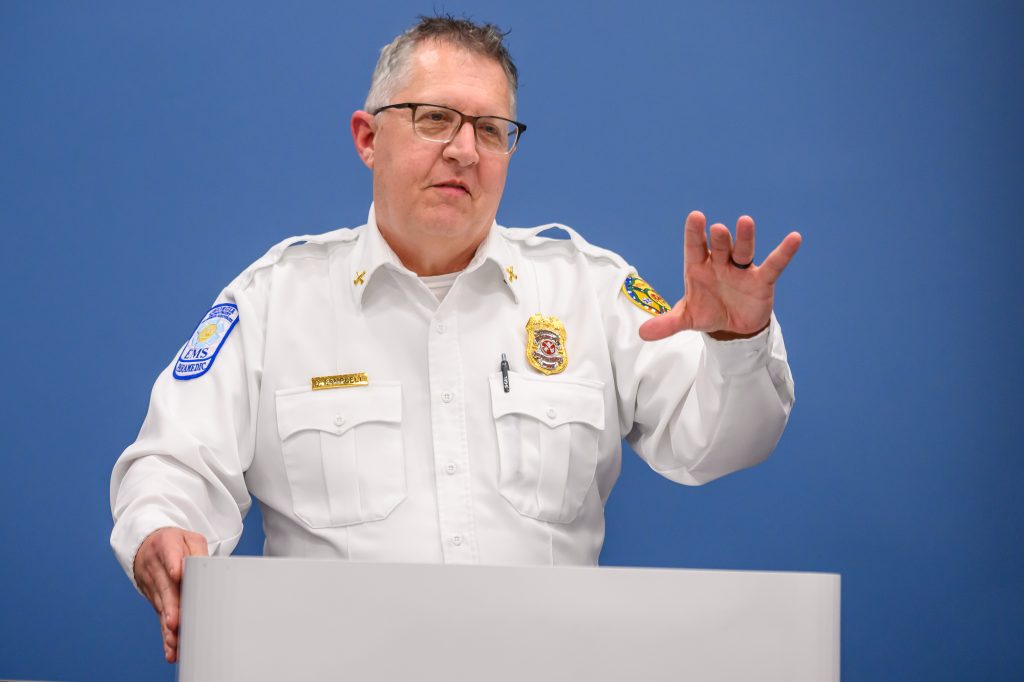
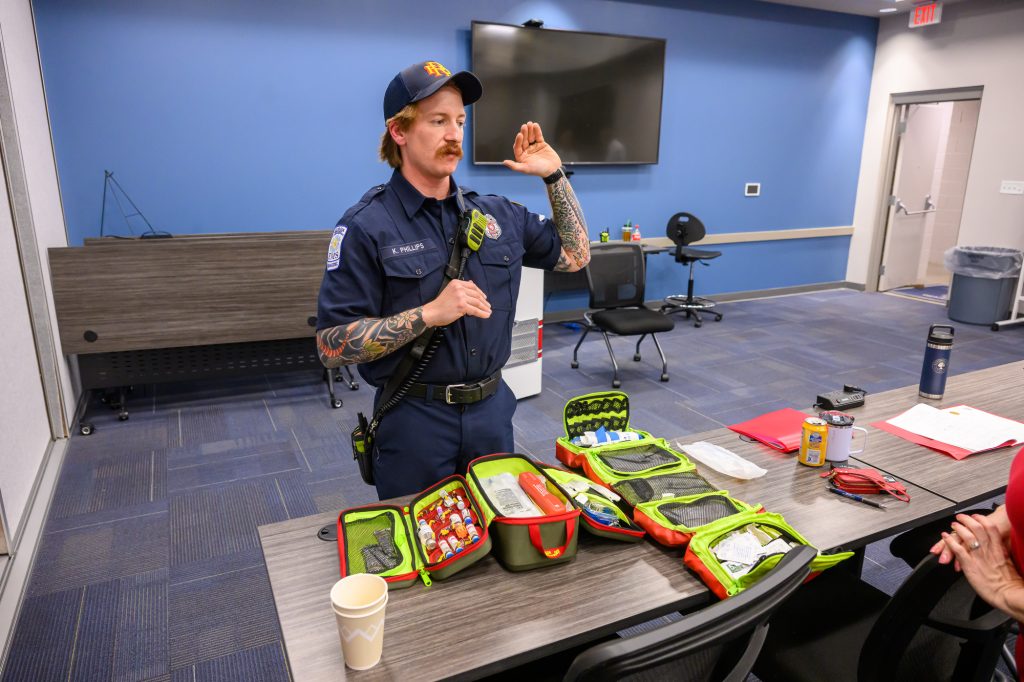
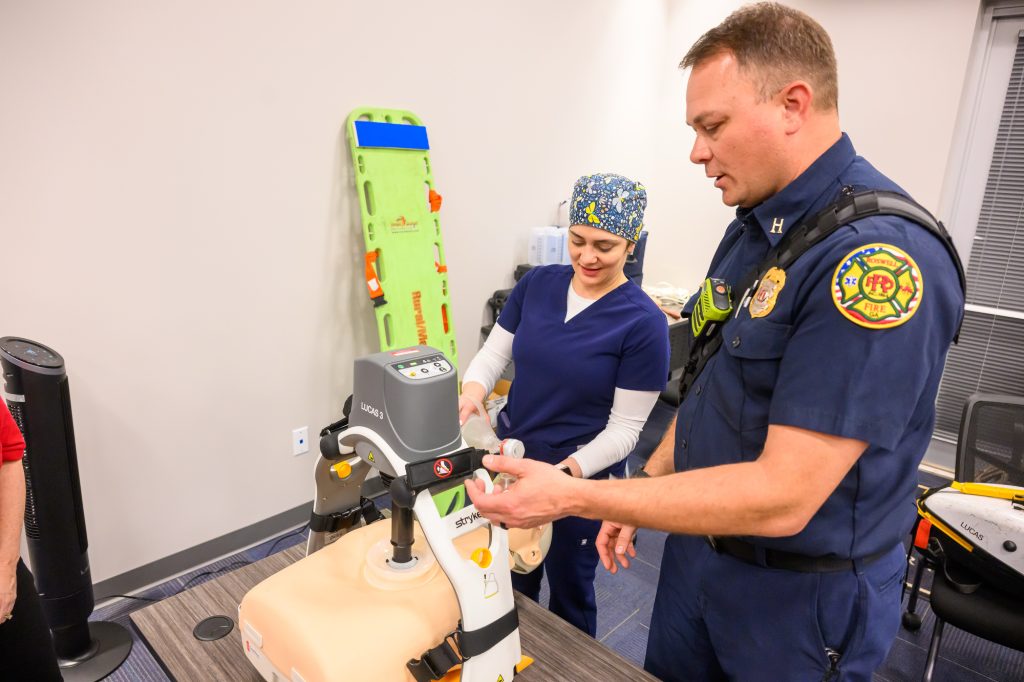
Battalion Chief DeWayne Campbell led the evening with help from the team at Station 22, including Captain Anthony Witchousky, Firefighter Kyle Phillips, Roswell City Nurse Virginia Hames, Captain Bryan Thomas, and others. We also heard from the department’s Medical Director, Dr. E. Malcolm III, who explained the critical role a medical director plays in EMS systems.

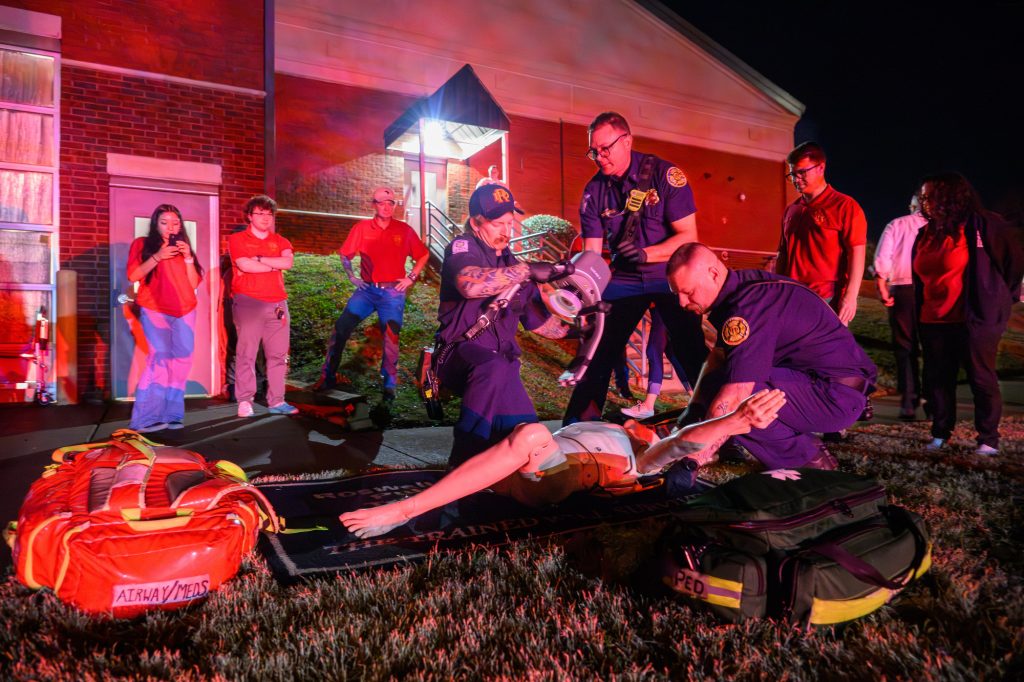
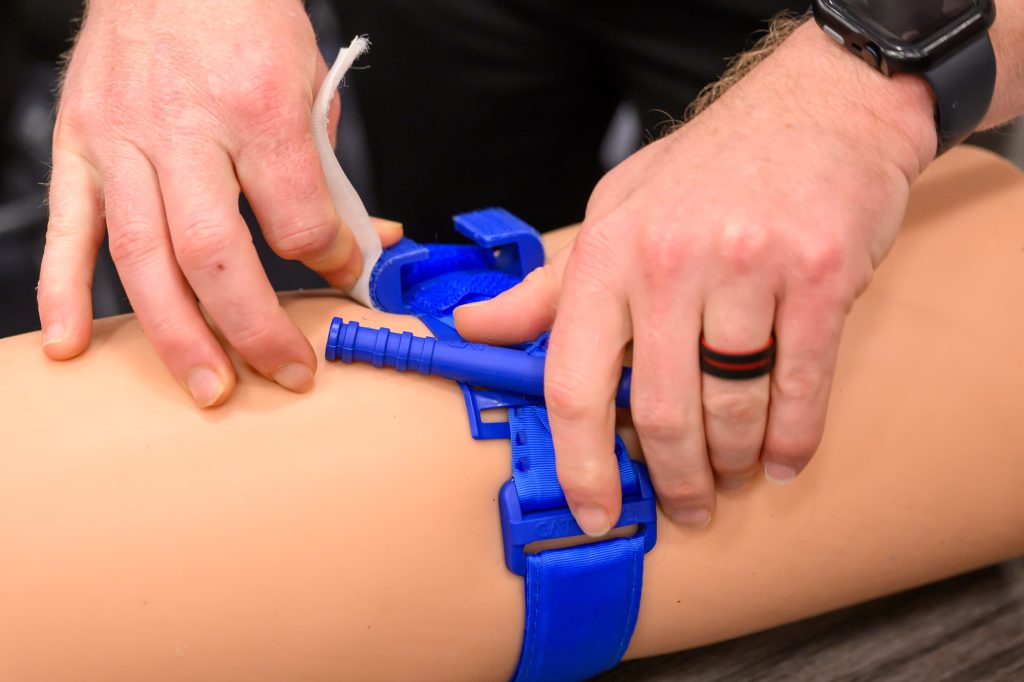
They walked us through the different levels of EMT training and the paramedic level, showed us the tools and medications they use in the field, and demonstrated how they are used during real emergencies. Then we got to try some of it ourselves.

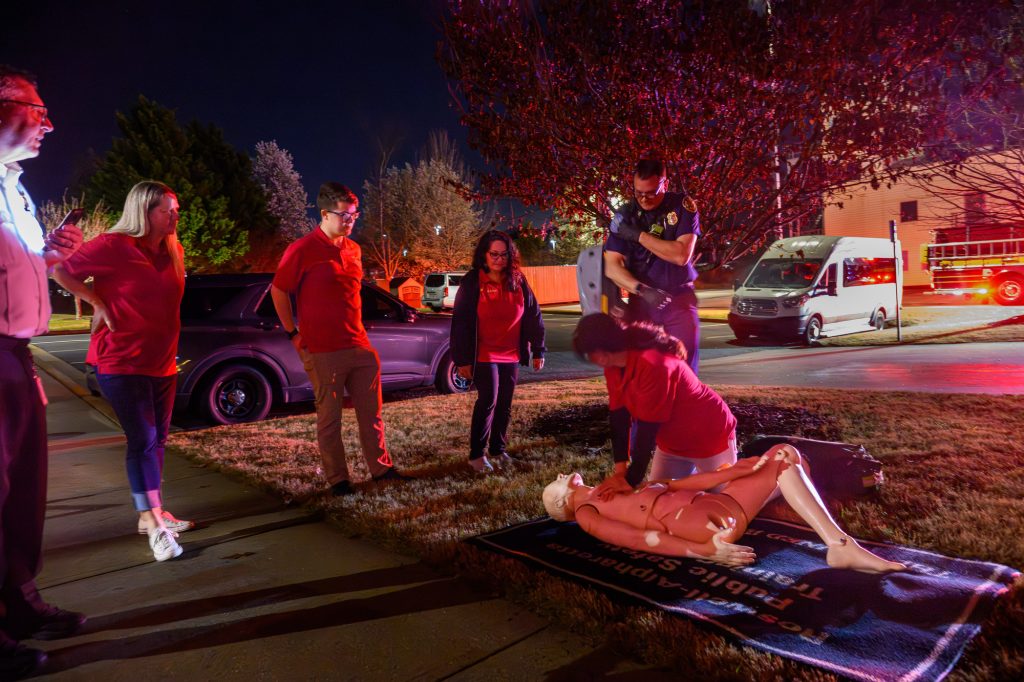
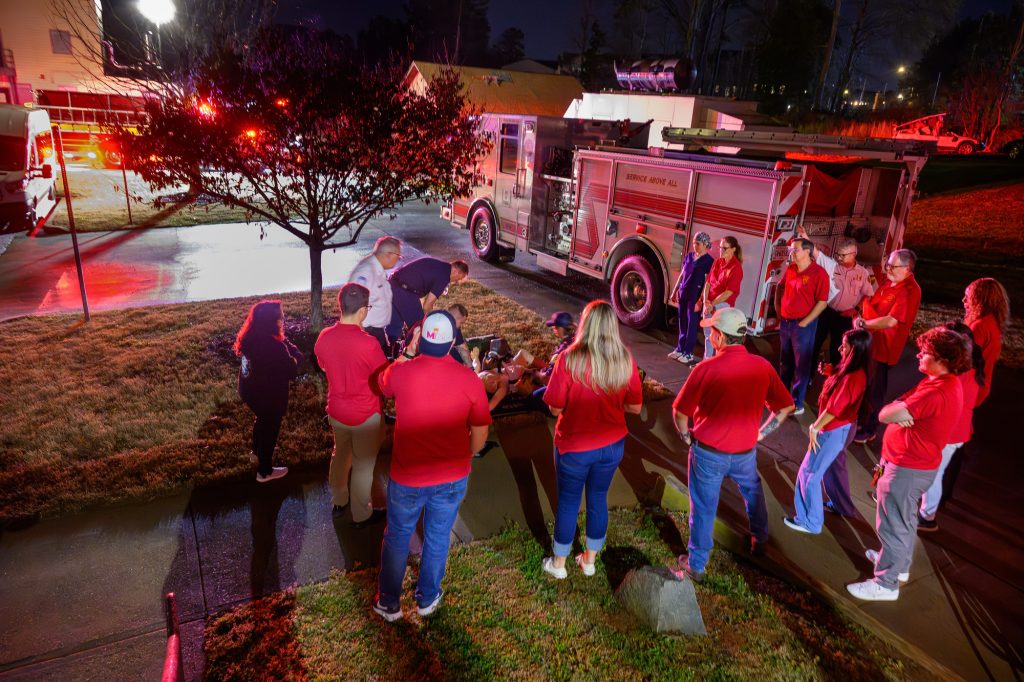
The night ended with a realistic scenario. A person was unconscious, and someone from our class had to take charge—directing one person to call 911, another to retrieve the AED, and starting CPR. As we rotated through roles, the fire engine arrived, and the EMS team took over. Watching them move from assessment to treatment with the equipment we had just learned about was incredibly impressive.

What struck me most was the depth of knowledge and experience these professionals possess. The more questions we asked, the more it became clear how deep their training really goes.

I left feeling grateful—and honestly lucky—to live in Roswell, Georgia, where the first responders are this well-trained and this committed to saving lives.


Why This Matters for Storytelling

This experience has reminded me of something I often teach:

Stories are everywhere—you just have to be paying attention.

The Citizens’ Fire Academy isn’t a marketing campaign. It’s simply a program designed to help residents understand their fire department.

But within every class are:

  • real people
  • real expertise
  • real moments of learning
  • real examples of service

Those are the ingredients of powerful storytelling.

By photographing and sharing these moments, I’m doing two things at once.


1. Helping the Fire Department Tell Their Story

Most organizations—especially public service agencies—are incredibly busy doing their work. Telling their story often falls to the bottom of the list.

By sharing what I’m seeing and learning, I’m helping shine a light on:

  • The training firefighters go through
  • The technology they are testing
  • The professionalism of the team
  • The importance of community preparedness

It’s a small way of giving back to the department that serves our city.


2. Demonstrating My Own Storytelling Skills

At the same time, these posts are quietly doing something else.

They’re showing how I work as a storyteller.

Instead of simply saying, “I’m a storyteller,” people are seeing it in action:

  • Identifying meaningful moments
  • Capturing photos that show what’s happening
  • Turning information into human stories
  • Sharing those stories in ways people want to read

In other words, the best marketing for storytelling is often telling stories.


Marketing Without Feeling Like Marketing

One of the challenges many photographers and communicators face is how to promote their work without constantly talking about themselves.

This experience has been a great reminder that the best marketing often focuses on someone else’s story.

When you highlight meaningful work happening around you:

  • The audience learns something valuable
  • The organization receives positive exposure
  • And your storytelling ability becomes visible in a natural way

It’s authentic, helpful, and far more engaging than simply posting, “Look at what I can do.”


A Grateful Student

I’m only partway through the Citizens’ Fire Academy, and already it has deepened my respect for the men and women who serve our community through the Roswell Fire Department.

It has also reminded me that great stories are often hiding in plain sight—in classrooms, training sessions, community programs, and everyday moments where people are serving others.

Sometimes all it takes is paying attention, picking up a camera, and sharing what you see.

And when you do that well, everyone benefits.

Tagged : /

When Photojournalists Forget the Words

Reading Time: 4 minutes

Over the years, I’ve noticed something interesting when photojournalists present their work at conferences or workshops.

Many of them rely heavily on writers to tell the story.

For this story, I selected photos from two of today’s top photojournalists, Doug Mills and Carol Guzy, who consistently put the subjects first. When they present, they don’t just show images—they tell the story of the people in their photos and then add the context that brings the work fully to life.

That’s not unusual in newsrooms. In newspapers and magazines, the partnership between a reporter and a photographer can be incredibly powerful. The writer provides depth, context, and explanation. The photographer provides the emotional entry point—the moment that pulls the reader into the story.

When it works well, the two are married together beautifully.

But something often gets lost when photographers present their work on their own.

They show powerful images on the screen, but the audience only hears fragments of the story. Instead of hearing about the people in the photos, the presentation becomes more about the photographer’s experience—how they got access, how hard the assignment was, or what challenges they faced making the picture.

Meanwhile, the audience is left trying to figure out what is actually happening in the story.

The problem is simple: the audience never saw the original package.

They didn’t see the full article that the writer produced. They didn’t read the background reporting. They didn’t get the captions in context with the larger narrative.

All they see is the photo.

And if the photographer doesn’t fill in the story, no one else will.

The Photographer Still Carries the Story

Even when a writer originally tells the story in print, the photographer still bears responsibility for it.

Why?

Because the images exist because of the people in them.

Photojournalists aren’t just creating interesting pictures. They are documenting someone else’s life, struggle, celebration, or moment in history. The photos only matter because of the human story behind them.

If we fail to tell that story when we have the microphone, we miss the very reason the photograph exists.

Don’t Let the Photos Become Window Dressing

Sometimes presentations unintentionally turn photographs into visual decoration.

The images serve as slides in the background while the photographer mostly talks about themselves.

But photojournalism was never meant to be about the photographer.

It’s about the subject.

The person whose life intersected with the camera.

When we show our work publicly, we are being trusted again with that person’s story. The least we can do is make sure the audience understands who they are and why their story matters.

Tell the Story First

One simple shift can make presentations far more powerful:

Tell the story first. Then share the backstory.

Introduce the people in the photographs.

Explain what is happening in their lives.

Help the audience understand the stakes, the emotions, and the context.

Once the audience understands the story, then it becomes meaningful to hear how the photographer found it, gained access, or overcame obstacles to document it.

But the story must come first.

Otherwise, the audience is just looking at pictures without understanding why they matter.

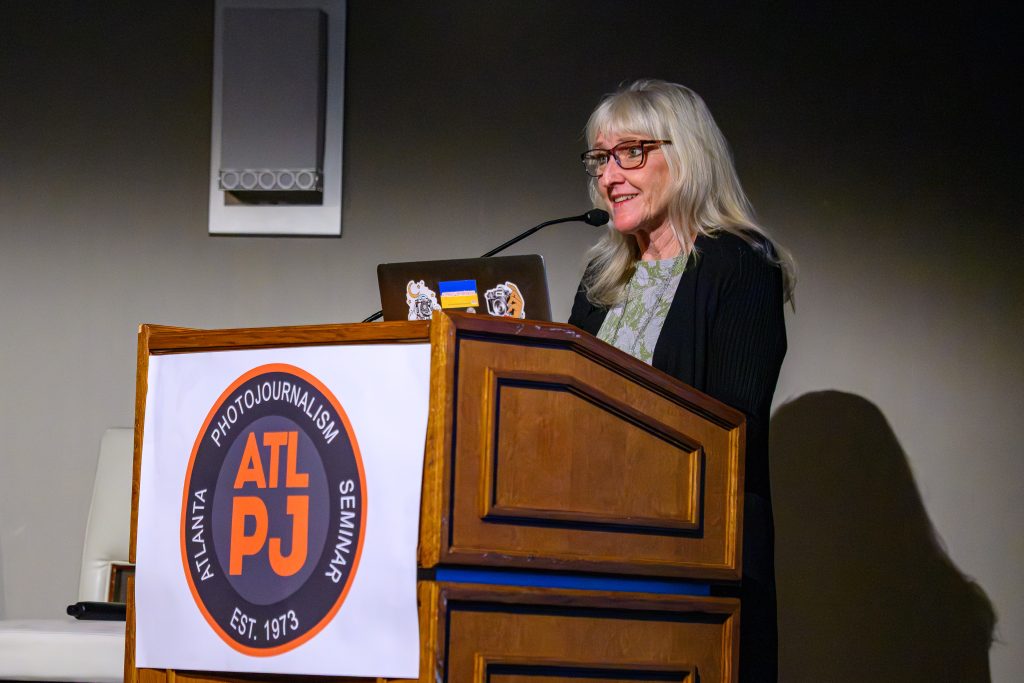
Carol Guzy speaks at the Atlanta Photojournalism Conference 2025, sharing the stories behind her photographs and reminding the audience that the power of photojournalism begins with the lives of the people in front of the lens.

Why Journalists Must Seize Every Opportunity to Tell the Story

Every time journalists speak publicly, they have an opportunity—and a responsibility—to tell the subject’s story.

There are several reasons why this matters.

First, many people will never encounter the original journalism.
Most stories today have a short life in print or online. A presentation may reach people who have never seen the article or publication where the work first appeared.

Second, storytelling preserves the dignity of the subject.
When we tell the full story, we help the audience see the person behind the photograph—not just the moment that was captured.

Third, it keeps journalism focused on its purpose.
Journalism exists to inform the public and help people understand the world around them. If the focus shifts entirely to the journalist, we’ve lost sight of that mission.

Finally, it honors the trust people gave us.
The people we photograph often allow us into vulnerable moments of their lives. When we share those images publicly, we owe it to them to make sure their story is told clearly and truthfully.

The Photograph Is the Doorway

A great photograph is often the doorway into a story.

It grabs attention. It creates curiosity. It invites people to ask questions.

But the photograph alone is rarely the whole story.

That’s where the journalist comes in.

When photographers stand in front of an audience, they are no longer just showing pictures. They are serving as the storyteller who helps the audience understand what they are seeing.

And when we do that well, the photographs become far more than images on a screen.

They become a window into someone else’s life.

Tagged : / /

Celebrating Visual Storytelling at UTC’s 10th Annual Photo Night

Reading Time: 4 minutes

Yesterday I had the privilege of being part of something special at the University of Tennessee at Chattanooga. The Communication Department hosted the 10th annual Photo Night, a celebration of visual storytelling that brought together professional photographers, filmmakers, students, and the Chattanooga community.

The day started with workshops where professionals shared their experiences and insights with students who are just beginning their journeys into visual storytelling. Events like this matter because they create space where working professionals can pass along both the craft and the heart behind the work.

The evening program, held in the Roland Hayes Concert Hall at UTC’s Fine Arts Center, felt a bit like a visual storytelling version of a late-night talk show. Each presenter shared stories from their work, giving the audience a glimpse into the moments behind the images.

The lineup of speakers reflected just how strong the storytelling community is:

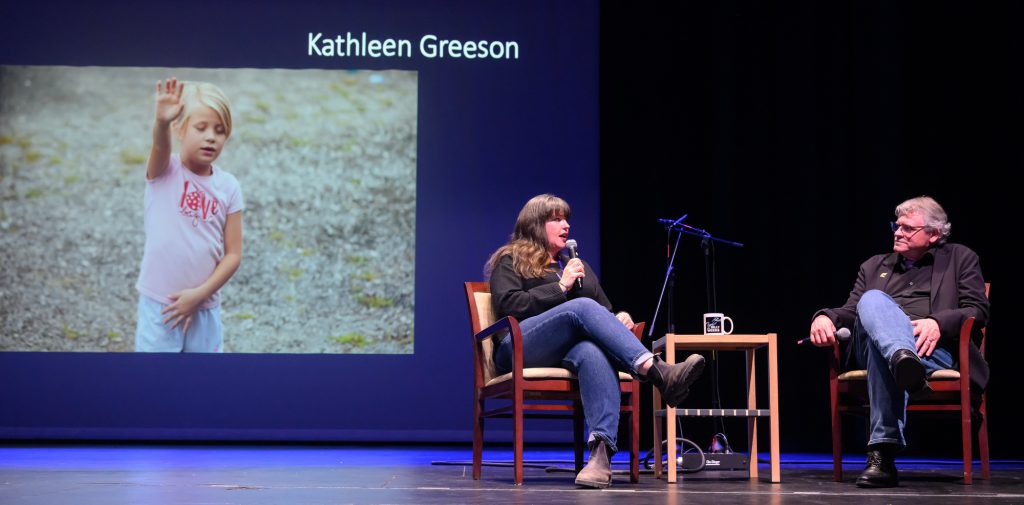
  • Kathleen Greeson, a Chattanooga documentarian and photographer whose work has explored important social issues, including her current long-form documentary project examining rural health and hospital closures in Tennessee.
  • Brynn Anderson of Associated Press, who regularly covers major sporting events around the world, including the Super Bowl, World Series, Olympics, and NCAA Final Four.
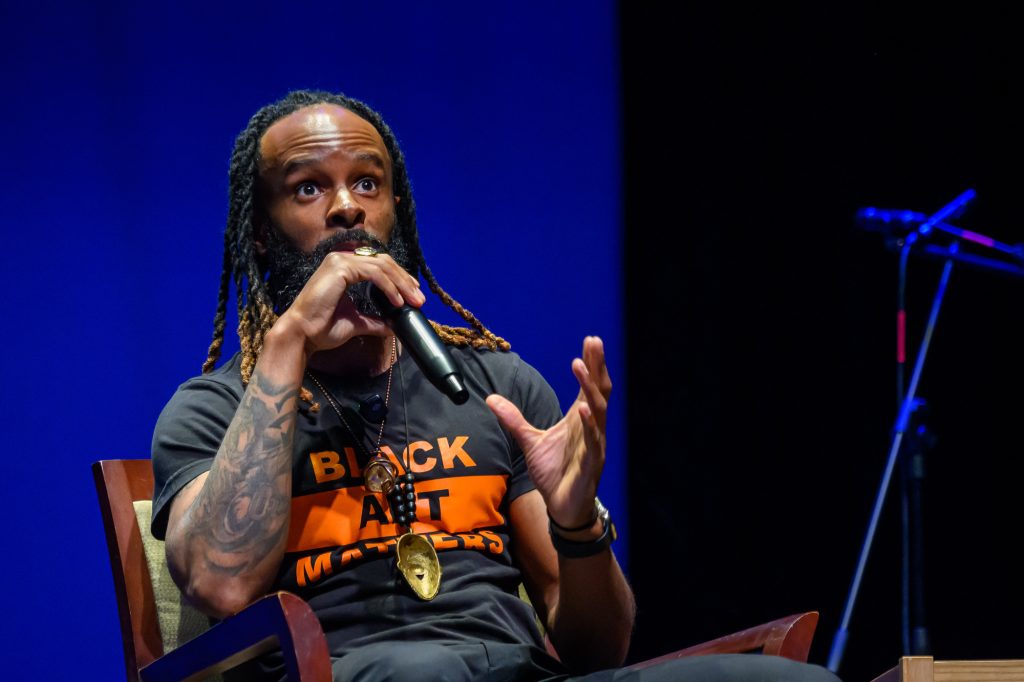
  • Chris Shaw, founder of Final Flash Productions.
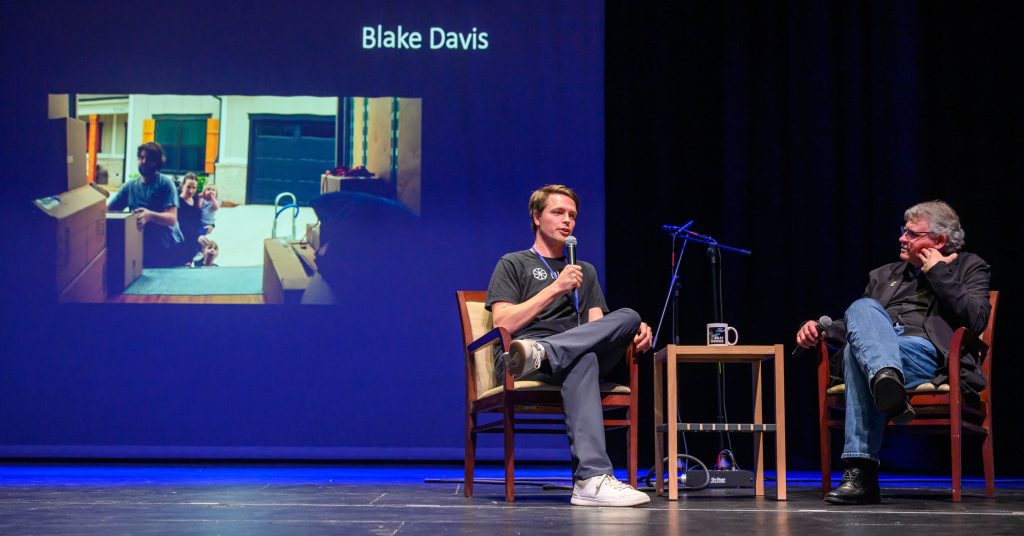
  • Blake Davis, founder of Bloom Video Production.
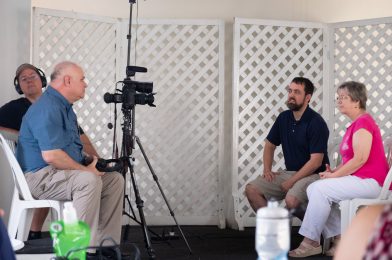
Billy Weeks interviews Chattanooga photojournalist and documentarian Kathleen Greeson during the 10th Annual Photo Night at the University of Tennessee at Chattanooga. Greeson shared insights from her career in visual storytelling and previewed her current long-form documentary project exploring rural health care and hospital closures across Tennessee.

The event was hosted by photojournalist and UTC lecturer Billy Weeks, who founded Photo Night and continues to lead the program. Billy often describes the evening as more of a storytelling show than a lecture, and that description fits perfectly.

But what makes Photo Night unique is that the students are truly the stars.

Billy Weeks interviews Blake Davis, founder of Bloom Video Production, during the 10th Annual Photo Night at the University of Tennessee at Chattanooga. Davis shared stories from his journey building a production company and discussed the creative and technical challenges of producing compelling video content for clients.

Throughout the evening, the audience saw students in UTC’s Rising Rock program produce their work. These stories are powerful examples of what happens when young storytellers are given mentorship, real-world experience, and the opportunity to pursue meaningful stories.

Chris Shaw, founder of Final Flash Productions, shares stories from his work during the 10th Annual Photo Night at the University of Tennessee at Chattanooga, giving the audience a behind-the-scenes look at the creative process and challenges of producing compelling visual stories.

More than 500 people attended the event, filling the hall with photographers, journalists, students, and members of the community. There were moments of laughter, moments of reflection, and stories that clearly moved the audience.

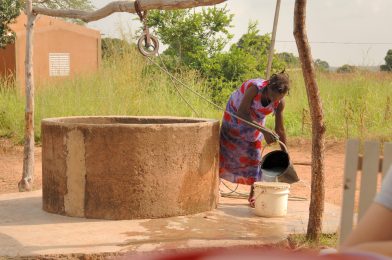
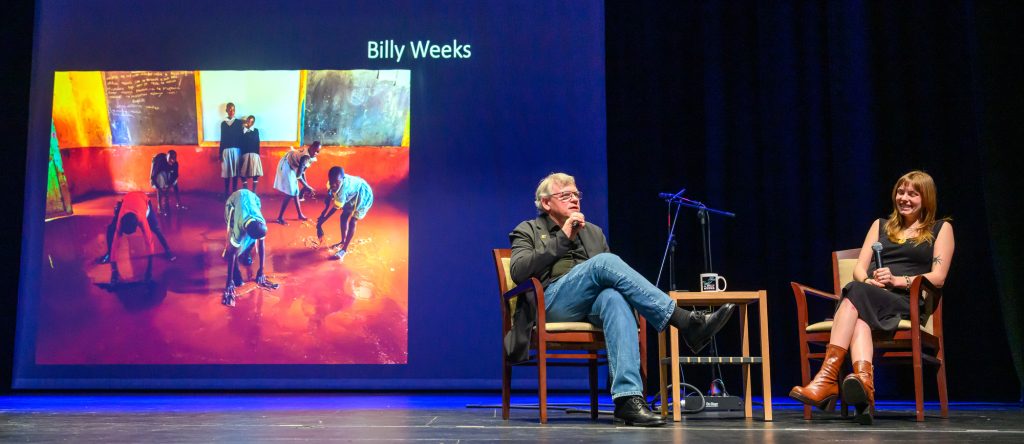
The tables were turned on Billy Weeks and Delaney Holman, head editor for Rising Rock, who interviews him, and here he is talking about a photo he took last summer in Kenya.

Billy summed it up best in a note he sent to the speakers afterward. He wrote that students were still talking the next day about what they saw—but more importantly about what they felt. For those of us who believe in the power of visual storytelling, that’s the real goal.

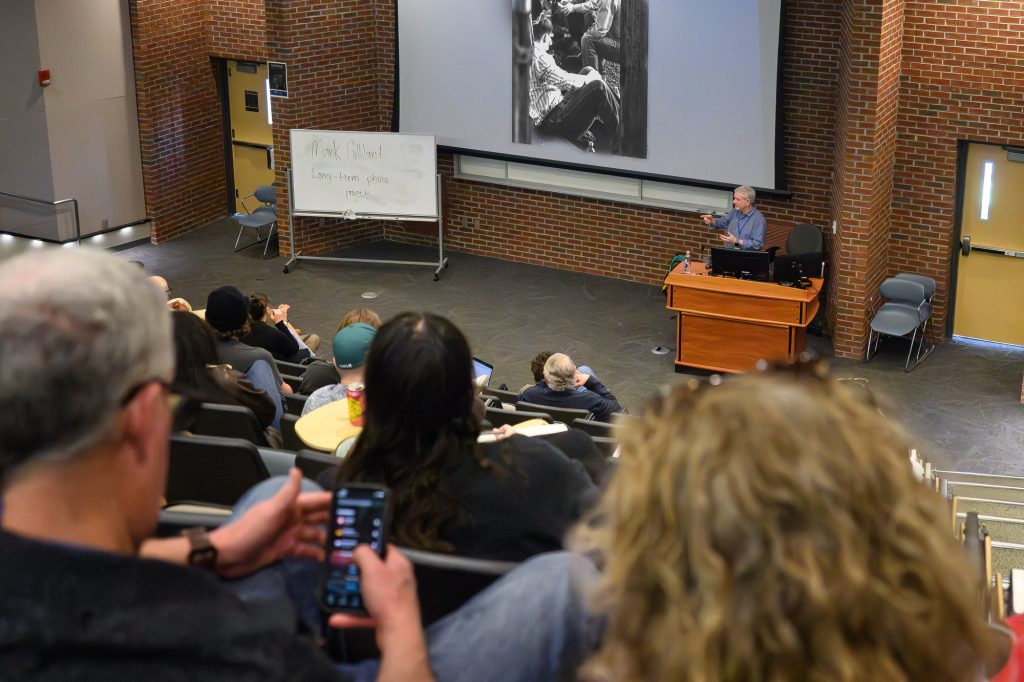
Mark Gilliland discusses his long-term documentary project on the rodeo in the Chattanooga, Tennessee, area over the past 25 years.

For me, it was a joy to share some of my own work and to spend time encouraging students preparing to enter the profession. After more than four decades working as a visual storyteller, I still believe one of the most important things we can do is invest in the next generation.

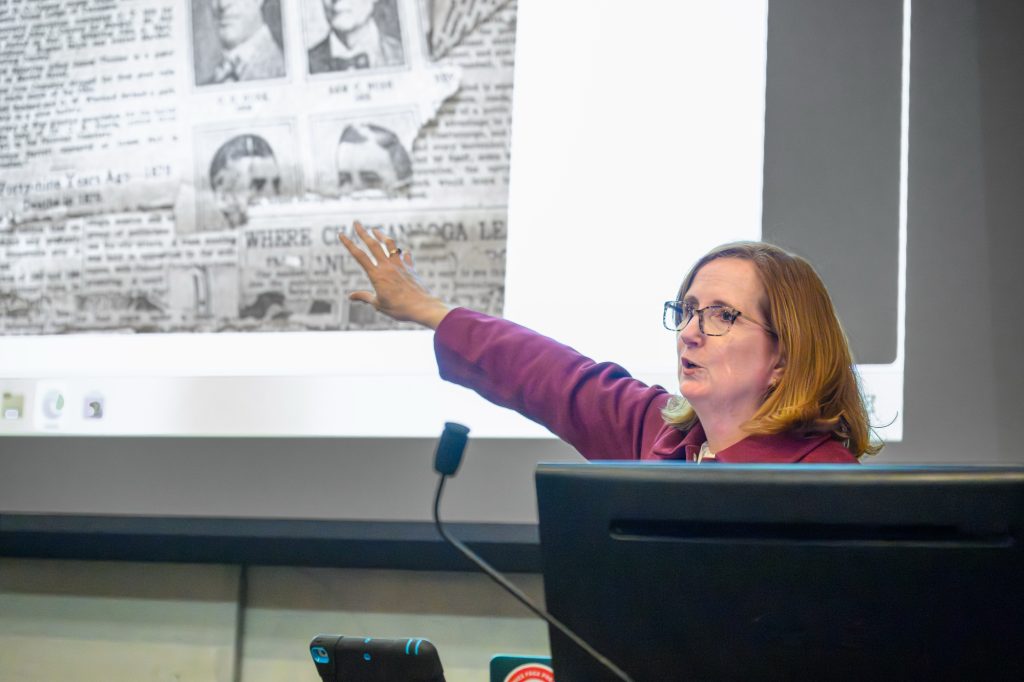
Alison Gerber, the editor of the Chattanooga Times Free Press, talks about where the industry is now in journalism, the emergence of “News Deserts,” and the many ways the industry is exploring to fund journalism going forward.

Photo Night has now celebrated ten years, and if last night was any indication, the future of visual storytelling is in very good hands.

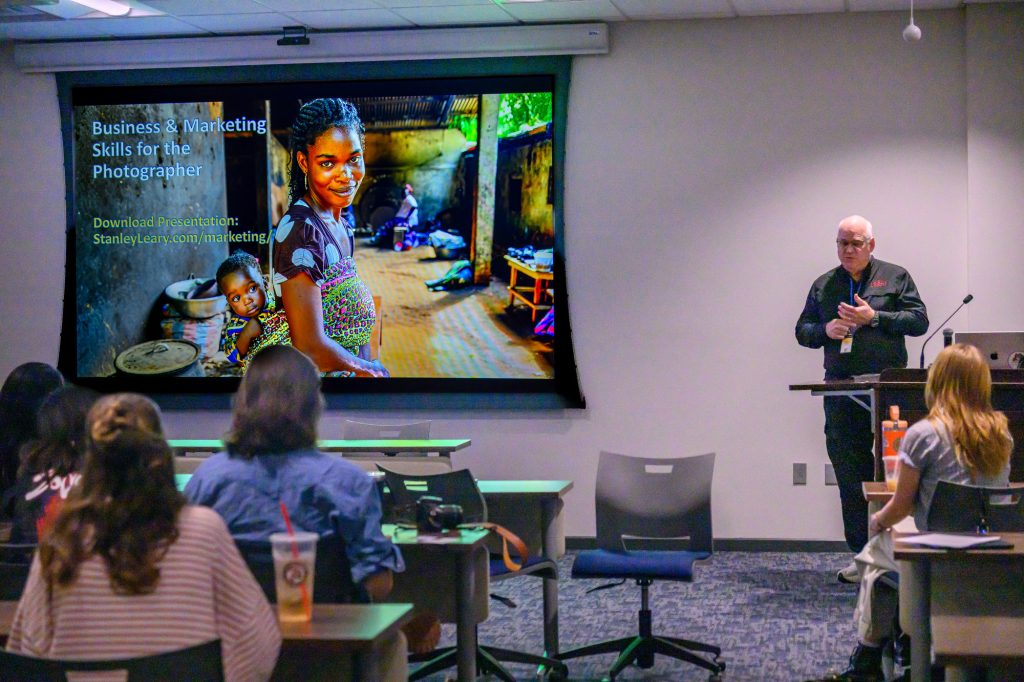
I was the first speaker at 9 am, presenting on Business and Marketing Skills for the Photographer.

Here is a link to the PDF of the presentation I made if you care to see it. https://stanleyleary.com/marketing/

Tagged : / /

What You Should Be Working on to Become a Photojournalist

Reading Time: 4 minutes

If you want to become a photojournalist, you need to understand something up front: this isn’t about taking pretty pictures. It’s about telling stories that make people feel something.

And that requires two things working together all the time—technical mastery and emotional intelligence.

Let’s start with the foundation.


Master the Technical First

Before anyone trusts you with their story, you have to prove you can handle the tools.

You should be completely comfortable with:

  • Shooting in manual mode
  • Working in changing light
  • Using on-camera flash
  • Using off-camera flash
  • Balancing ambient and strobe
  • Freezing action and working with motion blur
  • Exposing for skin tones in difficult environments

Flash, especially, is something many new photographers avoid. Don’t. Learn it. Master it. Understand how to shape light, control direction, and create depth. If you can walk into a dimly lit room and confidently light a scene without overpowering it, you’re already ahead of most beginners.

Technical skill builds confidence. But it doesn’t build a connection.

That’s the next step.


Don’t Just Practice Photography — Create a Photo Story

One of the best things you can do is produce a photo story about something you genuinely care about.

Not because it will go viral.
Not because it will win awards.
But because you care.

People will not hire you to cover their passions until they see that you can cover a story with emotional depth. They don’t want a collection of well-exposed images. They want to see that you understand how to engage a viewer.

And here’s the key:

A photo story is not just a checklist.

It’s not simply an assignment where you gather a few wide shots, a couple of details, and a portrait.

It’s about emotion.

Memorial Day @ Georgia National Cemetery

The Difference Between a Shot List and a Story

Now, let’s be clear—shot lists matter.

A strong photojournalist understands narrative structure and plans accordingly. A solid shot list for a story typically includes:

  • Establishing Shot (Wide Shot): Sets the scene and gives context.
  • Medium Shots: Connects the viewer to the subject and shows activity.
  • Tight/Detail Shots: Adds emotional depth and meaningful context.
  • Portrait(s): Captures the key individual(s), often in their environment.
  • Action/Interaction Shot: Shows movement, behavior, and purpose.
  • Conclusion Shot: Brings closure to the narrative arc.

You also want variety—high angles, low angles, eye level. You research beforehand. You anticipate moments.

That’s good journalism.

But here’s where many beginners stop: they check off the list and think they’ve told a story.

They haven’t.

They’ve gathered parts.

A story emerges when those parts work together emotionally.


Susan Fonseca, who was helping with translations and organization for the President of Honduras, Juan Orlando Hernández, takes a selfie with the CEO of Delta Air Lines, Ed Bastian.

Why Emotion Matters (And What Simon Sinek Teaches Us)

I often think about this through the lens of Simon Sinek and his “Golden Circle” concept—Why, How, What.

He connects this idea to how our brains work:

  • The Neocortex handles rational thought and language. That’s the “What.”
  • The Limbic System drives feelings, trust, loyalty, and decision-making. That’s the “Why” and the “How.”

Here’s the fascinating part: the limbic system has no capacity for language. That’s why we say, “It just feels right,” but struggle to explain why.

When you communicate from the outside in, what do you first appeal to? Logic.

When you communicate from the inside out, why first—you appeal to emotion.

Great photojournalism works the same way.

If your images only communicate the “What,” viewers may understand the information.

But if your images communicate the “Why,” they feel it.

And feeling drives action.

Publications, nonprofits, brands—they all need images that move people emotionally. That’s what influences decisions, donations, loyalty, and trust.


Jesus & Gloria say goodbye to their son before the funeral service for Jesus Fonseca, Jr.

Treat Every Assignment Like a Story

Whether you’re covering a football game, a city council meeting, a nonprofit event, or a portrait session—approach it like an essay.

An assignment is often defined by the client’s needs:

  • “We need a headshot.”
  • “We need event coverage.”
  • “We need photos for the website.”

A story asks deeper questions:

  • What’s at stake?
  • Who is affected?
  • What emotion defines this moment?
  • Why should anyone care?

When I shoot, I absolutely work through the shot list in my head. I want my wide, medium, tight, action, portrait, and closing frames.

But I’m not just checking boxes.

I’m watching faces.
I’m listening to the tone.
I’m paying attention to body language.
I’m waiting for the moment when the story reveals itself.

That’s when journalism happens.


Start Narrow. Then Expand.

Photojournalists are asked to cover everything—politics, sports, features, breaking news, and human interest.

That can feel overwhelming.

Start with one area. Master it. Build depth. Learn how to tell that type of story well.

Then expand.

Over time, your portfolio should show range—but each section should still demonstrate emotional depth, not just technical competence.


The Biggest Thing Missing in Most Beginner Portfolios

If I had to name the number one thing lacking in most new photojournalists’ portfolios, it’s this:

Emotional connection.

The images are sharp.
The exposure is solid.
The composition is fine.

But I don’t feel anything.

The photographer never stepped into the story. They never allowed themselves to feel it first.

You cannot photograph emotion you refuse to experience.

The craft of photojournalism is learning to recognize those emotional beats in real time—and then having the technical skill to capture them when they happen.

That’s the intersection.

Feel the story.
Recognize the moment.
Use your technical mastery to preserve it.

When you can do that consistently, you’re not just taking pictures.

You’re telling stories people can’t ignore.

Tagged : /

Ole Timers Dinner – Brotherhood That Doesn’t Retire

Reading Time: 4 minutes

There’s something powerful about being in a room filled with people who have spent decades running toward danger while everyone else was running away.

The 2026 Ole Timers Dinner with the Roswell Fire Department wasn’t just another annual event. It was a living reminder that brotherhood doesn’t end when the uniform comes off. For many, this gathering—known in past years as the Retirees Oyster Dinner—is a reunion of stories, shared sacrifice, and deep respect.

Why I Focused on Candids

Most of the photos I captured that night were candid.

That was intentional.

When you’re documenting an evening like this, the real story isn’t in people looking at the camera. It’s in the handshake that turns into a two-handed grip. The laugh that erupts after someone says, “Remember that call when…” The quiet moment when two retirees lean in close, heads bowed together in conversation.

Those unscripted moments are where you see the brotherhood.

Posed photos have their place—and I’ll get to that—but the heart of the night lives in those in-between frames. The ones where no one is performing. They’re just being who they’ve always been with each other.

The Group Photos: Organized Chaos

At the end of the evening, we pulled everyone together for two group portraits:

  • One with just the retired firefighters
  • One with current staff joining them

These photos matter. They’re historical records. Years from now, someone will look at those images and say, “That was our crew.”

But let me tell you—the hardest part of the night wasn’t lighting or camera settings.

It was getting everyone staggered enough so we could see every face.

The retired firefighters of the Roswell Fire Department gathered together—decades of service standing shoulder to shoulder once again. To make a group this size work outdoors at night, I brought in studio strobes. They recycle quickly and produce enough power to evenly light a large group in a single burst, helping me freeze the moment while keeping faces sharp, visible, and connected.

My wife, Dorie Griggs, who serves as Chaplain for the department, was right there helping organize and encourage everyone. Even with her support, it takes patience. Firefighters are used to moving with purpose—not necessarily holding still while a photographer fine-tunes spacing.

And then came the baseball caps.

They had just handed out caps to everyone, and of course, people wanted to wear them for the photo. I don’t blame them—it’s part of the story. But caps change everything when it comes to lighting.

Normally, I’d raise my lights high enough to avoid the front row casting shadows on the second row. But with hats, if the lights are too high, the brims throw shadows over eyes. So I had to lower the lights.

Lower lights mean staggering becomes even more critical.

So I went down the line.
Adjusted shoulders.
Asked a few to shift left.
Encouraged others to step back half a foot.

The entire group—retired firefighters alongside current leadership staff of the Roswell Fire Department—together in one frame. Past and present, all connected by the same calling to serve and protect the community.

We got it set.

And then, naturally, people moved.

That’s just part of photographing a large group. You do your best. You refine. You shoot multiple frames. And you accept that perfection is rarely the goal—connection is.

« of 25 »

Double-click on the images to see them larger.

More Than a Photo

In the end, the images aren’t about flawless alignment or perfectly lit faces.

They’re about legacy.

They’re about men and women who built a culture of service in Roswell. They’re about shared history. They’re about the kind of bond that only comes from walking through hard things together.

It was an honor to document a night that celebrates not just years of service—but a lifetime of impact.

And if you look closely at those candids, you’ll see it.

The brotherhood never retired.

When Every Name Matters: Capturing What It Feels Like to Be Seen

Reading Time: 4 minutes

There are shoots where I’m simply documenting what happens — and then there are the ones where I feel the heartbeat of a team through the lens. The Support Desk Kickoff for Chick-fil-A’s Help Desk team was the latter.

This department started in 2016 with just three people. Today it’s nearly 400 strong. A growth story like that is impressive on paper, but what’s even more powerful is how they experience each other as individuals every year at this kickoff — celebrating what they’ve accomplished together and revisiting their mission and goals for what comes next.

And my job isn’t just to document it. It’s to capture the emotion that drives it.

A Tradition Worth Photographing

For the past four years, there’s been a moment in this gathering that always stops me in my tracks.

Someone stands at the front of the room and names everyone in the organization from memory. Headshots are projected on a screen, and one by one — nearly 400 people — are called out by name. It started with their director in the first year. This year, a new person carried the tradition forward flawlessly.

I don’t know if you’ve ever really witnessed the power of hearing your own name said aloud in a room full of peers, but the body language, the smiles, the subtle nods — it tells a story of belonging that most corporate settings barely touch, let alone celebrate.

Jon Gordon stands beneath the covers of his bestselling books projected behind him — a visual reminder that the principles he teaches about leadership and positive culture aren’t just ideas, but messages that have resonated with teams around the world.

Jon Gordon on Positive Leadership

As part of the kickoff this year, their keynote speaker was Jon Gordon, a 15-times bestselling author and one of the world’s most sought-after speakers on positivity, leadership, team culture, and helping organizations move forward together. His work emphasizes how positive leadership and shared purpose fuel engagement in teams of all kinds — from Fortune 500 companies to non-profits and service organizations like this one.

In a close-up moment, Jon Gordon’s expression says it all — conviction, energy, and a deep belief that leadership begins with mindset. You could feel the room leaning in.

I capture a lot of keynotes. But with someone like Jon, you can feel the room shift — not because of theatrics or shock value, but because his message connects with people. When the speaker’s message aligns with the team’s mission in front of you, the emotional impact is far easier to see through a camera.

Nearly 400 people gathered in one frame — a team that began with just three in 2016, now standing shoulder to shoulder. I made 28 frames to ensure they had the strongest possible representation of their team, because when this many people come together, every face matters.

The Group Photo That’s More Than a Picture

Every year, I make a large group photo of everyone. This year, it was close to 400 people.

Here’s the part I think most photographers overlook: the moment before and after the shutter clicks is where the emotional story lives.

Every person had their name said from the stage. Then I was on a ladder, elevated above them, capturing a moment where they — as individuals — became a collective.

That’s where purpose becomes visible. That’s where belonging becomes tangible. That’s where your lens does more than record — it reflects what it feels like to be seen and known.

When the photo booth lights came on, no one hesitated — they leaned in, pulled each other close, and made sure everyone fit in the frame. Moments like this say more than any mission statement ever could. They genuinely enjoy working together, and that joy shows up not just in how they serve others, but in how they show up for each other.

More Than a Photographer — a Witness

Over the years, I’ve been to this event more than a few times. What’s become clear isn’t just the growth of the team, or the traditions they honor — it’s how consistently they show up for one another.

And how do I know that?

Year after year, after the shoot is over, people walk up to me and say my name. No introduction. Just recognition — a “thank you” that tells me they remember me being there. That I saw them.

That’s an honor. And it’s one of the quiet reasons I do this work.

My Follow-Up on Aftershoot: I No Longer Recommend It

Reading Time: 2 minutes

A few days ago, I shared my one-month review of Aftershoot and mentioned that I was planning to purchase it.

After completing several more projects with it, I need to update that recommendation.

When I first tested it, I was hopeful. The idea of saving time on culling and basic edits is appealing to any working photographer. But the more real-world projects I ran through it, the more I realized I couldn’t trust the results.

The Culling Problem

The biggest issue is culling.

In multiple shoots, Aftershoot gave five-star ratings to images that were clearly out of focus. I’ll include one example below. An image that no client would ever receive was ranked as a top selection.

That alone is concerning.

But even beyond focus, it consistently chose the wrong “best” image in a series. In groupings where I had subtle variations—expressions, micro-movements, peak moments—it often picked the weaker frame.

That meant I couldn’t trust it.

And if I can’t trust it, I have to double-check everything.

Once I’m reviewing every image again to make sure nothing important was missed—and correcting its “best” selections—I’m no longer saving time. In fact, over the past few projects, I believe I’ve spent more time re-checking its work than if I had simply culled the job myself from the start.

I also found many images that should have been selected as top choices but weren’t flagged at all.

Editing: Adequate, But Basic

As for editing, it’s acceptable in a very general sense.

If your goal is something similar to dropping your film at a one-hour lab and letting them process everything evenly, it can get you in that direction.

But that’s not how I work.

My editing relies heavily on selective masks—subject masks, gradients, sky selections, landscape separation, and nuanced refinements in Adobe Lightroom. Aftershoot’s adjustments are broad and basic by comparison.

It doesn’t think the way I think when refining an image.

And that matters.

The Bottom Line

If I must go back through every image because I don’t trust the culling…
If it misses peak moments…
If it rates out-of-focus images as top selections…
And if the editing doesn’t significantly reduce my workflow time…

Then it’s not helping me.

It’s adding friction.

So I need to correct my earlier statement: I will not be purchasing Aftershoot.

I always want to be transparent about the tools I test. When something works, I’ll say it. When it doesn’t—especially after extended real-world use—I’ll say that too.

If you’re considering it, I would strongly encourage you to run extensive tests on your own real assignments before committing.

For my workflow, the trust just isn’t there.

My One-Month Review of Aftershoot (February 2026)

Reading Time: 2 minutes

I’ve been using Aftershoot for the past month during the free trial period, and I’ve decided to subscribe. That alone tells you something.

The short answer to the big question: Does it save time?
Yes. It does.

But let’s unpack that.

Where Aftershoot Really Helps

Aftershoot is very good at the technical side of culling:

  • Identifying out-of-focus images
  • Flagging closed eyes
  • Catching exposure issues
  • Grouping similar images together

The grouping feature alone is a major time-saver. When I’m covering an event and shooting bursts, it quickly stacks near-duplicates so I can compare and choose. That reduces the mental fatigue that comes from clicking through hundreds of similar frames.

It’s efficient. And when you’re processing thousands of images from an event, efficiency matters.

The Biggest Weakness: The “Decisive Moment”

What it does not do well is choose the decisive moment.

That’s the difference between a technically correct photo and the image that actually tells the story.

For example, if I’m covering an event and there’s a prayer moment, people closing their eyes is not a mistake—it’s the story. The software often flags them as rejects because it sees “closed eyes” as a flaw. From a technical standpoint, that makes sense. From a storytelling standpoint, it doesn’t.

The good news? It’s easy to go back through the rejected images and recover what you need. But it reinforces something I already believed:

You still need a human eye.

AI Editing: Solid, But Not Finished

The AI editing is adequate. It gives you a usable starting point, especially for event coverage where speed matters.

However:

  • AI masking is not very strong yet.
  • Cropping isn’t very good.
  • Image straightening is inconsistent.

For event work, I still need to go in and refine quite a bit. For something like studio headshots, it might be sufficient—or at least much closer.

But for storytelling work where nuance matters, I’m not handing over final judgment to software.

So… Is It Worth It?

Yes—because of the time savings.

It dramatically reduces the first-pass workload. Instead of starting from scratch, I’m starting from an organized, filtered set of images. That’s valuable.

Do I trust it blindly? No.

Do I believe AI will improve over the next few years? Absolutely.

But as of February 2026, my experience is this:

Aftershoot is a strong assistant—not a replacement for a storyteller.

And that’s how I’m choosing to use it.