Great Photos Often Start With Dramatic Subjects

Reading Time: 2 minutes
 
Fuji X-E2, XF 55-200mm, ISO 6400, ƒ/5, 1/105

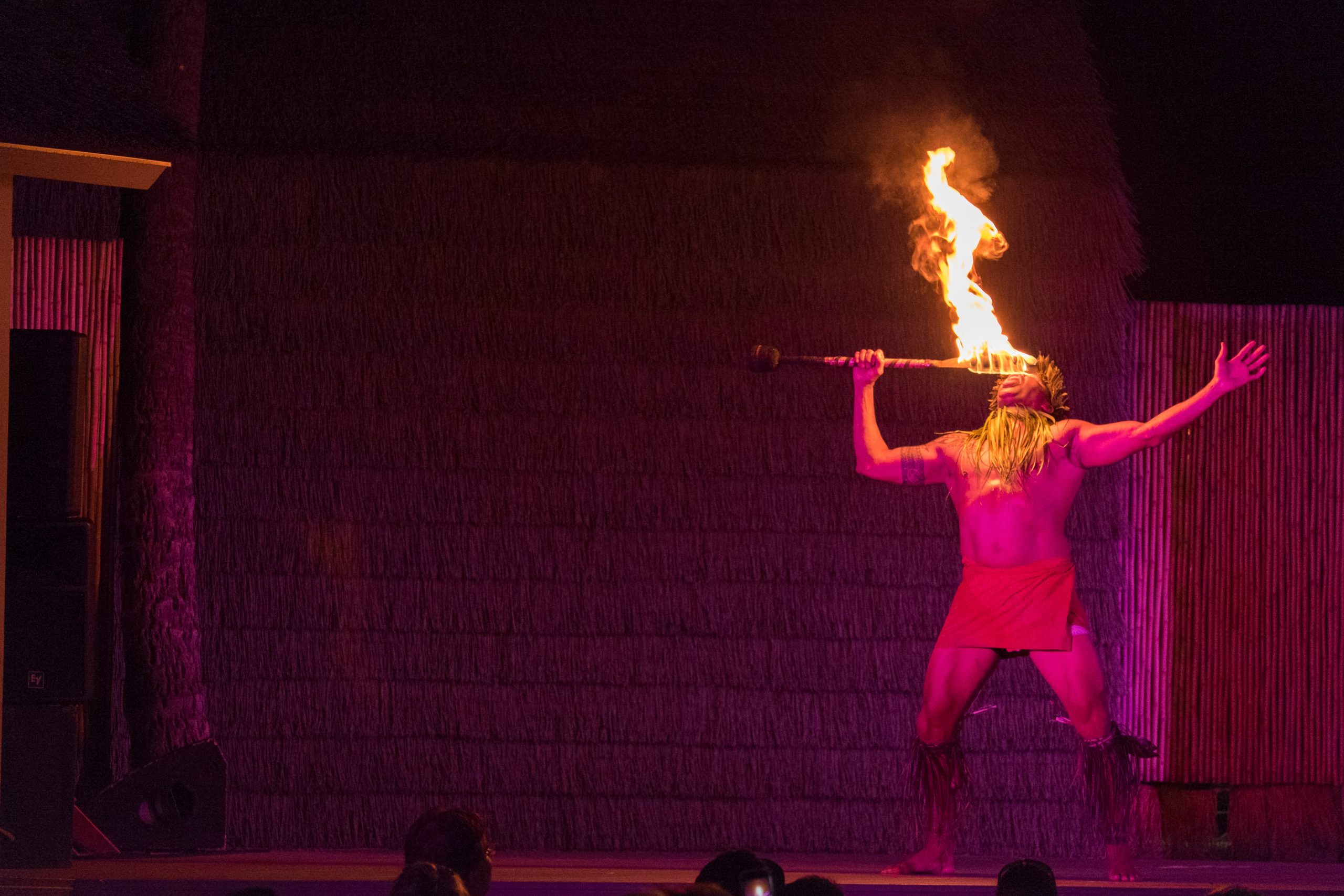
How can you go wrong with a fire-eating subject? If you miss the exposure, maybe, but if you get a well-exposed photo of something average and then something more dramatic, you get the idea of why start with a more exciting subject.

Fuji X-E2, XF 55-200mm, ISO 6400, ƒ/5, 1/140

Look for things like this Luau in Kona, Hawaii, for example.

Nikon D4, 28-300mm, ISO 640, ƒ/4.5, 1/100

I photographed him for this Fire Knife dance at Truett’s Luau in Fayetteville, GA. So, you don’t always have to go to Hawaii to get your photo.

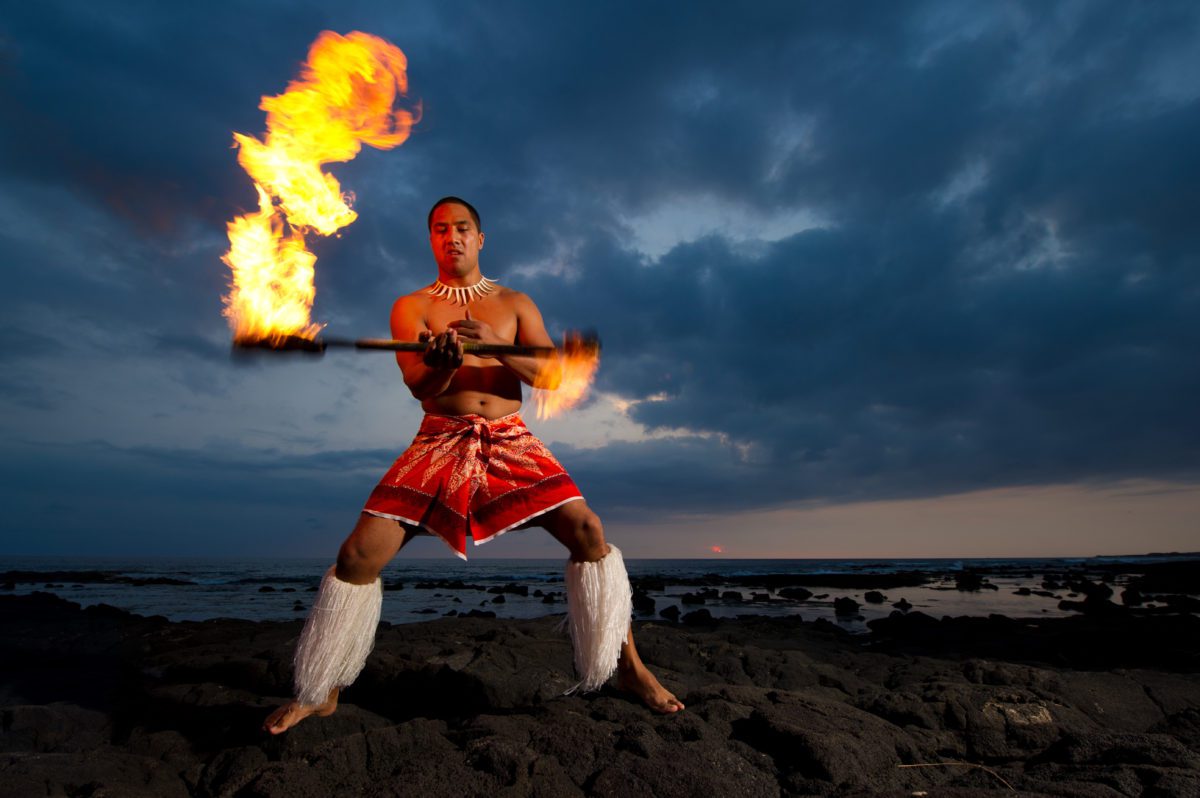
Nikon D4, 28-300mm, ISO 640, ƒ/5.3, 1/3200

Later, I photographed the same guy the following day, but this was outside in the sunlight. This change in time and location should help you see how much a place and lighting can help a situation or not at all.

I think to improve your photos, don’t light everything when they turned off all the stage lights and let the fire dancer be the center stage so that the image is more dramatic than in the bright sunlight.

Without flash. Photo by Clara Kwon
With off-camera flash. Photo by Clara Kwon

In these two photos, you can see how Clara Kwon had no flash, and then adding sparkle helped to make the subject “pop.” She is not lighting everything, and the rest of the scene is slightly darker, making the subject stand out.

Remember to pick exciting subjects and try your best to put them in the best light.

Nikon D4, 14-24mm, ISO 200, ƒ/22, 1/13 with two Alienbees B1600 with CTO triggered by Pocketwizards.

Student’s work from the YWAM School of Photography 1 2014

Reading Time: 3 minutes
 
Photo by Clara Kwon

These are examples of the student’s work from this past week on lighting that I taught in the School of Photography 1, which is part of Youth With A Mission’s University of the Nations campus in Kona, Hawaii.

This class was the first time most of the course used studio strobes.

Without flash — Photo by Andrea Klaussner
With flash — Photo by Andrea Klaussner

They learned how to use off-camera flash on location. The assignment required them to hand in one photo without a flash and one with it. Some of the student’s photos looked better without a flash, and sometimes you don’t need a flash.

 Without flash — Photo by Lizz Busby
With flash — Photo by Lizz Busby

The bread and butter assignment for a photographer is the environmental portrait. Taking a poor lighting situation and improving it was the purpose of the assignment, as well as knowing how to make it.

The students took a baseline photo without a flash and below the sync speed for their camera. Then they made a flash reading setting the strobe to be one stop greater than the aperture reading without the flash. They then only changed the aperture to the great one-stop aperture that was the flash setting. They were also encouraged to see if more power from the flash was better for the photo.

1:3 Lighting Ratio Assignment

In an earlier blog post, you can see the students’ assignments. First, they needed the leading light [key] at 45º from the camera, with the model looking straight into the camera. We did this to help them see the shadow across the nose. They then had a fill light one stop less than the leading light.

They could use different backgrounds from White, Gray, or color.

Photo by Debbie Smit
Photo by Erik Wuesthoff
Photo by Keziah Khoo
Photo by Lizz Busby
Photo by Oo Shinoda
Photo by Melissa Kelsey

I think the students all did a great job, and in less than a week, each person had a potential of a couple of photos to add to their portfolios.

12 week photography workshop for those who believe photography to be a calling

Reading Time: 2 minutes

Dennis Fahringer has been leading a photography program in Kona, Hawaii for more than 25 years. I first heard of the program back in the 1980’s from my friend and mentor Don Rutledge.

Don was leaving on a trip to do work in Hawaii and at the time Don worked for the International Mission Board for the Southern Baptist. I joked with Don and asked what Hawaii had to do with international missions since it was a state.

This is when Don told me he was just teaching at the Youth With A Mission’s University of the Nations campus in Kona, Hawaii.

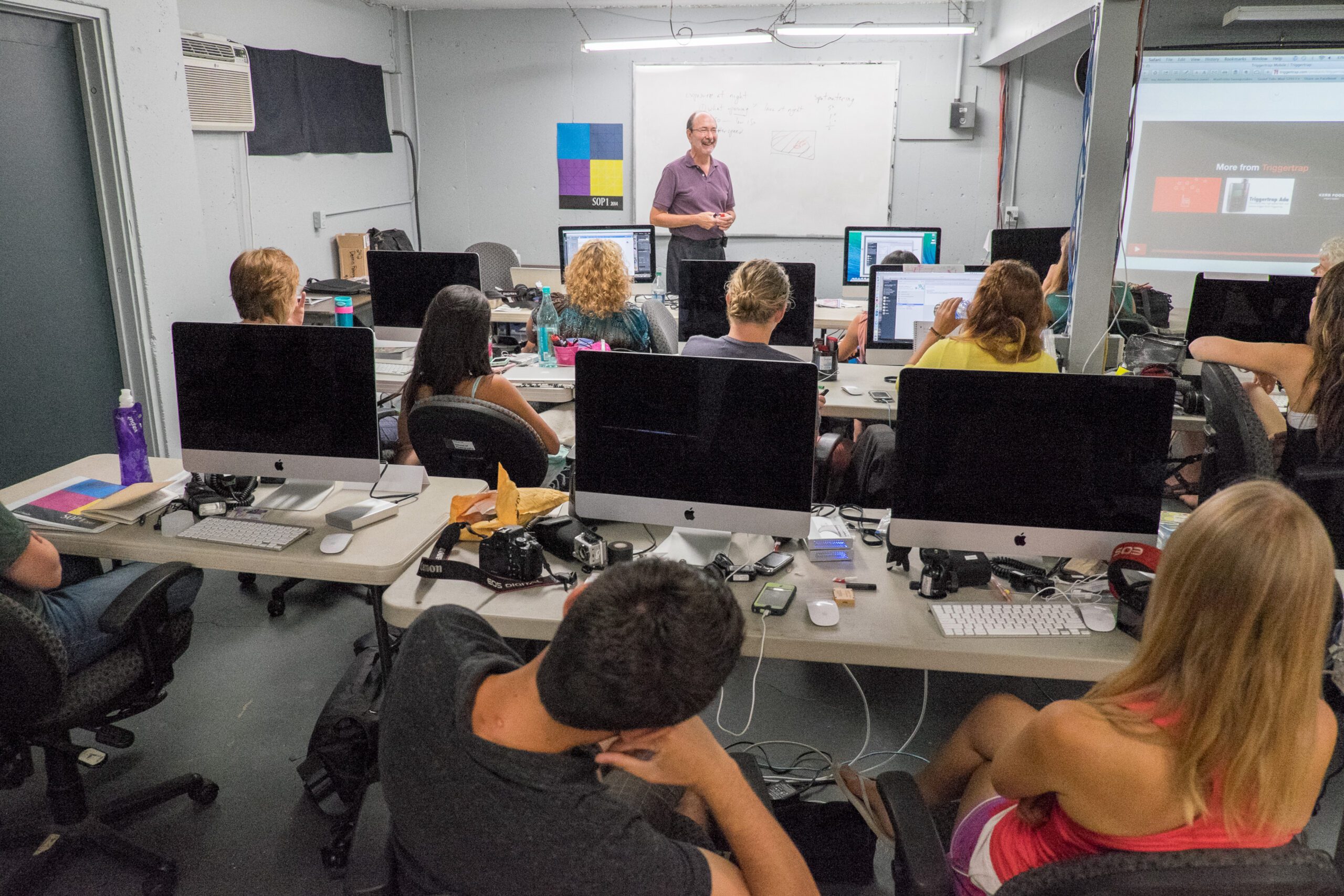
Dennis Fahringer teaching in SOP 1 [Fuji X-E2, 55-200mm, ISO 6400, ƒ4.8, 1/250]

Some of the past guest speakers that Dennis brings in for every class have included Gary S Chapman, Louis Deluca, Joanna Pinneo, Don Rutledge, Patrick Murphy-Racey, Gary Russ, Anacleto Rapping, Ron Londen and many, many more.

Most of the students are just starting out. The ages range in the class from 17 to 69 for the class I am presently teaching. Most of the classes I have taught the majority are from 18 to 30.

Fuji X-E2, 18-55mm, ISO 6400, ƒ/6.4, 1/25

Dennis has collected a large selection of books and videos for the students.

Dennis shares with his students many of his notes he has collected through the years on photography using Evernote app.  Dennis has shared some 3,700+ notes with the class that he has in Evernote: just short of 30,000(!) Just this alone is worth the price of admission.

If you are really wanting an intense photography program for twelve weeks then this is it. Before you can take this class you must do a DTS.  This is a 12 weeks lecture phase, plus 10-12 weeks outreach phase, thus 6 months total.  This is a Discipleship Training School where for part of your time will be a cross cultural experience. Many of these DTS groups go all over the world.

In my present class we have nine different nations represented. Those perspectives are great when learning photography.

Here is the YWAM Kona webpage for you to learn more about the program here.

Many who take the class go into business as photographers, other may use this in missions and even some just keep it as a hobby.

Photographing the Island Breeze Luau cast on the beach of Hawaii

Reading Time: 4 minutes

Nikon D4, 14-24mm ƒ/2.8, ISO 200, ƒ/16, 1/200 with 2 Alienbees with CTO 1 for off-camera flash. These are triggered with the Pocketwizard Radio Remotes.

I enjoyed shooting these photos of the Island Breeze Impact Tour cast at the Old Kona Airport State Park on the Big Island of Hawaii. In this setting, I took control of the situation as compared to the night before, when I was photographing them while they were putting on a Luau.

While the stage lighting is excellent, the amount of light they use in the show is minimal.

Fuji X-E2, XF 55-200mm, ISO 6400, ƒ/4.6, 1/125

The show I was shooting at ISO 6400 with ƒ/4.6 and a 1/125 setting compared to the controlled shooting on the beach with ISO 200, ƒ/16, and 1/200.

Nikon D4, 14-24mm ƒ/2.8, ISO 200, ƒ/14, 1/320

I am in Hawaii teaching lighting to YWAM School of Photography students. We went to the beach for them to see me shoot mixed light, where I added light to the scene to help make the photos better.

Nikon D4, 14-24mm ƒ/2.8, ISO 200, ƒ/14, 1/400 no flash

As you can see in the photo, there is no flash; it is more of a silhouette.

Photo by David White

In this photo, you can see it was taken by my assistant David White. First, I set this up using the Alienbees B1600 flash with CTO 1 over the strobes to warm up the subject, and then I color-corrected for the light, which made the sky even bluer.

Two Alienbees B1600 at full power on the right at 45º with CTO Gels.
Nikon D4, 14-24mm ƒ/2.8, ISO 200, ƒ/22, 1/20

Brooke Valle, a former student of mine, is part of Island Breeze and is spinning the POI. I worked with her to have her friends and family in the cast come and help us with the photo shoot.

Brooke is spinning the “POI” [it is the Maori word for “ball” on a cord].

Nikon D4, 14-24mm ƒ/2.8, ISO 200, ƒ/16, 1/400

Due to working around other events, we could not shoot right at sunset. So we shot had to stop about 30 minutes before the sunset. Had we been able to go later, the sky would have been a little darker and more vibrant than in these photos.

I am under-exposing the subject about two stops to get the background to saturate and be darker. I then am overexposing the issue by two stops with the strobes. The combination of the under-exposure on the camera and the overexposure with the lights makes the subject well-exposed; the background is slightly under-exposed and a little more saturated than what the naked eye saw.

Nikon D4, 14-24mm ƒ/2.8, ISO 200, ƒ/8, 1/400

If we had waited a little longer, then flame would also have shown up even more.

Nikon D3S, 14-24mm ƒ/2.8, ISO 200, ƒ/7.1, 1/100

Two years ago, I did a similar shot, and by waiting till the sun dipped below the horizon, I could capture the flame much better because the sky was darker.

The class enjoyed watching and seeing all the lights set up and also taking some of their photos of the cast in costume.

Fuji X-E2, 18-55mm, fill flash -1 EV, ISO 6400, ƒ/5, 1/15

The Portfolio Presentation: Mistakes photographers make and how to avoid them

Reading Time: 5 minutes
 

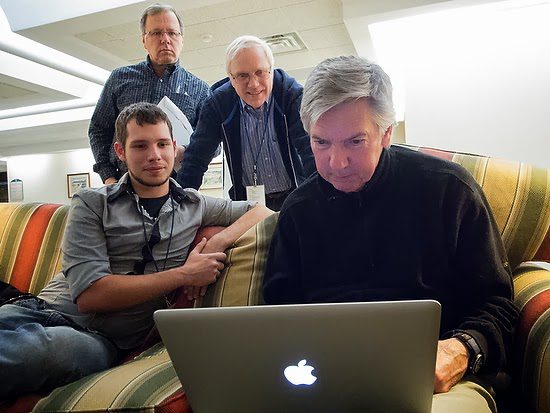
There are many ways you may get to show your work to someone. What you need to know is that you never know who is the actual person who may end up hiring you. For example, while this person was reviewing the work by the legendary Dave Black, two other people were watching.

I know that one of those looking on was probably more likely to be the one who could hire the person than any of the others, including Dave.

Some photographers speak to groups, and many of those groups are other photographers. For example, Joanna Pinneo, National Geographic Photographer, speaks to a group of photographers. In the room were a few of us who would hire Joanna to do work for some of our clients. I know I called her and had her shoot some work for Chick-fil-A.

Every year at the Southwestern Photojournalism Conference in Fort Worth, TX, one of the biggest highlights of the conference is the 2-minute shows. Here is a link to the rules for the two-minute shows.
Here is one of the 2-minute shows that I used for one year.

[youtube https://www.youtube.com/watch?v=8Gk7ql99MXs]
One of the best things about the 2-minute show is it helps you to get your thoughts focused and presented in a timely fashion. I believe every photographer should have at least one or more 2-minute presentations that are self-contained. Creating a video is where you might voice over the photos to help clients know what you do and can do for them.

Today clients may not even give you 5 minutes for an in-person interview. Send me a link to your website, and you will hear a great deal. So, why not direct them to the 2-minute presentation you created for them?

Why did we use 2-minutes as a standard?

We used the elevator pitch as the one thing most of us should be able to do at a moment’s notice to get jobs. So here is Chris O’Leary’s outline to understand the Elevator Pitch’s core essentials.

What is an Elevator Pitch? 
A quick definition of an Elevator Pitch is as follows:

An Elevator Pitch is an overview of a product, service, project, person, or other thing and is designed to get a conversation started.

Why do I need an Elevator Pitch? 
It would help if you had an Elevator Pitch for one reason: time. But, unfortunately, most people are extremely busy and won’t give you much time to get their attention. As a result, you must get your point across exceptionally rapidly.

What is the purpose of an Elevator Pitch? 
The purpose of an Elevator Pitch is to get the attention of the person you are talking to and convince them to keep talking to you.

How long should it take to deliver an Elevator Pitch? 
In general, the less time, the better. More often than not, that means 30 seconds or less (the period of the typical elevator ride). However, sometimes an Elevator Pitch can run for as long as one or two minutes.

What are the characteristics of an effective Elevator Pitch?
An effective Elevator Pitch is nine things:

1. Concise
2. Clear
3. Compelling
4. Credible
5. Conceptual
6. Concrete
7. Customized
8. Consistent
9. Conversational

I highly recommend that every photographer attend the Southwestern Photojournalism Conference and do a 2-minute presentation. The goal is to hook people in the audience, so they want to talk to you. Then the other thing is to have a folder of images [20 or so] that you can sit down with people and get your work reviewed.

Many who come are editors looking to hire people for projects throughout the year. The seminar is a great time to show your wort some feedback and then make those changes to improve your presentation.

Tips for photographers who want to get hired more often

Treat every presentation you give as an opportunity to show the audience how you help clients improve their business.

Tip #1 Start on positive
Never start your presentation by apologizing. It sets a negative tone for the entire meeting and makes you look like you’re neglecting your responsibilities. Customers like to work with agents – not victims.

The only thing worse is an apology with strings attached. I’m sorry I am running late. I still need it the whole time.

Tip #2 Focus on the client
“I have 15 minutes left, and I’m only through 20 of my 58 PowerPoint slides,s so I will be going through this last bit quickly.” Sound familiar?

Guilting your audience into paying attention not only doesn’t work; it’s insulting. Don’t try to force your customers through your plan. Your presentation needs to focus on their needs – period.

Tip #3 Avoid Excuses
Talking about yourself instead of your customer’s needs will only waste time. Who cares where you were last night, how long your flight was, or how late you were up? Get over yourself, quit whining, and start focusing on your customer.

Tip #4 Start with the hook
Please put all your customers’ issues, problems, and objectives up front, and save your corporate marketing material for last. Your customer isn’t even slightly interested in hearing about how great you are unless they first hear about how you understand their problems and how you can solve them.

Tip #5 Smile
Don’t forget to smile. It would help if you continued to show how excited you are about what you do and the opportunity to work with them.

Tip #6 Remain visible
Be very careful not to turn your back on the audience. Face the audience is essential for you, and do not read your PowerPoint slides to them. People are reading your expressions and body language while you talk. Help them see you.

Tip #7 Watch your speed for talking
Talking too fast or too slow can be a turn-off. Instead, keep your speed conversational, as if you are having a cup of coffee with a friend.

Tip #8 Use real examples
Do use real-life examples, quotes, stories, and testimonials. They’re critical to making your account come alive and persuading people to buy your products or services. Make sure that these stories are as specific and relevant to your customer’s situation as possible.

After all, no matter how much you love that favorite anecdote about what happened last year at a friend’s house, unless it involves your customers’ problems, challenges, or your solution, a business presentation probably isn’t the best place to tell it!

Content AND Presentation

Too many photographers think their pictures alone will get them jobs. They may even have the work on the level of the best in the industry, but you must also be able to package your content [photos] in a way that is digestible for the audience.

Please stay in your time frame for your presentation. Please arrive early and test everything, so you know it is working.

Practice your presentation many times before giving it. Do not ever indicate that you haven’t run through before. Instead, try to find someone to listen to and give you feedback on your presentation.

Presidents take a few months to work on their State of the Union Address. Comedians take a year or two to prepare for a show. Musicians perform for a long time before they take their concert tours on the road.

Successful photographers prepare just as much. Those who can’t find jobs are the ones who are not prepared to present their work.