Before you tell a story you have to find the story

Reading Time: 3 minutes

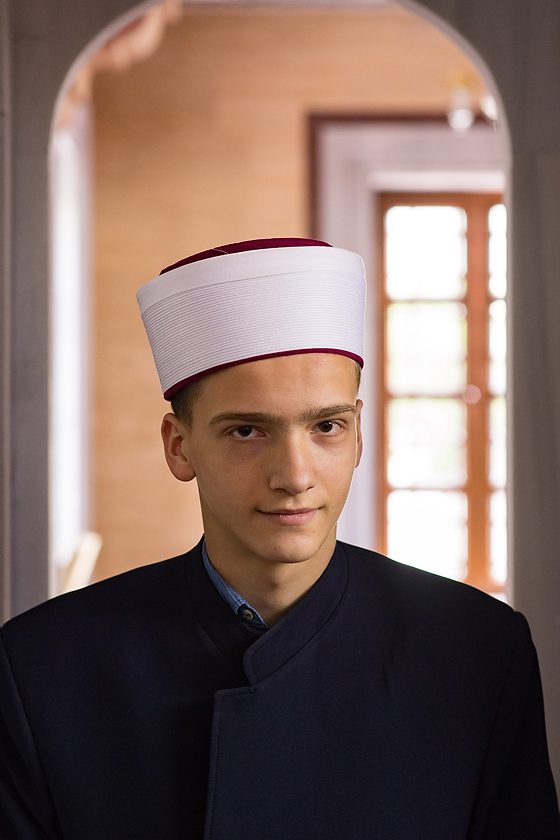
[Nikon D5, 85mm ƒ/1.8, ISO 4500, ƒ/4, 1/100]

This is Amar, and his father is the Imam in a Mosque we visited in the Balkans. This is all part of our Storytellers Abroad Multimedia Workshop that I am helping lead in the Balkans, which is part of Eastern Europe.
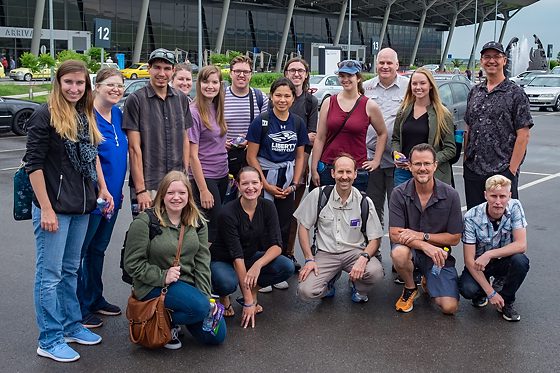
[Fuji X-E2, 18-55mm, ISO 400, ƒ/8, 1/240]

This is our Storytellers Abroad Multimedia Workshop of 12 participants, four instructors, and one administrative staff.

We are finding stories where global workers are helping through education the people of the Balkans.

Hopefully, next week I can show you some of the finished projects.
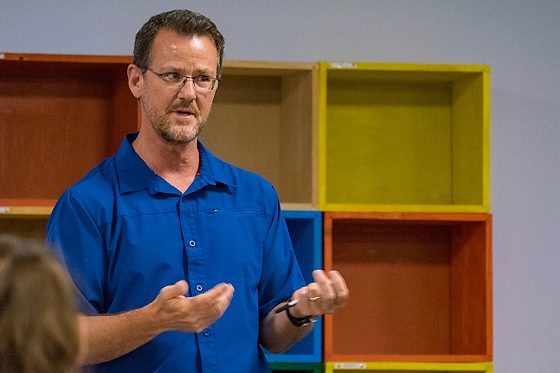
[Fuji X-E2, 55-200mm, ISO 6400, ƒ/5, 1/80]

Each day we have a couple of hours of class time teaching some of the basics the students need to do before they go out.

Pat Davison, one of the instructors, is talking to the workshop participants about how to conduct a pre-interview where you find the storyline that will later help you with the questions that will make up the video interview.

[Fuji X-E2, 18-55mm, ISO 800, ƒ/5, 1/100]

James Dockery is one of the other instructors in our Storytellers Abroad Multimedia Workshop that we are doing in the Balkans. James was photographing the kids, and I was off to the side and pulled my camera up, and they all quickly posed.

No matter where we go, we have our cameras and are learning about the culture. Children quickly run to be in the photos and let us get to know them.

[Nikon D5, Sigma 35mm ƒ/1.4, ISO 1250, ƒ/1.4, 1/100]

We walked to the square in the town at night, and everyone was out socializing and drinking their macchiatos.

[Nikon D5, Sigma 35mm ƒ/1.4, ISO 100, ƒ/1.4, 1/400]

This is the Macchiato I was drinking at an Italian restaurant in the Balkans. A Caffé Macchiato or Espresso Macchiato is a shot or two of espresso, with just a small amount of steamed milk that “marks” the espresso, though in some regions, the steamed milk comes first, and the espresso makes the mark.

This is a photo from last year’s workshop in Togo, West Africa. This is what I will demonstrate this morning for the class. I will be showing them how to conduct an interview where they have a subject and a translator.

The very first night we were in the Balkans, we sat down and explained how they were to spend time getting to know their subject the next day. They were to develop a list of questions to help tell their subject’s story.

Today they will conduct those formal interviews, which will be the storyline for the multimedia package.

Stay tuned for more experiences from the Storytellers Abroad Workshop in the Balkans this week and next week.

Mr. Robot appeals to the cerebral audience–Especially visually

Reading Time: 3 minutes
 
Fujifilm X-E2, Fuji XF 18-55mm, ISO 400, ƒ/2.8, 1/125

Rami Malek picked up the Emmy Award for Outstanding Lead Actor for his role in “Mr. Robot.” Malek had the perfect Elliot line to deliver: “Please tell me you’re seeing this too.”

“I play a young man who is, like so many of us, profoundly alienated,” Malek said, which lives with social anxiety disorder and clinical depression in the show. “And the unfortunate thing is I’m not sure how many of us would want to hang out with a guy like Elliot.

“But I want to honor the Elliots cause there’s a little bit of Elliot in all of us.” Todd Campbell, the director of photography for Mr. Robot, helps make the show visually cerebral. This approach helps to connect the show to the nerds. For a writer’s concept to truly connect with cinema, a director of photography helps to bring out the writer’s moods and tone through the visual. The cinema-photography is writing with light to compliment the words to bring the audience along with the storylines.

Fujifilm X-E2, Fuji XF 18-55mm, ISO 500, ƒ/3.2, 1/60

Campbell’s use of the negative space helps to make the audience’s eyes wander through the scene. By not using a lot of movement in a shot, the audience has time to ponder the scene.

Fujifilm X-E2, Fuji XF 18-55mm, ISO 800, ƒ/3.6, 1/60


Most movies today have more than 50% of the scenes being close-up shots. This technique makes you wonder what is outside the frame to engage the audience.

Fujifilm X-E2, Fuji XF 18-55mm, ISO 400, ƒ/2.8, 1/60

When you go close, you wonder what is beyond the frame.

Fujifilm X-E2, Fuji XF 18-55mm, ISO 400, ƒ/2.8, 1/60

You see what is going on going much broader, but your eye wonders much more. In this process, you start to write your visual narrative even more. For me, this is a much more cerebral exercise for the audience, and if you pause long enough on your visuals, the audience will start to take it in. Here is the trailer for Mr. Robot.

[youtube https://www.youtube.com/watch?v=Oc-AsN7d1wg]
To appeal to the nerds and deep thinkers, you have to give them the content that allows their brains to engage and process the content. Mr. Robot does this not just with the storyline, but the visuals help genuinely engage the audience in a way rarely done within cinema today.

Maybe the most significant reason Mr. Robot is such a big hit is that it is unconventional. By being different, the show’s creators appear to be revolutionary. For me, it is a style I grew up in magazine photojournalism.

To me, Mr. Robot proves that the audience is not just ready for much deeper storylines but craving them. They are tired of the quick sound bite and the simplistic close-up visuals. Instead, people enjoy thinking to keep up with the storyline.

Start with the Audience

Reading Time: 2 minutes
 
Fujifilm X-E2, FUJINON XF 18-55mm, 

Have you ever seen the acronym WIIFM? It stands for What’s In It For Me. It is the essential part of telling a story. But, first, you must understand who the audience is to craft a story that will appeal to their desires.

What’s In It For Me, are without a doubt, the most important five letters in your business writing, your Web site, and maybe even in your business success. Always tell people what’s in it for them when they do business with you.

You will likely appeal to no one if you try to reach everyone.
 
Nikon D5, Sigma 24-105mm f/4 DG OS HSM Art Lens, ISO 32000, ƒ/9, 1/100
Think of you talking one-on-one with someone in your audience. It would help to have the audience in mind before picking the story.
 
For there to be a story, we have these basic four things:
 
  1. Subject 
  2. They WANT something
  3. They overcome obstacles
  4. To get it
The audience wants something too. The audience wants to be part of the story. The audience in a call to action can be the helper for the subject to attain their wants.
 
When I am teaching Missions Multimedia Storytelling Workshop, the hardest part of the learning for the student, which is their obstacle, has less to do about learning to use the gear. Instead, the real struggle is understanding the storyline.
 
They must toss out so much because it isn’t engaging the audience. 
 
I get the deer in the headlights looking over and over from students when they show me their work, and I ask why I should care.
 
They are crafting a story they are interested in, not one for the audience.
 
In the hero’s journey storytelling model discovered by Joseph Campbell and modified by Chris Vogler, there is a meeting of the mentor usually in Act 1. The mentor can be the role of the audience when it comes to the call to action for helping the subject attain their goal.
 
 
A good storyteller understands that the Audience, Subject, and even you as a storyteller all have a storyline. The key to the success story is when the Audience, Subject, and even you as a storyteller are all able to get what they want.
 
If your story seems stuck, check and see which of the storylines [Audience, Subject, Storyteller] is having problems.
 
One of the key things to evaluate is constantly asking how this helps us achieve our WANTS/GOAL if it doesn’t look at cutting it out.