Why Photographers Have to Start Fighting Back — And Why It’s Easier Than You Think

Reading Time: 6 minutes

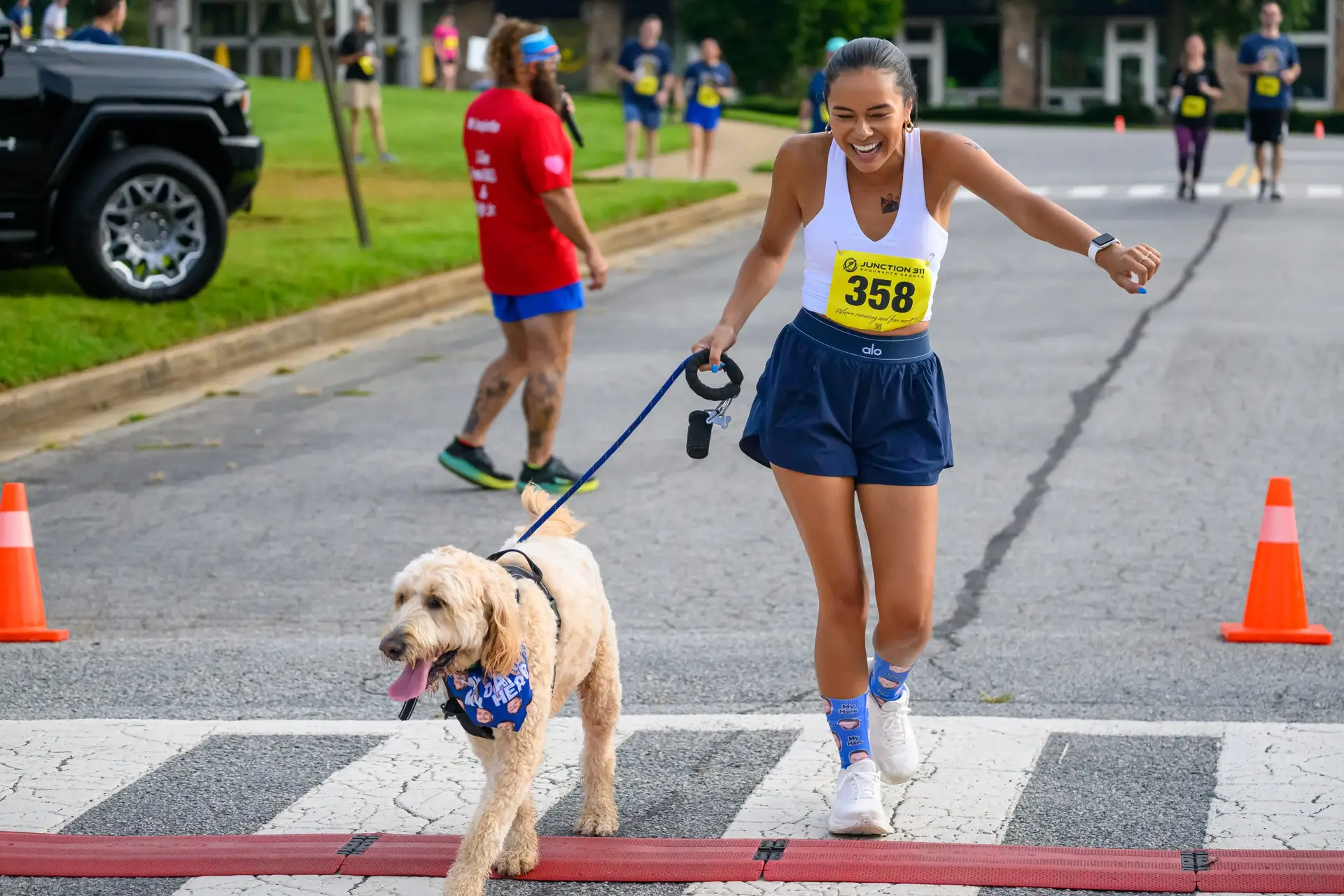
Today, my friend Chris Garner, who owns TPS Photography in Morganton, NC, found one of his images posted on social media — stolen, screenshotted, run through an AI watermark remover, and reposted looking dark, blurry, and cheap. His online shop has barriers built in specifically to prevent this. Someone got around them anyway.

Chris didn’t stay quiet. He posted publicly:

“This is not only theft, but it’s portraying our product as trash… If they used AI, someone overseas now has your minor’s likeness in their database and can use it for who knows what.”

He followed that post with an eleven-minute video of himself walking, trying to cool down. Not because he was angry for the sake of being angry — because he saw, clearly, what this represents: an existential threat to small photography businesses and to the profession as a whole.

Chris is right. And I’ve lived a version of this myself.

My Own Experience

Last month, I went through a copyright dispute after a business used one of my photographs without permission or payment. I hired Alicia Wagner Calzada, NPPA’s Deputy General Counsel — who, alongside General Counsel Mickey Osterreicher, represents NPPA members on exactly this kind of issue — to represent me. I’m not going to walk through the details of who or what — that’s not the point of this post. What matters is the pattern, because if you’ve been doing this work for any length of time, you will run into it too.

Here’s what stood out to me watching Alicia work:

The value of a photo is front-loaded. When an image is used without permission — especially on social media — most of the benefit happens immediately. Engagement, reach, and impressions all peak in the days right after posting. A business can pull the photo down two or three weeks later and still have banked nearly all the value it took from you. “I removed it” is not the same as “no harm was done.”

The Business Already Received the Value

The important thing to understand is that removing the photograph later doesn’t erase the value the business already received.

If a business posts a photograph at noon and thousands of people see it, share it, comment on it, or interact with the business because of it, that exposure has already happened. The photograph did its job.

Taking the photograph down two weeks later doesn’t rewind the clock.

That’s especially important with social media because the value of a timely photograph is often front-loaded. A photograph from an event posted while the event is happening can help a business become part of the conversation. The same photograph posted weeks later may still be useful, but its immediate promotional value has largely passed.

That’s one reason photographers should stop thinking of their work as simply “a picture.” We are creating a business asset that can deliver measurable value almost immediately.

Silence isn’t a strategy — but neither is rolling over. Alicia’s approach throughout was calm, direct, and unemotional: state the facts, establish that a benefit was received, and invite a fair offer. No threats, no drama. Just a clear paper trail showing that unauthorized use happened and has value, followed by a straightforward ask: what are you offering to make this right?

That measured, professional approach is exactly why it’s worth having someone like Alicia in your corner instead of handling it yourself over email, tired and frustrated at midnight.

The NPPA Benefit Most Members Forget About

If you’re a member of the National Press Photographers Association, you already have access to something incredibly valuable: legal guidance. NPPA members can consult with media attorneys as part of their membership before ever paying a retainer. You can talk through what happened, find out if you have a real case, and then decide whether to formally hire counsel — with someone who already understands photography licensing and copyright law, not a general practice attorney learning it on the fly.

If you’re not using this benefit, you’re leaving value on the table that you’re already paying for.

Why This Matters for All of Us, Not Just You

Every time a photographer lets an infringement slide because pursuing it feels like too much hassle, it teaches the next business, the next content thief, that stealing images carries no real risk. If more photographers registered their work and followed through when it was infringed, the calculation would change. Enforcement isn’t just about recovering money for one photo — it’s about raising the cost of theft industry-wide. This is a collective action problem, and right now too many of us default to doing nothing.

The Education Part: How to Actually Protect Yourself

Here’s the good news — this is far more accessible than most photographers assume.

1. Register your copyrights (and do it early)

Copyright exists the moment you create an image, but your legal leverage depends heavily on registration. If your work is registered with the U.S. Copyright Office before an infringement occurs — or within 90 days of first publication — you become eligible for statutory damages and recovery of attorney’s fees. Without timely registration, you’re generally limited to proving actual financial harm, which is far harder and far less of a deterrent to the person who stole your work.

For working photographers, the most practical tool is Group Registration of Published Photographs (GRPPH), filed through the Copyright Office’s electronic system (eCO) at copyright.gov. It lets you register up to 750 photographs published within the same calendar year in a single application, for one filing fee—currently $55. I personally register everything I’ve shot for publication in a rolling 90-day window, in one group filing, so nothing falls outside that protected registration period. It takes an afternoon, not a week.

One more reason to act now: the Copyright Office has finalized a fee increase that raises this group registration fee from $55 to $85, expected to take effect in mid-November 2026. If you’ve got a backlog of unregistered images, this is a good time to catch up before the price goes up roughly 55%.

2. Know about the Copyright Claims Board — small claims for copyright

Most infringement cases aren’t worth a federal lawsuit. That’s exactly why Congress created the Copyright Claims Board (CCB) through the CASE Act. It’s a small-claims-style tribunal specifically for copyright disputes, with damages capped at $30,000. You can file it yourself, without an attorney, through the CCB’s online portal. It’s designed to be accessible to independent creators — no federal court experience required.

The cost is minimal: a $40 filing fee when you submit your claim, and a $60 second fee if the other side doesn’t opt out within 60 days — about $100 total to pursue a claim. If your damages are $5,000 or less, you can request the CCB’s streamlined “Smaller Claims” track, decided by a single Copyright Claims Officer.

Registration still matters here too: to seek statutory damages through the CCB, your work needs to be registered (or have a registration application filed) before your claim is finalized. That’s one more reason registering early, as a habit, pays off.

3. This really isn’t that hard

  • Set a recurring habit: every 90 days, submit a group registration of everything you’ve published.
  • Keep your files organized by publication date so you can pull together a group filing quickly.
  • If you’re an NPPA member, use your legal consultation benefit the moment you spot unauthorized use — before you respond to anyone yourself.
  • If the amount involved is modest, look at the Copyright Claims Board before assuming you need to hire a lawyer for federal court.
  • If it’s more complex or the infringer won’t engage, bring in an attorney who does this for a living.

None of this requires a law degree. It requires a system, and the willingness actually to use it.

Thank You, Alicia

I want to publicly thank Alicia Wagner Calzada for the work she did on my case and for the broader work she does for photographers navigating exactly this kind of situation. If you’re dealing with a copyright infringement and want experienced counsel who understands the photography and media world specifically, you can find her at calzadalegal.com.

Chris Garner shouldn’t have had to spend eleven minutes walking around trying to calm down after finding his work stolen and degraded. But he — and the rest of us — have more tools available now than photographers have ever had before. Register your work. Know your options. And when someone violates your copyright, don’t just let it go. The next photographer is counting on you not to.


📌 Pro Tip: If You Use Photo Mechanic, This Part Gets Even Easier

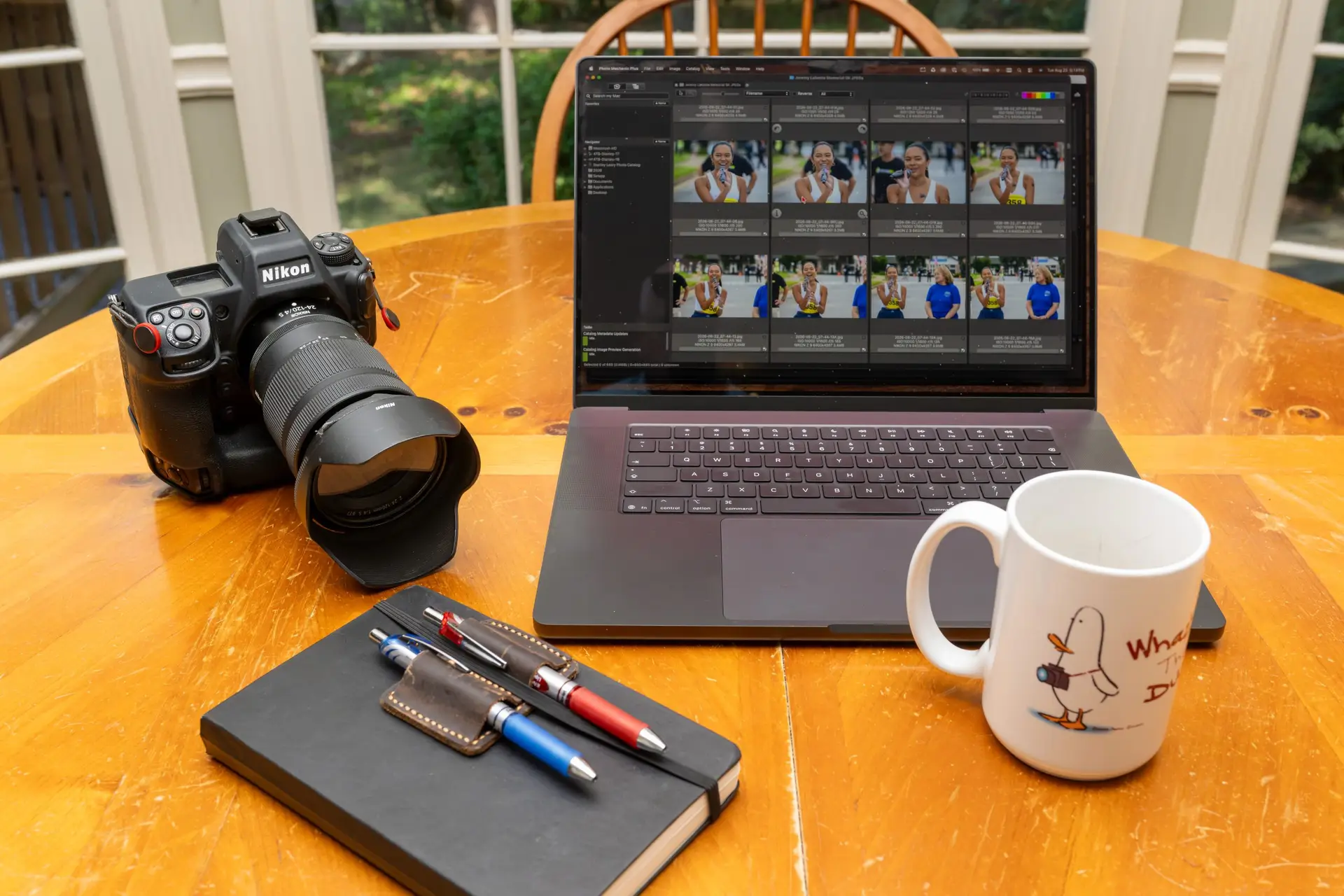
If you’re already culling and captioning in Photo Mechanic, you can skip most of the manual data entry for your group registration. Here’s the shortcut:

  1. Select the images you’re registering.
  2. Go to File ▶ Export, and choose Text Exporter.
  3. In the header field, type: Title{tab}Filename
  4. In the body field, type: {object}{tab}{filename}
  5. Export the file and save it with a .tsv extension.
  6. Open it in Excel (or any spreadsheet program) — you’ll have a clean, two-column list of titles and filenames ready to copy straight into the Copyright Office’s group registration form.

One catch: the “Title” here pulls from whatever you’ve written in the caption/description field in Photo Mechanic, so this only works well if you’re already captioning your images as you edit — one more reason to build that into your workflow, not just your registration routine.

Camera Bits (the makers of Photo Mechanic) has a short video walking through this exact process, and the Copyright Office has its own registration portal at copyright.gov/registration.

Before You Pick Up the Camera: Questions That Help You Find the Story

Reading Time: 6 minutes

I originally wrote about the questions I ask before doing a story back in 2016.

A lot has changed since then. Cameras have become smarter. Phones have become incredibly capable cameras. Video has become an essential part of almost every visual story. Social media has changed how stories are discovered and shared. And now we have artificial intelligence capable of creating images, writing copy, and producing video.

But one thing hasn’t changed:

A good story still begins with understanding people.

After more than 40 years of photographing people, organizations, events,s and stories, I’ve become increasingly convinced that the most important part of a storytelling assignment happens before I ever pick up a camera.

It starts with questions.

What Is the Story?

It is surprisingly easy to skip.

Someone calls and says, “We need some photographs.”

Okay.

Photographs of what?

And more importantly:

Why?

Are they documenting an event? Introducing a person? Explaining a process? Recruiting employees? Raising money? Celebrating an accomplishment? Helping people understand a problem?

The assignment may sound like it is about making pictures.

It usually isn’t.

The pictures are a means of communicating something.

Until I understand what that something is, I’m not really ready to photograph it.

Lisbon, Portugal

Who Is the Story About?

The person paying for the photographs isn’t necessarily the person the story is about.

An organization may want to tell its story, but the story might actually be about an employee.

A nonprofit may want to explain its mission, but the most powerful story might be about the person whose life changed because of that mission.

A school may want photographs of a program, but the real story might be the student who discovered something about themselves through that experience.

This is where curiosity becomes important.

Instead of asking only, “What do you want me to photograph?”

I try to ask:

“Who should I meet?”

People are usually where the story begins.

Why Does This Story Matter?

This may be my most important question.

A story doesn’t become meaningful simply because something happened.

It becomes meaningful when we understand why it matters.

Why should someone who wasn’t there care?

Why should a customer care?

Why should a potential employee care?

Why should a donor care?

Why should a community care?

If I don’t understand why something matters, it’s difficult for me to make photographs that communicate its importance to someone else.

Musicians perform with the Forsyth Symphony Orchestra during a spring concert Sunday at Sexton Hall Enrichment Center in Cumming, Ga. The program featured orchestral works ranging from classical symphonies to familiar favorites performed for a community audience.

Who Is the Audience?

One lesson I’ve learned over the years is that you cannot separate the story from the audience.

The same person can tell the same story to two different audiences and need to tell it differently.

Think about a photograph of a firefighter.

A photograph intended for a fire department’s training program is different from one intended for a recruiting campaign.

A photograph for a newspaper is different from one for Instagram.

A photograph for a donor may need to communicate something different from a photograph for a person considering volunteering.

The subject hasn’t changed.

The audience has.

And that changes the story.

What Does the Audience Already Know?

Before telling a story, I want to understand what the audience knows—or thinks it knows.

Sometimes the most important part of storytelling is correcting an assumption.

Sometimes it’s revealing something people have never seen.

Sometimes it’s simply helping people see something familiar in a new way.

That is why I don’t want to walk into a story with my mind already made up.

I want to be curious.

What Do I Need to Discover?

This is an important distinction.

I’m not simply looking for photographs to illustrate information someone has already given me.

I’m looking for what I don’t know yet.

That’s one reason I enjoy talking with people before photographing them.

I’ll often ask questions that have little to do with the photograph I initially think I need.

Then something happens.

A person tells me something unexpected.

Their expression changes.

They mention someone important.

They describe an experience.

They tell me why they care.

Suddenly, the story becomes bigger than the original assignment.

That’s the moment I’m looking for.

What Is Beneath the Surface?

I’ve written before about “peeling the onion.”

The idea came partly from my background in social work.

When you’re working with people, the first answer isn’t always the real answer.

Someone may tell you what happened.

But what happened isn’t necessarily the story.

You want to know:

  • Why did it happen?
  • How did it affect them?
  • What changed?
  • What did they learn?
  • What do they want other people to understand?

Those answers often lead somewhere much more interesting.

And that’s where photography can become powerful.

I’m no longer simply photographing what something looks like.

I’m trying to photograph what it means.

What Should the Audience Feel?

Information is important.

But stories aren’t only information.

They create an emotional connection.

Should the audience feel inspired?

Concerned?

Hopeful?

Curious?

Connected?

Surprised?

Proud?

Sometimes the desired emotion is obvious. Sometimes it isn’t.

But if I understand what I want the audience to feel, it changes the photographs I look for.

A smiling person isn’t automatically an inspiring photograph.

A dramatic photograph isn’t automatically a powerful photograph.

The photograph needs to support the story.

What Should the Audience Do Next?

This is especially important when I’m working with organizations.

A story usually has a purpose.

Maybe the organization wants someone to:

  • Donate
  • Volunteer
  • Apply for a job
  • Attend an event
  • Understand an issue
  • Support a program
  • Purchase something
  • Share the story
  • Or remember it

The photograph isn’t necessarily the final destination.

It may be the doorway into the story.

Then—and Only Then—Do I Think About the Photograph

Once I understand the story, the people, the audience, and the purpose, I can start making photographic decisions.

What needs to be shown?

What can be suggested?

What needs a portrait?

What needs a moment?

What needs context?

What details help tell the story?

Do I need video?

Would audio make this more powerful?

Would a series of photographs communicate more effectively than one image?

Would a drone photograph provide context?

Would an environmental portrait tell me more than a traditional headshot?

These are photographic questions.

But they come after the storytelling questions.

That’s an important distinction.

The Camera Is Not the Beginning

Photography has changed enormously since I first started.

The technology available to us today is extraordinary.

My Nikon Z9 can do things I couldn’t have imagined when I started. Phones can produce remarkable photographs. Autofocus can recognize eyes. Software can remove distractions. AI can help us edit and organize enormous collections of images.

But none of that answers the most important questions.

What are we trying to say?

Why does it matter?

Who needs to hear it?

Who needs to see it?

Those are human questions.

And a camera can’t answer them for us.

Curiosity May Be the Most Important Tool I Carry

When I teach photography, I often encourage students to ask “why.”

Why is this person doing this?

Why does this moment matter?

Why am I making this photograph?

Why did this image work?

Why didn’t it?

Curiosity changes the way we photograph.

Instead of walking into a situation looking for the picture we expected to make, we begin looking for the picture we haven’t imagined yet.

That’s where stories often surprise us.

And those surprises are often the photographs worth making.

Before You Pick Up Your Camera

So, before I begin a story today, these are some of the questions I try to answer:

  1. What is the story?
  2. Who is the story really about?
  3. Why does it matter?
  4. Who is the audience?
  5. What does the audience already know?
  6. What don’t I know yet?
  7. What’s beneath the surface?
  8. What should the audience feel?
  9. What should the audience do or understand afterward?
  10. What photographs—or other forms of media—will communicate that story best?

The last question is deliberately last.

The camera shouldn’t determine the story. The story should determine what I do with the camera.

After four decades of photography, that’s probably one of the biggest lessons I’ve learned.

I’m not really interested in simply making photographs anymore.

I’m interested in helping people see, understand,d and remember something that matters.

And that starts long before I press the shutter.

It starts with a question.

Two Reasons to Pick Up a Camera

Reading Time: 3 minutes

A friend recently shared a video from Simon d’Entremont, a nature and wildlife photographer, with the message: ” Every photographer should watch this. Simon had just come back from three weeks in Botswana, and the video reflected on why photography matters in a world of AI and algorithms — why picking up a camera is an act of resistance against everything designed to hijack our attention.

I watched it, and I loved it. And it got me thinking about two very different reasons a person might carry a camera — reasons that don’t compete with each other, but that we don’t talk about separately often enough.

The Joy of Making

Simon’s case is built entirely, and beautifully, around what photography gives back to the photographer. Curiosity in a world obsessed with certainty. A reason to leave the screen and stand in a forest at 5 am. Patience, in an age of instant everything. And maybe most of all, story — not the photograph itself, but everything it takes to make it. The alarm, the hike, the cold, the waiting. He tells a story about a lion nicknamed Blondie who roared him awake at 4 am near his tent, and he’s right that the roar is the better story, not the photo.

That’s a real and important truth about photography. The image is often just the receipt. The experience is the purchase. And I’ve watched this exact thing change people’s lives — I regularly hear from people managing mental health challenges or PTSD who tell me that having a camera, and a reason to use it, got them out of the house for the first time in months. That’s not a small thing. That’s photography doing something for the person holding it, and the world needs more of that, not less.

At the Citizens Fire Academy in Roswell, Captain Keith “Doc” Schneider uses a scaled “dollhouse” fire prop — sometimes called a Palmer’s Box — to show how ventilation shapes airflow, smoke, and flame, even demonstrating backdraft safely in miniature. A hands-on way firefighters learn fire behavior before facing it at full scale.

The Purpose of Witnessing

But I’ve spent more than 40 years as a photojournalist and documentary storyteller, and for that work, the center of gravity sits somewhere else entirely.

The job was never to have an experience worth remembering. It was to build enough trust with the person in front of the lens—and understand the world around them well enough—that what I brought back was honest and belonged to them, not to me. A photojournalist’s curiosity isn’t in service of their own growth. It’s in service of a question: what does someone who wasn’t there need to understand, and what does the person in the frame deserve to have understood about them?

That reframes almost everything Simon says about photography, without contradicting it. The photograph isn’t evidence that I was there. It’s a bridge between someone who lived a moment and someone who needs to see it truthfully but couldn’t be there. When a photojournalist starts centering their own experience — their own patience, their own memory, their own story — something has usually gone wrong. The work is meant to disappear behind the honesty of what it shows.

This is also, I think, why Simon’s “AI can’t generate a memory” argument, true as it is, isn’t quite the argument that matters for journalism. AI images are a threat to documentary work not because a machine lacks nostalgia, but because they threaten trust in the record itself — the audience’s basic ability to believe that what they’re looking at actually happened, to a real person, in a real place, witnessed by someone accountable for getting it right. That’s a bigger and more urgent problem than whether a machine can feel anything, and it’s the one photojournalists should be sounding the alarm about.

Both Things Can Be True

None of this makes Simon wrong. It makes photography bigger than either of us captured on our own.

For most people, most of the time, photography is exactly what Simon describes: a discipline of presence, curiosity, and appreciation in a world engineered to steal all three. That’s worth celebrating without qualification.

But for those of us who’ve built careers on the other side of the lens — where a stranger has to trust you enough to hand you their story — the camera has a different job. Not to give us an experience, but to carry someone else’s truth to people who need to see it.

Two different reasons to pick up the same tool. Both worth defending, especially now.

Remembering Ambassador James T. Laney

Reading Time: 3 minutes

Two encounters with a man who shaped a university and a peninsula

I learned this week that Ambassador James T. Laney, President Emeritus of Emory University, passed away at the age of 98. Over the years, my camera crossed paths with his twice — and both times, I came away with a deeper sense of just how much history one person can carry into a room.

On the Set of Faith and the City

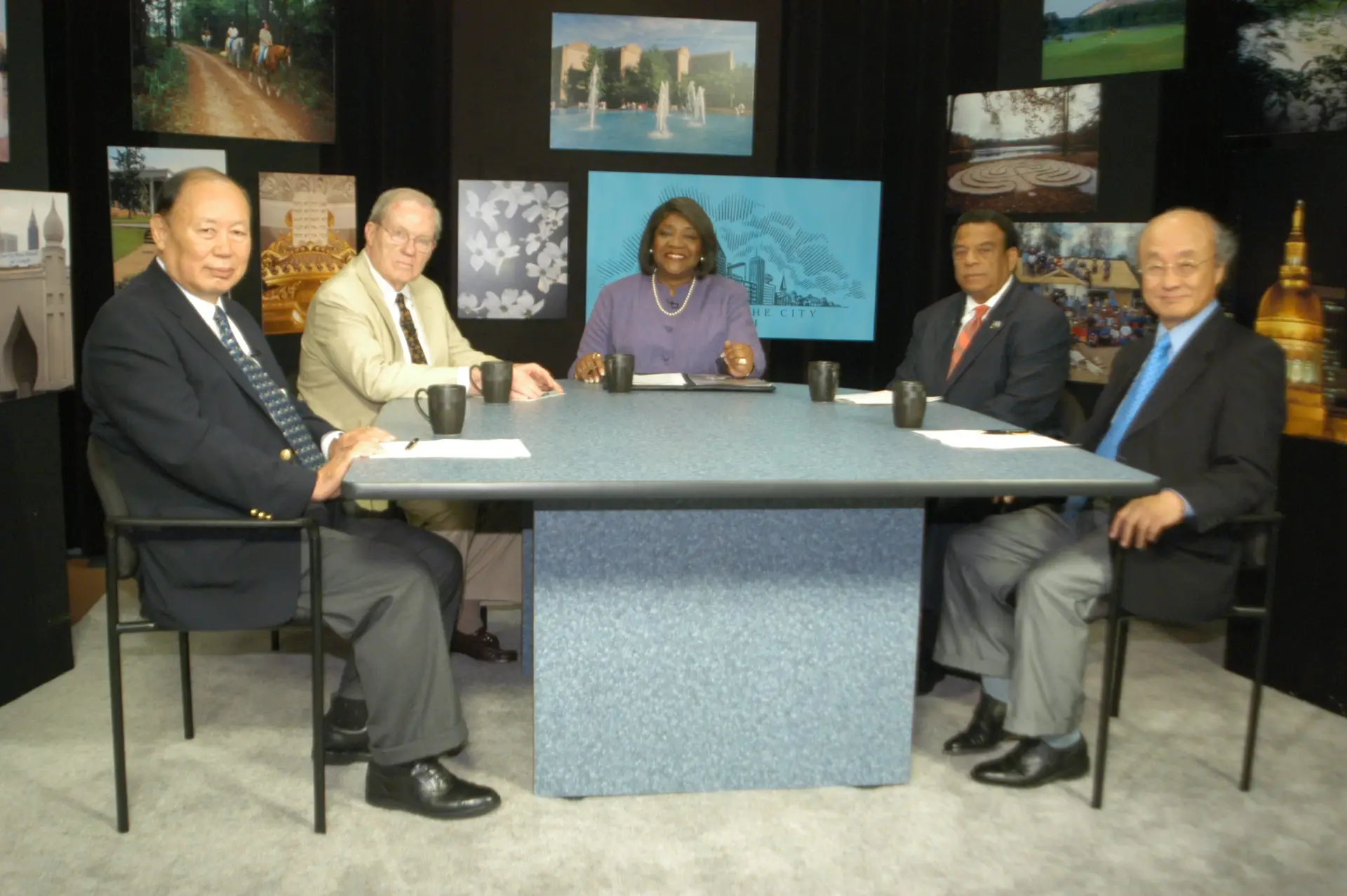
The first photo here is from the set of Faith and the City, a TV forum my wife Dorie Griggs produced on the AIB network in Atlanta. On July 8, 2003, we brought Ambassador Laney together with fellow Korea ambassador Andrew Young, host Steen Miles, Rev. Dr. Insik Kim of the Presbyterian Church USA, and Dr. Han Park of the University of Georgia for a conversation on North and South Korea and the global community.

It was cutting-edge content for its time — two men who had each represented the United States on the Korean peninsula, sitting across from each other, unpacking the tangled relationships among North Korea, South Korea, China, and the U.S. Ambassador Laney had served as U.S. Ambassador to South Korea from 1993 to 1996, and he was there for the fraught moment in 1994 when tensions over North Korea’s nuclear program escalated to the brink — working alongside Presidents Clinton and Carter to help pull the region back from conflict. Hearing him talk through that history in the studio, with the calm authority of someone who had actually lived it, is a memory I still carry.

Founder’s Day Symposium, 2006

The second photo comes from March 15, 2006, at the Founder’s Day Symposium honoring Jesse Hill Jr., held at the Biltmore in Atlanta. Jesse Hill Jr. was himself a giant of Atlanta’s civil rights and business history — longtime president of Atlanta Life Insurance Company, the first African American to lead a major city’s chamber of commerce, and a man whose fingerprints were on nearly every major civic movement in the city for half a century. That Ambassador Laney was there to help honor him says something about the circles Laney moved in and the respect he commanded across Atlanta’s civic life.

Ambassador James Laney – President Emeritus, Emory University

A Life That Shaped Institutions

Before diplomacy, Laney spent 16 years as Emory’s 17th president, from 1977 to 1993 — a tenure Emory credits with the most significant transformation in the university’s history, from a regional teaching college into a major national research university. On his watch, Emory received the landmark $105 million gift from Robert W. Woodruff and his brother George, at the time the largest philanthropic investment ever made in an American university. He recruited President Jimmy Carter to the faculty, launched a new school of public health, and helped set Emory on the path to national prominence. In 2009, Emory renamed its graduate school in his honor — the James T. Laney School of Graduate Studies.

His connection to Korea ran even deeper than his ambassadorship. He first went there in 1947 as a young Army officer, returned in the late 1950s as a Methodist missionary and professor at Yonsei University, and spent decades as one of America’s most trusted voices on U.S.–Korea relations, right up through a Building Bridges Award he received earlier this year from the Pacific Century Institute.

I’m grateful my camera was in the room for even a small piece of that story. Rest well, Ambassador.

Believe: The Word We Hang on the Wall When We Can’t See What’s Coming

Reading Time: 4 minutes

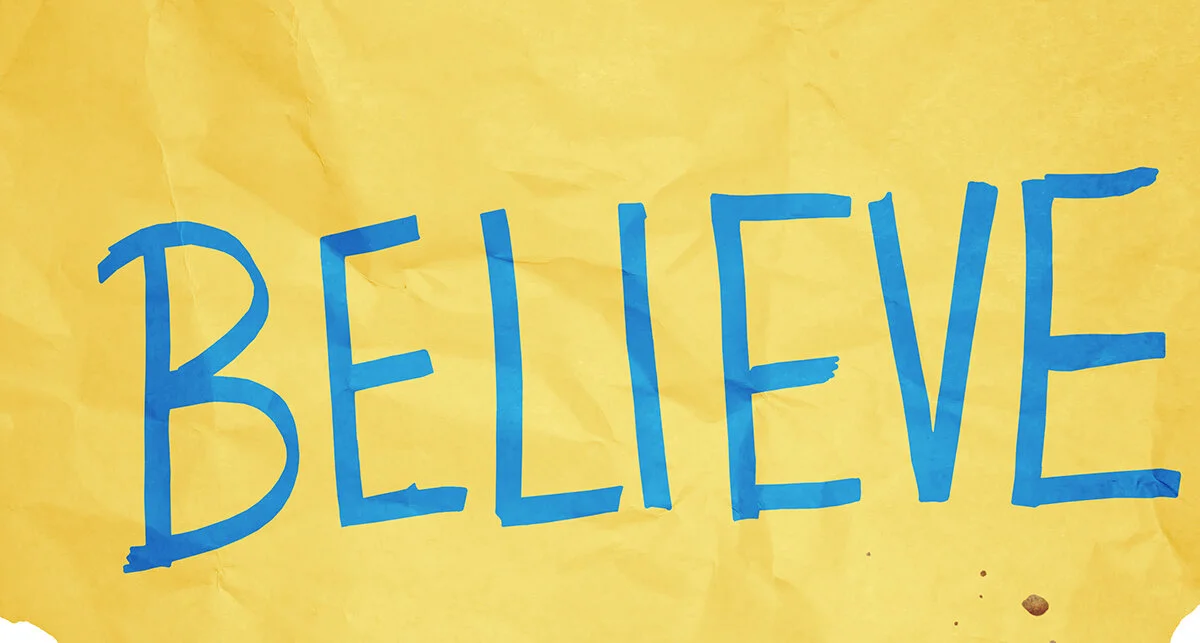
Seven letters. All caps. Handwritten on a piece of yellow construction paper and taped above a locker room door with athletic tape, crooked on purpose.

That’s the “Believe” sign from Ted Lasso — one of the most talked-about props in recent television. Ted put it up during his first week coaching AFC Richmond, and it became something closer to scripture than decor. When the team’s spirit cracked, players touched it on their way to the pitch. When Nate, wrestling with his own insecurity, tore it in half and dropped it on Ted’s desk, the show made something visible that most of us feel but rarely say out loud: belief is fragile, and someone can wound you by wounding what you believe in.

But here’s what I keep coming back to. In season three, the sign starts peeling off the wall on its own — no villain required, just time and tape and gravity. Ted takes it down himself and tells the team something worth sitting with: belief was never in the paper. It comes from the heart, the head, the gut — and it gets crowded out by the ordinary junk we all carry: envy, fear, shame. The sign was never the point. It was a pointer.

A Word Older Than the Locker Room

Sports teams didn’t wait for Ted Lasso to figure this out. Locker rooms have hung that word, or something like it, for generations — because coaches have always known that talent isn’t enough. A team has to believe it belongs on the field before it can win on it. The Atlanta Falcons even hung their own BELIEVE sign in a press conference room after a comeback win, borrowing straight from the show, because the metaphor was already doing real work in their locker room before the cameras caught it. Belief, it turns out, is a discipline you practice before it’s a feeling you have.

And long before any of us understood locker rooms or television, most of us were handed our first lesson in belief on a much smaller stage: a chimney, a plate of cookies, and a jolly stranger who somehow knew whether we’d been good. Santa Claus asks something of children that Ted Lasso asks of grown men in cleats — believe in something you cannot verify, because believing changes how you move through the season.

Christian faith asks for something similar, though it names it more plainly. Faith, as the New Testament puts it, is “the assurance of things hoped for, the conviction of things not seen.” Believers don’t arrive at their faith through a spreadsheet of proof. They choose it — again and again, especially on the days the evidence points the other way.

The Thread That Connects All of It

Put these side by side — a torn locker room poster, a chimney story, a centuries-old confession of faith — and a pattern emerges. In every case, someone is being asked to trust a future they can’t yet see, and often the visible evidence argues against them. The team is down at halftime. The presents haven’t appeared yet. The prayer hasn’t been answered yet. And still: believe.

That’s not naivety. It’s a decision about which truths will steer you when the facts are incomplete — which they always are, because none of us gets to see how our story ends while we’re still living it.

Storytellers understand this instinct better than almost anyone, because it’s the same posture a story asks of its reader. Every great story — whether it’s a novel, a docuseries, or a photo essay — asks the audience to believe in a character before that character has proven themselves. We root for the protagonist before we know if they’ll succeed, because the story has given us a reason to trust the journey even without knowing the ending. That’s the covenant between storyteller and audience: I don’t know exactly how this turns out, but I trust it’s going somewhere worth following. It’s the same covenant Ted Lasso made with a locker room, the same one Santa makes with a five-year-old, the same one faith makes with the unseen.

How We Practice Believing

Belief that only shows up when the evidence is convenient isn’t really belief — it’s just agreement. The kind of belief that gets a losing team through a season or a person through a hard year has to be practiced. Here’s a working list of what that practice looks like:

  1. Name what you believe, out loud or on paper. Ted’s sign worked partly because it was written down and visible. Vague hope evaporates; a stated belief can be returned to.
  2. Expect it to get torn. Something will test what you believe — a loss, a doubt, a person who tears it in half. That’s not proof it was wrong. It’s proof it mattered enough to attack.
  3. Understand the object was never the point. The sign, the tradition, the ritual — these are pointers, not the thing itself. When Ted’s sign started peeling on its own, he didn’t replace it. He located belief back inside the people who needed it.
  4. Clear out what crowds’ beliefs. Coach Lasso named his own list: envy, fear, shame. Most of us are carrying a version of that list, and it’s worth naming yours specifically, because vague junk is harder to clear than named junk.
  5. Choose it again, especially when the score is against you. Belief proven only in victory isn’t belief — it’s a victory lap. The real practice happens at halftime, down two goals, when quitting would be easier and more defensible.
  6. Let community carry you when your own belief runs thin. Isaac touching the sign, followed by the rest of the team — nobody has to believe alone. Faith communities, teammates, and even an audience following a story all lend each other belief on days when it’s in short supply.
  7. Look for the unseen truths that have already proven reliable. Belief isn’t a blind leap into nothing — it’s usually built on some track record, some prior faithfulness, some pattern that’s held before. Santa’s promise felt believable to a child because someone trustworthy told them about it.

None of us can see the whole story we’re living. We get this scene, this chapter, this season — and we’re asked, again and again, to decide what we’ll trust to guide the next choice. Maybe that’s why a torn piece of yellow paper became one of the most talked-about props on television. It wasn’t really about football, or even about a fictional coach. It was about all of us, standing in front of our own locker room door, deciding — one more time — to believe.

‘People of Hope’ museum brings stories of service to Roswell

Reading Time: 3 minutes

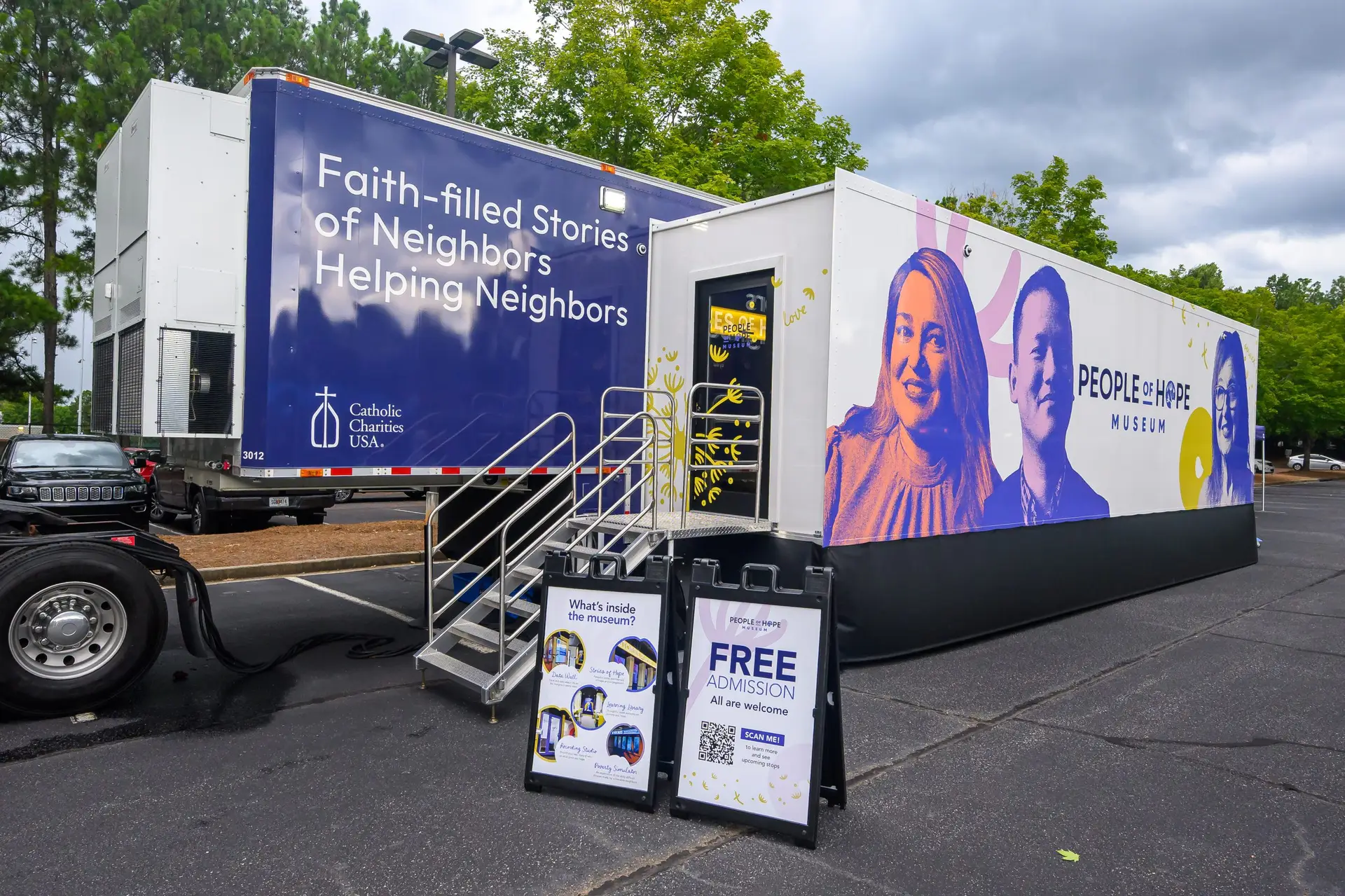
ROSWELL, Ga. — A 53-foot tractor-trailer turned traveling museum parked at Blessed Trinity High School on Aug. 5, giving visitors an immersive look at poverty in America and the people working to address it.

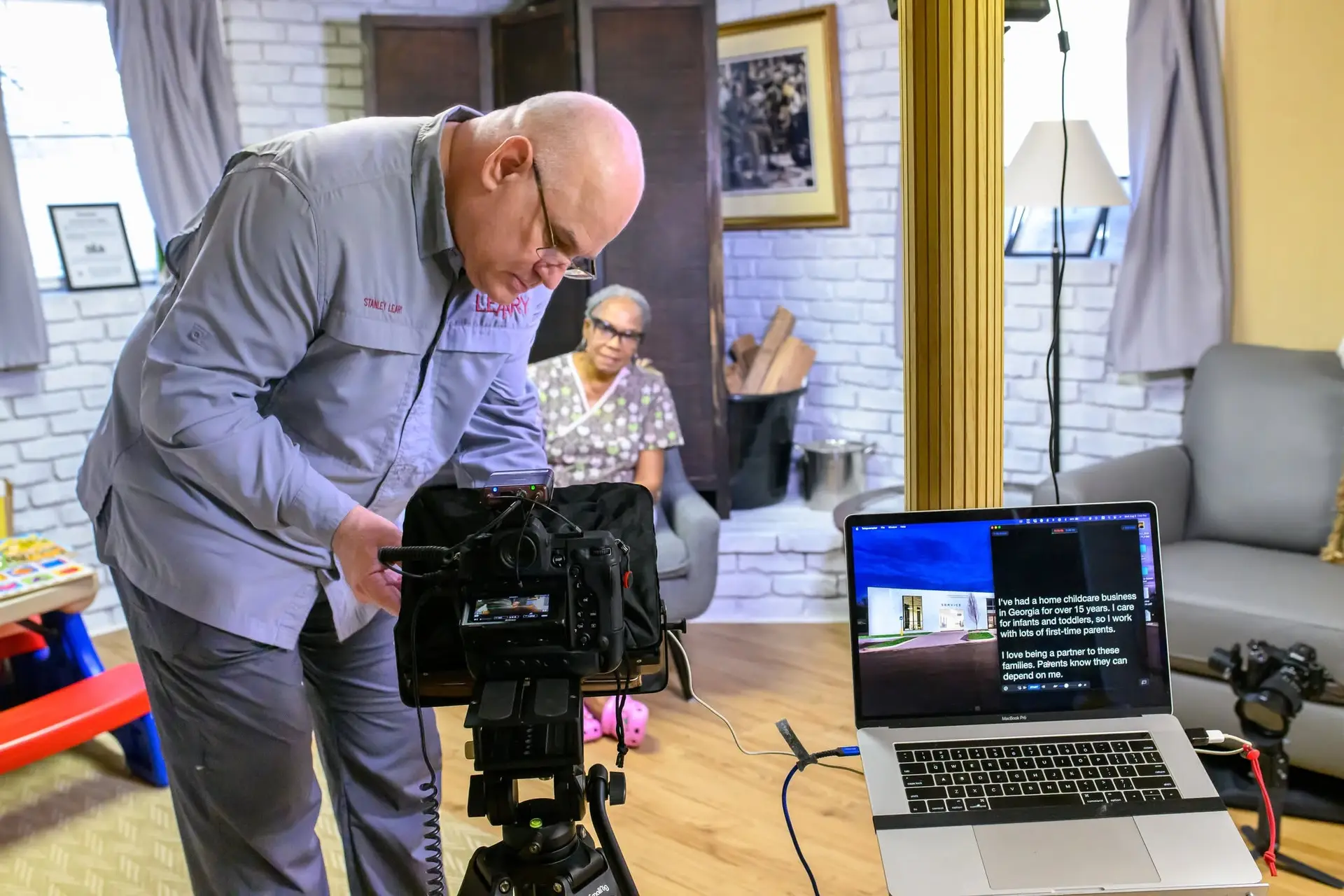
The People of Hope Museum, a nationwide initiative from Catholic Charities USA, made its two-day metro Atlanta stop Aug. 4-5, hosted by Catholic Charities Atlanta. Inside the retrofitted trailer, visitors watched touchscreen video stories from Catholic Charities staff and volunteers across the country, tried an interactive poverty simulation, and could record their own stories of hope and service in an on-site studio.

“It allows you to make some of the choices that they have to make every day,” Vanessa Russell, CEO of Catholic Charities Atlanta, said of the simulation, which asks visitors to weigh grocery trips, bills and other tradeoffs faced by families living on limited incomes.

The exhibit is part of a national storytelling campaign called “People of Hope: Faith-Filled Stories of Neighbors Helping Neighbors,” built around more than 40 professionally produced video accounts and supported by a $5 million grant from the Lilly Endowment. Since launching earlier this year, the museum has traveled to more than a dozen cities, including Philadelphia, New York, Baltimore, Hartford and Cleveland, with stops planned through 2027 in more than 150 communities nationwide.

Among those on hand in Roswell was Bishop John Tran, an auxiliary bishop for the Archdiocese of Atlanta, who told local reporters he benefited from Catholic Charities himself in 1975 after his family arrived in the United States from Vietnam.

“Too many of our brothers and sisters live in poverty, and it’s important for us to be able to care for them as best we can,” Tran said.

Catholic Charities Atlanta serves about 11,000 people a year across the metro area. Organizers said the museum’s goal is less about statistics and more about connection — helping visitors see poverty and service through individual stories rather than numbers alone.

Admission to the museum was free. The exhibit is recommended for visitors aged 14 and older, as some content addresses sensitive themes related to poverty and hardship.

The People of Hope Museum’s next stops are Knoxville, Tennessee, Aug. 7-8, followed by Chattanooga, Memphis, and cities across Oklahoma later this month.

A Story Without an Audience Isn’t a Story Yet

Reading Time: 4 minutes

I have a folder on my hard drive I only half-jokingly call the graveyard. It’s full of stories I love — a wildlife photographer tracking recovery species through North Atlanta neighborhoods. This hairstylist has turned herself into the region’s go-to Santa hair specialist every December, a ballplayer down the street who happened to be the first designated hitter in Major League history. Every one of them is a good story. Most of them sat in that folder for months before they ever ran anywhere.

That gap — between having a good story and having somewhere for it to live — is the part nobody warns you about. And it’s the same gap whether you’re a photographer with a great frame, a nonprofit with a great program, or a business with a great customer story. The story existing isn’t the hard part. Finding it a home is.

The story isn’t finished until it has a home.

We tend to treat “the story” and “the pitch” as two separate jobs — first you go find and shoot the story, then, separately, you go try to sell it. I’ve come to think that’s backward. A story that has no audience yet isn’t really finished. It’s raw material. The pitch is where the last bit of the work actually happens, because the pitch is where you decide who this is for and why it matters to them specifically.

That reframe changes how I work. Instead of “I found a great story, now who wants it,” the question up front becomes “who is missing this story, and what do they need it to do for them?” Different question, different result.

The same subject, told three different ways.

Here’s the part that took me the longest to accept: you will pitch the same story to many outlets before one of them says yes, and it usually can’t be the same pitch each time.

A wildlife recovery story pitched to a nature-photography audience is about the technical patience of the tracking and the rarity of the species. Pitched to a regional lifestyle magazine, it’s about a neighbor doing something quietly remarkable in their own backyard. Same photographer, same animals, same months of fieldwork — different hook, because the two audiences are showing up with different questions in their heads. One wants craft. The other wants a neighbor they can root for.

Sometimes the subject even shifts entirely while the storyline stays put. A story about a stylist’s holiday specialty can be a small-business feature, a seasonal lifestyle piece, or a “here’s how she built a niche” business story — same person, three different reasons for a reader to care—knowing which reason belongs to which outlet is half the job.

This isn’t compromising the story. It’s translating it. A good translator doesn’t change what was true — they change what lands.

Bring the reader something to see before you ask them to read.

One thing I believe more every year: if you’re a photographer or videographer pitching a story, don’t send a paragraph and ask an editor to imagine it. Send a small visual alongside the pitch — a single frame, a short reel, a simple mood board. Editors and clients are making a quick judgment about whether this story looks like something before they’ll invest the time to read why it matters. Give them that in three seconds, and the words you send after get read differently.

Sometimes it’s not a no — it’s a not yet.

There’s a version of rejection that has nothing to do with the story or the pitch at all. An outlet just ran something similar last month. A client has a reason they can’t say out loud — a budget freeze, a leadership change, or a different priority eating up all the oxygen this quarter. You’ll rarely be told this plainly. You’ll get a pass, and it will feel exactly like the pass you got when the pitch itself was wrong.

I’ve learned to hold both possibilities at once instead of assuming the worst one. A story can be genuinely right for an outlet and still be untimely for it. That’s not a flaw in the story — it’s a season it hasn’t reached yet. The stylist’s Santa-hair story I mentioned earlier is a good example: it has a built-in calendar. Pitch it in July, and it reads as odd. Pitch it in October, and it reads as timely—same story, same outlet, different month, completely different reception.

The practical move is to keep a short list going of good stories but early, and revisit it on a schedule rather than a whim — quarterly, or whenever a season or news cycle turns in its favor. A story that got a “not now” this spring might be exactly what an editor needs in November.

Pitching to clients is the same problem wearing a different shirt

Most of my work doesn’t come from me finishing a story and then shopping it. It comes from pitching a client on a story I believe they should let me tell — before it exists. That’s a harder version of the same problem, because now the “audience” I’m finding a home for the story with is also the one deciding whether to pay for it.

The instinct is to lead with what I can do — the camera work, the credentials, forty years of this. But the pitch that actually lands is the one that leads with their story and their audience: here’s a story your customers or your community would want, here’s roughly what it would look like, here’s why now. I’m not selling a service. I’m handing them a finished-looking idea and letting them see themselves as the outlet for it.

The rejection isn’t the verdict on the story.

If there’s one thing worth saying plainly to anyone doing this work: getting passed over by the third or fourth outlet doesn’t mean the story was wrong. It usually means you hadn’t yet found the audience whose question it answers. Keep the subject. Keep the truth of it. Change who you’re telling it to, and which part you lead with.

The story was never really finished sitting in my folder. It gets finished the moment someone reads it and thinks, “That’s for me.”

Picture Storyteller Is Evolving: From Photography Blog to Stories That Matter

Reading Time: 5 minutes

For nearly 20 years, I have been writing at PictureStoryteller.com.

When I started the site around 2006, the purpose was pretty simple. I was teaching photography, particularly lighting and the business of photography, and I wanted my students to have a place they could return to after class. I could share what I was learning, examples of my work, lessons from assignments, and ideas that might help another photographer.

Over the years, something happened that I didn’t necessarily plan.

The blog grew up.

What began as a photography resource became a collection of more than 2,000 posts exploring photography, photojournalism, storytelling, communication, business, teaching, leadership, faith, purpose, and the people I’ve encountered along the way.

And I’ve come to realize that the site has become broader than the word photographer suggests.

Photography Is Still at the Center

I’m not walking away from photography.

Photography has been part of my life for more than 40 years. It is how I learned to pay attention. It taught me to slow down, look carefully, anticipate moments, and become curious about people.

But photography has always been more than making pictures for me.

The camera is a tool.

The photograph is a doorway.

The real question has always been:

What is the story behind the picture, and why should anyone care?

That question has taken me places I never expected.

It has led me into photojournalism, corporate communications, nonprofit work, teaching, organizational storytelling, interviews and conversations with people from all kinds of backgrounds.

It has also taught me that the best photographs often begin long before the camera comes out.

They begin with curiosity.

They begin with listening.

They begin with understanding people.

The Story Isn’t About Me

One of the things I’ve learned through all of this is that storytelling isn’t really about the storyteller.

It’s about the audience.

Organizations often tell the stories they want to tell. Photographers sometimes make the photographs they want to make. Writers can become fascinated with what they have to say.

But effective storytelling asks a different question:

What does the audience need to see, understand, or feel?

That changes everything.

It changes how I approach a portrait.

It changes how I photograph a firefighter.

It changes how I tell a business’s story.

It changes how I interview someone.

And it changes how I think about this website.

Picture Storyteller won’t simply be a place where I write about cameras, lenses, and lighting.

Those things will still be here.

But they’re part of a much larger conversation.

What Comes Next

In the future, I want Picture Storyteller to explore the intersection of people, stories, photography, and communication.

There will still be photography education and discussions about technique.

There will still be photojournalism.

There will still be stories about the business of photography.

But I also want to explore questions like:

How do we tell better stories?

How do we become more curious?

How do we listen to people?

How do organizations communicate who they really are?

How can a photograph help someone understand something they might otherwise miss?

What does it mean to build a meaningful creative career?

What can failure, disappointment, aging, and change teach us?

And perhaps most importantly:

How do we tell stories that matter to the people who need to hear them?

Five Doors Into the Story

As Picture Storyteller evolves, I’m thinking about the site through several connected areas.

Stories

People, organizations, communities and experiences.

These are the stories that remind us that behind every organization, event, or issue are real people.

Seeing

Photography, photojournalism, lighting and visual storytelling.

This is where the craft still matters. I’ll continue sharing what I’ve learned about making photographs and helping other photographers develop their ability to see.

Communicating

How organizations and individuals use stories, photography, and video to connect with their audiences.

A good photograph isn’t necessarily a good communication tool. The question is whether the image helps achieve the story’s purpose.

The Business of Storytelling

The realities of making a living as a creative professional.

Pricing. Marketing. Clients. Careers. Finding work. Losing work. Adapting. Learning. Starting over.

These are conversations I’ve been having for decades, and I don’t think they’re going away.

Teaching

Lessons for photographers, storytellers and communicators.

I’ve spent a significant part of my career teaching. Teaching forces me to examine what I know—and what I don’t know.

Sometimes the best way to understand something is to try to explain it to someone else.

The Photograph Is the Doorway

There is an idea that keeps coming back to me:

The photograph is the doorway into the story.

A photograph can get our attention.

But then what?

What happens when we become curious about the person in the photograph?

What happens when we learn what happened before that moment?

What happens when we discover the reason someone does what they do?

What happens when we realize that someone else’s experience has something to teach us about our own?

That’s where storytelling becomes more interesting than photography alone.

The image opens the door.

The story invites us inside.

A More Honest Description of What I Do

For a long time, the easiest way to describe myself was:

I’m a photographer.

That’s still true.

But it isn’t the whole truth.

I’m a photographer.

I’m a photojournalist.

I’m a storyteller.

I’m a teacher.

I’m a communicator.

And after decades of doing all of those things, I’m increasingly interested in how they fit together.

Photography taught me how to see.

Photojournalism taught me how to observe.

Storytelling taught me how to listen.

Teaching taught me how to explain.

Working with organizations taught me how important it is to understand the audience.

And life has taught me that the most interesting stories usually aren’t about perfect people having perfect experiences.

They’re about people figuring things out.

Why Keep Writing?

I’ve occasionally wondered whether I should continue writing this blog.

There are plenty of places to post photographs now. Social media moves faster. Artificial intelligence is changing how images are created. The traditional photography business continues to evolve.

So why maintain a blog that has been around for nearly two decades?

Because I don’t think the need for stories is going away.

If anything, I think it is becoming more important.

Images surround us.

We are surrounded by information.

Competing narratives surround us.

What we need isn’t simply more content.

We need better stories.

Stories that help us understand people.

Stories that create curiosity rather than division.

Stories that allow us to see something from another person’s perspective.

Stories that remind us that behind the statistics, organizations, headlines, and photographs are human beings.

That’s the kind of storytelling I want to keep exploring.

What’s Next for Picture Storyteller

So Picture Storyteller is evolving.

Not away from photography.

Through photography and beyond it.

The camera will still be part of the conversation.

So will lighting.

So will photojournalism.

So will the business of photography.

But the larger subject is becoming clearer to me:

People. Stories. Seeing. Listening. Communicating.

For nearly 20 years, I’ve been documenting what I’ve learned.

Now I want to be more intentional about bringing those lessons together.

Picture Storyteller is becoming a place to explore how we see, how we listen, how we tell stories, and how those stories can help people connect.

The tagline still feels right:

Human Eyes. Honest Stories.

Because that’s ultimately what I’ve been trying to do all along.

Not simply make better photographs.

See better. Listen better. Tell better stories.

And hopefully help other people do the same.

How to Geotag Photos with Your Phone’s GPS

Reading Time: 6 minutes

A visually stunning photograph that nobody can search for, organize, or locate is a photo that loses its utility the moment it is archived. In the digital age, a great image is only half the equation—the other half is data. Whether you are managing a massive personal portfolio or delivering images to a client, knowing exactly where a photo was taken is critical.

This is especially vital for humanitarian photography, documentary work, and NGO coverage. Organizations often manage thousands of assets from global projects; without embedded location metadata, your critical images can easily get lost in a digital void. Having precise coordinates baked directly into your image files allows organizations to search for images by region instantly, verify location authenticity, and drastically speed up the process of writing accurate, fact-based captions.

While only a few modern cameras have built-in GPS chips due to battery and size constraints, almost every major brand offers a workaround: using your Smartphone’s GPS via Bluetooth.

Here is exactly how Nikon, Sony, Canon, Fujifilm, OM System (Olympus), and Leica handle mobile geotagging, along with the specific apps you need to download.


Before diving into the brands, there is a massive misconception that you need a cellular signal or Wi-Fi for this to work. You do not.

Your Smartphone has a dedicated, hardware-based GPS receiver that operates entirely independently of cellular data networks. You can put your phone into Airplane Mode and turn Wi-Fi completely off to save battery or comply with flight regulations, and your phone will still track your precise coordinates. As long as your phone’s Bluetooth remains enabled to connect to your camera, you can geotag your photos in the deep back-country, in remote villages, or in foreign countries without using a single megabyte of data or roaming.


1. Nikon (SnapBridge)

Nikon was one of the early pioneers of seamless mobile geotagging using low-energy Bluetooth.

  • The App: Nikon SnapBridge
  • How it works: Once you pair your camera to your phone via Bluetooth, open the app, go to the Connect tab, and toggle on Auto link, then Location data. On your camera, ensure the location data feature is set to download from the smart device.
  • The Nuance: SnapBridge is highly regarded for its stability. It can automatically pull your phone’s GPS data in the background, even when your phone is locked, and stamp coordinates onto your files exactly when the shutter clicks.

2. Sony (Creators’ App)

Sony uses a continuous Bluetooth handshake to keep your location data up to date as you move.

  • The App: Sony Creators’ App (or Imaging Edge Mobile for older cameras).
  • How it works: Pair your camera to the app via Bluetooth. Inside the app, toggle on Location Information Linkage by going to the[Cameras] screen, and tap [Others] → [Setup] → [Location Information Linkage] and switch on  Location Information Linkage, Auto Time Correction, and Auto Area Adjustment. You may also need to go to your camera’s network menu and turn Location Info. Link to On.
  • The Nuance: For iOS and Android to allow continuous tracking in your pocket, you must set your phone’s location permission for the Creators’ App to “Allow all the time” rather than “Only while using the app.” And in the Creators’ App, click the gear icon in the upper-right corner of the [Cameras] screen, then set Connection with Camera in Background to Keep connection.

3. Geotag Alpha (multiple cameras at same time)

Geotag Alpha uses a continuous Bluetooth handshake to keep your location data up to date as you move.

  • The App: Geotag Alpha (third-party iOS app for Sony cameras).
  • How it works: Turn Bluetooth on in your camera’s network menu. Open Geotag Alpha, tap Add Camera, and pair it directly within the app. Then, go to your camera’s network menu and turn Location Info Link to On.
  • The Nuance: For iOS to allow continuous tracking in your pocket, you must set your phone’s location permission for Geotag Alpha to “Always Allow” rather than “While Using the App.”

4. Canon (Camera Connect)

Canon offers real-time coordinate stamping as long as the mobile application remains active in your phone’s memory.

  • The App: Canon Camera Connect
  • How it works: Establish a Bluetooth connection between your camera and Smartphone. In the app settings, enable Location Information. Next, dive into your camera’s yellow Setup menu, find the GPS settings, and set the GPS device to Smartphone.
  • The Nuance: Canon cameras require a constant active connection to stamp coordinates on the fly. If your phone aggressively kills background apps to save battery, you may need to reopen the app occasionally during a shoot.

5. Fujifilm (FUJIFILM XApp)

Fujifilm drastically improved its wireless reliability with the release of its modern connectivity app.

  • The App: FUJIFILM XApp (replaces the legacy Camera Remote app).
  • How it works: Pair your camera via Bluetooth. In the XApp settings, ensure location synchronization is switched on. A small satellite or globe icon will appear on your camera’s LCD/EVF screen when it is actively receiving a GPS signal.
  • The Nuance: Fujifilm cameras update their internal clocks and locations based on the phone. However, aggressive smartphone power-saving settings can sometimes pause background sync, requiring a quick phone wake-up.

6. OM System / Olympus (OI.Share)

Because most Olympus and OM System bodies lack internal GPS hardware, they rely on a smartphone-tethered handshake to map your journey.

  • The App: OM Image Share (OI.Share)
  • How it works: You can sync the camera and phone via a Bluetooth background connection. Turn on the location logging feature within the OI. Share app to communicate the live coordinates directly to the camera body as you shoot.
  • The Nuance: Because it relies entirely on a continuous data stream, keeping the app open and active is crucial for accurate mapping throughout a long day of shooting.

7. Leica (Leica FOTOS)

Leica utilizes a clean, minimalist application to push location data to models without internal GPS, such as the Q and M series.

  • The App: Leica FOTOS App
  • How it works: Pair your Leica camera to your phone using Bluetooth. In the app’s camera management settings, enable the location logging option.
  • The Nuance: The app features an “Always-on” background toggle that keeps geotagging active even when the phone is locked. Be aware that keeping this link constantly active will cause a noticeable increase in both phone and camera battery consumption.

Pro-Tips for Flawless Mobile Geotagging:

  1. Check Battery Optimization: Android and iOS love to put background apps to “sleep.” Disable battery optimization/restrictions for your camera app to prevent geotagging dropouts.
  2. Watch the Icons: Always look at your camera’s display before shooting. Most brands display a GPS or satellite icon that flashes while searching and remains solid once it has a lock on your phone’s location.
  3. Time Sync is Key: Ensure your camera’s internal clock is synced to your Smartphone. If the timestamps don’t match up, the app may fail to align the GPS coordinates with the correct image.

Unlocking Your Coordinates in Lightroom

Once you have successfully embedded those coordinates into your files using the steps in the post, here is how actually to put that metadata to work using Adobe Lightroom Classic:

  • The Map Module: Go to the Map module at the top right. Lightroom will read the EXIF data from your camera app and instantly drop physical pins on a global map showing exactly where you stood for every shot.
  • Reverse Geocoding: When you select images in the Map module, Lightroom can automatically look up the coordinates and populate the City, State, and Country fields in your Metadata panel, saving you hours of manual typing.
  • Smart Collections: You can create a Smart Collection with rules like “GPS Data > is coordinates” to instantly isolate images that contain location data, making it easy to filter out studio shots from fieldwork.
  • The Sync Backup Workaround: If your phone app ever disconnects in the field, you can track your route using a standalone GPX logging app (such as Geotag Photos Pro). In Lightroom’s Map module, click the Tracklog icon (the little wavy line button) and select Load Tracklog. Lightroom will automatically match the timestamps on your photos to your phone’s GPS log and retroactively stamp the files.

What Happens When You Point a Drone (and a Camera, and Some Care) at Roswell Small Businesses

Reading Time: 4 minutes

Over the past week, I did something I’ve been wanting to do for a while: I turned my camera toward two businesses I actually use — I Canita Cake and Gus’ Barbershop — to show my neighbors what I already know about them.

I didn’t expect the response.

I Canita Cake: 31,768 Views in 5 Days

I took a drone shot of I Canita Cake on Alpharetta Street and posted it with this:

Shoutout to a Roswell gem: I Canita Cake! If you haven’t stopped by I Canita Cake on Alpharetta Street yet, you’re missing out. This woman-owned bakery in the heart of Roswell has been making custom cookies and cakes memorable for over 12 years, and everything from their custom cakes to their famous “Better-than-Oreo” cookie sandwiches is made with real care and creativity.

But the part of the post people really responded to wasn’t the cookies. It was this:

What makes I Canita Cake truly special isn’t just what’s in the display case — it’s what happens with the leftovers. When the day’s baking is done, they call my wife, Dorie Griggs, chaplain for the Roswell Fire Department and Emory Saint Joseph’s Hospital, and she delivers those goodies straight into the hands of our Fire, Police, 911 Call Center, and hospital nurses and doctors. It’s a small gesture that means a lot to the people who serve our community around the clock — and it says everything about who I Canita Cake is.

The result: 31,768 views in 5 days, and by the owner’s own account, 4 to 5 new customers walked in the very next day because of the post.

Owner Canita Allen said, “We had three or four people today that said they saw the write-up about us and decided to come give us a try. I can’t tell you how much I appreciate it.”

I Canita Cake 1294 Alpharetta St, Roswell, GA (470) 300-9518 icanitacake.com

Gus’ Barbershop: Two Posts, Two Different Stories

The Drone Shot — 8,361 Views

I’ve been a customer at Gus’ Barbershop for more than 20 years — since Gus and his uncle Ray had a shop together just down the street. So when I posted a drone shot of the current location, it came from a lot of history, not just a good haircut day:

Gus’ Barbershop has been a fixture in this community for over 10 years, and it shows. It’s not just a haircut — it’s a tradition. The whole team takes their time with you; nobody’s ever in a hurry, and the customer service is genuinely great every single visit.

That post pulled 8,361 views in 5 days.

Gus Barbershop

The Video — 1,300+ Views Overnight

Then last night I shared something different: a short video of Gus himself, talking about why he does this work.

Meet Gus — Roswell’s own, one haircut at a time. I’ve been going to Gus’ Barbershop for years, and I finally sat down with him to talk about why he does what he does. Turns out it’s not just about the haircut — it’s about making sure everyone in this community, no matter their budget, can walk out feeling good.

That post hit over 1,300 views in the first 16 hours — most of it while everyone was asleep.

Gus’ Barbershop 10697 Alpharetta Hwy, Roswell, GA 30076 (478) 395-8700

Why This Matters (To Me, and Maybe to Your Business)

I’ve spent over 40 years telling stories with a camera — for magazines, for corporations, for community newspapers. What these three posts remind me of is something I learned a long time ago from my mentor, Don Rutledge: you don’t find the story by isolating your subject. You find it by showing people in their relationships and their environment — Canita and the leftovers that go to first responders, Gus and 20 years of customers in that chair.

That’s the story people stop scrolling for.

If your business has a story like that — something true about why you do what you do, and who it’s for — I’d love to help you tell it. A single drone shot or a two-minute conversation on Video might be all it takes.