|
Getting your Trinity Audio player ready...
|
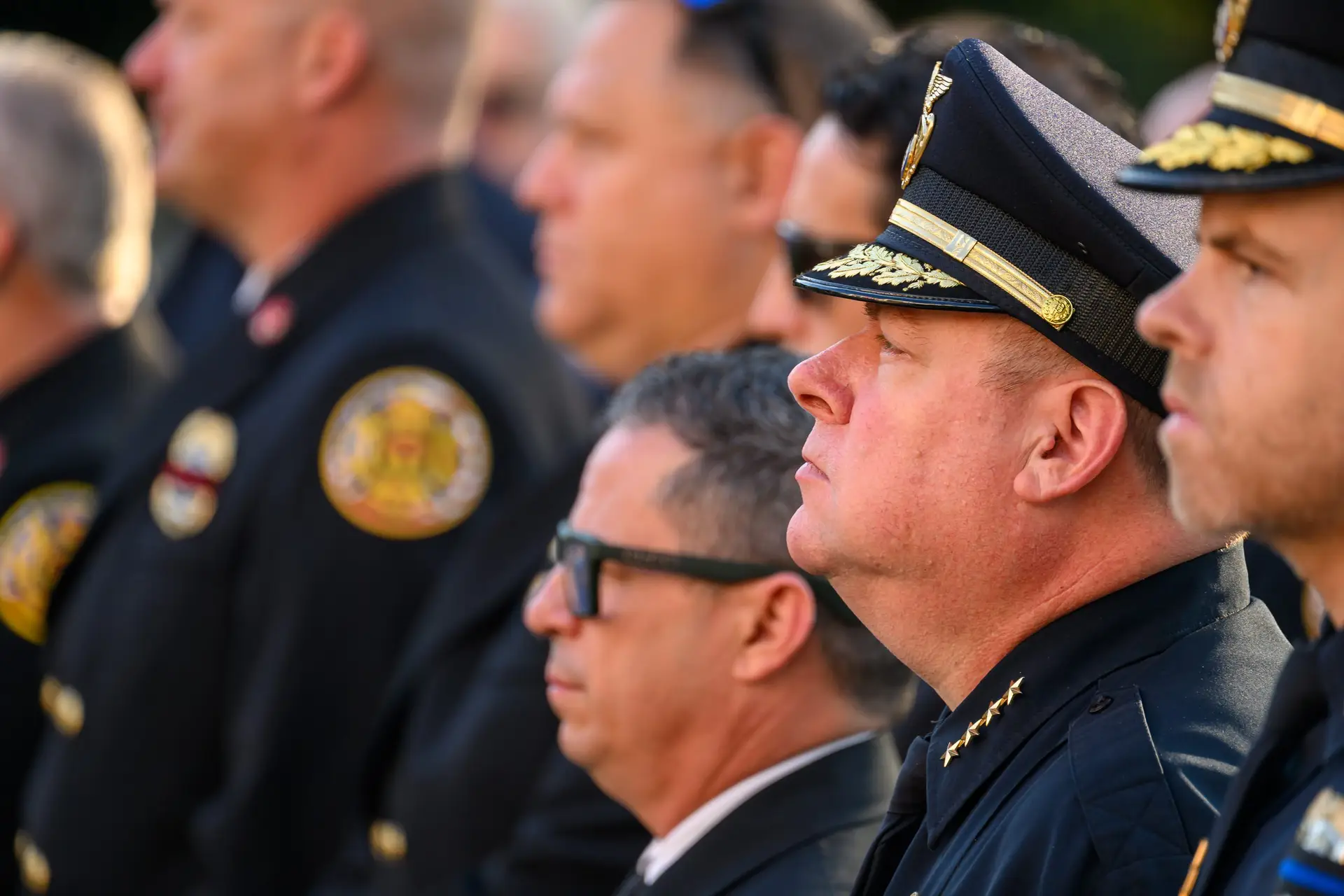
Police Chief JAMES W. CONROY and Fire Chief PABEL TROCHE stand during the presentation of the colors at Roswell’s 9/11 Commemorative Ceremony at City Hall, Thursday, Sept. 11, 2025. The annual service honored the victims and heroes of the September 11 attacks.
This year I took on something I hadn’t done in years: contributing both the article and the photos for a newspaper. I’ve since stopped — the pay didn’t come close to covering the hours an assignment actually took. But before I let it go, it taught me something I didn’t expect.
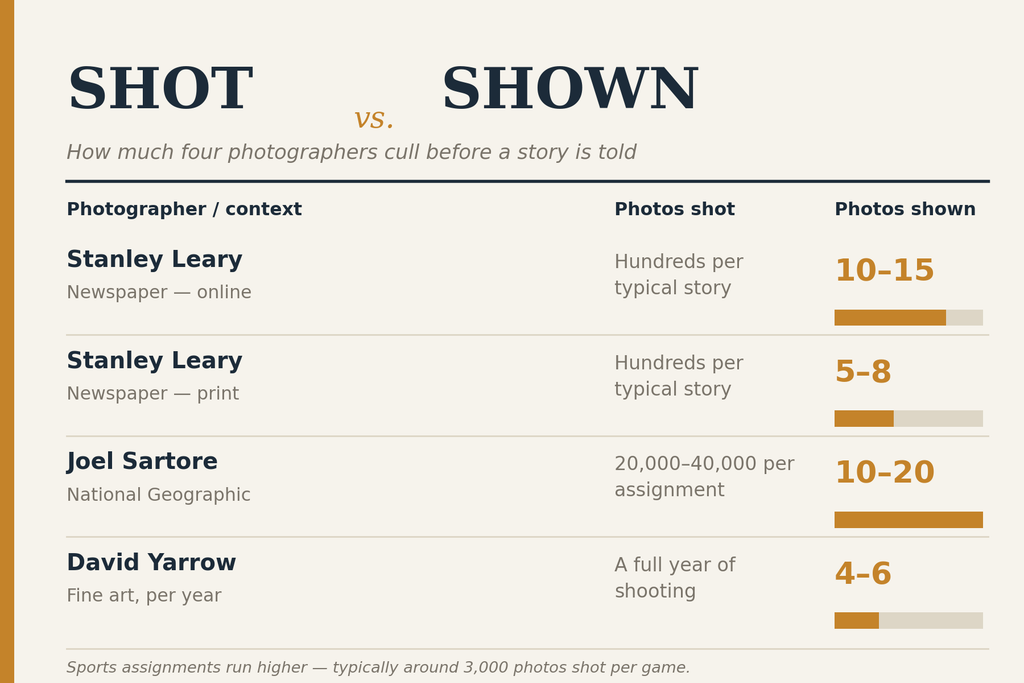
The newspaper only needed 10 to 15 photos online. In print, they usually ran about half of that — five to eight images to carry the whole story. I’d write a 400 to 1,000-word piece, usually landing closer to 400, and caption everything in AP style.
That number, 10 to 15, felt small at first. For years I’d shot for organizations with outlets stacked on top of each other — a piece might need to serve the main publication, a children’s version, a seniors’ newsletter, a social feed, an annual report. I trained myself to shoot wide enough to feed all of it. So even on the newspaper assignments, old habits kicked in: I kept shooting like every frame might need to work five different ways.
But I didn’t edit that way. I’d go through everything, pull the 15 that actually told the story, and only finish those. The other 90 percent never got touched. And cutting it down like that wasn’t a limitation. It was a relief.
What Sartore and Yarrow taught me about my own ratio
Not long after I stopped that work, I was rewatching an interview with David Yarrow, the fine art photographer known for his large-format wildlife and cultural work. He said he considers a year successful if it produces four to six images worth printing. Those become 12 to 20 standard prints — roughly 37 inches on the short side unframed — and the same number of large prints, around 56 inches on the short side. A year of shooting. Four to six final photographs.
That sent me looking into how National Geographic photographers handle the same problem, and I found Joel Sartore’s answer. On average, he shoots 20,000 to 40,000 images. The magazine publishes 10 to 20 of them, depending on the story.
Line those up and something clicks. My newspaper work, without my planning it, landed right in Sartore’s exact publish range — even though I was shooting hundreds of frames per assignment, not tens of thousands. Yarrow takes the same ratio to its extreme: a full year of work compressed into a handful of prints meant to hang on a wall for decades.
The volume changes. The ratio doesn’t. Somewhere between a few hundred frames and forty thousand, the number of images that actually deserve to be shown stays remarkably small.
Digital gives you more, not better.
I shoot far more today than I ever did with film, and I don’t think that’s a bad thing. Digital gives me choices I didn’t have before — more angles, more moments, more chances to catch the one frame that works. But more choices only help if the editing keeps pace with the shooting. The camera doesn’t do the culling. I do.
That’s the part of the craft that doesn’t show up in a portfolio or a camera bag: sitting with hundreds of images and having the discipline to walk away from 90 percent of them, even the technically good ones, because they don’t serve the story.
Fewer photos, more trust
Here’s the part I keep coming back to: I think most photographers would look better in the public’s eye if they showed fewer images. A tight edit reads as confidence. A photographer who shows everything reads as someone still deciding what the story is. Sartore doesn’t publish 500 photos from a year in the field. Yarrow doesn’t print fifty images a year. The restraint is the credibility.
None of this starts at the edit.
But culling only works if what you shot was worth culling from in the first place. That’s where the research comes in — not research as in reading background material before you show up. That matters too, but research is pursuing the access necessary to be there in the moment. You can’t edit your way to a story you were never present for. The discipline of fewer photos starts long before the camera comes up. It starts with earning the position to see something that will move people, and it ends with having the nerve to show only the frames that do.
Fewer photos. Better story. That’s the trade worth making.