Finding Rhythm in Life: How Playing an Instrument Can Keep You Positive

Reading Time: 2 minutes

Sometimes life throws you into a rut. The kind where your mind starts circling the same thoughts repeatedly, and you feel stuck. This year’s latest season of Professor T unexpectedly hit me. The brilliant but often socially awkward criminology professor plays the drums in the show, not to become a rock star, but because his therapist suggested it as a form of therapy. It’s not about the notes; it’s about the rhythm, the release, and the mental reset.

That storyline resonated with me. Last July, when my uncle Knolan Benfield passed away, I found myself in a similar place of needing a healthy outlet. Uncle Knolan had been a big part of my life, and when he died, I inherited his trumpet. Picking it up again brought back memories of when I used to play regularly. I also bought a flugelhorn because of the warm, mellow tone it calls to me.

Now, I keep the horn within arm’s reach. If I’ve been working on the computer for hours, I’ll take a short break and play. Just a few minutes of music can reset my mind. Making sound—focusing on breathing, embouchure, and melody—pulls me out of work mode and grounds me in something tangible and joyful.

But music wasn’t my only therapy. Since losing my uncle, I’ve also gotten serious about the gym. In 2025 alone, I’ve done 117 thirty-minute workouts so far. It’s not about chasing a number on the scale but building resilience. Exercise and music together have helped me stay optimistic, so that no matter what comes, I’m looking for ways to move forward rather than letting stress take over.

Tips for Staying Positive as a Creative (Even When Life Gets Stressful)

Whether you’re a musician, photographer, writer, or artist, staying emotionally steady is critical. Here are a few practices that have worked for me:

  1. Find a creative outlet just for you.
    Don’t worry about making it perfect or sharing it online. Play an instrument, paint, dance—whatever pulls you into a different mental space.
  2. Move your body daily.
    Exercise doesn’t have to be extreme. Even a 30-minute walk or light workout can reduce stress and boost mood.
  3. Break up your workday.
    Step away from screens and do something physical or creative to reset your brain before returning to the grind.
  4. Practice gratitude daily.
    Even on tough days, note at least one thing you’re thankful for. It helps shift your mindset toward the positive.
  5. Surround yourself with encouraging voices.
    Spend time with people who help you see solutions, not just problems.
  6. Accept that stress will come, but it doesn’t have to control you.
    Have a “go-to” activity (music, exercise, journaling) that helps you process and release tension.
  7. Invest in your passions, even when life is busy.
    If something brings you joy, make room for it. It’s not indulgence—it’s maintenance for your mental health.

The trumpet, flugelhorn, and a good gym session have become tools, not just hobbies. They remind me that I can choose rhythm, movement, and optimism even when life is stressful.

Tagged : /

The Wealth of Pursuing Your Calling

Reading Time: 2 minutes

I’ve known a lot of photographers who chased assignments that paid the most, and I’ve known others who chased stories that mattered most. Dave LaBelle is one of those rare people who reminds me that wealth isn’t measured in currency — it’s measured in the lives you touch.

Dave LaBelle shared today on our Zoom meeting for The Story Thread that he decided money would not be his main goal in life. Instead, he committed to “seek first the kingdom of God” — putting faith and purpose before pursuing income. His tools were simple: a camera, a pen, and believing that his gifts were meant to serve others.

Listen to Dave here:

Dave’s words challenge one of our culture’s loudest messages: “Make as much money as possible — then you’ll be secure.” Instead, he shows the freedom and joy that come when you reverse that — focus on purpose and trust provision to follow.

This choice meant turning down specific opportunities, running a blog without ads, and measuring relationship success rather than revenue. And yet, he calls himself “one of the most successful people” he’s ever met. Why? Because he has always had enough. Enough to eat. Enough to live. Enough to keep creating.

When we choose our calling over the chase for cash, we often discover something surprising — provision shows up. The right connections appear. The bills get paid. And the work we produce matters.

Practical Takeaway:

  1. Define your priority. Money will take that spot by default if you don’t know what comes first.
  2. Use your gifts to serve. Your talents are meant for more than your gain.
  3. Trust provision. Security often comes when we stop obsessing over it.
  4. Measure wealth differently. Relationships, impact, and legacy often outlast financial success.

Closing:
Dave reminded me — and I hope this reminds you — that the real reward of pursuing your calling is a life that feels full, not just a wallet that looks full. And if you can grasp this truth early, you’ll be rich in the most critical ways.

Tagged : /

More Than BBQ: The Story Behind the Slopes Video

Reading Time: < 1 minute

This 30-second video for Slopes BBQ may have been designed to play during high school games on the jumbotrons around Roswell, Georgia, but it’s more than just a quick commercial.

Angel, the owner of Slopes BBQ, reached out and asked if I could create a video for those in-game sponsor moments. Last year, he used the restaurant’s logo while they thanked the local businesses. But this year, he noticed other sponsors running full videos and wanted to stand out.

At first, the idea was simple: a quick flyover with a drone showing the restaurant’s location.

But when we sat down to talk, I asked him, “What else could we show? What do people love about Slopes?” That question opened the door to a bigger story.

I wrote the script, coordinated the voiceover, selected music that matched the tone, and shot both aerial and interior footage. I filmed the drone shots first to establish where the restaurant is in Roswell, then came back a couple more times to capture the kitchen in action and the people who fill the place with life.

This video isn’t just about barbecue. It’s about a place that holds a history and a community. It’s where friends meet, families gather, and traditions are passed across the table.

Here’s the final result. You might see it pop up at a Roswell football game soon—but I’m excited to share it with you here first:

Thanks again to Angel and the Slopes team for trusting me to tell their story.

If your business is ready to go beyond the logo and tell a story that connects—especially in a world of distractions—I’d love to help.

Tagged : /

“Do You Feel Lost?” — Why Knowing Your True North as a Creative Matters More Than Ever

Reading Time: 3 minutes

A young Fulani shepherd watches over his cattle under the scorching sun in Burkina Faso. Known for their rich nomadic heritage, the Fulani are expert cattle herders, moving with the rhythm of the land and seasons. His Marlboro hat—an unexpected blend of tradition and Western branding—was likely a secondhand item from the global used-clothing trade that flows into West Africa. It offers both shade and a curious symbol of how cultures intersect in even the world’s most remote corners.

Have you ever felt like you’re spinning your wheels—busy, but not going anywhere?

You’re not alone. I’ve met many creatives, communicators, and even business leaders who feel like something’s off, even if everything looks good. They’re talented, experienced, and hardworking, but still feel lost.

Does this sound like you?

Lately, I’ve noticed something troubling in the news. Every time a tragedy like a mass shooting happens, the first question people ask is: “Why did they do it?” And most of the time, we never get a clear answer. We might hear about mental health, loneliness, or anger, but not the why.

That silence? That void where purpose should be? That’s what I believe we’re witnessing. A life with no compass. A person with no “True North.”

And it doesn’t only show up in extreme or tragic ways. It quietly affects artists, freelancers, and communicators every day. It drains our creativity, derails our focus, and leaves us stuck.


5 Signs You May Not Know Your “Why”

  1. You feel burned out, even when you’re not busy.
    You’re emotionally tired, even when your workload is manageable. It’s a deeper fatigue, not fixed by rest.
  2. You keep saying “yes” to things that don’t fulfill you.
    You take on projects that pay the bills but drain your soul. Over time, you start forgetting what excites you.
  3. You’re constantly pivoting, but never progressing.
    Change is normal. But if you’re constantly switching direction and never gaining traction, something’s off.
  4. You envy others more than they inspire you.
    Instead of being motivated, you may be discouraged by others’ success because you may be unsure of what success looks like for you.
  5. You can’t clearly articulate what drives you.
    If someone asks, “Why do you do what you do?”—and your answer is vague, uncertain, or just about the money—you may not have your compass set.

How I’ve Stayed Oriented—Even When I Had to Pivot

Over the years, I’ve had to adapt to many changes—new tools, shifting industries, different clients, and more than a few surprise detours. Jobs, technology, and client demands have changed.

But my True North didn’t.

I’ve always been about storytelling—stories that matter and serve. Whether behind the camera, teaching a workshop, or consulting a nonprofit, I come alive when I help people find and tell stories that change lives.

Knowing that has been my anchor. It’s what kept me going when things got challenging or confusing. That’s what I want for you, too.


5 Ways to Discover—or Re-Discover—Your “Why”

  1. Look at your childhood passions.
    What lit you up before anyone told you what you should do? There’s often a clue to your purpose there.
  2. Pay attention to what energizes you.
    Not just what you’re good at—but what you love doing, even when no one’s watching or paying.
  3. Ask others what they see in you.
    Friends and mentors often see your “why” more clearly than you do. Listen carefully to their insights.
  4. Write your obituary (yes, really).
    What do you want to be remembered for? What legacy do you want to leave behind?
  5. Work with a coach or mentor.
    Sometimes we need help uncovering purpose under layers of fear, failure, or fatigue. There’s no shame in that.

If you don’t know your why, someone else will try to give you one. A boss, a client, a culture. But it won’t fit right, and you’ll eventually feel it.

So take the time to find your True North. When you know it, every pivot becomes a course correction, not a crisis. Every change becomes a choice, not a derailment.

Your story matters.
Just make sure you know where it’s going.

Tagged : / /

From Horse-Drawn to High-Tech: A Roswell Firefighting Tradition Lives On

Reading Time: 2 minutes

Today, I photographed two meaningful ceremonies here in Roswell, Georgia—the Push-In Ceremonies for the new fire engines at Stations 22 and 26.

This isn’t just a photo op. It’s a tradition deeply rooted in the history of firefighting. Back in the days of horse-drawn fire wagons, firefighters had to physically push their equipment back into the station after returning from a call. After unhitching the horses, they’d wash and care for them, showing respect for the animals who had just pulled them through tough, smoky streets.

Fire Chief Pabel Troche shares the history behind the Push-In Ceremony, which dates back to the days of horse-drawn fire wagons. After returning from a fire, crews would wash down and cool off the horses before pushing the wagon back into the station. Today, Roswell continues the tradition by using the outgoing engine to spray down the new one, symbolically passing the baton.

Fast forward to today, with a modern twist, and the tradition lives on.

At 10:00 a.m. at Station 22 and again at 1:00 p.m. at Station 26, Roswell Fire Chief Pabel Troche led the ceremonies and shared the story behind this time-honored ritual. Instead of washing down horses, Roswell firefighters brought their retired fire engine to ceremonially spray water over the new engine—a symbolic “passing of the torch.” Having served the community faithfully, the older engine helped usher in the next generation of equipment.

One of the highlights of the day was seeing so many families come out to the ceremony. Kids were beaming excitedly as they helped carry the fire hose behind the firefighter during the washdown. Then, with towels in hand, they helped dry off the gleaming new engine. And of course, the moment everyone was waiting for: the official push-in.

« of 17 »

Dozens of hands—firefighters, kids, parents, neighbors—all came together to push the engine into the bay, just like it’s been done for over a century. It was a beautiful mix of history, community, and forward momentum.

These are the moments I love to document—where legacy meets the present, and people come together around something meaningful. I’m grateful to help tell this story through images and remind us that tradition still has a place, even in a world constantly moving forward.

Tagged : / /

If I Were 20 Again—In 2025

Reading Time: 2 minutes

Sometimes I think, “What if I were 20 years old today, just starting as a photographer and storyteller in 2025?”

In 1982, when I was 20, I was at East Carolina University. I spent more time in the darkroom than the classroom—working for the school paper and yearbook, shooting black-and-white film and color slides. It was the beginning of everything. I didn’t have a roadmap, but I had a camera and a deep curiosity about people’s stories.

With more than 40 years behind the lens, I wonder what I’d do differently if I were starting right now.

Here’s what I’d tell my 20-year-old self—if that self lived in today’s world.


1. Don’t just shoot—tell stories.

In 1982, I was focused on getting the shot. Today, I’d be focused on what the shot says.

I wouldn’t just learn lighting and composition. I’d study human nature, communication, and why specific images move people. I’d ask, “What story am I helping this person tell?” Not just, “Is this technically correct?”

In 2025, gear is more accessible than ever, but the most valuable skill is empathy.


2. Build a personal brand early.

In college, no one talked about personal branding—we were just trying to meet the deadlines for the yearbook.

If I were 20 today, I’d create a simple website and share my best photos and thoughts. I’d post behind-the-scenes videos, caption stories, and explain my learning.

People don’t hire gear—they employ a person with a point of view. Start showing yours early.


3. Fail faster. Post more.

Back then, failure was expensive. A roll of slide film might cost you a week’s lunch money. Now? You can shoot a thousand photos in an afternoon, edit them that evening, and share a short film before bed.

So if I were 20 in 2025, I’d experiment more. I’d post more. I’d get feedback. I’d try new genres. I wouldn’t worry about being perfect—I’d be focused on growth.

The quicker you get through the bad work, the faster you reach the good stuff.


4. Learn business while you learn photography.

I didn’t learn how to price my work, negotiate a contract, or license an image until I had to. If I were 20 today, I’d take a business course before I bought another lens.

Photographers who succeed long-term aren’t just great with a camera—they know how to run a business. Your creativity gets stuck in a box if you don’t learn both.


5. Find a mentor—and be one.

Looking back, I was lucky to learn from incredible mentors like Don Rutledge. Today, I’d look for someone ahead of me in the field and also look behind me to help someone just starting.

You grow by teaching as much as by doing.


Final Thought: Curiosity Still Wins

No matter what year you’re 20—1982 or 2025—the most powerful thing you can bring to the table is curiosity. Ask better questions. Listen more. Learn from everyone.

Back in college, I had no idea that chasing photos for the school paper would lead me into global storytelling, working with ministries, nonprofits, and major brands. But that same curiosity drives me today.

So if you’re 20 in 2025—lean into the tools, but even more into the people, the stories are still out there. And they still need someone to tell them well.


Now it’s your turn:
If you’re in your 20s (or wish you were), what advice would you give your younger self starting in today’s world? I’d love to hear your story.

Tagged : /

Why Join a Professional Photography Association in 2025?

Reading Time: 4 minutes

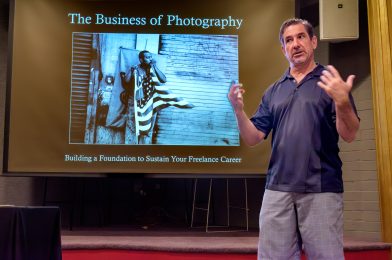
Photographer and educator Todd Bigelow shares real-world insights during the Business of Photography Workshop, hosted by ASMP/Atlanta. A powerful reminder that success in photography isn’t just about your images—it’s about how you run your business.
There’s a question I hear from newer photographers all the time:
“Why should I join an organization like ASMP, NPPA, or PPA? What’s in it for me?”

It’s a fair question, especially when so many resources, communities, and marketing tools are available online for free. But after more than 40 years in this industry, I’ve learned this:
A strong association isn’t just about what you get—it’s also about who you’re becoming.

Let me break that down and explain why I’ve remained a member—and a board member—of these organizations for decades.


What Is the Purpose of a Photography Association?

At its core, a professional association exists to:

  • Advocate for your rights and the future of the profession
  • Educate photographers on the best business and creative practices
  • Create a network of peers and mentors who raise the bar
  • Provide business tools—insurance, contracts, legal templates, pricing guidance
  • Promote ethical standards and professionalism

But it’s also about identity and solidarity. You’re not just a freelancer in isolation. You’re part of a professional class of creatives who believe storytelling has value—and should be protected, respected, and fairly compensated.

You’re not just paying dues when you join ASMP, NPPA, or PPA. You’re contributing to the infrastructure that protects your ability to work, grow, and thrive in an evolving marketplace.


My Journey with NPPA and ASMP

I joined NPPA in 1984 when I was still wet behind the ears in photojournalism. A few years later, in 1987, I joined ASMP as I began taking on more commercial and editorial work.

Both organizations gave me tools I didn’t know I needed at the time—legal knowledge, pricing strategies, ethical guidelines, and a network of seasoned pros willing to share what they’d learned the hard way.

Over the years, I’ve served on both local and national boards, and that experience gave me a new perspective: These organizations only work when members step up to lead, serve, and evolve them.


What It Means to Serve on the Board

Being elected to an association board is not a résumé booster or a vanity title—it’s a responsibility.

A board member must:

  • Show up prepared
  • Represent the full membership, not just personal interests
  • Engage in hard conversations
  • Help set policies, make decisions, and execute initiatives
  • Be willing to do the work between meetings

The best board members listen well, lead by example, and build trust in the broader community.

And let me be clear: Ideas are cheap. Action is costly. If you serve on a board, it’s not enough to speak up—you’ve got to follow through.


Advocacy Is Essential—But Not the Whole Picture

One of the biggest strengths of NPPA and ASMP is their ongoing advocacy for photographers’ rights.

These aren’t just symbolic efforts. They’ve led to fundamental, lasting changes that benefit the entire photography industry, not just members.

Take NPPA’s work on drone regulations, for example. When the FAA’s Part 107 Drone Rules were being developed, NPPA was one of the only organizations advocating for journalists and visual storytellers. Their efforts helped ensure that the drone certification process allowed for legitimate use by photographers and videographers in newsgathering and documentary storytelling, without excessive barriers. Today, we fly legally thanks partly to their behind-the-scenes work with the FAA. (More here)

On the business side, ASMP has long been a leader in educating creatives about contracts, licensing, and intellectual property. Their push for fair business practices—including guidance on usage fees, indemnity clauses, and copyright registration—has elevated how professionals negotiate and protect their work. Many of us run stronger businesses today because of the standards and sample contracts ASMP has made available for decades.

But advocacy alone isn’t the whole picture. If you only want someone to fight your legal battles, that’s not a complete membership experience.

Their holistic support makes these associations valuable, from business coaching to contract templates to peer mentorship.


Evolving for the Future: From Exclusivity to Inclusivity (with Standards)

Some associations were seen as exclusive clubs—gatekeepers of knowledge, access, and status in the early days. That model no longer serves the profession.

Today, photography associations must be:

  • Inclusive in their outreach
  • Welcoming to new voices and perspectives
  • Supportive of underrepresented communities in the industry

But inclusive doesn’t mean anyone can join without standards.

Every member should uphold core principles—ethical practice, creative responsibility, and professionalism. Associations should create pathways for newer photographers to qualify, not barriers to keep them out.

We grow stronger not by shrinking the circle, but by inviting more people in and giving them the tools to succeed.


So, Why Should You Join?

If you’re starting, joining an organization like ASMP or NPPA gives you access to:

  • Contracts and business tools that protect you
  • Legal insights and templates that save you money and stress
  • A network of working professionals who can help you grow
  • Continuing education opportunities you won’t find on YouTube

If you’re established, membership lets you:

  • Please pay it forward by mentoring others
  • Stay up to date with evolving legal and ethical standards
  • Shape the future of the profession by participating in leadership
  • Be part of a voice that advocates for our rights at the national level

Final Thoughts

I’ve been doing this long enough to know that no association can meet every need. But I also know this:

You can’t complain about the direction of the profession if you’re not willing to help steer the ship.

Organizations like ASMP and NPPA only work when professionals like you and me show up, contribute, and take responsibility for our collective future.

Let’s stop thinking of membership as a subscription and start thinking of it as a shared investment in the profession we love.

Would you like help choosing the right association for your needs or figuring out how to get more involved? I’d be happy to discuss your options.

Tagged :

Why the Infinite Mindset Matters for Photographers and Freelancers

Reading Time: 2 minutes

As a freelance photographer and visual storyteller, it’s easy to fall into the trap of thinking we compete for jobs, fight for exposure, and try to be the best. But here’s a thought that changed the game: business is not a finite game with winners and losers. It’s an infinite game where the goal is to keep playing and growing.

This idea comes from Simon Sinek’s concept of the infinite mindset—and it’s especially powerful for photographers, videographers, and other creative freelancers.

1. You’re Not Trying to Win Clients—You’re Building Something That Lasts

In a finite mindset, success looks like closing a deal, getting the biggest paycheck, or booking the biggest name.

But when you think infinitely, the question becomes:

“How do I build a career—and a reputation—that keeps me doing meaningful work for the long haul?”

That shift changes everything: how you price your work, build relationships, and position your brand. You’re not chasing short-term wins. You’re investing in long-term value.

2. Your Real Competition Isn’t Other Creatives—It’s Irrelevance

The freelance world is full of comparison traps. But with an infinite mindset, you stop trying to “beat” others and focus on staying relevant and helpful.

Ask yourself:

  • Am I growing in my craft?
  • Am I better at telling stories today than I was last year?
  • Am I adapting to what my clients need?

That’s the race worth running.

3. Your “Just Cause” Is More Powerful Than Your Portfolio

One of the hallmarks of an infinite mindset is having a Just Cause—a purpose that drives what you do beyond money or recognition.

Mine is simple: helping organizations tell their stories well to serve their communities better.

That mission gives direction to every decision, attracts the right clients, helps me say no to projects that don’t align, and fuels the work I do with nonprofits, ministries, and businesses that are in this for the right reasons.

4. It Reframes Failure

When you’re playing an infinite game, losing a gig or a client isn’t failure. It’s feedback. It’s part of learning. It’s part of becoming more resilient.

Instead of asking, “How did I lose?” try asking, “What did I learn?”

That slight shift creates a whole lot more freedom.

5. You Make Decisions That Prioritize Longevity

A finite mindset says:

“I’ll undercharge just to land this job.”

An infinite mindset says:

“I want to build a business that lasts, with clients who value what I bring to the table.”

That means:

  • Pricing for sustainability
  • Creating repeatable systems
  • Building trust with clients over time

Stop thinking about this month’s income and start building a future.


Final Thought:

I’ve learned that my best work happens when I think long-term—helping clients tell powerful stories, not just for one campaign but to shape their brand for years.

The infinite mindset isn’t about being the best. It’s about getting better and staying in the game.

If you’re a creative professional looking to build a career with purpose, this mindset might be the shift you didn’t know you needed.

Let’s keep playing the game that never ends.

Tagged :

Be Prepared: What To Do If Your MacBook Pro Has a Meltdown

Reading Time: 2 minutes

Well, today didn’t go as planned.

Instead of spending my workday creating stories or editing videos, I fixed my MacBook Pro. Again.

This morning, I opened my laptop and was greeted with a warning: “Your disk is almost full.” Sound familiar? The crazy part? I had about 1.5 TB of free space on my 2TB internal SSD. So what happened?

Something corrupted the “Macintosh HD – Data” volume like last year. It made the system think I only had 5.8 GB of space left, which locked everything up: no saving or updating. I had a machine with storage, but it couldn’t see.

What I Had to Do

Once this happens, there’s only one way out:

  1. Erase the internal drive.
    Yep, all of it. Completely reformat the disk.
  2. Reinstall macOS.
    This part takes a little time, but it’s straightforward.
  3. Restore from a Time Machine backup.
    This is where having a solid backup plan pays off. I had a full-time machine backup on my NAS (Network Attached Storage) device. A NAS is like your own personal cloud—a hard drive (or multiple drives) that connects to your network and lets you store, access, and backup files from any device in your house or studio.

Restoring from Time Machine is smooth, but it’s not fast. Between all the steps—erasing, reinstalling, and restoring —this whole process takes up most of a workday. That’s time I should’ve spent on client projects; that’s billable time I can’t get back.

Lessons Learned (Again)

If you’re a creative or business professional who relies on your MacBook Pro every day, here are a few takeaways:

  • Always have a current backup. I recommend a Time Machine backup to a NAS, external hard drive, or both.
  • Know how to boot into macOS Recovery Mode. Press Command + R during startup.
  • Plan for lost time. Even when you’re backed up, you’ll likely lose an entire day restoring everything and getting your setup back to normal.
  • Consider using Disk Utility regularly to check and repair your drive. It might help you catch an issue before it becomes a disaster.

The Bottom Line

You can’t prevent every issue, but you can be prepared. If this ever happens to you—and trust me, it might—having a reliable backup system could be the difference between a quick recovery and a complete meltdown.

I didn’t lose any files, and that’s a huge win. But I did lose a day of productivity. Hopefully, sharing this saves you from the same.

Tagged : /

Successful Self-Promotion for Photographers in 2025: A Practical Guide

Reading Time: 4 minutes

If you’re a photographer trying to stay relevant and profitable in 2025, you already know just being “good with a camera” isn’t enough. The photographers who thrive today aren’t just capturing images—they’re building trust, solving problems, and promoting themselves personally, strategically, and consistently.

As someone who’s spent decades helping others tell their stories, here’s how I’ve learned to successfully self-promote in a way that builds long-term relationships and opens new doors.

Know Your Audience

Start here: Who do you want to reach?

If you’re like me, your ideal clients are nonprofits, faith-based groups, or small businesses that need strong brand messaging. These clients are often overwhelmed, understaffed, and unsure how to communicate visually. They don’t need someone to “take photos”—they need someone to help them connect.

So make sure everything about how you present yourself speaks to that. Your audience needs to know:

  • You understand their mission.
  • You’ve helped others like them.
  • You’re someone they can trust with their story.

When your message speaks directly to their world, it becomes about them, not just you.

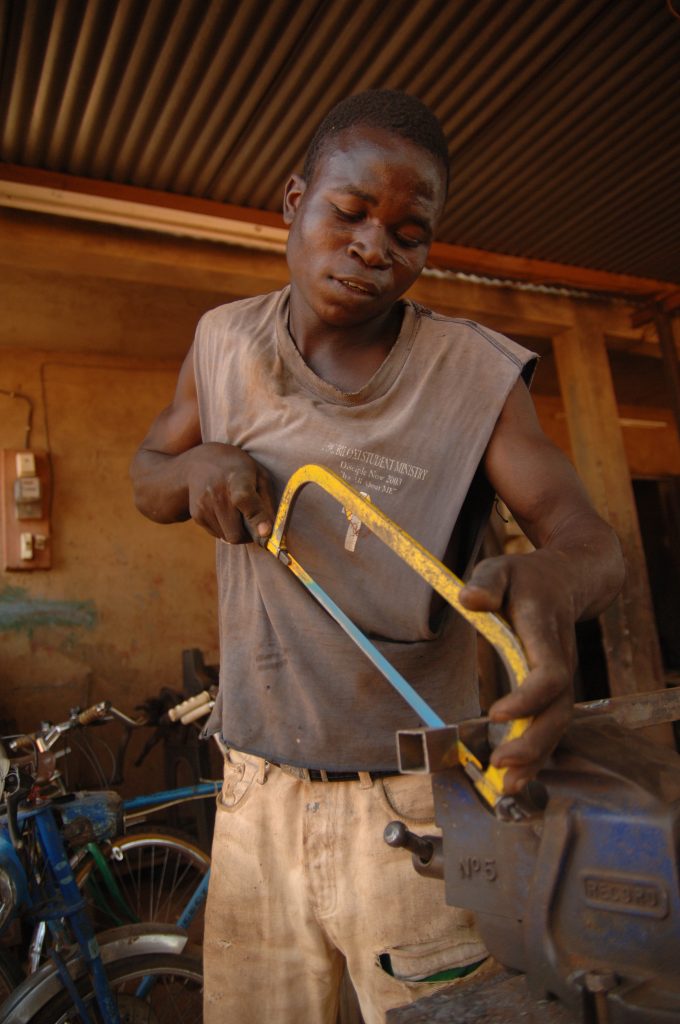
Ya Ya Sebre repairs motorcycles in his workshop in Garango, Burkina Faso. He uses his skills to serve his community and support his family in West Africa.

Identify and Solve Their Problems

A promotion that works starts with empathy.

Think about the actual pain points clients bring to the table. Maybe they’re struggling to get donors to engage, or their social media feels flat. Perhaps they’ve worked with other photographers who delivered technically OK photos, but missed the emotional connection.

What you’re offering is a solution. You’re helping them:

  • Communicate value to their audience.
  • Connect emotionally with supporters or customers.
  • Build consistency across their visual brand.

Your messaging should reflect that on your website, blog, emails, and in person.

A team of local and visiting surgeons collaborates during a procedure at Hôpital Baptiste Biblique in Togo. This mission hospital blends compassionate care with surgical excellence, serving as a vital lifeline for thousands in West Africa.

Structure Your Portfolio for Their Needs

Most photographers build portfolios that show what they like to shoot. However, effective self-promotion means showing what your clients want to see.

Instead of a general “highlight reel,” think about case studies. Break your portfolio into categories like:

  • Brand Storytelling for Nonprofits
  • Faith-Based Projects
  • Event Coverage with a Mission
  • Executive and Environmental Portraits

Show variety, but also show depth. For each gallery, include a short paragraph about the client’s challenge, your approach, and the result. A powerful image with a brief story goes much further than a grid of 20 random shots.

Promote Yourself—Consistently and Intentionally

In today’s market, it’s easy to fall into the trap of thinking you must always be everywhere. Instead, aim to be intentional in the ways that matter most.

Snail Mail
Surprise still works. A professionally printed postcard with a handwritten note has a much higher open and response rate than another email in their inbox. Use it to highlight a recent campaign or image series relevant to their mission.

Email
A well-crafted newsletter—once a quarter or once a month—is a great way to stay top-of-mind. Ensure it’s more than “look at my latest shoot.” Offer value: a quick tip on storytelling, a link to a behind-the-scenes post, or a short story of a client’s success.

Blog and Website
Consider your blog your voice when you’re not in the room. Write posts that answer the kinds of questions your clients are already asking:

  • What makes a good storytelling photo?
  • How do visuals help with fundraising?
  • What do we need to do before the shoot?

Ensure your website leads people somewhere: either to contact you, download something helpful, or read more about your process.

Networking and Speaking
This still works better than anything else, especially in the nonprofit and small businesses. Offer to give a short talk on storytelling at a local church, business group, or creative meetup. Speak from experience. Don’t sell. Teach.

You’re not just a vendor—you’re a guide. And the more people see you that way, the easier it is for them to say yes.

Golden hour over Ocean Isle Beach, North Carolina—where the Atlantic meets a peaceful island community. This aerial view captures the harmony of coastline, homes, and marshland in one perfect summer evening.

Choose the Right Images to Reinforce Your Message

Images matter as much in your self-promotion as in your client work. Choose photos that reflect both skill and purpose.

Here are the types of images to pull from your website and blog:

  • Emotion-rich moments from nonprofit or missionary stories. Show connection, not just action.
  • Before-and-after branding examples—how a campaign improved with visuals.
  • Behind-the-scenes photos of you working, especially in faith or storytelling contexts.
  • Photos with real people, real impact—portraits of clients or community members engaging with your work.
  • Close-up emotional moments that visually reinforce the message of your post.

These aren’t just portfolio pieces—they’re proof of concept. They show that you understand how to capture images that do something.

Final Thought

Self-promotion doesn’t have to feel awkward or self-serving. Knowing your audience and speaking directly to their needs becomes something much more powerful: an invitation to collaborate.

You’re not just saying, “Look at what I’ve done.” You’re saying, “Here’s how I can help you tell your story.”

And that’s what people will remember.

Tagged :

Clarity Through Connection: What Great Teachers and Leaders Share

Reading Time: 2 minutes

Great teaching doesn’t just transfer knowledge—it builds trust, invites vulnerability, and creates space for laughter. Here’s a fun moment with students and staff from the YWAM School of Photography in Kona, Hawaii, where we didn’t just learn photography—we learned how to lead by showing up as ourselves.

“The best teachers translate complexity into clarity, not by simplifying the subject, but by personalizing the path.”
Stanley Leary

Over the years of teaching photographers, videographers, and storytellers from all walks of life, I’ve learned that people don’t just need simplified information-they need relevant understanding. Whether helping someone understand lighting or guiding a nonprofit through brand strategy, I’ve seen that people needn’t just simplified information—they need relevant understanding.

Albert Einstein put it this way:

“If you can’t explain it simply, you don’t understand it well enough.”

It’s a great benchmark. But here’s the next step: just because something is simple to you doesn’t mean it’s clear to them. That’s where personalization comes in.


Teaching vs. Leading: Who Needs to Personalize?

A workshop teacher works face-to-face with learners, adjusting explanations to match different learning styles. One person may need visual examples, another might learn best by doing, and a third might need the story behind the technique to understand its purpose.

Great teachers observe, listen, and respond—not just with answers, but with adaptation. The best ones know the material, sure—but more importantly, they learn the student.

Now, what about leaders?

They may not be teaching aperture or video timelines, but they are guiding people—staff, partners, clients, or donors—through complex decisions and missions. Clarity still matters, and so does personalization.

A great leader:

  • Shapes the organization’s message to fit different audiences.
  • Communicates vision in a way that each team member can own.
  • Understands when to lead from the front and when to walk beside.

Like the teacher, the leader must also personalize the path.


Don’t Just Simplify—Clarify

It’s tempting to take shortcuts: simplify, eliminate the details, and assume people will “get it.” But that often leads to misunderstanding or disengagement.

True clarity comes from doing translation work—not removing the complexity, but guiding someone through it.

That’s what teaching is. That’s what leadership is. And that’s what storytelling is, too.

Whether you’re standing in front of a classroom or at the head of an organization, the goal is the same:

Help people make sense of what matters—by meeting them where they are and guiding them forward.

Tagged :

The Power of Friendship and Storytelling

Reading Time: 4 minutes

Friendships aren’t just lovely to have—they’re essential. Research consistently shows that strong social bonds improve physical health, mental well-being, and longevity. Friendships help us live longer, manage stress better, and give us a sense of purpose.

Simon Sinek, the leadership author known for books like Start With Why and Leaders Eat Last, has been thinking a lot about this lately. While he hasn’t yet released a whole book on the topic, he’s shared in interviews and blog posts that he’s become increasingly obsessed with friendship. He discusses how real friendships are the foundation of trust, connection, and good leadership.

As someone who works in visual storytelling, I’ve seen how photography and video can celebrate, reinforce, and deepen those connections. It’s one of the most meaningful uses of our craft—capturing the small, unrepeatable moments that define our closest relationships.


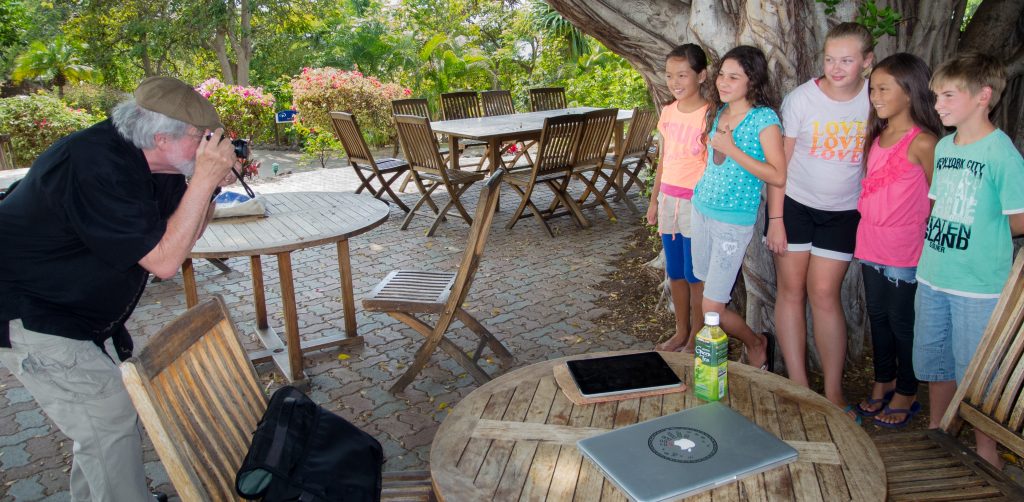
With nothing but his camera and a warm smile, Bill Bangham made instant friends. These kids walked right up to him and offered him tea. Soon after, he captured their portrait—shared moments, trust exchanged, all in a few frames.

Photography: A Celebration of Friendship

Taking photos of your friends isn’t just about making memories. It’s a form of honoring them. It says: “You matter. This moment with you matters.”

Here are some powerful ways photography and video can strengthen and celebrate friendships:

  1. Capture the candid, everyday moments together.
  2. Document your shared adventures—whether a road trip, mission trip, or just a weekend lunch.
  3. Make portraits of each other that you both feel good about.
  4. Show each other how you see one another through your lens.
  5. Create albums or reels that remind you how far you’ve come together.
  6. Revisit old photos to reflect on growth and shared history.
  7. Take video clips of conversations or moments that are often forgotten.
  8. Celebrate milestones together—birthdays, graduations, reunions, or just surviving a hard week.
  9. Turn ordinary hangouts into documentary-style reflections of your friendship.
  10. Being present with a camera says, “This is worth remembering.”

The Real Tip: Photo Reciprocity

Here’s something I’ve learned as a visual storyteller and as someone who archives personal photo collections for families: your collection becomes more powerful when it includes your friends’ perspectives.

Two clients had children who went on the same Spring Break mission trip in 2005. One of the boys gathered photos from all his friends on that trip. I believe he also shared his own with them. Because of this exchange, his family had far more images of their son—photos of him, not just the ones he took.

When we only keep our perspective, we miss half the story. But when our friends take photos and share them with us, we see ourselves through their eyes—and that’s a powerful gift.

So here’s my advice: ask your friends to photograph you. Then swap, trade perspectives, build shared albums, and celebrate each other.


How Sharing Photos Builds Connection

After the rise of Facebook and Instagram, something unexpected happened: we started seeing photos of ourselves we didn’t know existed. Moments from a mission trip, a birthday party, or even just sitting in a coffee shop—all captured by someone else.

This helped us feel more seen, more included. Some studies suggest that people sharing photos with friends feel more connected. Even sharing lighthearted images like pet photos or travel snapshots has increased emotional closeness.

When you see yourself in your friend’s story, something changes. The relationship grows deeper. You start to see how others value you, not just how you see yourself.


Ways to Share Photos with Your Circle of Friends

Here are some easy ways to turn your photo habits into a friendship-strengthening tradition:

  • Create a shared album where everyone adds their best photos each month.
  • Host a photo night and swap prints or slideshows.
  • Send surprise prints in the mail.
  • Start a digital picture frame rotation where you preload your favorite moments for each other.
  • Keep a running photo journal together in a private social media group.
  • Build an annual photo book or scrapbook that you all contribute to.

Celebrating Customers with Photography

This same principle applies in business, too. I’ve visited restaurants that take photos of their guests and hang them on the wall. It’s not just décor—a visual celebration of their community. These walls of smiling faces invite new customers in and remind regulars that they’re appreciated.

Today, that’s moved mostly to social media. Businesses share customer photos online, creating digital versions of that wall.

If you run a business and want to do this well, here are a few tips:

Do:

  • Always get permission before posting.
  • Use a consistent style or frame to make your images feel on-brand.
  • Celebrate your customers, not just yourself.
  • Refresh your content often so it doesn’t get stale.
  • Make your customers feel like VIPs when they’re featured.

Avoid:

  • Posting without consent or using photos out of context.
  • Letting the feed get outdated or inconsistent.
  • Posting poor-quality images that don’t reflect well on your brand.
  • Ignoring customer engagement in the comments or messages.

Done right, these photos can turn casual customers into lifelong fans.


Final Thoughts

As a storyteller and brand builder, I believe professionals don’t tell some of the best stories—they’re lived and captured by friends.

So don’t just take photos of your friends. Ask them to do the same for you. Share them. Celebrate one another. Archive your friendships as you would a legacy—because that’s what they are.

Want to build deeper bonds? Please pick up your camera and hand it to your friend.


Tagged :