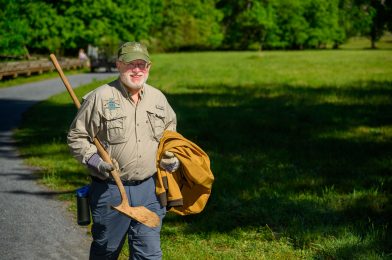
Most companies know the value of a good story, but do not know how to tell their own story. Leary has a process to find and tell stories that communicate how they change lives, so that their companies grow again.
Some of his clients include Chick-fil-A, Newell-Rubbermaid, Coke, Georgia Tech, and The Carter Center.
Leary’s work has taken him across the United States and beyond — to Chile, Peru, Burkina Faso, Canada, France, Ghana, Guatemala, Haiti, Honduras, Mexico, Nicaragua, Portugal and Romania.
The experiences of this award-winning communications allow him to engage audiences with storytelling that builds organization’s brand. His U.S. clients find that ability translates into making their messages cross-culturally relevant with diverse American audiences and within the mainstream media.
Prior to forming his own company, Leary worked on staff for The Hickory (N.C.) Daily Record and theCOMMISSION magazine in Richmond, VA. For nine years he was on staff with PR team at Georgia Institute of Technology, Atlanta, Ga.
Leary is also a teacher. He enjoys sharing his expertise with others. He has taught storytelling and brand building at Grady College of Journalism and Mass Communication, University of Georgia, Athens, Ga.; The University of the Nations, Kona, Hawaii; Reinhardt College, Waleska, Ga.; Berry College, Rome, Ga.; Portfolio Center, Atlanta, Ga.; and Dallas (Texas) Baptist University.
He also has been a guest lecturer at World Journalism Institute, Washington, D.C.; Southwestern Photojournalist Conference, Fort Worth, Texas; Art Institute of Atlanta, Ga.; American Society of Media Photographers. Atlanta (Ga.) Chapter; and the Southeastern Photographic Society, Atlanta Ga.
Clients often contract him to teach their staffs to become more visually effective in building their brand.
Leary lives in Roswell, Ga., holds degrees in social work and communications, and is married to Dorie Griggs. They have three children.
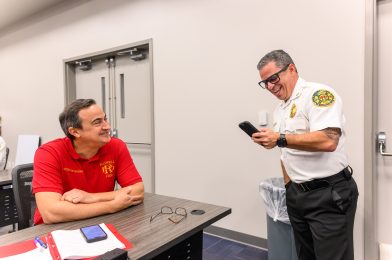
Ryan Rucker and Dorie Griggs, Chaplain for the Roswell Fire Department, share a genuine reaction as another story unfolds across the table—one of those moments where laughter, memory, and years of brotherhood all meet in a single expression.
There’s something powerful about being in a room filled with people who have spent decades running toward danger while everyone else was running away.
The 2026 Ole Timers Dinner with the Roswell Fire Department wasn’t just another annual event. It was a living reminder that brotherhood doesn’t end when the uniform comes off. For many, this gathering—known in past years as the Retirees Oyster Dinner—is a reunion of stories, shared sacrifice, and deep respect.
Why I Focused on Candids
Most of the photos I captured that night were candid.
That was intentional.
When you’re documenting an evening like this, the real story isn’t in people looking at the camera. It’s in the handshake that turns into a two-handed grip. The laugh that erupts after someone says, “Remember that call when…” The quiet moment when two retirees lean in close, heads bowed together in conversation.
Those unscripted moments are where you see the brotherhood.
Posed photos have their place—and I’ll get to that—but the heart of the night lives in those in-between frames. The ones where no one is performing. They’re just being who they’ve always been with each other.
The Group Photos: Organized Chaos
At the end of the evening, we pulled everyone together for two group portraits:
One with just the retired firefighters
One with current staff joining them
These photos matter. They’re historical records. Years from now, someone will look at those images and say, “That was our crew.”
But let me tell you—the hardest part of the night wasn’t lighting or camera settings.
It was getting everyone staggered enough so we could see every face.
The retired firefighters of the Roswell Fire Department gathered together—decades of service standing shoulder to shoulder once again. To make a group this size work outdoors at night, I brought in studio strobes. They recycle quickly and produce enough power to evenly light a large group in a single burst, helping me freeze the moment while keeping faces sharp, visible, and connected.
My wife, Dorie Griggs, who serves as Chaplain for the department, was right there helping organize and encourage everyone. Even with her support, it takes patience. Firefighters are used to moving with purpose—not necessarily holding still while a photographer fine-tunes spacing.
And then came the baseball caps.
They had just handed out caps to everyone, and of course, people wanted to wear them for the photo. I don’t blame them—it’s part of the story. But caps change everything when it comes to lighting.
Normally, I’d raise my lights high enough to avoid the front row casting shadows on the second row. But with hats, if the lights are too high, the brims throw shadows over eyes. So I had to lower the lights.
Lower lights mean staggering becomes even more critical.
So I went down the line. Adjusted shoulders. Asked a few to shift left. Encouraged others to step back half a foot.
The entire group—retired firefighters alongside current leadership staff of the Roswell Fire Department—together in one frame. Past and present, all connected by the same calling to serve and protect the community.
We got it set.
And then, naturally, people moved.
That’s just part of photographing a large group. You do your best. You refine. You shoot multiple frames. And you accept that perfection is rarely the goal—connection is.
Double-click on the images to see them larger.
More Than a Photo
In the end, the images aren’t about flawless alignment or perfectly lit faces.
They’re about legacy.
They’re about men and women who built a culture of service in Roswell. They’re about shared history. They’re about the kind of bond that only comes from walking through hard things together.
It was an honor to document a night that celebrates not just years of service—but a lifetime of impact.
And if you look closely at those candids, you’ll see it.
Jasmine Montgomery stands at the front of the room, naming nearly 400 team members from memory — one by one — as their faces appear on the screen behind her. In a department built on serving others, this moment quietly reminds everyone that they, too, are known.
There are shoots where I’m simply documenting what happens — and then there are the ones where I feel the heartbeat of a team through the lens. The Support Desk Kickoff for Chick-fil-A’s Help Desk team was the latter.
This department started in 2016 with just three people. Today it’s nearly 400 strong. A growth story like that is impressive on paper, but what’s even more powerful is how they experience each other as individuals every year at this kickoff — celebrating what they’ve accomplished together and revisiting their mission and goals for what comes next.
And my job isn’t just to document it. It’s to capture the emotion that drives it.
A Tradition Worth Photographing
For the past four years, there’s been a moment in this gathering that always stops me in my tracks.
Someone stands at the front of the room and names everyone in the organization from memory. Headshots are projected on a screen, and one by one — nearly 400 people — are called out by name. It started with their director in the first year. This year, a new person carried the tradition forward flawlessly.
I don’t know if you’ve ever really witnessed the power of hearing your own name said aloud in a room full of peers, but the body language, the smiles, the subtle nods — it tells a story of belonging that most corporate settings barely touch, let alone celebrate.
Jon Gordon stands beneath the covers of his bestselling books projected behind him — a visual reminder that the principles he teaches about leadership and positive culture aren’t just ideas, but messages that have resonated with teams around the world.
Jon Gordon on Positive Leadership
As part of the kickoff this year, their keynote speaker was Jon Gordon, a 15-times bestselling author and one of the world’s most sought-after speakers on positivity, leadership, team culture, and helping organizations move forward together. His work emphasizes how positive leadership and shared purpose fuel engagement in teams of all kinds — from Fortune 500 companies to non-profits and service organizations like this one.
In a close-up moment, Jon Gordon’s expression says it all — conviction, energy, and a deep belief that leadership begins with mindset. You could feel the room leaning in.
I capture a lot of keynotes. But with someone like Jon, you can feel the room shift — not because of theatrics or shock value, but because his message connects with people. When the speaker’s message aligns with the team’s mission in front of you, the emotional impact is far easier to see through a camera.
Nearly 400 people gathered in one frame — a team that began with just three in 2016, now standing shoulder to shoulder. I made 28 frames to ensure they had the strongest possible representation of their team, because when this many people come together, every face matters.
The Group Photo That’s More Than a Picture
Every year, I make a large group photo of everyone. This year, it was close to 400 people.
Here’s the part I think most photographers overlook: the moment before and after the shutter clicks is where the emotional story lives.
Every person had their name said from the stage. Then I was on a ladder, elevated above them, capturing a moment where they — as individuals — became a collective.
That’s where purpose becomes visible. That’s where belonging becomes tangible. That’s where your lens does more than record — it reflects what it feels like to be seen and known.
When the photo booth lights came on, no one hesitated — they leaned in, pulled each other close, and made sure everyone fit in the frame. Moments like this say more than any mission statement ever could. They genuinely enjoy working together, and that joy shows up not just in how they serve others, but in how they show up for each other.
More Than a Photographer — a Witness
Over the years, I’ve been to this event more than a few times. What’s become clear isn’t just the growth of the team, or the traditions they honor — it’s how consistently they show up for one another.
And how do I know that?
Year after year, after the shoot is over, people walk up to me and say my name. No introduction. Just recognition — a “thank you” that tells me they remember me being there. That I saw them.
That’s an honor. And it’s one of the quiet reasons I do this work.
Aftershoot assigned this image a 4-star rating during culling, even though it is out of focus.
A few days ago, I shared my one-month review of Aftershoot and mentioned that I was planning to purchase it.
After completing several more projects with it, I need to update that recommendation.
I no longer recommend Aftershoot.
When I first tested it, I was hopeful. The idea of saving time on culling and basic edits is appealing to any working photographer. But the more real-world projects I ran through it, the more I realized I couldn’t trust the results.
The Culling Problem
The biggest issue is culling.
In multiple shoots, Aftershoot gave five-star ratings to images that were clearly out of focus. I’ll include one example below. An image that no client would ever receive was ranked as a top selection.
That alone is concerning.
But even beyond focus, it consistently chose the wrong “best” image in a series. In groupings where I had subtle variations—expressions, micro-movements, peak moments—it often picked the weaker frame.
That meant I couldn’t trust it.
And if I can’t trust it, I have to double-check everything.
Once I’m reviewing every image again to make sure nothing important was missed—and correcting its “best” selections—I’m no longer saving time. In fact, over the past few projects, I believe I’ve spent more time re-checking its work than if I had simply culled the job myself from the start.
I also found many images that should have been selected as top choices but weren’t flagged at all.
Editing: Adequate, But Basic
As for editing, it’s acceptable in a very general sense.
If your goal is something similar to dropping your film at a one-hour lab and letting them process everything evenly, it can get you in that direction.
But that’s not how I work.
My editing relies heavily on selective masks—subject masks, gradients, sky selections, landscape separation, and nuanced refinements in Adobe Lightroom. Aftershoot’s adjustments are broad and basic by comparison.
It doesn’t think the way I think when refining an image.
And that matters.
The Bottom Line
If I must go back through every image because I don’t trust the culling… If it misses peak moments… If it rates out-of-focus images as top selections… And if the editing doesn’t significantly reduce my workflow time…
Then it’s not helping me.
It’s adding friction.
So I need to correct my earlier statement: I will not be purchasing Aftershoot.
I always want to be transparent about the tools I test. When something works, I’ll say it. When it doesn’t—especially after extended real-world use—I’ll say that too.
If you’re considering it, I would strongly encourage you to run extensive tests on your own real assignments before committing.
I’ve been using Aftershoot for the past month during the free trial period, and I’ve decided to subscribe. That alone tells you something.
The short answer to the big question: Does it save time? Yes. It does.
But let’s unpack that.
Where Aftershoot Really Helps
Aftershoot is very good at the technical side of culling:
Identifying out-of-focus images
Flagging closed eyes
Catching exposure issues
Grouping similar images together
The grouping feature alone is a major time-saver. When I’m covering an event and shooting bursts, it quickly stacks near-duplicates so I can compare and choose. That reduces the mental fatigue that comes from clicking through hundreds of similar frames.
It’s efficient. And when you’re processing thousands of images from an event, efficiency matters.
The Biggest Weakness: The “Decisive Moment”
What it does not do well is choose the decisive moment.
That’s the difference between a technically correct photo and the image that actually tells the story.
For example, if I’m covering an event and there’s a prayer moment, people closing their eyes is not a mistake—it’s the story. The software often flags them as rejects because it sees “closed eyes” as a flaw. From a technical standpoint, that makes sense. From a storytelling standpoint, it doesn’t.
The good news? It’s easy to go back through the rejected images and recover what you need. But it reinforces something I already believed:
You still need a human eye.
AI Editing: Solid, But Not Finished
The AI editing is adequate. It gives you a usable starting point, especially for event coverage where speed matters.
However:
AI masking is not very strong yet.
Cropping isn’t very good.
Image straightening is inconsistent.
For event work, I still need to go in and refine quite a bit. For something like studio headshots, it might be sufficient—or at least much closer.
But for storytelling work where nuance matters, I’m not handing over final judgment to software.
So… Is It Worth It?
Yes—because of the time savings.
It dramatically reduces the first-pass workload. Instead of starting from scratch, I’m starting from an organized, filtered set of images. That’s valuable.
Do I trust it blindly? No.
Do I believe AI will improve over the next few years? Absolutely.
But as of February 2026, my experience is this:
Aftershoot is a strong assistant—not a replacement for a storyteller.
Over the past couple of years, the storage market has shifted from a long price decline (where SSDs and memory cards steadily got cheaper) to a period of rapid price increases across the board:
Key Trends
● 2023–2024: SSD and NAND flash pricing began stabilizing after years of decline as oversupply receded. ● 2025: NAND flash spot prices started climbing sharply — some reports show NAND wafer costs more than doubling in six months — and consumer SSD prices rose in response. ● 2026: Price increases accelerated:
NAND flash up ~65% in early 2026 alone on key products.
Kingston reported a 246% increase in NAND wafer costs year-over-year.
Production for much of 2026 has been pre-sold to large buyers, tightening available retail stock.
Memory cards (SD, microSD, CFexpress) also feel the pressure, because they are built on the same NAND flash technology. Some reports suggest prices for a 128 GB card that were $25–$30 in early 2025 could approach $50–$60 by mid-2026.
What’s Driving the Price Spike?
1. Memory Shortages Replacing Oversupply
In 2024–2025, memory markets swung from oversupply to shortage, largely because manufacturers cut back production of mainstream DRAM and NAND to rebalance profit margins.
2. Data Centers & AI Demand Dominating Supply
The biggest shift has been data center demand — particularly from AI workloads. Hyperscale compute clusters need huge amounts of:
high-performance NVMe SSDs, and
advanced NAND flash.
This demand consumes a disproportionate share of global memory output, leaving less for consumer SSDs and camera memory cards.
Many memory fabs have pre-committed production capacity to AI and cloud customers, effectively locking in supply years ahead.
3. Manufacturers Reallocating Production
Leading memory makers like Samsung, SK Hynix, and Micron are prioritizing:
High-bandwidth memory (HBM) for AI accelerators
Enterprise NVMe SSDs
Server DRAM
Over consumer NAND and SSD production.
Ready-to-Use Price Trend Graph (Data Summary)
Below is a simple graph you can drop into a blog post — it abstracts price shifts for a few representative products over 2024–2026. (These are illustrative based on reported trends; for custom chart creation, you’d replace these placeholders with your real data.)
You can turn that into a visual chart showing steady increases, accelerating in 2025–2026.
What This Means for Storytellers & Creatives
Buy Now — Don’t Wait
Because NAND flash costs are being bid up by huge enterprise customers, and production is largely committed:
Prices are expected to continue rising through 2026, with limited relief until ~2027.
SSD and memory card availability could tighten — especially high-capacity cards and pro-grade SSDs.
If you have planned upgrades or needs coming up within the next 12–18 months, acting sooner rather than later can save you real cash.
Practical Tips for Photographers, Videographers
✔ Prioritize what you really need right now Focus on essentials such as reliable SSDs for your current workflow, and use larger memory cards only if they fit your shoot schedule.
✔ Buy in volume before price increases bite For items you will use—extra cards, SSDs for backups, RAID/NAS storage—purchasing ahead of time locks in lower prices.
✔ Watch for deals, but don’t delay for tiny price dips With ongoing supply tightness, prices may fluctuate week to week, but the overall trend is upward.
✔ Consider alternative strategies If the budget is tight:
Lower-spec SSDs, combined with tools like RAID or hybrid HDD + SSD setups, can help balance cost vs. performance.
Renting high-capacity cards for big shoots (instead of buying them).
Worldwide Price Pressure from Supply & Demand
Primary drivers are global and structural:
AI and data center demand are consuming huge amounts of NAND flash and DRAM memory worldwide. Major manufacturers are allocating more production to high-margin enterprise products, reducing the volume available for consumer SSDs and memory cards. This has tightened supply globally and pushed prices up across regions.
Production cuts by major NAND flash makers also reduce available supply, resulting in less commodity flash entering the retail market worldwide.
Reports show NAND flash pricing—the core component of SSDs and cards—has doubled in some periods, affecting end prices globally, not just in the U.S.
Industry analysts describe this as a global memory supply shortage driven by demand from hyperscale AI infrastructure, affecting consumers across Europe, Asia, Africa, and the Americas.
What this means: SSDs and memory cards have become more expensive all over the world because the raw material (NAND flash) costs more and supply is tight — not because of local pricing in one market alone.
Role of U.S. Tariffs & Trade Policies
Tariffs and trade policy have some influence, but are not the main reason prices are rising:
There were periods—such as in 2025—when U.S. tariff announcements led to stockpiling and contract price shifts, as buyers anticipated future uncertainty in trade costs. This briefly influenced how companies procured memory and accelerated buying, which, in turn, put upward pressure on prices.
Some memory manufacturers have imposed surcharges on U.S. customers due to tariff pressures, which can slightly increase prices in that market.
However, most NAND flash and SSD production occurs in Asia (South Korea, Japan, Taiwan), and global memory pricing typically follows international supply conditions first, with tariffs accounting for only part of distribution costs and not shaping wholesale price direction.
What this means: Tariffs can affect short-term buying behavior and local pricing structures, especially in the U.S., but they aren’t the dominant force behind the multi-year trend of rising storage costs — that’s mainly supply and demand.
The bottom line: Storage prices are rising because the entire memory supply chain is under strain, not just because of tariffs in one market. Prices are climbing across all channels where consumers buy SSDs and memory cards — and the U.S. experience largely mirrors the broader global trend.
Most photographers love the creative side of the craft. Very few love maintenance.
But the truth is this: your camera, your computer, and your workflow are tools. And tools that aren’t maintained will eventually fail you — often at the worst possible moment.
If you want fewer surprises, faster turnaround, and less stress, then it’s time for some house cleaning.
Let’s start where it matters most.
Camera: Clean, Updated, and Ready
1. Keep Your Sensor Clean
A dirty sensor will show up as dark spots in skies and clean backgrounds — and nothing slows down post-production like cloning out dozens of dust spots.
A few practical tips:
Use a rocket blower first. Often, dust is loose and can be removed without touching the sensor.
Enable your camera’s built-in sensor cleaning mode. Most modern cameras vibrate the sensor to shake off dust.
Wet cleaning only when necessary. If you see persistent spots at f/16 or f/22, use proper sensor swabs and cleaning solution made specifically for your sensor size.
Never use canned air. It can spray propellant and cause damage.
Check your sensor regularly. Shoot a photo of a clear sky or white wall at f/16 and zoom in to inspect.
If you’re unsure, a professional cleaning once or twice a year is inexpensive insurance.
2. Always Format Your Memory Cards in the Camera
Deleting images in your computer and reinserting the card may seem fine, but formatting in-camera ensures:
The correct file structure for your specific camera.
Fewer card corruption issues.
Better long-term reliability.
Make it a habit: after confirming your files are backed up in multiple places, format the card inside the camera before the next job.
3. Keep the Outside Clean Too
Your gear says something about you.
Wipe down your camera bodies regularly.
Clean lenses with proper lens cleaner and a microfiber cloth.
Check lens mounts and rear elements for dust.
Keep viewfinders and LCD screens clean.
Use Body Caps, Rear lens caps, and front lens caps.
Not only does this protect your investment, but it also communicates professionalism.
Zarpax is what I use in my Thinktank Rolling cases
6. Store Your Gear in a Dry Place
Humidity is the silent enemy of camera gear.
High moisture levels can cause:
Fungal growth inside lenses.
Corrosion on electronics.
Long-term damage to internal components.
If you live in a humid climate:
Store gear in an airtight case with silica gel packs (replace or recharge them regularly).
Consider a dry cabinet designed for camera storage.
Keep gear off basement floors and away from damp environments.
Protecting your gear from moisture is far cheaper than replacing lenses.
Computer: The Engine Behind Your Work
Your computer is as important as your camera.
Crucial X10 2TB Portable SSD is what I am using now
1. Edit From External SSDs
I recommend keeping your working photo files on fast external SSDs rather than filling your internal drive.
Why?
SSDs are fast.
They reduce strain on your internal drive.
They make projects portable.
If your computer fails, your files aren’t trapped inside it.
2. Always Have a Second Backup (At Minimum)
One copy is not a backup.
I use a NAS system as an additional layer of protection. A NAS allows:
Redundant drives (if one fails, data survives).
Centralized storage.
Automated backups.
Hard drives fail. It’s not “if.” It’s “when.”
3. Cloud Storage Is Your Offsite Insurance
I also store images in the cloud using PhotoShelter.
Cloud storage protects you from:
Fire
Theft
Flood
Physical drive failure
The 3-2-1 rule is simple:
3 copies of your data
2 different types of media
1 copy offsite
4. Keep 20% of Your Main Drive Empty
This is critical and often overlooked.
Operating systems use free space for:
Cache files
Virtual memory (swap space)
Temporary render files
System updates
When your drive gets too full:
Performance slows dramatically.
Applications crash more frequently.
File corruption risks increase.
SSD lifespan can be reduced.
A good rule: keep at least 20% of your internal drive free at all times.
Your computer needs room to breathe.
5. Update Your Operating System and Software — Strategically
Updates improve:
Security
Stability
Performance
Compatibility with cameras and plugins
But again — don’t update right before a job.
Install updates across projects so that if something breaks, you have time to troubleshoot.
6. Maintenance Utilities (For Non-Tech Users)
There are tools that help keep your system healthy:
Mac Disk Utility – Built into macOS. Lets you verify and repair disk permissions and check drive health.
Disk Warrior – Rebuilds directory structures if drives become corrupted.
CleanMyMac (or similar tools) – Removes cache files, temporary files, and unnecessary clutter.
For a novice user, think of these as routine maintenance—oil changes for your computer. They don’t make a slow computer magically fast, but they help prevent avoidable problems.
7. Back Up Your Computer Itself
Backing up photos is not the same as backing up your entire system.
I use Time Machine to back up weekly. Over the years, I’ve had to restore from backup multiple times.
Each time it saved me.
A full restore can bring your system back to life quickly — with software, settings, and files intact.
If you’ve never tested your backup, you don’t actually know if you have one.
[NIKON Z 9, 85mm f/1.8G, Mode = Aperture Priority, ISO 18000, 1/250, ƒ/1.8, (35mm = 85)]
Remembering in the Dark: Why I Put the Zooms Away at the Officer Jeremy Labonte Memorial Vigil
One year ago, Officer Jeremy Labonte was killed in the line of duty while serving the City of Roswell.
This past weekend, the city gathered for a candlelight vigil to honor a promise made in grief: to never forget his sacrifice. The evening was quiet, reflective, and heavy in the way only shared remembrance can be. I was there to document—not just what happened, but how it felt.
That distinction matters, especially in low light.
[NIKON Z 9, NIKKOR Z 100-400mm f/4.5-5.6 VR S, Mode = Aperture Priority, ISO 8000, 1/250, ƒ/5, (35mm = 230)]
Starting with the “Safe” Choice
I arrived around 6:00 p.m. as the light was already fading. Like many professionals, I defaulted to what should cover everything:
Nikon Z9 with the Nikon Z 100–400mm
Nikon Z9 with the Nikon Z 24–120mm f/4
Nikon Z6 with the Sigma 35mm f/1.4 Art
On paper, this gave me reach, flexibility, and redundancy. In reality, it took me only a short time to realize something wasn’t right.
A candlelight vigil isn’t about reach. It’s about faces, emotion, and moments that live in shadows.
[NIKON Z 6, NIKKOR Z 24-120mm f/4 S, Mode = Aperture Priority, ISO 51200, 1/100, ƒ/4, (35mm = 68)]
Realizing the Problem
The vigil unfolded with deeply personal words from Jeremy’s widow, Alyssa Labonte, Roswell Police Chief James Conroy, Jeremy’s parents Roger and Brandi Labonte, Alyssa’s father Ben Porter, and fellow officer Sam Wolfson.
These weren’t moments that needed compression from across the field. They needed presence.
Technically, the issue was obvious:
The 100–400mm tops out at f/4.5–5.6
The 24–120mm is a constant f/4
As daylight disappeared, ISO climbed fast. Yes, the Z9 can handle high ISO remarkably well—but handling noise is not the same as honoring mood.
I walked back to my vehicle and made a decision that felt both technical and intuitive: I took off the 100–400mm and replaced it with my older Nikon 85mm f/1.8.
[NIKON Z 9, 85mm f/1.8G, Mode = Aperture Priority, ISO 9000, 1/250, ƒ/1.8, (35mm = 85)]
The Math Behind the Decision
This wasn’t nostalgia. It was physics.
Compared to the zooms:
f/4 → f/1.8 gives roughly 2.3 stops more light
f/5.6 → f/1.8 gives roughly 3.3 stops more light
f/4 → f/1.4 gives about 3 stops more light
f/5.6 → f/1.4 gives nearly 4 stops more light
[NIKON Z 9, 35mm f/1.4G, Mode = Aperture Priority, ISO 25600, 1/100, ƒ/1.4, (35mm = 35)]
In practical terms, that meant:
ISO 12,800 could become ISO 3,200
Shadows held detail instead of breaking apart
Candlelight looked like candlelight, not digital noise
That’s not a small difference—it’s the difference between documenting an event and translating an atmosphere.
Old Glass, New Purpose
With the 85mm f/1.8 and 35mm f/1.4 primarily on the Z9, something shifted immediately. Faces separated from the background. The falloff felt gentle. The images breathed.
Ironically, one of the surprises came later in post.
When I processed the files in Lightroom and applied Denoise, I was genuinely impressed by some of the images from the Nikon Z6, particularly those shot with the 24–120mm. Modern software is closing gaps we once accepted as hard limits.
[NIKON Z 6, NIKKOR Z 24-120mm f/4 S, Mode = Aperture Priority, ISO 51200, 1/80, ƒ/4, (35mm = 120)]
But software recovery is still recovery.
It can’t recreate light that never reached the sensor.
The Real Lesson
Yes, you can get away with modern zoom lenses at high ISO.
But there is still a clear, undeniable advantage to working with f/1.4 and f/1.8 primes—especially when the story lives in the dark.
[NIKON Z 9, 35mm f/1.4G, Mode = Aperture Priority, ISO 25600, 1/200, ƒ/1.4, (35mm = 35)]
This vigil wasn’t about technical perfection. It was about dignity, remembrance, and respect. Choosing faster glass wasn’t just a gear decision—it was a storytelling decision.
In moments like these, faster lenses don’t just give you cleaner files.
They give you permission to slow down, move closer, and honor the weight of what’s unfolding in front of you.
And sometimes, that’s the most important choice you can make as a visual storyteller.
[NIKON Z 9, 85mm f/1.8G, Mode = Aperture Priority, ISO 25600, 1/125, ƒ/1.8, (35mm = 85)]
I’m becoming more convinced that the most important work we do in life isn’t our job, our craft, or even our calling.
It’s the work we do on ourselves.
Not in a self-help, navel-gazing kind of way—but in a posture of honest self-curiosity.
Who am I, really? What are my gifts? Where am I weak? Where do I still need to grow?
These aren’t just personal development questions. For artists, photographers, and storytellers, they are foundational to creativity itself.
Self-curiosity is not self-criticism
There’s a difference between beating yourself up and being curious about yourself.
Self-curiosity sounds like:
Why did I react that way?
What do I bring into a room without realizing it?
Why does this kind of story pull me in every time?
Why do I avoid certain subjects—or certain people?
Great artists aren’t just observant of the world. They’re observant of themselves in the world.
Your lens, your framing, your timing, your choice of subject—none of that is neutral. It all flows from who you are, how you see, and what you’ve wrestled with.
The discipline of honesty in the lows
When things fall apart—creatively, professionally, relationally—it’s easy to blame circumstances, clients, algorithms, budgets, or timing.
But the deeper work is asking:
How did I get here?
What patterns do I see repeating?
What was my role in this—not to assign shame, but to gain clarity?
That kind of honesty hurts a little. But it’s also where growth begins.
Avoiding those questions doesn’t protect your creativity—it slowly suffocates it.
The rarely-discussed work: curiosity in the highs
We talk a lot about reflection after failure. Almost no one talks about reflection after success.
But the highs deserve just as much curiosity.
Why did this project work?
What was I fully present for here?
What part of myself showed up at my best?
What do I not want to lose the next time things go well?
Unchecked success can harden into ego just as easily as failure can harden into fear. Curiosity keeps both soft. And softness, paradoxically, is where creative strength lives.
A thought on boredom (and why it matters)
I’ve started wondering if boredom isn’t a lack of inspiration—but a lack of self-discovery.
Maybe boredom shows up when:
We’ve stopped asking new questions of ourselves
Our work has become technically competent but internally stale
We’re producing, but not uncovering anything new
Creativity thrives on discovery. And sometimes the next discovery isn’t “out there” in a new location or assignment—it’s in here, waiting for attention.
Why this matters for storytellers
Every meaningful story begins with awareness:
Awareness of others
Awareness of power, pain, joy, contradiction
And awareness of how you interpret all of that
If you don’t understand yourself, your stories flatten. If you don’t examine your wiring, your blind spots show up in your work. If you stop being curious about who you are becoming, your creativity eventually starts repeating itself.
Working on yourself isn’t a detour from the work. It is the work.
A quiet invitation
If you’re feeling stuck, bored, or restless in your creative life, maybe the question isn’t: What should I make next?
Maybe it’s:
What haven’t I been honest about?
What part of myself have I stopped listening to?
What might I discover if I got curious again?
Your best work has always followed your deepest learning. That hasn’t changed.
Ever apologize for something and feel done with it—only to have your brain hit repeat? Yeah… me too. Sometimes, even when I know I’ve done everything I can, my mind keeps replaying the conversation like a broken record.
If you’re autistic, this is pretty common. Our brains are wired to notice patterns, hold onto details, and think deeply about social interactions. That means we sometimes get stuck on things. But here’s the thing: that same wiring also has some serious perks.
The Downside
You replay social moments over and over.
It’s easy to feel guilty or anxious long after the fact.
Moving on can feel impossible—even when you’ve apologized, and there’s literally nothing more to do.
The Upside
You notice details others miss.
You really think about how your actions affect people.
You learn quickly from experiences because you process them deeply.
So yes, sometimes it’s exhausting. But it also makes you sincerely empathetic and super aware—qualities most people wish they had.
This Applies to Everyone
Even if you’re not autistic, we all have quirks that are both a blessing and a curse: perfectionism, hyper-focus, sensitivity, overthinking… You name it. The trick is figuring out when your brain is helping you and when it’s holding you back.
How to Move On Without Losing the Benefits
Call it out: “Okay, brain, I’ve apologized. That’s done.”
Write it down: Journaling or a quick note can mentally close the loop.
Switch focus: Dive into a task, a hobby, or exercise.
Set a timer: Give yourself a set period to reflect, then let it go.
Use it as fuel: Draw on the depth of your thinking to plan or improve next time.
Bottom Line
Your quirks—autistic or not—are powerful. They let you notice, care, and reflect in ways most people can’t. But they can also trap you if you don’t manage them. Recognize the gift. Handle the challenge. And keep moving forward.
After shooting events for most of my life, I’ve learned something that may sound counterintuitive:
The less you move, the better your work—and the better the experience for everyone else in the room.
Don’t get me wrong. I still get up. I still move. I still chase moments. But when I can do my job well from a seated position, I’m far less distracting to the audience and to the production team running the show. That matters—especially when you’re working events with live broadcasts, multiple cameras, and thousands of people in the room.
Over the years, I’ve learned that where you sit can be just as important as what lens you choose.
And this year, a surprisingly simple tool made a bigger difference than I expected: custom Reserved Chair Signs.
Why Staying Seated Matters at Large Events
Whenever possible, I prefer to shoot from a seated position with a clean view of the main stage. I usually choose an aisle seat—ideally on the end—so that when I do need to stand or move for a different angle, I’m not forcing an entire row of attendees to shuffle around me.
It’s about respect.
Respect for the audience who paid to be there. Respect for the speakers on stage. Respect for the production team managing 10+ live cameras, steady cams, jib arms, and broadcast cues.
If I’m constantly popping up in someone’s peripheral vision or crossing sightlines, I’m not helping anyone—even if I’m getting the shot.
The Challenge of Multi-Day Events
Reserving a seat for a one-day event is fairly simple. Multi-day events? That’s where things get tricky.
One of the primary events I cover each year is Chick-fil-A’s annual meeting—an event with over 10,000 operators, staff, and spouses. There’s a massive main stage, breakout sessions throughout the day, and an expo area that everyone disperses to. But each day, everyone comes back to that same main stage.
I’ve worked closely with the production team there for years. Still, when you’re dealing with a crew of 100+ people and constant room resets between sessions, it’s easy for a seat reservation to get lost—or for me to get forgotten in the shuffle.
That usually meant reintroducing myself, re-explaining why I needed a specific seat, or—worse—scrambling at the last minute before the program started.
This year, I decided to solve that problem myself.
Enter: Custom Reserved Chair Signs
I ordered a pack of ten generic Reserved Chair signs from Amazon. Simple. Inexpensive. Nothing fancy.
Then I took them to 92 Threads, the same place I use for logo work on clothing, and asked if they could put my logo on them. They digitally printed my branding directly onto the signs.
The result? Clean. Professional. Clear.
These weren’t “temporary placeholders.” They looked intentional—like they belonged in the room.
Scouting the Right Seat (This Part Matters)
In years past, the stage was round, and I used to reserve two seats on opposite sides so I could adjust based on where the speakers were facing. I wish I had those custom signs.
I arrived the day before and scouted for a great seat.
When choosing your spot, here’s what I always consider:
Distance: You don’t want to be so close that you’re shooting up someone’s nose, and you don’t want to be so far back that you need a super-telephoto just to fill the frame.
Angle: A slight angle is usually better than dead center—especially for storytelling shots that feel more dimensional.
Sightlines: Heads are your enemy. Even one person leaning forward can ruin a shot.
The front middle section was too close for my taste. Instead, I chose the second section, which had a huge 10+ foot gap used by steady cams and foot traffic. That gap gave me breathing room, clean sightlines, and flexibility.
I picked the front row, far-left aisle seat in that section—and placed my Reserved Chair Sign there.
That seat became the home base for the entire event.
An Unexpected Bonus
Something happened this year that genuinely surprised me.
Not only was my seat always there when I arrived, but the operators also began looking for it. Some even wanted to sit next to me.
After 17 years of covering Chick-fil-A’s meetings, that was new.
The sign didn’t just reserve a chair—it quietly communicated:
I belong here
I have a role
This seat serves a purpose
And because I wasn’t constantly moving or disrupting anyone, it actually made people more comfortable—not less.
Less Distraction = Better Storytelling
At the end of the day, this isn’t about claiming territory or being precious about a seat.
It’s about doing your job well without becoming part of the show.
When you can work efficiently, predictably, and unobtrusively:
The audience stays engaged
The production team trusts you
The cameras stay clean
The story comes first
For anyone who regularly shoots large events—especially multi-day ones—custom Reserved Chair Signs are a small investment with an outsized return.
I only wish I’d done it years ago.
All photos shot on Nikon Z9 with either 100-400mm Z or 24-120mm Z
Not long ago, I had the chance to swing by and catch up with an old family friend and fellow photographer: John Payne. John and I share something pretty special — he grew up in the same church where my grandfather was pastor, and I’ve known his family for as long as I can remember. So when my friend Gibbs Frazeur and I pulled into his studio to see his Nikon camera collection, it felt like stepping into a piece of photographic history.
John didn’t just dabble with cameras — he built something unforgettable.
Photo by John S. Payne
A Life Built Around Nikon
John has been a working photographer since 1985 — four decades behind the lens, navigating film and digital, lighting and landscapes, teaching and making images people want to see. That alone is impressive. But what’s even more remarkable is the body of gear he’s collected over the years.
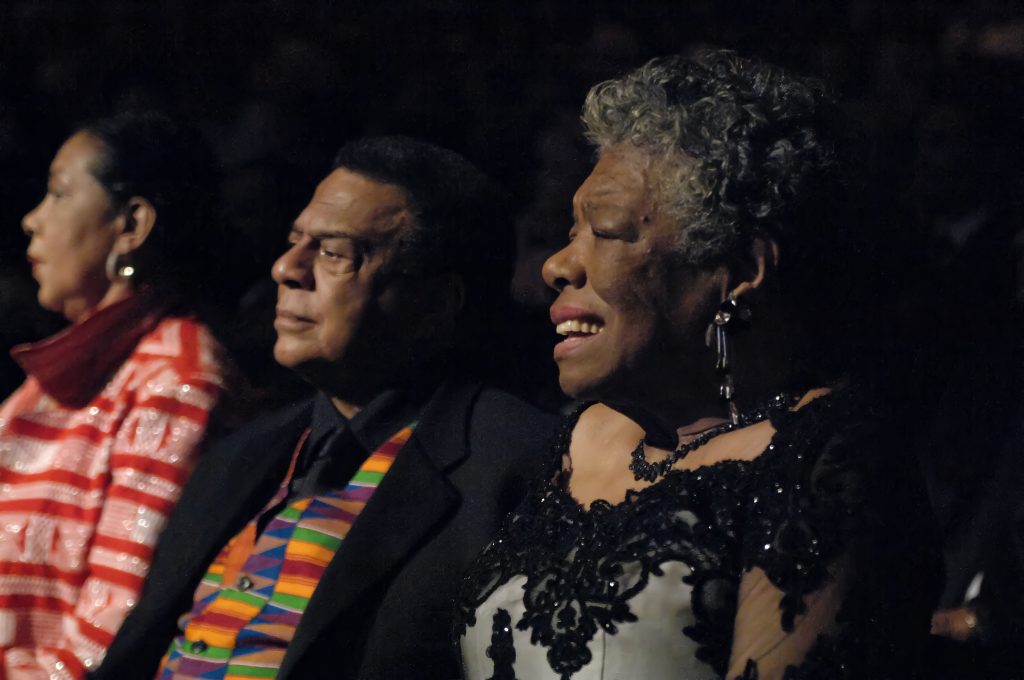
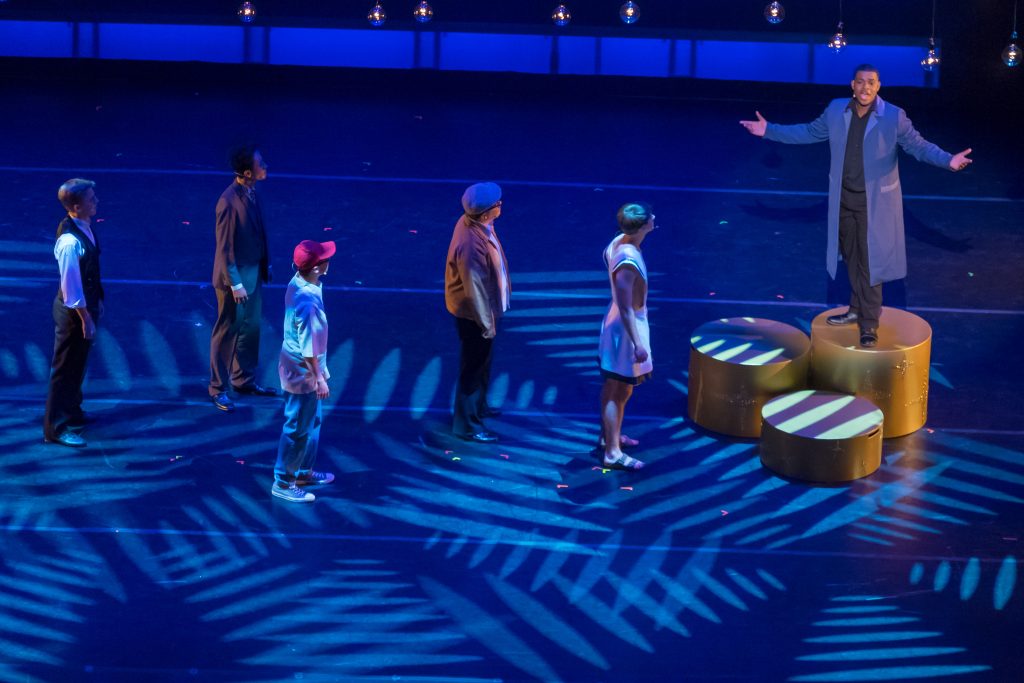

Back in 2017, PetaPixel featured John’s Nikon gear neatly arranged in a “family portrait” that stopped many photographers in their tracks. At that time, his collection included around 150 Nikon cameras and roughly 155 lenses, worth about $150,000 — and that was only a fraction of the whole story.
Since that 2017 PetaPixel article, John hasn’t slowed down a bit. In fact, he told me his Nikon collection has grown to more than double its size since then. That means even more cameras, more lenses, and more pieces of Nikon history carefully preserved by someone who truly understands their value — not just as tools, but as storytellers in their own right. It’s a reflection of John’s ongoing curiosity, his love for the craft, and a career that never stopped evolving, even decades after he first went into business.
Think about that: cameras from nearly every era of Nikon’s storied history — from early SLR classics to pro bodies that defined decades — lay out with the kind of quiet care only another photographer could truly appreciate. I saw a few pieces of that legacy myself during our visit.
Photo by John S. Payne
Beyond the Gear: Memory and Community
Walking through John’s space wasn’t just about gear — it was about roots. I could see the years of passion behind every camera on the shelf, and not just because of the vintage values. These were milestones in his life, markers of stories told, moments captured, and lessons learned.
Conversations with John always circle back to photography as a vocation and calling. For him, Nikon wasn’t just a system — it was a lifelong conversation with light, composition, and human connection. That isn’t something you can pin a price tag on.
John Payne listens to Gibbs Frazeur ask questions about his studio, which is a renovated theater.
Why This Resonates With Me
As someone who has spent decades telling stories through images — and teaching others to do the same — moments like visiting John are reminders of why we pick up cameras in the first place.
It’s not the gear itself. It’s the hands that use them. The eyes that see through them. And the community that grows around them.
Whether you’re just starting out or you’ve been at it for years, I hope you can find a moment like the one I had with John — where the gear becomes a backdrop to the deeper story.
John is showing us some of the work that he uses when teaching at his workstation.
Some weddings are meaningful because of the details. Some because of the emotion. And some because of the history that led to the day.
Maria & Chris’ wedding at Primrose Cottage in Roswell, Georgia was all three.
I’ve been working with Maria’s mom for over 20 years, and along the way, I met Maria on one of those jobs—back when she was still in college. Watching her step into this season of life, surrounded by people who love her deeply, was incredibly special. Being invited to photograph both their engagement session and their wedding day made it even more so.
From start to finish, the day was an absolute blast.
Getting Ready: Where the Story Begins
The day started with Maria and her friends getting ready—those quiet-but-not-really-quiet moments filled with laughter, nerves, music, and a lot of joy. These are some of my favorite moments to photograph because they’re real and unguarded.
Friends helping with dresses, final touches of makeup, hugs that linger just a little longer—this is where the emotional tone of the day really gets set.
First Looks That Hit You Right in the Heart
We had not one, but two powerful first looks.
First was Maria and her dad. Those moments never disappoint, and this one was no exception. The emotion was immediate and honest—the kind you don’t pose or manufacture.
Then came the first look with Chris. The look on his face when he saw Maria said everything. These are the moments couples later tell me they’re so glad they chose to do—quiet, emotional, and just for them before the whirlwind begins.
Double-click the photo to open it in a larger view.
Mother & Bride Moments
Some of the most meaningful frames of the day came from Maria and her mom together—small moments filled with pride, love, and reflection. When you’ve known a family for decades, those images carry even more weight. They’re not just wedding photos; they’re legacy moments.
Ceremony & Emotional High Points
The ceremony itself was filled with emotion—happy tears, deep breaths, knowing glances. You could feel how much Maria & Chris are supported by their community. Photographing moments like these is why I still love what I do after all these years.
Let the Celebration Begin
The reception was exactly what you hope for—great energy, full dance floor, and zero holding back. From the first dance through the open dancing, the joy was contagious.
There was a beautiful cake-cutting, heartfelt toasts, and a special champagne toast shared by Maria & Chris that felt intimate, even in a room full of people.
And then—because every great wedding has a surprise—there was a cigar truck, which added a fun, relaxed vibe to the evening and gave guests another way to connect and celebrate.
A Perfect Send-Off
Maria & Chris wrapped up the night with a joyful departure under pom poms in Florida and Georgia colors—a playful, personal touch that felt perfectly them. It was a high-energy, laughter-filled ending to a day that never stopped smiling.
Why This Wedding Meant So Much
I’ve said it many times: photography is about relationships first. This wedding was a reminder of that.
Working with Maria’s mom for two decades, meeting Maria years ago on the job, photographing her engagement, and now documenting her wedding day—it’s a full-circle moment I don’t take lightly.
Maria & Chris, thank you for trusting me to tell your story. Your wedding was joyful, emotional, and deeply meaningful—and I’m grateful to have been part of it.