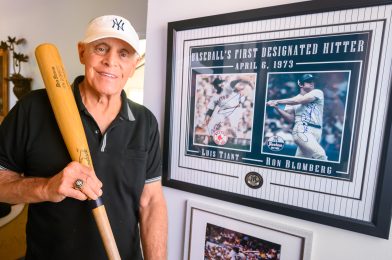
For two years, I had a locker next to Ron Blomberg at a gym in Alpharetta.
I knew he was friendly. I knew everyone liked him. I knew he never walked through a room without starting three conversations before he reached the door. What I didn’t fully reckon with — at least not right away — was that the guy next to me in the locker room had a bat sitting in the Baseball Hall of Fame in Cooperstown.
That bat got there on April 6, 1973, at Fenway Park, when Ron stepped to the plate as the first designated hitter in Major League Baseball history. Luis Tiant walked him on five pitches. The Yankees lost 15 to 5. And the game of baseball changed permanently.
Ron will tell you he screwed it up. He says it with a grin.
The story nobody was telling
Here’s what I’ve learned after more than 40 years behind a camera: the most important stories in any community aren’t the ones that get assigned. They’re the ones hiding in the daily life of the people already around you — at the coffee shop, at church, at the gym.
I pitched the Ron Blomberg story to Appen Media because I recognized what I was sitting next to. Not because an editor called me. Not because it showed up on a calendar. Because I had spent two years showing up at the same place, at the same time, and paying attention.
That’s not a reporting technique. That’s just presence.
What the locker room taught me
Glenn Prince, who also works out at the same gym, described Ron this way: “Ron is the coolest guy — just a regular older guy. Whenever he’s in the locker room, he’s carrying on multiple conversations at one time with everyone.”
That’s exactly right. And that’s exactly why the story works.
Ron Blomberg is not performing accessibility. He’s not doing public relations. He is genuinely the same person in the locker room that he was in Yankee Stadium — open, warm, and completely unguarded. When I brought my camera to OneLife Fitness and later to his Roswell home, I wasn’t introducing myself to a subject. I was showing up as a neighbor with a camera.
That changes everything about what you’re able to photograph.
The image of Ron grimacing on the shoulder press — it hurts to raise his hands above his shoulders now, but the 78-year-old hasn’t missed a workout in seven decades — exists because he wasn’t performing for me. The frame of him stopping to talk with a fellow gym member on his way out the door exists because that’s just what he does, and he forgot to stop doing it because I was there.
That’s the access two years in a locker room buys you. No press credential gets you that.
Two locations, one truth
We shot at two locations that morning. The gym first — available light, people in motion, Ron in his element. Then his home in Roswell, where the walls tell the rest of the story: a framed Sports Illustrated cover from June 1973, a photo of Luis Tiant, his 1977 World Series ring from George Steinbrenner, memorabilia from a career that injuries cut shorter than it should have been.
The gym frames show you who Ron is today. The home frames show you the weight of what he carried — and still carries. Together they tell a complete story that neither location could tell alone.
Whenever you can, give yourself two environments with one subject. The contrast between how a person inhabits public space versus private space almost always reveals something neither location shows on its own.
The pitch
Some photographers I know wait to be assigned. I understand that instinct — it feels safer, more professional, less presumptuous.
But the stories I’m most proud of over four decades are the ones I recognized before anyone asked me to look. The Ron Blomberg story was sitting next to me in a locker room for two years. At some point, I had a responsibility to do something about it.
I pitched it to Appen Media. They said yes. And last Friday, I spent a morning photographing a neighbor I already knew — which is the best possible way to work.
Ron Blomberg still shows up at the gym. He still makes friends with everyone in the room. He still can’t get from the weight machines to the parking lot without stopping four times to talk.
He’s been doing it his whole life. He’s not about to stop.
The full story — Roswell man made history as baseball’s first designated hitter — is published today at Appen Media. Read it here →
I am not covering events. I am covering the people who show up — and what their presence says about who we are to each other.
When my editor sends me out on an assignment, the brief is usually about an event: a festival, a fundraiser, a ceremony. But by the time I walk back to my car, what I have on my cards is almost never really about the event at all.
It is about a man spinning his wife across a dance floor because someone finally gave him a reason to. It is about a group of friends who graduated high school together in Florida forty years ago and somehow ended up in the same corner of Georgia, still sitting at the front table every Saturday night. It is about a woman standing in a barn, holding a piece of her county’s history like it belongs to her — because it does.
Community is my beat. And I have come to believe that documenting it is one of the most important things a photographer can do.
The South Florida Rejects
A few weeks ago I drove out to Guston’s Grille in Woodstock to photograph a story about a Roswell chiropractor who built a spreadsheet tracking more than 350 bands. On the surface it sounds like a quirky feature. But when I walked in and found the table — Gene and Lisa, Lydia and Charlie, Jamie and Mark, all singing along from the front row — I realized what I was actually photographing was loyalty.
These people graduated from Coconut Creek High School in 1983. Life scattered them, as it does. But something pulled them back together in the suburbs north of Atlanta, and now they show up, week after week, for live music and for each other. The spreadsheet is just the mechanism. The real story is that they decided their friendship was worth the effort of maintaining it.
That is the kind of thing you cannot capture with a wide shot of a stage. You have to sit down close, earn a smile, and wait for the moment when someone forgets you are there.
A few weeks before that, I photographed the Milton Historical Society’s Spring Fling in a historic barn out in Milton. Bob Meyers was there signing copies of his book on the old barns of Milton County — signing it inside one of the very barns he wrote about. That kind of moment is a gift, and I did not want to waste it.
What struck me most that evening was how many different threads of community were gathered in one room. A conservation advocate who has helped protect more than 500,000 acres of Georgia land. An indie folk musician whose Appalachian roots sounded exactly right in that setting. Neighbors reading exhibit panels about places their grandparents may have known. These were not strangers at an event. They were people maintaining a connection to something larger than themselves.
My job in a room like that is to move quietly, make eye contact before I raise the camera, and trust that the story will reveal itself if I stay patient enough to let it.
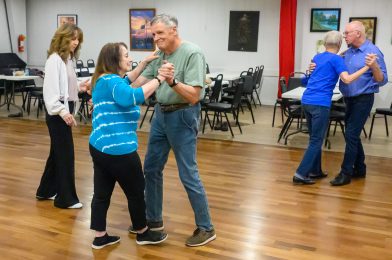
Of all the assignments I have had over the past year, the one that has stayed with me longest is the free dance class for veterans and first responders at the American Legion Post in Alpharetta.
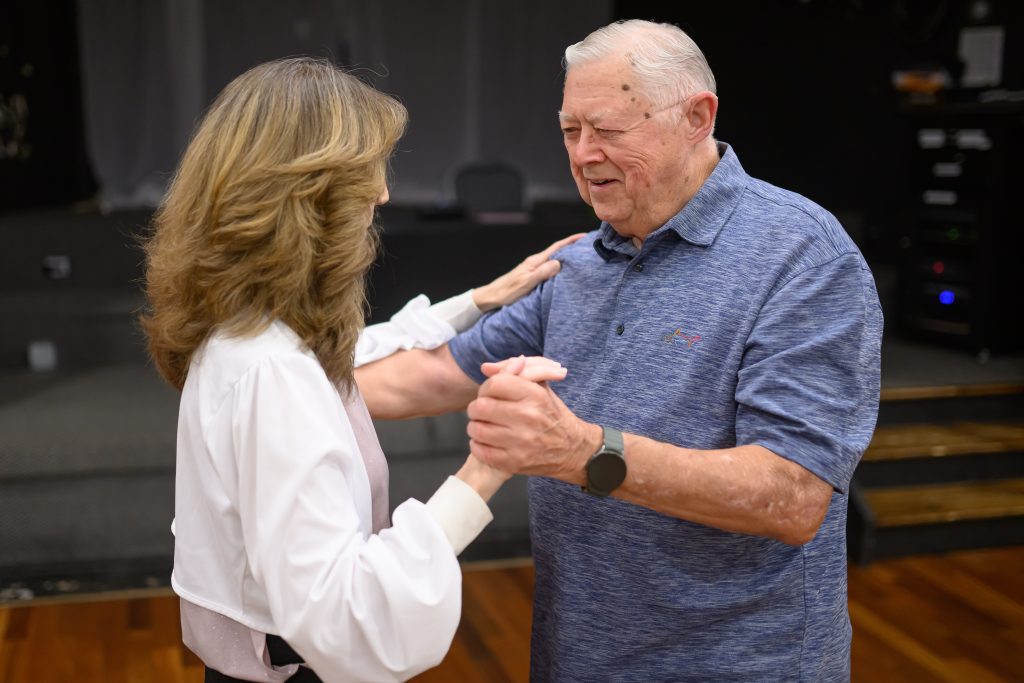
I watched men who had carried enormous weight in their lives learn the two-step from a volunteer instructor with patience and grace. I photographed couples — some who had been dancing together for decades, some who were finding their footing for the first time — moving across that floor like they had all the time in the world. Wayne Lass spinning Barbara. Tom Moore shadowing his partner through a swing step. Don Askew, tentative at first, then grinning.
Nobody there needed me to tell them that service costs something. They already knew. What they were doing that Thursday evening was choosing, deliberately, to receive something back. Joy. Motion. Connection. The photographs I came home with are some of the quietest and most honest I have made in years.
I have been making pictures for more than forty years. The technical side is not what separates a meaningful community photograph from a forgettable one. What separates them is whether the photographer actually believes the people in front of the camera matter.
My mentor Don Rutledge taught me that visual storytelling is about revealing a person through their relationships and their context — not isolating them in front of a lens and pointing. That principle does not change when you are working a community event with fifteen minutes and a crowd. It just means you have to move faster toward the real thing and spend less time on the surface.
When I walk into a festival or a fundraiser or a barn dance, I am not looking for a representative image of the event. I am looking for the person whose presence at this event tells me something true about why human beings need each other. That is always the picture worth making. And in North Atlanta, I keep finding it.
Stanley Leary is a photographer, journalist, and visual storytelling educator based in the Atlanta area. He contributes regularly to Appen Media and writes about photography at picturestoryteller.com.
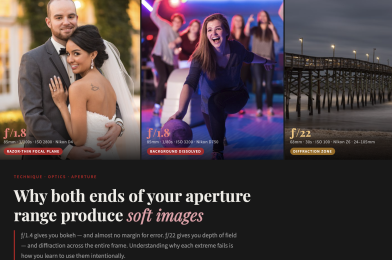
Most photographers learn early that aperture controls depth of field. What takes longer to learn — sometimes the hard way — is that the two extremes of the aperture range each produce soft images, but for completely different reasons.
And if you don’t understand why, you’ll spend a lot of time blaming your lens for a problem that lives in your settings.
ƒ/1.4 and the myth of sharpness
Shooting wide open at ƒ/1.4 feels like a superpower. You get beautiful background blur, gorgeous light gathering, and that cinematic separation between subject and scene. Lens manufacturers advertise it. Gear review sites obsess over it. And beginners chase it.
The problem is that at ƒ/1.4, your depth of field can be measured in inches — sometimes less. On a portrait shot at five feet, the plane of acceptable focus is razor thin. Your subject turns their head slightly, you drift a half-step, or you press the shutter a beat late, and the eyes you were focused on are now soft. The ear is sharp. The nose is sharp. But the eyes — the one thing that makes or breaks a portrait — are just outside the focal plane.
What’s tricky is that wide-open bokeh is so visually pleasing that beginning photographers sometimes mistake it for good photography. They see the creamy background and assume the image is working. It’s only when they pixel-peep on a monitor that they realize the focus landed on an eyebrow instead of an iris.
At ƒ/1.4, the margin for error is almost zero. This is not a beginner aperture. It’s a precision instrument.
You need fast, precise autofocus, careful single-point focus placement, and a subject that isn’t moving. Even then, you’ll have more misses than you expect.
ƒ/16–ƒ/22 and diffraction
On the other end of the range, photographers learn that smaller apertures mean more depth of field — everything in focus from near to far. So beginners reason: if ƒ/8 is good, ƒ/22 must be better.
It isn’t.
At very small apertures, light waves passing through the opening don’t travel in clean, straight lines. They bend around the edges of the aperture blades — a physical phenomenon called diffraction. The smaller the opening, the more pronounced this bending becomes, and the more the light rays scatter before hitting your sensor. The result is a softening of the entire image, not just part of it. Your deep depth of field comes at the cost of overall resolution and micro-contrast.
Sharpness across the aperture range
This effect becomes visible around ƒ/16 on most full-frame cameras, and even earlier on crop sensors, where the smaller physical aperture triggers diffraction at wider f-numbers. By ƒ/22, you’ve often given up more sharpness to diffraction than you gained from the added depth of field.
The irony is that beginners stop down to ƒ/22 precisely because they’re worried about sharpness — and the result is an image that’s soft edge to edge.
Why ƒ/8 earns its reputation
There’s a reason experienced photographers default to ƒ/8 when conditions allow. It sits squarely in the sweet spot: enough depth of field to keep most subjects and scenes in focus, and an aperture opening large enough that diffraction is negligible.
At ƒ/8, most lenses are also performing at or near their optical peak. Wide open, lenses often exhibit some softness, chromatic aberration, and vignetting. Fully stopped down, diffraction degrades the image. In the middle of the range — roughly ƒ/5.6 to ƒ/11 — the glass is doing its best work.
ƒ/1.4
Wide open
Razor-thin focus plane
DOF measured in inches. Beautiful bokeh, but miss by a half-step and the eyes are soft.
Precision required
ƒ/8
Sweet spot
Optical peak of most lenses
Enough DOF for most situations. No diffraction. Lens aberrations minimal. This is where glass performs best.
Recommended default
ƒ/22
Fully stopped down
Diffraction softens everything
Deep DOF, but light bends around aperture blades. Every part of the frame loses resolution and contrast.
Diffraction zone
For environmental portraits, group photos, street photography, product work, and most documentary shooting, ƒ/8 delivers consistent, dependable results. It’s not a creative compromise. It’s a technically informed choice that frees your attention for the things that actually make a photograph — light, timing, and relationship with your subject.
Why beginners fall into both traps
Both mistakes stem from the same root cause: learning aperture as a single variable rather than understanding the trade-offs at each end.
The ƒ/1.4 mistake usually comes from gear desire outpacing technique. A photographer buys a fast prime, reads that professionals shoot wide open, and starts doing it before they’ve developed the focus discipline it demands. They’re chasing an aesthetic without the craft to execute it reliably.
The ƒ/22 mistake comes from misapplying a partially correct rule. “Smaller aperture = more in focus” is true — but only up to the point where diffraction takes over. Nobody tells beginners where that cliff is, so they drive right off it.
The deeper issue is that photography instruction often teaches settings as a checklist rather than a system. When you understand why each setting behaves the way it does — the physics of a thin focal plane, the optics of light diffraction — you stop chasing numbers and start making decisions. That’s when you stop guessing and start seeing.
The takeaway
Your aperture range isn’t a slider from “blurry” to “sharp.” Both extremes produce soft images — just for different reasons.
ƒ/1.4 demands precision that beginners haven’t yet developed. ƒ/22 fights against the physics of light. ƒ/8 gives you margin for error, optical performance, and enough depth of field to work confidently in most situations.
Master the middle. Then explore the extremes — with your eyes open.
Yesterday I helped a client move files from a seven-year-old Windows laptop to a new Windows 11 computer.
I expected the process to be simple.
The old laptop only needed three folders transferred:
Documents
Music
Pictures
The plan was straightforward: copy those folders to an external SSD and then move them to the new computer.
Unfortunately, nothing went according to plan.
As soon as I started copying files, I was greeted with error message after error message. Files wouldn’t transfer. The computer crawled. What should have been a quick job became an all-day project.
The first clue was how long it took just to restart the laptop. After closing everything and rebooting, I waited more than five minutes before the machine became usable again.
That’s when I realized this wasn’t simply a file transfer problem. The computer itself needed maintenance.
The Hidden Cost of Ignoring Maintenance
Many people assume computers slow down because they’re old.
Age certainly plays a role, but more often the real issue is years of accumulated errors, corrupted files, incomplete updates, neglected maintenance, and failing sectors on aging drives.
In this case, I started running diagnostic and repair tools.
Step 1: CHKDSK
CHKDSK scans your hard drive or SSD to verify its integrity.
Fixes logical file system errors
Corrects corruption caused by improper shutdowns
Identifies bad sectors on hard drives
Prevents Windows from writing data to damaged areas
Think of it as inspecting the road before repairing the vehicles driving on it.
Step 2: SFC /SCANNOW
After the drive itself is healthy, Windows can verify its own system files.
The System File Checker scans protected Windows files and replaces damaged versions with known-good copies.
Lesson Learned:
I actually started with SFC before running CHKDSK. Because the computer was so slow, I researched the issue and learned the order should have been reversed.
Repair the drive first. Then repair Windows.
Sometimes the best lessons come from making the mistake yourself.
What should have taken less than an hour ultimately consumed nearly eight hours.
The files were successfully recovered and transferred, but much of the frustration could have been avoided through routine maintenance.
I’ve Seen This Before
During years of teaching photography and visual storytelling workshops, I regularly encountered students struggling with computers that seemed unusable.
Many assumed they needed a new machine.
Often, they simply needed maintenance.
On Windows computers, basic repair tools frequently restored performance.
On Macs, I often used Disk Utility and First Aid to repair file system issues and restore stability.
“The computer isn’t always dying. Sometimes it’s simply asking for attention.”
External Drives Need Maintenance Too
Recently, another client handed me a 1TB external hard drive that had been sitting on a shelf for more than five years.
The drive wouldn’t even appear properly on a Mac.
Disk Utility couldn’t recognize it correctly because of corruption issues.
To recover the files I used:
Recovery Explorer Standard
DiskWarrior
Recovery Explorer helped identify the drive structure and DiskWarrior helped rebuild directory information.
The files were recovered, but once again the problem was largely the result of years without maintenance and long periods of inactivity.
Important:
Just because a hard drive powers on doesn’t mean it’s healthy.
Every drive will eventually fail. The question is whether you discover the problem before or after you need the files.
The Real Problem
The challenge isn’t that maintenance is difficult.
The challenge is knowing what maintenance needs to be done.
Most people don’t realize there is a problem until the computer becomes painfully slow or a drive stops working.
Unfortunately, that’s often when recovery becomes expensive, stressful, and time-consuming.
A little preventative maintenance can save countless hours and protect irreplaceable photos, videos, documents, and business records.
Windows Maintenance Checklist
Monthly
Restart your computer completely
Run Windows Update
Check available storage space
Empty the Recycle Bin
Review startup programs
Every 3–6 Months
Run CHKDSK
Run SFC /SCANNOW
Verify backups are working
Scan for malware
Clean temporary files
Annually
Test backup recovery
Review external drives
Replace aging HDDs
Upgrade to SSD when possible
Mac Maintenance Checklist
Monthly
Restart your Mac
Install macOS updates
Verify Time Machine backups
Check available storage
Every 3–6 Months
Run Disk Utility First Aid
Review Login Items
Remove unused applications
Verify external drives are healthy
Annually
Test Time Machine recovery
Review aging drives
Archive important projects
Create redundant backups
One Rule Every Photographer Should Follow
As photographers, videographers, and storytellers, we often have years of work stored on computers and external drives.
Never assume a drive is healthy simply because it powers on.
Verify it.
Maintain it.
Back it up.
Test those backups.
The best time to discover a problem is before you need the files.
The eight hours I spent rescuing one laptop yesterday served as another reminder that routine maintenance isn’t just about keeping a computer fast.
It’s about protecting the stories, memories, and work that matter most.
The fear is real. So is the reward of crossing the line anyway.
Almost everyone who has ever had to approach a stranger — to interview them, sell to them, photograph them, or simply love them as a neighbor — has felt the same tightening in the chest right before they do it. That feeling isn’t weakness. It’s one of the oldest instincts we carry, and understanding where it comes from changes how we lead people through it.
Where the Fear Actually Comes From
For most of human history, people outside your group weren’t a networking opportunity — they were a genuine risk. Psychologists call our deep preference for the familiar “in-group favoritism,” and it’s not a personality trait some people have and others don’t. It shows up in children as young as six, operates mostly below conscious awareness, and was, for thousands of years, a survival strategy rather than a flaw. Staying close to your own and staying wary of outsiders kept people alive.
That instinct didn’t disappear just because modern life got safer. It still fires the moment a photography student has to approach someone they’ve never met, the moment a salesperson has to make a cold call, the moment a churchgoer has to talk to someone outside their usual circle. The body doesn’t know the difference between “unfamiliar person at a coffee shop” and “stranger from a rival tribe.” It just knows: proceed with caution — or don’t proceed at all.
Once you understand that, the goal shifts. You’re not trying to make the fear disappear. You’re helping people act alongside it.
For Leaders Teaching Journalism and Photography
If you teach storytelling for a living, you already know this fear by name — it’s the assignment that brings strong students to tears, not because the camera confused them, but because walking up to a stranger and asking “Can I tell your story?” feels like crossing a real boundary. It is one. The instinct to stay with people who feel familiar is ancient; the craft you’re teaching asks students to override it on purpose, every time.
The most useful thing you can do isn’t push harder — it’s name the mechanism. Tell students plainly that the fear they’re feeling isn’t a sign they’re unsuited for this work; it’s a sign the work is doing exactly what it’s supposed to do. Then build in low-stakes reps — small, low-pressure approaches to strangers in non-photography settings — before the real assignment, so the nervous system gets practice before the deadline matters. Students who understand why they’re afraid stop waiting to feel confident before acting, and start acting their way into confidence instead.
For Business People
In business, this same fear shows up as the email sent instead of the call made, the LinkedIn message instead of the conversation, the lead researched for an hour instead of approached. It looks like procrastination. It’s actually the same ancient wiring — and it’s worth naming, not just pushing past.
What makes the difference is reframing the approach itself. “Can I get five minutes of your time?” feels like an extraction. “I’d genuinely like to understand your situation” feels like an invitation. The words matter less than the posture behind them: are you taking from this stranger, or inviting them in? Most people aren’t waiting to say no to you — they’re waiting to be noticed. The discomfort almost always lives entirely on your side of the conversation, not theirs.
And the stakes are higher than they look. Every new client, every referral, every person who eventually trusts you with their business started as a stranger. The ability to walk toward that discomfort instead of away from it isn’t a soft skill. It’s the foundation the rest of the business sits on.
For the Church
Here’s where the pattern gets most personal, and most convicting. Jesus’ last instruction to His followers wasn’t vague — He told them to be witnesses “in Jerusalem, and in all Judea and Samaria, and to the ends of the earth,” moving in expanding circles from the familiar toward the unfamiliar.
And here’s what often gets skipped over: the first believers obeyed the “Jerusalem” part almost immediately. Ten days after the ascension, Peter stood up and preached to a crowd in the city he already knew. But the harder part of the command — Judea, Samaria, the people genuinely unlike them — didn’t happen for years. The believers stayed clustered together in Jerusalem until persecution scattered them by force into Samaria, a region they’d been taught to treat with open hostility.
In other words: even people who had walked with Jesus Himself, who had a direct command from Him, defaulted to staying with their own. It took real pressure to finally move them across that line.
That should be both humbling and freeing for believers today. If you find it easier to stay inside your church bubble — surrounded by people who think, vote, and worship like you — you’re not uniquely failing. You’re feeling the same pull every human community feels, the same pull the apostles felt before persecution forced their hand. The difference is, we don’t have to wait for persecution to do what obedience could do on its own. We can choose, on purpose, to cross the line Jesus actually drew — toward the Samaritan, the stranger, the person outside the comfortable circle — instead of waiting for circumstances to push us there.
The Reward on the Other Side
Whatever room you’re standing in — a classroom, a sales floor, a church lobby — the instinct to stay with your own is ancient, automatic, and shared by everyone in it. That’s not the bad news. It means no one in front of you is uniquely broken or uniquely behind. The fear is universal.
What isn’t universal is the willingness to walk toward the stranger anyway. That’s the part that’s learned, practiced, and chosen — and it’s the part that produces every great story, every real client relationship, and every act of obedience that actually costs something. The reward was never on the comfortable side of that line. It’s always been on the other side of it.
After 40+ years of teaching photography, I can tell you the hardest assignment isn’t lighting, composition, or gear. It’s getting a student to walk up to someone they’ve never met and start a conversation.
This week I was filling in for my friend Bill Bangham, who was scheduled to teach photojournalism but is still recovering from a medical procedure. I’m teaching this class over Zoom, but the assignment is no less real for being remote. The photo story requirement had been part of their 12-week program from the very beginning; the environmental portrait was added later. Either way, both required the same thing: finding someone off campus. A stranger.
On our first Zoom call, I reminded them of the requirement — and I already knew roughly how the week would go. Over the years, I’ve had students reach out to me visibly anxious, sometimes in tears, after hearing this assignment. Not because the camera settings confused them. Because the idea of asking a stranger if they could take their picture felt overwhelming.
This Isn’t a New Problem — But It’s a Growing One
Years ago, while teaching Intro to Photojournalism at the University of Georgia, students weren’t supposed to photograph their friends. The whole point of the assignment was to push them out of their comfort zone. But if you scrolled their social media feeds, you’d see it every semester — friends, roommates, siblings. They’d quietly broken the rule, because photographing a friend is easy and photographing a stranger is terrifying.
I saw the same pattern teaching with Youth With A Mission (YWAM), where students were training to use these same skills on the mission field. The stakes were different, but the fear was identical.
“Many journalism majors can go almost all the way through the program and never have to be face to face with a stranger.”
My good friend Mark Johnson Sr. — Professor of Sports Media, Clinical Professor of Photojournalism, and CTO at the University of Georgia’s College of Journalism and Mass Communication — pointed this out to me, and he’s right. Students will text. They’ll email. They’ll DM. Anything to avoid the live, unscripted, slightly uncomfortable moment of walking up to a real person and saying, “Hi, I’m working on a story — can I talk to you?”
The Camera Was Never the Hard Part
Whether a student is trying to disappear into the background as the fly on the wall, or trying to direct someone into a posed environmental portrait, the technical skill is secondary. What actually determines whether they get the shot is whether they can put a stranger at ease in the first thirty seconds of meeting them.
Can you explain who you are and why you’re asking, quickly and warmly?
Can you read whether someone is nervous, and adjust?
Can you sit with the awkward silence of a first approach instead of retreating to your phone?
Can you ask a follow-up question that shows you’re actually listening?
None of that is taught in a lighting workshop. It’s taught by being forced to do it, fail at it, and do it again.
Why this matters. I don’t share this to single anyone out — this happens to some degree with nearly every group I teach. The fact that this assignment can bring even strong students to a moment of real anxiety tells you how significant the skill gap is. It also tells you that when they push through it, what they gain is worth far more than a portfolio image.
What I Tell Them
I remind students that almost every person they’re afraid to approach is flattered to be asked. Most strangers aren’t waiting to say no — they’re waiting to be noticed. The fear lives entirely on the photographer’s side of the conversation.
I also remind them that this skill outlasts the camera. Whether they end up in a newsroom, a mission field, running their own business, or leading a team, the ability to walk up to someone they don’t know and build trust quickly is one of the most valuable things they will ever own. Cameras get replaced every few years. That skill doesn’t.
The Real Lesson of Photojournalism
I’ve taught this craft for over four decades, and I still believe the camera is the easiest part to teach. Talking to strangers — really talking to them, with curiosity and respect — is the lens through which everything else becomes possible. Get that right, and the photographs follow.
Photographer and instructor Brien Aho works with students during a hands-on critique session, offering targeted feedback on composition, light, and storytelling.
A critique is information about your photograph — not a verdict about you as a person. Learning to receive feedback well is one of the most powerful skills a photographer can develop.
Understanding the difference
Guilt vs Shame
When receiving feedback, students tend to respond in one of two ways. Understanding which mode you’re in changes everything.
Shame
“I am a bad photographer.”
Focuses on identity & self-worth
Leads to withdrawal or defensiveness
“What does this say about me?”
vs
Guilt
“This shot has a specific problem.”
Focuses on a choice or technique
Leads to curiosity and action
“What can I learn from this?”
In the moment
How to Respond in the Moment
These five steps move you from a shame response toward a growth response — every time.
1
Pause before reacting
Take a breath. Your first instinct may be to defend yourself — that’s normal. Give yourself a moment before responding.
2
Separate the photo from yourself
The critique is about the image in front of you, not who you are as a person. The photograph is the subject.
3
Ask a clarifying question
Instead of accepting or rejecting the feedback, get curious: “What specifically would you change about the exposure?” Questions build skill.
4
Identify one concrete takeaway
Complete this sentence: “From this image, I learned that I could try _____.” One specific action beats a vague resolve to “do better.”
5
Acknowledge without agreement
You don’t have to agree with every critique. You do need to understand it. Try: “I hear what you’re saying — I want to think about that.”
Reframing
Reframing Shame Thoughts
When a shame thought appears, translate it into a specific, actionable observation about the photograph.
Shame thought
Growth reframe
“My photos are always blurry.”
“My shutter speed was too slow — I can try 1/500 next time.”
“I can’t get composition right.”
“This shot was too centered — I’ll try the rule of thirds.”
“Everyone else is better than me.”
“I’m at an earlier point in the learning curve.”
“I shouldn’t even be here.”
“This discomfort is what learning actually feels like.”
Know the difference
Recognizing When It’s Shaming, Not Critiquing
Not all feedback is critique. A critique targets your photograph. Shaming targets you. Knowing the difference protects your growth as an artist.
Signs that feedback has crossed into shaming:
Attacks your identity rather than the image: “You just don’t have an eye for this.”
Uses absolutes — always, never, hopeless: “You never get the exposure right.”
Compares you unfavorably to others as a statement of worth: “Even beginners do better than this.”
Offers no path forward — pure judgment with nothing to act on.
Feels personal, contemptuous, or meant to diminish rather than improve.
What you can do
Name the impact, not the person. You don’t need to accuse — simply say: “That comment felt more personal than helpful to me.”
Separate the useful from the harmful. Even poorly delivered feedback sometimes contains a real technical point. Extract the lesson, leave the tone.
You are not obligated to absorb shaming. Critique is a gift; shaming is not. You can set it aside without losing your curiosity.
Seek feedback elsewhere. One person’s contempt is not the verdict of the craft. Find voices that challenge and support your growth.
“The critique lives in the photograph — not in you. Your worth as a photographer is not on the table.”
How the Ideas of Brené Brown, Adam Grant, and Simon Sinek Are Actually More Powerful When You Work Alone
There’s a moment every freelancer knows.
You’re sitting at your desk — no team, no manager, no morning standup — and you’ve just finished a leadership podcast or cracked the spine on another business bestseller. And the whole time you’re reading, a quiet voice in your head is saying: This is great… but it’s not really for me, is it?
Brené Brown talks about leading with courage. Adam Grant breaks down givers, takers, and matchers. Simon Sinek tells you to start with your why. And all of it sounds thrillingly relevant until the chapter starts talking about building teams, managing employees, and transforming organizational culture.
You close the book. Back to chasing invoices.
Here’s what nobody is telling you: these frameworks weren’t just built for corner offices and org charts. When you strip away the corporate scaffolding, what Sinek, Brown, and Grant are really describing is a way of being in business — one that translates directly, sometimes even more powerfully, to the solo operator’s world.
You don’t manage employees. But you do manage yourself. You do manage client relationships. You do manage your reputation. And in the gig economy, that is your organization.
Let’s unpack it.
Part One: Simon Sinek — Your “Why” Is Your Brand
Sinek’s big idea is deceptively simple: people don’t buy what you do, they buy why you do it.
He calls it the Golden Circle. Most people and businesses communicate from the outside in — they lead with what they offer, sometimes explain how they do it, and rarely get around to why they exist at all. The most inspiring leaders, companies, and individuals do the opposite. They start at the center.
For a CEO, this shapes a company’s culture and messaging. For you, it shapes something even more fundamental: your entire reason for showing up.
Think about how most freelancers introduce themselves. “I’m a marketing consultant.” “I do web design.” “I’m a copywriter.” That’s what you do. It’s forgettable. It’s a commodity.
Now imagine instead: “I believe that small businesses deserve to tell their story as powerfully as any global brand — and I help them do exactly that.”
That’s a why. And it does several things for you that no rate card or portfolio ever can:
It filters your clients. When you know your why, you stop chasing every gig and start attracting the ones that fit. Clients who share your values don’t just hire you — they advocate for you. They refer you. They come back.
It guides your decisions. Should you take on that project that pays well but feels off? Does this new service offering align with what you actually believe in? Your why is the compass that makes those calls easier.
It builds loyalty. Clients sense purpose. When they feel you genuinely care about the outcome — not just the deliverable — the relationship shifts from transactional to a trusted one.
The practical step: sit down and write your own Golden Circle. Start with why — what do you believe? What problem in the world genuinely frustrates you that your work helps solve? Then write how you do it differently. Then, last, write what you actually offer.
Put the why on your website. Let it lead your proposals. Let it be the first thing out of your mouth at a networking event.
You’ll know it’s working when people say, “I’m not sure exactly what you do — but I know I want to work with you.”
Part Two: Brené Brown — Vulnerability Is Your Competitive Advantage
This one tends to make freelancers uncomfortable. Vulnerability? In business? Isn’t that how you get taken advantage of?
Here’s what Brown actually found after twelve years of research: vulnerability is not weakness. It’s the precise measure of courage. And in a world full of polished, guarded, LinkedIn-perfect professionals, the person willing to show up as a real human being is magnetic.
For solo operators, this hits differently than it does for executives. When you work alone, there’s no brand armor. No PR team. No company name to hide behind. The relationship your client has is with you — your judgment, your communication, your character. That’s both terrifying and, if you embrace it, a profound advantage.
Here’s what vulnerability looks like in the gig economy:
Admitting when something is outside your expertise. Rather than overpromising and underdelivering, you say: “That’s not my strongest area — here’s who I’d recommend, or here’s how we can approach it together.” Clients don’t lose trust in you. They gain it.
Owning your mistakes quickly. A missed deadline, a misunderstood brief, a deliverable that missed the mark. The instinct is to minimize. Brown’s research says the opposite works: acknowledge it directly, explain what happened, and present the fix. What feels like exposure is actually the fastest route to rebuilding trust.
Sharing your genuine passion. Telling a client, “I’ve been thinking about your problem at 6 am because I keep having ideas,” isn’t unprofessional. It’s the thing they’ll remember and tell people about.
Setting honest boundaries. Brown is equally clear that vulnerability isn’t the same as saying yes to everything. Knowing and communicating your limits — your rates, your availability, the kind of work you won’t take on — is an act of self-respect that clients read as confidence.
The solo operator who masters this becomes the person clients don’t just hire — they trust. And in the referral-driven world of freelancing, trust is the only currency that compounds.
Brown puts it plainly: “We need to trust to be vulnerable, and we need to be vulnerable in order to build trust.” For the independent worker, that loop is the entire business model.
Part Three: Adam Grant — Be a Giver. A Strategic One.
Grant’s research reveals something that sounds obvious until you realize how few people actually live it: the most successful professionals over the long run are givers — people who contribute to others without keeping score.
He identifies three types in every professional environment. Takers extract as much value as they can. Matchers trade evenly — I’ll scratch your back if you scratch mine. And givers contribute without strings attached.
Here’s the twist that makes Grant’s work so interesting: givers are both the most successful and the least successful professionals. What determines which? Whether they give strategically or let themselves burn out serving everyone.
For a freelancer, this framework is a masterclass in building a practice that grows on its own.
The solo operator who works as a strategic giver does things like:
Referring a potential client to a better-fit colleague, knowing the goodwill will circle back
Sharing a genuinely useful insight or resource with a prospect, before they’ve signed anything
Adding a small, unexpected deliverable for a client who really needed it
Introducing two people in their network who should know each other
None of this requires employees. It requires only the decision to operate from abundance rather than scarcity.
Grant’s data backs this up in a way that’s hard to argue with: givers build broader, more loyal networks than takers — not because they’re more social, but because every interaction leaves the other person better off. In a world where most new freelance work comes through referrals and reputation, this isn’t just nice. It’s a strategy.
But — and this is the part most summaries skip — Grant is specific about the traps. Selfless givers burn out and get exploited. The key is what he calls being “otherish” — genuinely other-focused, but not at the expense of your own goals and sustainability.
For freelancers, that means: block time for your own development. Set boundaries with clients who consistently drain without reciprocating. Give generously in your zone of strength, not in every direction at once. And give to givers and matchers first — people who will pay it forward, rather than pouring your energy into takers who will simply take more.
The Through Line
Here’s what becomes clear when you lay these three frameworks side by side:
Sinek gives you your compass. Your why tells you what you stand for, who you serve, and why it matters — to you and to them.
Brown gives you your courage. Knowing your why means little if fear keeps you performing a safe but hollow version of yourself. Vulnerability is what makes the compass visible to others.
Grant gives you your practice. Once you know why you’re here and you show up as yourself, generosity becomes the engine. The giver mindset — strategic, boundaried, genuine — is what turns individual transactions into a reputation, and a reputation into a growing practice.
Together, they don’t describe a leadership philosophy for the boardroom. They describe something closer to a personal operating system — a set of principles for how to be in every client call, every proposal, every difficult conversation, every moment when the work is hard, and no one is watching.
You don’t need a team to lead. You need to lead yourself consistently in a direction worth following.
That’s what clients see. That’s what they remember. That’s what they tell their peers.
And in the solo economy, that’s everything.
The next time you pick up a leadership book and feel that nagging sense that it wasn’t written for you, read it again. Just replace every instance of “your team” with “your clients,” and every “employee” with “yourself.”
You might find it was written for you all along.
About this post: This piece draws on the foundational work of Simon Sinek (Start With Why), Brené Brown (Daring Greatly, Dare to Lead), and Adam Grant (Give and Take). All three are worth reading in full — not as leadership manuals, but as mirrors.
For decades, organizations relied on newspapers, magazines, radio stations, and television networks to help tell their stories. If a business launched a new service, a nonprofit started a new program, or a ministry made an impact in the community, they often turned to journalists to share the news.
Then everything changed.
The rise of Craigslist disrupted one of the largest revenue sources for newspapers—classified advertising. Soon after, social media platforms like Facebook, Twitter (now X), LinkedIn, Instagram, YouTube, and others gave organizations something they had never had before: direct access to their audiences.
Suddenly, businesses, nonprofits, and NGOs no longer needed to wait for a reporter to tell their story. They could publish it themselves.
At first, this seemed like an obvious win. Communication became faster, cheaper, and more controlled.
But something important was lost along the way.
The Difference Between Publishing and Verification
Today, nearly every organization is its own media company.
Websites, blogs, newsletters, podcasts, videos, and social media channels allow leaders to communicate directly with customers, donors, volunteers, and stakeholders.
That is incredibly valuable.
However, self-publishing and journalism serve different purposes.
When an organization publishes its own story, it controls the message.
When a journalist covers a story, someone outside the organization evaluates the facts, asks questions, provides context, and determines whether it is newsworthy.
One creates visibility.
The other creates credibility.
Both matter.
Walter Cronkite’s Warning Still Matters
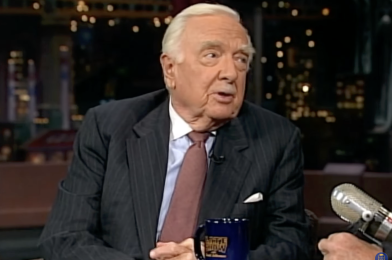
Following the attacks of September 11, 2001, legendary broadcaster Walter Cronkite appeared on David Letterman’s show to discuss the role of media in a democracy.
One of the most powerful moments came when Cronkite reflected on Germany during World War II. He noted that many German citizens accepted government control of newspapers and radio because they trusted those in power. Later, many claimed they did not know what was happening around them.
Cronkite’s point was simple: citizens have a responsibility to stay informed, and societies need independent sources of information to hold institutions accountable.
While he was speaking about government and democracy, the lesson applies more broadly today.
Trust grows when information is examined, questioned, and verified—not simply published.
The Communications Mistake Many Organizations Make
Many leaders assume that because they have social media accounts, email newsletters, and a website, they no longer need traditional media coverage.
That is a mistake.
Organizations often spend significant resources creating content but overlook one of the most valuable forms of communication available: earned media.
When a respected newspaper, industry publication, radio station, podcast, or television outlet tells your story, it carries a level of credibility that self-published content cannot achieve on its own.
People expect organizations to say good things about themselves.
Third-party validation is different.
It signals that someone outside the organization found the story important enough to share.
The Best Approach Is a Blended Strategy
The strongest communication plans combine three types of media.
Owned Media
These are the channels your organization controls:
Website
Blog
Newsletter
Podcast
Video content
Social media channels
Owned media allows you to communicate consistently and directly with your audience.
Earned Media
This includes coverage from outside sources:
Newspapers
Television stations
Radio programs
Industry publications
Community media
Independent podcasts
Earned media provides credibility and expands your reach beyond your existing audience.
Shared Media
These are channels where others help amplify your message:
Community partners
Influencers
Volunteers
Employees
Donors
Customers
Shared media extends trust through relationships.
Should Organizations Still Send Press Releases?
Absolutely—but only when they have something genuinely newsworthy to share.
Most press releases fail because they read like advertisements.
Journalists are not looking for marketing copy. They are looking for stories their audiences care about.
Before sending a press release, ask:
Why would the public care about this?
What problem does this solve?
Who benefits?
What impact does this create?
What larger trend does this illustrate?
The best press releases focus on people, community impact, innovation, research, trends, and outcomes—not self-promotion.
Why This Matters More Than Ever
Artificial intelligence can now generate articles, images, videos, and social media posts in seconds.
The volume of content is exploding.
As information becomes easier to create, trust becomes harder to earn.
That is why organizations should not abandon their relationships with traditional media. They should strengthen them.
Social media gives you the power to publish.
Earned media provides the opportunity for independent validation.
Organizations that combine both are often viewed as more credible, more trustworthy, and more influential than those that rely solely on their own channels.
The future of communication is not choosing between social media and traditional media.
It is understanding how each serves a different purpose—and using both strategically.
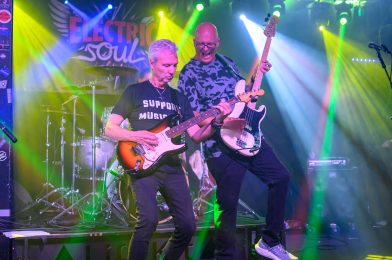
Billy Darling, left, on lead guitar, and Devron Hooker on bass perform with Electric Soul at Guston’s Grille in Woodstock, Ga., on Saturday, June 13, 2026. The band’s performance of classic rock favorites drew a crowd of regulars, including members of the “Rock and Reunion” group, who gather weekly at live music venues along the Georgia 400 corridor north of Atlanta.
Most leaders will never sit through formal media training.
That’s unfortunate.
Because while media training is often associated with preparing executives for television interviews or crisis communications, its greatest value has nothing to do with cameras or microphones. It forces leaders to answer a simple question:
Can you clearly explain why your organization exists and why anyone should care?
Over the past couple of months, I’ve had the opportunity not only to photograph events for Appen Media Group’s seven community newspapers serving North Atlanta and the Decatur area, but also to write those stories. That shift from behind the camera to conducting interviews has reminded me how revealing a few simple questions can be. Covering everything from city council meetings and community festivals to nonprofit fundraisers and veterans’ events, I’ve discovered that the most memorable moments rarely come from the basic facts. They emerge when people explain why they are investing their time, energy and resources into the work they do.
Journalists are trained to ask the Five W’s:
Who?
What?
When?
Where?
Why?
Most leaders can answer the first four without much hesitation.
Who are you?
What do you do?
When is the event?
Where is it happening?
Those answers provide information.
But the fifth question changes everything.
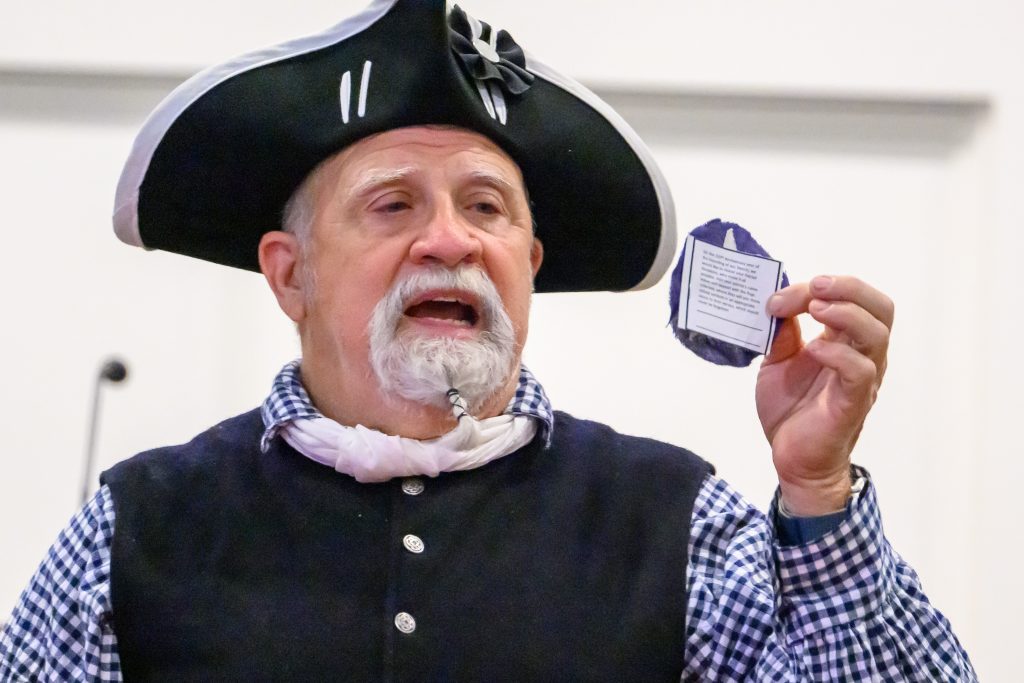
Emil Decker, president of the Robert Forsyth Chapter of the National Society Sons of the American Revolution, holds up a star cut from a retired American flag during the annual Flag Day and Flag Retirement Ceremony at Ingram Funeral Home and Crematory in Cumming, Ga., on June 13, 2026. “We cut out the Stars on some of the flags and give to vets and explain where they came from and to remind the vets of their purpose,” Decker said.
Why?
Why are you doing this?
Why does it matter?
Why should anyone care?
As a journalist, that’s the answer I’m usually chasing because it produces the quote readers remember. Facts fill in the blanks of a story. Purpose gives it life.
I’ve found that when I ask someone why they do what they do, I often get past the rehearsed responses and into the heart of the matter. That’s where people reveal what motivates them, what they believe, and whom they hope to serve.
And that matters far beyond journalism.
Don Askea dances with volunteer instructor Elizabeth Williams during a free class for veterans and first responders at American Legion Post in Alpharetta on Thursday, June 11, 2026. He enjoys coming to the lessons because they provide an opportunity to socialize, stay active and try something new.
The Five W’s Through the Eyes of Your Customer
Every leader should regularly answer the Five W’s about their organization. But there’s an important twist:
Every answer should revolve around your customer.
Instead of making your business the hero of the story, make your customer the focus.
Who?
Who do you serve?
Not everyone. Be specific. What problems do they face? What aspirations do they have? What keeps them awake at night?
What?
What do you actually do for them?
Avoid industry jargon. Explain the transformation you provide. What changes because of your work?
When?
When are you most needed?
At what point in your customer’s journey do they seek your help? What circumstances create urgency?
Where?
Where do you meet them?
This isn’t just geography. Where do they encounter your brand? Where do they experience the value you provide?
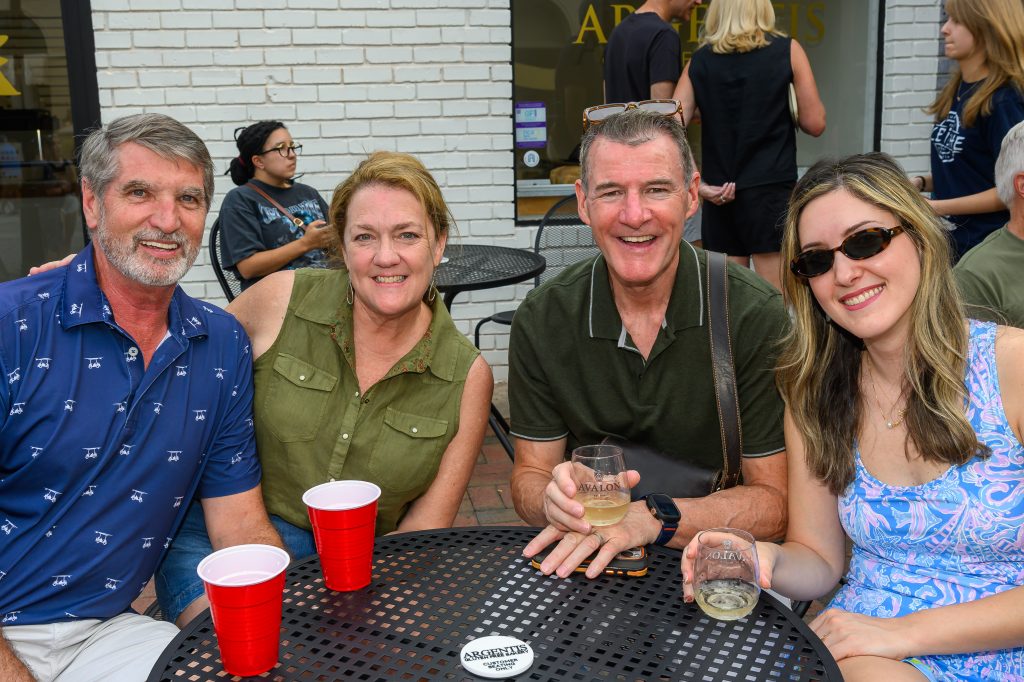
From left, Tom Ashworth, Tracy Ashworth, Sean O’Rourke and Lilas O’Rourke attend Brew Moon Fest in downtown Alpharetta, Ga., on Saturday, June 6, 2026. The longtime friends attended the annual event to see friends and enjoy the Alpharetta community, according to Tom Ashworth.
Why?
Why do you exist to serve them?
This is the question that separates organizations people simply buy from and organizations people believe in.
People don’t just purchase products and services. They align themselves with values, causes, and missions they trust.
Simon Sinek built an entire body of work around this principle in his book, Start With Why. His argument is straightforward: people don’t buy what you do; they buy why you do it.
The organizations that inspire loyalty understand this.
Their “why” isn’t about making money. Profit is necessary, but it isn’t the purpose.
Their why explains the difference they hope to make in the lives of the people they serve.
That clarity affects everything.
It influences whether customers choose you over competitors.
It shapes whether employees want to work with you.
It determines whether people advocate for your brand when you’re not in the room.
People are drawn to purpose.
Clark Spaulding holds up his crawfish during the children’s race at the Crawfish Boil benefiting the Brady Corbett Fund, a hands-on activity that brought energy and excitement to the evening’s family-friendly festivities. For parents like Sprice Packham, whose son Charles received care through the program, the support has been life-changing. “They helped him to broaden his world,” Packham said. “He couldn’t do that on his own.”
Think Like a Journalist
There’s one more layer to this exercise.
A good journalist is constantly asking:
Why would our audience care?
It’s not enough for something to matter to you. You have to connect it to the interests and needs of the people you’re trying to reach.
Leaders should ask the same question.
Why would your customers care about this initiative?
Why should your employees be excited about this change?
Why would your community pay attention?
If you can’t answer that question, you may be communicating information without creating relevance.
The leaders who communicate best don’t simply announce what they’re doing.
They translate it into terms their audience understands and values.
Your Assignment
Set aside thirty minutes this week.
Imagine you’re sitting across from a journalist who knows nothing about your organization.
Answer these questions:
Who do you serve?
What do you help them accomplish?
When do they need you most?
Where do they experience your value?
Why do you exist to do this work?
Then read your answers out loud.
If they sound like a brochure, keep working.
If they sound like you genuinely understand and care about the people you serve, you’re getting closer.
Because media training isn’t really about handling difficult questions.
It’s about developing the clarity to communicate your purpose.
And leaders who can clearly articulate their why—through the lens of the people they serve—don’t just attract attention.
They attract trust, customers, employees, and advocates who want to be part of the story they’re telling.
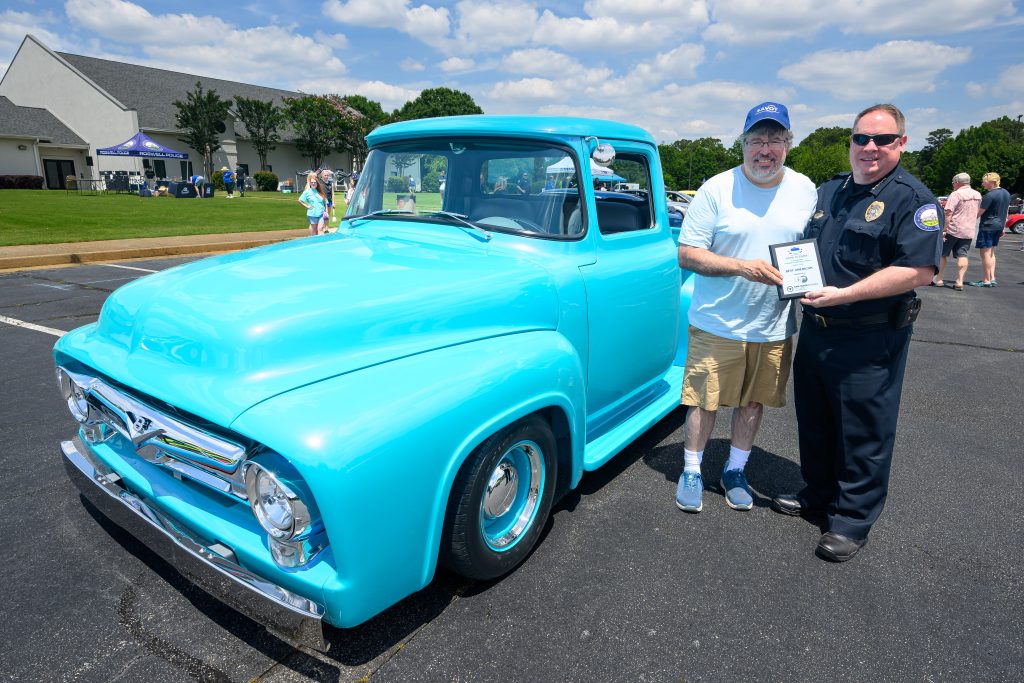
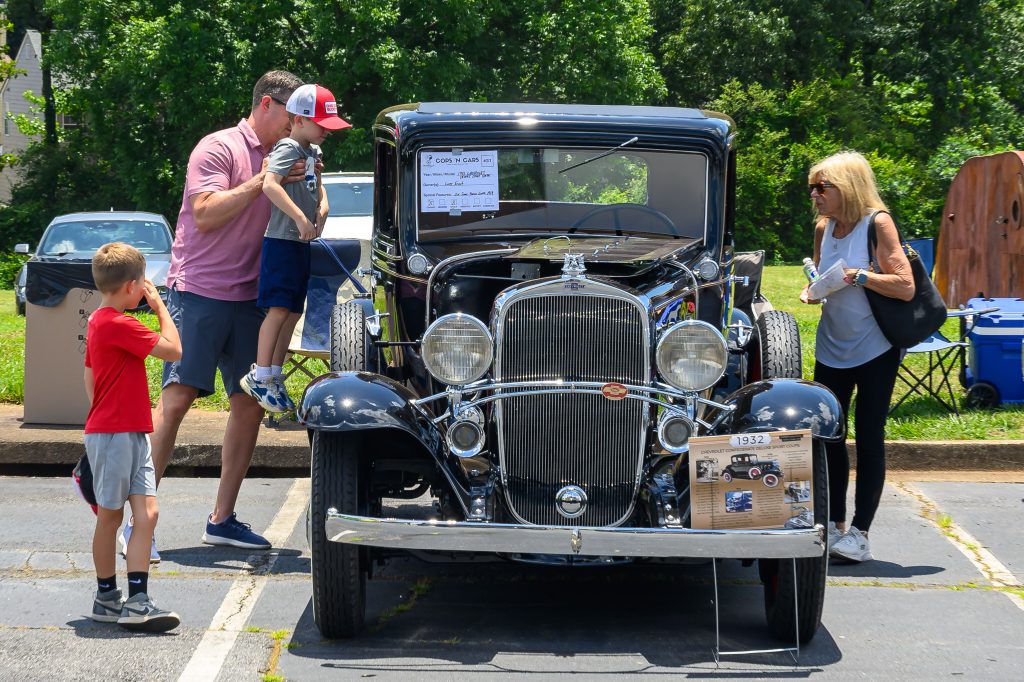
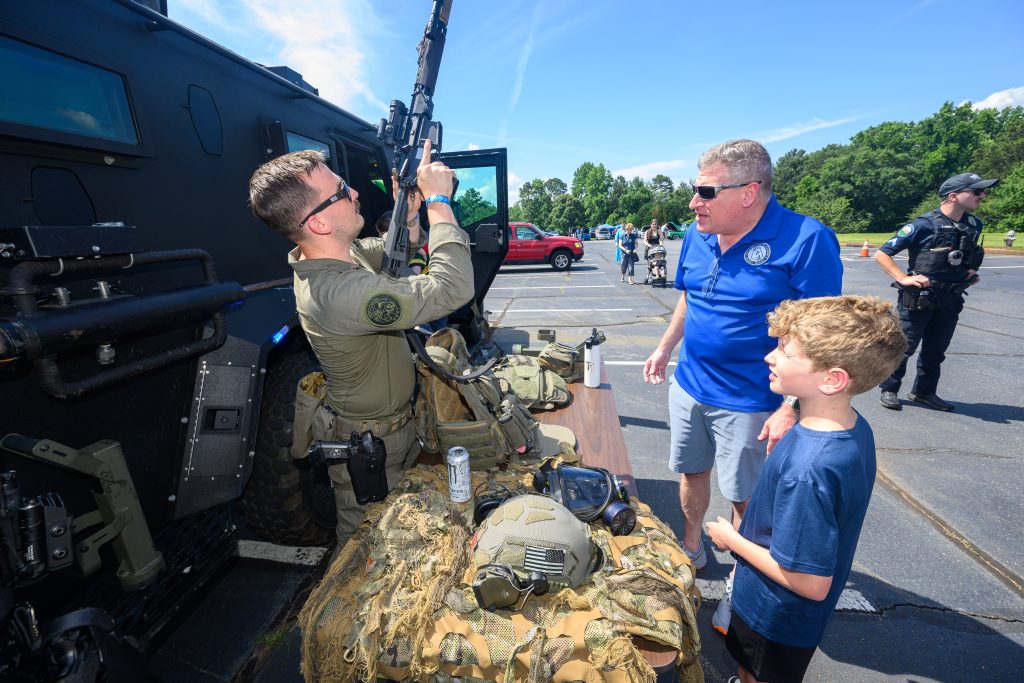
This weekend I had the privilege of serving as the official photographer for Roswell Cops N Cars, an event hosted by the Friends of Roswell Police Foundation in partnership with the Roswell Police Department.
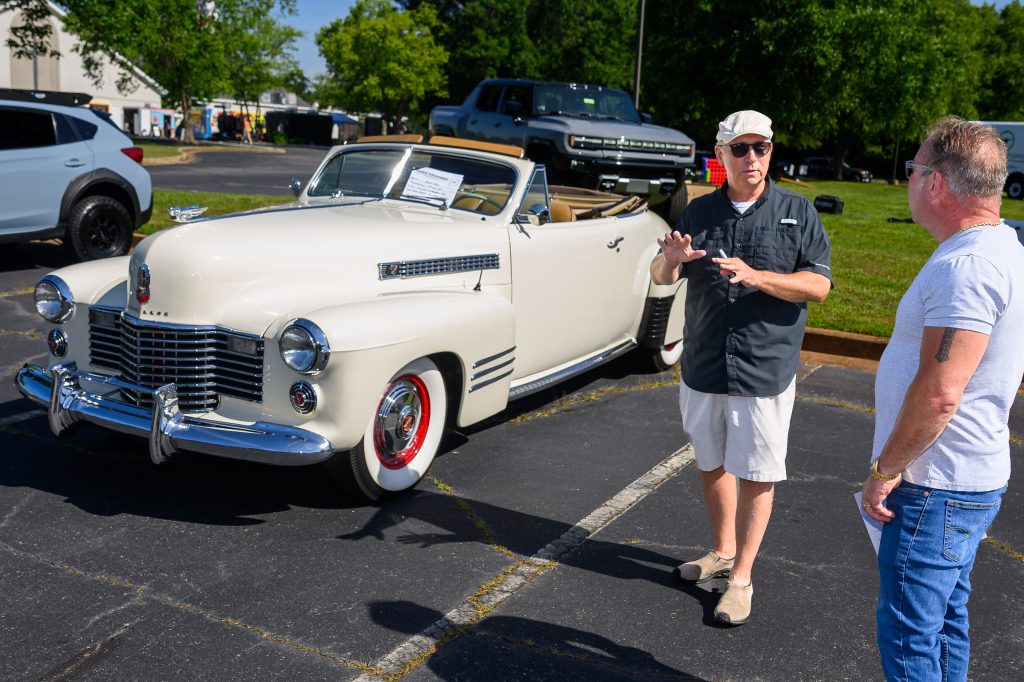
On the surface, it was everything you would expect from a great community car show. Classic cars lined the parking lot, families wandered from vehicle to vehicle, local vendors showcased their products and services, and food trucks kept everyone well fed throughout the day.
But as I walked through the event with my camera, I was reminded that the most meaningful stories are rarely about the thing that initially draws people together.
Cops N Cars 2026
The cars were impressive. The real story was the people.
In recent months, I’ve enjoyed covering community events and writing stories for local media outlets. One thing I’ve noticed is how many organizations are intentionally creating opportunities for people to gather face-to-face. In a world where so much communication happens through screens, events like Roswell Cops N Cars remind us of the value of simply spending time together.
The Friends of Roswell Police Foundation understands this well.
Their annual event helps raise support for programs that benefit both the Roswell community and the officers who serve it. Just as importantly, it creates an environment where residents can meet police officers outside of emergency situations.
Cops N Cars 2026
That matters.
Most interactions people have with law enforcement happen during stressful moments. Community events provide a different setting—one where conversations happen naturally, children climb into police vehicles with excitement, neighbors meet one another, and officers become familiar faces rather than uniforms seen only during difficult circumstances.
Throughout the afternoon, I watched officers answering questions, posing for photos, talking with families, and sharing laughs with attendees. Those moments may seem small, but they are the building blocks of trust and connection.
Cops N Cars 2026
The event’s organizers often talk about the relationships that develop during these gatherings, and after spending the day documenting the event, it’s easy to understand why. The strongest communities are built when people know one another, not just by name, but through shared experiences.
As a storyteller, those are the moments that catch my attention.
A child looking wide-eyed at a classic car.
Cops N Cars 2026
Neighbors reconnecting over a shared interest.
Families spending time together.
Police officers and residents are having conversations that might never have happened otherwise.
These interactions may not make national headlines, but they help create the kind of community most people want to call home.
The classic cars provided plenty of opportunities for great photographs, but the images I’m most drawn to are the ones showing people connecting with one another. Those photographs tell the deeper story of what the day was really about.
Cops N Cars 2026
Roswell Cops N Cars wasn’t simply a car show.
It was another reminder that strong communities don’t happen by accident. They are built intentionally—one conversation, one gathering, and one relationship at a time.
“We have a college student who takes great photos.”
I hear this all the time.
And sometimes it’s true.
That college student may be talented, enthusiastic, and capable of making a few outstanding photographs. But if your brand matters, hiring a photographer should never be based on whether someone owns a nice camera or has a handful of impressive images on Instagram.
The question isn’t:
Can they make a good photograph?
The question is:
Can they consistently create images that strengthen your brand?
That’s an entirely different skill.
Anyone Can Get Lucky. Professionals Deliver Consistently.
One of the first things I tell clients to look for in a photographer’s portfolio is consistency.
A portfolio should not be judged by its five best images. It should be judged by whether the quality remains high from image to image and assignment to assignment. Professional photographers deliver reliable results regardless of the location, lighting conditions, weather, or subject matter. That’s what separates experience from luck.
Raiden Sparks
Your Brand Deserves More Than Good Camera Gear
The camera is the least important part of the equation.
Professional photographers bring experience in:
Lighting
Composition
Color management
Storytelling
Working with people
Solving problems under pressure
Understanding marketing objectives
A business photograph isn’t simply about documenting what happened. It’s about communicating who you are, what you do, and why someone should trust you.
The best commercial photographers don’t just take pictures. They create visual assets that support your brand message and marketing goals.
Look Beyond the “Wow” Photos
When reviewing a portfolio, ask yourself:
Are the exposures consistent?
Do skin tones look natural?
Are faces well-lit and easy to see?
Does your eye immediately go to the subject?
Is there a clear visual style?
Do the images feel intentional?
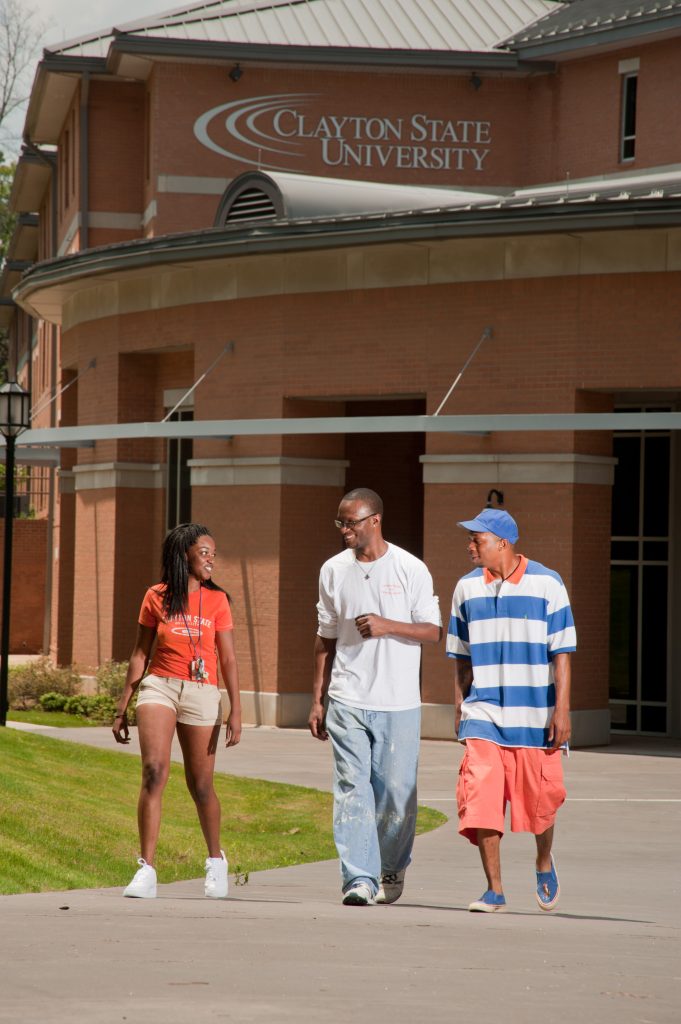
Clayton State University
A photographer’s portfolio is often a highlight reel. That’s why I encourage clients to ask to see complete projects, not just selected favorites. The real test is whether the photographer can produce strong work throughout an entire assignment.
Consistency Builds Trust
Imagine visiting a company’s website where every employee’s headshot has a different style, lighting, background, and quality level.
What does that communicate?
Most likely, it suggests a lack of attention to detail.
Visual consistency is one of the foundations of a strong brand. Whether it’s executive portraits, event coverage, product photography, or storytelling images, your photography should feel like it belongs to the same organization. Consistent imagery builds credibility and trust.
The Real Cost of Hiring the Cheapest Photographer
Many organizations compare photographers based on price alone.
But the real cost isn’t what you pay the photographer.
The real cost is using weak images for years on your website, annual reports, newsletters, fundraising campaigns, social media, recruiting efforts, and presentations.
Poor photography doesn’t just look bad.
It can make your organization look less professional, less trustworthy, and less capable than it really is.
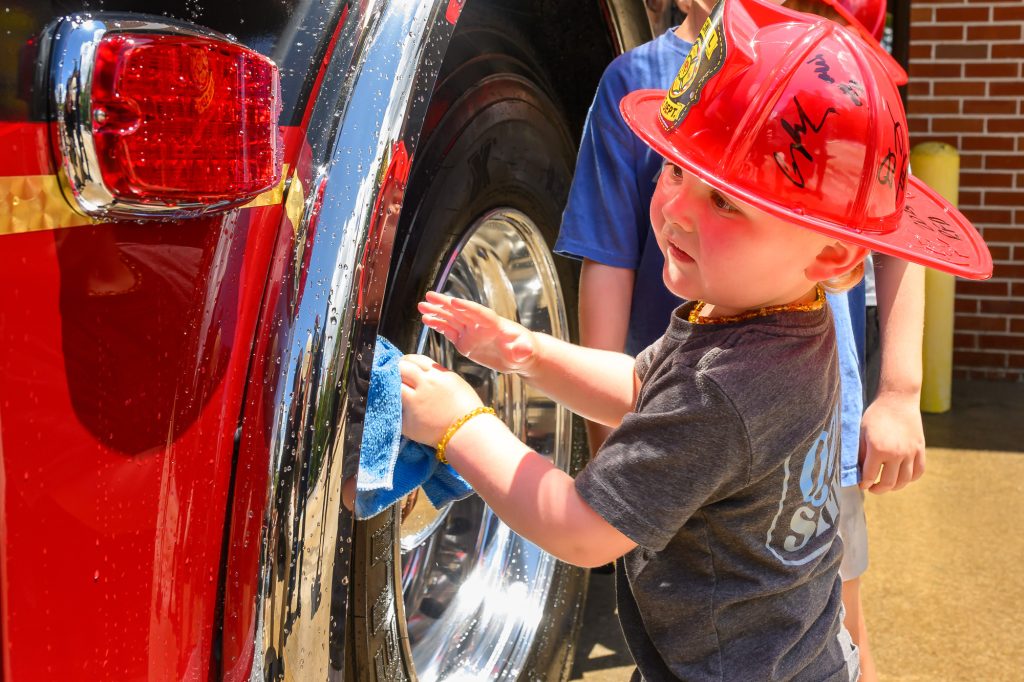
New Fire Engine Push-In Ceremonies
Hire a Photographer Who Understands Your Story
Before you hire anyone, ask yourself:
Do I need someone to take pictures?
Or do I need someone to help communicate who we are?
The best photographers are storytellers first and camera operators second.
When your brand is on the line, that’s a difference worth paying for.
Cookie Consent
We use cookies to improve your experience on our site. By using our site, you consent to cookies.