|
Getting your Trinity Audio player ready...
|
After 40+ years of teaching photography, I can tell you the hardest assignment isn’t lighting, composition, or gear. It’s getting a student to walk up to someone they’ve never met and start a conversation.
This week I was filling in for my friend Bill Bangham, who was scheduled to teach photojournalism but is still recovering from a medical procedure. I’m teaching this class over Zoom, but the assignment is no less real for being remote. The photo story requirement had been part of their 12-week program from the very beginning; the environmental portrait was added later. Either way, both required the same thing: finding someone off campus. A stranger.
On our first Zoom call, I reminded them of the requirement — and I already knew roughly how the week would go. Over the years, I’ve had students reach out to me visibly anxious, sometimes in tears, after hearing this assignment. Not because the camera settings confused them. Because the idea of asking a stranger if they could take their picture felt overwhelming.
This Isn’t a New Problem — But It’s a Growing One
Years ago, while teaching Intro to Photojournalism at the University of Georgia, students weren’t supposed to photograph their friends. The whole point of the assignment was to push them out of their comfort zone. But if you scrolled their social media feeds, you’d see it every semester — friends, roommates, siblings. They’d quietly broken the rule, because photographing a friend is easy and photographing a stranger is terrifying.
I saw the same pattern teaching with Youth With A Mission (YWAM), where students were training to use these same skills on the mission field. The stakes were different, but the fear was identical.
“Many journalism majors can go almost all the way through the program and never have to be face to face with a stranger.”
My good friend Mark Johnson Sr. — Professor of Sports Media, Clinical Professor of Photojournalism, and CTO at the University of Georgia’s College of Journalism and Mass Communication — pointed this out to me, and he’s right. Students will text. They’ll email. They’ll DM. Anything to avoid the live, unscripted, slightly uncomfortable moment of walking up to a real person and saying, “Hi, I’m working on a story — can I talk to you?”
The Camera Was Never the Hard Part
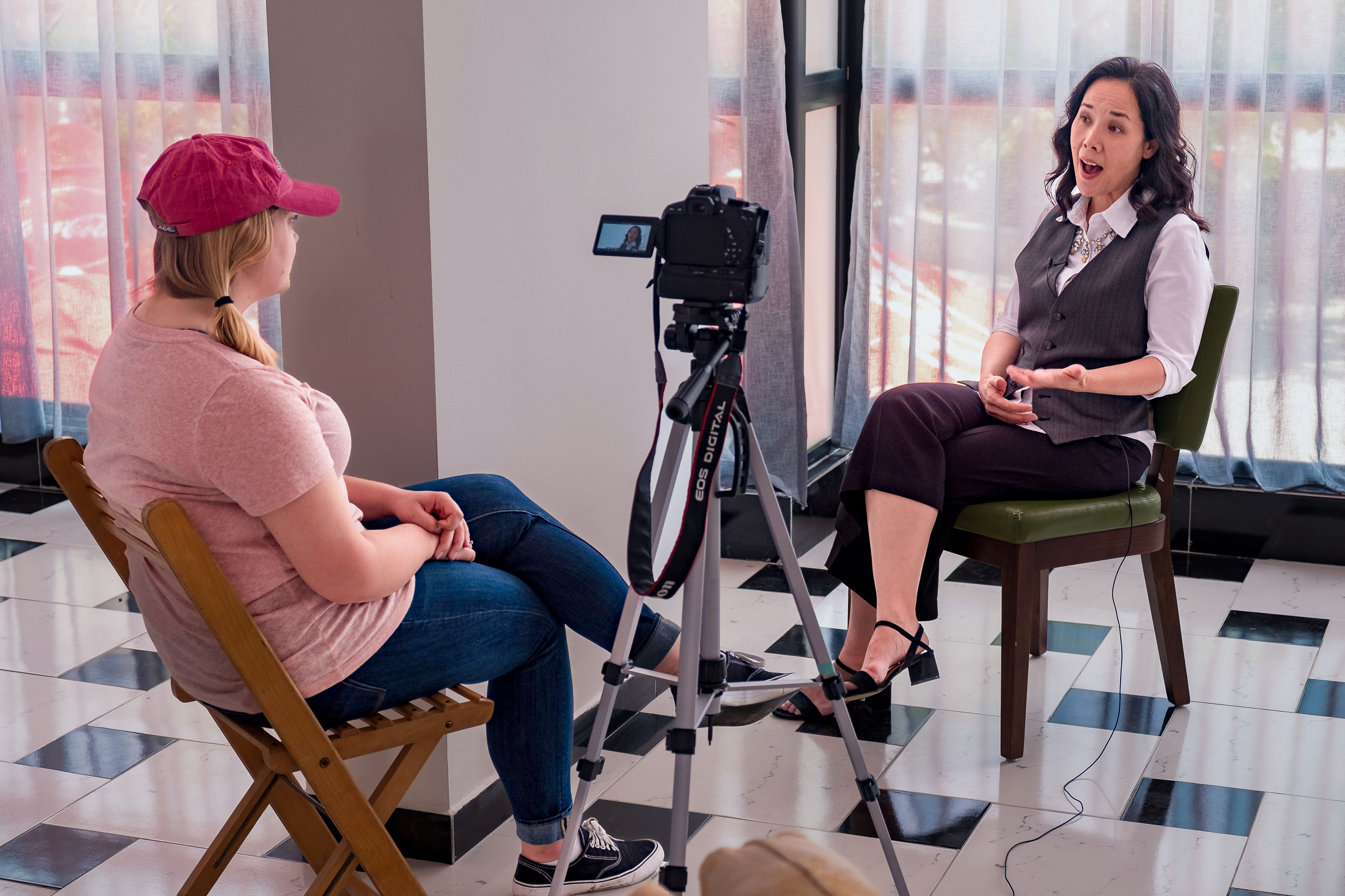
Whether a student is trying to disappear into the background as the fly on the wall, or trying to direct someone into a posed environmental portrait, the technical skill is secondary. What actually determines whether they get the shot is whether they can put a stranger at ease in the first thirty seconds of meeting them.
- Can you explain who you are and why you’re asking, quickly and warmly?
- Can you read whether someone is nervous, and adjust?
- Can you sit with the awkward silence of a first approach instead of retreating to your phone?
- Can you ask a follow-up question that shows you’re actually listening?
None of that is taught in a lighting workshop. It’s taught by being forced to do it, fail at it, and do it again.
What I Tell Them
I remind students that almost every person they’re afraid to approach is flattered to be asked. Most strangers aren’t waiting to say no — they’re waiting to be noticed. The fear lives entirely on the photographer’s side of the conversation.
I also remind them that this skill outlasts the camera. Whether they end up in a newsroom, a mission field, running their own business, or leading a team, the ability to walk up to someone they don’t know and build trust quickly is one of the most valuable things they will ever own. Cameras get replaced every few years. That skill doesn’t.
The Real Lesson of Photojournalism
I’ve taught this craft for over four decades, and I still believe the camera is the easiest part to teach. Talking to strangers — really talking to them, with curiosity and respect — is the lens through which everything else becomes possible. Get that right, and the photographs follow.