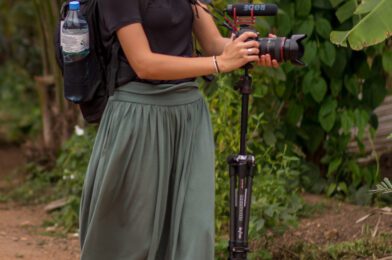
Storyteller Stacey Schuett has been telling the story of Nyakpo, who was born into an African royal family and raised by his grandmother. After his grandmother’s passing and a series of difficult trials, Nyakpo came to know the Lord. He is now a Bible Baptist Schools of Togo teacher and is highly involved in youth ministry.
Watch Stacey’s story. Leave your feedback here in the comments.
We still have openings for the Honduras Multimedia Workshop from October 29 to November 5. The deadline to apply is August 30, 2016. Click here to learn more.
A week ago today, I was stuck in the Accra, Ghana airport, waiting for the Delta Airlines computer system to get back online so that we could return home after a week in Tsiko, Togo, West Africa.
It was a good week of capturing stories with the help of the Association of Baptists for World Evangelism missionaries. We were staying at the Hospital Baptiste Biblique guest housing while working on stories that have all resulted from the hospital.
Over the next few weeks, I will share some of the stories done by the students. Today I want to share what Hannah Strayer captured.
Hannah Strayer captures her story. [Nikon D5, Nikon 85mm ƒ/1.8G, ISO 100, ƒ/1.8, 1/640]
Hannah’s story is just below here. Look at what she captured in just a week while in Togo.
Under the teaching of ABWE missionary Rebekah Poteat, Abra Sakpa has been learning Bible study methods and is using them to teach between 20-25 women about the Bible. Her vision in learning and teaching the Bible is that she might teach other women to teach women so that the farthest corners of Togo might be reached with the Gospel.
We still have openings for the Honduras Multimedia Workshop from October 29 to November 5. The deadline to apply is August 30, 2016. Click here to learn more.
Photo by Hannah Strayer, Storytellers Abroad participant
In the words of Joan Rivers, “Can we talk here?”
First, if you lost your job and are looking for a new job, go and have lunch or coffee with a successful pro. Take the time to ask the pro, “If you were I, what would you do?”
Nikon D5, Sigma 24-105mm f/4 DG OS HSM Art Lens, ISO 7200, ƒ/5.6, 1/100
Also, scrape together enough money to pay for that lunch or coffee because it will most likely be the best money you have spent in a long time.
Second, learn to listen, try to hear what people need, and know how to position yourself as the solution to their problems. Too often, new freelancers do all they can to tell a potential client what they do. As a result, they just talked themselves out of any work. If you talk about how you are a great square and they needed a round solution, you can see how you lost the job. It is better to listen and hear they need a round object and figure out how you could be a round object.
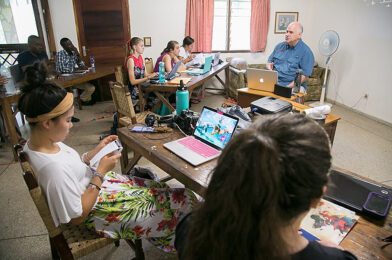
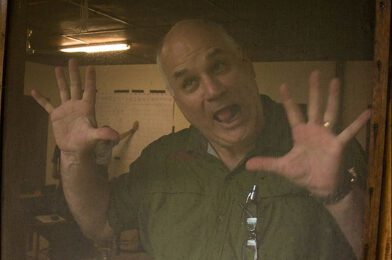
Jeff Raymond talks through Stacey Schuett’s story during our Storytellers Abroad Missions Multimedia Workshop in Togo, West Africa. [Nikon D5, Sigma 24-105mm f/4 DG OS HSM Art Lens, ISO 25600, ƒ/5.6, 1/100]
Third, pause and think if you get a call about a job opportunity. Your objective should be to get the job offer and decide if you are interested. Don’t be the guy who is turning it down before hearing all about a job. Now all the reasons you have for turning something down may disappear if you just shut up and listen. There is an excellent chance they may offer you more money or something else that helps address your needs, but because you are so bright and already knew why this isn’t a good fit just lost a great opportunity.
You never know who is watching. As I was shooting this, another photographer was photographing me. [Nikon D5, Nikon 85mm ƒ/1.8G, ISO 100, ƒ/1.8, 1/320]
Fourth, let’s say you screwed up on anything; call that person and apologize. If you don’t know what you did wrong, call them and tell them I think I made a mistake with you and I don’t know what I did, but I would love to learn from you, so I don’t make that mistake again. Your willingness to eat some humble pie might reopen a closed door.
Photo by Hannah Strayer, Storytellers Abroad participant
Fifth, many people could go to etiquette classes for adults. You may sabotage your efforts, from how you dress to how you eat your food, for example. The more you know, the better you can be at shaping your brand.
Here are some key factors that prohibit professionals or an organization from achieving its potential level of success include:
Poor verbal and nonverbal skills towards other employees or business partners
Rude and distracting behavior in the office and during meetings
Failing to appreciate employees for their contributions and poor communication
Inappropriate attire and inappropriate behavior
Poor manners on the phone and via email
Embarrassing business and social faux pas
My wife has educated me extraordinarily on some of what I call overlooked social faux pas. In addition, she has helped me so much in navigating etiquette.
The proverbs of Solomon, son of David, king of Israel: To know wisdom and instruction, to understand words of insight, to receive instruction in wise dealing, in righteousness, justice, and equity; to give prudence to the simple, knowledge and discretion to the youth— Let the wise hear and increase in learning, and the one who understands obtain guidance, …
Proverbs 1:1-33 ESV
Now we all still make mistakes, so learn from them. I hope this helps you think about your objective of finding work.
Walk in wisdom toward outsiders, making the best use of the time. Let your speech always be gracious, seasoned with salt, so that you may know how you ought to answer each person.
I enjoy meeting people, and finding children around the world captures my attention the most. I think it is because of their curiosity that I get a response when I smile.
Nikon D5, Nikon 85mm ƒ/1.8G, ISO 100, ƒ/1.8, 1/200
My two favorite lenses to capture these emotional connections are the Nikon 85mm ƒ/1.8G and the Sigma 35mm ƒ/1.4 DG Art. Since both are high-speed lenses of wide open apertures of ƒ/1.4 and ƒ/1.8, you can capture just the person and especially the eyes and let everything else go out of focus.
My mentor Don Rutledge is the one I often heard referring to the power of the eyes. He said these with the “Windows to the Soul.”
Nikon D5, Sigma 24-105mm f/4 DG OS HSM Art Lens, ISO 8000, ƒ/4, 1/100
I have learned through the years that the angle from which you photograph a person can significantly impact what you are saying and determine how much of an “emotional connection” you can make with the subject and the audience.
I blogged about the topic earlier. Here is that blog post.
While I commented in that blog post that seeing eye-to-eye isn’t always best, I tend to look for this when trying to connect the audience to the subject as their equal.
Nikon D5, Nikon 85mm ƒ/1.8G, ISO 100, ƒ/1.8, 1/320
Now getting eye level with a smile is always expressive; it isn’t the only facial expression that connects with the audience.
Also, it is essential to mention that the eyes that do most of the smiling in those photos show the joy of seeing you.
Nikon D5, Nikon 85mm ƒ/1.8G, ISO 1100, ƒ/1.8, 1/200
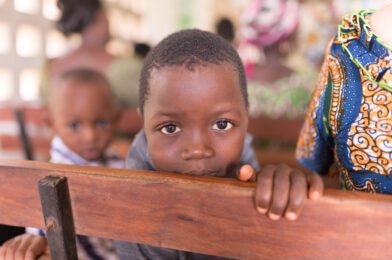
Now while this little boy isn’t sure of me with that expression, the expression does capture the child’s innocence. I can see in the face the question of who are you and can I trust you?
The other thing that happens when people look at you without a big smile is there appears to be a silent dialogue going on with the audience. I think this type of expression is relatively abstract. It makes the audience want to fill in the conversation.
Nikon D5, Sigma 24-105mm f/4 DG OS HSM Art Lens, ISO 8000, ƒ/4, 1/500
To me, a photographer’s demeanor helps to elicit responses from people. I know this because I don’t speak their language in a cross-cultural situation like this in Togo, West Africa. So all I am doing is using body language and facial expressions to get reactions to me from people.
I felt welcomed by these guys as they drove closer to me down this dirt road.
Nikon D5, Nikon 85mm ƒ/1.8G, ISO 100, ƒ/1.8, 1/200
How can’t the most demanding person be melted by this little girl’s presence and expression?
Nikon D5, Nikon 85mm ƒ/1.8G, ISO 1100, ƒ/1.8, 1/1000
Hey, the smile will always get a great reaction, but remember your audience, and you need more to your life than just one emotion. Learn to explore your subject. Don’t be afraid of those uncomfortable expressions as well.
Nikon D5, Nikon 85mm ƒ/1.8G, ISO 4000, ƒ/1.8, 1/200
Often the beginning of the relationship with a subject may start like this before I can build the trust that lets me be able to get behind those off-putting expressions.
Nikon D5, Nikon 85mm ƒ/1.8G, ISO 2800, ƒ/1.8, 1/200
I have one tip that should help you get better emotional connection photos. Be vulnerable with yourself and open with the subjects. Take your time and remember that you must first learn to serve your issue with your willingness to give rather than take.
The only way I know to express this is I think of this as giving a hug with your eyes. Like you would do with a newborn child, be expressive and show the excitement of being in their presence.
If you are patient, kind, and a loving person to others, then the odds of you capturing the “Decisive Moment” where there is an “Emotional Connection” is possible.
Nikon D5, Nikon 85mm ƒ/1.8G, ISO 100, ƒ/1.8, 1/500
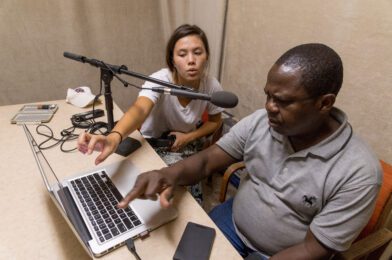
Hannah Teramura is working on a voice-over for her video. The man doing the voice-over is a Ghanaian who lives in Tsiko, Togo, and works with the Hospital Baptiste Biblique. [Nikon D5, Sigma 24-105mm f/4 DG OS HSM Art Lens, ISO 5600, ƒ/8, 1/100]
What a week this has been. I am now flying back to Atlanta through JFK airport in New York. By the way, we had around a four-hour delay. Not sure right now which flight I will take to get back to Atlanta. It appears I will miss the scheduled flight. It was delayed, but not as much as my flight.
During this week with Storytellers Abroad Missions Multimedia Workshop, I have worked with Pat Davison and Jeff Raymond as we led ten students through their stories.
Cy Hayden, another one of the students, interviewed his subject with the help of Mrs. Gail on translating from French to English. [Nikon D5, Sigma 24-105mm f/4 DG OS HSM Art Lens, ISO 100, ƒ/8, 1/125]
Each student would do a pre-interview with their subject and then a sit-down interview. Then, after we reviewed it most, everyone would do a follow-up interview to help fill in the holes in the storyline.
Pat Davison works here with Liz Ortiz on the left and Keziah Khoo. Each student spent much time with Pat going over their stories. I also met with each student. We would help by helping them through the storyline process and helping them understand how to use b-roll more effectively to tell their stories. [Nikon D5, Sigma 24-105mm f/4 DG OS HSM Art Lens, ISO 7200, ƒ/5.6, 1/125]
Each of the students then spent a lot of time massaging their stories in Adobe Premier.
Stacey Schuett [left] and Hannah Saxe [right] work hard in the classroom on their projects. [Nikon D5, Sigma 35mm ƒ/1.4 DG Art, ISO 1000, ƒ/1.4, 1/125]
One of the students was Stacey Schuett, who had been in the Atlanta Ballet and even lived near me during that time in Roswell, GA. We believe that my family saw her dancing in the Atlanta Ballet’s Nutcracker when she was in Atlanta.
That was a cool thing to discover and made the world seem that much smaller.
Another surprise was Wilson, on the left, and his friend came to listen to us several times. They are local and part of the YWAM base there. Wilson had been to Kona, Hawaii, and we had a lot of friends in common. Keziah, another student, had taken the same film classes in Kona but at different times. [Nikon D5, Sigma 24-105mm f/4 DG OS HSM Art Lens, ISO 8000, ƒ/5.6, 1/125]
The students stopped on Saturday night, and we showed our stories in whatever stage they were in the missionaries and to the subjects before we left the next day.
Everyone gathered who was in the stories or part of the Baptist Hospital in Tsiko, Togo, West Africa, to see our progress. [Nikon D5, Sigma 24-105mm f/4 DG OS HSM Art Lens, ISO 7200, ƒ/4, 1/100]
Since we started doing this workshop in 2014 with our first workshop in Lisbon, Portugal, two students have decided to do this as a full-time career in missions. We have had a few others who have made more trips to tell missions stories using multimedia. Some of them are exploring this as a full-time career as well.
Here is our team. [Nikon D5, Sigma 24-105mm f/4 DG OS HSM Art Lens, ISO 100, ƒ/8, 1/200]
Check out Storytellers Abroad for our trip next year. We are going to Lisbon, Portugal, and will have the date posted soon.
If you want to do this sooner, you can still join me in Honduras for a similar workshop. Here is that link.
Nikon D5, Sigma 24-105mm f/4 DG OS HSM Art Lens, ISO 3600, ƒ/8, 1/100
Our Storytellers Abroad workshop was feeling worn out and stressed yesterday. Everyone, including the instructors, was learning new things and dealing with the difficulties of living in the 3rd World Country of Togo, West Africa.
We could not just jump in a car and type in the address we wanted to go to in our GPS as we would back in the USA.
Nikon D5, Sigma 24-105mm f/4 DG OS HSM Art Lens, ISO 2800, ƒ/4, 1/100
Pat Davison was added to our team when James Dockery could not come on this trip. Pat has shown us a few tricks that have made my life easier and helped to improve my workflow with Adobe Premier. Pat also taught us many other ways to help tell a story using visuals than I have been using.
We knew from the students’ projects that we wanted to raise the bar a little higher. So, during this trip, we all worked harder to use new techniques in teaching the content to get the students to get better quality b-roll better.
We taught the many different ways they could use their tripods to steady their cameras. As a result, the b-roll got much better.
Since more students were shooting more videos than in the past, the time to do this versus still photos takes more time. More time when you are already in a 3rd World Country and dealing with the frustrations of everything taking longer put all of us into a stress overload.
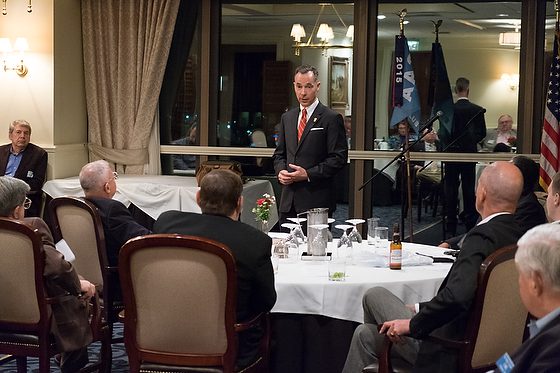
Michael Cheatham, chief surgeon at Orlando health and who coordinated the Orlando shooting medical response, is here with us in Togo working at the Hospital Bible Baptist. He led our devotional yesterday, and his words for us were just what we needed.
He shared how his pastor friend sent him the morning of the shooting this bible verse:
David also said to Solomon his son, “Be strong and courageous, and do the work. Do not be afraid or discouraged, for the Lord God, my God, is with you. He will not fail you or forsake you until all the work for the service of the temple of the Lord is finished.
1 Chronicles 28:20
Hearing how his team needed encouragement and God was with you was so comforting. So today, we will share the storied with the community we have been working on since Sunday. We are still feeling the stress and hope by our time tonight that, most of the students will feel a sense of peace with their projects.
Nikon D5, Sigma 24-105mm f/4 DG OS HSM Art Lens, ISO 800, ƒ/9, 1/200
We are looking forward to sharing the stories today. Now wherever the project is tonight, we will show it, so it is a work in progress. Next week the students will add a few finishing touches, and then we will share them with the world. Stay tuned.
The Nikon D5 is really performing well here in Togo, West Africa. I don’t have a lot of technical things to share this time for a blog. I just wanted to share some of the photos I have been getting which is really me sharing the people of Togo that I am meeting.
Nikon D5, Nikon 85mm ƒ/1.8G, ISO 100, ƒ/1.8, 1/125
I have been pleased with the Dynamic Range of the files.
Nikon D5, Nikon 85mm ƒ/1.8G, ISO 100, ƒ/1.8, 1/400
I am loving doing portraits with the Nikon 85mm ƒ/1.8
I also love shooting with the Sigma 35mm ƒ/1.4 DG Art lens. I love shooting both of the lenses wide open which gives such a selective focus that the subject really pops out from the background.
Nikon D5, Nikon 85mm ƒ/1.8G, ISO 100, ƒ/1.8, 1/1000
This week, while teaching in the Storytellers Abroad Workshop in Togo, West Africa, I noticed some trends that most students make.
We assess the trends of common errors and address those each day. For example, one of the most common themes that almost every day starts with is taking care of the technology before trying to capture the content.
Allison Waller, a student in the Storytellers Abroad Workshop, has all these Togo children fascinated with her camera. [Nikon D5, Sigma 24-105mm f/4 DG OS HSM Art Lens,, ISO 3600, ƒ/4, 1/100]
Before you start shooting pictures or capturing video, you need to take care of the settings on your camera.
Here is a short list of things that I recommend that a person checks before capturing the content.
Set the camera resolution.
Stills – I use RAW, but just be sure you have made a conscience choice.
Video – I often shoot today in 1920×1280 24 fps. Again be aware of what settings you use. With video, you need to be sure all the cameras you use are on the exact resolution, or editing will be a problem.
Set ISO – Use the lowest ISO possible to get a sharp and well-exposed image.
Set Aperture
Set Shutter Speed
Stills – Pick shutter speed that works with the focal length
Video – Use shutter speed double the fps.
White Balance – I recommend always using a Custom White balance
Video Sound
Microphones are as close as possible to the person
Set Audio Recording level
Always use closed headphones to listen for sound issues
Once you take care of those technical settings, then when you start shooting, the content you are collecting will be useable.
Pat Davison, a UNC School of Media/Journalism professor, is teaching interviewing techniques using a translator during our workshop in Togo, West Africa. [Nikon D5, Sigma 24-105mm f/4 DG OS HSM Art Lens, ISO 1800, ƒ/8, 1/100]
I can tell you a few downsides of buying a new camera. First, when it is unique, some changes will be necessary.
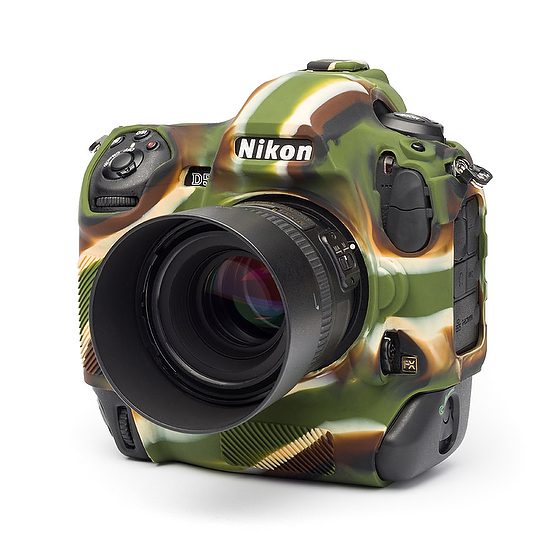
One of the changes I had to go through was not having my EasyCover for the Nikon D5 to protect it for a couple of months. I just got mine last week. I bought two of the two cameras. I even made one different than the other to know which camera I was shooting. Different covers help when I need to know which camera I am shooting with due to a few things. One may be I set up one for video and the other for stills.
Another reason maybe one is set for studio flash and the other available. There are many reasons you may need to know or remember which camera is which.
One of the cameras has camouflage, and the other is black.
The great thing about getting a new camera is all the improvements, and EasyCover also made improvements over the Nikon D4 cover.
At first glance, it may look very similar, but they did listen to users and found that the Nikon D4 cover made it difficult to see your buttons. When Nikon made the Nikon D4, they improved it by creating a backlight inside the controls so you could turn on a light to see which button, but the EasyCover covered them, and you could still push them; you just lost this fantastic enhancement.
Now you can easily see your buttons on the Nikon D5. Unfortunately, they kept covering just a few, as you can see above.
Now, those who shoot with a different camera make many other covers, including lens covers. Check out all their bodies for cameras here.
A camera cover is one of the best investments anyone can make for their camera. I like to describe it as similar to my Otterbox for my Smartphone. It protects the camera.
Now, if I can get Pocketwizard to update the firmware for the Flex TT5 & TT1 for the Nikon D5, I will be thrilled.
Nikon D5, Sigma 24-105mm f/4 DG OS HSM Art Lens, ISO 5600, ƒ/5.6, 1/100
I have had a great week in Kona, Hawaii, teaching Sébastien Pannatier and Jessie Toney Multimedia Storytelling.
Dennis Fahringer, pictured above on the left, is the leader of the YWAM School of Photography 2, which invited me to teach.
Neither student had ever shot video on their cameras. They had never plugged an external microphone into their cameras. The students had never done this type of storytelling before.
Now the subjects were unavailable whenever we needed them, and we had to work around their availability, which could have been the deal breaker for these stories. Still, through persistence, they each could do formal sit-down interviews and capture their stories.
Like everyone who has done a project like this, and our first one, we wish we all had more b-roll in the end. I told the students I had never felt I had enough b-roll on any project.
Rather than me making you read a lot, here are their first projects. Please let them know by commenting below if you have some words of encouragement as they leave for Rio De Janeiro next week to spend a month capturing stories around the Olympics.
Have you ever seen the acronym WIIFM? It stands for What’sIn It For Me. It is the essential part of telling a story. But, first, you must understand who the audience is to craft a story that will appeal to their desires.
What’s In It For Me, are without a doubt, the most important five letters in your business writing, your Web site, and maybe even in your business success. Always tell people what’s in it for them when they do business with you.
You will likely appeal to no one if you try to reach everyone.
Nikon D5, Sigma 24-105mm f/4 DG OS HSM Art Lens, ISO 32000, ƒ/9, 1/100
Think of you talking one-on-one with someone in your audience. It would help to have the audience in mind before picking the story.
For there to be a story, we have these basic four things:
Subject
They WANT something
They overcome obstacles
To get it
The audience wants something too. The audience wants to be part of the story. The audience in a call to action can be the helper for the subject to attain their wants.
When I am teaching Missions Multimedia Storytelling Workshop, the hardest part of the learning for the student, which is their obstacle, has less to do about learning to use the gear. Instead, the real struggle is understanding the storyline.
They must toss out so much because it isn’t engaging the audience.
I get the deer in the headlights looking over and over from students when they show me their work, and I ask why I should care.
They are crafting a story they are interested in, not one for the audience.
In the hero’s journey storytelling model discovered by Joseph Campbell and modified by Chris Vogler, there is a meeting of the mentor usually in Act 1. The mentor can be the role of the audience when it comes to the call to action for helping the subject attain their goal.
A good storyteller understands that the Audience, Subject, and even you as a storyteller all have a storyline. The key to the success story is when the Audience, Subject, and even you as a storyteller are all able to get what they want.
If your story seems stuck, check and see which of the storylines [Audience, Subject, Storyteller] is having problems.
One of the key things to evaluate is constantly asking how this helps us achieve our WANTS/GOAL if it doesn’t look at cutting it out.
Nikon D5, AF-S NIKKOR 28-300mm f/3.5-5.6G ED VR, ISO 280, ƒ/8, 1/100
When I teach students photography, multimedia, and storytelling, I often reflect on the content.
Nikon D5, AF-S NIKKOR 28-300mm f/3.5-5.6G ED VR, ISO 100, ƒ/5.6, 1/1250
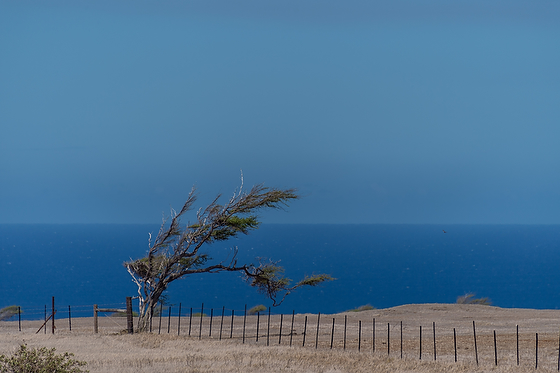
When I was down at South Point on The Big Island of Hawaii, I saw how all the trees were leaning in one direction.
Nikon D5, AF-S NIKKOR 28-300mm f/3.5-5.6G ED VR, ISO 100, ƒ/10, 1/200
When I say all the trees, I mean all the trees are leaning from a constant wind. The wind is so consistent and promising that they use windmills for wind power.
Nikon D5, AF-S NIKKOR 28-300mm f/3.5-5.6G ED VR, ISO 100, ƒ/7.1, 1/800
While this strong wind is excellent, it will affect the landscape. Well, when I teach, I am trying hard not to make so much of an impression it looks like my students are too overpowered.
Some of the things we discussed today was interviewing techniques. Now when I teach with my friends Jeff Raymond and James Dockery, we compile a list of tips we give to the students. Here is that list, plus some that I have added this week:
INTERVIEWING TECHNIQUES
Remember, the audience doesn’t know the question from the interviewer if they are not recorded or on camera. Therefore, remind the subject to restate the question in their answer.
Write down at least five good questions beforehand.
Listen to their responses and be ready to deviate from your list
Listen as if you only hear their words, not the question you asked
Ask open-ended questions
Ask questions that the subject CAN’T answer with a ‘yes’ or ‘no.’
Ask “how” and “why” questions.
If the person speaks in the abstract, ask, “Can you give me an example of that?”
Dig for anecdotes and details
Ask the person to tell you precisely what happened moment by moment
Ask for specific details along the way.
Understand them and their story
Try to see the world through their eyes.
Remember, it’s not your story. Get the subject’s story right.
Ask your questions, then be quiet. Use silence, and don’t be afraid of it. No noises to affirm them. Affirm with gestures. Your noises will distract from the sound quality.
Don’t finish their sentences.
Be a good listener. Sit still as they wrestle with what they are trying to say.
Coach the person to speak with the passion they feel about the subject.
Can you say that again, but with more feeling?
Remember, they may be pretty up tight in front of the camera and need not just to relax but bring the emotion through their voice.
Get the basic details right
Get the spelling of their name (business card, or have them write it down).
Clarify
If something they said didn’t make sense, ask for clarification.
Review your footage while you’re still overseas, where follow-up is much easier than after you go home.
Please get to know your subject before interviewing them. Learning more about the subject will not just help the subject be more relaxed but help you understand how to interview the subject and perhaps help the subject relax.
You can interview at the end of the coverage and not at the beginning. I find it is easier to have someone sum up what we saw today than have the subject talk about a lot of stuff that I never caught on camera by the end of that, again. But, again, this helps you from lacking in b-roll or images.
Ask the subject to summarize what you have seen that day. While you may not use all of this, it will help you with a starting place for the narrative.
Mirror them. Keep the subject going by nodding and smiling.
Keep them on topic. If you have two or more interviews in your package planned, then each person needs to know what they are covering. Sometimes I break it down to let one person tell me why something happened, and the other explains what they did to make it happen.
Help them revise their comments. Often I need about 30 to 45 seconds of words, and a person may talk for more than 5 minutes. If I were to edit it later, there would not be a good flow. I try and help them summarize what they just said or even edit. When I say edit–I mean cutting content.
Get variety. I like to record longer comments often and then follow up with them, making them short. Sometimes I use the longer word. Get another direction, just in case. Doing this for a few minutes often engages their minds, and they find a new way to articulate themselves. Allow for this to happen.
Remember that you don’t need them to tell you everything in words. You will also help communicate a good part of what they do with visuals you will capture and use as a b-roll. It would help if you told you the things the visuals don’t convey. While you have a visual that shows something happening, it often doesn’t help the audience know why.
The story will be unique if you do a good job interviewing. The branches of the report can be like Angel Oak Park on Johns Island near Charleston, South Carolina. Angel Oak is estimated to be 500 years old. The subject’s character will shine through and be who they are rather than all the wind forcing its power on the tree.