My mentor Don Rutledge said the eyes are the windows to the soul. When I am really connecting with another human being in conversation, I am very much aware that we are locking in on each other’s eyes.
We allow the other person into our world, and they let us see into theirs.
I have even written previously that eyes are so revealing that this is where we truly smile.
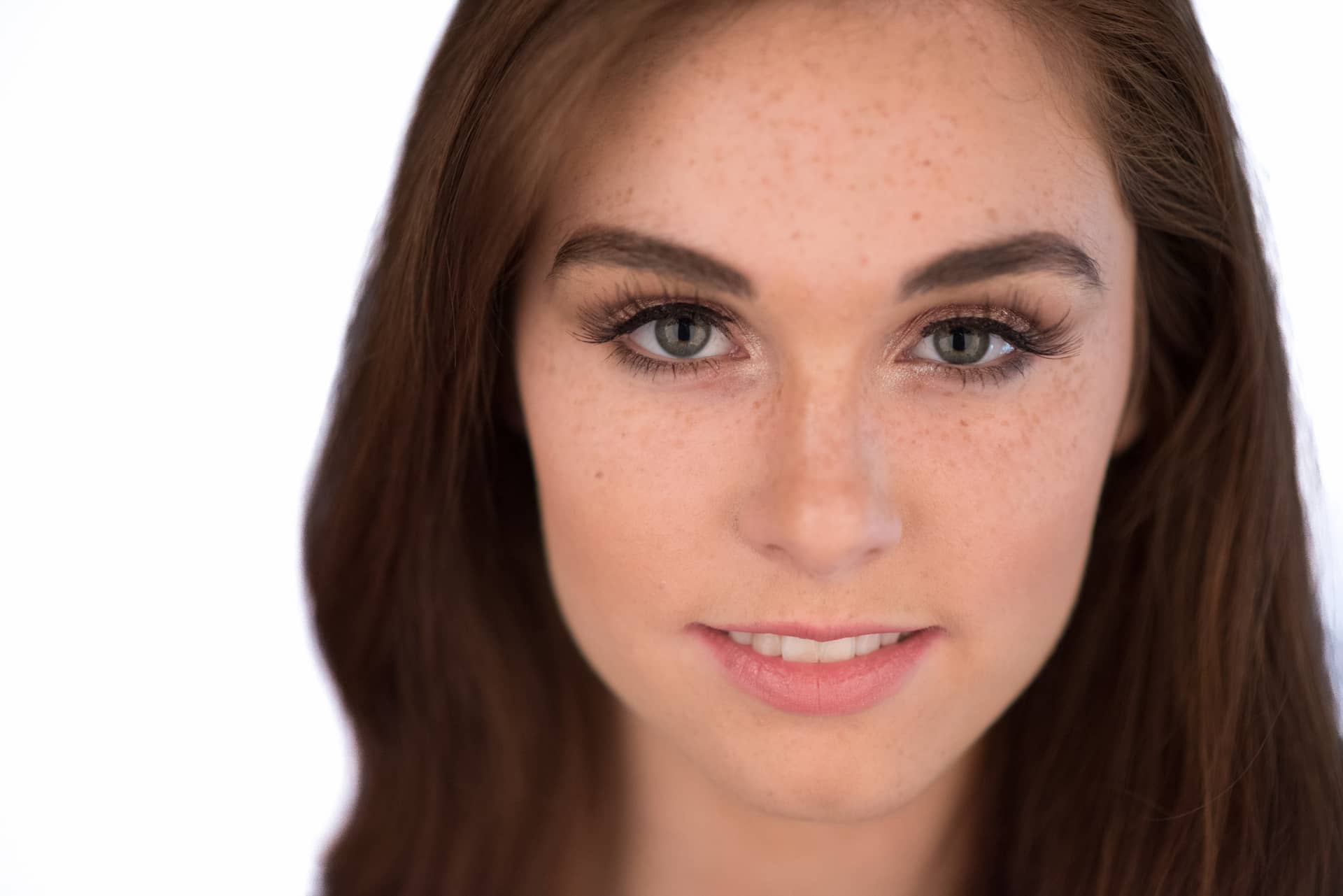
In this blog post, I want to emphasize how important it is to keep the eyes in focus for portraits. Keep the eye closest to the camera in focus.
I believe that if everything is out of focus except the eyes, you can have a very successful portrait, but if the eyes are out of focus, it can be quite disturbing.
In the first photo, the eyes are pretty much the only thing that is in focus. I think this is, in many ways, what draws you to the eyes and helps the audience connect with the subject.
Sydney Rhame
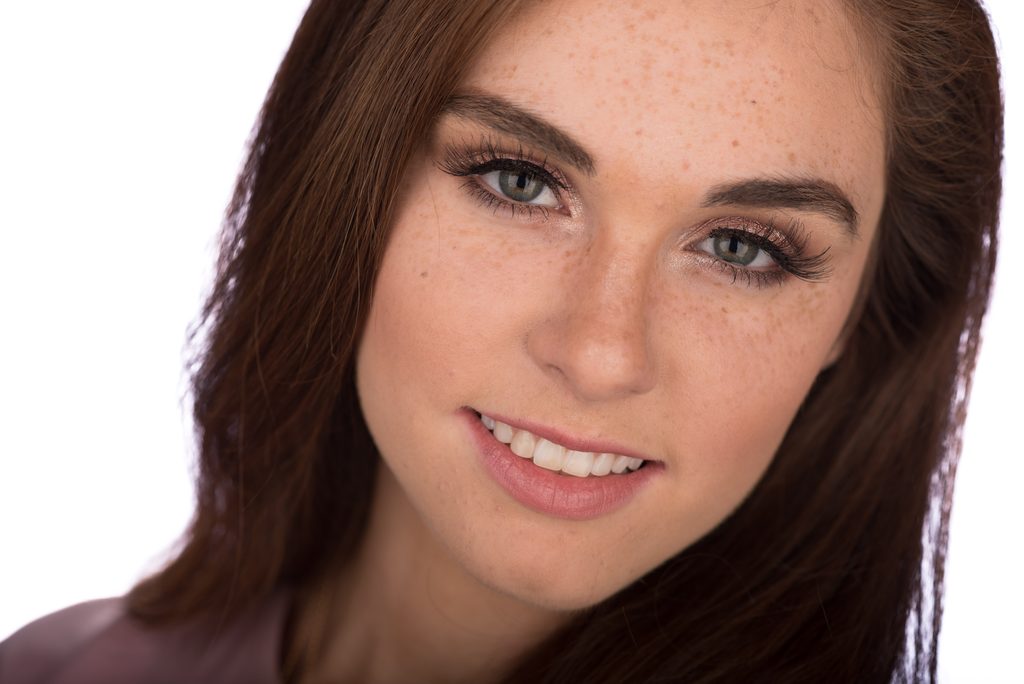
Notice that by closing down the aperture, you get more depth of field, so your eyes tend to look more at the face than in the first photograph.
Sydney Rhame
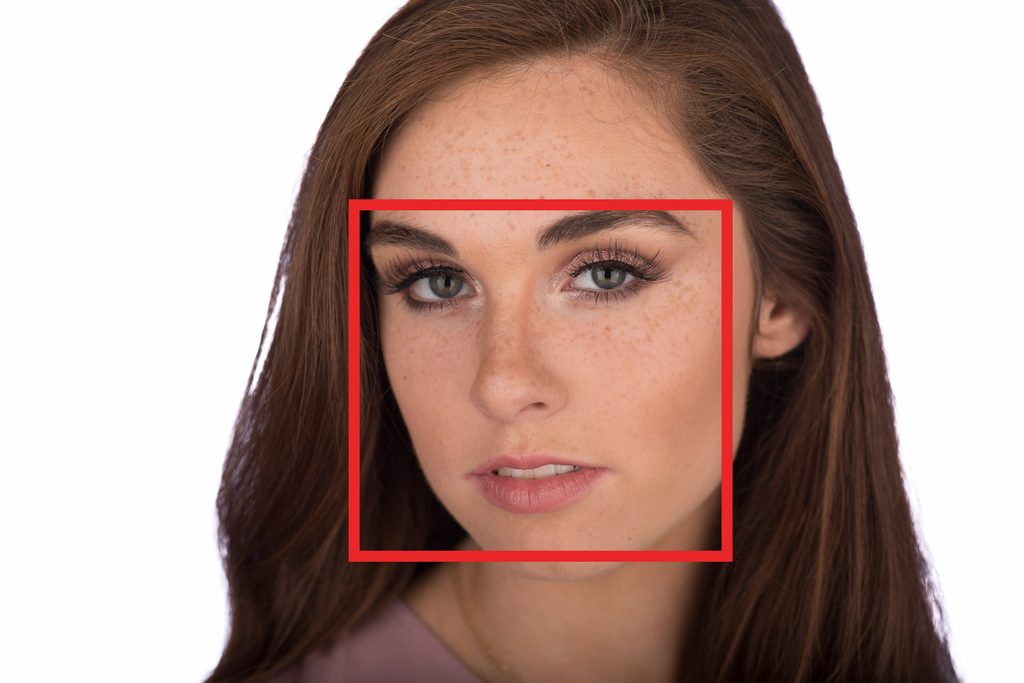
I believe the most important part of a portrait is inside this square. You can capture the person’s essence inside this square, while the area outside adds more information. It complements this core, where the audience and the subject connect.
The famous war photographer Robert Capa said, “If your pictures aren’t good enough, you aren’t close enough.” I believe this applies to portraits, too.
Get as close as your lens will focus with your subject. Try that and see what kind of results you get.
What happens when you get as close as the lens will focus?
A few things happen when you get as close as a lens will focus. Technically, your depth of field gets even more shallow. This will bring even more emphasis to the eyes than almost anything else you can do once you have the aperture wide open. The other way is to light the eyes more than the rest of the face.
Another HUGE thing that happens when you get this close is that you will either make your subject quite uncomfortable, or, if you have built trust, you will be let into their world even more. We call this getting into their intimate space.
Here is information that will help you understand how this can impact your photos from Wikipedia:
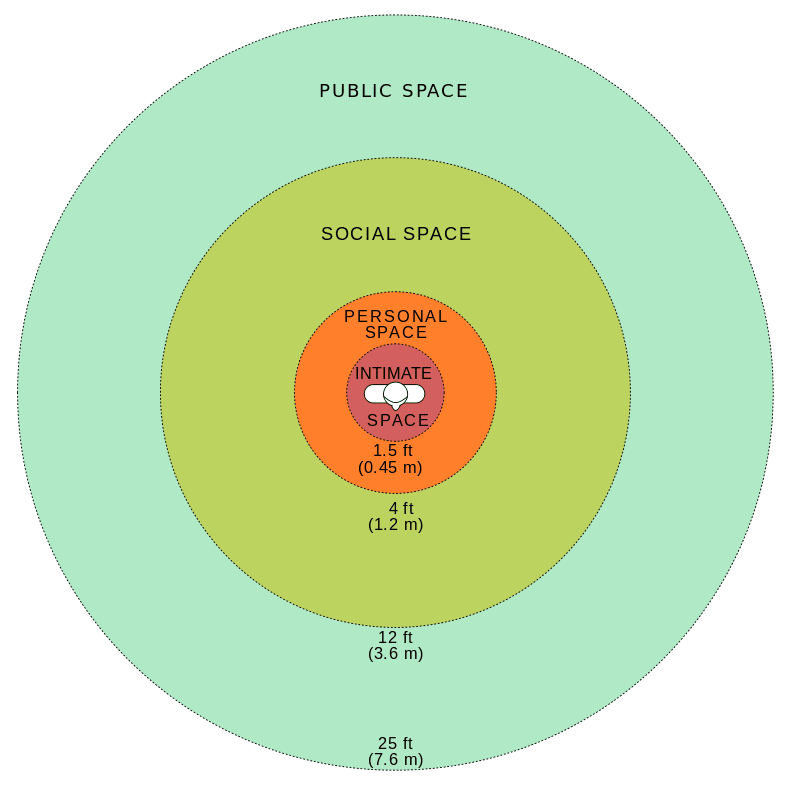
In 1966, anthropologist Edward T. Hall identified four zones of personal space that residents of the United States of America like to maintain around them:
Intimate distance: extends roughly 18 inches (46 cm) from the individual and is reserved for family, pets and very close friends. Displays of affection and comforting are commonly conducted within this space. The only strangers an individual typically accepts within his or her intimate space are health care professionals.
Personal distance: extends 1.5 to 4 feet (0.46–1.22 m) and is reserved for friends and acquaintances. A handshake will typically place strangers at least 2 to 4 feet (0.61–1.22 m) apart, preserving the personal distance. However, a friendly kiss on the cheek by a woman as a greeting is widely practiced.
Social distance: extends from about 4 to 12 feet (1.2–3.7 m) and is used for formal, business and other impersonal interactions such as meeting a client.
Public Space: extends more than 12 feet (3.7 m) and is not guarded. Secret Service agents will commonly attempt to ensure 12 feet (3.7 m) of open space around dignitaries and high-ranking officials.
Now my Nikon 85mm ƒ/1.8 has a minimum focus distance of 2.6′, which is inside that personal space zone for Americans. Funny, but did you know that most 50mm lenses’ minimum focus distance is 18″? I wonder if this is how they discovered the intimate zone?
I believe that if you are inside 4 feet of the subject, you are getting more intimate photos. It’s difficult to get intimate photos if the photographer can’t be intimate with the subject through the camera.
Conclusion:
Focus on eyes, and specifically the one closest to the camera
Get close, as your lens will let you get truly intimate photos
To be allowed through the window into the soul, you must build a rapport with the subject
Reading Time: 2 minutes Nikon D750, AF-S NIKKOR 28-300mm f/3.5-5.6G ED VR, ISO 12800, ƒ/5.3, 1/30 While most people are facing the sunset on the beaches of Hawaii, I like to turn around 180º and…
Reading Time: 3 minutes Nikon D750, AF-S NIKKOR 28-300mm f/3.5-5.6G ED VR, ISO 100, ƒ/22, 25 sec Storytellers Abroad We are progressing through the multimedia workshop here in Bucharest, Romania. Last night we went out on…
Reading Time: 2 minutesNikon D750, AF-S NIKKOR 28-300mm f/3.5-5.6G ED VR, ISO 800, ƒ/3.5, 1/100 Hannah Strayer listens to James Dockery as he gives editing suggestions to her project on the Romanian Prostitution story she…
Cookie Consent
We use cookies to improve your experience on our site. By using our site, you consent to cookies.