The Importance of Overshooting: Capturing Dance Recitals and Beyond

Reading Time: 3 minutes

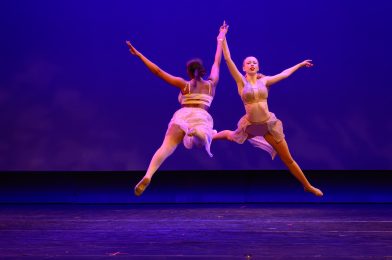
Yesterday was a special day for me. I had the pleasure of photographing my daughter’s students from Elite Dance Academy during their Spring Dance Recital at the Springer Opera House in Columbus, Georgia. This venue holds a special place in our hearts because of its rich history and because my daughter works full-time at the box office, conducts ghost tours, and hosts No-Shame Theater every other week. It was a joy to see her in her element and to capture the artistry of her students on such a grand stage.

Why Overshooting is Essential

Photography, especially in dynamic settings like dance recitals, demands a keen eye and quick reflexes. The fleeting nature of “peak” moments – those split seconds where the dancers’ expressions, movements, and lighting converge perfectly – makes overshooting an invaluable strategy. Here’s why:

  1. Capturing the Unpredictable: Dance is all about movement. Unlike posed photography, you can’t predict when a dancer will hit their stride. By overshooting, you increase your chances of capturing those perfect, unscripted moments that define the performance.
  2. Compensating for Inexperience: While I don’t shoot dance daily, even seasoned photographers who specialize in dance know the importance of taking numerous shots. When you’re not regularly photographing a particular subject, overshooting helps mitigate the risk of missing key moments.
  3. Ensuring Coverage: At yesterday’s recital, there were over 80 separate dance routines, ranging from young children to high school students. Shooting around 100 images per dance routine might seem excessive, but it ensures that I have a wide selection to choose from, highlighting each dancer’s best moments.
  4. Capturing “Peak” Moments: Dance photography is all about timing. Those brief, peak moments where a dancer’s skill and emotion are fully displayed can be challenging to capture. Taking many shots maximizes your chances of freezing these moments in time.
« of 37 »

Tips for Effective Overshooting

  1. Know Your Equipment: Familiarize yourself with your camera’s burst mode settings. This allows you to take multiple shots quickly, which is crucial for capturing fast-moving subjects like dancers.
  2. Anticipate Movements: Study the dance routines beforehand if possible. Understanding the choreography helps you anticipate when those peak moments might occur, allowing you to be ready to capture them.
  3. Be Selective with Your Shots: While overshooting involves taking many photos, it’s also about being strategic. Focus on moments when the dancers will likely express the most emotion or demonstrate impressive technical skills.

Culling the Images: Finding the Best Moments

Once the event is over and you have thousands of images, the next step is culling – sorting through to find the best shots. Here are some tips to streamline this process:

  1. Initial Pass: Please look at all your images and discard any that are out of focus, poorly composed, or otherwise unusable. This will significantly reduce the number of images you must review more carefully.
  2. Star Rating System: Use a star rating system to categorize your images. Start with broad categories (e.g., 1-2 stars for average shots, 3-4 stars for good shots, 5 stars for the best shots). This helps you progressively narrow down your selection.
  3. Look for Emotion and Composition: Focus on images that convey strong emotions, tell a story, or have excellent composition. These are the photos that will stand out and resonate with viewers.
  4. Seek Feedback: If possible, get a second opinion. Sometimes, another set of eyes can catch details you might have missed and provide valuable insights into which images truly capture the essence of the performance.

Conclusion

Overshooting is a powerful technique, especially when every moment counts and the action is unpredictable. Yesterday’s dance recital at the Springer Opera House reminded me of the beauty of these fleeting moments and the importance of capturing them. Whether you’re photographing dance, sports, or any fast-moving event, don’t be afraid to overshoot. The extra effort will pay off when you see the final images that truly encapsulate the spirit and energy of the performance.

Remember, the key to successful photography is not just the moments you capture but also ensuring you have enough material to choose from to tell the best possible story. Happy shooting!
Tagged : /

Empowering Roswell Citizens: Combating Misinformation with the Roswell Fire Department

Reading Time: 4 minutes

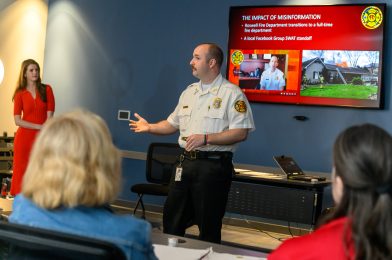
Last night, I had the privilege of covering an event that highlighted the proactive efforts of the Roswell Fire Department in combating misinformation within the community. As I witnessed firsthand, misinformation has become a pervasive issue, often leading to confusion and panic among citizens. However, the Roswell Fire Department is taking significant steps to address this issue head-on.

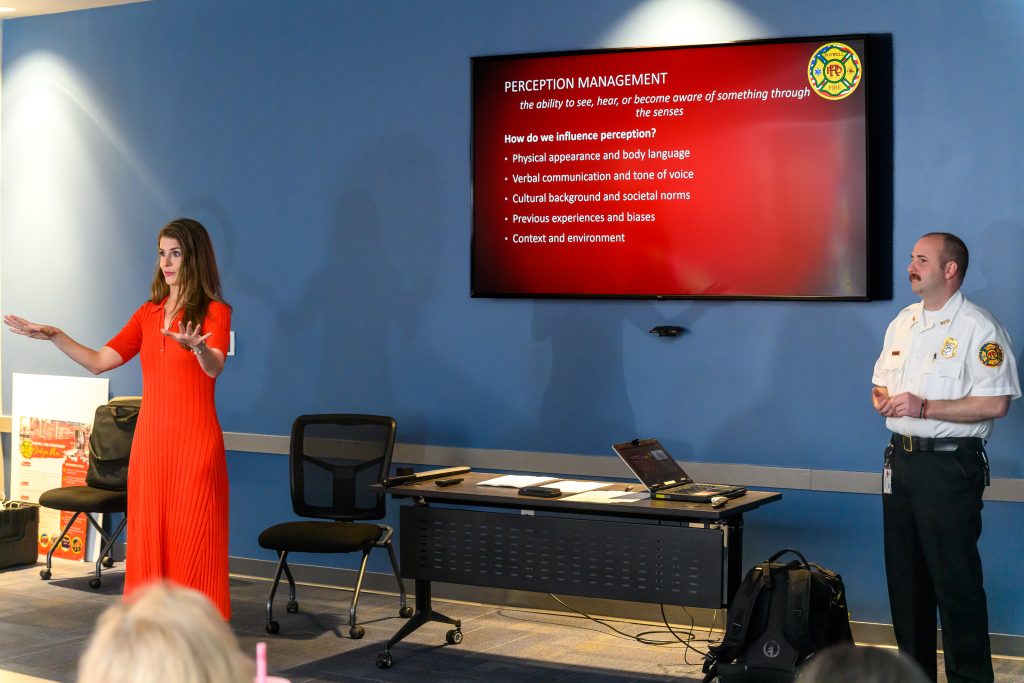
The event, held at the Citizens Fire Academy in Roswell, Georgia, showcased the department’s dedication to educating citizens on the dangers of misinformation and the crucial role of the Public Information Officer (PIO) in crisis communication. Led by seasoned expert Chad Miller, the PIO for the Roswell Fire Department, and Molly Oak, a respected News Reporter from 11Alive, the event provided valuable insights into navigating the complexities of information dissemination in today’s digital age.

MOLLY OAK, a reporter for 11Alive in Atlanta, Georgia, trains the Roswell Fire Department’s Citizens Academy on how to improve the public’s perception of you during a press conference as part of the Public Information Training at the Roswell-Alpharetta Public Safety Training Center in Roswell, Georgia.

As I listened to Chad and Molly’s presentations, it became evident how easily misinformation can be spread through unreliable sources, particularly on social media and through word of mouth. With so many avenues for information consumption, citizens need to verify their sources and rely on trusted channels for accurate updates during emergencies.

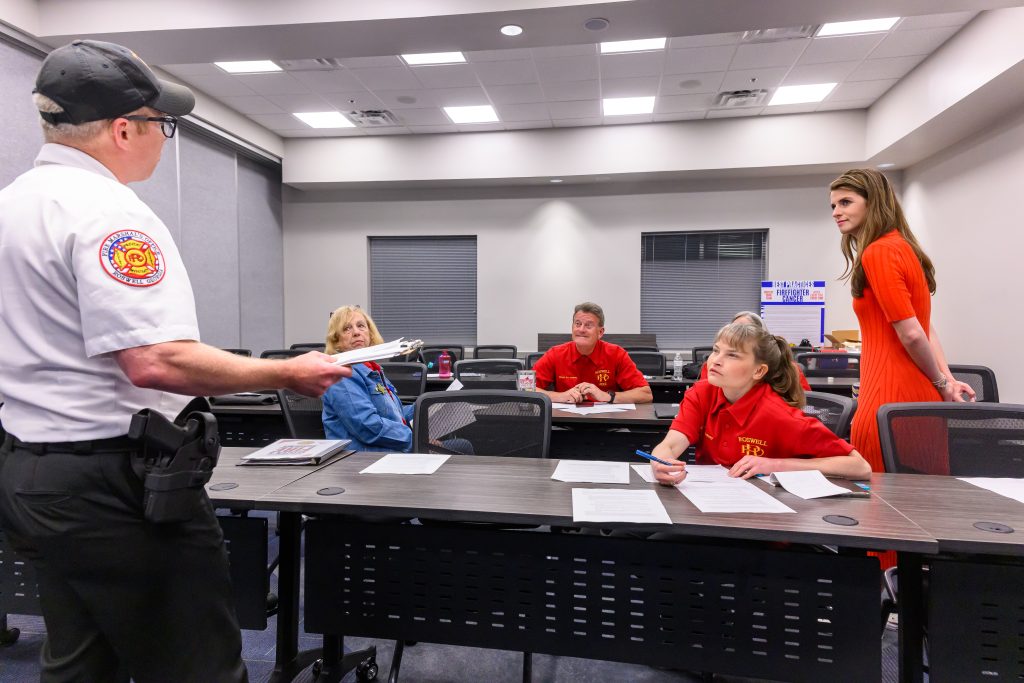
The training session at the Citizens Fire Academy went beyond theoretical discussions, offering participants a hands-on experience in the role of community leaders during a mock news conference. Divided into teams, citizens tackled real-life scenarios, learning firsthand the challenges faced by PIOs in delivering clear and concise messages to the public.

Roswell Fire Department’s CHRIS ARCHER, the Fire Marshall, alongside MOLLY OAK, an esteemed News Reporter from 11Alive News in Atlanta, is leading a group through an impending weather event scenario where they will do a practice news conference as the roles of the mayor, fire chief, police chief and other leaders of the community as part of the Citizens Academy at the Roswell-Alpharetta Public Safety Training Center in Roswell, Georgia.

One of the key takeaways from the event was the critical relationship between PIOs and the local media in disseminating accurate information to the community. By working together, PIOs and journalists play a vital role in keeping citizens informed and prepared during crises.

Throughout the evening, Chad and Molly emphasized the importance of collaboration and transparency in crisis communication. They highlighted the department’s commitment to providing reliable updates through verified channels, such as the department’s website, to combat the spread of misinformation.

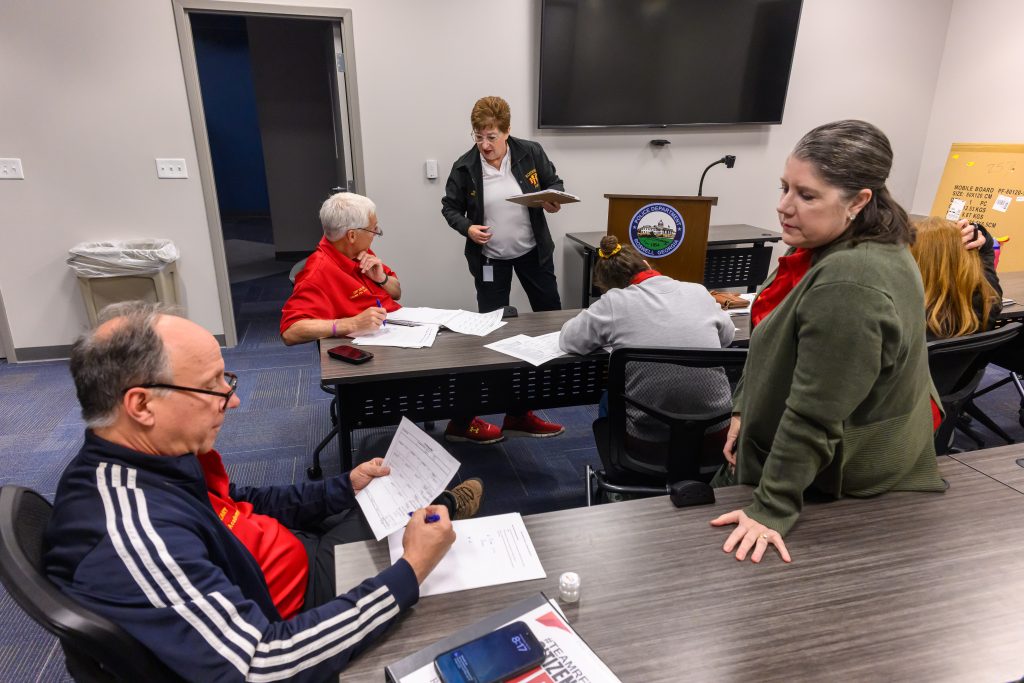
RFD Citizens Academy participants are going over their roles for a mock news conference as part of the Public Information Officer Training at the Roswell-Alpharetta Public Safety Training Center in Roswell, Georgia, to help the citizens understand what is involved in keeping the community informed during an impending severe weather event.

As I reflected on the event, I couldn’t help but feel inspired by the Roswell Fire Department’s dedication to empowering citizens with the knowledge and skills needed to navigate the complexities of information in today’s digital age. By investing in education and collaboration, they are not only strengthening community safety but also fostering a more informed and resilient community.

In conclusion, the event at the Citizens Fire Academy served as a powerful reminder of the importance of combating misinformation and empowering citizens to become critical consumers of information. Through education, collaboration, and transparency, we can work together to build a more resilient and informed community in Roswell and beyond.

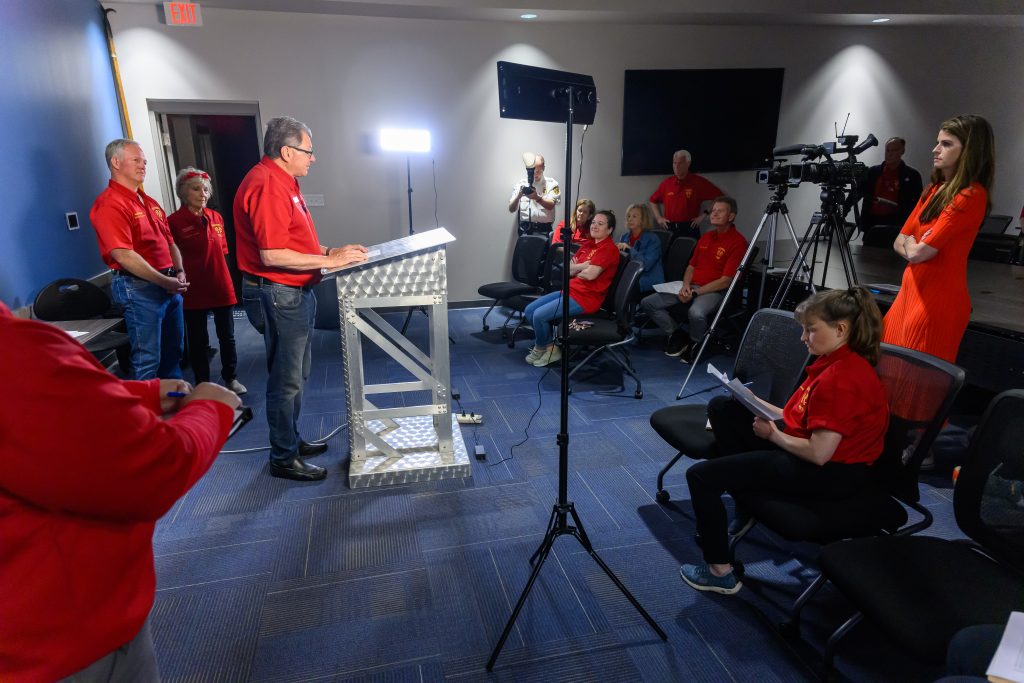
MARK PACACHA, a workshop participant, addressed the media during a mock news conference training exercise at the Roswell-Alpharetta Public Safety Training Center in Roswell, Georgia, as part of the Roswell Fire Department’s Citizens Academy. This training night was focused on the role of the Public Information Officer.
Tagged :

Students have access to superstars

Reading Time: 3 minutes
photo1
Sergej Krylov and Arild Remmereit talk to the students from Elkins Point Middle School orchestra and band. Next to Sergej is his Stradivari “Scotland University” (1734) from the Sau-Wing Lam Collection, courtesy of “Fondazione A. Stradivari” in Cremona. (photo by: Stanley Leary) 

Having kids give us a great excuse, if we need one, to take them places we want to go. Parents of kids get to enjoy children’s movies that they may feel awkward going to alone. We get to go to places like Disney World.

Sometimes kids have advantages to give us access to adult subject matter.  This is what happened last Friday night with our daughter.

Seth Gamba is my daughter’s orchestra teacher who organized group ticket sale for the students and parents to see the Atlanta Symphony.  Friday night was special because of guest violin soloist Sergej Krylov and last minute bonus of guest conductor Arild Remmereit.

photo2
Students, parents and teachers from Elkins Middle School enjoy listening to the artists answer their questions. (photo by: Stanley Leary)

At first you might think the “discounted ticket” was what excited me, but really it was what happened after the concert.

Seth Gamba had asked if the soloist violinist and the conductor would talk to the students after the concert.  They graciously stayed after the event and the students sat on the first 2 rows of the symphony hall for question and answer time.

You could see the faces of the students paying close attention to these superstars.  The parents I think were just as excited and also asked questions.

photo3
Arild Remmereit talks about his journey from the time of the student’s age to now. The students got to hear how his path was different than of Sergej Krylov’s. Arild’s mother made him take piano, which he wasn’t fond of at that time and had to practice 5 minutes a day.  Sergej took from his parents and practiced for 6 hours a day as a young 5 year old. (photo by: Stanley Leary)

The lesson is simple—as a student you have access that is difficult later in life to get. Professionals are very excited about talking about their work and answering questions to students.

If you have children be sure you are aware of the opportunities that the community has for them that give them access to “superstars” and go with them.  If you don’t have children—volunteer to help youth programs and by doing so you will not just get an opportunity to tag along to meet superstars you are one for giving of your time.

photo4
I seized the opportunity to thank Seth Gamba by offering to photograph him with the conductor and violinist. Follow the lead of Seth Gamba and organize an outing for the students you know to get access to professionals and artists–you will be glad you did. (photo by: Stanley Leary)
Tagged :

Active Listening

Reading Time: 3 minutes

Vince Stanton attempts Troublemaker during the Professional Bull Riders Atlanta Classic at the Georgia Dome. 

From Wikipedia
Active listening is a communication technique that requires the listener to understand, interpret, and evaluate what they hear. Listening actively can improve personal relationships by reducing conflicts, strengthening cooperation, and fostering understanding. When interacting, people often do not listen attentively. They may be distracted, thinking about other things, or thinking about what they will say next (the latter case is particularly true in conflict situations or disagreements). Active listening is a structured way of listening and responding to others, focusing attention on the speaker. Suspending one’s frame of reference, suspending judgment, and avoiding other internal mental activities are essential to attend to the speaker fully. “The Most Dangerous Eight Seconds in Sports” is how National Geographic writer Zoltan Istvan describes bull riding.  Death is a real possibility for the bull rider.  The bulls are 15 times the size of the rider.  Imagine a defensive lineman in football being 15 times the quarterback’s size. One of my photography friends is also a bull-riding coach.  His name is Maxy Pinson.  When you meet Maxey, you see a well-dressed and groomed elderly gentleman.  He is from Oklahoma and was a scientist for the oil industry in his earlier career.   

Reuben Geleynse hangs on to Long John during the 2004 RBR Atlanta Classic at the Georgia Dome, February 7, 2004.

 I was fascinated with Maxy’s career and interested in what a coach does to help a cowboy ride a bull.  What he teaches these bull riders parallels what we need to know about being a good listener. Maxy teaches the bull rider to focus his “full attention” on the bull’s head.  “The bull’s head will let you know what the bull is doing and going to do,” says Maxy.  You cannot take your eye off it.  You have to stay focused for 8 seconds to ride the bull. Active listening requires you to make eye contact and listen to understand the message, and not just hear the words. You cannot be distracted by whatever else is happening around you, or by forming counterarguments you’ll make when the other person stops speaking. Nor can you allow yourself to get bored and lose focus on what the other person is saying. All of these contribute to a lack of listening and understanding. You also need to communicate to the person you are listening.  Sometimes just an “uh-huh” or nod will let them know you are listening.  This isn’t saying you agree, but it communicates you are listening. An occasional question or comment to recap what they say

WE REMEMBER
10% of what we read
20% of what we hear
30% of what we see
50% of what we hear and see
70% of what we discuss with others
80% of what we experience
95% of what we teach others–Edgar Dale

The first step to becoming a better listener was acknowledging that my communication style has been less than stellar.  While I was getting better at getting my ideas across as I matured, my relationships with people were not improving.  I had to stop and evaluate my communication style.  It needed an overhaul. I can see that the successes I have had in life have usually been when I practiced “active listening.”  There are still many relationships where I need to implement these skills better.   I have discovered that Edgar Dale is right. I remember more of what I needed to do to be more successful: write and share what I found on this blog.   While you might get something out of the blog, the very nature of writing these posts has helped me improve in many ways.

Bart Jackson attempts to ride Smokin Joe during the 2004 RBR Atlanta Classic at the Georgia Dome, February 7, 2004.

If you don’t listen actively to those needing your attention, you will go down like a bull rider.

Tagged : /

Good photographers play checkers, while great photographers play chess

Reading Time: 3 minutes


If you have played checkers, you know that each piece moves the same. When a piece reaches the furthest row from the player who controls it, it is crowned and becomes a king.

The other game that uses the same board is chess. Chess has six different pieces, each moving differently from the others. Once a beginner is familiar with the rules, one of the many problems he faces in a chess game is what to do when playing the game, how to start the game, how to attack his opponent’s position, and how to defend his own at the same time.  

The difference between the two games that I want to use for illustration is that all the pieces are the same in checkers, but they are different in chess.

I remember taking lessons on how to play chess from a grand master who played on the Princeton team in college. Two pieces I had more trouble learning how to play than all the others: the pawn and the knight.

It took a while to understand that the pawn’s first move can be one or two squares straight ahead, and unlike the other pieces, where it can move to, it does not take the opponent’s pieces; instead, it takes them diagonally. The en passant capture is when your opponent moves his pawn two spaces, trying to avoid capture by your pawn on the first square. You may take their pawn if they make that move. Also, unlike the other pieces, the pawn cannot move backwards. As you can see, this can make your head spin, and this is just the pawn.

Once you learn what all the pieces can do, you realize that they can do things in combination that they cannot alone.


My teacher taught me how military leaders used chess to help them plan their attacks on enemies and how to respond. The pieces represent the people and their roles. If you watched Harry Potter and the Sorcerer’s Stone, you will have seen how the pieces of the board came to life as they played. Today, you will find humans used as pieces in large chess games worldwide.

I see two ways photographers play chess or checkers. The first way is how they treat their subjects in their viewfinders.

Many photographers see people as just objects to fill a space, but great photographers like Henri Cartier-Bresson know that not just any subject will do for a particular composition. His photos became iconic because everything in the frame worked together at the right moment—the decisive moment.

So, the first lesson we can learn as photographers is to see people like chess pieces—each one unique and moving differently. This requires you to get to know your subjects, and the more you know about them, the better your photographs will be.

Second-place photographers often play checkers rather than chess in their business practices. You may only make headshots in your business, as opposed to another photographer who offers a wide variety of services. The mistake is often made not by the photographer offering only 1 product but by the photographer who thinks their variety of services makes them more service-oriented.

If you want to play chess instead of checkers with your business, then you need to see each client as different and learn to listen to them. While you may only offer headshots, they may need you to come to them or be more flexible with your schedule. They may need large prints or just a Facebook-size photo, and the question is, are you flexible enough to offer them what they need?

If you are playing chess with your photographs, then:

  1. You know your subjects’ names in your photos
  2. The photos reveal their personality, not necessarily yours
  3. You know something about your subject—how else were you going to tell their story if you didn’t think it
  4. You are making new friends with your subjects

If you are playing chess with your clients in your photo business

  1. You have accommodated a request you don’t usually offer. You may charge more for this, but you were willing and excited to meet their expectations.
  2. You are asking what they want and need, rather than just showing them a menu of your services.
  3. You listen more than you talk.
  4. After you no longer interact with the client, you think about them and how you can do something else to help them.
  5. You are making new lifelong friends with your clients
Tagged :