Making Photos POP!

Reading Time: 3 minutes

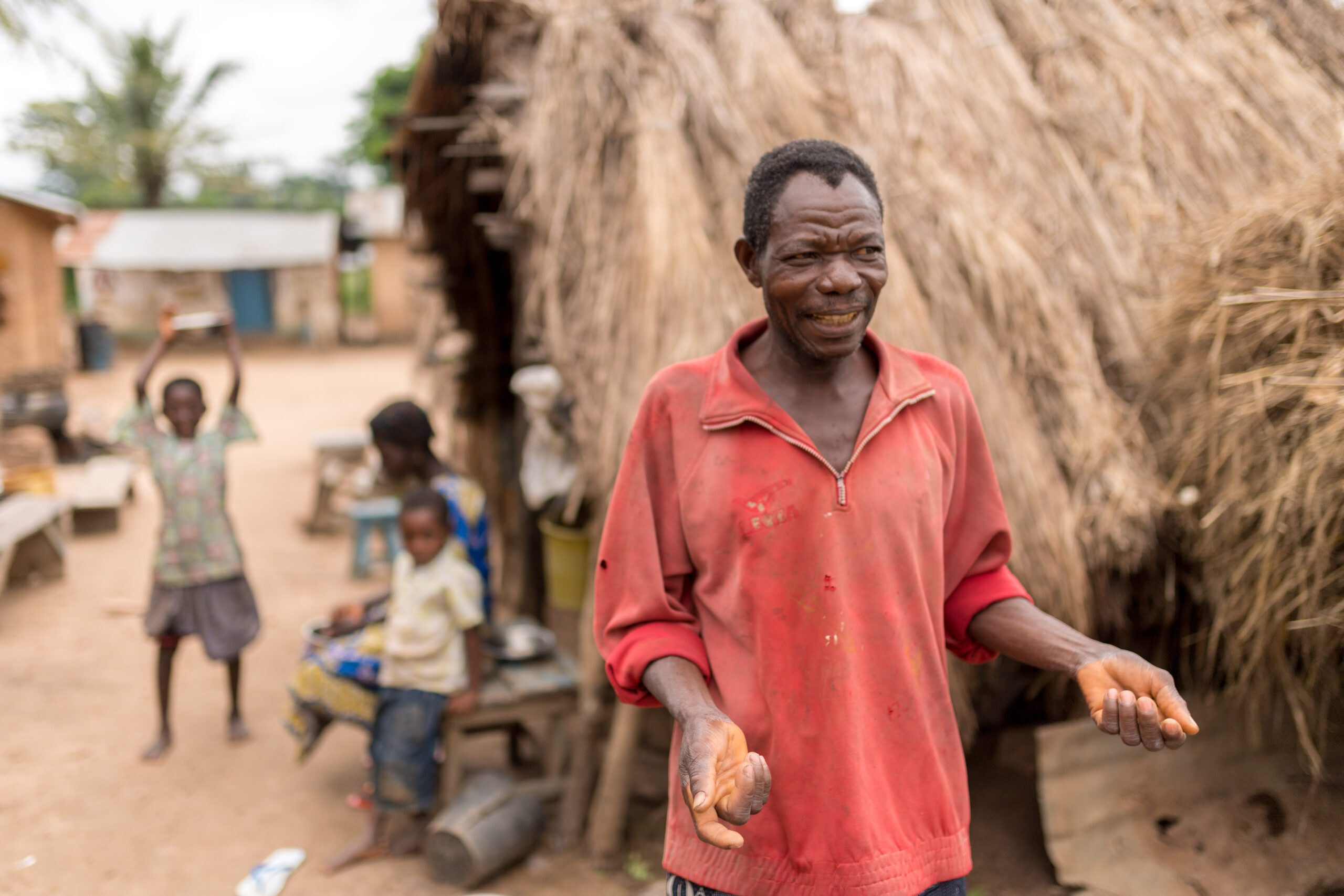
Selective focus makes people pop out of photos or makes the backgrounds recede into a blur. And you choose what pops, what blurs, and what fuzzes over.

Where do you want the viewer to focus their attention – the hedge in the foreground, the man in the middle, or the trees in the distant background? Many professional photographers use selective focus to control the viewer’s attention.

The apertures, called f-stops, are fractions. For example, the f-stop ƒ/4 is ¼ (one-fourth) of what one-fourth is, which is a little beyond the scope of this article. Let’s say that an f-stop is a fraction, ok? (ƒ/4 = 1/4th  f8 = 1/8th). Typically, these numbers are on the lens: 2.8, 4, 5.6, 8, 11, 16, 22, and so on.

Remember these are fractions: 1/2.8, 1/4, 1/5.6, 1/8, 1/11, 1/16, and 1/22. It compares how much light each number lets through the lens. Therefore, 1/5.6 allows more light through the lens than 1/22.

Togo, West Africa [NIKON D5, 35.0 mm f/1.4, Mode = Aperture Priority, ISO 100, 1/2500, ƒ/1.4, (35mm = 35)]

Here’s the creative part: the smaller the opening (f-stop) in the lens, the less light is allowed in. Therefore, a greater area is in focus from the foreground to the background. If you want to throw most of the background out of focus, use ƒ/5.6 rather than
ƒ/22.

Today’s digital cameras allow the photographer to vary the aperture, preview the results, and then decide its effectiveness.

Togo, West Africa [Nikon D5, Nikon 85mm ƒ/1.8G, ISO 100, ƒ/1.8, 1/320]

If you want the subject to “pop,” use a larger lens opening, e.g., ƒ/4 or ƒ/5.6. Like a simple sentence, having one different subject is better.

A smaller aperture (ƒ/16 or ƒ/22) brings the foreground and background into sharper focus or a greater depth of field. It also allows for other compositional techniques to direct the viewer to the photo’s main subject.

Jessie Bowling, Senior photos [Nikon D5, Nikon 85mm ƒ/1.8G, ISO 100, ƒ/1.8, 1/4000]

Setting your camera’s ISO, shutter speed, and aperture provides more than a properly exposed photograph. You can use these tools to compose and say what you want to say in your pictures.

Jessie Bowling, Senior photos [Nikon D5, Nikon 85mm ƒ/1.8G, ISO 100, ƒ/10, 1/320]

Experiment using different ƒ-stops. Try setting the camera to the aperture preferred setting. Explore the creative tools available on the camera. If the camera is always set on automatic, it becomes a costly box camera.

Tagged : /