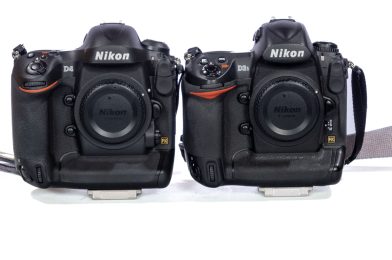
While the cameras appear very similar, there are differences with shooting still images.
Now that I have practiced shooting with the camera for the past few days, I have noticed a few changes I had to get used to. First, I prefer to have two identical cameras. I like not to think about any differences between cameras while working. The D4 has some button changes from the D3S.
The buttons are not exactly alike, so I can see myself making some errors. So, I will try to replace my Nikon D3S with another Nikon D4 very soon.
The Nikon D3s are great cameras, and if it had not for the changes in all the buttons, I might have lived with the slight differences in the cameras’ still image shooting. However, while the changes might be significant improvements, adjusting my shooting from camera to camera could cost me an image.
I think Nikon did think through this and still made the changes because some of the functions are improvements.
There are more differences on the back than on the front. While many buttons appear the same, they are not all the same.
I am not going into every button difference here in this post. I just wanted to highlight some that I use all the time.
First, the metering mode choices are located in very different places. The options are the same, but you now push the choice at the top left and rotate the thumb dial to select the various metering modes.
I seldom use the average meter and pick between the spot and the matrix.
One difference is the metering choices. The Nikon D4 has removed the dial on the viewfinder and moved it to the left-top menu.
This is the back of the Nikon D3S
The following significant change for me is the focusing modes. On the Nikon D3S, you just flipped the dial on the back, and depending on whether you had the camera in AF-S or AF-C, different functions were tweaked in the menu.
On the Nikon D4, most choices are now visible on the top menu when you push the AF button on the front and use the thumb or index finger dials.
This is the back of the Nikon D4
This is the Auto Focus button on the Nikon D4. You push the button to change functions and turn the aperture or shutter dial.
This is the Auto Focus button on the Nikon D3S
Nikon D4: When you push the AF button on the front of the camera and rotate the thumb dial on the back, the AF switch changes from AF-S to AF-C.
Nikon D4—When you push the AF button on the front of the camera and rotate the index finger dial, you change the AF-C to many different options. This is the third choice.
Nikon D4—When you push the AF button on the front of the camera and rotate the index finger dial, the AF-C switches to many different options. This is the d51 point.
Nikon D4 – When you push the AF button on the front of the camera and rotate the index finger dial, you change the AF-C to many different options. These are the d21 points.
Nikon D4—When you push the AF button on the front of the camera and rotate the index finger dial, the AF-C switches to many different options. This is the D9 point.
Nikon D4—When you push the AF button on the front of the camera and rotate the index finger dial, you change the AF-C to many different choices. This is the single [ ] that you move around.
Nikon D4—When you push the AF button on the front of the camera and rotate the index finger dial, you change the AF-C to many different choices. This auto function locks in on faces and other subjects based on algorithms.
Nikon D4: When you push the AF button on the front of the camera and rotate the index finger dial, you change the AF-S to one of two choices: Single or Auto.
These are the dials on the Nikon D3S. The lock button on the Nikon D4 has been changed to the meter, and the lock function is now in the menu rather than a dial.
This is the Nikon D4. Having the meter choice here is nice in some ways. I miss the lock button from the Aperture, and the shutter is no longer here. However, it is still accessible in the menu.
This is the Nikon D4. You will notice a new red dot on a button. This is for the movie function as the start and stop function. The rest is the same.
There will be even more updates as I get used to the new Nikon D4.
Fuji X-E2, FUJINON XF 55-200mm, ISO 500, ƒ/6.4, 1/500
My stepson looked at his first paycheck and asked, “Who is FICA?” This was his first hard lesson about where the money goes – the cost of doing business.
Much of the money we pay for a service doesn’t stay with the service provider.
According to Dun & Bradstreet, “Businesses with fewer than 20 employees have only a 37% chance of surviving four years (of business) and only a 9% chance of surviving ten years.” Of these failed businesses, only 10% close involuntarily due to bankruptcy. The remaining 90% close because the company was unsuccessful, did not provide the level of income desired, or was too much work for their efforts.”
So many good photographers have to turn to other ways to make a living, not due to a lack of photographic skills but poor business practices.
Two things caused their businesses to fail: 1st – they didn’t know the actual cost of doing business, and 2nd – they could not promote themselves.
In 2001, I left a staff position and began freelancing full-time. My business has averaged 20% annual growth over the past 6 years. Many of my colleagues ask me how I do it.
This coming week, I am going to Hawaii to teach business practices for the third year at the University of Nations in Kona. First, I require the students to calculate how much it costs them to live for a year. I’ve found that even the older students who have been on their own for a time typically do not know what it costs them to live.
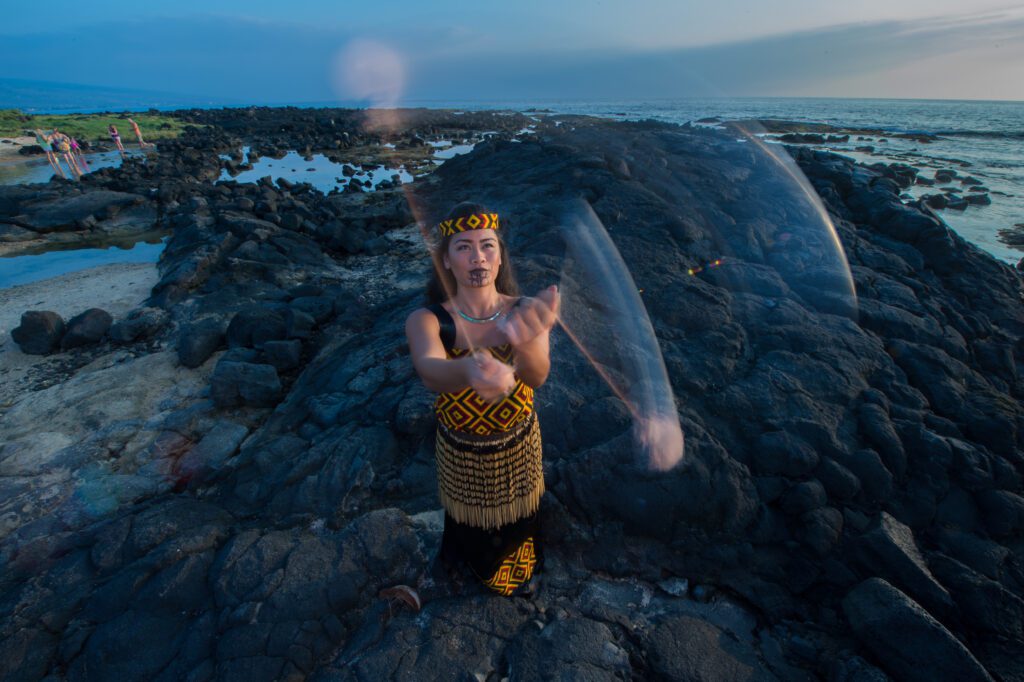
Island Breeze [Nikon D4, AF-S NIKKOR 14-24mm f/2.8G ED, ISO 200, ƒ/22, 1/15]
No matter the profession, if you do not know your costs, you cannot estimate your worth in the marketplace.
Once you know your cost and decide how much net income you want to earn, it is easy to determine what to charge for each project to reach that goal.
Take a moment to think about everything you need to do your job. Here are some categories from the National Press Photographers’ Association list I use. Just substitute your terms for similar types to figure out your annual cost of doing business.
Office or Studio
Phone
Photo Equipment
Repairs
Computers (Hardware & Software)
Internet (Broadband, Website & email)
Auto Expenses (Lease, Insurance & Maintenance)
Office Supplies
Photography Supplies
Postage
Professional Development
Advertising and Promotion
Subscriptions & dues
Business Insurance
Health Insurance
Legal & Accounting Services
Taxes & Licenses
Office Assistant
Utilities
Retirement Fund
Travel
Entertainment (meals with clients)
Add your desired net income to your annual business expenses, and divide that total by the number of projects you reasonably expect to do in a year. The answer gives you the average per project you must charge clients to pay those bills, stay in business, and live the way you want.
Now you must determine whether the marketplace can sustain this charge.
On average, you need to charge $1,000 per project to reach your goal. If the services you provide are what people can get anywhere, they will shop for price. If the going rate in your community is $1,200, you are in good shape. If the going rate is $900, you need to cut your overhead—you’re hoping for income, business expenses, or both.
The key to earning what you want comes down to service. You must be able to demonstrate to potential clients that you offer something more if you want/need to charge more than other photographers do.
I have found that I need to know about the subjects I cover more than other photographers do. In addition, I deliver my images a lot faster than most others do. I also listen carefully to what clients say they want and try to meet their needs and go beyond their expectations.
It was a revelation when I first determined my cost and income goals, just as my stepson’s response to FICA and other deductions from his pay was for him.
I do my best to keep my overhead low, but even close to 50% of my gross goes to business expenses. It was shocking to see what I would have to charge to pay the bills. This knowledge was the fire I needed to put in the time and effort to find ways to make myself more valuable to clients and to find those clients by seriously marketing myself.
Nikon D4, AF-S NIKKOR 28-300mm f/3.5-5.6G ED VR, ISO 28735, ƒ/5.3, 1/100
In the same way, the Spirit helps us in our weakness. We do not know what we ought to pray for, but the Spirit himself intercedes for us with groans that words cannot express.
Romans 8:26
Christians everywhere study prayer for many different reasons. Some want to harness the power of the prayer:
He replied, “Because you have so little faith. I tell you the truth, if you have faith as small as a mustard seed, you can say to this mountain, ‘Move from here to there’ and it will move. Nothing will be impossible for you.”
Matthew 16:20
We want control. We want to be able and talk to God and for him to respond to our needs. But, we also see so many situations in which we believe we know what is best.
I am sure you can think of many other reasons we pray. However, what struck me about the topic of prayer is how much we study prayer to be able to control it.
Nikon D2X, Sigma 18-125mm f/3.8-5.6 DC OS HSM, ISO 1600, ƒ/5.6, 1/80
Debra Williams, D.D. did a study called “Scientific Research of Prayer: Can the Power of Prayer Be Proven?” Here is a link to the survey http://www.plim.org/PrayerDeb.htm. Her research shows that even when people do not know people are praying for them, there still is an impact. So who wouldn’t want to tap into this healing power?
If our friends all got together and compared their notes on communicating with us to get what they wanted—how would this make us feel?
Is the purpose of prayer to get what we want, or is it really about the relationship with God?
I like what is said in Romans 8:26 (see above). It paints the picture to me of a relationship that is so good and intimate it may resemble a couple who have been married for years and are in retirement, and their movements with each other reach a dance. Words are not always said, but they know each other so well as not to step on each other’s toes.
“these I will bring to my holy mountain and give them joy in my house of prayer. Their burnt offerings and sacrifices will be accepted on my altar; for my house will be called a house of prayer for all nations.”
Isaiah 56:7
Christians in Photojournalism’s strength is in our prayer life. While individual prayer is our priority, we can learn from each other when we are with those who are on a similar path in this life.
“For where two or three come together in my name, there am I with them.”
Matthew 18:20
Cookie Consent
We use cookies to improve your experience on our site. By using our site, you consent to cookies.