|
Getting your Trinity Audio player ready...
|
An observation from a photographer’s husband stayed with me.
In an interview with her mentor, Tin Man, wildlife photographer Janet described how ongoing instruction helped her move toward the photographs she wanted to make. Her husband, Chuck, had watched that process unfold.
He noticed that the people who engaged in the mentorship—sharing photographs, participating in discussions, and applying what they learned—were the ones who grew.
That sounds simple. But it raises a question worth asking before we register for our next workshop:
What am I prepared to contribute to my own learning?
We can pay for instruction, reserve a hotel room, and buy the equipment on the recommended packing list. Growth also requires us to try something, examine the result, and let someone help us see what we missed.
Learning happens when we have something to work through
At the YWAM School of Photography, I teach students how to use studio lighting. For some, it is their first experience working with strobes.
I can show where to place a light and explain what happens when we move it. But students need to move that light themselves. They need to make a photograph, look at the shadows, and decide what to change.
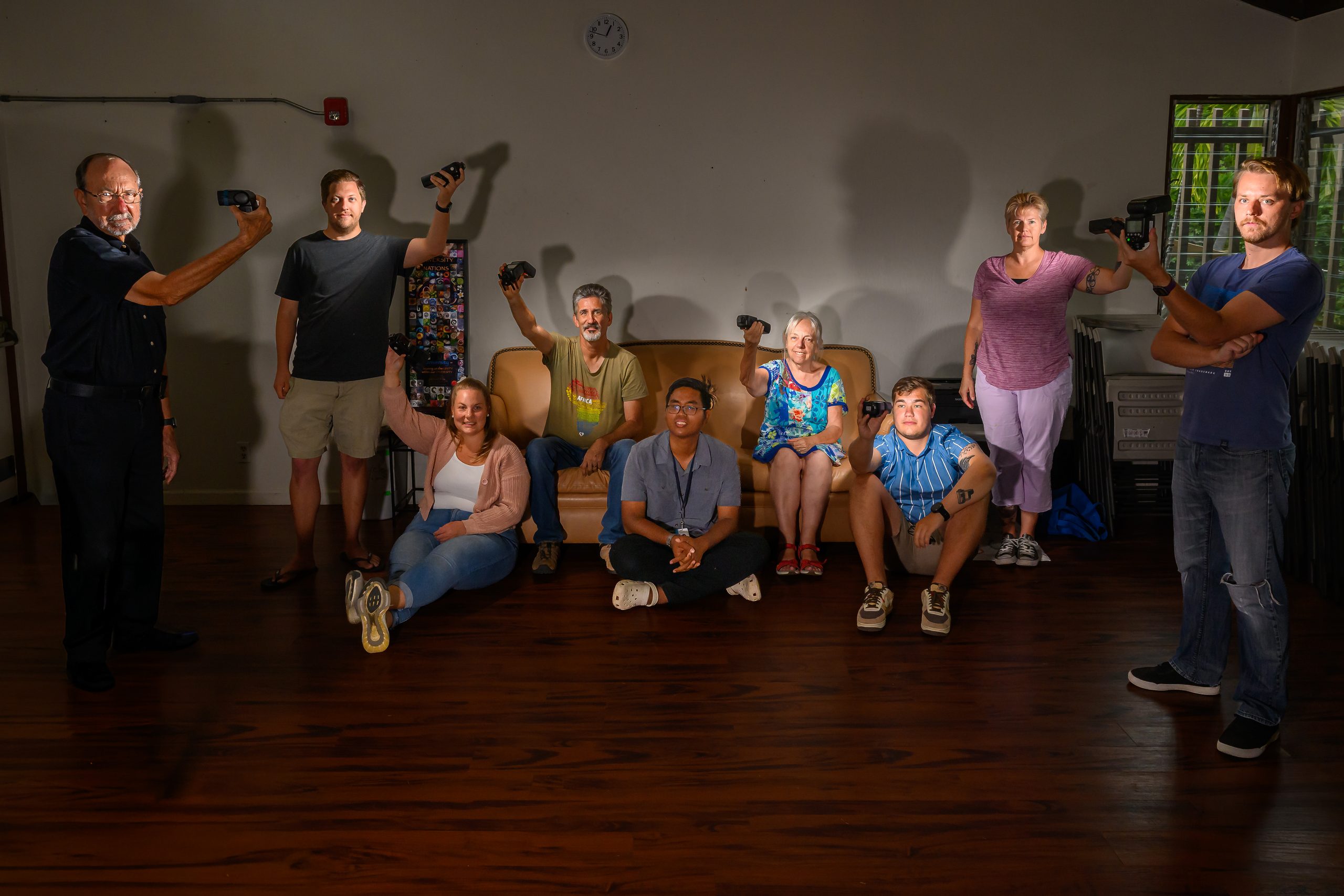
In a group photo exercise I wrote about in 2024, students held their own flashes and aimed them at themselves while I triggered the lights.
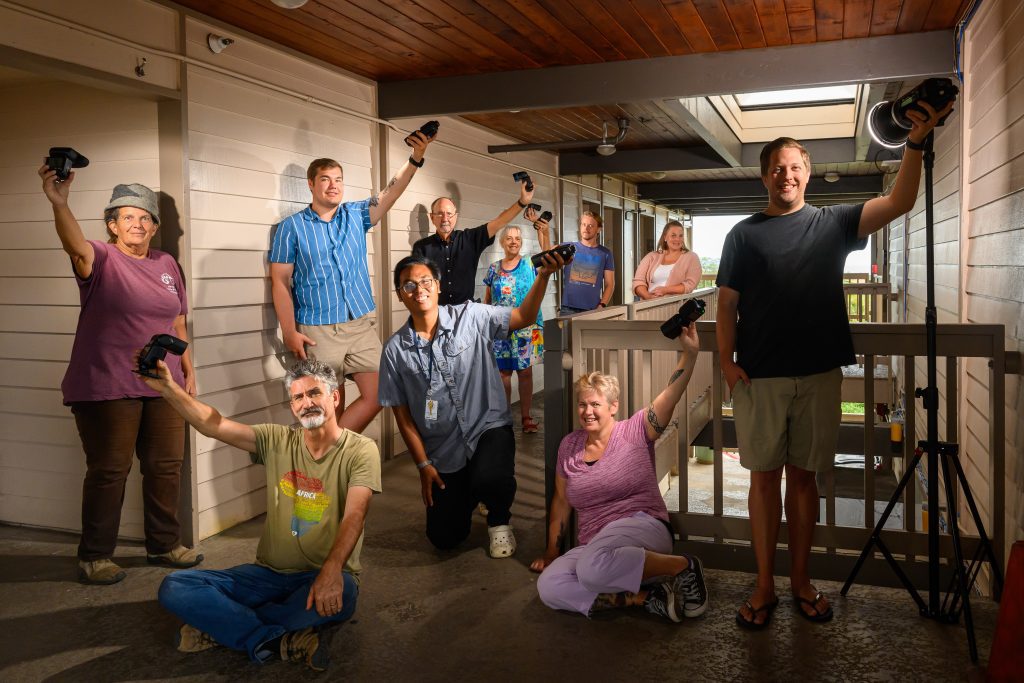
Making the photograph required several attempts. We had to coordinate the lighting, adjust positions, and accommodate someone using different equipment. Everyone had a role in solving the problem.
That is the kind of experience I want a workshop to provide: an opportunity to make decisions and understand their consequences.
Watching someone solve a lighting problem can help. Solving one yourself gives you questions you might never have thought to ask.
Curiosity gives instruction somewhere to go.
Janet described the frustration of watching photography videos that assumed she already understood the terminology. She had questions, but no one was there to answer them.
That is an important part of teaching. An instructor needs to explain clearly, welcome questions, and recognize when a student needs another approach.
In “Why Teaching Is One of My Greatest Loves,” I wrote about teaching students at YWAM Dunham to think, ask why, and use photography to communicate. I also wrote about my responsibility to listen and help each student feel heard.
The student also brings a responsibility: curiosity.
Why is that background distracting? What happens if I move? Why does this photograph communicate something that the previous frame does not?
You do not need to arrive knowing the answers. You do need to be willing to investigate.
Participation can be quiet and thoughtful. It might mean writing down a question, asking for clarification after a demonstration, or taking time to process feedback before trying again.
Give someone a chance to help you
Showing unfinished work can feel uncomfortable.
We want people to see the photograph that worked. Yet the photograph we cannot quite figure out may lead to the most useful conversation.
A teacher can respond much more specifically when you bring an image and explain what you were trying to accomplish.
“I want to get better” is a starting point.
“I wanted the viewer to notice this person, but the background keeps pulling my eye away” gives us something to work on.
Then comes the part that matters: make another photograph using what you learned. See whether the advice helped. Return with another question.
I have to bring that same willingness
This applies to me as much as it does to anyone I teach.
As I wrote in “Don’t Just Build a Network. Become Useful to Your Network,” I’ll be attending a polar bear workshop with my friend Mark, led by Kristi Odom.
I knew Kristi when she was a student at Georgia Tech, and I was on staff. Now I have the opportunity to learn from her.
I want to arrive ready to listen, ask questions, and examine my habits. Experience gives me something to build on. It also gives me familiar approaches that may need challenging.
The willingness to remain a student matters.
Decide how you will participate.e
Before your next workshop, class, or mentoring session, try this:
- Choose one thing you want to improve. Give your learning a specific purpose.
- Bring work you have questions about. Let the instructor see where you need help.
- Try the feedback. Make another attempt while the lesson is fresh.
- Continue after you get home. Put time on your calendar to practice.
Janet wanted to make photographs that helped people care about wildlife. That purpose gave her a reason to keep asking, practicing, and sharing her work—even while she doubted herself.
Before you book your next learning opportunity, ask yourself:
What will I do with what I learn?