
|
Getting your Trinity Audio player ready...
|
Over the past year, I’ve photographed many meaningful moments.
Stories of faith.
Stories of service.
Stories of people doing quiet, important work that most never see.
But this week, something different happened.
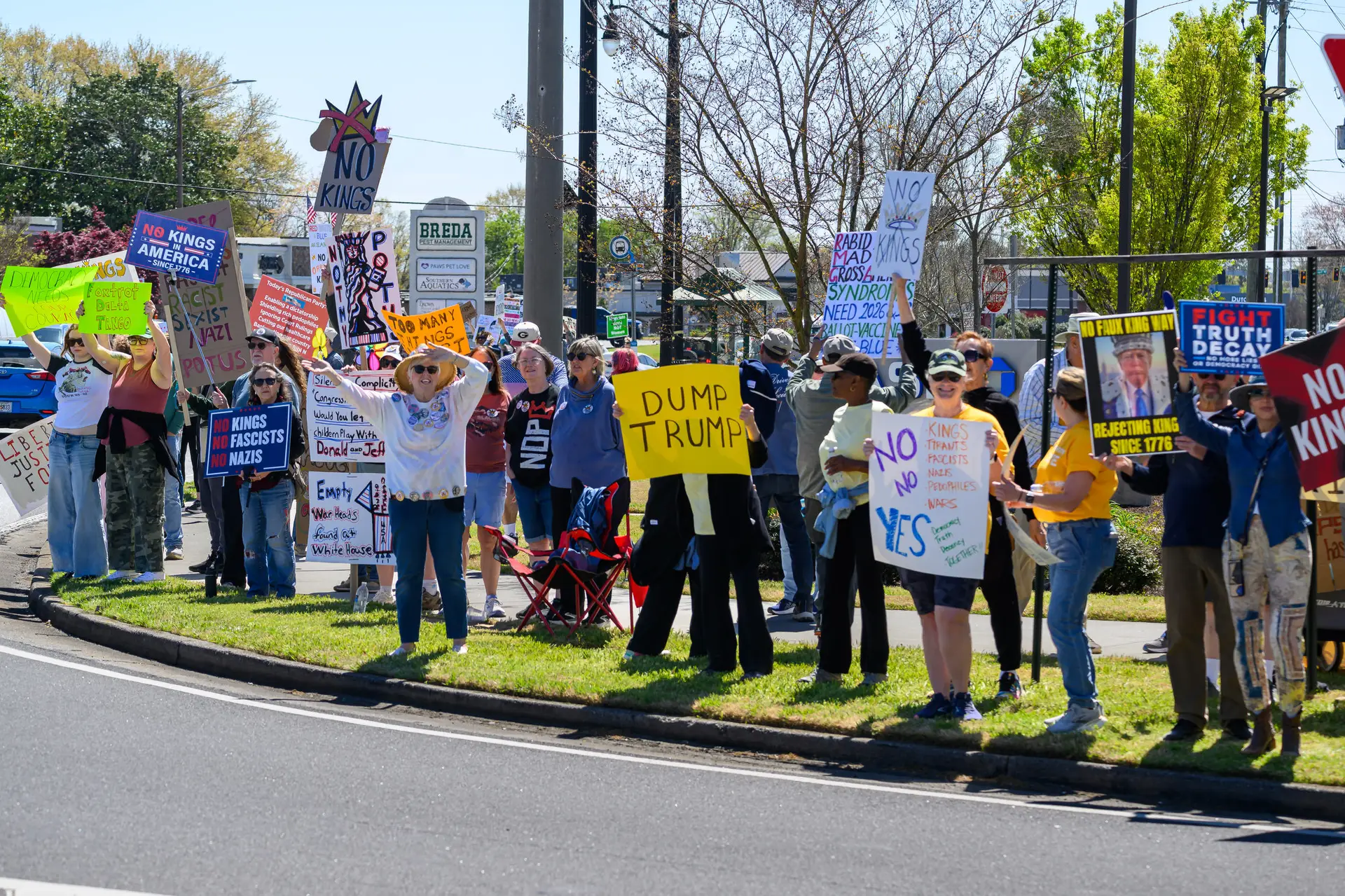
My photojournalistic coverage of the “No Kings” protest in Roswell—shot for ZUMA Press—reached more people on Facebook than almost anything I’ve shared all year.
18,000+ views.
And more striking—over 93% of those views came from people who don’t even follow me.
That got my attention.
Not just because of the numbers—but because of why.
What People Engaged With… Wasn’t Just the Photos
Alongside the images and a short video, the comments began to come in.
Some supportive.
Some critical.
Some are deeply passionate.
Some… deeply personal.
And as I read through them, something became clear:
People weren’t just reacting to a protest.
They were reacting to their own story.
One person talked about gas prices and the cost of living.
Another talked about constitutional concerns and government overreach.
Another spoke about global politics and national security.
Others shared beliefs about faith, freedom, and the country’s future.
At first glance, it appears to be a disagreement.
But if you slow down and really listen…
It’s not just disagreement.
It’s people telling you how life is going for them.
We Don’t Just Argue Ideas—We Defend Our Lived Experience
What I saw in the comment thread is something I’ve seen for years as a storyteller:
When people feel strongly about something, it’s usually not abstract.
It’s personal.
- The cost of gas isn’t just economic—it’s whether someone can visit family.
- Immigration isn’t just policy—it’s about safety, identity, or opportunity.
- Government decisions aren’t just headlines—they shape how secure or uncertain someone feels about their future.
So when people “dig in their heels,” it’s often because:
They’re defending their experience of reality.
And that’s why these conversations get so intense.
Because it feels like more than being disagreed with.
It feels like being dismissed.
The Hardest Thing: Listening First
As I watched the back-and-forth unfold, I kept coming back to one thought:
The hardest thing for any of us to do… is to listen first.
Not to respond.
Not to correct.
Not to win.
Just… to understand.
And honestly, that’s not easy.
Because listening requires something we don’t talk about enough:
Compassion.
Not agreement.
Not approval.
But a willingness to say:
“Help me understand how you got here.”
As a Storyteller, I Ask Myself This Question
Covering moments like this, I wrestle with something:
Am I helping…
Or am I just stirring the pot?
When a story gets attention like this, it clearly touches something deeper.
It brings people out.
It gets them talking.
Sometimes arguing.
But maybe that’s not the whole picture.
Maybe what storytelling really does—at its best—is this:
It forces us to see our neighbors.
Not as headlines.
Not as labels.
But as people… standing on a street corner, holding a sign, trying to be heard.
What If We Took One More Step?
It’s one thing to listen.
It’s another to care.
What if, instead of stopping at “I hear you,” we asked:
“How can I help?”
Because the truth is—
Every single one of us has needed help at some point.
And every single one of us will need help again.
That’s part of being human.
And maybe that’s the piece we’re missing in so many of these conversations.
Not better arguments.
Not louder voices.
But a deeper recognition that:
The person on the other side of the conversation is carrying something real.
Why I’ll Keep Telling These Stories
I don’t expect everyone to agree with what they see in these images.
That’s not the goal.
The goal is to document.
To witness.
To help people be seen and heard.
But if those stories also lead us to:
- Listen a little longer
- Assume a little less
- and care a little more
Then maybe it’s doing more than just “getting attention.”
Maybe it’s doing what storytelling is meant to do.
Helping us live better… together.