|
Getting your Trinity Audio player ready...
|
A child’s first words are nouns. Dog. Ball. Mama. Labels for things that exist. It takes years before a child has the words for what’s happening between things — before, because, even though, love. That’s not a small addition. That’s the difference between naming the world and being able to say something about it.
Most photographers never get past nouns.
They learn correct exposure. Sharp focus. Rule of thirds. Good light. All of it true, all of it necessary, and all of it — eventually — fluent. A fluent photographer produces work that’s clean, competent, correctly composed. Nothing wrong with it. Nothing that moves you, either.
Here’s the thing about fluency: almost everyone who sticks with photography for a few years gets there. Which means fluency isn’t actually the skill that matters anymore. It’s the price of admission.
Think about the rare bestseller that people can’t put down, or the film that leaves an audience wrecked walking out of the theater. Those aren’t better grammar than everything else on the shelf. Thousands of technically competent novels have correct structure and clean prose, yet nobody remembers them a year later. What separates the rare ones isn’t more correctness. It’s that the audience stops noticing the craft at all and feels something. That’s a different tier entirely, and very few writers, directors, or photographers ever get there.
But here’s what has to come first
You cannot make that photograph by reaching for technique. Before you can make it, you have to have internalized the emotion — you have to know already what you’re trying to say. That has to happen before you raise the camera, not while you’re fiddling with settings.
This is the part that’s easy to skip past, so it’s worth saying plainly: vocabulary doesn’t create intent. It serves it. A writer who knows ten thousand words but doesn’t know what they’re trying to say will still write something forgettable. The words don’t rescue an empty idea. The same is true behind a camera.
So the order matters:
- First, know what this moment is about for you — loss, joy, anonymity, tenderness, tension.
- Only then does vocabulary become a tool, not decoration.

Two words worth learning on purpose
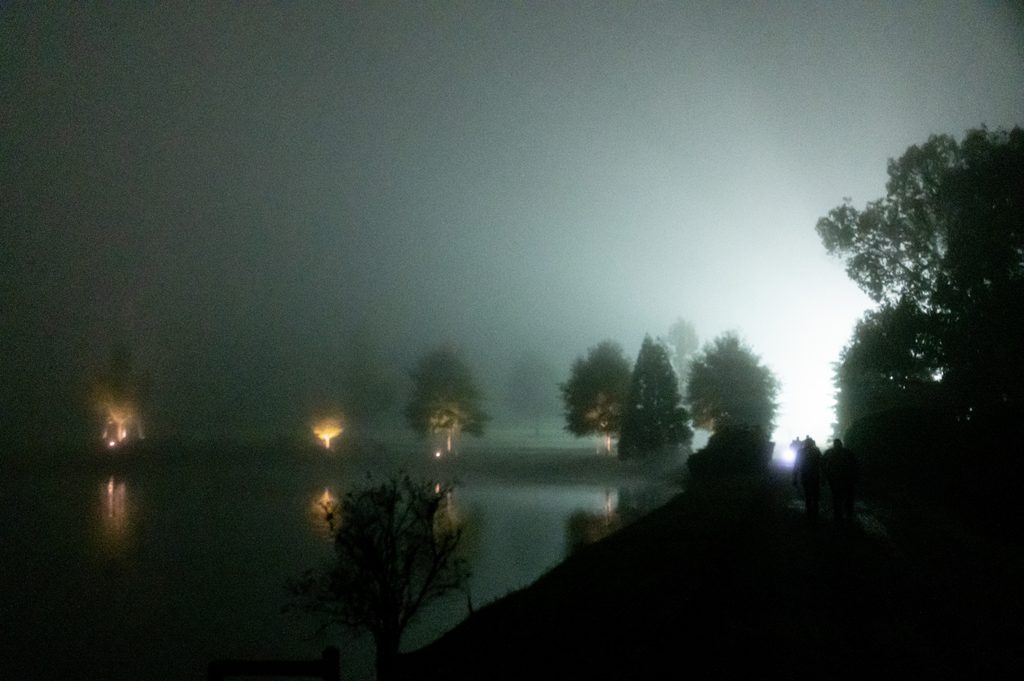
Exposure. Most photographers learn correct exposure first — meter reads middle gray, check the histogram, done. But shaving exposure deliberately is a different act entirely. Push toward silhouette, and you strip away detail and identity — a specific person becomes a universal one, a face becomes pure gesture. Push toward high key, and you burn away shadow and weight — the image reads as light, hope, sometimes vulnerability. Both are technically “shaving exposure.” What they’re saying is opposite. That’s the difference between having the word and knowing which direction to shave and why — because you already decided what this moment is about before you touched the dial.
Leading the eye. If exposure is the word, this is the sentence. It’s not enough to have a sharp subject and a clean background. Fluent composition stops there. Vocabulary-level composition builds a path — what the eye sees first, where it travels next, what it lands on last — the way a sentence unfolds instead of a pile of words on a page. You’re not just showing the viewer a subject. You’re taking them somewhere, in an order you chose, because you already know what you want them to feel first, second, and third.
Why this is worth the work
Most photographers plateau at fluency because it’s comfortable and it’s enough to get hired. But craft alone is a commodity — there are a thousand photographers with correct exposure and clean composition in every market. The ability to make someone feel something isn’t a commodity. It’s rare precisely because it asks for something before the camera ever comes up: knowing what you’re trying to say.
Very few photographers get to that level. But the ones who do stay in demand.