|
Getting your Trinity Audio player ready...
|
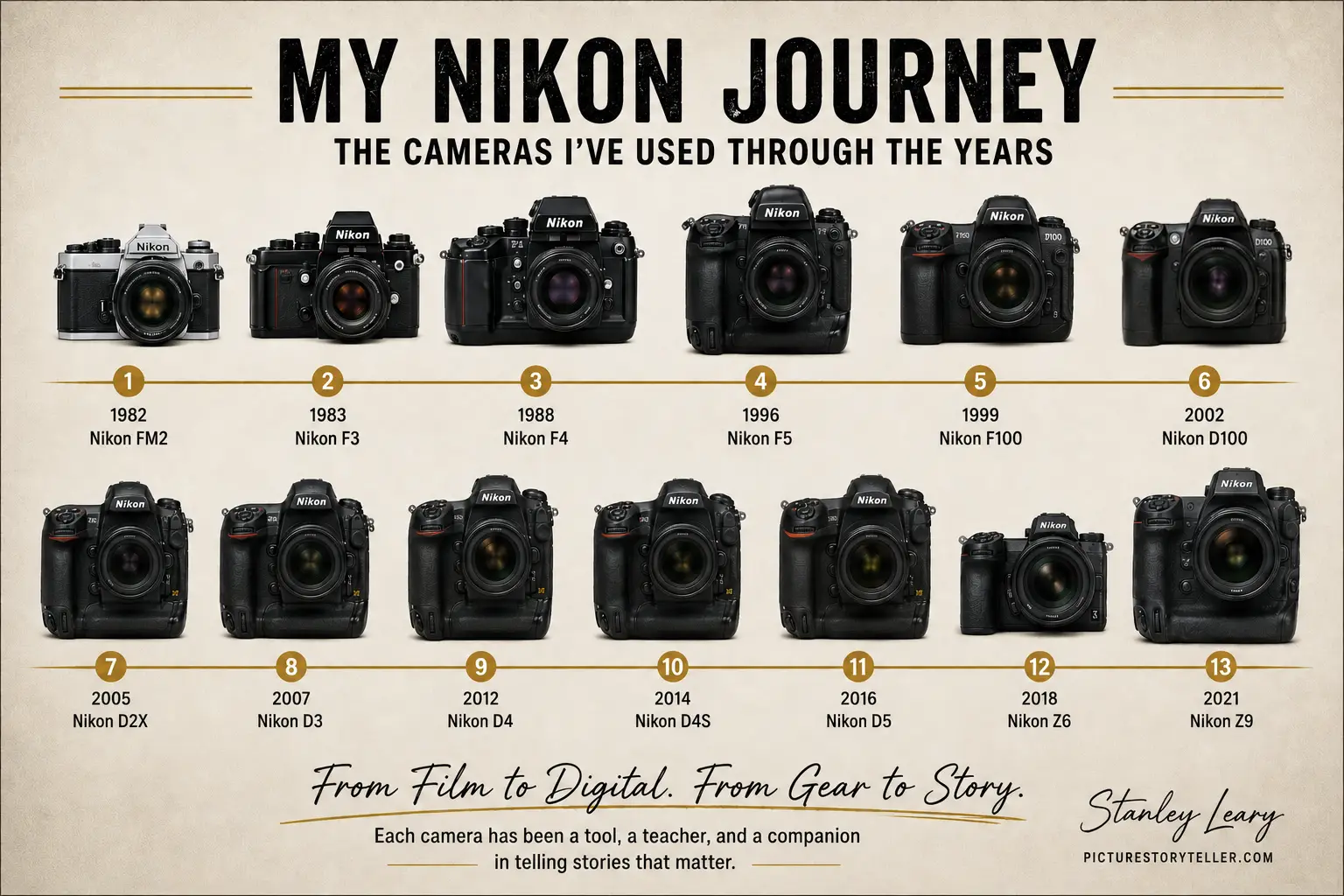
In 1982, I traded my Pentax K1000 and ME Super for my first Nikon FM2. I’ve stayed with Nikon ever since, and I’ve never regretted the decision.
Looking back, I realize the camera brand was never really what held me back. The limiting factor was always how much I understood about getting the most out of whatever body was in my hands. Meanwhile, I watched friends jump ship the moment a new brand released something shiny. I never saw the logic in it. I never picked up a newspaper or magazine and thought, that was clearly shot on Brand X. The images that stopped me were never about the equipment behind them.
You Don’t Buy a Camera. You Buy an Ecosystem.
When I started out, Nikon dominated professional photojournalism. Most newspapers expected their photographers to already own a basic Nikon system, because the paper’s pool gear — specialty glass like a 300mm f/2.8, and other lenses too expensive for any one photographer to own outright — was built around that same mount. If you showed up with something else, you weren’t just choosing a different camera. You were choosing yourself out of the equipment everyone around you was already standing on.
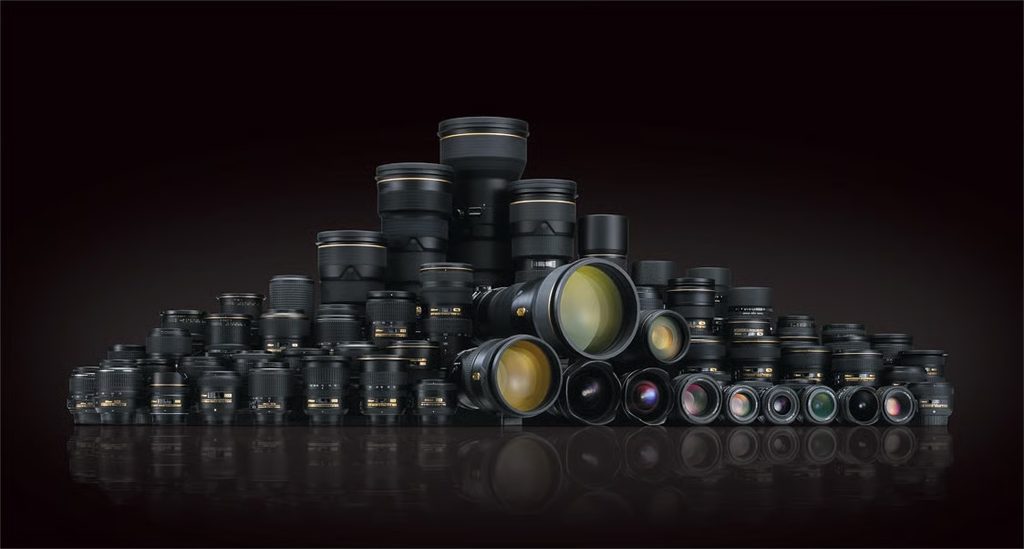
That’s the part people miss when they talk about switching systems on a whim. You’re not just buying a body. You’re buying into a lineup of lenses, accessories, and shared professional infrastructure. In the 1980s, Nikon’s lens lineup was so deep there was more glass available than I could have used in several careers.
Built for the Harshest Jobs on Earth (and Off It)
Nikon’s reputation for rugged, professional-grade build quality isn’t marketing spin—it’s why NASA has trusted Nikon gear for over fifty years. The relationship goes back to 1971, when a modified Nikon F flew on Apollo 15. Since then, Nikon cameras have flown on the Space Shuttle program, lived aboard Skylab, and continue to document daily operations on the International Space Station today. When NASA ordered 53 Nikon D5 bodies in 2017, the notable detail was that they were unmodified — the same cameras available to any working photographer, proven durable enough to operate in the vacuum of space and the temperature extremes of orbit.
That’s not a gimmick engineered for a press release. That’s five decades of an organization with zero tolerance for equipment failure choosing, mission after mission, to trust the same brand I bought into in 1982.
The Support Behind the System
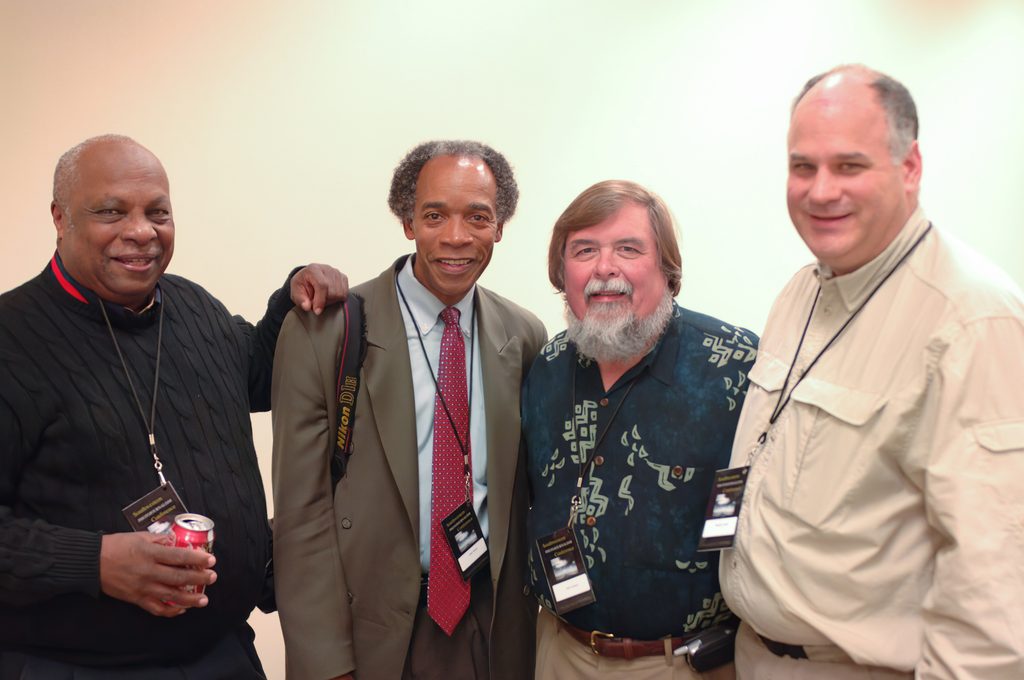
Professional-grade build quality only gets you so far. Gear still breaks, and when it does, who picks up the phone matters. Over more than forty years, I’ve gotten to know the Nikon reps who covered my territory, and three of them stand out: Fred Sisson, Bill Fortney, and today, Andy Dunaway. Every one of them has been knowledgeable, personable, and generous with their time — treating a working freelancer exactly the way they’d treat one of Nikon’s official Ambassadors. That kind of consistency, across decades and multiple people in the role, tells you something about the culture behind the brand, not just the hardware.
But Here’s What Actually Matters
None of that — the lens lineup, the NASA pedigree, the reps who know your name — is the reason a photograph stops someone flipping through a magazine and holds their attention. That comes down to the person behind the camera.
In any profession, the operator matters more than the tool itself. A reliable professional who’s built a solid reputation gets there because of how they see, not because of what’s hanging around their neck. I learned that lesson from my mentor, the late Don Rutledge, whose approach was to photograph people through their relationships and their environment rather than isolating them from the life around them. No camera body teaches you that. No autofocus system finds that moment for you.
Nikon gave me a dependable ecosystem, gear that could survive the same hard use NASA demands of it, and people I could call when something went wrong. That combination let me stop thinking about my equipment and start thinking about my subject. And that, not the brand on the camera, is what actually makes a photograph worth stopping for.