|
Getting your Trinity Audio player ready...
|
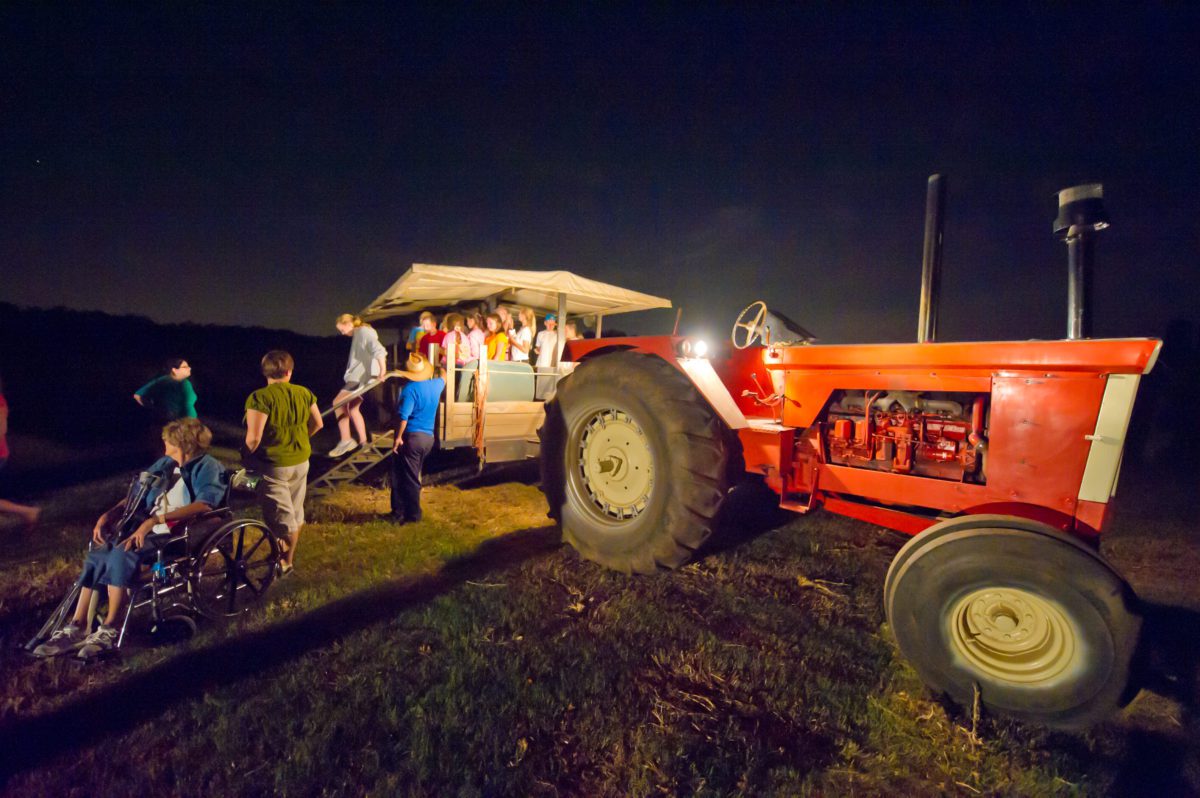
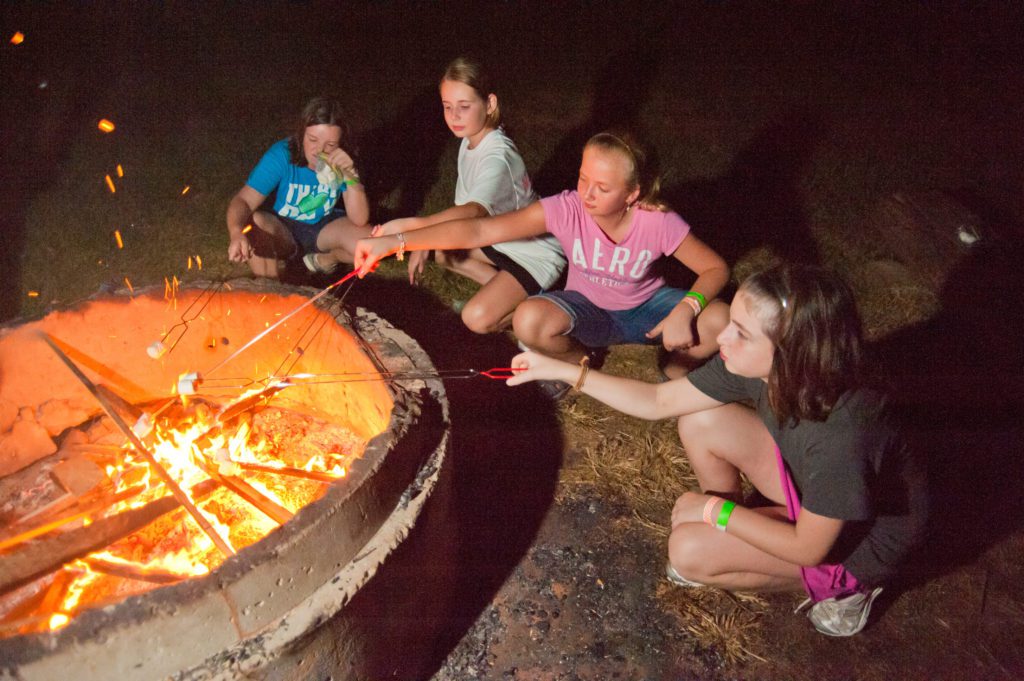
Available Light, no flashes at night. We’re headed to the corn maze! Jumpee pillow, hayride, smores, and corn cannon, too. [NIKON D3S, 14.0-24.0 mm f/2.8, Mode = Aperture Priority, ISO 12800, 1/80, ƒ/2.8, (35mm = 14)]
In writing, we use italics, bold, quote marks, and other techniques to emphasize parts of the composition. In photography, we use light to do the same thing.
Theater and movie directors often use light to draw our attention to the main subject in a scene. This may be as dramatic as turning a spotlight on a character while everything goes completely black. More often, it is much more subtle. Without the light to guide us, we might lose the lead actor on stage amidst all the other actors and scenery.
During a concert, the spotlight is constantly on the leading performer. So rarely are they not in that spotlight that the famous clown Emit Kelly did a comedy act in which he tried to stay in the spotlight only to give up and sweep the light off the floor.
Another way to direct the viewer’s attention to a person or part of a scene in video photography is to zoom in on that subject. In TV and film, multiple cameras help direct the audience. The director will cut from a camera with a broad view to one showing a close-up of the subject.
Still, photographers don’t have the luxury of simultaneous shots zoomed in or out, cutting from a wide to a close shot. The still photographer can do all this, of course, but they must tell the whole story in a single image. Print advertising does this all the time.
The still shooter should do all that is reasonable and feasible to capture the image in as high a quality as possible. (More about that in a minute.)
In photography, there are two ways to use light to help direct the attention to the main subject. One is done in the camera, and the other is in post-processing.
Getting it in the camera

Available Light
With today’s digital cameras, working with the available light in almost any location is relatively easy.
If people sit at a table with poor light, move them to a table in better light. After a few moments, they’ll pick up on the conversation where they left off, and you now have them in a light that will work for the photos. This is inappropriate in photojournalistic coverage, but it is beautiful for advertising or a corporate shoot.
Use a reflector to help improve the light. It is much less intrusive than flash and can work just as well. Have an assistant hold a glass just from the camera’s view and bounce the light back into the subject’s face. This helps to draw attention to the main issue.
Adding Light
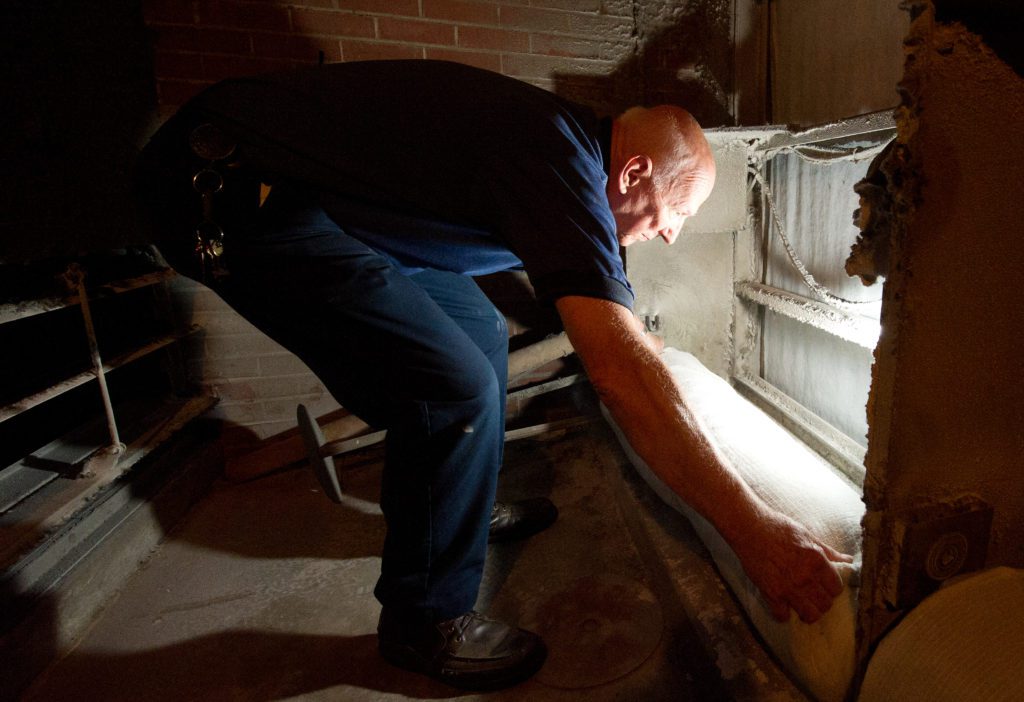
You can use a constant light source or flash to illuminate the subject. Try to use the spotlight effect as much as possible rather than a floodlight, which illuminates everything equally.
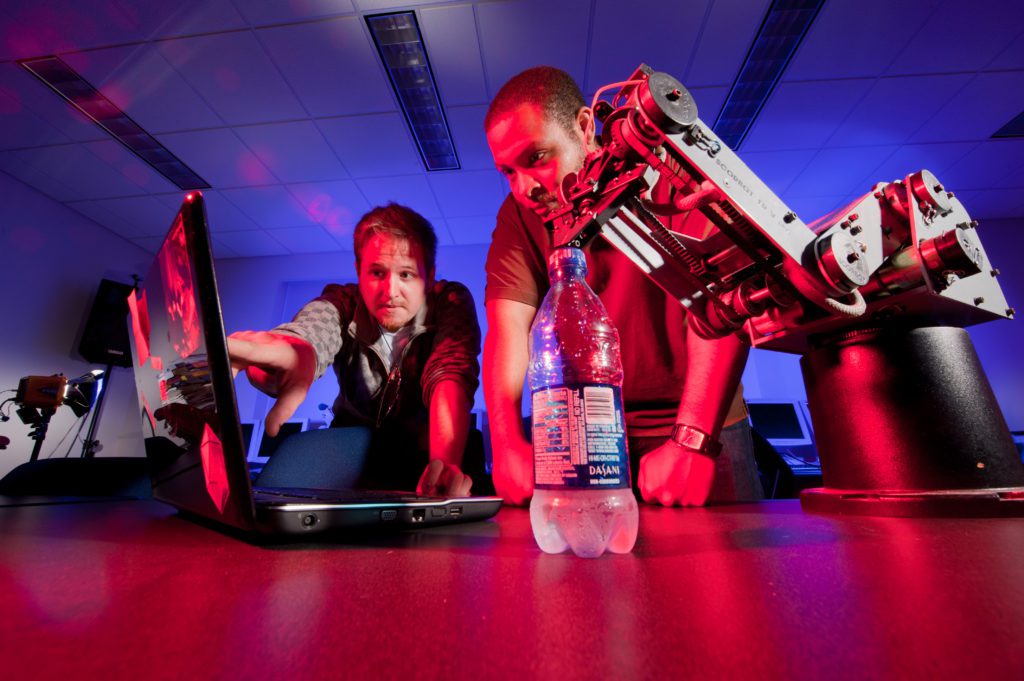
Another trick of the trade is to place a colored gel over a light used on the background. This will simplify a junky background by making it all one color. The orange extension cords and red tools hanging on the wall in the background no longer vie for attention with your subject. At least two lights are needed, one on the subject and one on the background. The light on the subject should be brighter than the background light.
Postproduction lighting
This is done so much today that a photo being “PhotoShopped” is now a verb, not just a noun. Before Photoshop, photographers would “burn” and “dodge” in the darkroom. A face could be lightened and the background darkened.
With digital today, you can do even more and more precisely than you could in the darkroom. You can select only the subject, just a single color, or any part of a photo, and alter it in many ways. You can remove, change, or add color. You can make objects lighter or darker. Details of the image can soften or be blurred.
If all this can be done in post-processing… why use lights?
The need for post-processing disappears if you capture it on camera, saving time and money.
An adequately exposed subject contains information at its most total value.
When should auxiliary lights be used and not used?
(Here’s the “more on” reasonable and feasible.)
In Hollywood, everyone is being paid to produce a professional product that people will be willing to pay to see. (Pardon the alteration; I got carried away as always.)
In news coverage, the only ones being paid are the news crew or maybe just a single photographer, and they are being paid to get the story, regardless of the quality. Sure, it should be as high a quality as is practical, but the story is the thing.

When a photographer comes to do a job, particularly an event, what determines the approach? Can it be with all the lighting using multiple flashes (Hollywood), or will it need to be photographed using the available light (News coverage)?
What is the deciding factor? It would help to consider the friction you may cause while capturing the moment.
Perhaps the subject or event can be moved to a more photogenic area that would not require much, if any, additional lighting. Maybe reflectors can be used instead of flash, thus reducing the interference with an event.
You need to explain the choices (and the resulting photos) to the client and find a solution together. (HINT: Whoever is paying for the project needs to decide, or this may be your last job with them.)
Final thought
Use light to direct attention; it can improve the communication of the composition.