|
Getting your Trinity Audio player ready...
|
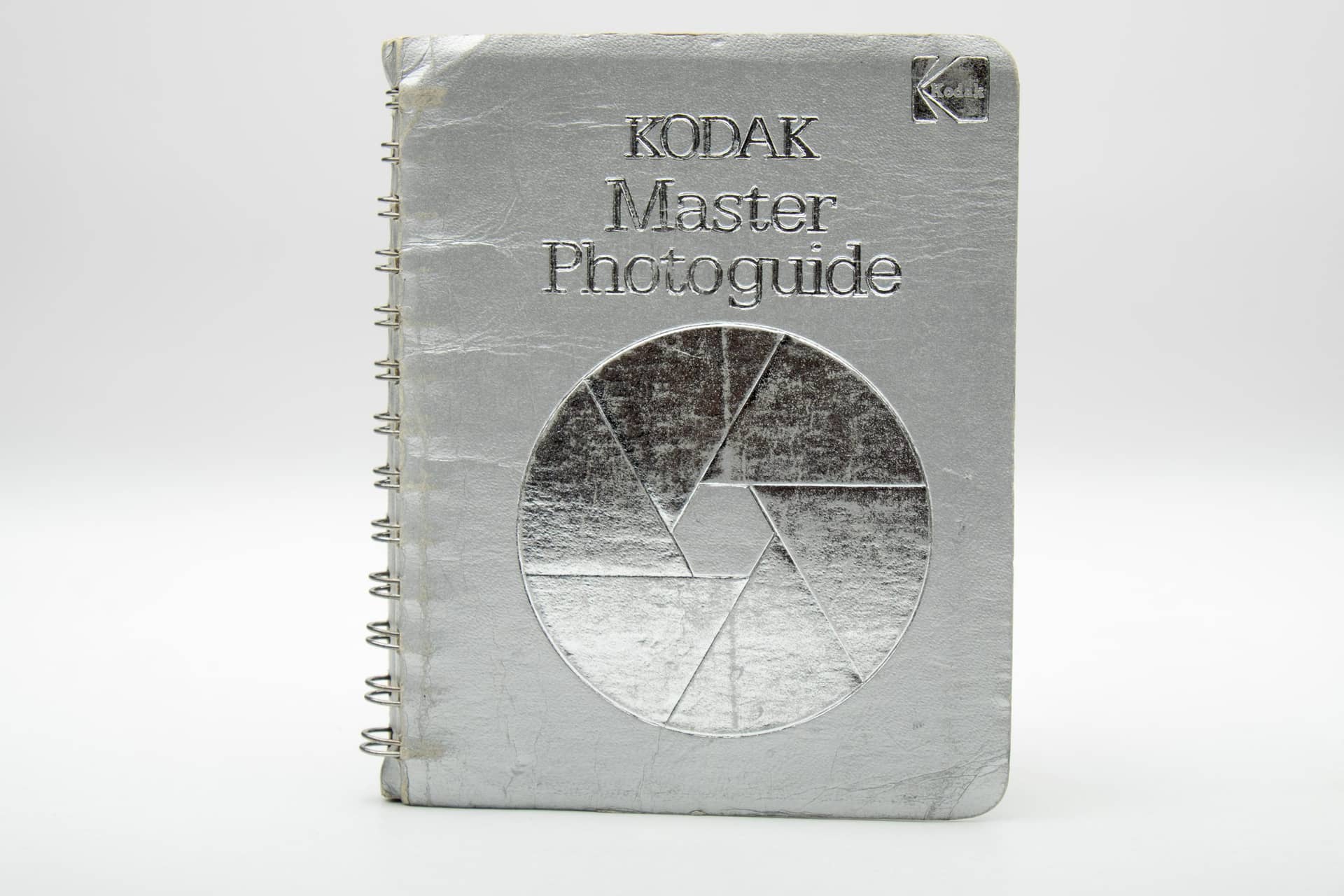
I found this in the drawer today, and it took me down memory lane. This pocket-sized Kodak guide taught me exposure before I ever owned a light meter.
While this Kodak Master Photoguide has been gathering dust, its contents are burned into my brain from years of using it to learn photography principles.
Here is what is on the first page of the book to tell you how to use it and what I did:
You can carry this Photoguide when you take pictures so that it will be handy. It’s the right size for your pocket, purse, or camera bag. The Master Photoguide contains a great deal of information that is usually found in photo books in compact form. You’ll find it helpful whether or not you have an exposure meter or an automatic camera. This Photoguide will help you set your camera for the correct exposure, select filters, use supplementary lenses for close-ups, determine depth of field, and much more.
In addition, the Photoguide is especially helpful for planning purposes, as it shows you the photographic requirements for the pictures you want to take in advance.
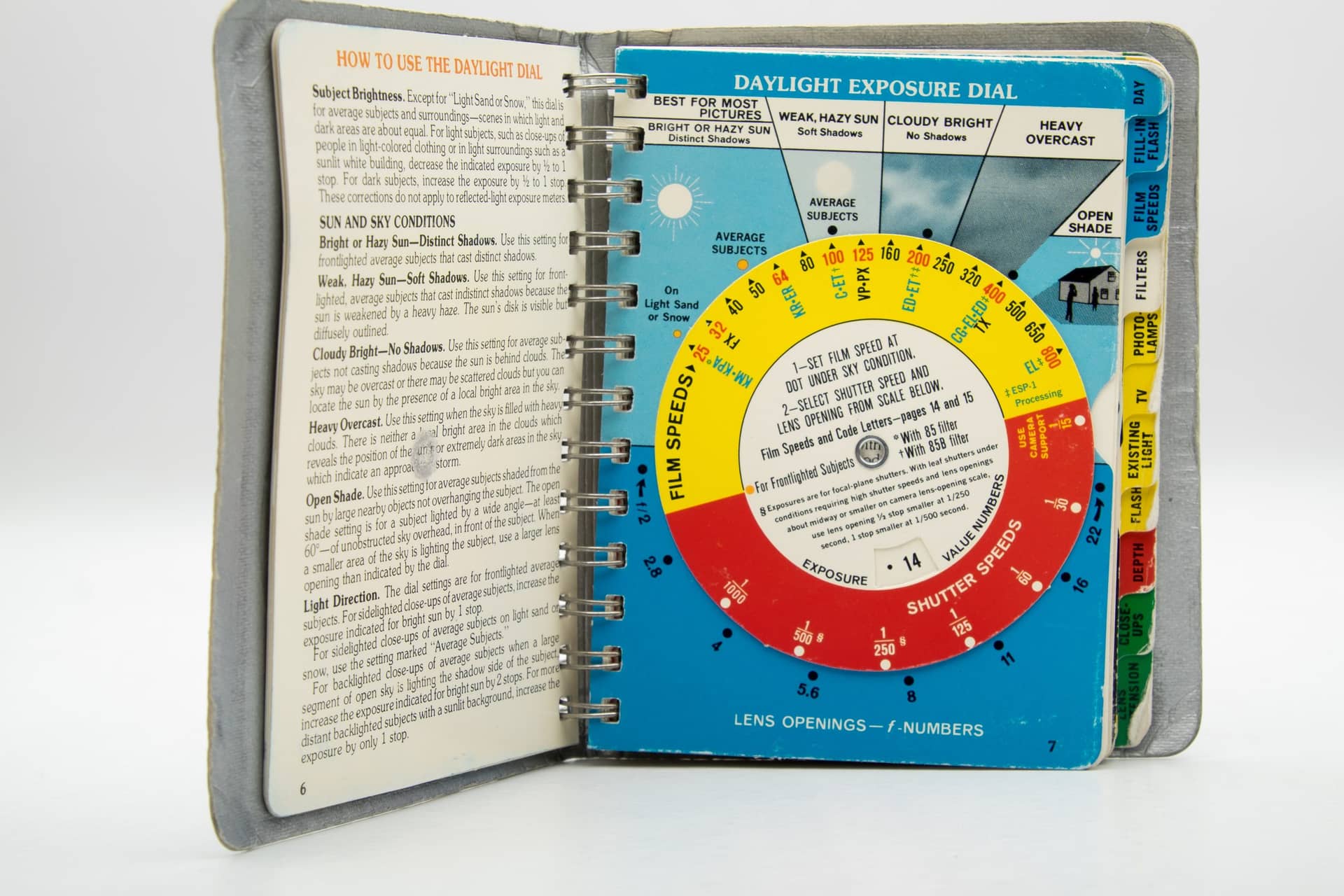
The “Sunny 16 Rule” is on the Daylight Exposure Dial. I often used this dial because my earliest camera had no meter. You lined up your ISO with one of these:
| Lighting condition | Aperture | Example at ISO 100 |
|---|---|---|
| Bright sun on light sand or snow | ƒ/22 | ƒ/22 at 1/100 sec |
| Bright or hazy sun, average scene | ƒ/16 | ƒ/16 at 1/100 sec |
| Weak, hazy sun | ƒ/11 | ƒ/11 at 1/100 sec |
| Cloudy bright | ƒ/8 | ƒ/8 at 1/100 sec |
| Heavy overcast | ƒ/5.6 | ƒ/5.6 at 1/100 sec |
| Open shade | ƒ/4 | ƒ/4 at 1/100 sec |
Set your shutter speed to the number closest to 1/ISO. At ISO 100, that is about 1/100 sec (1/125 sec on most cameras).
On light sand or snow, dial your ISO, and the corresponding ƒ/16 would be the exposure. Set the shutter speed to the closest to 1/ISO.
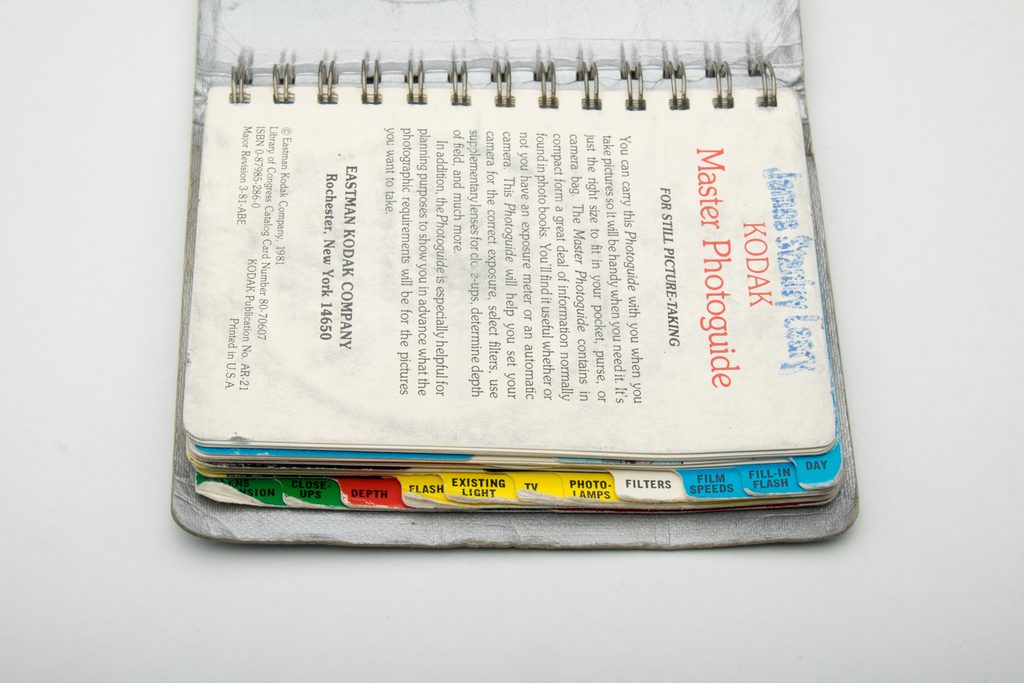
I often pull this little book out when planning a new adventure, find the tab, and flip to the page. The text says, “The Photoguide is especially helpful for planning purposes.”
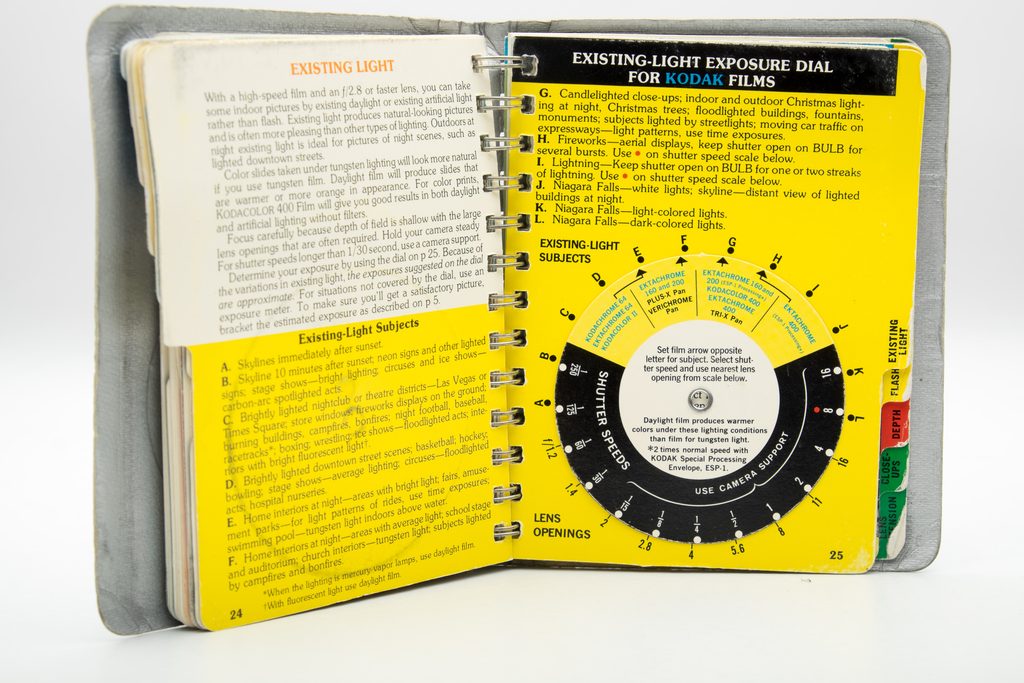
Click on the photo above to see the existing light choices.
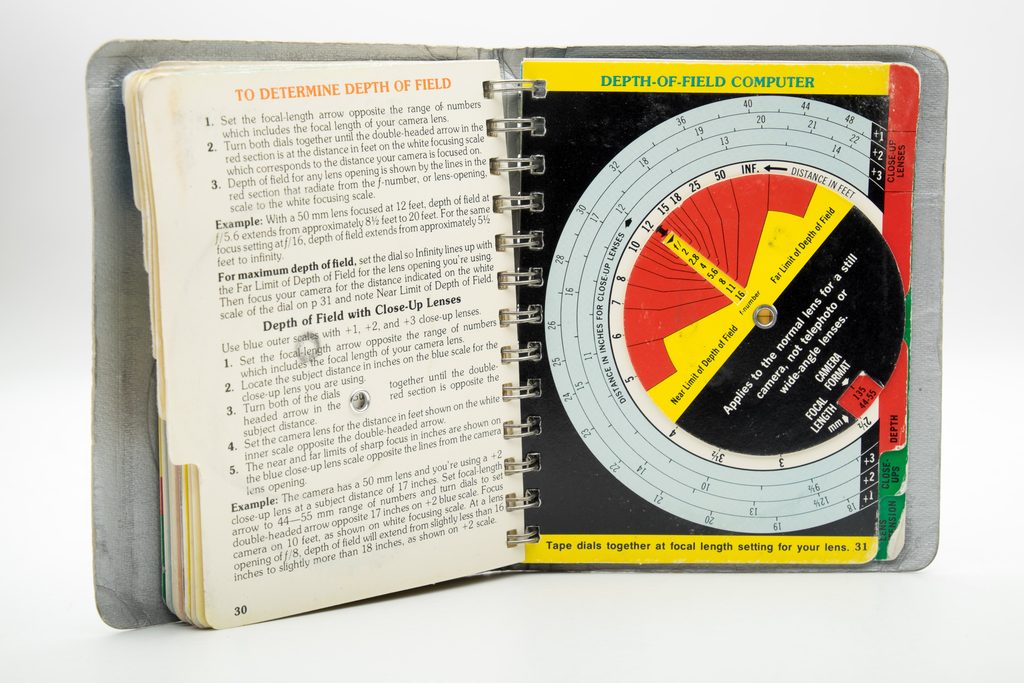
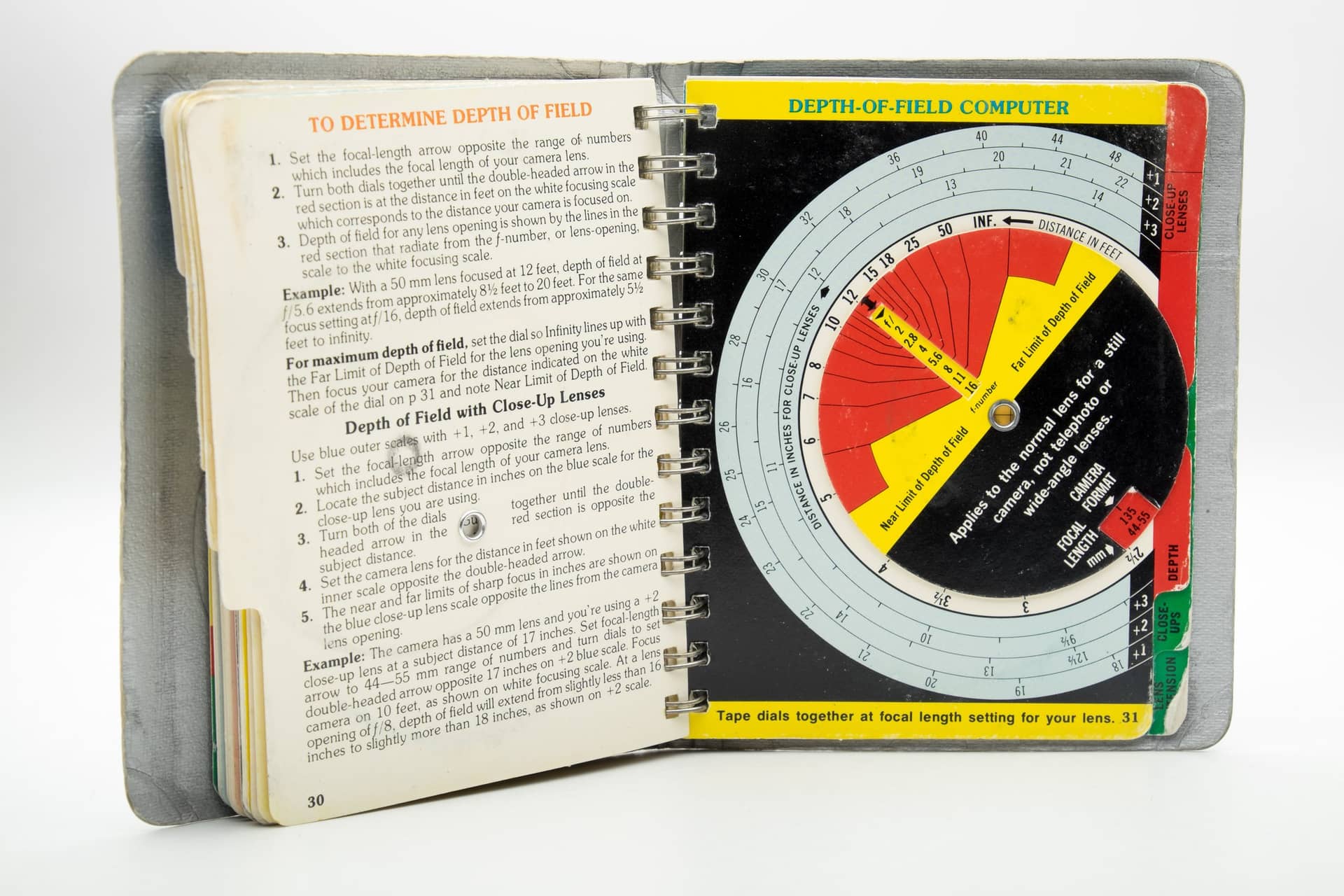
The little book even helped me figure out depth of field. When I mounted a camera on the backboard for a basketball game, I needed the rim and the players’ faces both in focus. I shot at ƒ/22 and used strobes to supply enough light at that small aperture. Back then, you had to buy the right ISO film for the situation, so the Kodak book helped me preplan before I ever got to the gym.
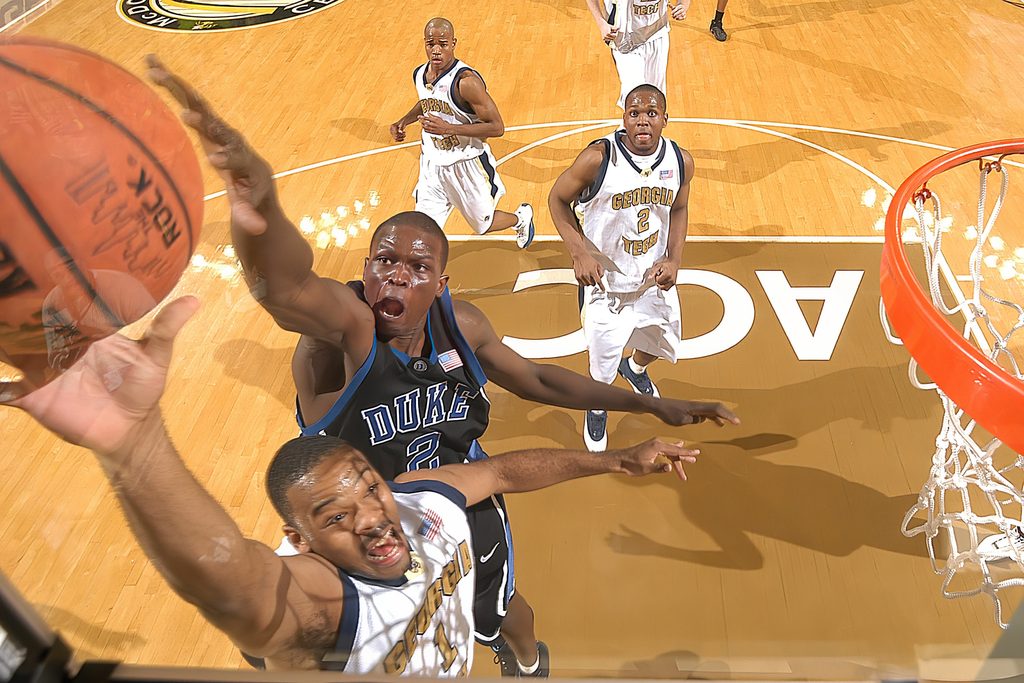
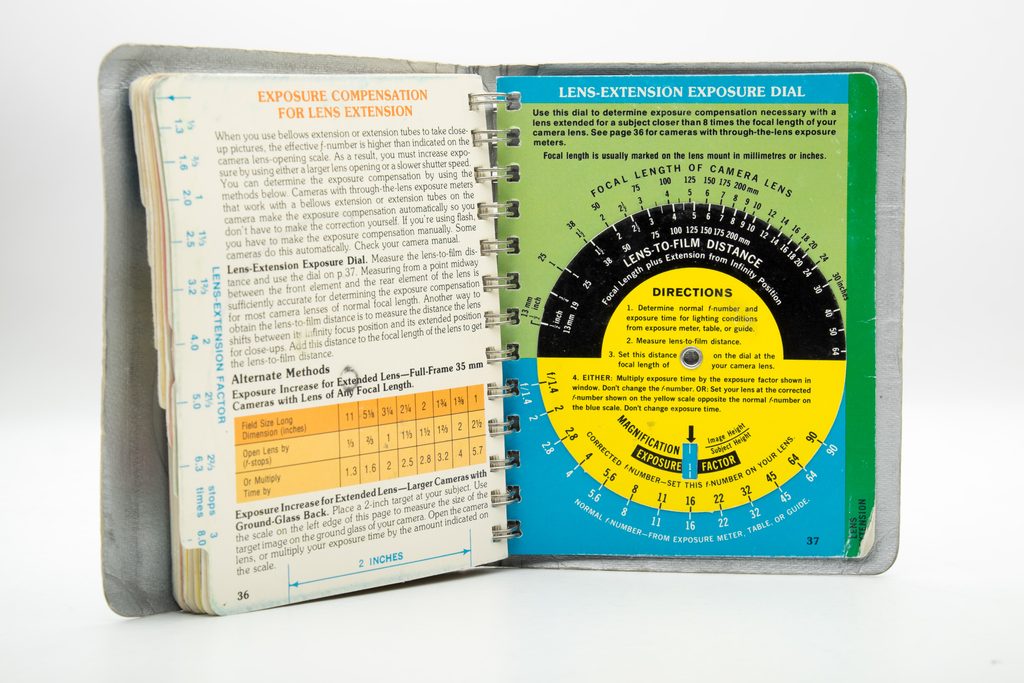
Even planning macro work with extension tubes or bellows would help you figure out the proper exposure. We couldn’t take the photo and adjust it immediately. Instead, you would have to process the film and then see the results.
If you’re starting, you need to know that most of us had to work to understand the principles because the learning curve with film was longer over time. You didn’t click and look at an LCD to see your results. Sometimes, it would be weeks after you returned from traveling for coverage for a month or so on the road.
While this book isn’t necessary to get the shot, it’s still the fastest way to see how aperture, shutter, and light relate. It is also great for planning what you might need for your next assignment.
The best part is that this book was like a cheat sheet for photography.