Resilience, Agency, and the Creative Journey — Lessons from Cory Richards

Reading Time: 2 minutes

As someone who’s spent a lifetime listening to people’s stories, I’ve learned that what we often admire most in others—their creative voice, passion, and impact—is born out of pain. It’s not just talent or opportunity. It’s what they do with difficulty.

I recommend a powerful two-part podcast interview with National Geographic photographer Cory Richards, hosted by Simon Sinek. Cory’s story is filled with raw honesty about success, struggle, depression, and finding purpose through a camera lens. It’s not just about photography. It’s about being human.

What stuck with me were Cory’s outlines of a four-part process he’s developed to stay grounded when life—and identity—begin to unravel. He calls it his framework for agency, and it’s something every creative, every missionary, and every person in ministry or leadership could benefit from reflecting on.


Cory Richards’ 4-Point Resilience Framework

1. Agency Is Everything
When things go wrong, the temptation is to blame or collapse. Cory talks about choosing not to live as a victim, even when the pain is real. Instead, he focuses on what I can do next. This isn’t about ignoring the hurt. It’s about reclaiming the power to respond.

2. Discovery Demands Discomfort
Growth doesn’t happen in our comfort zones. Cory reminds us to lean into the pain—because that’s often where the real learning begins. Whether it’s grief, burnout, or self-doubt, we can’t grow if we don’t face what hurts.

3. Certainty Kills Curiosity
The more sure we are, the less we tend to ask questions. Cory points out how dangerous that can be, especially in storytelling. Curiosity—about people, places, even ourselves—keeps our work fresh and connected.

4. Adaptation Leads to Evolution
When life changes (as it always does), we have two choices: cling to what was or grow into what could be. After experiencing a personal and professional collapse, Cory learned to reimagine his role and purpose. That’s when transformation began.


Why This Matters for Storytellers

Whether you’re a photographer, filmmaker, missionary, or nonprofit communicator, this framework speaks to more than mental health. It speaks to the soul of why we tell stories in the first place.

Many of us teach, mentor, and work alongside people trying to make a difference. But we can’t guide others if we’re not also doing the work within ourselves. Cory’s process reminds us that even in our lowest moments, we are still capable of purpose.

If you’ve ever felt overwhelmed by the tension of trying to do meaningful work while fighting your own internal battles, I hope this interview gives you language, perspective, and hope. I know it did for me.

Let me know what speaks to you after you listen. This is one of those conversations that lingers.

Tagged :

Seeing the Big Picture: How a Drone Told the Story of Cops ‘N Cars

Reading Time: 2 minutes

Today I had the chance to photograph the Fifth Annual Cops ‘N Cars Show—a vibrant, family-friendly event held at Lebanon Baptist Church in Roswell. What started as a car show has become something much more: a celebration of community, local pride, and the incredible support for those who serve and protect us daily.

The event will feature a remarkable display of classic and custom cars, as well as the chance to meet the drivers and explore a variety of police vehicles. Attendees can also enjoy shopping from local merchants, savor delicious food from local vendors, and experience a warm, community-oriented atmosphere.

This year marked a turning point for the event. With a new, larger venue, the show had room to expand—and it did. Rows of classic and custom cars stretched across the lot, food trucks served long lines of guests, and families mingled with local officers. Kids explored police cruisers and K9 units with wide eyes and curiosity.

As a photographer, I love capturing moments on the ground—smiles, conversations, the shine of chrome under Georgia sunlight. But it was the drone that told the whole story. From above, the scale of this year’s event became crystal clear. You could see the growth. You could feel the energy in a way that a ground-level shot couldn’t express.

The lesson hit me hard: Sometimes, the only way to truly capture the impact of a moment is to rise above it. That drone shot didn’t just show cars—it showed community. It showed what’s possible when a good idea is given room to grow. And it reminded me how perspective can shape storytelling.

Proceeds from the event benefit the Friends of Roswell Police Foundation, which supports local needy families and helps Roswell officers serve the community more effectively. It’s an event with heart—and now, thanks to the drone, we can see how big that heart has become.


“Seeing Is Believing”—But Are You Showing the Right Story?

Reading Time: 2 minutes

We’ve all heard the phrase “seeing is believing.” That idea goes all the way back to the Apostle Thomas, who famously wouldn’t believe Jesus was resurrected until he could see and touch Him for himself.

That moment captures something deeply human. We trust what we see. When it comes to communication—whether in business, education, or ministry—visuals aren’t just decoration. They’re the bridge between information and understanding.

In fact:

  • Around 65% of people are visual learners.
  • We retain up to 80% of what we see (compared to 10–20% of what we hear or read).
  • Our brains are wired to process stories and visuals simultaneously.

So if we know that visual storytelling is one of the most powerful ways to communicate—especially the Why behind what we do—why are so few small businesses and organizations using it?


What Most People Do Instead (And Why It Doesn’t Work)

Instead of storytelling, most people default to facts, features, and benefits. They create:

  • A list of services
  • A bullet-point résumé of achievements
  • A “we’re passionate about excellence” paragraph with no real-life example to back it up

The problem is: facts don’t move people. Stories do.

A list of what you do might check a few boxes, but it won’t build trust, spark a connection, or set you apart. Your potential clients or supporters aren’t just asking, “What do you do?” They’re asking:

“Can I see myself in your story?”


Why Some Storytelling Still Doesn’t Work

Now here’s the part most people miss—and it’s why even those who try storytelling often give up too quickly:

They weren’t strategic about it.

They post a few testimonials or a random behind-the-scenes video. They tell a personal story that matters to them, but doesn’t clarify the value they bring to others. Or they focus on storytelling as a tactic—instead of starting with a strategy.

Effective storytelling requires focus.
You need to know:

  • Who is this story for?
  • What action do I want the listener/viewer to take?
  • How does this story reveal our mission, not just our personality?

When businesses skip strategy, they end up with stories that don’t land—and they wrongly assume storytelling just doesn’t work.


This Is Where I Come In

If you’re leading a business, ministry, or creative project and you’re struggling to clearly communicate what makes you different and valuable—I’d love to help.

I’ve spent years not only creating visual stories, but teaching others how to uncover the right stories for the right moment. I don’t just shoot a video or write a caption—I help you think strategically before we create tactically.

There’s a reason your story matters. You just might need help telling it the way people can see it.

📩 Reach out to me if you’re ready to turn your story into something that works—not just something that sounds good.

When the Work Ends… But the Calling Doesn’t

Reading Time: 2 minutes

In 1990, I lost my job with the International Mission Board. Budget cuts. One day I was doing meaningful work I loved — work I believed in deeply — and the next, I was packing my things.

Later, I lost another job at Georgia Tech.

And now, looking back over the past 20 years of running my own business, I’ve started to notice a pattern. I have incredible seasons with clients — I walk with them, help tell their stories, see real transformation — and then that chapter ends. Sometimes it’s budget. Sometimes it’s new leadership. Sometimes it just… shifts.

Every time this has happened, I’ve faced a tough question:
Who am I, when the work stops?

When your identity is wrapped up in what you do — the title, the paycheck, the projects — and that goes away, it can feel like you go away with it. You start to wonder:
Do I still have a purpose? Do I still matter?

For a long time, I wrestled with that. But somewhere along the way, I started seeing things differently.

That shift really took shape when I read Simon Sinek’s The Infinite Game. He makes the case that life — and especially meaningful work — isn’t about winning or finishing. It’s not a race to a title or a trophy. It’s about playing the long game. An infinite game. One where the goal isn’t to “win” — it’s to keep playing with purpose.

That’s when I realized something important:
The work may end, but the calling doesn’t.

Each job loss, each client transition, each unexpected pivot has actually refined my calling — not erased it. My deeper purpose has always been the same: to help people tell stories that matter. To shine light where there’s hope. To give voice to truth, beauty, and purpose.

That’s not tied to a single employer or client.
It’s tied to something deeper — my why.

Here’s what I’ve learned along the way:

  • Losing your job doesn’t mean losing your value. It may just be clearing space for something new to emerge.
  • Your identity has to be rooted in something deeper than your business card. Titles and gigs come and go. Purpose endures.
  • Pivoting isn’t failure. It’s movement. It’s growth. Sometimes it’s even grace.

So if you’re in a season where the work has ended — or you’re wondering what comes next — I want to encourage you:
You’re not done.
You’re not without meaning.
You’re just being invited to play the infinite game a little differently.

Keep showing up.
Keep playing with purpose.
Keep telling stories that matter.


For a deeper exploration of these themes, I highly recommend listening to the podcast episode “Where Is Simon Going?” from A Bit of Optimism. In this episode, journalist Cal Fussman interviews Simon Sinek, delving into topics like identity, purpose, and the concept of the infinite game. Their discussion offers valuable insights into how we can navigate life’s transitions and remain true to our calling. You can listen to the episode here:

Tagged :

Why Friendship Feels So Hard in Your 20s — And What to Do About It

Reading Time: 3 minutes

Insights from a Mentor Who’s Walked This Road with You

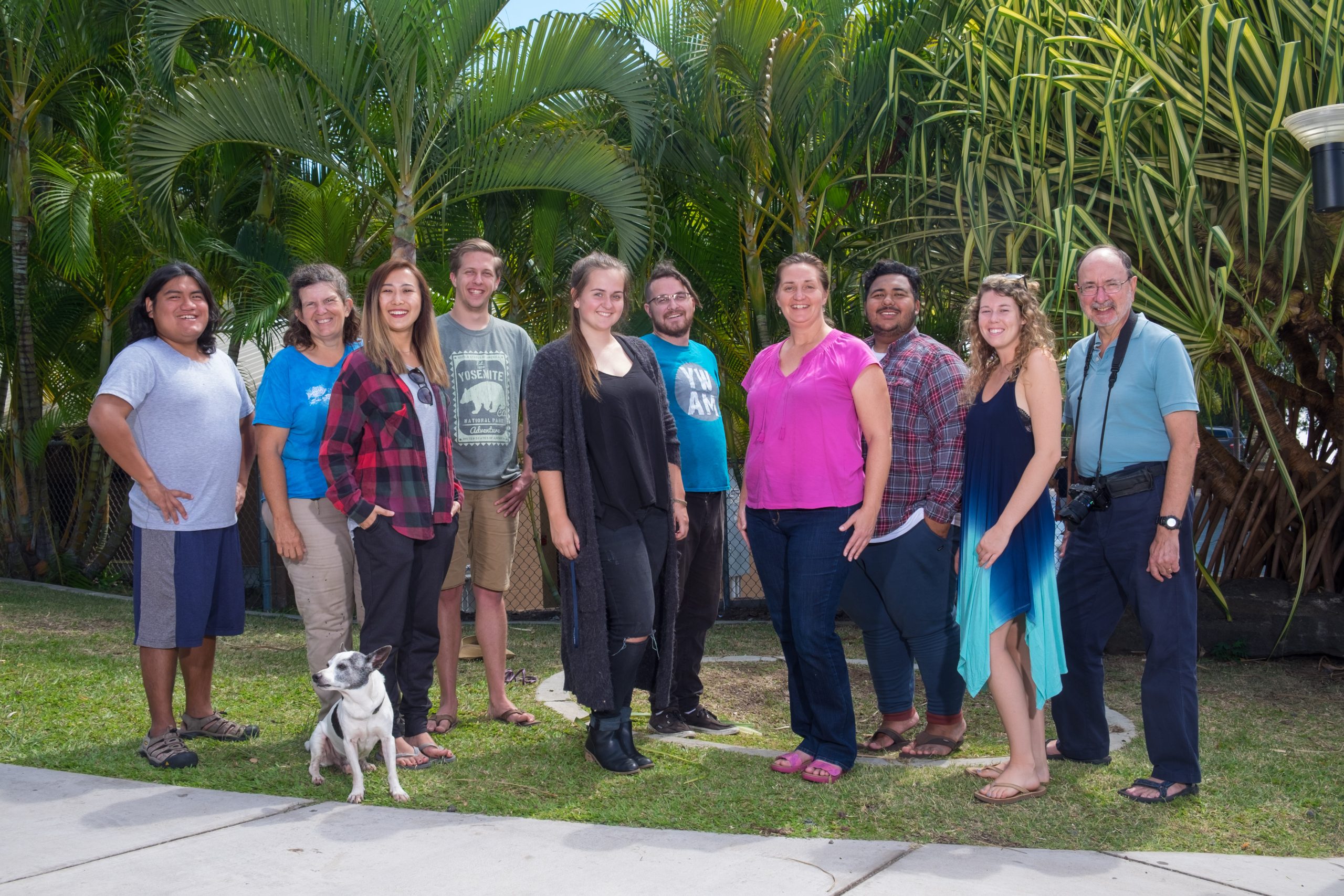
One of my greatest joys is teaching and mentoring young adults, primarily through my work as a mentor in NPPA, YWAM, and our international storytelling workshops. I’ve spent much time listening to 20-somethings open up about what’s really going on in their lives—not just creatively or spiritually, but personally.

And one question comes up a lot:
“Why is finding real friends after high school or college so hard?”

That disconnection can feel overwhelming, whether fresh out of DTS or starting to build your life and calling. You want deep friendships. You want people who “get you.” But somehow, it’s more complicated than you expected.

You’re not imagining it. You’re not alone. And—this is important—you’re not doing anything wrong.

Mel Robbins, a respected author and speaker, has done some excellent work recently in explaining what’s happening during this season of life. I want to break down some of what she shares and weave in what I’ve observed walking alongside young adults for decades.


The Great Scattering: Why Friendships Feel Like They’re Falling Apart

In school or during DTS, friendships form naturally. You’re living together, eating together, and praying together. You’ve got a built-in community.

But once that season ends? Everything changes.

People scatter across cities, countries, and even continents. Life gets busier. Priorities shift. Friendships that once came easily now require effort.

Mel Robbins calls this transition “The Great Scattering.” And it’s one of the most significant emotional shifts in your 20s. You suddenly realize that friendship isn’t automatic anymore. It has to be intentional.


What Makes Adult Friendships Stick

Robbins says lasting friendships usually need three things:

  1. Proximity – You need to see or connect often.
  2. Timing – You’re in similar life stages or can relate to each other’s experiences.
  3. Energy – There’s a natural connection or shared purpose.

If even one of those is missing, that relationship might need extra effort or not work long-term. This doesn’t mean you failed. It just means the season or context has changed.


Real Friendship Takes Time

Another thing that surprises people: how long it takes to build close friendships as an adult.

  • Around 74 hours of quality time can form a casual friendship.
  • Over 200 hours are usually needed to build a deep one.

So when people say, “I don’t have close friends yet,” I often remind them—they probably haven’t had the time yet. Friendship is a slow burn, not a spark.


A Mentoring Mindset: Let Them

Robbins teaches something I often use when mentoring: the “Let Them” mindset.

If someone flakes on plans, let them.
If they don’t prioritize the friendship, let them.
If they go quiet for a while, let them.

This doesn’t mean you stop caring. It just means you stop chasing. You let people show you how much capacity they have for friendship. And you let yourself move forward without resentment or guilt.


What I Tell My Students (and My Kids)

If you’re in this season of figuring out who your people are, here’s my encouragement:

  • Friendship gets harder, but it also gets richer. You’ll start finding people you choose—and who choose you back.
  • Be the kind of friend you’re looking for. Consistent. Curious. Kind.
  • Don’t confuse loneliness with failure. Most people are lonely. But few are willing to admit it. Your courage to press in is part of what will build your future.

And if we’ve crossed paths—on a YWAM base, in a workshop overseas, or through storytelling—I want you to know I see you. I know this road can feel lonely sometimes. But I promise: the deep, soul-filling friendships you’re looking for can be built. They just take time, intention, and grace.

I’m cheering you on.

Tagged :