|
Getting your Trinity Audio player ready...
|
Layering is one of the best techniques I know for setting scenes. Layering is when you have a foreground, a middle layer, and a background. For example, in the photo above, I use layering to engage the viewer with the little boy and his interaction with his parents within the overall concert scene.

Here is another scene setter, but notice how it is more of just a wide shot saying “here it is” rather than the above photo that engages the viewer in something going on much more effectively. The lower image has two people walking closest to the camera.

Here, I use the lady taking a photo with her phone to pull the reader into the scene.

The photo I loved the most and used as the scene setter for this event is one of a couple dancing. Even without seeing the stage, the couple dancing, and people in the background facing in one direction, you can sense the band playing. Hopefully, you see the critical piece that the photo needs to be powerful enough to engage the viewer. In this photo, the romantic moment is what draws the viewer in.

I have the couple enjoying themselves in this photo, but it isn’t a scene-setting type of photo. Yes, it captures the mood of a party, but I am missing the feeling that the earlier photos give the audience.

Here is a more cliché scene-setting photo. It establishes the location. It does so from a low angle.

Here is another way to introduce a story about Saint Martin: getting up high on the road and shooting down into the bay, capturing the community.

Often we think of scene-setting photos as the overall shot, like this one of arabica coffee growing in Salvador Urbina, Chiapas, Mexico. But sometimes, you can set the scene with a tight trial just as well.

The tight shot of arabica coffee and the wide shot help introduce the topic of coffee cultivation. So often, photographers make the mistake of trying to put everything into their scene setter, losing the impact of what the setter is doing—introducing the topic.

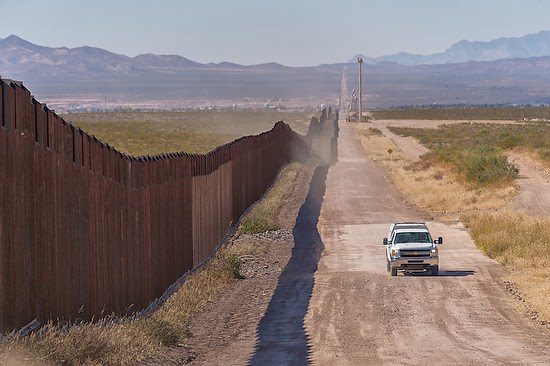
This photo of the fence along the border between Agua Prieta, Mexico, and Douglas, Arizona, is also a great scene-setter for the story on coffee; however, using this photo starts with the report’s reason—illegal immigration.

When I think of The Citadel, I think of the pageantry of the parades. I got low with a wide-angle lens to show the beginning of the Friday afternoon parade.

Another time, I went across the parade field and captured a more compressed photo with a longer telephoto lens.

Tossing the hats at graduation is another excellent scene for a story on The Citadel.

Just as significant to The Citadel graduates is the long gray line the seniors form upon graduation. They form one long line and walk across the parade field for the last time.
Class of 1967, Pat Conroy immortalized the sentence “I wear the ring” in his novel The Lords of Discipline, published in 1980. So, which of these photos would work for the beginning of the book, The Lords of Discipline?


I think any of the three can work, and that is the point. Your establishing shot could be a close-up photo like the one of the ring, and start your story just like Pat Conroy.
I like the last photo for a different reason—most of the guys in the photo chose to go to The Citadel after reading The Lords of Discipline.
So you can shoot mindlessly and get shots that are unlikely to engage the viewer, or you can work to get shots that do engage people.
Probably the most crucial point about finding your establishing shot is to have an idea of what the story is all about; otherwise, you will lose the overall or close-up picture you need to help set the scene because you were paying too much attention to capturing a subject or just capturing the climax of the story. Remember, you need a sequence of different photos to guide someone through the plot of your account.
Take the time to think about the story and how you can best establish the scene for the audience.