How much should I charge?

Reading Time: 5 minutes

It is quite common for a professional photographer to get a call asking to use a photo and the photographer doesn’t know how to give a quote for the usage.

Understanding Copyright

First let me start with understanding of copyright. It is safe to say that unless you have permission from a photographer to use a photo you cannot use it without opening yourself up to copyright infringement.

If a photo qualifies in Public Domain then you can use it.  Accurate photographs of two-dimensional visual artworks lack expressive content and are automatically in the public domain once the painting’s copyright has expired (which it has in the US if it was published before 1923).

There is also the category of Creative Commons License. Here the photographer has given permission for use of their images for non-commercial use. What is considered “non-commercial” is debated. To be sure you are OK clarifying before using would be a good idea.

If you are searching Flickr just look on the side navigation with all the tag and group information, it’s listed in that area with a link to what kind of license it is.

The other category is called Fair Use which can allow for use of images without compensation. My interpretation and I am not a lawyer, but if you are a student and working on a project for a class you can use images. However, if that student publishes those say on the internet could be a violation of copyright. When teachers start using the material it becomes a problem once they publish and distribute the material. Showing a news clip for a class to discuss would most likely fall under Fair Use.

When in doubt get the photographer’s permission.

The Phone Call

I have gotten numerous phone calls from colleagues on quoting on some of the strangest uses. My first place to look for starting is the software FotoQuote. It sells for $149.99 and most everyone I know that buys it usually recovers their money in the first few times they use it.

FotoQuote has over 300 stock photo pricing categories and a wealth of coach information.

Often clients are asking for a variety of uses and FotoQuote lets you even create “Quote Packs.” This is where you might include all advertising uses and exclude editorial. Just remember there are over 300 categories alone in this software package of categories.

Besides what category you are also giving permission for how big the image will be used. For example is it the main part of an ad or just a spec? Will they use your photo for the cover or just a thumbnail head shot with an article?

How often they use the image makes a difference as well. If they are publishing only 300 brochures for a meeting verses a print run of 5 million should be priced differently.

How long they get to use the image is also another variable. Will they use the photo one time, one month, one year, multiple years or unlimited should impact your price.

The first few times I was quoting on large projects I could feel the sweat on my forehead and my heart racing. I was having a panic attack.

Guidelines for quoting

Here are my tips for quoting on a usage. We need to first start with your base. If this is an assignment the basic price should be about the same for similar assignment, the differences in price are for the use. So, an executive portrait for a print on the wall in the companies headquarters verses it being use on billboards and running on the cover of Forbes Magazine will change the price, due to usage.

  1. Always ask what their budget is for the project up front. Sometimes they will give you a better deal than you would have asked.
  2. Be prepared to negotiate. Your first quote will often be countered. Therefore it is better to quote a little higher and have room to drop your price.
  3. Whenever you change your price you should change the usage terms.
  4. To speed the process along, I recommend going to a client with three prices. Your rock bottom price, middle range price and the high end price. This makes them see you as already trying to work with their budget. 

 Creative Fee and Usage Fee

When quoting on an assignment separating the creative fee and usage fee is a good idea. In addition to the creative fee you might have expenses as well listed.

I would suggest trying your best to encourage the client pay for as much usage up front. To help encourage them it would be great to list usage fees for future purchases.  I would probably state the time these prices will still be good as well.

For example you might allow them for an unlimited usage right now for $10,000. If they come back to you later that price should be much higher.  By putting this in writing and up front with the client you are showing them you are being transparent and trying to work with them.

Magazines

One category in the FotoQuote database I find helpful is the going rates that are known for different publications. Many of the magazines listed will even let you know the rights and there going rates.  Basically they set the price and you decide to except their terms or not. Sometimes you might be able to get a better rate if you have a specialty or the only one with access to the subject.

I think of using FotoQuote like a pilot does when they are flying in the clouds, they are using the instrument panel to help guide them.

Remember FotoQuote is a guide and not prices fixed by the industry. These give you some starting points to help you negotiate.

Just as important as FotoQuote are other photographers. This is why I joined American Society of Media Photographers [ASMP]. I can pick up the phone and ask other members their advice. Often some of them have more experience than I. I am not calling for prices as much as also how to communicate with clients. Often how you word something can make a huge difference.

When you “hit the wall” in your business

Reading Time: 4 minutes

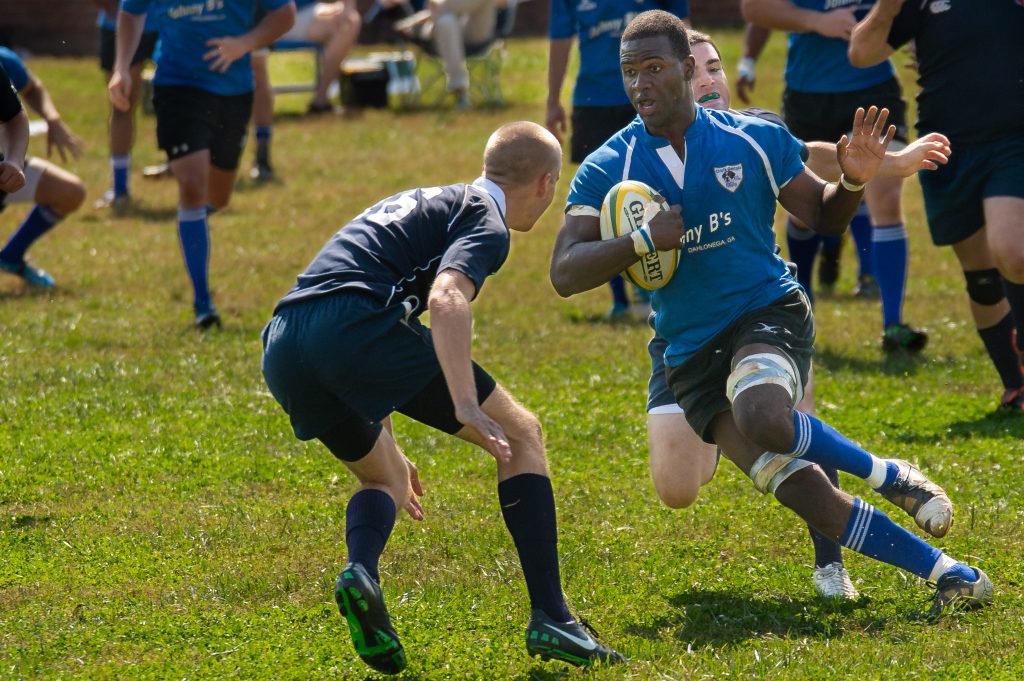
In endurance sports, “hitting the wall” is characterized by a sudden and dramatic decrease in energy and performance and can be caused by various factors, including lack of proper training, inadequate nutrition, and overuse of muscles. For example, suppose you feel like you are “hitting the wall” during physical activity. In that case, it is essential to take a break, replenish your energy stores, and evaluate your training and nutrition to ensure that you are adequately prepared for your next workout.

When the phone stops ringing and your inbox is empty for business requests, you have “hit the wall” in your business.

Endurance athletes have the plan to avoid “hitting the wall” on race day. Usually, most of these athletes had experienced “hitting the wall” before they had a plan. Maybe this is your situation as well. You didn’t have a business plan, and now you need one.

What should your plan include?

Like a marathon runner, endurance athlete knows where their finish line is for them. If their finish line is 26 miles when they start, they are not running 26 miles. They break down their plan into bite sizes.

[NIKON D4, 120.0-300.0 mm f/2.8, Mode = Aperture Priority, ISO 1000, 1/2000, ƒ/5.6, (35mm = 420)]

What is your goal? Do you want recurring income that allows you to use your time as you, please? Do you want to build retirement? Many start their business to have freedom. However, many of these people feel enslaved by it rather than free.

Define Your Customer

Are they male or female? Do they have a budget for one-time, occasional, or recurring services? Do they spend a lot of little time on the Internet? Where on the Internet do they spend their time? Where do they go to find your product or services?

What am I selling?

Most make the initial mistake of thinking they are selling a service or product. I challenge you to consider what benefit you are offering the customer. When you can connect emotionally, you will increase your business. Just look at all the automobile ads that relate to fear. They help the customer know they can feel safe in their product. What are they selling most of the time? Safety. Sometimes they show almost running over a child, or sometimes, they show how their engine performance will help you pull away from oncoming trucks or pass crazy drivers.

Connect the dots

Now that you know your customer and what you sell, you need to connect these dots.

Today’s most common mistake is an emphasis on quality, not the number of connections.

Suspension bridges, boats, and even rock climbers rely on many strands, not just one, to support them. Using more strands of a weaker tinsel-strength fiber can create a more robust support than with one strand of a stronger tinsel-strength fiber.

Marketing the rules of Seven and Three

Most all research has shown that you need seven different connections to turn a prospect into a customer. But unfortunately, many businesses fail to have a marketing plan with at least seven other links to their targeted audience.

While you may have planned seven different ways to reach your targeted audience, you want to try each method three times.

The first time you do something, you spend a great deal of effort to make it happen. The learning curve alone is very steep. Your audience is just being introduced to whatever you are doing.

You can make some necessary changes the second time you implement your idea. First, you don’t have that steep learning curve and are now building on some experience. The audience is now somewhat aware of what you are doing. Therefore, you have more buy-in from them.

The third time you know you have worked out almost all the kinks, your implementation is at its peak. At this point, your audience may be a raving fan of what you are doing.

By the third time, you will be able to make an excellent evaluation of the Return-On-Investment. If you did this the first time, you have too many things working against you from your mistakes implementing it and customer understanding what you are trying to do.

Marketing ideas

[NIKON D4, 28.0-300.0 mm f/3.5-5.6, Mode = Aperture Priority, ISO 4000, 1/100, ƒ/4, (35mm = 38)]

Make yourself newsworthy. When you win, you can enter contests and send a press release promoting yourself. In addition, you can get involved in a community event as a sponsor. You have a good chance of the local paper writing about your involvement by being there and involved.

[NIKON D4, 28.0-300.0 mm f/3.5-5.6, Mode = Aperture Priority, ISO 12800, 1/400, ƒ/5.6, (35mm = 150)]

Create a seminar. Create a program that will help your target audience. For example, one small public relations agency I work with in Roswell, GA, created a free seminar titled “Social Media Marketing Made Simple” to drum up business in the local market.

Create a brochure.
If you meet your targeted audience one-on-one or they come to a seminar, you put on having something they can leave with is another strand.
Website. While this is static, you can point people to this, and sometimes they may stumble upon it if you use the right keywords for listing your website.

Blog. By writing a blog, you establish yourself as an expert in the field.

Social Media. Get involved in groups on the web where you can listen to topics you can help with. For example, you can find these groups on Facebook, LinkedIn, and Twitter.

With social media, you mustn’t be pushing yourself on everyone but pulling them to you.

This is true with all of your marketing.

Dale Carnegie said it best; “You can close more business in two months by becoming interested in other people than you can in two years by trying to get people interested in you.”

Seven Reasons Not to Become a Freelance Professional Photographer

Reading Time: 3 minutes

7) Not a self-starter—In your first year or so you will be getting up with no photo shoots on your schedule. You must be able to fill your day with something that will be productive. If you are someone that takes initiative and rarely needs someone to tell you what you should be doing at work, then you might make it as a professional photographer.

6) Procrastinator—You may know what you need to do each day, but you can easily get distracted and not stay on task. If you have seen the movie “UP” then you will recognize the comment—Squirrel.  I know a good number of former photographers who just didn’t get around to doing what they should have been working on and now they are no longer working professional photographers.

Nikon D4, 70-200mm, ISO 6400, ƒ/2.8, 1/100–Marc Broussard

5) Hate rejection—If you get easily discouraged then you do not want to go into business for yourself—in any field. Just because your family and friends think you are a great photographer is not the same as everyone lining up to pay you to take photos. If you have people lining up and begging you to shoot things for money—then this is way different and makes you the only person I know to be in that situation. Successful photographers are only selling to 5 – 10% of those people they have contacted. 90 – 95% of the time they are rejected.

4) Poor Negotiator—For the most part photography is not so cookie cutter. This is very true for the commercial photographer. Each job is different from the rest and requires you to price differently. Due to this there tends to be a lot of negotiating with clients. Sometimes this may sound harsh when someone is trying to get you to lower your price.

Nikon D4, Sigma 120-300mm ƒ/2.8 DG OS HSM S, 2X, ISO 10000, ƒ/4, 1/2000

3) Do not like taking direction—many “artists” tend to think they know better what they need to create. Unless you are going to be a “fine art photographer” then you will need to execute other people’s ideas. You will need to learn how to bend to keep a client and get paid.

2) Do not like sitting at a computer for long periods—You will need to spend time editing your work for sure, but you will spend a lot of time connecting with people through emails, website, blogs, creating printed materials and searching the web for clients to name just a few of the things you will need to be doing on a computer.

Nikon D4, 85mm ƒ/1.4, ISO 200, ƒ/1.4, 1/80

1) No business skills—You need to understand pricing of your services that will help you make a profit for the long haul is not easy to do. You also have to be a risk taker in running your own business. Almost nothing is a sure bet and you will have to put money behind ideas that may or may not work. You also need to know how to market yourself to the world.

Now you don’t have to be good at all these things, but they all must be done to remain a professional photographer. You can outsource some of these, but the outsourcing will cost more than if you did them yourself. At a certain point in your growth of your brand you will find it necessary to outsource some of this to grow your business.

You might think of more things to add to this list–but freelancing full-time is not for the faint of heart.

The Value of Splurging and Selling Value Instead of Price

Reading Time: < 1 minute

I was reminiscing about my family’s memorable vacation to Jamaica when my wife graduated from seminary. We indulged in an all-inclusive package where we didn’t have to worry about anything but having fun. This splurge created lasting memories for their family.

I also splurge on workshops and seminars to increase my value to clients. I initially hesitated to invite speakers out for meals, worried that it would appear odd. However, I discovered that these one-on-one interactions were invaluable and often led to long-term friendships and business opportunities.

Price shouldn’t be the sole determining factor in any transaction. Just like how I splurged on the vacation and treated speakers to meals, it’s essential to focus on the value of what you’re getting for your money. If the quality of your work is superior and you consistently treat customers with respect, it establishes a brand that will attract clients.

Instead of discussing the price and bottom line, I suggest focusing on the value of the work and the benefits it will provide to the client. By effectively communicating your worth, you’ll attract clients who appreciate the value you provide rather than just seeking the cheapest option.

How to Create Raving Fans for Your Business

Reading Time: < 1 minute

In my experience of growing my business, I’ve learned that success doesn’t solely depend on me but is not all about me. One of the most important aspects is creating Raving Fans – customers who use your services more often, pay the total price, and tell others about you. So how do you get them?

Firstly, your product or service must be superior. Striving for excellence and going beyond “good enough” will create genuine fans. For example, as a photographer, I aim for unique angles and creative lighting to make my work stand out.

Secondly, providing Second Mile Service, going above and beyond what’s expected, is crucial in winning Raving Fans. This includes delivering a professional-looking CD/DVD with helpful information, quick turnaround times, and unexpected little extras. Observing other successful businesses, like Chick-fil-A, can also inspire how to create a guest-like experience.

Lastly, establishing an emotional connection with your clients is essential in creating friendships and loyal fans. Listening to your clients and valuing them beyond just a paycheck can make a lasting impact. An easy way to make a fan and a friend is by taking the time to listen and maybe sharing a meal.

In summary, to grow your business, prioritize serving your customers and creating Raving Fans. Remember that delivering a quality product or service, providing Second Mile Service, and establishing an emotional connection can make loyal fans who will spread the word about your business.

Give yourself an assignment

Reading Time: 3 minutes

I just got back from Hawaii, and I’m excited. It was my fifth trip to Hawaii to teach, but photographically this was the best trip by far.

Why so? Well, this time, I had a couple of assignments.

On the drive over to the Hawaii Volcanoes National Park, my daughter calls me and says, “Daddy, I need some photos of the volcano for my class at school. We’re studying the Earth’s crust, and I thought the volcano would be a good way to show it.”

Listen, with an extraordinary assignment like that; you give it all you’ve got! I knew I needed to do an outstanding job for this client. Besides, this allowed me to play with my new Nikon D3s.

I met this Park Ranger at the Volcanoes Park and decided to interview her since she was bound to know more about it than I did (it wouldn’t take much).

She knew just what to do when I told her about my assignment and the intended audience. We interviewed one take. I got the feeling she’d done this before – what a pro.

Here’s what we did in my daughter’s class. You can see it for yourself.

Here’s another assignment I did while on the island.

I’d been to the luau the Island Breeze produces in Kona. I asked the folks at the school where I was teaching if there was a way we could set up a shoot with these dancers. Don’t tell me luck has nothing to do with anything. One of the dancers with Island Breeze was actually in my class! Brooke Valle, the student, is also a professional dancer and travels the world full-time dancing.

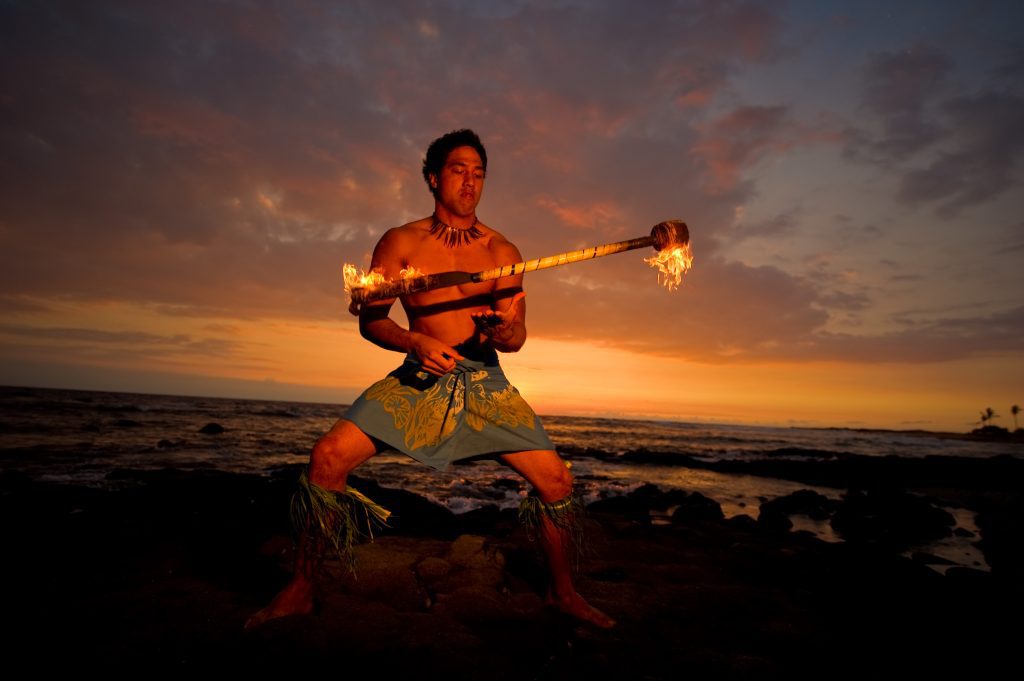
I photographed the women dancers and one of the guys who is a fire dancer. They were excited. We photographed the women one night at the home of Kamehameha the Great, the first king to rule all the islands. The next night we photographed the fire dancer on the beach.

I used this to show the students how to silhouette the dancers and expose them to the sky at dusk, which makes for a great-looking sky but puts dancers in the dark. Then I showed them how to use remote Nikon TTL flashes to light up the dancers and make them pop.

Here are the examples:

Here the dancers are silhouetted.
They are now revealed with the flash.
One of my favorites is showing the king’s palace in the background.
The fire dancer is silhouetted.
Now he is displayed with the flash.

These self-assignments, well one assigned by my daughter, forced me to preplan. The photographs were better than on past trips and were a lot of fun. Want better travel photos? Do some research and preplan. You’ll be glad you did.

Here are some of the student’s first attempts working with studio lighting and off-camera flash after a few days in class.


Finding and Keeping Clients

Reading Time: 4 minutes

In February, I go to Hawaii to teach at a photography school. We’ll cover Lighting, the heart of photography, and Business Practices in Photography, the lifeblood of the business. Below are some points we’ll cover that might work for your industry.

Finding Clients

Before you start building a database of names, determine your niche. Targeting the specific audience, you need to address will make your research and set-up time more productive.

Get Organized

Software programs such as Microsoft Office has Outlook, Word, Powerpoint, and Excel help organize your material. Also, these programs are integrated with Microsoft Word and facilitate merging your contacts into a snail mail or email.

You write one letter, and the software will merge your contact information into each letter personalizing it. Likewise, you can write one email and personalize it to a long list of contacts. 

It is pretty standard for me to think of a great tip that might help me get some jobs that I send out to a few hundred or thousands of contacts. Instead of the email coming to them with “To whom it may concern,” it is personalized with their name, like “Dear Steve.” 

What To Do With All The Collected Contacts

Set up files in a database for the company’s name, the personal contact’s name, their address and phone numbers, email, and website address. Assign each contact to a category.

I specialize in photographing people but setting up a category for companies who hire photographers who photograph people is too broad. By assigning a contact to a category such as “Education,” I can send a promotional piece to only those contacts in the education field. Assigning multiple categories to individual contacts further refines target marketing.

Contact management software has space for making notes. Keep this up-to-date as new information about your client comes to light. Use this field for their Facebook page and other information that doesn’t fit in any other field.

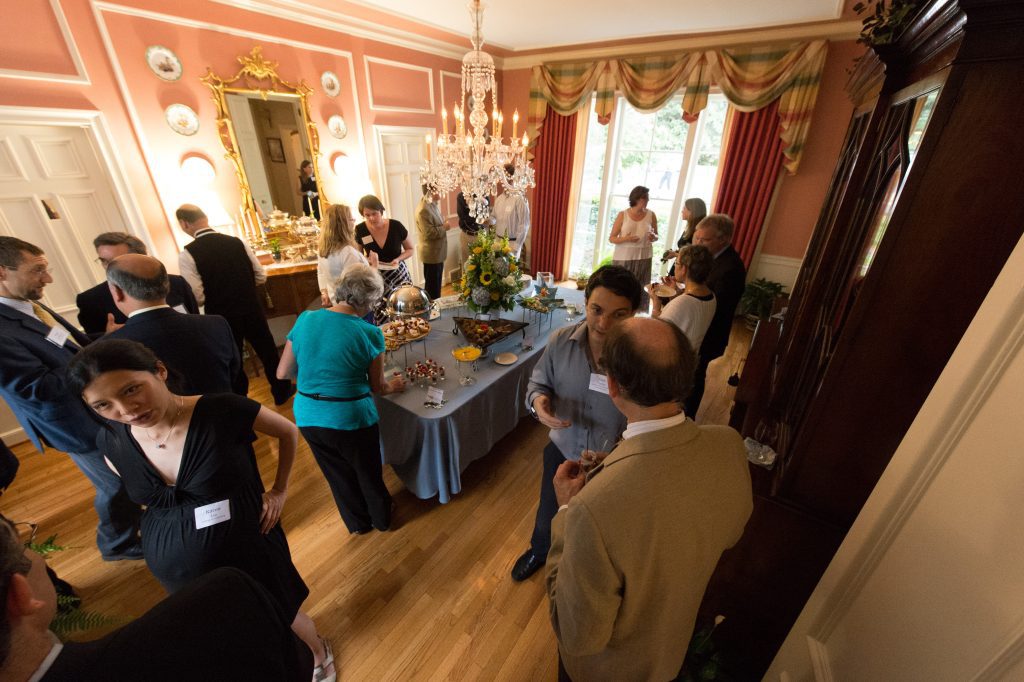
Party for the newly tenured professors at Georgia Tech at the President’s house.

Parties (some parties) are an excellent way to build your database. Attend the “after-hours” events many civic and trade organizations sponsor that are designed to promote getting to know people and businesses in the area. Usually held monthly, these events are great ways to meet many folks and have fun doing so. It beats sitting at home with a computer.

Party for the newly tenured professors at Georgia Tech at the President’s house.

Work The Room 

Be sure you know your two-minute “elevator talk” about your business. Find someone you know. Get them to introduce you to the person to whom they are talking. Exchange a business card and ask if you can follow up at another time for coffee or lunch. Be sure to give that person your full attention while with them, but move on after about five minutes. Remember, almost everyone in the room is there for the same reason you are, to meet people and find clients. 

Be Relevant/Current 

I recommend the students read industry magazines. Photo District News helps keep photographers informed on happenings in photography. It is filled with the latest trends and techniques, business and legal news, and new product reviews. Contact information for magazines interested in your work can usually be found on the masthead. Many magazines are online today. Read some back issues before contacting them. Offer a story idea to the editor. If you did your homework, your concept should reflect the trends that are going on in the industry or plug into the style of that magazine. 

Investigate – Dig Deep

Put on your investigative reporter hat and dig around for your niche. Use Google and type in your categories. Combine them with the word “organizations,” and you will find many trade associations. When you see their websites click on the “About Us” section. It often will help you know the image the company is trying to convey. This is invaluable if you contact them and land an appointment. Dale Carnegie said it best; “You can close more business in two months by becoming interested in other people than you can in two years by trying to get people interested in you.” 

Qualify Your Lead 

I know of a photographer who contacted a designer a few years. The photographer sent out beautiful newsletters and promotional material. One day the photographer dropped off a portfolio and met the designer. He asked if he was the person that hired the photographers. He said no, his boss picked the photographers; he just designed the pieces.

Clayton State University Recruiting photos

Connecting With A Client 

You can establish a business relationship if you find common interests with a prospect. In a prospect’s office, look at pictures and plaques on the wall, the books on the shelf, and anything that shows their interest. Commenting on that interest is an excellent way to start a conversation. People love to talk about their interests. Try to find common ground for a friendship. People are more likely to buy from a friend than a salesperson. Sales consultant Jeffrey Gitomer says, “If you establish common ground with the other person, they will like you, believe you, begin to trust you, and connect with you on a deeper level, a ‘things-in-common’ level. The best way to win the connection is first winning the person.” Finding clients is hard work. Keeping them is all-important.

Maximizing Your Investment: Tips for Hiring a Photographer

Reading Time: 2 minutes

Are you planning an event or a photoshoot and want to get the most out of your budget? Look no further! One of the best ways to optimize your investment is to bring in a photographer early in the planning process.

Involving the photographer in your planning can benefit you in several ways. For one, you can ensure that the photos will turn out exactly as you envision them. This is because the photographer can work with you to identify the best locations and lighting for the shoot and discuss the emotions you want the photos to evoke in viewers. Additionally, you can maximize your time during the shoot by collaborating with the photographer in the pre-planning phase.

During the shoot, priorities can shift. Certain shots may become more critical, while others may become less important than initially thought. You can stretch your budget while still producing outstanding images by focusing on getting the best shots and dropping or limiting others.

Columbia Theological Seminary

One example of stretching your budget is set up in one location. This can be particularly useful when working with schools or universities where most general classrooms look alike. By setting up all the lighting and determining the exposure and white balance in just one classroom, you can save time and money by not having to move from building to building.

If you’re unsure how to optimize your budget for a photo shoot, consider adding a photographer to your creative team. Doing so can save you time and money and help ensure a more productive and creative shoot. But, being a photographer is an investment worth capturing the perfect moment. So, why not give me a call? I’m here to help!