|
Getting your Trinity Audio player ready...
|
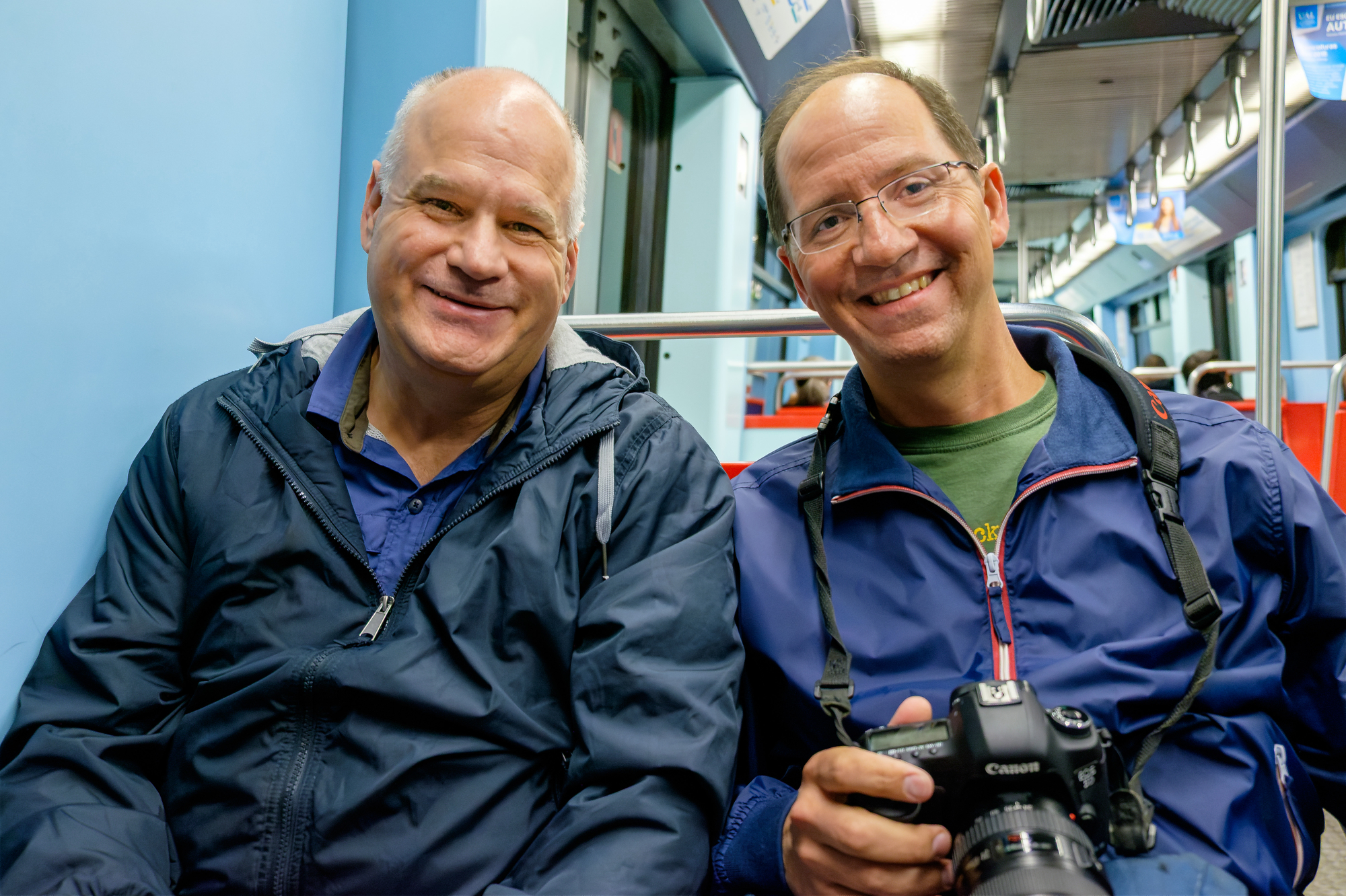
James Dockery and Stanley Leary on the subway in Lisbon, Portugal, while leading a workshop on Missions Storytelling.
When I look back over my photography career, I can remember assignments, places, and photographs that have stayed with me.
But the longer I think about my journey, the more I realize that the story isn’t complete without the people who helped me along the way.
Someone gave me an opportunity. Someone taught me a skill. Someone listened as I tried to figure out what came next. Someone trusted me with an assignment. Someone welcomed me into a community where I felt I belonged.
I didn’t make this journey alone. None of us does.
And I’m beginning to see that one of the keys to happiness in my photography journey is gratitude—not just feeling grateful for those people, but taking the time to tell them.
Gratitude Takes Practice
In an episode of Office Hours, Arthur Brooks talks about why gratitude doesn’t always come naturally, even when we have much to appreciate.
He describes negativity bias: our tendency to pay more attention to problems and threats than to what’s going well. Brooks suggests that gratitude can help us deliberately redirect our attention toward the good we might otherwise overlook.
That idea makes sense to me as a photographer.
I can come home from an assignment with hundreds of successful images and find myself dwelling on the one moment I missed. I can have a career filled with meaningful relationships and still focus on the job I didn’t get or the opportunity that disappeared.
Those disappointments are real. I don’t have to pretend they don’t matter. But if I let them occupy all my attention, I can lose sight of everything—and everyone—that has helped me get this far.
Brooks describes gratitude as something we can practice. We can pause, notice what we appreciate, and express it. Over time, that practice can help us become more aware of the good already present in our lives.
Look Beyond the Photograph
As photographers, we learn to pay attention to what is inside the frame. We look for light, expression, relationships, and moments that help tell a story.
But what if we also paused to consider the people outside the frame who helped make that photograph possible?
There might be an editor who gave you an assignment when you were still building your portfolio. A teacher who helped you understand light. A colleague who answered a question when you were stuck. A client who trusted you with a story that mattered.
And then there are the people who had nothing to do with the photograph itself but helped you become the person who made it.
A friend who listened. A spouse who encouraged you. A group of photographers who welcomed you to the table. Someone who reminded you you had something to offer when you questioned yourself.
Looking back on my own journey—from newspapers and missions to Georgia Tech, freelance photography, and teaching—I see how much my life has been shaped by relationships. Every chapter has included people who gave me opportunities, shared what they knew, or helped me see something differently.
Be Grateful for the People Who Helped You Grow
Brooks makes an important distinction: Gratitude should be authentic. We don’t have to force ourselves to be thankful for something painful.
I’m not grateful that I was laid off from a job I loved. Like many people who have experienced a job loss, I had to figure out how to move forward when the future looked different than I expected.
But looking back, I’m grateful for the people who helped me through the transitions that followed. I can appreciate the work that paid the bills, the lessons I learned, and the doors that opened later.
That’s different from claiming that every hard thing happened for a reason or that every disappointment was easy to overcome. Sometimes it takes years to see what we learned. Sometimes we are still figuring it out.
I’m also grateful for the people who let me fail without treating me like a failure. They helped me see that an idea that didn’t work could teach me something about what to try next.
When we give someone room to learn, we may be doing more for them than we realize.
Don’t Forget the People You’ve Moved On From
One thing I’ve learned is that gratitude needs to extend beyond the moment someone helps us.
It’s natural to thank a person after they give us a job, make an introduction, or offer advice. But what about years later, when we are in a different job, living somewhere else, or working on something new?
Do we still remember them? Do we ever let them know?
If we only reach out when we need something, our relationships can begin to feel transactional. I don’t want the people in my life to feel that I appreciated them only for what they could do for me.
That doesn’t mean I can stay equally close to everyone I’ve met. Life moves, and so do we. But moving on to another chapter doesn’t mean the people from the earlier chapters no longer matter.
Sometimes a memory gives us an opening to reconnect.
You see a photograph and remember the person who taught you how to make it. You find yourself sharing advice you first heard from a mentor. You pass a place where you used to work and think of a colleague who helped you feel at home.
When that happens, take a moment to reach out.
You might write:
I was thinking about you today and remembered what you did for me. I’m not sure I ever told you how much it meant, but it made a difference in my life. Thank you.
You don’t have to ask for anything. You’re simply letting someone know they mattered—and still do.
Write the Note
Brooks recommends making gratitude a habit, including sending a regular message of appreciation to someone whose work, kindness, or help you value.
I like that idea. And sometimes, I think it’s worth taking the extra time to write a handwritten thank-you note.
Thank someone who listened when you needed to talk.
Thank someone who challenged your thinking and helped you see a new perspective.
Thank someone who gave you a chance before you had proved yourself.
Thank someone who let you make a mistake and helped you learn from it.
And thank the people who spent time with you, shared a meal, laughed with you, and made you feel part of a community.
We can overlook those moments because they don’t always come with a job title, a paycheck, or an award. Yet belonging can be one of the greatest gifts someone gives us.
Be specific when you can. Tell the person what they did and why it mattered. They may not have known that a conversation they barely remember helped you find your way.
Pay It Forward
Gratitude can also change how we show up for others.
Brooks talks about the value of expressing appreciation in ways that benefit both the person offering thanks and the person receiving it. That idea made me think about the people who have invested in me—and how I can extend that same generosity to someone else.
We may never be able to repay every person who helped us. But we can pay their generosity forward.
We can listen to someone who is trying to decide what comes next. We can share a technique with a photographer who wants to learn. We can introduce someone to a community, recommend them for an opportunity, or offer encouragement when their work doesn’t turn out as they hoped.
I think about that when I teach photography. Of course, I want students to understand lighting, storytelling, and the business side of the work. But I also want them to experience the encouragement and community that have meant so much to me.
Someone helped me. Now I have the opportunity to help someone else.
A Practice for This Week
Brooks suggests writing down five things you’re genuinely grateful for and revisiting the list during the week. He also encourages you to send a note of appreciation regularly.
Here is how I want to put that into practice:
- Write down five things I’m grateful for, including at least one person.
- Remember what that person contributed—a lesson, an opportunity, a conversation, or a sense of belonging.
- Reach out and tell them, whether through a handwritten note, a message, or a phone call.
- Look for someone I can encourage with the same generosity I received.
Gratitude won’t erase every challenge or guarantee a good day. But it can help me notice the relationships and gifts I might otherwise take for granted.
The photographs I’ve made are part of my story. So are the people who helped me make them.
This week, when someone from your past comes to mind, take a moment to tell them. Your words may mean more than you know.