
|
Getting your Trinity Audio player ready...
|
I’ve spent a career pointing a lens at people — in boardrooms, on porches, at parades, in the quiet moment before someone realizes they’re being photographed. Somewhere along the way, I learned that the real story isn’t the isolated subject; it’s the subject in relationship — to their environment, their people, their calling. You can’t understand someone by cropping everything else out of the frame.
I was reminded of that watching an ABC interview with Wynton Marsalis, recorded for America’s 250th birthday. He talked about growing up around musicians in his father’s band who never made it out from under addiction, about a mother who lived with mental illness her whole life, about a brother whose autism nobody around them had a name for yet. It would be easy to build a tidy narrative out of that — hardship forged the genius. Marsalis refused to let the story be that simple:
“You could grow up hard and not be able to play anything or you grow up easy and be great.”
Read that twice. He’s not saying struggle guarantees depth, and he’s not saying comfort guarantees shallowness. He’s saying the correlation a lot of us assume — that suffering is the price of admission for great art — doesn’t actually hold up. Some people are handed nothing and produce nothing. Some people are handed everything and go on to produce something extraordinary. And the reverse is just as true. Whatever creativity draws from, it isn’t simply owed to you or extracted from you based on how hard your life has been.

The Myth We Keep Telling Ourselves
There’s a seductive story in creative circles — that you have to have suffered to have something worth saying. I’ve believed versions of it myself, standing behind a camera at events where someone’s whole life visibly shows on their face, thinking that’s where the “real” photograph lives. But Marsalis’s own words push back on that instinct. He immediately widened the frame:
“Some people can paint flowers better than any person ever painted a flower. Some person only paints scenes of war.”
Neither of those painters is more legitimate than the other. The one who paints flowers isn’t naive, and the one who paints war isn’t more serious. They’re both just working from whatever true material they were given — and that material isn’t rationed out according to who deserves it or who’s earned it through pain.
Everyone’s Raw Material Is Different — Not Ranked, Just Different
This is where it gets useful for the rest of us who aren’t jazz composers. Marsalis didn’t romanticize struggle, and he didn’t romanticize ease either. He framed both as simply the material he was given — the way another person might be given a stable home, or financial security, or an easy relationship with the world. Different raw material, not a better or worse starting line.
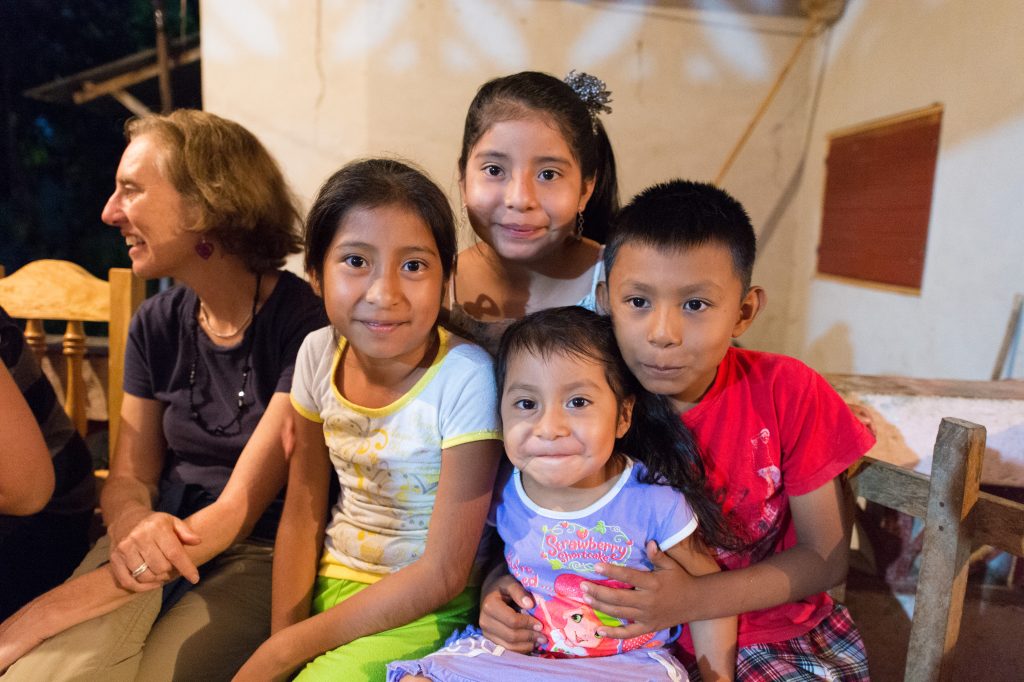
That’s the thing I keep relearning behind the camera. Every person I photograph has a completely different set of raw material than the person before them. The retired veteran at an American Legion dance, the kid at a Juneteenth celebration, the pastor, the small business owner trying to explain what they do in thirty seconds — none of them are working with the same clay, and none of them had to earn the right to have a story by suffering enough first. My job isn’t to go looking for the hardship to make the photograph “real.” It’s to find the shape each person’s particular material already wants to take, whatever that material happens to be.
The Question Is What You Choose to Focus On
If neither hardship nor privilege determines what you’re capable of making, then something else has to be doing the real work. Marsalis pointed at it almost in passing. He said that when he visits people’s homes, someone — usually a woman in the family — pulls out the photo album and walks him through the family history. And he’s noticed something: nobody ever shows the worst pictures. We curate. We choose what to focus on.
He wasn’t being cynical about it. He was naming the actual skill underneath creativity, the one that has nothing to do with your starting circumstances: the ability to look honestly at everything you were given — the beauty and the ugliness both — and decide what the story is actually about. That’s a discipline. It’s learnable. It doesn’t arrive automatically with a hard childhood, and it isn’t blocked by an easy one.
That’s the whole job, isn’t it? Not just for musicians. For anyone trying to tell a true story about a person — including the story you’re telling about yourself.
Find Something New to Play
There’s a line in the interview I keep coming back to. Marsalis said his father used to tell him, instead of playing the same old stuff, why not find something new to play. Marsalis asked what that “new thing” even was. His father’s answer:
“Just listen to the person next to you for a change.”
That’s the entire discipline of documentary work in eight words. You don’t manufacture a new angle by trying harder to be original. You get it by actually listening — to the person in front of you, to what their particular gift is, to what they’re carrying that nobody else is carrying quite the same way.
Everybody’s got a flower or a war scene in them. The work pays enough attention to know which one you’re looking at and to tell it honestly.
Source: ABC News interview with Wynton Marsalis, recorded at Chicago’s Symphony Center for America’s 250th anniversary coverage.