
|
Getting your Trinity Audio player ready...
|
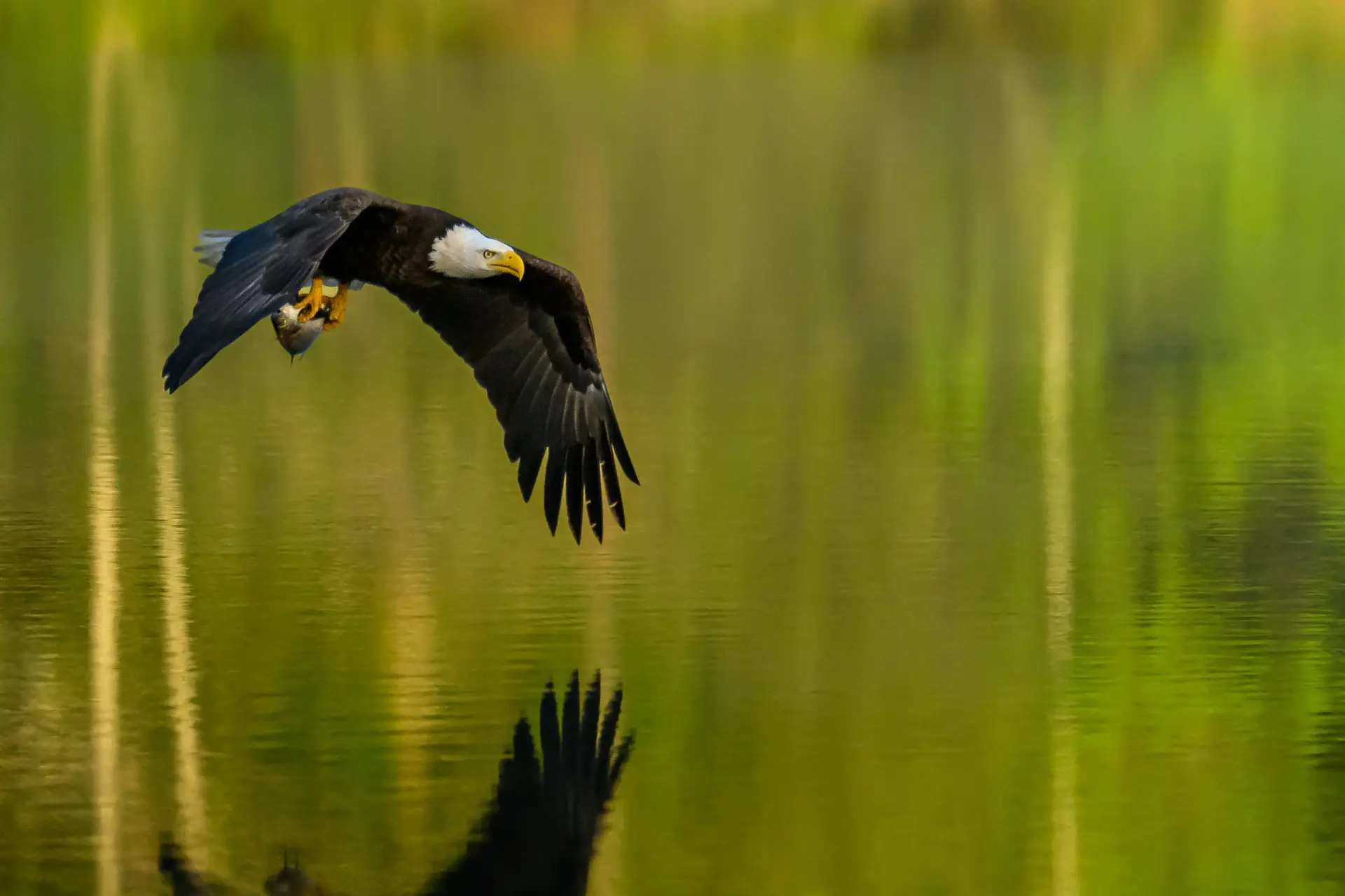
[NIKON Z 9, NIKKOR Z 100-400mm f/4.5-5.6 VR S Z TC-1.4x, Mode = Manual, ISO 9000, 1/2500, ƒ/8, (35mm = 560)]
This morning reminded me why I still get excited about photography after all these years.
It wasn’t just about capturing my first bald eagle—it was about being ready when the moment showed up.
The Backstory
This actually goes back about a year.
A friend of mine, Brenda Oran, had told me about her quiet morning routine. She would grab breakfast at Chick-fil-A and then head over to the lake to sit, eat, and enjoy the stillness before the day really got going.
Over time, she started noticing something unusual—bald eagles in the area.
She also mentioned running into wildlife photographers there, which is usually a pretty strong signal that something special is happening.
That conversation stuck with me.
So when Gibbs Frazeur mentioned he was heading out to look for bald eagles nearby, I shared Brenda’s experience with him. He took that information and did what good photographers do—he went and checked it out first.
That’s what ultimately led us to meet out there at 7:30 a.m. the next morning.
The Location
We met at Mountain Park, just outside Roswell, where two lakes sit at the heart of the community: Lake Cherful and Lake Garrett.
Gibbs suggested Lake Cherful for the light—and he was right.
The sun would come in over my right shoulder just enough to give us a clean angle if anything happened.
The Setup (and the Mistake)
I was shooting with my Nikon Z9, paired with the Nikon Z 100-400mm f/4.5-5.6 VR S and a 1.4x converter, for a total of 560mm.
Settings:
- 1/2500
- ƒ/8 (wide open with the converter)
- Auto ISO (ranging from 900 to 25,000)
- Spot metering tied to the bird’s eye
- Bird detection autofocus
- Back-button focus
And yes… I forgot to switch to high-speed motor drive.
I was in single-shot mode.
Not ideal—but as it turns out, not fatal either.
The Moment
Then it happened.
A large bird flew over me.
At first, I didn’t even know what it was.
No hesitation—I zoomed out, grabbed focus with the back button, and started tracking.
That’s when everything lined up.
The bird was flying away… then suddenly banked, turned, and dove almost straight toward me.
The light was perfect—coming over my right shoulder at about 30°, lighting up the eagle’s face.
Then it struck.
It caught a fish.
And just like that, it turned again—now flying left to right, parallel to me, heading back toward what I can only assume was its nest.
From the first frame to the last: about 55 seconds.
I kept 43 images.
Not bad for single-shot mode.
The Community
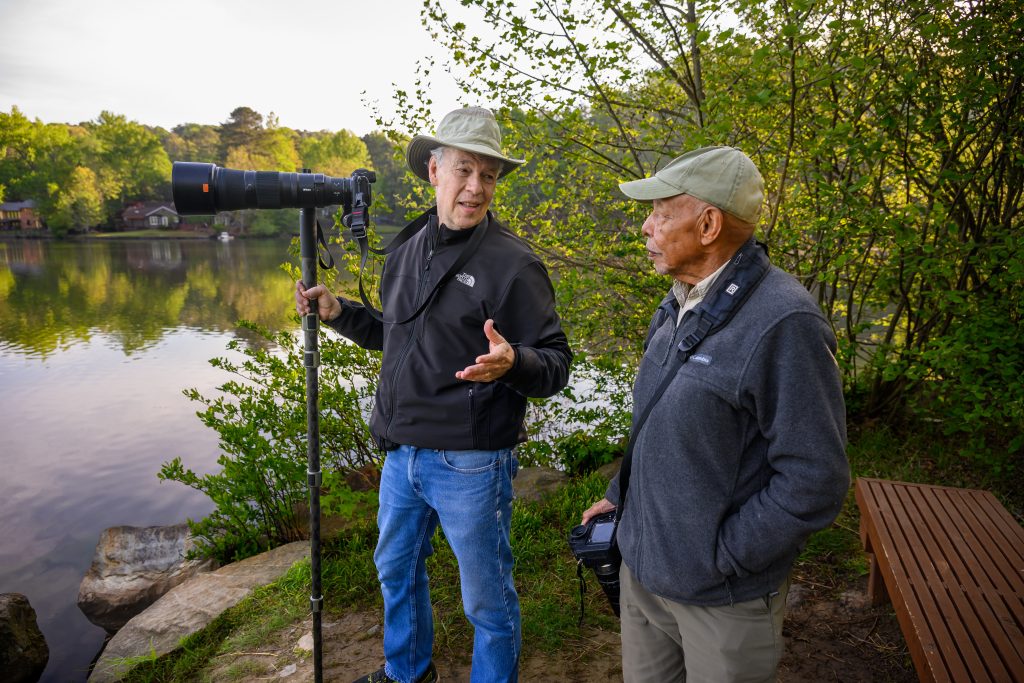
Not long after, Darryl A Vincent joined us.
Gibbs already knew him, and I had met him previously while shooting at Providence Park.
And that’s one of the things I love about this kind of photography.
Yes, we’re all there for the shot—but we’re also there for each other.
We swapped stories. Compared notes. Enjoyed the moment.
A Few Takeaways
1. Preparation beats perfection
I didn’t have everything set perfectly—but I had enough right to make the moment count.
2. Know your gear before the moment comes
Because when it happens, there’s no time to think—only react.
3. Light matters more than almost anything
That 30° angle over the shoulder made the difference between a record shot and a storytelling image.
4. Sometimes you get nothing—and that’s okay
Most days, wildlife photography is waiting. Watching. Hoping.
But even when nothing shows up, you’re still standing in a beautiful place, paying attention to the world.
And that’s never wasted.
5. Community makes it richer
Photography may look like a solo craft, but moments like this remind me it’s often shared.
Final Thought
There’s something powerful about watching a bald eagle in the wild—especially when you see it hunt, succeed, and carry that story right in front of you.
And when you’re fortunate enough to capture it…
You don’t just walk away with photos.
You walk away with a story worth telling.