
|
Getting your Trinity Audio player ready...
|
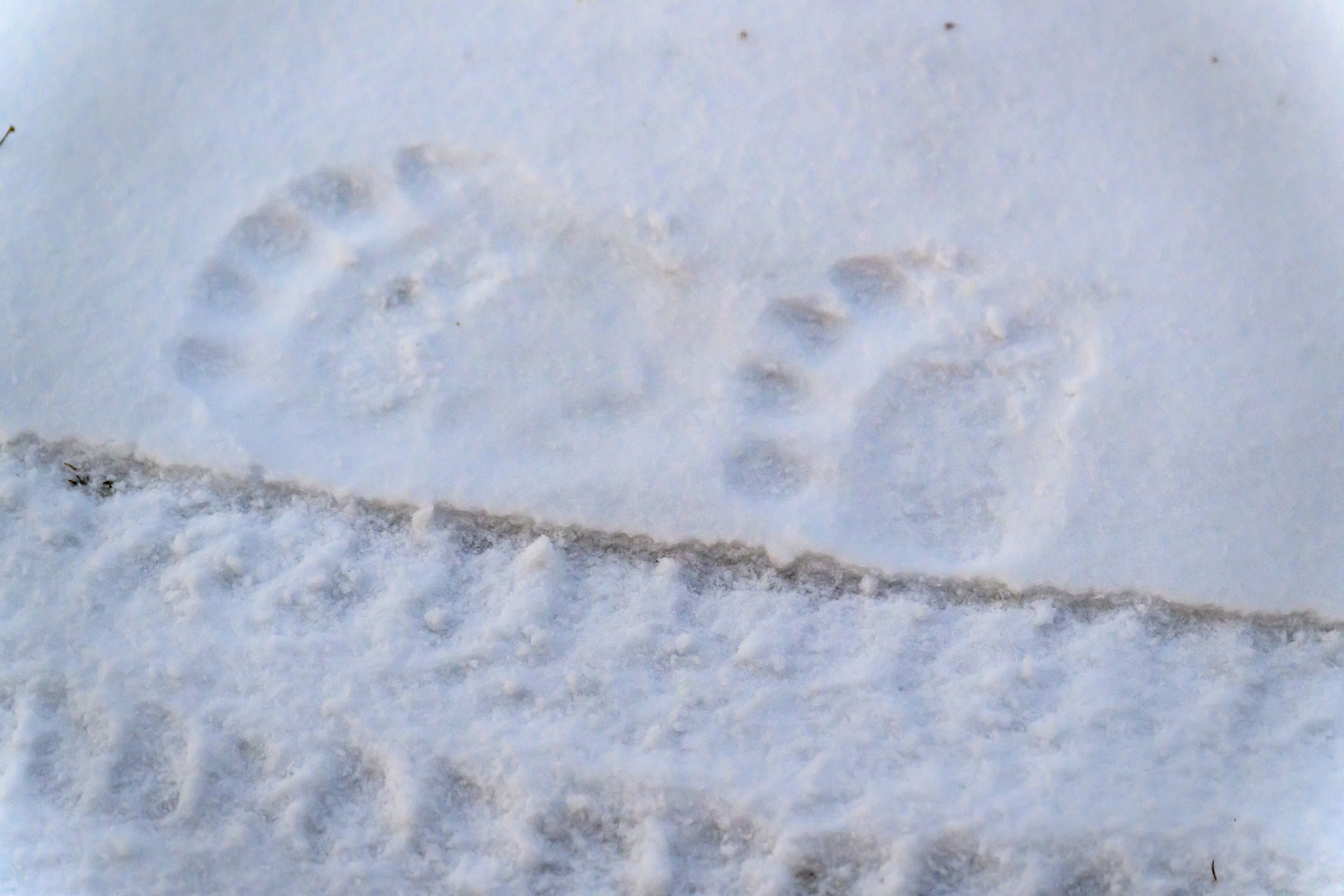
Polar bear tracks appear alongside vehicle tire tracks on a road in Churchill, Manitoba, on November 13, 2026. Although we never saw the bear, its tracks reminded us that polar bears sometimes travel through areas used by residents and visitors.
I traveled to Churchill, Manitoba, to photograph polar bears.
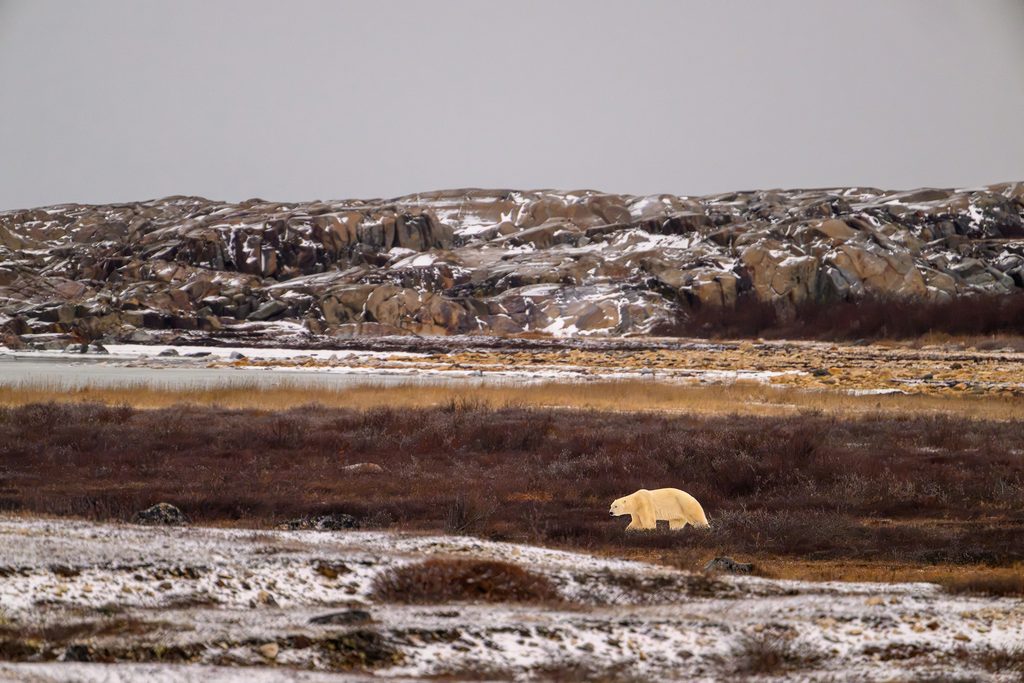
And I did. I photographed mothers with cubs, large males sparring, and solitary bears walking along Hudson Bay’s rocky shoreline.
Some of those encounters were everything I had hoped for. Others surprised me.
But one of the trip’s most important reminders came from a polar bear I never photographed.
In fact, I never even saw it.
All I saw were its tracks.
Evidence of an Unseen Visitor
On November 13, while traveling through Churchill with our guides from Discover Churchill Tours, we came across polar bear tracks along a road in town.
There they were, alongside the tire tracks left by vehicles.
A bear had walked through the area.
We hadn’t witnessed its arrival. We didn’t know exactly when it passed or where it went. We had only the evidence it left behind.
Our guides reported the tracks to local authorities.
That detail mattered to me.
In a community where people and polar bears share the same landscape, evidence of a bear’s presence isn’t simply something interesting to photograph. It’s information that may help protect both people and wildlife.
A Different Kind of Polar Bear Photograph
Think about the photographs most people associate with Churchill.
A massive bear standing on its hind legs. Two males wrestling. A mother leading her cubs across the tundra.
Those are the photographs that capture attention.
But what about a photograph of tracks in the road?
There is no dramatic expression. No beautiful portrait. No extraordinary action.
There isn’t even a bear in the frame.
Yet the photograph tells us something important: a polar bear was here, whether anyone saw it or not.
It made me think about how often we confuse what we can see with everything that is happening.
As photographers, we work within the boundaries of a frame. We choose what to include, what to exclude, and when to press the shutter.
But the world doesn’t stop at the edges of our photographs.
The Responsibility of Knowing What We Don’t Know
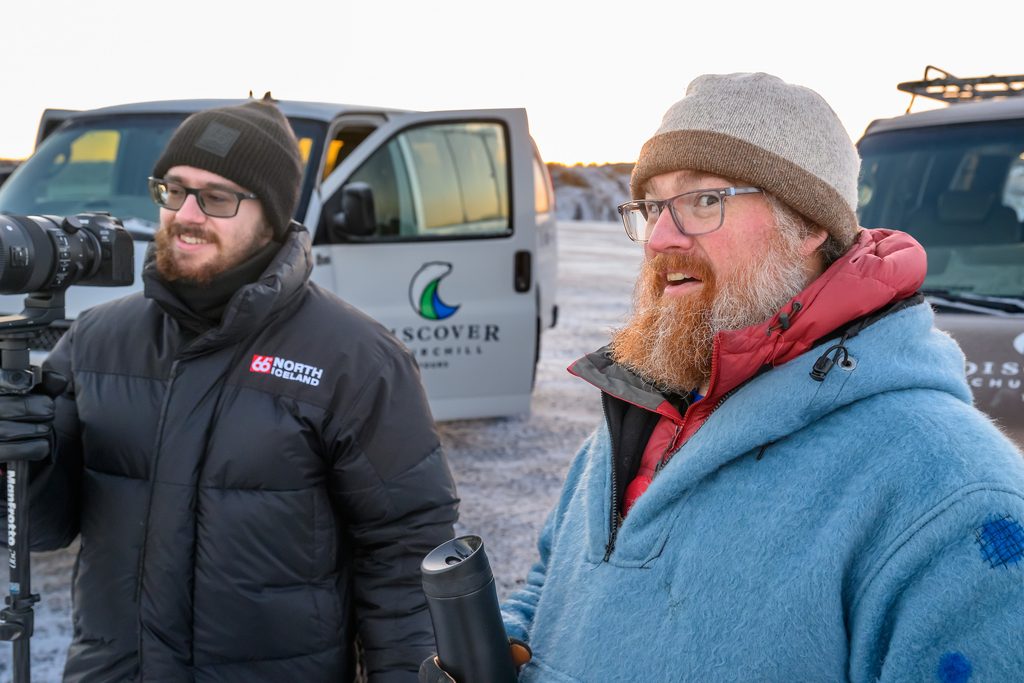
One of the things I appreciated most about our week in Churchill was how seriously our guides took their responsibilities.
Drew Hamilton, Alex de Vries, and the Discover Churchill Tours team weren’t simply helping us find polar bears.
They were helping us understand the animals and the environment we had entered.
They paid attention to behavior, distance, conditions, and safety. They understood that an encounter could change quickly and that their decisions affected more than the photographs we might bring home.
The tracks in town were another example.
They could have been treated as nothing more than an interesting discovery.
Instead, they passed the information along.
I couldn’t help thinking about how different that approach is from the way we sometimes measure success as photographers.
We often ask, Did I get the shot?
But perhaps a better question is, Did I understand what was happening, and did I respond responsibly?
What the Tracks Taught Me About Communication
For much of my career, I’ve worked with organizations to help them communicate more effectively.
Photography has been an important part of that work, but the process has always needed to begin with something more fundamental: understanding the situation.
What is happening?
Who is affected?
What information is missing?
What are we assuming?
What does someone need to know to make a better decision?
The tracks reminded me of those questions.
A photograph can be accurate and still be incomplete.
A beautiful image can attract attention without helping anyone understand the larger story.
And sometimes the most useful information is something we almost overlook because it doesn’t look important at first.
In Churchill, the guides recognized the significance of those tracks because they understood the environment and the consequences.
That understanding gave meaning to what we were seeing.
Sometimes the Most Important Story Is Outside the Frame
I came home from Churchill with thousands of photographs of polar bears.
Some capture extraordinary behavior. Others are quiet moments that mean a great deal to me.
But I keep coming back to the bear we never saw.
Its tracks remind me that being a good photographer isn’t only about recognizing the right moment to press the shutter.
It’s about curiosity. Paying attention, asking questions, listening to people who know more than we do.
And recognizing that what we don’t see may be just as important as what we do.
I went to Churchill hoping to make meaningful photographs of polar bears.
I didn’t expect one of the most meaningful lessons to come from a bear that never appeared in my viewfinder.
Sometimes the most important story is the one that leaves only a trace.


