|
Getting your Trinity Audio player ready...
|
Every assignment arrives with a picture already attached. An editor sends a shot list. A nonprofit asks for “a hopeful image of a mother and child.” A pitch gets written before anyone has visited the community. Sometimes the picture is just our own assumption, formed before we ever got on the plane.
That picture is usually reasonable, but it’s unverified. In more than 40 years of photojournalism and documentary work, I’ve learned that the assignment is not the story. The assignment is what someone thinks the story is. The gap between the two is where the real work happens.
I know two ways to close that gap. They look like opposites, but they’re really one habit.
Going below: talk your way in
In a recent workshop, I gave my students the same advice I always give: get closer, and engage with your subjects. Their photos lacked intimacy, both physical and emotional. The fix wasn’t a lens or a setting. It was a phrase I keep coming back to:
“Talk your way in and then shoot your way out.”
Put the camera down first. Have a real conversation. Ask what a normal day looks like and what someone from outside would get wrong. The people who live the story know what’s actually happening in that room, and no shot list can tell you that.
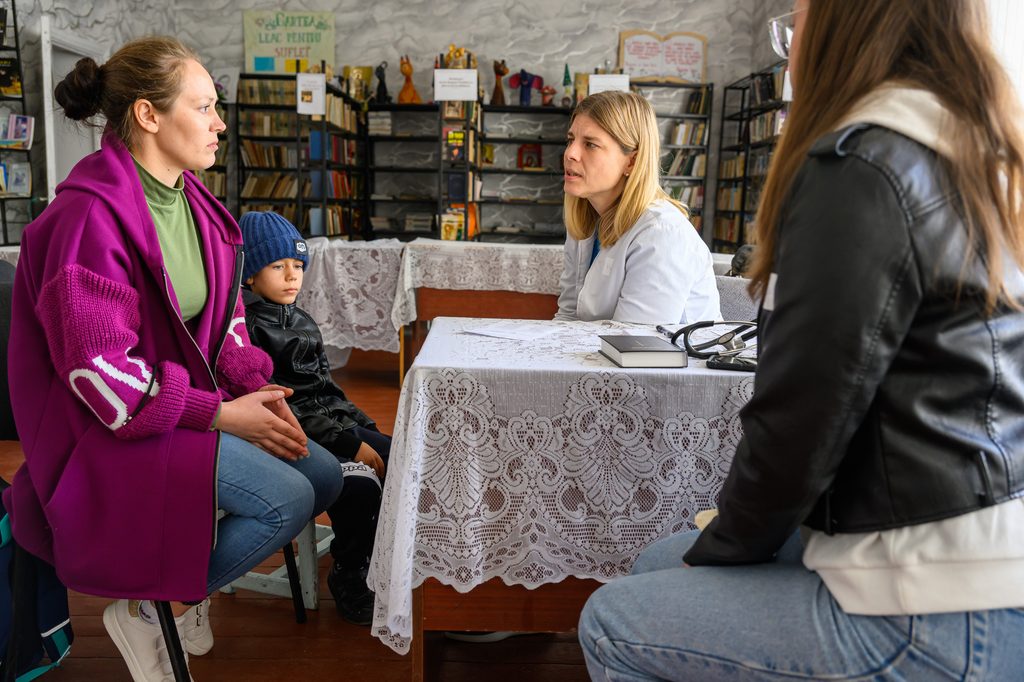
I think of Holly Friesen, a family nurse practitioner and director of Ukraine Medical Ministry. Before she can diagnose a child’s condition in a village in Moldova, she asks a long series of thorough questions. Her translator, Ana Calcavura, makes sure the mother’s concerns and the boy’s condition are understood in both directions. Holly doesn’t treat the first complaint as the diagnosis. She treats it as the starting point.
That’s the right posture for a storyteller too. The assignment is the chief complaint. The story is the diagnosis, and you only get it by asking.
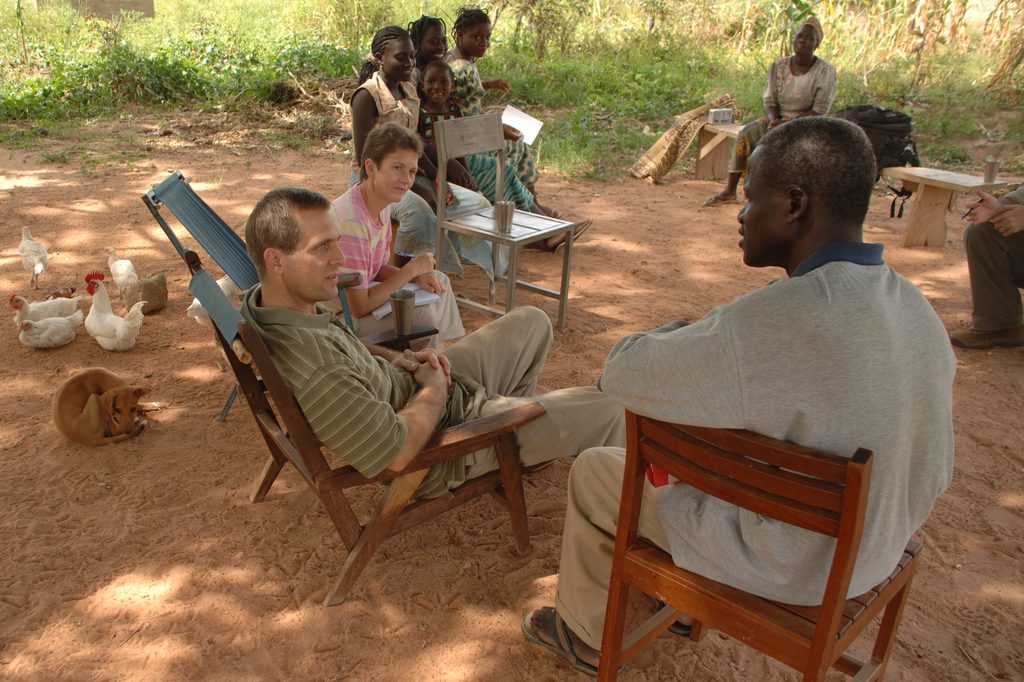
The same goes for David and Tami Wood, missionaries in Burkina Faso. They interview pastors in village after village, gathering data on existing churches and access to resources like fresh water. The details come from asking the people who live there, not from assumptions made at a desk.
Going above: know what the image is for
The second move is to step back and ask what the image needs to do in the world. Is it meant to raise money, change a policy, honor a life, or help a community be seen? Does the “hopeful” shot the organization requested serve the people in the frame, or only the appeal?
This is where advocacy comes in. Advocacy isn’t limited to politics or policy. It extends to storytelling itself. You can’t advocate for someone until you understand their narrative, so the order matters: relationship first, then representation.
Journalism has a long-running tension between impartial reporting and using media to drive change. Wherever you land on that spectrum, the foundation is the same: understanding and empathy. I’d add that this is where constructive journalism earns its place. It highlights problems, but it also looks at evidence-based solutions and progress. It treats the people in our photographs as participants in their own stories, not just subjects of concern.

Look at the mother in that frame. She isn’t a prop for a story about a doctor. She’s a participant, and the picture only works because she’s there, watching and worried. That’s the kind of frame you find after you’ve gone below the assignment, and that you can only justify once you’ve gone above it.
The gap is where the story lives
Step above and ask what the image should accomplish. Step below and ask what’s actually true. The distance between the story as pitched and the story as lived is where the real work is, and the camera is the easy part.
Two questions before your next assignment
- What is this story supposed to accomplish? Not what’s on the shot list, but what it should do in the world.
- Who actually knows what happens in this room? Find that person and talk to them before you raise the camera. Usually it’s not the person who wrote the assignment. It’s the person whose hands, or whose life, are in the work.
Nobody hides the real story from us on purpose. Most of the time they don’t know it’s there, or don’t know how to say it. Our job is to ask the questions that bring it out, and then shoot our way out.
Your turn: when did a story look one way on paper and another way when you showed up? Tell me in the comments.