
|
Getting your Trinity Audio player ready...
|
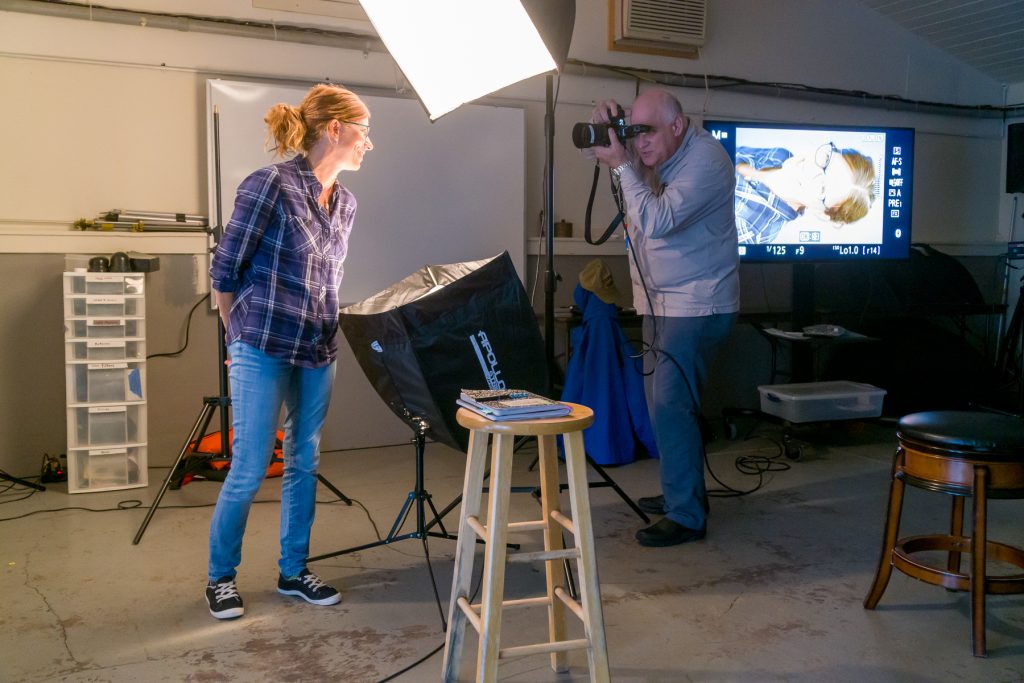
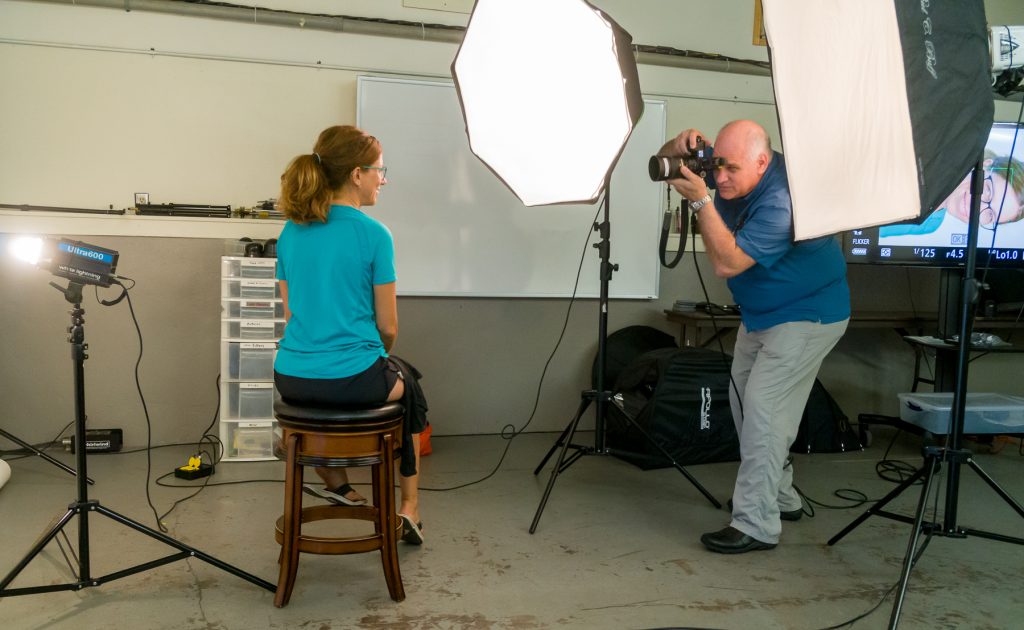
Teaching Light with Purpose—During a hands-on lighting demo at the School of Photography with YWAM in Kona, Hawaii, I showed students how using gels on off-camera flash can better shift the background’s mood and color to support the story. Photo by Dennis Fahringer.
Over the years, I’ve used everything from Nikon’s speedlights to studio strobes like the Flashpoint XPLOR 600, and I’ve learned that manual flash gives me the consistency I need when the light—and the story—matter most.
Don’t get me wrong—TTL flash (through-the-lens metering) is an incredible tool, especially in a fast-moving, unpredictable environment. It’s like having an assistant constantly reading your scene and adjusting the light. TTL can be a lifesaver for event work, weddings, or situations where your subject and background continually change.
But when I have the time to set up and shape the light—whether it’s an environmental portrait, a brand shoot, or storytelling for a nonprofit—I switch to manual flash every time.
Manual = Control and Consistency
TTL works by firing a quick pre-flash and measuring the light bounce to determine power. The problem? If your subject moves slightly or the background changes, your exposure can shift, even if nothing about your lighting setup changes.
That’s where manual flash shines. Once you dial your settings—say 1/8 power, 1/200 shutter speed, f/4, ISO 100—you’re locked in. You can reposition, recompose, and shoot knowing your light won’t surprise you. That’s a big deal when trying to match strobes to ambient light or nail a consistent look across a series of images.
As I’ve written, “Flash is like garlic—a little goes a long way.” Manual flash gives me the finesse to use enough light to sculpt the subject without overwhelming the scene. With TTL, you sometimes get too much “garlic” when you weren’t expecting it.
When TTL Makes Sense
There are times when TTL flash is exactly what I need. In my post on slow-sync TTL flash, I discussed balancing flash with ambient light during low-light moments. TTL is perfect for that, especially when people are moving in and out of shade or you don’t have time to meter and tweak.
I also appreciate TTL using small flashes like the Godox V860 in rapidly changing lighting conditions. TTL gives you a strong starting point; some systems even let you dial in exposure compensation if TTL overshoots.
But again, if I have the time, I’ll almost always switch to manual after that initial TTL reading—because I want consistency from frame to frame.

Real-World Example: Flashpoint XPLOR 600 and the Nikon Z9
When I tested the Flashpoint XPLOR 600 with my Nikon Z6 (and now the Z9), I was impressed with how well the TTL worked for quick setups. But for my storytelling work—especially when I’m controlling background light with high-speed sync (HSS)—I rely on manual mode to avoid fluctuating exposures that TTL can sometimes introduce.
Once I’ve dialed in that look—backlight from the sun at f/2.8, a soft key from my off-camera flash—it’s smooth sailing. Manual gives me repeatability, and that’s critical when I’m shooting interviews or sequences where continuity matters.

Final Thoughts
If you’re new to Flash, TTL is a great teacher. It helps you understand how flash balances with ambient and gets you close quickly. But if you’re ready to take control of your lighting, manual is the way forward.
So while both TTL and manual flash are in my bag, manual flash gives me the light I trust frame after frame.
Let’s connect:
Do you have a question about manual flash, or would you like help with setting up the Nikon Z9? Please message me or check out more lighting tips on my blog.