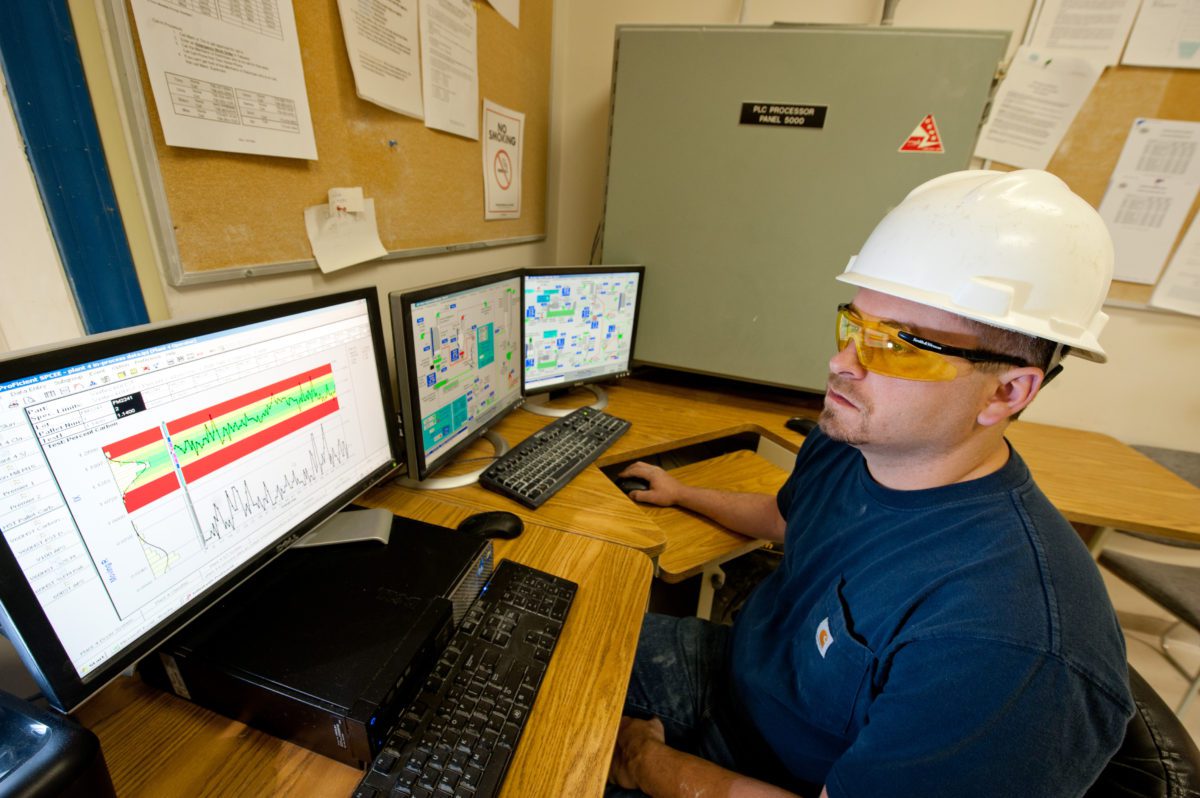
What is an environmental portrait and what is not

Reading Time: 5 minutes

An environmental portrait does not have to be formal. I captured Philip Newberry, who had lost both legs and arms to spinal meningitis. Little Philip jumped on the merry-go-round, had fun, and smiled at his parents. I just composed and had a great “environmental portrait” of Philip.

This photo could also be an “environmental portrait” and may work better since I know more about Philip’s loss of feet and hands here. It helps tell the story. Again, this is not a “Posed Portrait.”

Sometimes you may have to set up a portrait, as I did here in the man’s kitchen. I added a light to help them see his face better.

Think of setting up the photo without the man and then having the man sit down in the image. That is what I did here.

New photographers often make the mistake of taking a vertical photo when assigned to make an environmental portrait. Too often, young new photographers think the picture is the orientation.

They must think of their computer, and when they set up their page or print it, they remember there are “Portrait” and “Landscape” choices. These refer to vertical and horizontal, and not a style of photography. For example, you can have a vertical environmental portrait, but this photo would not be. Here, I have eliminated most of the environment so that the surroundings tell us little about the subject.

By composing the image so tightly around the subject, you have “eliminated” the environment.

Environmental Portrait Tips

  1. Compose for the environment first. Then, find the angle that best captures the space in which the subject works, plays, or lives. 
  2. The environment should be enough to communicate something about the subject.
  3. Let the subject move in the environment as naturally as they usually will if you are not there. Then, sit and wait and take photos until you have a selection of places where the subject has moved in the frame. 
  4. Look for the “moment” and not just the subject’s location in the frame. The moment is more subtle. For example, the subject may turn their head ever so slightly to the light that makes their face glow, or there is an expression that best captures their personality. 
  5. Just remember, people have many traits to their character, and the more you shoot, the better the chances you will have more options to choose from to capture the very best of the person.
  6. Use an off-camera flash, turn on a desk lamp, or do something else to ensure you have the best light to communicate more effectively. For an environmental portrait, you don’t want a silhouette of the subject.


Here, I believe the “expression” of the young boy is the strength of the photo. The environment tells a little, and I would have preferred more surroundings than I have. 


Here I have a father with his children and wife in the background of his kitchen. The photo tells a little about the man that, had I cropped in tight, would have been left out. 


I had very little time at this home, so hanging out in the room with this teenager until I could find a natural moment would not happen. However, I have traveled from Atlanta to Chiapas, Mexico, so I had to get what I could.  As you can see, the window behind the teenager would have made him a silhouette, so I am using an off-camera flash to the far left, pointed at his face.


I had him stand here, and I moved the off-camera flash on a light stand to my right and his left. Then, I took more photos to show a typical teenager’s room in Mexico. 


The man on the street is a new pastor starting work at the medical center in Houston, TX. I took almost all my photos of him inside a hotel meeting room. Nothing in the room said “Houston.” I wanted to be sure I had something of him showing that he works in Houston.  The photo was my intro shot of Ben telling his story in Houston in a slideshow.

Often, space is so scarce in print that the environmental portrait is the only photo the photographer will use. So, you need to capture as much as possible in one picture to help tell a little about the person’s story and introduce them to the audience.

Here is a photo of Philip and Matt Moulthrop, who learned how to turn bowls from Philip’s dad, Ed. I wanted to capture pictures of them with their bowls and photos of them making them.

The magazine used my photos in the article. As you can see, sometimes, they need to introduce the person to the audience. The bowls were just as important here, but this was an Alumni magazine package, so the people were the hook for the story.

Sometimes they use your photo as a vertical shot, as they did here for a magazine cover. Notice how this, too, is an environmental portrait.

Here are a few more examples. You can see where I sometimes used artificial light to enhance the photo.

While this appears to be natural light, it is not. Here is the lighting setup for the man at the desk:

My last suggestion is to use layers in the photograph when possible. Have things in front of and behind the subject to create depth.