Tips for Parents shooting sports

Reading Time: 4 minutes

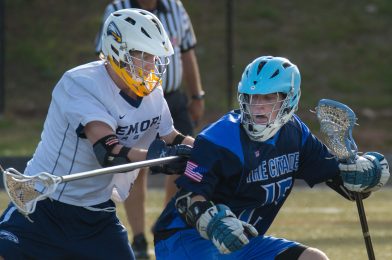
Nikon D4, Sigma 120-300mm ƒ/2.8 with Sigma 1.4 converter, ISO 900, ƒ/5.6, 1/2000

I am so thankful I was covering this lacrosse game between The Citadel and Emory University this past Friday, rather than when it was first played. Initially, they had between 100 and 1,000 players on a much larger field and played for 2 to 3 days.

Wikipedia reports, “Lacrosse played a significant role in the community and religious life of tribes across the continent for many years. Early Lacrosse was characterized by deep spiritual involvement, befitting the spirit of combat in which it was undertaken. Those who took part did so in the role of warriors, to bring glory and honor to themselves and their tribes.”
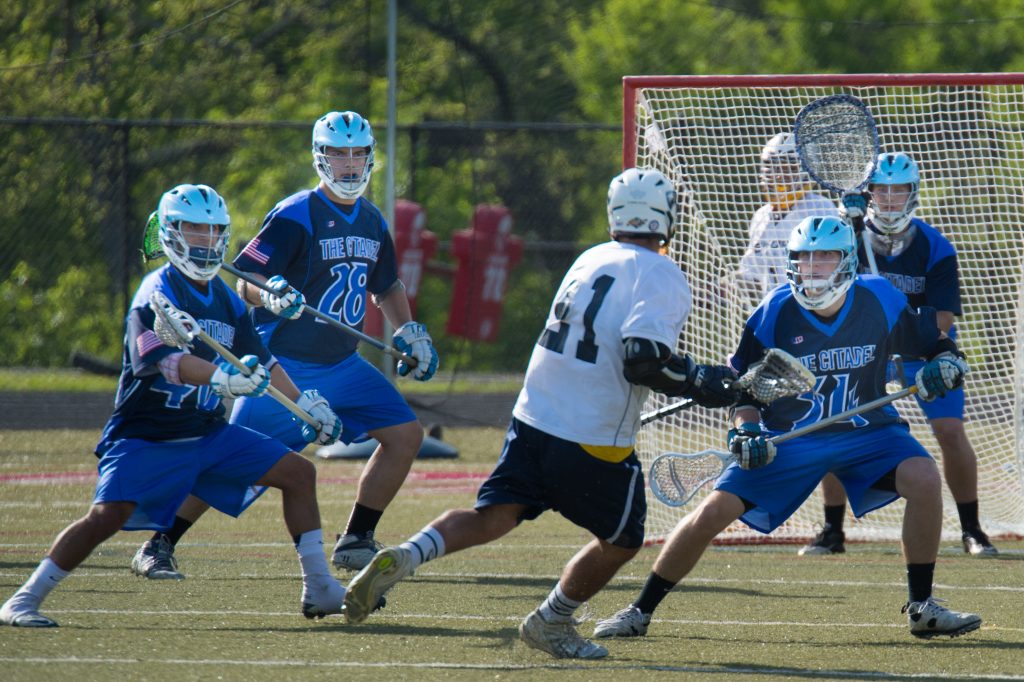
Nikon D4, Sigma 120-300mm ƒ/2.8 with Sigma 1.4 converter, ISO 800, ƒ/5.6, 1/2000

Today, we celebrate our sporting victories with parties. In many ways, the money we spend on sports resembles the money we spend on religious events. Sportswriters even talk about the house of worship when referring to some venues. We have the call to worship with the national anthem, and we stand and cheer.

All this is to say, we love our sports.

The players in the game I covered are not on scholarships but rather play for the pure enjoyment of the game.

As I walked onto the field, I decided to shoot most of the match back-lit. I knew from years of shooting with the sun in their faces that often, the helmets would cast wicked dark shadows over their eyes. I wanted to see the sights.
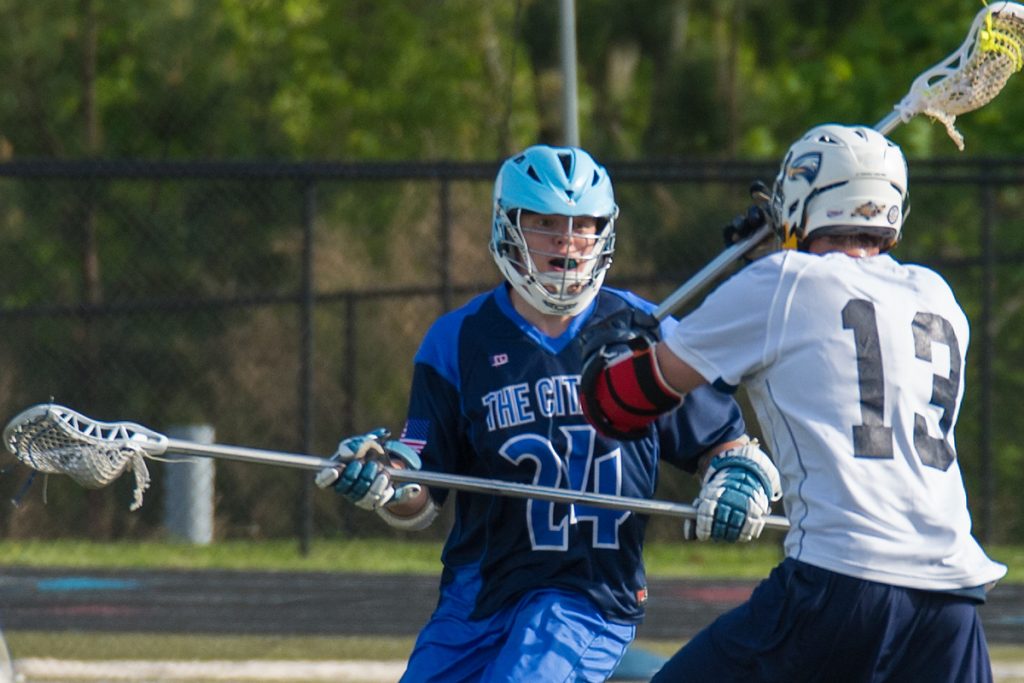
Nikon D4, Sigma 120-300mm ƒ/2.8 with Sigma 1.4 converter, ISO 800, ƒ/5.6, 1/2000

The dynamic range spans from the brightest spot on their face to the darkest area, which is almost always the eyes. So by shooting on the shadow side, I just opened up a little. The other benefit was that the stands in the background were in the shade. This helped to pop the athletes out from the background.
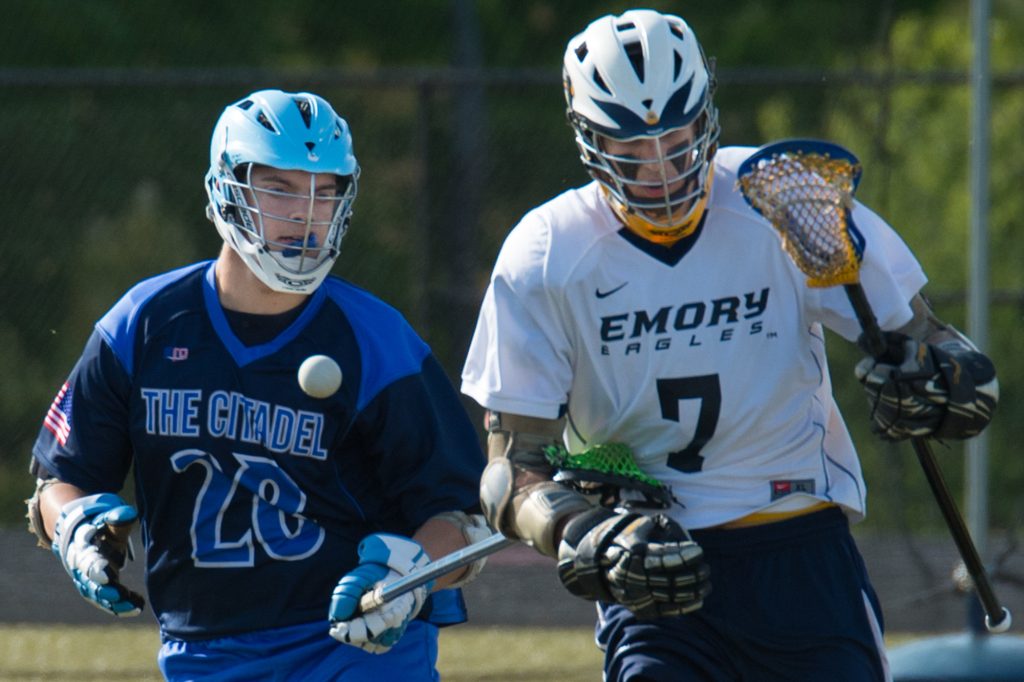
Nikon D4, Sigma 120-300mm ƒ/2.8 with Sigma 1.4 converter, ISO 720, ƒ/5.6, 1/2000

Parents

So you bought a nice DSLR and a lovely lens that the camera store recommended to cover your child in sports. There are just a few tips to remember to make all your photos a lot better.

Get to the game early—this will give you time to scout out the best photo spots and get a feel for the lighting conditions at the field or court.

Get closer—Most parents could have saved a lot of money had they done what most pros do. Get out of the stands and get on the sidelines of the field. You may need permission, but this will improve your photos.

Shoot tight—While occasionally a looser shot can work, if it does, you still need to enlarge it to enjoy it more than the tight shots. Also, while you can crop later, photos shot with a longer lens and not cropped tend to look better, technically. One reason is that the uncropped idea is full resolution.

Use continuous shooting mode—This will allow you to take a rapid-fire series of photos, which can help capture fast-moving sports action.

Know the game—You need to understand the rules and what the point of the game is all about. This knowledge will help you locate the best place to capture those peak game moments.

Subscribe to sports magazines—Almost every sport has magazines with good examples of great images. Be familiar with the standard shots in the sport.
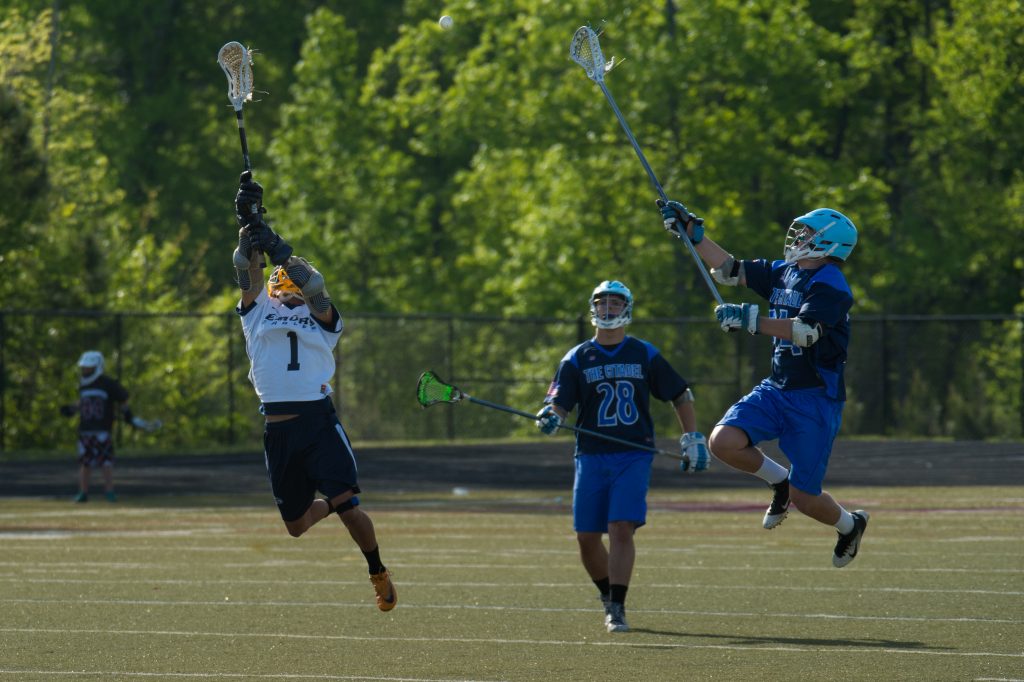
Nikon D4, Sigma 120-300mm ƒ/2.8 with Sigma 1.4 converter, ISO 640, ƒ/5.6, 1/2000. Note that even though this is an exciting moment, it does not compare to all the other photos here because it is loose.

Fast shutter speed—Your photos will be sharper and more in focus if you keep the shutter speed fast. I recommend 1/2000. This will minimize your camera movement and help freeze the athletes. If you read about shutter speed, many recommend 1/500. But if you got the light, shoot as high as possible.

Shallow Depth-of-Field—Photos shot at ƒ/2.8 or ƒ/4 will help clean up the background by throwing it out of focus. Yes, ƒ/16 will mean more photos are usable because everything is in direction. Refer to your Sports Illustrated Magazine photos to see what I mean.

Watch your backgrounds—Too often, busy and distracting backgrounds can ruin a great image. Sometimes you can’t do anything about it, but be sure you have tried.
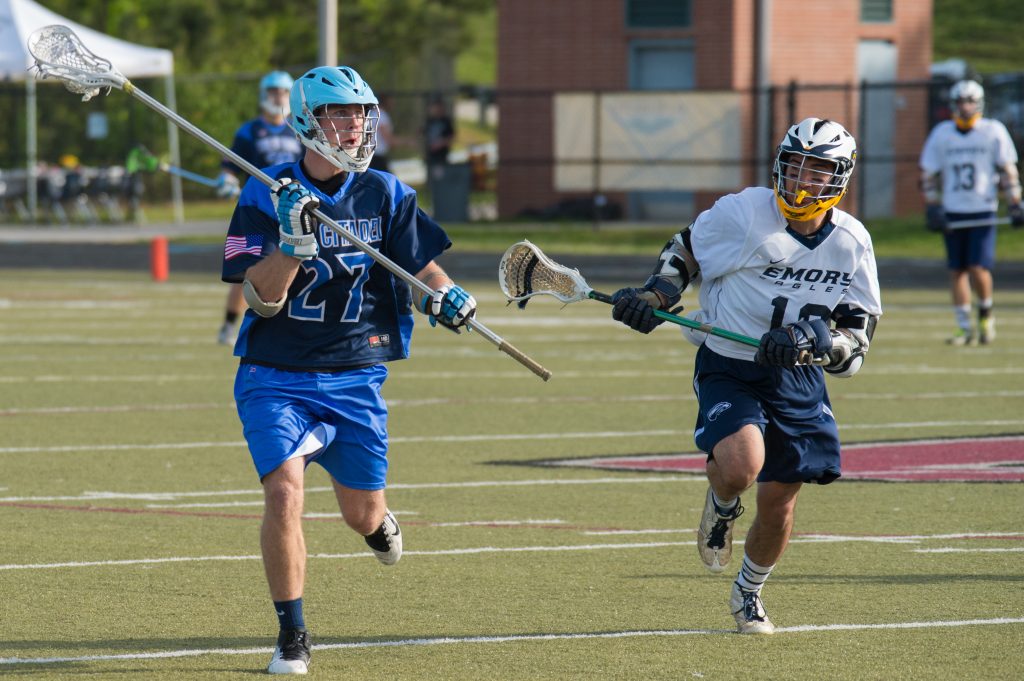
Nikon D4, Sigma 120-300mm ƒ/2.8 with Sigma 1.4 converter, ISO 900, ƒ/5.6, 1/2000.

Show the competition—If you need a good action photo of your kid, take them to the field when there is no game, have them pose or play like they are playing, and get close. If you are shooting the game, take advantage of the other team. This is why they play: to compete. Take away the competition, and you lose the point of sports.

Edit your photos—After the game, take some time to review them and select the best ones. You can use editing tools to adjust the lighting, contrast, and color to make your photos look even better.

Share your photos with your child—Whether you post them on social media or print them out and put them in a photo album, make sure to share them with your child. They will love seeing themselves in action, which will be a great way to celebrate their hard work and dedication to their sport.

Get out of your seat

Reading Time: 4 minutes

Nikon D2X, Sigma 18 – 125mm, ISO 400, ƒ/7.2, 1/200 [4 – Alienbees B1600s full power on the catwalk with 50º parabolic reflectors, triggered by Pocketwizards.]

The other night I attended a lacrosse match at the local high school. I went as a spectator. Attending a game when not working is rare for me to be at a sports event without my camera equipment.

It was interesting to watch the parents photographing the game. A couple of them were on the sidelines, but most stayed in their seats in the stands.

Everyone was shooting with digital cameras. From the most straightforward cameras to most professional equipment, they all had similar focal length lenses that would zoom out to about 200 mm (equivalent to a 35 mm camera).

Nikon D3, 14-24mm, ISO 450, ƒ/4.5, 1/1000

At this high school lacrosse match, the parents were not kept off the sidelines by anyone. Instead, they kept themselves back from the action!

The difference between what each person could photograph varied dramatically because of where they were in relation to the field action.

If you want better photos of your kids playing sports (or doing almost anything else), get as close to the action as possible. But, of course, use some common sense and don’t get in the way of the game or the fans and a safe spot for you.

A famous war photographer said something that applies to sports photography just as it does to war photography. “If the pictures aren’t good enough, you’re not close enough.”

In addition to getting out of your seat to improve your photos, it is to hold your camera still. The longer the focal length, the shakier it can become. Use a monopod. They sell for about $30. I like the Manfrotto Modo 790B Monopod. A monopod will help keep your camera steady and improve the image’s sharpness. It is easier and faster to use than a tripod.

Most folks stand up when taking pictures. It’s more comfortable than squatting or resting on your knees, but it doesn’t usually give you the best action shots. You shoot up at the athletes if you are low to the ground. A lower perspective makes them seem more heroic. Shooting from a low angle makes them appear higher off the ground. Staying low on the sidelines is also courteous to the fans.

Nikon D2X, Sigma 15-30mm, ISO 400, ƒ/5.6, 1/200 [4 – Alienbees B1600s full power in corners is bouncing, triggered by Pocket wizards.

Another trick: Be where they are going – not where they are. Get downfield and shoot back at the players. Now when the big play happens, it is coming to you, not away, plus you can see their facial expressions.   

Nikon D100, Sigma 120-300mm ƒ/2.8 with 1.4 converters, ISO 200, 1/2000

If the sport you cover has a ball, ask yourself: Where’s the ball? Most of the peak action, the tangible expressions, and the competition will be around the ball. This rule doesn’t apply to all your shots, but it is a good one to remember.

If you were covering football, you would be on opposite ends of the field depending on if you are covering the offense or defensive players. You want to see the player’s faces as close as possible. The grimaces will show the intensity of the play.

With digital cameras, you can take ten, a hundred, or even a thousand pictures for the exact cost. So take lots of photos to capture the best moments.

Your kids will probably play these sports for just a few years. But, having good photos in which they can recognize themselves will be something they cherish for a lifetime.

So get out of your seat and get close to the action. You (and your kids) will be glad you did.

Nikon D4, Sigma 120-300mm ƒ/2.8 w/ 1.4 converter, ISO 900, ƒ/5.6, 1/2000
Let’s sum it up:
  • Get closer.
  • Use a monopod. Fuzzy Photos don’t count
  • Get down, and shoot up – make them heroes.
  • Stay ahead of the action.
  • Where’s the ball?
  • Show the faces/capture the emotion.
  • Take more pictures; it improves your odds.
  • Enjoy the photography and your kids.