Picture Storyteller Is Evolving: From Photography Blog to Stories That Matter

Reading Time: 5 minutes

For nearly 20 years, I have been writing at PictureStoryteller.com.

When I started the site around 2006, the purpose was pretty simple. I was teaching photography, particularly lighting and the business of photography, and I wanted my students to have a place they could return to after class. I could share what I was learning, examples of my work, lessons from assignments, and ideas that might help another photographer.

Over the years, something happened that I didn’t necessarily plan.

The blog grew up.

What began as a photography resource became a collection of more than 2,000 posts exploring photography, photojournalism, storytelling, communication, business, teaching, leadership, faith, purpose, and the people I’ve encountered along the way.

And I’ve come to realize that the site has become broader than the word photographer suggests.

Photography Is Still at the Center

I’m not walking away from photography.

Photography has been part of my life for more than 40 years. It is how I learned to pay attention. It taught me to slow down, look carefully, anticipate moments, and become curious about people.

But photography has always been more than making pictures for me.

The camera is a tool.

The photograph is a doorway.

The real question has always been:

What is the story behind the picture, and why should anyone care?

That question has taken me places I never expected.

It has led me into photojournalism, corporate communications, nonprofit work, teaching, organizational storytelling, interviews and conversations with people from all kinds of backgrounds.

It has also taught me that the best photographs often begin long before the camera comes out.

They begin with curiosity.

They begin with listening.

They begin with understanding people.

The Story Isn’t About Me

One of the things I’ve learned through all of this is that storytelling isn’t really about the storyteller.

It’s about the audience.

Organizations often tell the stories they want to tell. Photographers sometimes make the photographs they want to make. Writers can become fascinated with what they have to say.

But effective storytelling asks a different question:

What does the audience need to see, understand, or feel?

That changes everything.

It changes how I approach a portrait.

It changes how I photograph a firefighter.

It changes how I tell a business’s story.

It changes how I interview someone.

And it changes how I think about this website.

Picture Storyteller won’t simply be a place where I write about cameras, lenses, and lighting.

Those things will still be here.

But they’re part of a much larger conversation.

What Comes Next

In the future, I want Picture Storyteller to explore the intersection of people, stories, photography, and communication.

There will still be photography education and discussions about technique.

There will still be photojournalism.

There will still be stories about the business of photography.

But I also want to explore questions like:

How do we tell better stories?

How do we become more curious?

How do we listen to people?

How do organizations communicate who they really are?

How can a photograph help someone understand something they might otherwise miss?

What does it mean to build a meaningful creative career?

What can failure, disappointment, aging, and change teach us?

And perhaps most importantly:

How do we tell stories that matter to the people who need to hear them?

Five Doors Into the Story

As Picture Storyteller evolves, I’m thinking about the site through several connected areas.

Stories

People, organizations, communities and experiences.

These are the stories that remind us that behind every organization, event, or issue are real people.

Seeing

Photography, photojournalism, lighting and visual storytelling.

This is where the craft still matters. I’ll continue sharing what I’ve learned about making photographs and helping other photographers develop their ability to see.

Communicating

How organizations and individuals use stories, photography, and video to connect with their audiences.

A good photograph isn’t necessarily a good communication tool. The question is whether the image helps achieve the story’s purpose.

The Business of Storytelling

The realities of making a living as a creative professional.

Pricing. Marketing. Clients. Careers. Finding work. Losing work. Adapting. Learning. Starting over.

These are conversations I’ve been having for decades, and I don’t think they’re going away.

Teaching

Lessons for photographers, storytellers and communicators.

I’ve spent a significant part of my career teaching. Teaching forces me to examine what I know—and what I don’t know.

Sometimes the best way to understand something is to try to explain it to someone else.

The Photograph Is the Doorway

There is an idea that keeps coming back to me:

The photograph is the doorway into the story.

A photograph can get our attention.

But then what?

What happens when we become curious about the person in the photograph?

What happens when we learn what happened before that moment?

What happens when we discover the reason someone does what they do?

What happens when we realize that someone else’s experience has something to teach us about our own?

That’s where storytelling becomes more interesting than photography alone.

The image opens the door.

The story invites us inside.

A More Honest Description of What I Do

For a long time, the easiest way to describe myself was:

I’m a photographer.

That’s still true.

But it isn’t the whole truth.

I’m a photographer.

I’m a photojournalist.

I’m a storyteller.

I’m a teacher.

I’m a communicator.

And after decades of doing all of those things, I’m increasingly interested in how they fit together.

Photography taught me how to see.

Photojournalism taught me how to observe.

Storytelling taught me how to listen.

Teaching taught me how to explain.

Working with organizations taught me how important it is to understand the audience.

And life has taught me that the most interesting stories usually aren’t about perfect people having perfect experiences.

They’re about people figuring things out.

Why Keep Writing?

I’ve occasionally wondered whether I should continue writing this blog.

There are plenty of places to post photographs now. Social media moves faster. Artificial intelligence is changing how images are created. The traditional photography business continues to evolve.

So why maintain a blog that has been around for nearly two decades?

Because I don’t think the need for stories is going away.

If anything, I think it is becoming more important.

Images surround us.

We are surrounded by information.

Competing narratives surround us.

What we need isn’t simply more content.

We need better stories.

Stories that help us understand people.

Stories that create curiosity rather than division.

Stories that allow us to see something from another person’s perspective.

Stories that remind us that behind the statistics, organizations, headlines, and photographs are human beings.

That’s the kind of storytelling I want to keep exploring.

What’s Next for Picture Storyteller

So Picture Storyteller is evolving.

Not away from photography.

Through photography and beyond it.

The camera will still be part of the conversation.

So will lighting.

So will photojournalism.

So will the business of photography.

But the larger subject is becoming clearer to me:

People. Stories. Seeing. Listening. Communicating.

For nearly 20 years, I’ve been documenting what I’ve learned.

Now I want to be more intentional about bringing those lessons together.

Picture Storyteller is becoming a place to explore how we see, how we listen, how we tell stories, and how those stories can help people connect.

The tagline still feels right:

Human Eyes. Honest Stories.

Because that’s ultimately what I’ve been trying to do all along.

Not simply make better photographs.

See better. Listen better. Tell better stories.

And hopefully help other people do the same.

How to Geotag Photos with Your Phone’s GPS

Reading Time: 6 minutes

A visually stunning photograph that nobody can search for, organize, or locate is a photo that loses its utility the moment it is archived. In the digital age, a great image is only half the equation—the other half is data. Whether you are managing a massive personal portfolio or delivering images to a client, knowing exactly where a photo was taken is critical.

This is especially vital for humanitarian photography, documentary work, and NGO coverage. Organizations often manage thousands of assets from global projects; without embedded location metadata, your critical images can easily get lost in a digital void. Having precise coordinates baked directly into your image files allows organizations to search for images by region instantly, verify location authenticity, and drastically speed up the process of writing accurate, fact-based captions.

While only a few modern cameras have built-in GPS chips due to battery and size constraints, almost every major brand offers a workaround: using your Smartphone’s GPS via Bluetooth.

Here is exactly how Nikon, Sony, Canon, Fujifilm, OM System (Olympus), and Leica handle mobile geotagging, along with the specific apps you need to download.


Before diving into the brands, there is a massive misconception that you need a cellular signal or Wi-Fi for this to work. You do not.

Your Smartphone has a dedicated, hardware-based GPS receiver that operates entirely independently of cellular data networks. You can put your phone into Airplane Mode and turn Wi-Fi completely off to save battery or comply with flight regulations, and your phone will still track your precise coordinates. As long as your phone’s Bluetooth remains enabled to connect to your camera, you can geotag your photos in the deep back-country, in remote villages, or in foreign countries without using a single megabyte of data or roaming.


1. Nikon (SnapBridge)

Nikon was one of the early pioneers of seamless mobile geotagging using low-energy Bluetooth.

  • The App: Nikon SnapBridge
  • How it works: Once you pair your camera to your phone via Bluetooth, open the app, go to the Connect tab, and toggle on Auto link, then Location data. On your camera, ensure the location data feature is set to download from the smart device.
  • The Nuance: SnapBridge is highly regarded for its stability. It can automatically pull your phone’s GPS data in the background, even when your phone is locked, and stamp coordinates onto your files exactly when the shutter clicks.

2. Sony (Creators’ App)

Sony uses a continuous Bluetooth handshake to keep your location data up to date as you move.

  • The App: Sony Creators’ App (or Imaging Edge Mobile for older cameras).
  • How it works: Pair your camera to the app via Bluetooth. Inside the app, toggle on Location Information Linkage by going to the[Cameras] screen, and tap [Others] → [Setup] → [Location Information Linkage] and switch on  Location Information Linkage, Auto Time Correction, and Auto Area Adjustment. You may also need to go to your camera’s network menu and turn Location Info. Link to On.
  • The Nuance: For iOS and Android to allow continuous tracking in your pocket, you must set your phone’s location permission for the Creators’ App to “Allow all the time” rather than “Only while using the app.” And in the Creators’ App, click the gear icon in the upper-right corner of the [Cameras] screen, then set Connection with Camera in Background to Keep connection.

3. Geotag Alpha (multiple cameras at same time)

Geotag Alpha uses a continuous Bluetooth handshake to keep your location data up to date as you move.

  • The App: Geotag Alpha (third-party iOS app for Sony cameras).
  • How it works: Turn Bluetooth on in your camera’s network menu. Open Geotag Alpha, tap Add Camera, and pair it directly within the app. Then, go to your camera’s network menu and turn Location Info Link to On.
  • The Nuance: For iOS to allow continuous tracking in your pocket, you must set your phone’s location permission for Geotag Alpha to “Always Allow” rather than “While Using the App.”

4. Canon (Camera Connect)

Canon offers real-time coordinate stamping as long as the mobile application remains active in your phone’s memory.

  • The App: Canon Camera Connect
  • How it works: Establish a Bluetooth connection between your camera and Smartphone. In the app settings, enable Location Information. Next, dive into your camera’s yellow Setup menu, find the GPS settings, and set the GPS device to Smartphone.
  • The Nuance: Canon cameras require a constant active connection to stamp coordinates on the fly. If your phone aggressively kills background apps to save battery, you may need to reopen the app occasionally during a shoot.

5. Fujifilm (FUJIFILM XApp)

Fujifilm drastically improved its wireless reliability with the release of its modern connectivity app.

  • The App: FUJIFILM XApp (replaces the legacy Camera Remote app).
  • How it works: Pair your camera via Bluetooth. In the XApp settings, ensure location synchronization is switched on. A small satellite or globe icon will appear on your camera’s LCD/EVF screen when it is actively receiving a GPS signal.
  • The Nuance: Fujifilm cameras update their internal clocks and locations based on the phone. However, aggressive smartphone power-saving settings can sometimes pause background sync, requiring a quick phone wake-up.

6. OM System / Olympus (OI.Share)

Because most Olympus and OM System bodies lack internal GPS hardware, they rely on a smartphone-tethered handshake to map your journey.

  • The App: OM Image Share (OI.Share)
  • How it works: You can sync the camera and phone via a Bluetooth background connection. Turn on the location logging feature within the OI. Share app to communicate the live coordinates directly to the camera body as you shoot.
  • The Nuance: Because it relies entirely on a continuous data stream, keeping the app open and active is crucial for accurate mapping throughout a long day of shooting.

7. Leica (Leica FOTOS)

Leica utilizes a clean, minimalist application to push location data to models without internal GPS, such as the Q and M series.

  • The App: Leica FOTOS App
  • How it works: Pair your Leica camera to your phone using Bluetooth. In the app’s camera management settings, enable the location logging option.
  • The Nuance: The app features an “Always-on” background toggle that keeps geotagging active even when the phone is locked. Be aware that keeping this link constantly active will cause a noticeable increase in both phone and camera battery consumption.

Pro-Tips for Flawless Mobile Geotagging:

  1. Check Battery Optimization: Android and iOS love to put background apps to “sleep.” Disable battery optimization/restrictions for your camera app to prevent geotagging dropouts.
  2. Watch the Icons: Always look at your camera’s display before shooting. Most brands display a GPS or satellite icon that flashes while searching and remains solid once it has a lock on your phone’s location.
  3. Time Sync is Key: Ensure your camera’s internal clock is synced to your Smartphone. If the timestamps don’t match up, the app may fail to align the GPS coordinates with the correct image.

Unlocking Your Coordinates in Lightroom

Once you have successfully embedded those coordinates into your files using the steps in the post, here is how actually to put that metadata to work using Adobe Lightroom Classic:

  • The Map Module: Go to the Map module at the top right. Lightroom will read the EXIF data from your camera app and instantly drop physical pins on a global map showing exactly where you stood for every shot.
  • Reverse Geocoding: When you select images in the Map module, Lightroom can automatically look up the coordinates and populate the City, State, and Country fields in your Metadata panel, saving you hours of manual typing.
  • Smart Collections: You can create a Smart Collection with rules like “GPS Data > is coordinates” to instantly isolate images that contain location data, making it easy to filter out studio shots from fieldwork.
  • The Sync Backup Workaround: If your phone app ever disconnects in the field, you can track your route using a standalone GPX logging app (such as Geotag Photos Pro). In Lightroom’s Map module, click the Tracklog icon (the little wavy line button) and select Load Tracklog. Lightroom will automatically match the timestamps on your photos to your phone’s GPS log and retroactively stamp the files.

What Happens When You Point a Drone (and a Camera, and Some Care) at Roswell Small Businesses

Reading Time: 4 minutes

Over the past week, I did something I’ve been wanting to do for a while: I turned my camera toward two businesses I actually use — I Canita Cake and Gus’ Barbershop — to show my neighbors what I already know about them.

I didn’t expect the response.

I Canita Cake: 31,768 Views in 5 Days

I took a drone shot of I Canita Cake on Alpharetta Street and posted it with this:

Shoutout to a Roswell gem: I Canita Cake! If you haven’t stopped by I Canita Cake on Alpharetta Street yet, you’re missing out. This woman-owned bakery in the heart of Roswell has been making custom cookies and cakes memorable for over 12 years, and everything from their custom cakes to their famous “Better-than-Oreo” cookie sandwiches is made with real care and creativity.

But the part of the post people really responded to wasn’t the cookies. It was this:

What makes I Canita Cake truly special isn’t just what’s in the display case — it’s what happens with the leftovers. When the day’s baking is done, they call my wife, Dorie Griggs, chaplain for the Roswell Fire Department and Emory Saint Joseph’s Hospital, and she delivers those goodies straight into the hands of our Fire, Police, 911 Call Center, and hospital nurses and doctors. It’s a small gesture that means a lot to the people who serve our community around the clock — and it says everything about who I Canita Cake is.

The result: 31,768 views in 5 days, and by the owner’s own account, 4 to 5 new customers walked in the very next day because of the post.

Owner Canita Allen said, “We had three or four people today that said they saw the write-up about us and decided to come give us a try. I can’t tell you how much I appreciate it.”

I Canita Cake 1294 Alpharetta St, Roswell, GA (470) 300-9518 icanitacake.com

Gus’ Barbershop: Two Posts, Two Different Stories

The Drone Shot — 8,361 Views

I’ve been a customer at Gus’ Barbershop for more than 20 years — since Gus and his uncle Ray had a shop together just down the street. So when I posted a drone shot of the current location, it came from a lot of history, not just a good haircut day:

Gus’ Barbershop has been a fixture in this community for over 10 years, and it shows. It’s not just a haircut — it’s a tradition. The whole team takes their time with you; nobody’s ever in a hurry, and the customer service is genuinely great every single visit.

That post pulled 8,361 views in 5 days.

Gus Barbershop

The Video — 1,300+ Views Overnight

Then last night I shared something different: a short video of Gus himself, talking about why he does this work.

Meet Gus — Roswell’s own, one haircut at a time. I’ve been going to Gus’ Barbershop for years, and I finally sat down with him to talk about why he does what he does. Turns out it’s not just about the haircut — it’s about making sure everyone in this community, no matter their budget, can walk out feeling good.

That post hit over 1,300 views in the first 16 hours — most of it while everyone was asleep.

Gus’ Barbershop 10697 Alpharetta Hwy, Roswell, GA 30076 (478) 395-8700

Why This Matters (To Me, and Maybe to Your Business)

I’ve spent over 40 years telling stories with a camera — for magazines, for corporations, for community newspapers. What these three posts remind me of is something I learned a long time ago from my mentor, Don Rutledge: you don’t find the story by isolating your subject. You find it by showing people in their relationships and their environment — Canita and the leftovers that go to first responders, Gus and 20 years of customers in that chair.

That’s the story people stop scrolling for.

If your business has a story like that — something true about why you do what you do, and who it’s for — I’d love to help you tell it. A single drone shot or a two-minute conversation on Video might be all it takes.

From Helicopter to Drone: How Aerial Photography Changed in Seven Years

Reading Time: 3 minutes

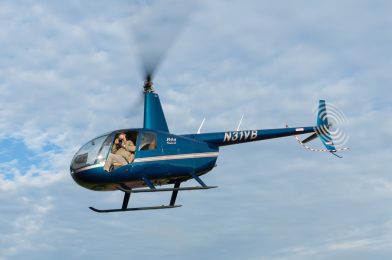
Stanley flying in a helicopter in 2014 above Blessed Trinity. Photo by Craig Carden

In September 2014, I climbed into a helicopter to get aerial shots of Blessed Trinity High School for a recruiting campaign. The clock was working against me before I even left the ground — by the time the helicopter left the airport, flew to pick me up at the school, and accounted for the return trip, I had about 30 minutes of actual air time to stay under the one-hour billing mark. At $600 an hour, every minute mattered. I was shooting fast, shooting smart, and hoping I nailed the angles I needed on the first pass because there wasn’t time for a second guess.
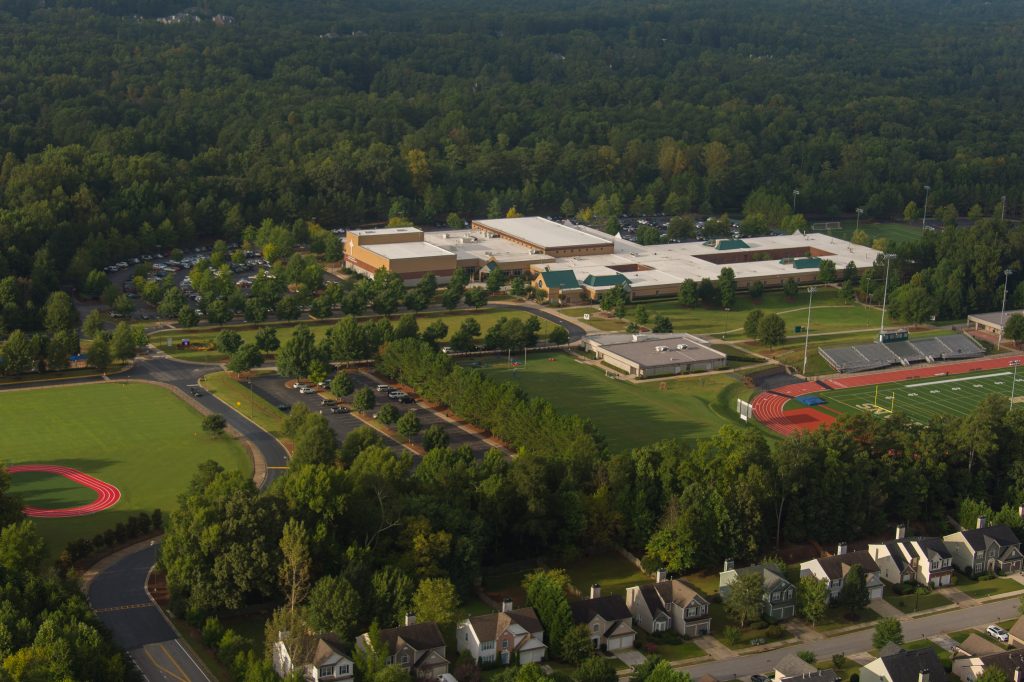
Blessed Trinity High School Helicopter 2014

That was the last time I ever needed a helicopter for aerial photography.

In June 2021, newly certified as a Part 107 drone pilot, I flew over Blessed Trinity again. The contrast could not have been more stark. A helicopter can’t legally fly below 500 feet. A drone can’t fly above 400 feet over most structures. That gap — the airspace between 400 and 500 feet — turned out to be exactly the sweet spot that opened the door to a completely different kind of aerial storytelling.

Today I fly a DJI Air 3. I charge a battery, get about 35 minutes in the air, land, swap in a fresh battery, and go right back up if I need to. No airport pickup. No 30-minute countdown. No $600-an-hour clock running in the back of my mind while I try to compose a shot. I can hover, reposition, wait for better light, and try an angle three different ways — options that simply didn’t exist for me as a working photographer seven years earlier.

Why This Matters for Businesses and Organizations

Aerial perspective used to be a luxury reserved for big budgets. Now it’s a practical tool that almost any business or organization can put to work.
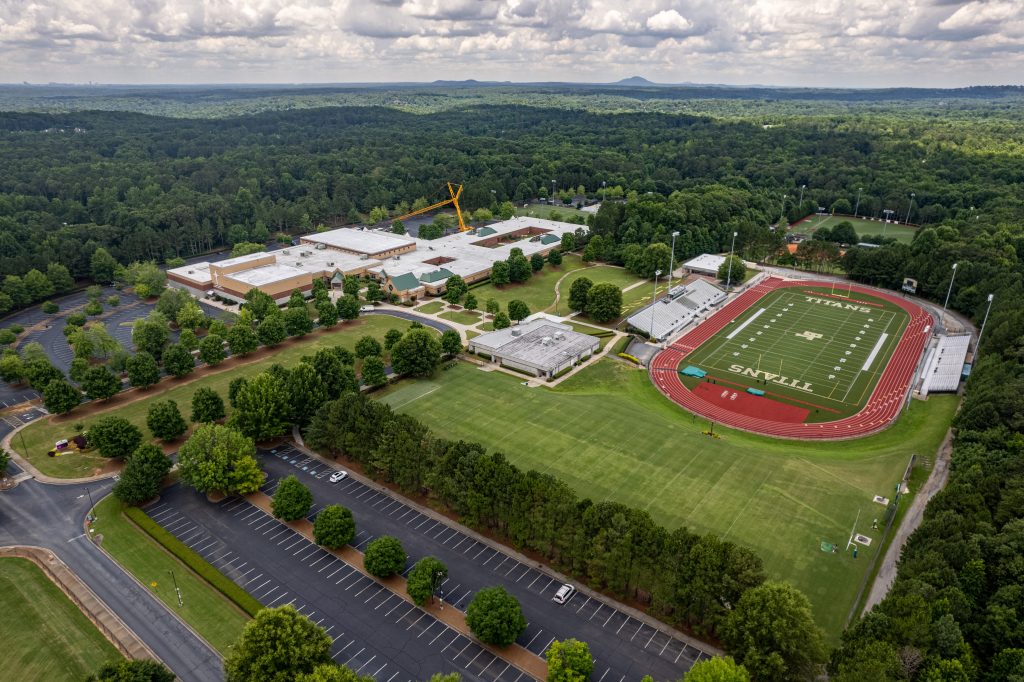
Blessed Trinity High School – Drone 2021

Still images from the air give a business context that ground-level photography can’t. A school can show its full campus — athletic fields, parking, building layout — in a single frame that helps prospective families understand the place at a glance. A contractor or landscaper can document a finished property in a way that shows scale and craftsmanship. A church or nonprofit can capture an outdoor event from above and convey a sense of community and turnout that no ground shot can match. For real estate, construction progress documentation, campus recruiting, and event promotion, a well-composed aerial still is often the single most persuasive image in the whole set.

Video adds movement and pacing to that same advantage. A slow reveal that rises over a building or glides along a property line gives viewers a sense of place and scale in a way that feels cinematic rather than promotional. Organizations use this for recruiting videos, donor and fundraising pieces, real estate listings, and social content that needs to stop the scroll. A ten-second aerial establishing shot can do more to set a tone than thirty seconds of interviews or B-roll.

And practically speaking, the cost structure has flipped. What used to require chartering a helicopter and hoping the weather cooperated on a single expensive day can now be done on a normal shoot day, revisited if the light isn’t right, and repeated as often as the story requires.

Why It Matters for Storytelling

The bigger shift, for me, isn’t really about cost or convenience. It’s about vantage point.

Ground-level photography tells you what something looks like up close — the people, the details, the relationships. Aerial photography tells you where that story sits in the world. It shows scale, context, and connection: how a campus relates to its neighborhood, how a farm relates to the land around it, how a crowd fills a space. My mentor Don Rutledge taught me that good documentary work reveals people through their context and relationships, not by isolating them. An aerial shot is one more way to show that context — pulling back far enough to let the viewer see the whole picture before coming back down to the human details that make it matter.

That’s the real value of having this tool now accessible on a normal shoot budget. It’s not just a new camera angle. It’s a new way to open or close a story — to show someone where they are before you show them who’s there.
Telling the Stories Behind the Membership Cards: My Work with Wellbridge

Reading Time: 5 minutes

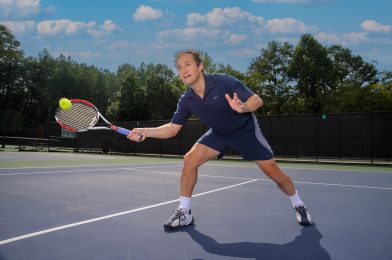
Marco Betti, owner of Antica Posta, a Tuscan restaurant and bar in Atlanta’s Buckhead neighborhood, plays tennis at Wellbridge’s Athletic Club Northeast in Atlanta, Ga., on September 22, 2009. Betti, who splits his time between the restaurant’s exhibition kitchen and its wine dinners, uses time on the court to stay active outside the kitchen.

Every gym has a wall of equipment. Not every gym has a wall of stories.

Back in the mid-2000s, I had the chance to work with Wellbridge on a project that’s stuck with me ever since — not because of the lighting setups or the shot lists, but because of who I met on the other side of the camera.

Wellbridge wanted to do something different with their marketing. Instead of another glossy mailer full of stock photography — the generic smiling model on a treadmill that nobody actually recognizes — they wanted to show the people who were already walking through their doors. Real members. Real trainers. Real results. The idea was simple: let the club’s own patrons tell the story of what membership had done for their lives, and back it up with photographs that felt honest rather than staged.

That’s where I came in.

Finding the Story in the Session

My approach to this kind of work goes back to something my mentor, the late Don Rutledge, drilled into me early in my career: you don’t find the real story by posing someone in isolation. You find it by staying close to the relationship — between a person and their work, their trainer, their routine, the thing that actually matters to them. So instead of setting up a sterile portrait station in a corner of the club, I spent time in the actual sessions. Step aerobics classes with steppers and hand weights. One-on-one training sessions. The unglamorous, sweaty, in-progress moments that don’t usually make it into a marketing mailer — because those are the moments that are true.

Over the course of the project, I photographed a wide range of Wellbridge members, each with a completely different reason for walking through the door:

  • A Georgia Tech professor whose entire career was built on studying human performance — using his own training as a real-world extension of the science he taught in the classroom.
  • A prominent Atlanta chef, whose long hours on his feet in a high-heat kitchen made his own health and stamina non-negotiable.
  • An independent PR executive, whose days were built around client calls and deadlines, using her time at the club as one of the only hours in her schedule that belonged to her.
  • Members connected to organizations like the CDC, along with entrepreneurs, parents, and everyday Atlantans — each with their own version of “why I’m here.”

What struck me, session after session, was how different the reasons were and how similar the result was. A professor who wanted sharper focus for his research. A chef who needed more energy to make it through service. A PR pro who needed one hour a day that wasn’t about anyone else’s deadline but her own. Different lives, same thread: showing up consistently changed how they showed up everywhere else.

Why This Kind of Work Matters

Mailers built around stock photography get glanced at and recycled. Mailers built around a neighbor, a familiar face from the community, someone whose kid goes to the same school — those get read. That’s the power of documentary-style photography in a marketing context: it doesn’t manufacture trust; it reveals trust that’s already there.
For Wellbridge, that meant a library of images they could drop into direct mail campaigns targeted at the neighborhoods surrounding each club — real members, photographed in real sessions, with testimonials that reflected their actual experience rather than a copywriter’s guess at one.

For me, it was a reminder of why I got into this work in the first place. Everybody has a reason they showed up. My job is just to stay close enough, long enough, to see it.


If you run a gym, studio, or wellness business and want to tell your members’ stories the same way — through real sessions, not staged portraits — get in touch to talk about a patron photography project for your own marketing.

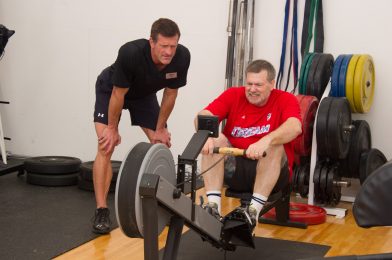
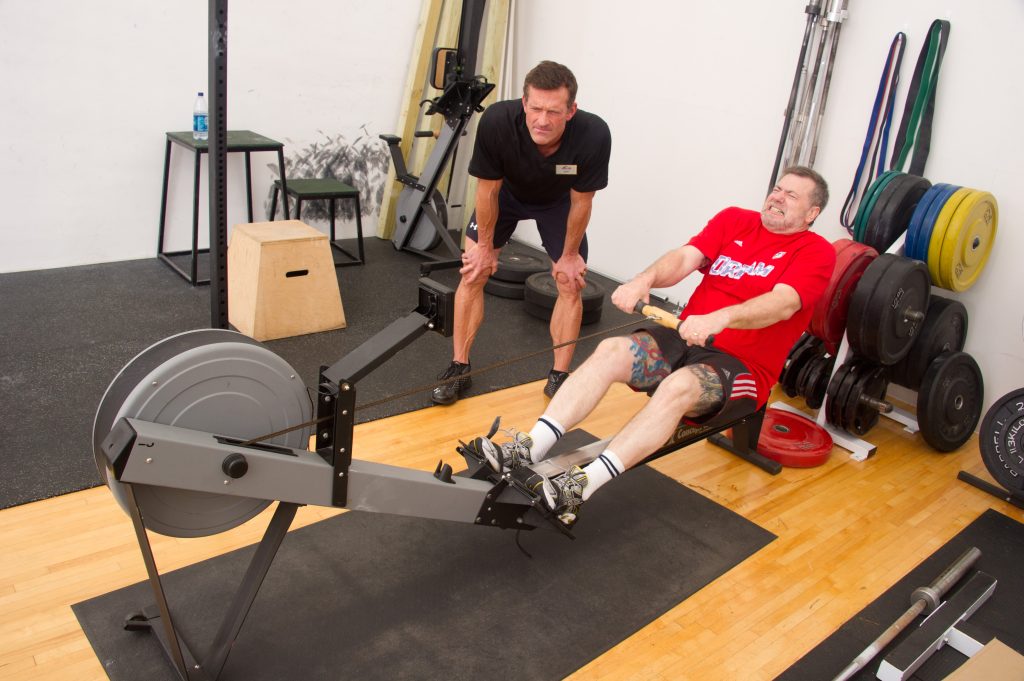
Dan Fisk works out on the rowing machine while Trainer Keith Walker helps monitor his form to get the maximum benefit from the rowing machine.
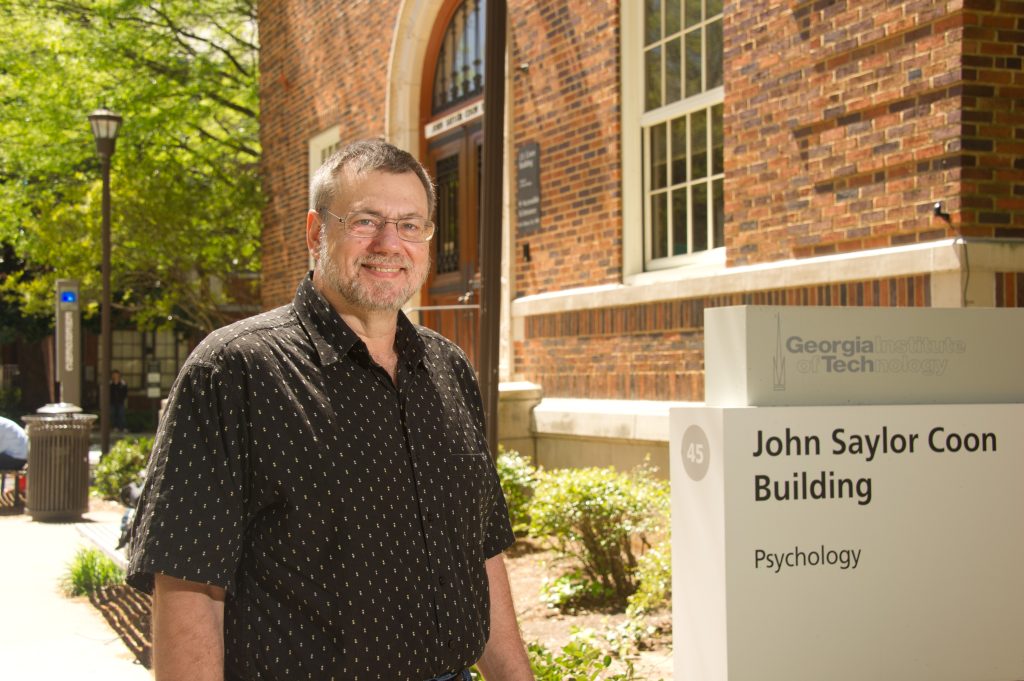
Georgia Tech psychology professor Dan Fisk on the Georgia Tech campus in Atlanta, Georgia.
Marco Betti, owner and chef of Antica Posta, stands in his chef’s whites beside the restaurant’s sign in Atlanta’s Buckhead neighborhood on September 22, 2009. Betti and his brother, Chef Alessandro “Sandro” Betti, bring the flavors of their native Tuscany, Italy, to the Atlanta dining scene at Antica Posta, a Tuscan restaurant and bar.
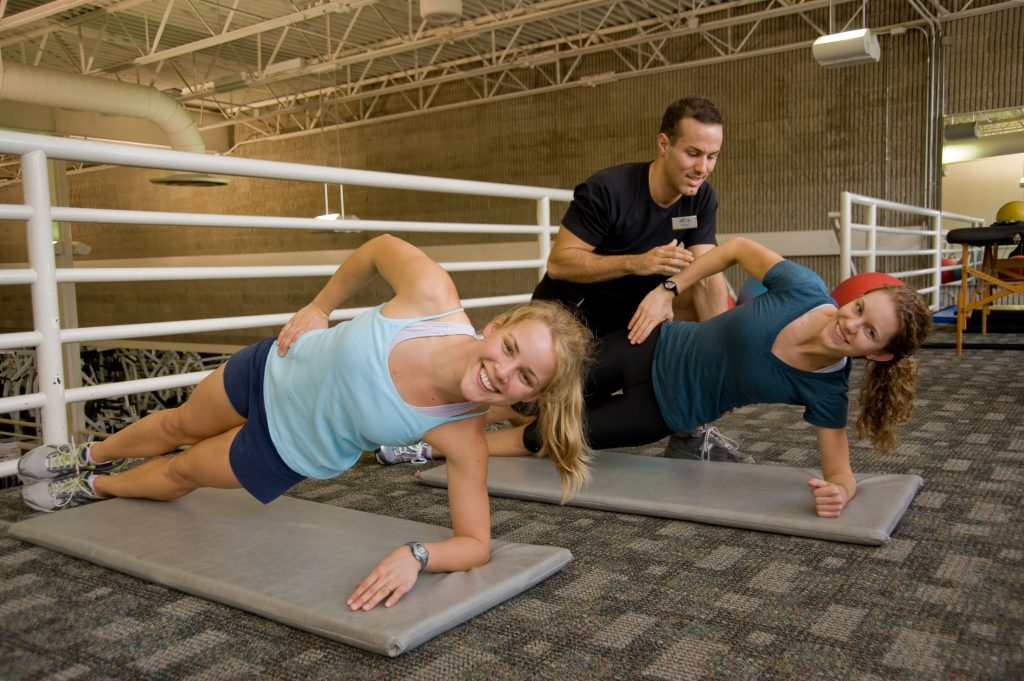
A trainer coaches two women through a side plank exercise on mats at Wellbridge’s Northeast Club in Atlanta, Ga., on Sept. 22, 2009.
Chef Michael Tuohy does bicep curls during a workout at Wellbridge in Atlanta, Ga. Tuohy, owner of Atlanta’s Woodfire Grill, joined the club to stay in shape for the physical demands of long hours in the kitchen.
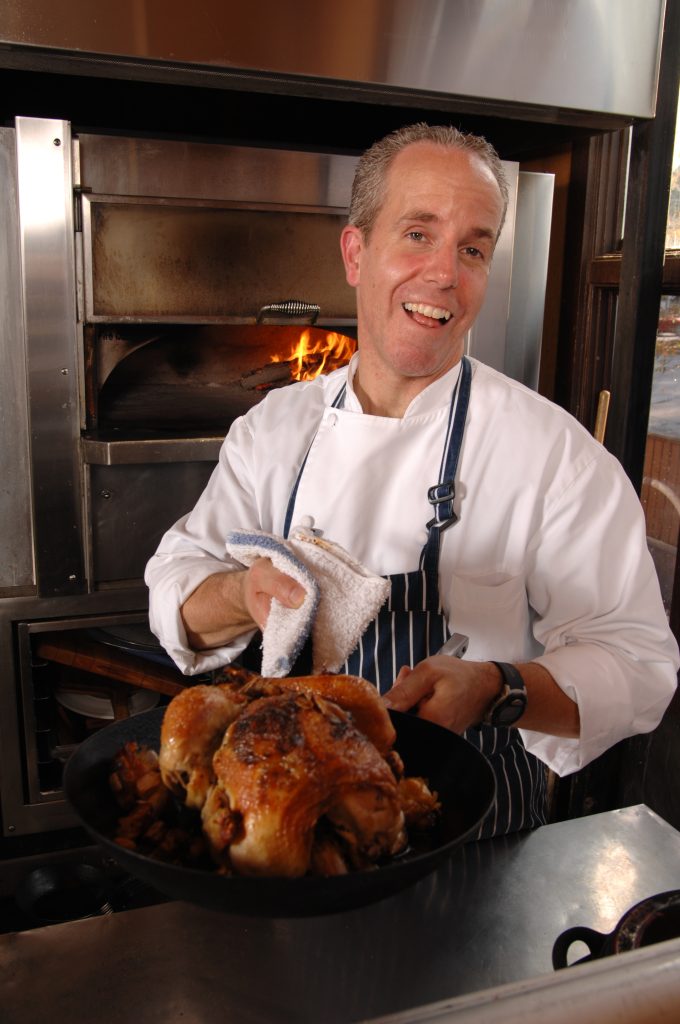
Chef Michael Tuohy stands in his restaurant, Woodfire Grill, in Atlanta, Ga. Tuohy, a pioneer of Atlanta’s farm-to-table dining scene, owned and operated Woodfire Grill from 2001 to 2008, drawing national acclaim for its locally sourced menus and open exhibition kitchen.
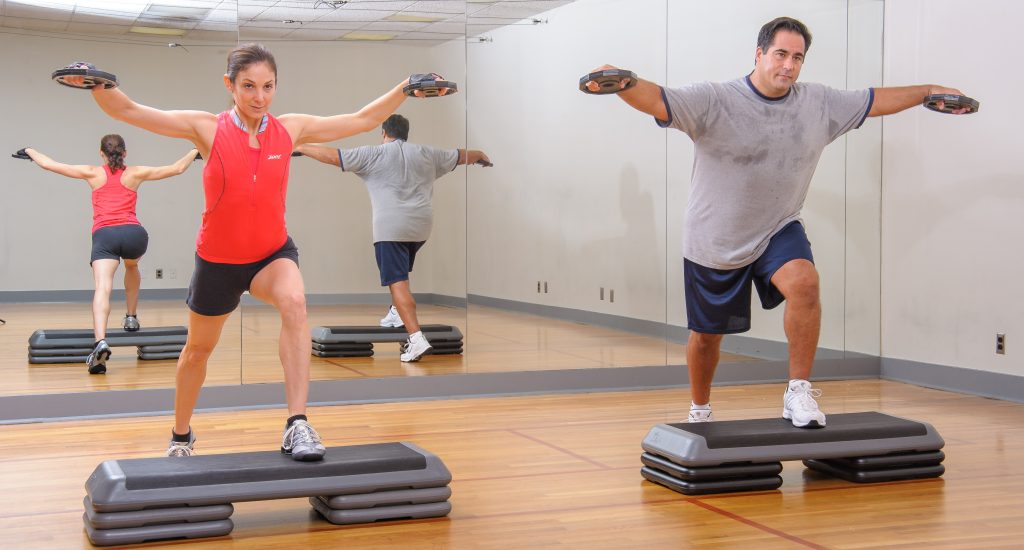
Participants take part in an aerobics class at Wellbridge Northeast in Atlanta. Group fitness classes combine cardiovascular exercise, strength training and flexibility to promote overall health and wellness.
Participants practice shadow boxing during an aerobics class at Wellbridge Northeast in Atlanta. The high-energy workout combines cardio, coordination and strength training.
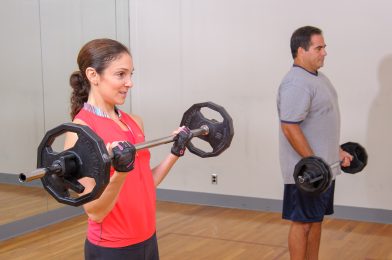
Ursula Phoenix works with personal trainer Wlaa Weeks during a strength-training session at Wellbridge Northeast in Atlanta. Weeks coaches Phoenix through a barbell shoulder press as part of her fitness program.
Ursula Phoenix works with personal trainer Wlaa Weeks during a boxing workout at Wellbridge Northeast in Atlanta. Weeks uses focus mitts as Phoenix practices punches to improve her strength, coordination and cardiovascular fitness.
Ursula Phoenix, a public health program specialist with the U.S. Department of Health and Human Services in Atlanta.

Client Spotlight: PR Pro Elizabeth Fairleigh Builds Balance at Wellbridge

Reading Time: < 1 minute

In October 2006, Atlanta public relations professional Elizabeth Fairleigh committed to her health, joining Wellbridge to bring the same discipline to her own well-being that she brought to her clients’ success.

At the time, Fairleigh was building a reputation as one of Atlanta’s go-to independent PR professionals. She had spent years as PR director for two Atlanta-based tech companies — one of which completed a successful IPO during her tenure — before striking out on her own to found thE Connection, Inc., a firm specializing in thought leadership and public relations for entrepreneurial, forward-thinking companies. It’s a career that runs on juggling multiple clients, tight deadlines and constant visibility — the kind of demanding pace that makes personal health easy to put last on the list.

For a PR professional whose days were built around client calls, media pitches and staying “on” for everyone else, time at Wellbridge became a space to invest in herself.

That same commitment to consistency and follow-through — the traits that built her PR career — showed up on the gym floor too, and carried back into her work representing clients across the country.

Want a story like this for your gym? Contact Stanley Leary

Elizabeth Fairleigh and her trainer work through a step aerobics class at Wellbridge, using aerobic steppers and hand weights as part of her fitness routine, September 2009, in Atlanta.

Client Spotlight: Chef Michael Tuohy’s Recipe for Staying Sharp at Wellbridge

Reading Time: 2 minutes

Long before he was known as one of Atlanta’s pioneering farm-to-table chefs, Michael Tuohy learned an early lesson in his San Francisco kitchens: what you put into your body matters as much as what you put on the plate. Decades later, as the chef/owner of Atlanta’s celebrated Woodfire Grill, Tuohy applied that same philosophy to himself — signing up at Wellbridge Athletic Health Spa to get healthy, stay healthy, and keep pace with the demands of a chef’s life.

Tuohy arrived in Atlanta in 1986 and spent more than two decades building a reputation as one of the city’s most influential chefs, known for bringing a Northern California, farm-to-table sensibility to Southern dining. His restaurant Woodfire Grill, which he owned from 2001 to 2008, drew national acclaim for its locally sourced menus and open-kitchen energy — the kind of demanding, high-heat, high-stakes environment that makes a chef’s own health and stamina non-negotiable.

For a chef, the job doesn’t stop when service ends — long hours on his feet, early mornings at the market, late nights closing the kitchen.

That same discipline — sourcing the right ingredients, building something sustainable, showing up consistently — is what carried over from the kitchen to the gym floor, and back again.

Michael Tuohy working out at Wellbridge Athletic Health Spa
Michael Tuohy at his restaurant Woodfire Grill.

Client Spotlight: How Dan Fisk Found More Than Fitness at Wellbridge

Reading Time: 2 minutes

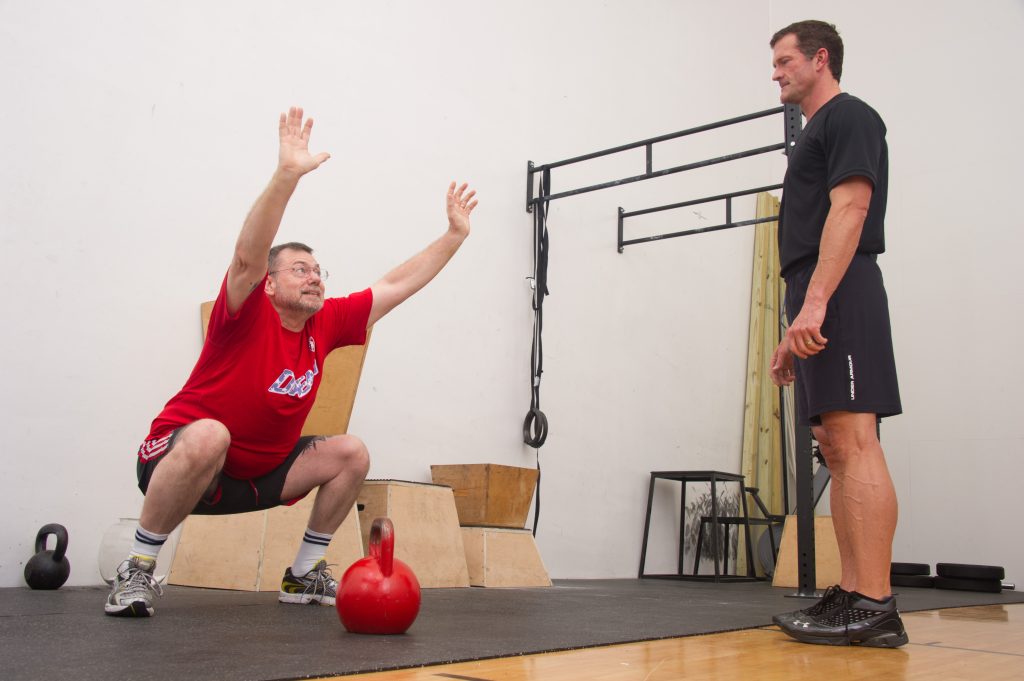
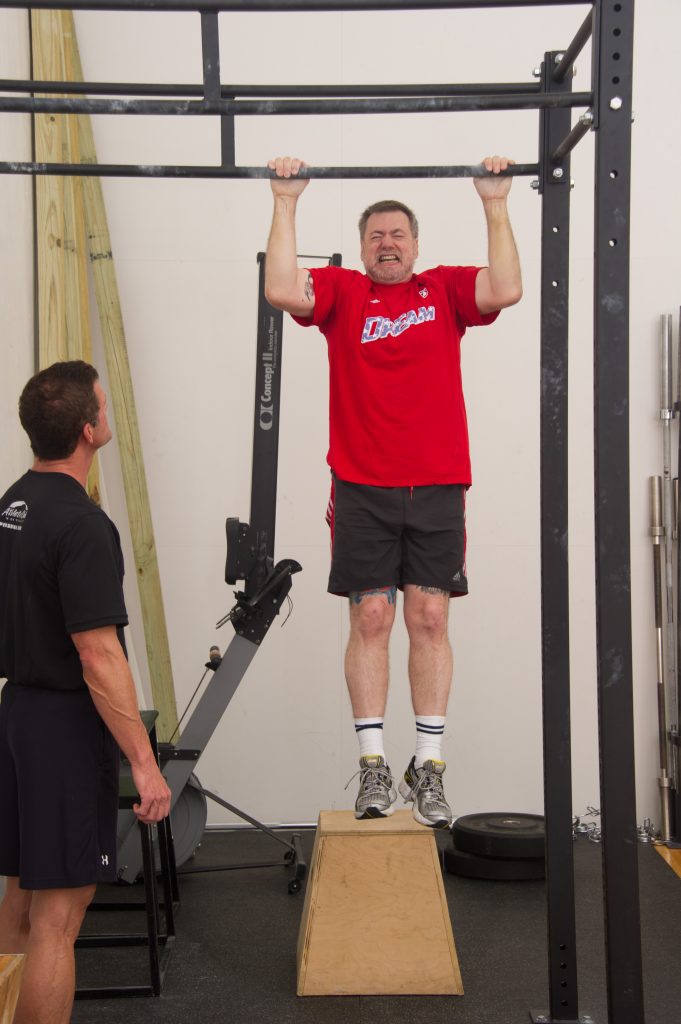
Back in 2011, Georgia Tech psychology professor Dan Fisk walked into a Wellbridge location in Atlanta looking for one thing: to get healthier. What he found was a partnership with trainer Keith Walker that changed how he showed up not just at the gym, but in the rest of his life.

Fisk’s day job is studying human performance — as a professor specializing in engineering psychology and cognitive aging at Georgia Tech, he has spent decades researching how people function at their best as they age. Working with Walker gave him a chance to put that research into practice in his own life.

Under Walker’s guidance, Fisk built a consistent training routine — the kind of structure and accountability that turned a gym membership into a genuine lifestyle change. [Add specific details here: how often he trained, what the sessions focused on, any milestones he hit.]

The results went beyond the weight room. Fisk found that the discipline and energy he built at Wellbridge carried into his work at Georgia Tech — sharper focus, more stamina, and the kind of resilience that comes from showing up for yourself consistently. [Add a specific example: better energy for teaching/research, stress management, sleep, etc.]

That’s the kind of transformation Walker says he loves to see in his clients — not just a change in the mirror, but a change in how they move through their day-to-day lives.

Want a story like this for your gym? Contact Stanley Leary to schedule a client photo shoot and testimonial feature.

Dan Fisk & Trainer Keith Walker
Dan Fisk
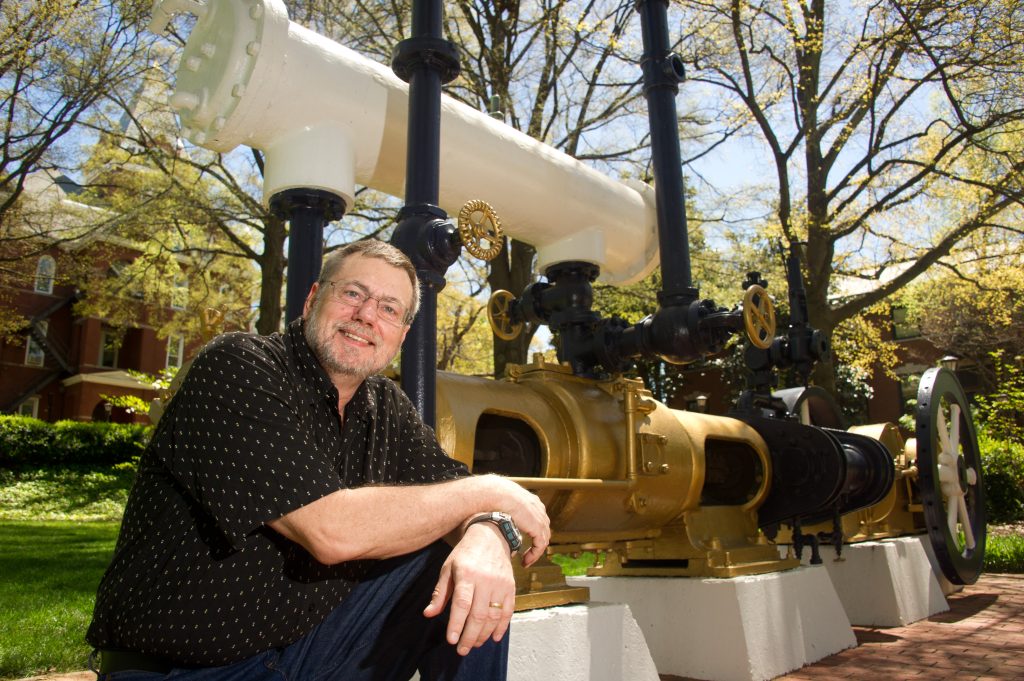
Dan Fisk
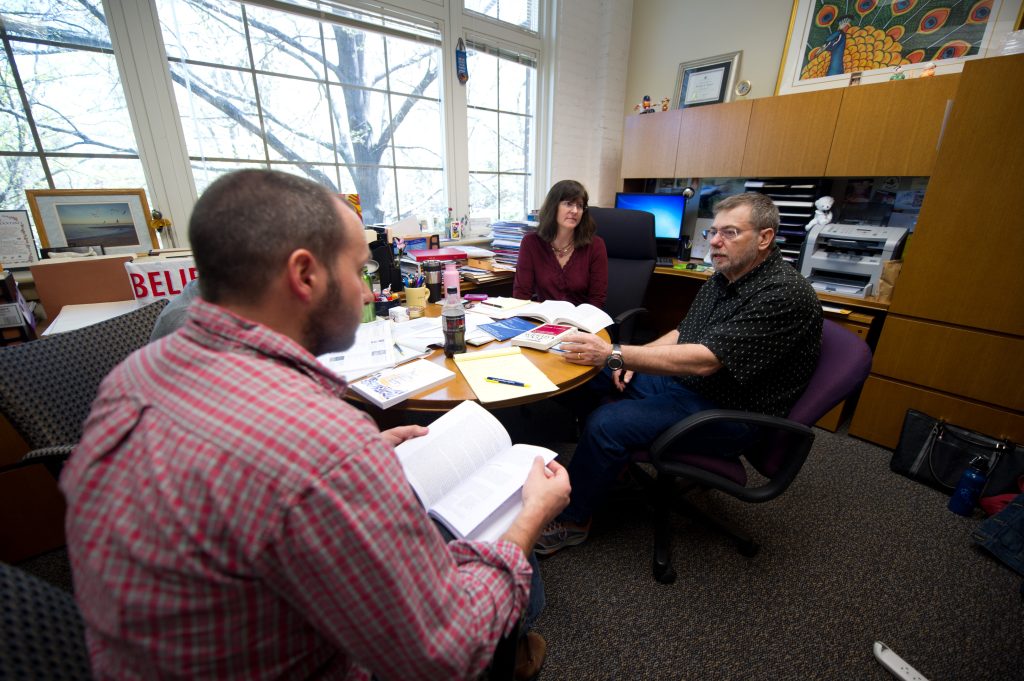
Dan Fisk
Dan Fisk

A Log, a Lathe, and a Life Built by Hand

Reading Time: 6 minutes

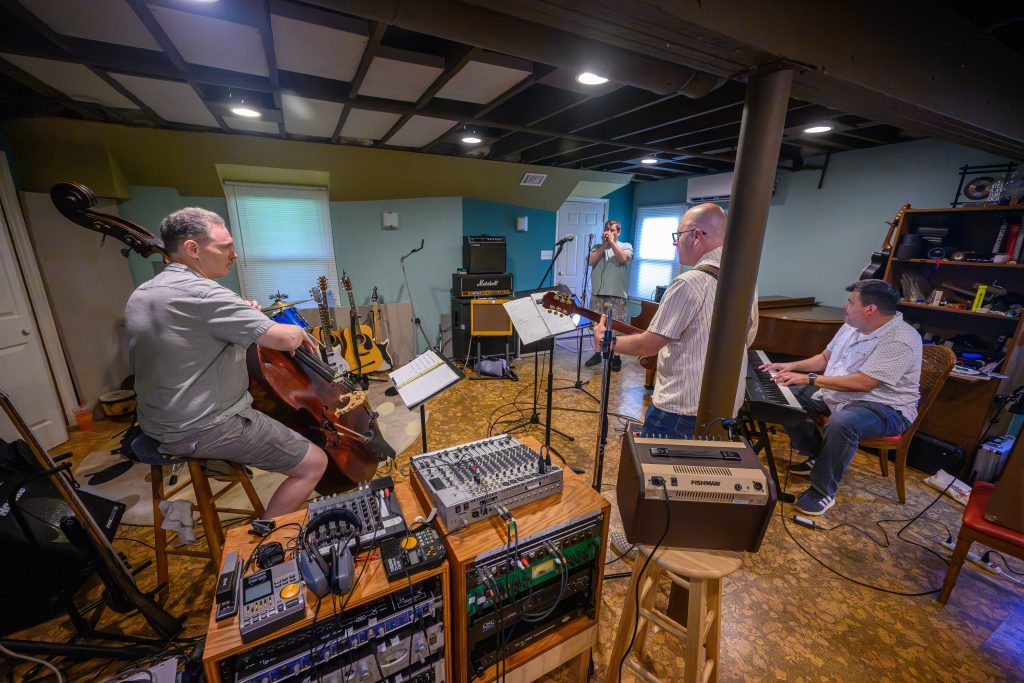
I spent a Saturday not long ago in Seth Gamba’s shop, watching wood shavings curl off a spinning block of box elder as it slowly became a bowl. Later that same day, I was in a different room watching him lock into a groove on upright bass while a new blues band worked out its first set list together. Same guy. Same hands. Two completely different instruments.

That’s the thing about Seth that’s hard to capture in a single photograph — he doesn’t really have a “main thing.” He has a way of doing things.

Seth told me he doesn’t buy his wood. Almost all of it — 85 percent, he estimates — comes from the street he lives on. A tree comes down in a neighbor’s yard, or his own, and instead of it becoming mulch, it becomes something. A bowl. A candle holder. A pet urn someone will keep on a shelf for the rest of their life. “I don’t go to the lumber yard,” he told me. He starts with a log and carries it, alone, all the way to something finished — something somebody else gets to use, enjoy, or hand down.

I keep thinking about that phrase: tree to finished. It’s not a bad description of how Seth approaches most things.

His friend Erik Herndon, who’s played music with Seth for close to twenty years, put it more bluntly than I ever could. “I don’t think there’s anything Seth can’t do,” Erik told me. “I know that’s getting harder to say about anybody these days — there’s just so much out there to learn. But this guy built me a guitar pedal from scratch. Soldered it. Did the circuitry himself. He wired up a whole recording studio and taught himself how to run it.” Erik used the word Renaissance man, and honestly, once you spend a day around Seth, it stops sounding like an exaggeration.

What struck me more, though, was something Erik added almost as an afterthought — that Seth has “a good moral and ethical compass,” that he “shoots straight.” That’s not the kind of line you get from an acquaintance. That’s twenty years of friendship talking.

Seth teaches strings during the week and plays professionally on the side, which means he’s the rare kind of teacher who’s still actively doing the thing he’s teaching kids to do. His friend and fellow music teacher Jay Champion talked about why that matters. “Music teachers have to keep themselves musically centered,” Jay said. “I can’t let middle school choral music be the only music in my life.” For Jay, and I think for Seth too, playing outside the classroom isn’t a hobby that competes with teaching — it feeds it.

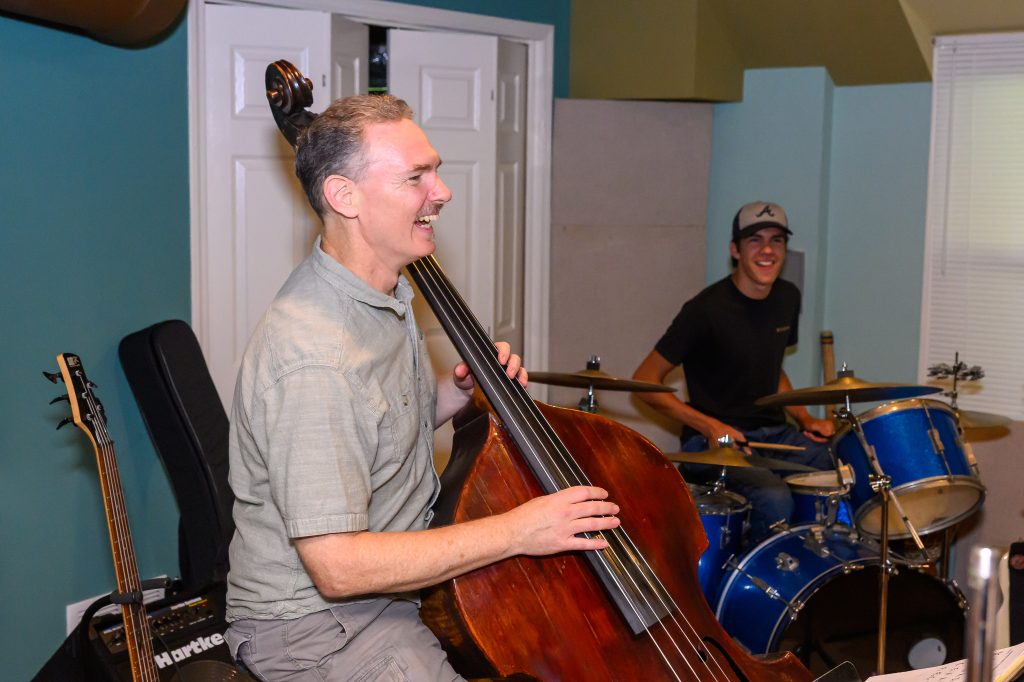
I photographed the new blues band during one of their first practices together — Seth on upright bass, Erik on guitar, Jay on keys, Jacek Mroczka on harmonica and vocals, and Jay’s son Sam holding it down on drums. They’ve got their first show in August. Watching them work through songs together, trading looks when something clicked, I was reminded that this is really what all the woodworking and the teaching and the composing comes back to for Seth — making something, with people he loves, that didn’t exist before he started.

A bowl from a fallen tree. A song worked out in a garage. A kid who leaves his classroom knowing how to hold a bow. Different materials. Same hands. Same patient, deliberate way of turning something raw into something finished.

A sample of hand-turned wood pieces made by Seth Gamba, many of which he has given to friends and now sells, sits on display in his home shop in Roswell, Georgia, on Saturday, July 18, 2026.
A hand-turned wood phone amplifier, one of Seth Gamba’s recent pieces, sits in his home shop in Roswell, Georgia, on Saturday, July 18, 2026.
A hand-turned wood candle holder made by Seth Gamba sits in his home shop in Roswell, Georgia, on Saturday, July 18, 2026.
A hand-turned wood bowl made by Seth Gamba, typically crafted from flaming box elder wood known for its distinct red streaks and black grain markings, sits in his home shop in Roswell, Georgia, on Saturday, July 18, 2026.
A hand-turned wood pet urn made by Seth Gamba sits in his home shop in Roswell, Georgia, on Saturday, July 18, 2026.
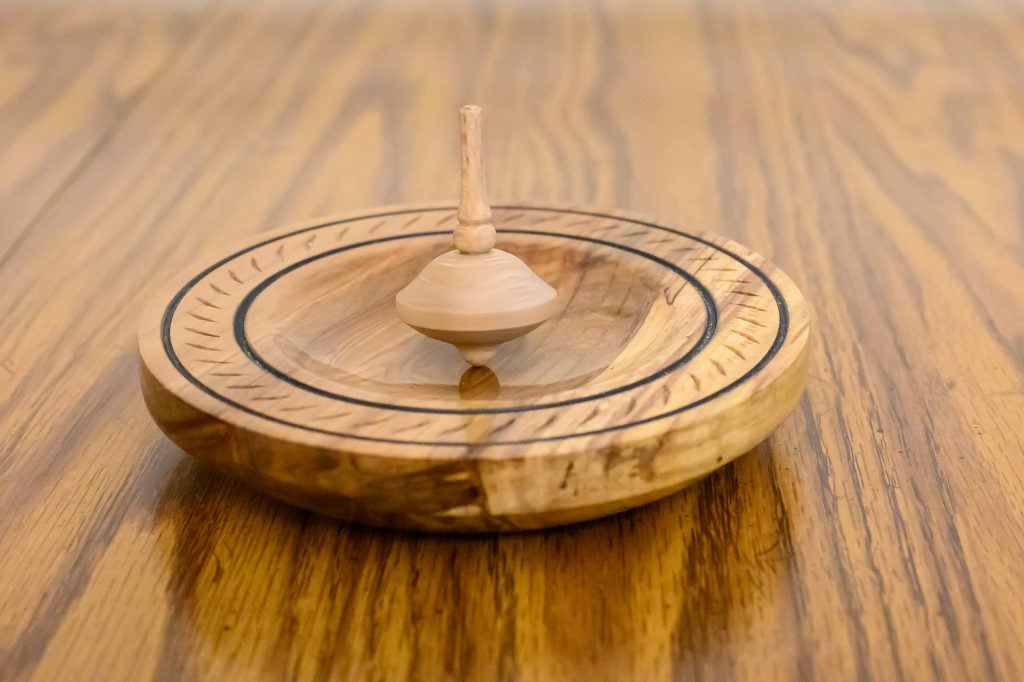
A hand-turned wood spinning top and companion bowl made by Seth Gamba sit in his home shop in Roswell, Georgia, on Saturday, July 18, 2026. Gamba originally demonstrated the top using regular bowls to keep it from spinning off the table, then created this bowl specifically designed for the top. The toy has become popular as a fidget tool.
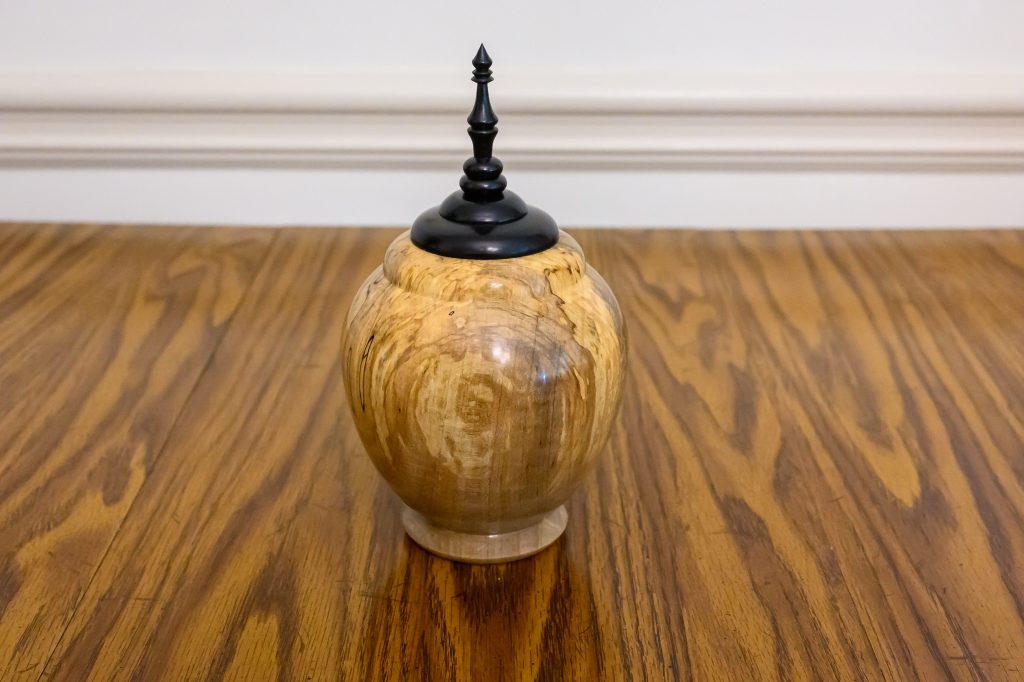
A hand-turned wood lidded vessel made by Seth Gamba sits in his home shop in Roswell, Georgia, on Saturday, July 18, 2026. The lower portion of the piece replicates a traditional Korean onggi, or earthenware jar, while the lid draws its design from a traditional Korean temple pagoda, known as a seoktap.
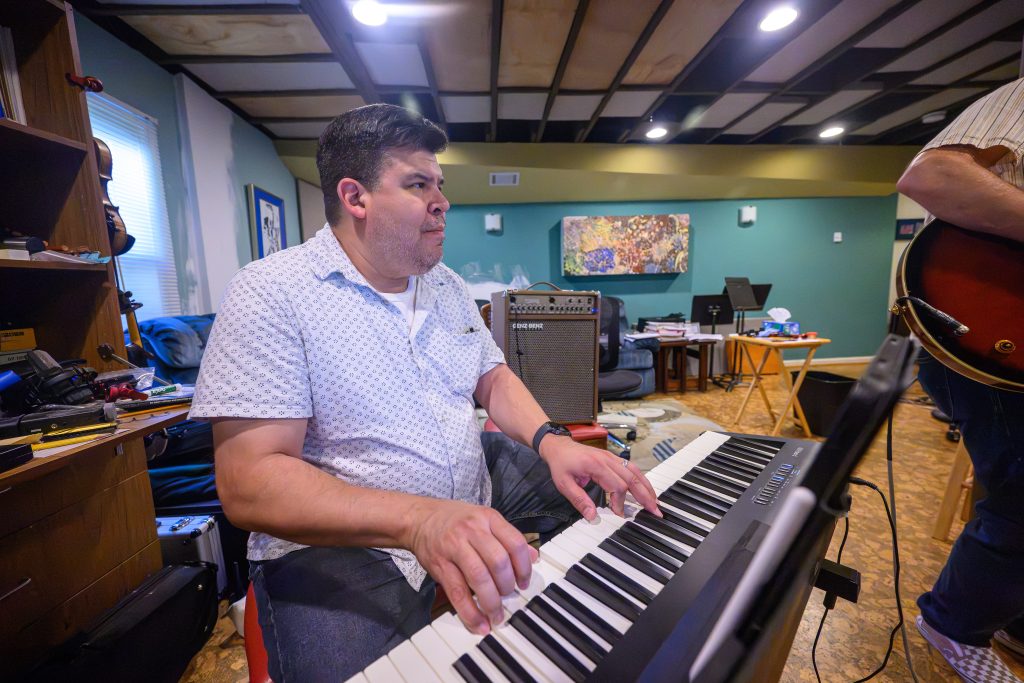
Jay Champion plays keyboards during a practice session with a new blues band in Roswell, Georgia, on Saturday, July 18, 2026. Champion, who teaches chorus and music technology at Lost Mountain Middle School in Kennesaw, said making music outside the classroom helps him stay “musically centered” as an educator.
Seth Gamba plays upright bass, Erik Herndon plays guitar and Jay Champion plays keyboards during a practice session with a new blues band in Roswell, Georgia, on Saturday, July 18, 2026. Also performing are Jacek Mroczka on harmonica and vocals and Sam Champion, Jay Champion’s son, on drums. The band is set to make its first public performance in August.
eth Gamba plays upright bass as Sam Champion, son of bandmate Jay Champion, plays drums during a practice session with a new blues band in Roswell, Georgia, on Saturday, July 18, 2026.
Jacek Mroczka plays harmonica during a practice session with a new blues band in Roswell, Georgia, on Saturday, July 18, 2026. The band is set to make its first public performance in August.
Sam Champion plays the drum kit during a practice session with a new blues band in Roswell, Georgia, on Saturday, July 18, 2026. Champion is the son of bandmate Jay Champion, who teaches chorus and music technology at Lost Mountain Middle School in Kennesaw.
Seth Gamba locks into the groove on upright bass alongside drummer Sam Champion during a blues band practice in Roswell, Georgia, on Saturday, July 18, 2026.
Members of a new blues band rehearse in Roswell, Georgia, on Saturday, July 18, 2026, ahead of their first public performance in August. From left: Sam Champion on drums, Jacek Mroczka on harmonica and vocals, Jay Champion on keyboards, Erik Herndon on guitar, and Seth Gamba on upright bass. Sam Champion is the son of bandmate Jay Champion.

Why Band Camp Matters in One of Georgia’s Most Educated Communities

Reading Time: 5 minutes

Roswell, Georgia, is one of the most highly educated cities in the state. Census data shows roughly 65% of adults here hold a bachelor’s degree or higher — nearly double the statewide rate of about 34% and well above the national average. It’s a community where parents think hard about what their kids’ time is spent on.

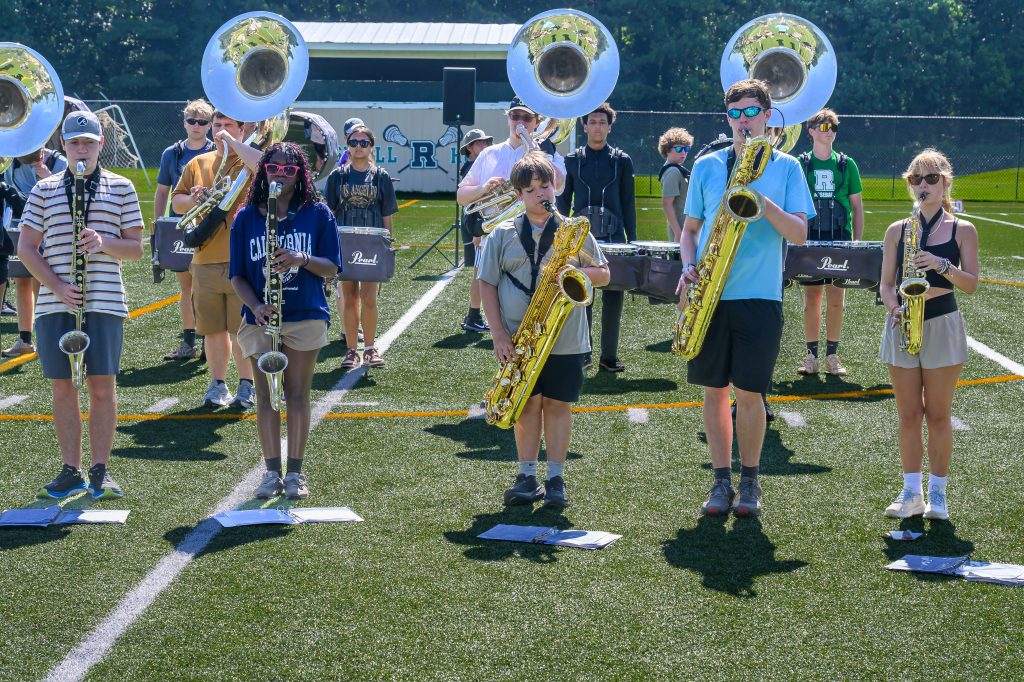
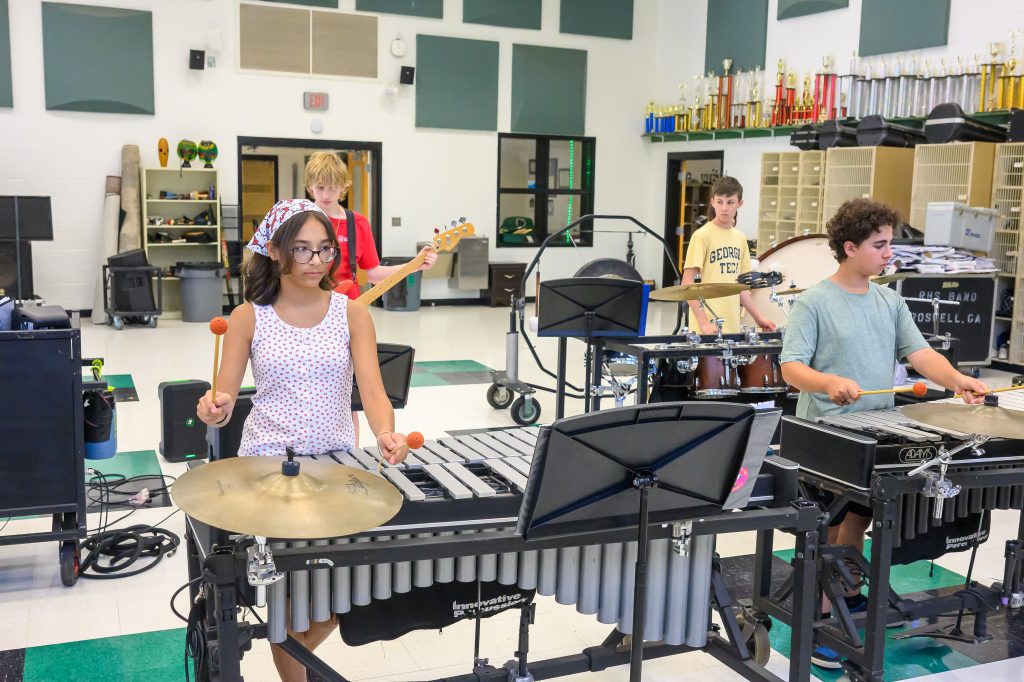
This week, many of Roswell High School’s students spent their days on the practice field instead of the couch, working through drill formations and sectionals for marching band camp. And talking to parents, students and educators, one theme kept coming up: band isn’t just fun — it’s preparation.

College Board data has long shown music students scoring dozens of points higher on the SAT than their non-music peers. Researchers debate how much of that is music itself versus who chooses band in the first place. But ask the people actually living it, and the case sounds less like a stat and more like lived experience.

“You get to meet all kinds of new people,” said Cooper Glaspy, a sophomore French horn player and section leader. “You can be in the leadership, learn how to lead, learn how to communicate. I think it helps with other things like school because you learn how to manage your time.”

Parents see it too. “There’s also just the discipline aspect — to be able to be on the field and march a show, you have to practice,” said Tara Glaspey, whose two sons play in the band. “You can’t just show up and make it happen.”

And for seniors like drum major Sydney Godoy, who plans to study music composition at UGA, the camp is where it all clicks. “I think everyone should play an instrument,” she said. “The way it makes you feel, the act of doing it — I fell in love with everything about music.”

In a town built on college degrees and long-term thinking, band camp turns out to be exactly the kind of investment parents here are looking for.

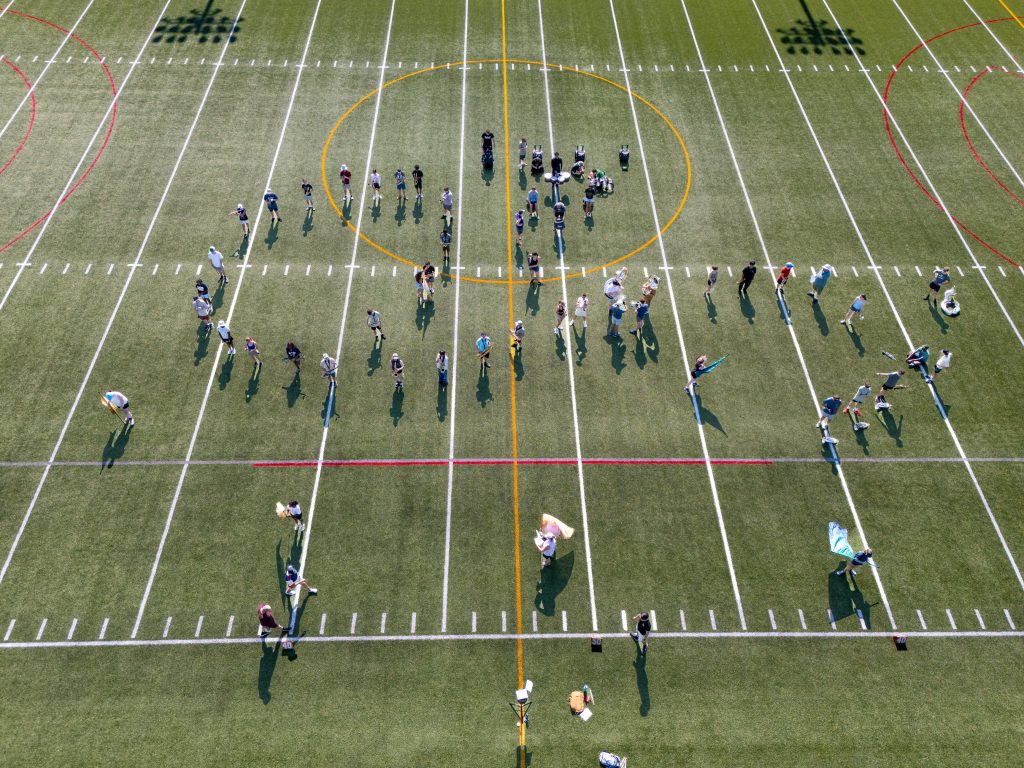
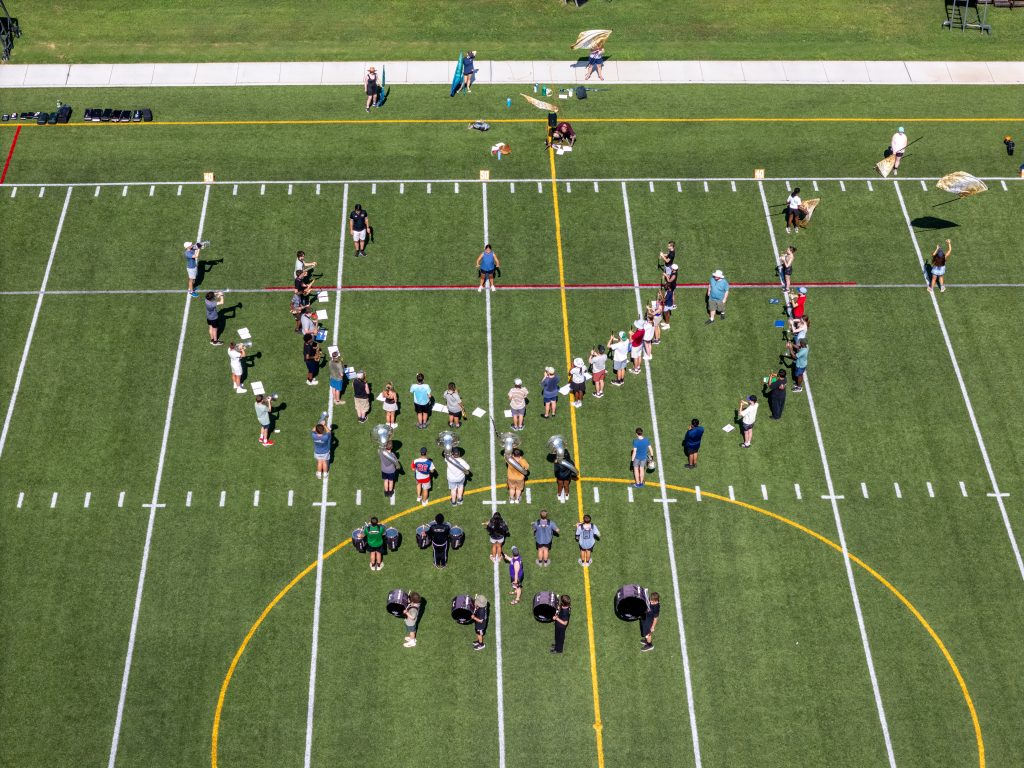
A drone view shows the full marching band rehearsing on the practice field during marching band camp at Roswell High School in Roswell, Georgia, on Friday, July 17, 2026.
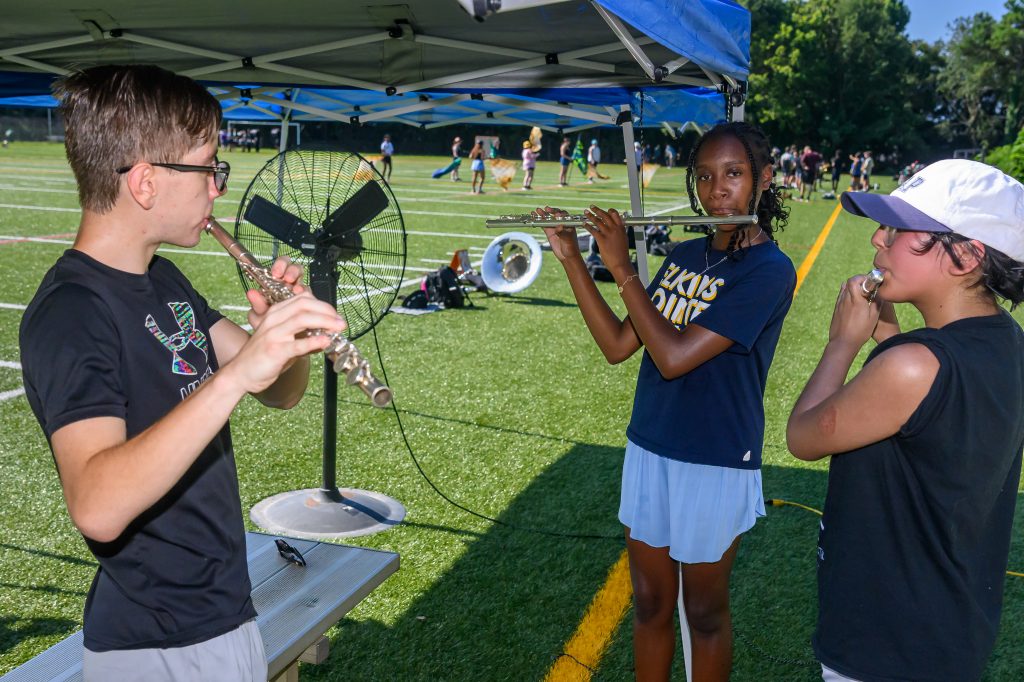
Flute players practice a sectional during marching band camp at Roswell High School in Roswell, Georgia, on Friday, July 17, 2026. From left, Miles Shryock, Tailey Fuller and Kimberly Trejo Julian work through their parts ahead of the start of the school year.
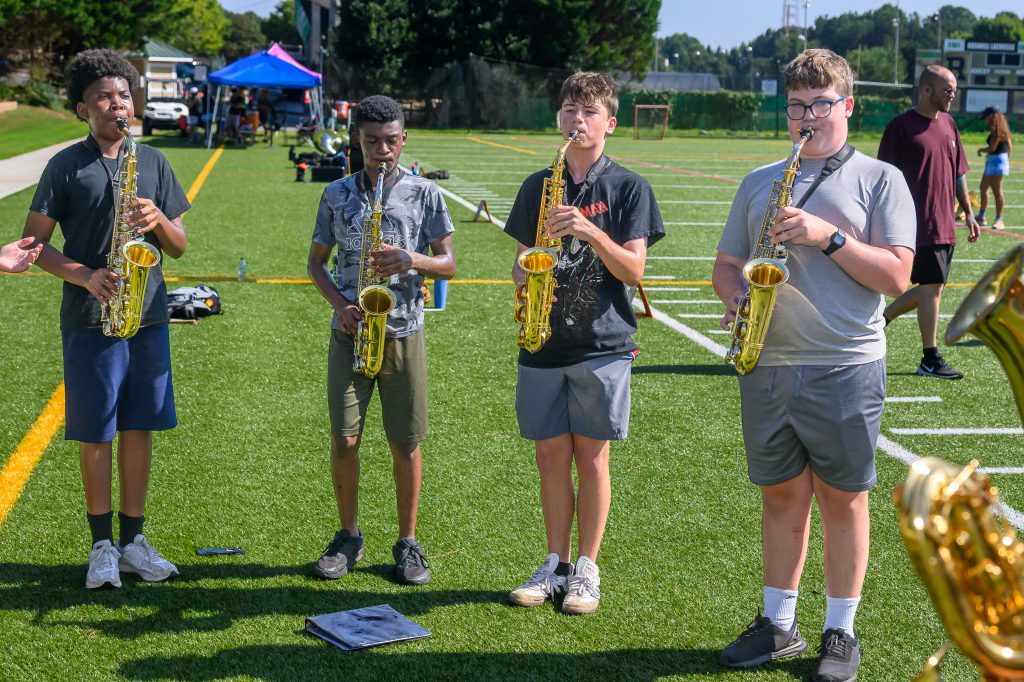
Saxophone players practice during marching band camp at Roswell High School in Roswell, Georgia, on Friday, July 17, 2026. From left, Tristan Ferguson, Jimmy Ryan, Simon Cornelius and Owen Albertalli rehearse their parts ahead of the start of the school year.
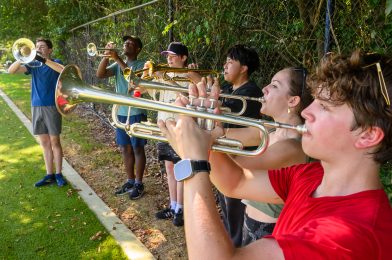
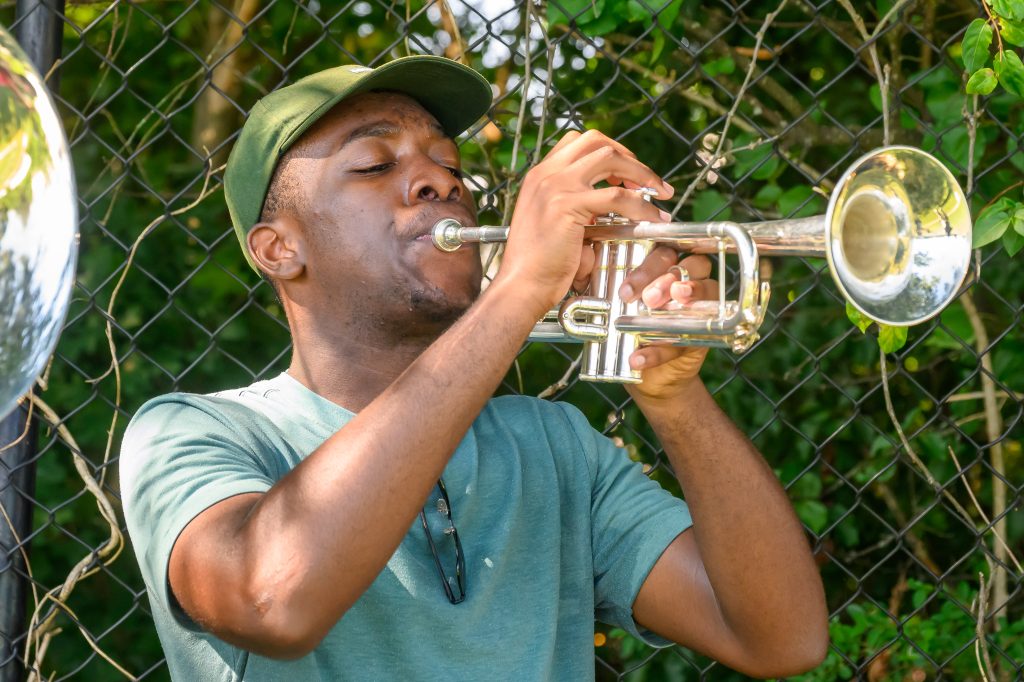
Inemesit Ubom practices during a trumpet sectional at marching band camp at Roswell High School in Roswell, Georgia, on Friday, July 17, 2026.
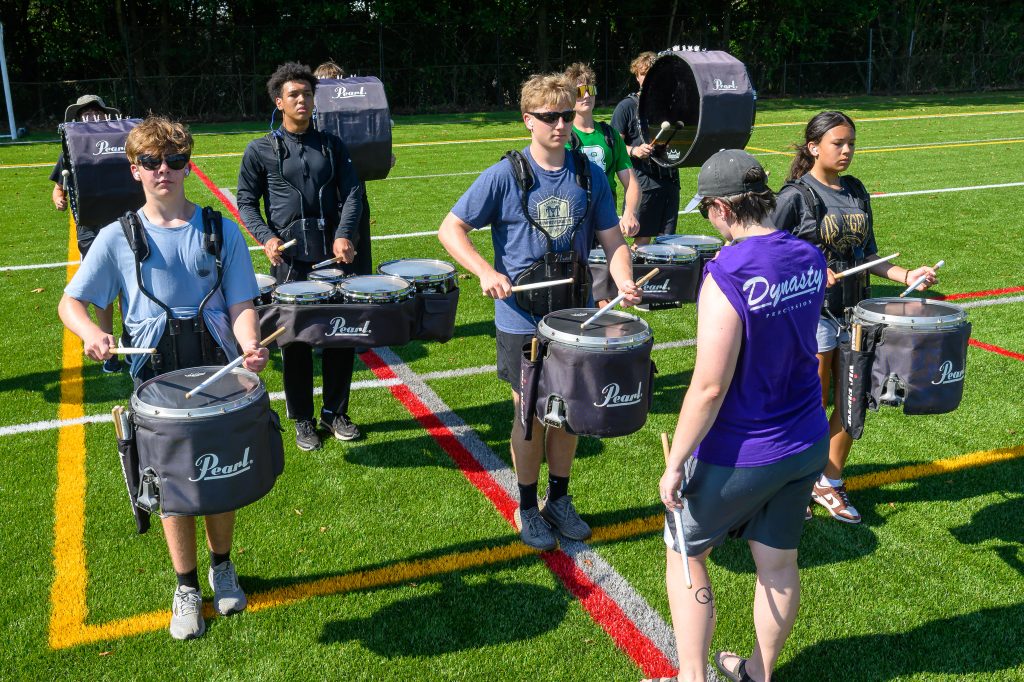
From left, Winston Scoggins, Ethan Young, Hayden Kingry and Finn Kingry practice during a drum sectional at marching band camp at Roswell High School in Roswell, Georgia, on Friday, July 17, 2026, as instructor Sarah Mottram Nesbitt works with Bella Izquierdo.
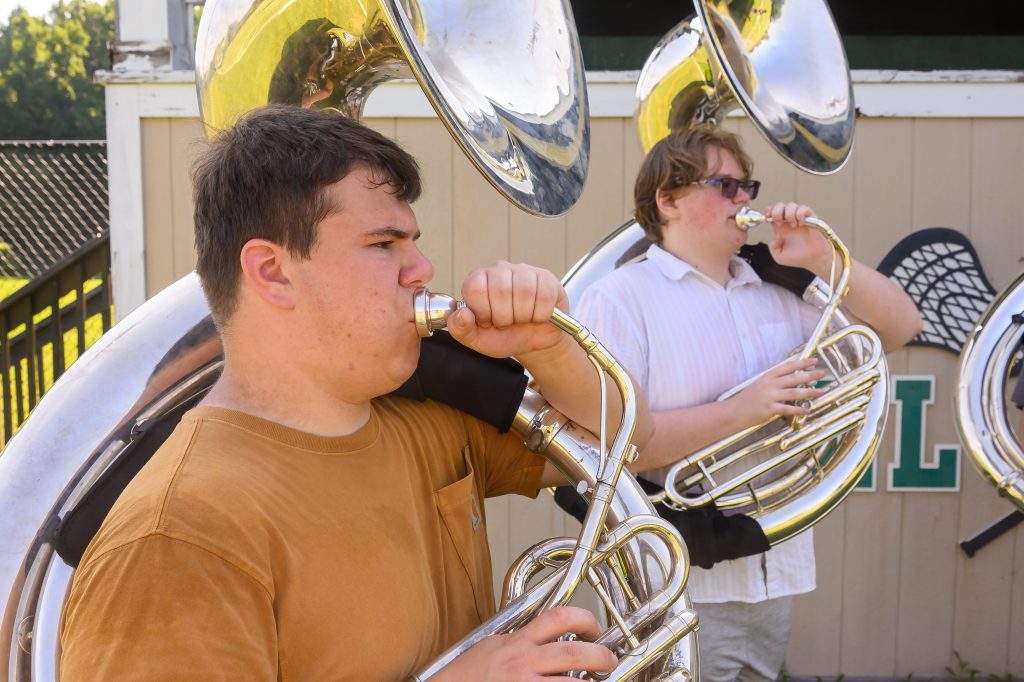
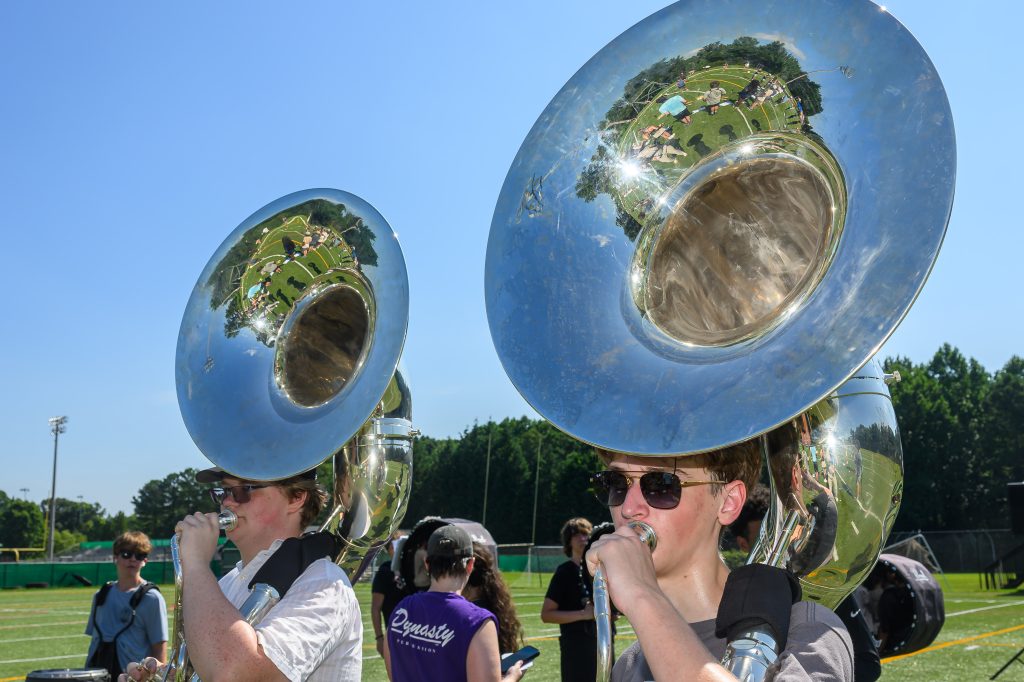
Stephen Gheen and Nat Vincent play sousaphone during marching band camp at Roswell High School in Roswell, Georgia, on Friday, July 17, 2026.
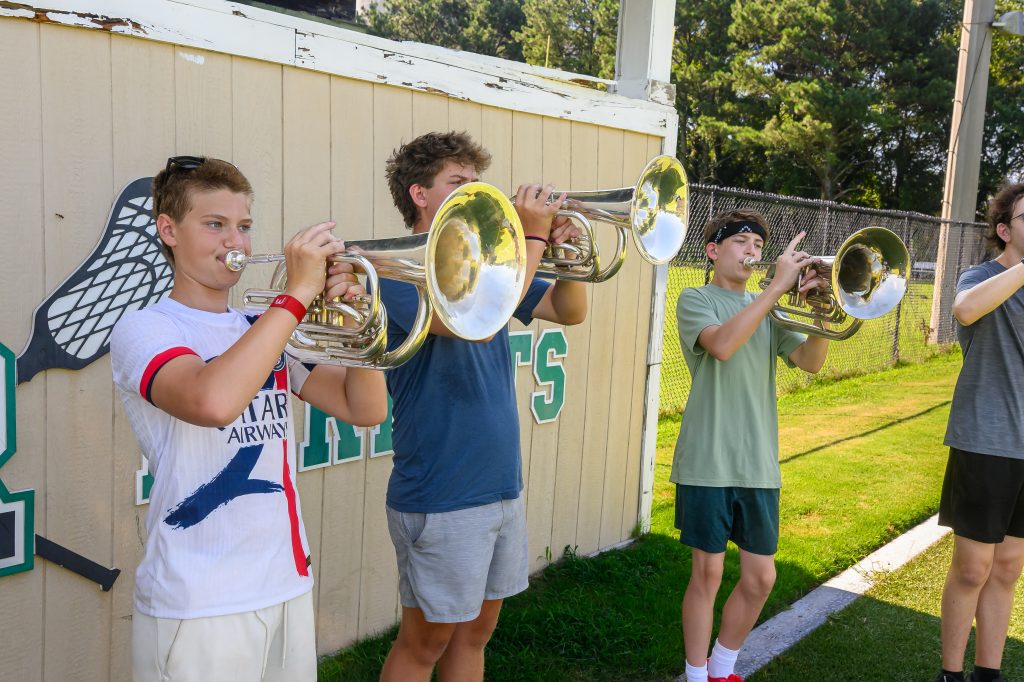
From left, Evan Goldberg, James McEntyre, Eric Edwards and Mason Glaspey practice during a baritone sectional at marching band camp at Roswell High School in Roswell, Georgia, on Friday, July 17, 2026.
A drone view shows the full marching band rehearsing on the practice field during marching band camp at Roswell High School in Roswell, Georgia, on Friday, July 17, 2026.
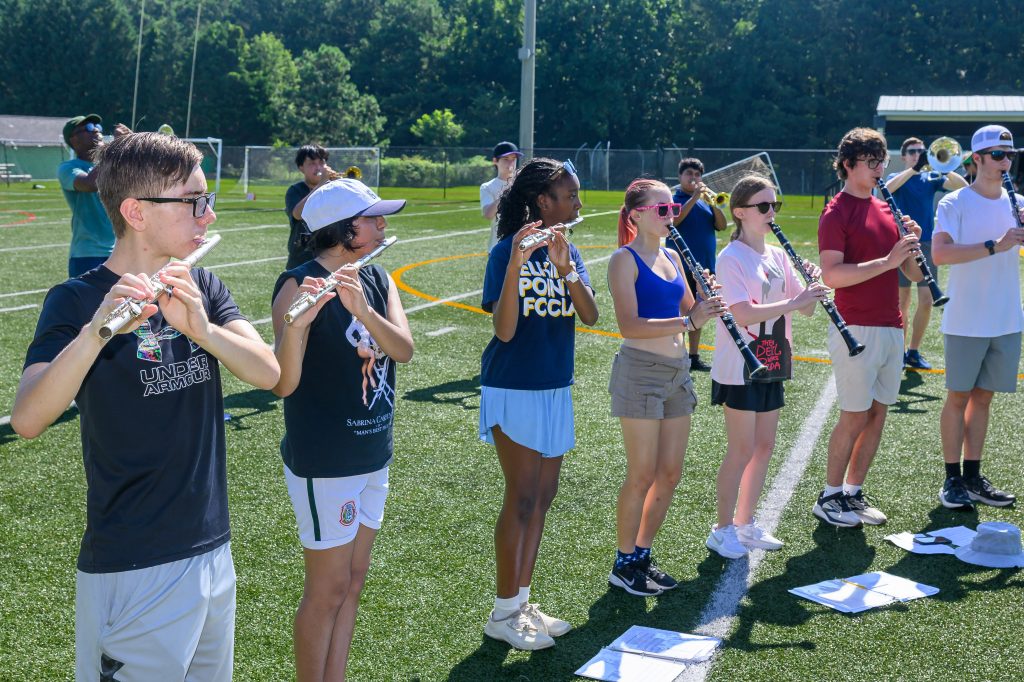
From left, flute players Miles Shryock, Kimberly Trejo Julian and Tailey Fuller, and clarinet players Rylen Williams, Evie Weissinger, Jackson Padolsky, Nicholas Laurent and Grant Ott practice on the field during marching band camp at Roswell High School in Roswell, Georgia, on Friday, July 17, 2026.
From left, bass clarinet players Trenton Leach and Aubri Franklin, and saxophone players Alexander Amar, Sebastien Laurent and Parker Brown practice on the field during marching band camp at Roswell High School in Roswell, Georgia, on Friday, July 17, 2026.
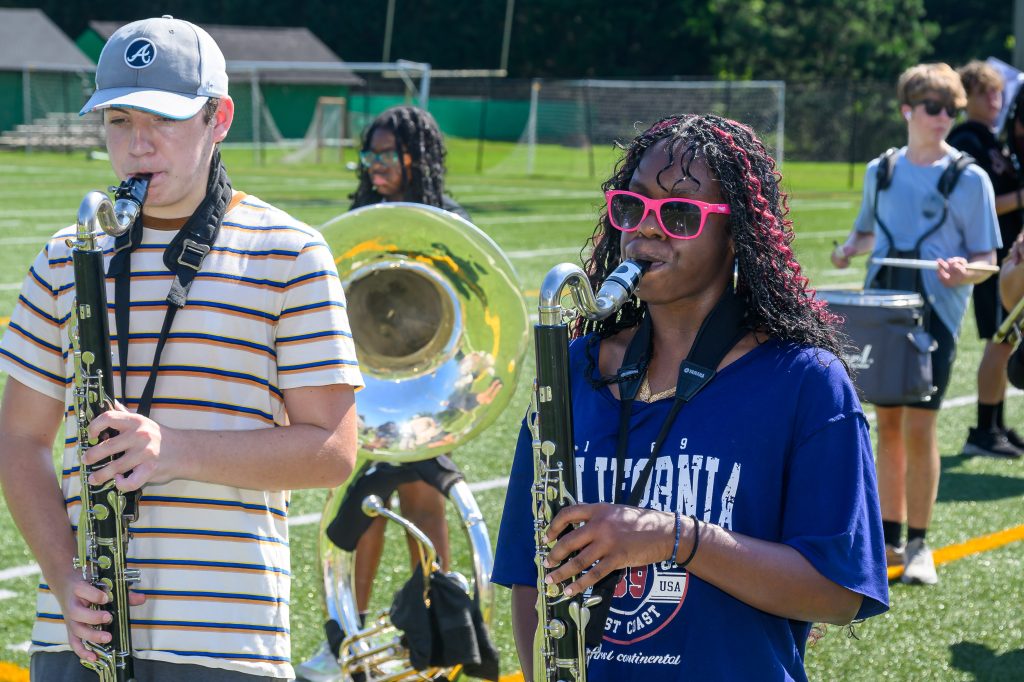
Bass clarinet players Trenton Leach and Aubri Franklin practice on the field during marching band camp at Roswell High School in Roswell, Georgia, on Friday, July 17, 2026.
Sousaphone players Nat Vincent and Nick Fazio practice on the field during marching band camp at Roswell High School in Roswell, Georgia, on Friday, July 17, 2026.
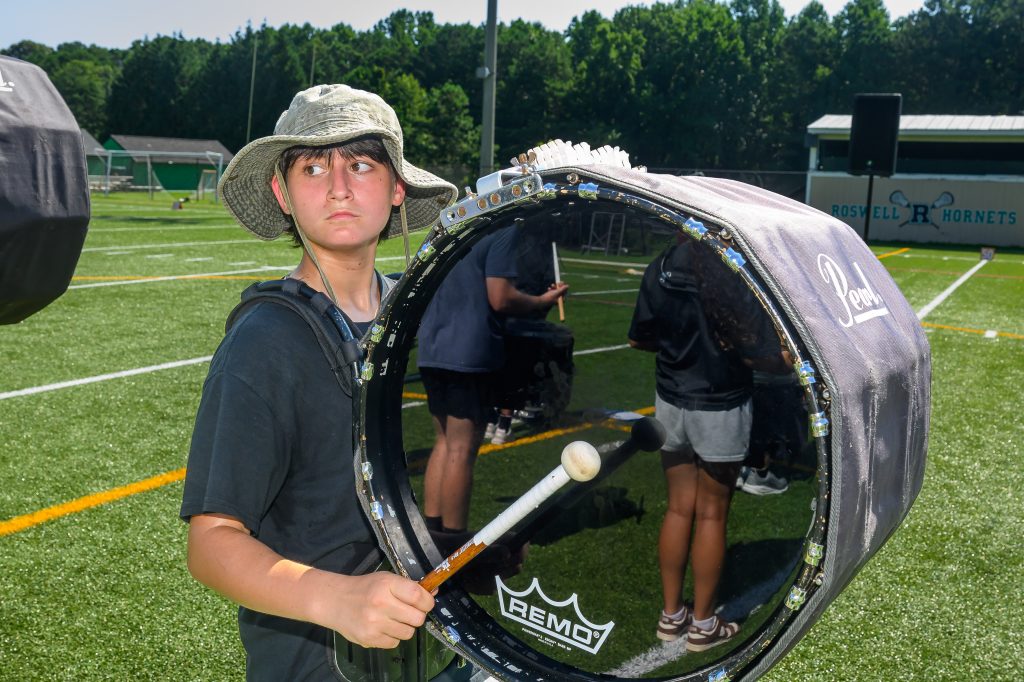
Kaylee Roselli plays bass drum during marching band camp at Roswell High School in Roswell, Georgia, on Friday, July 17, 2026.
Katherine Clinton, Skyler Gross-Cain, Jack Dempsey and Leo Averbukh play marimba, guitar and congas in the band room during marching band camp at Roswell High School in Roswell, Georgia, on Friday, July 17, 2026.

Hardship Doesn’t Make You Creative. Neither Does Comfort.

Reading Time: 4 minutes

I’ve spent a career pointing a lens at people — in boardrooms, on porches, at parades, in the quiet moment before someone realizes they’re being photographed. Somewhere along the way, I learned that the real story isn’t the isolated subject; it’s the subject in relationship — to their environment, their people, their calling. You can’t understand someone by cropping everything else out of the frame.

I was reminded of that watching an ABC interview with Wynton Marsalis, recorded for America’s 250th birthday. He talked about growing up around musicians in his father’s band who never made it out from under addiction, about a mother who lived with mental illness her whole life, about a brother whose autism nobody around them had a name for yet. It would be easy to build a tidy narrative out of that — hardship forged the genius. Marsalis refused to let the story be that simple:

“You could grow up hard and not be able to play anything or you grow up easy and be great.”

Read that twice. He’s not saying struggle guarantees depth, and he’s not saying comfort guarantees shallowness. He’s saying the correlation a lot of us assume — that suffering is the price of admission for great art — doesn’t actually hold up. Some people are handed nothing and produce nothing. Some people are handed everything and go on to produce something extraordinary. And the reverse is just as true. Whatever creativity draws from, it isn’t simply owed to you or extracted from you based on how hard your life has been.

Hawaii Tropical Botanical Garden — A moth orchid (Phalaenopsis) blooms in shades of purple and white.

The Myth We Keep Telling Ourselves

There’s a seductive story in creative circles — that you have to have suffered to have something worth saying. I’ve believed versions of it myself, standing behind a camera at events where someone’s whole life visibly shows on their face, thinking that’s where the “real” photograph lives. But Marsalis’s own words push back on that instinct. He immediately widened the frame:

“Some people can paint flowers better than any person ever painted a flower. Some person only paints scenes of war.”

Neither of those painters is more legitimate than the other. The one who paints flowers isn’t naive, and the one who paints war isn’t more serious. They’re both just working from whatever true material they were given — and that material isn’t rationed out according to who deserves it or who’s earned it through pain.

Everyone’s Raw Material Is Different — Not Ranked, Just Different

This is where it gets useful for the rest of us who aren’t jazz composers. Marsalis didn’t romanticize struggle, and he didn’t romanticize ease either. He framed both as simply the material he was given — the way another person might be given a stable home, or financial security, or an easy relationship with the world. Different raw material, not a better or worse starting line.

That’s the thing I keep relearning behind the camera. Every person I photograph has a completely different set of raw material than the person before them. The retired veteran at an American Legion dance, the kid at a Juneteenth celebration, the pastor, the small business owner trying to explain what they do in thirty seconds — none of them are working with the same clay, and none of them had to earn the right to have a story by suffering enough first. My job isn’t to go looking for the hardship to make the photograph “real.” It’s to find the shape each person’s particular material already wants to take, whatever that material happens to be.

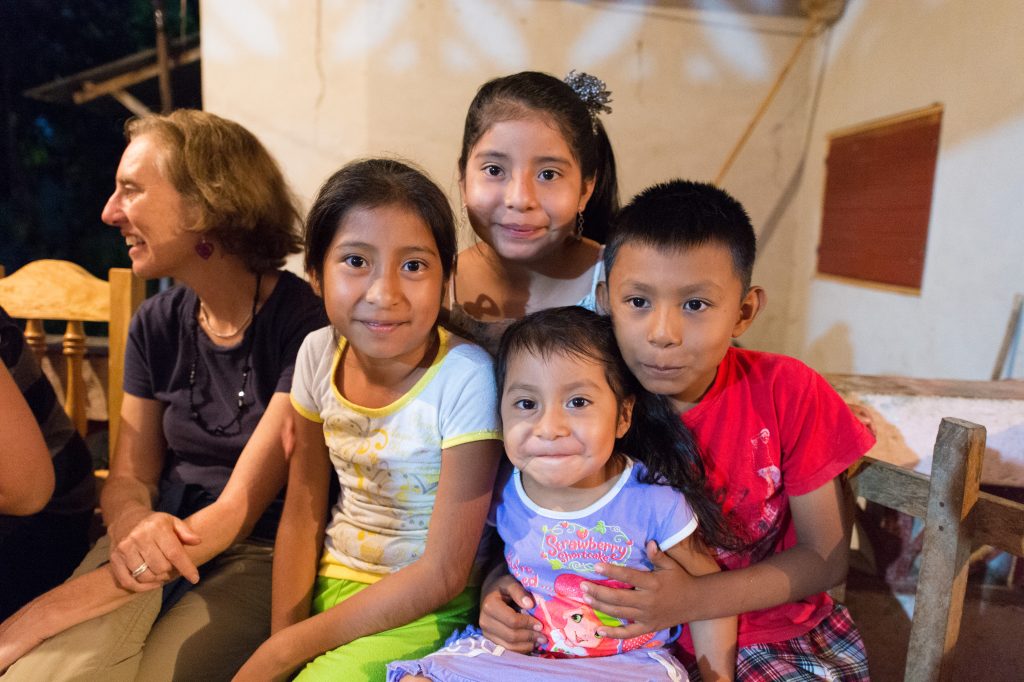
Salvador Urbina, Chiapas, Mexico — Children of local coffee farmers gather for a group photo in the highlands community of Salvador Urbina, where families have grown coffee for generations.

The Question Is What You Choose to Focus On

If neither hardship nor privilege determines what you’re capable of making, then something else has to be doing the real work. Marsalis pointed at it almost in passing. He said that when he visits people’s homes, someone — usually a woman in the family — pulls out the photo album and walks him through the family history. And he’s noticed something: nobody ever shows the worst pictures. We curate. We choose what to focus on.

He wasn’t being cynical about it. He was naming the actual skill underneath creativity, the one that has nothing to do with your starting circumstances: the ability to look honestly at everything you were given — the beauty and the ugliness both — and decide what the story is actually about. That’s a discipline. It’s learnable. It doesn’t arrive automatically with a hard childhood, and it isn’t blocked by an easy one.

That’s the whole job, isn’t it? Not just for musicians. For anyone trying to tell a true story about a person — including the story you’re telling about yourself.

Find Something New to Play

There’s a line in the interview I keep coming back to. Marsalis said his father used to tell him, instead of playing the same old stuff, why not find something new to play. Marsalis asked what that “new thing” even was. His father’s answer:

“Just listen to the person next to you for a change.”

That’s the entire discipline of documentary work in eight words. You don’t manufacture a new angle by trying harder to be original. You get it by actually listening — to the person in front of you, to what their particular gift is, to what they’re carrying that nobody else is carrying quite the same way.

Everybody’s got a flower or a war scene in them. The work pays enough attention to know which one you’re looking at and to tell it honestly.


Source: ABC News interview with Wynton Marsalis, recorded at Chicago’s Symphony Center for America’s 250th anniversary coverage.

Beyond the Elevator Pitch: Why Your Business Story Needs a Visual Voice

Reading Time: 3 minutes

Do you have an elevator pitch?

If you’re a business owner, chances are the answer is yes. You’ve trimmed it down over months or years — cut the fat, sharpened the hook, practiced it until it sounds natural instead of rehearsed. You can deliver it in the time it takes an elevator to climb six floors.

Here’s the question I want to ask next, and it’s the one almost nobody can answer yes to:

Have you ever turned that pitch into something visual?

Not slides behind you while you talk. Not a logo on a business card. I mean an actual visual version of your story — photographs, video, images — something a potential client can see, share, and remember after the elevator doors open and you’ve walked away.

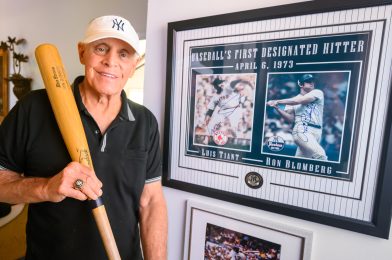
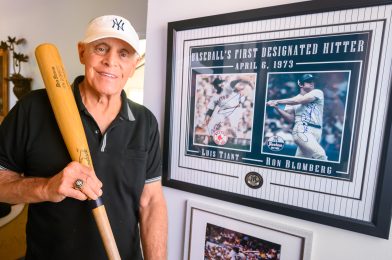
Ron Blomberg, foreground, the former New York Yankee who became Major League Baseball’s first designated hitter in 1973, works out with friends Glenn Prince, left, and Steve Gordon at OneLife Fitness in Alpharetta on Friday, June 26, 2026.

Words Fade. Pictures Stay.

I’ve spent over 40 years telling stories with a camera — for newspapers, nonprofits, churches, and small businesses across North Atlanta. If there’s one thing four decades behind a lens has taught me, it’s this: people don’t remember what you told them. They remember what they saw.

A well-rehearsed pitch might land in the moment. But a month later, when that same person is trying to recall who you were and why they should call you, the words are gone. What sticks is a face. A moment. An image that made them feel like they already knew you before you shook hands.

The Gap Between Speaking and Showing

Most entrepreneurs have invested real time into their verbal pitch — workshopping it, testing it at networking events, refining the wording until it’s tight. Very few have made that same investment in a visual version of the same story.

That’s not a knock on anyone. It’s just where the work usually stops. The pitch gets written. The visuals never get made. And so the story that could be doing work for you 24/7 — on your website, in your proposals, across social media, in a client’s inbox — never leaves your mouth.

Ron Blomberg stands in front of a framed Sports Illustrated cover at his Roswell home on Friday, June 26, 2026. The June 21, 1973, issue — titled “Pride of the New Yankees” and photographed by Neil Leifer at Yankee Stadium — featured Blomberg alongside teammate Bobby Murcer during his breakout season as baseball’s first designated hitter.

What This Actually Looks Like

Turning a pitch into visual storytelling doesn’t mean a slick corporate video with a voiceover. In my experience, the most effective visual pitches are the simplest ones:

  • A short series of portraits and environmental photos that show who you are and how you work
  • A few minutes of video — you, in your element, telling the same story you’d tell in an elevator, but now something a client can watch on their own time
  • Images of your work in action, paired with the real story of a client you helped

The goal isn’t production value. It’s proof — visual evidence that backs up every word of the pitch you’ve already perfected.

A Question Worth Sitting With

So here’s where I’ll leave you: you’ve got the pitch. Have you told your clients’ stories, too — the ones about how you helped them, in pictures they can actually see? If the honest answer is no, that’s not a failure. It’s just an opportunity that’s been sitting there, unclaimed.

I help business owners across North Atlanta turn the story they already tell into something visual — portraits, brand photography, and short documentary-style video that outlasts a single conversation.