The technology has changed. The question hasn’t.
Years ago, I wrote about understanding your audience and where they’d likely encounter your message.
At the time, I thought about commuting to work, listening to podcasts, reading blogs, checking email, using an iPhone, sending text messages, and discovering things on Twitter.
That was 2009.
A lot has changed since then.
Twitter became X. Facebook and Instagram changed how people consume information. YouTube became a primary way people learn. Smartphones became the place where much of our information is discovered. Newsletters became an important way organizations maintain relationships with people.
And now there is another significant change:
People increasingly ask AI and search engines questions instead of simply browsing websites.
But underneath all those changes is the same question I was asking back then:
Where is your audience when they encounter your story?
Your audience may never visit your website
This is one of the biggest changes communicators need to understand.
For years, we thought about communication something like this:
Someone hears about you → visits your website → reads your information → decides what to do.
That isn’t necessarily how it works anymore.
Someone might encounter you through a Google search.
They might see a photograph on Instagram.
They might watch a YouTube video.
They might receive your newsletter.
They might see someone share your story on Facebook or LinkedIn.
They might hear about you from someone else.
Or they might ask an AI tool a question and receive an answer that includes information about you or your organization.
In other words, your website may be part of the story without being the place where the story begins.
That’s an important distinction.

Don’t start with the technology. Start with the person.
It is easy to get caught up in the latest platform.
Should we be on Instagram?
Should we make YouTube videos?
Should we have a newsletter?
Should we optimize our website for Google?
Should we be thinking about AI search?
Those are legitimate questions, but they aren’t the first questions I would ask.
I would start with the person you are trying to reach.
Who are they?
What are they trying to understand?
What problem are they trying to solve?
What questions are they asking?
What matters to them?
What would cause them to stop scrolling and pay attention?
And perhaps most importantly:
What do they need to know before they will trust you?
Once you understand those things, then you can start thinking about where and how to communicate.
The same story may need different doors
Suppose you are photographing a company and the company wants to attract new employees.
The story isn’t simply:
“We need some new employee portraits.”
The communication problem might actually be:
“How do we help someone who has never heard of us understand what it is like to work here?”
That changes what you photograph.
You might photograph people doing their jobs.
You might photograph coworkers interacting.
You might show the workplace.
You might record short interviews.
You might create portraits.
You might make a video.
You might create photographs for LinkedIn.
You might create material for the company’s website.
And you might create stories that answer the questions a prospective employee is already asking.
The camera is still involved.
But the camera isn’t the strategy.
The audience is.
Search has changed the question
There was a time when we primarily optimized information so that people could find our websites.
Now we also need to think about whether the information we publish can help answer questions.
Someone may not search for:
“Stanley Leary photography.”
They may search for something more like:
“How do I tell better stories with photographs?”
or
“How do I photograph people for a company’s website?”
or
“What should a nonprofit photograph at an event?”
Those questions can lead people to information you have published.
And increasingly, people may ask an AI system those same questions.
That means the useful question isn’t simply:
“How do I get people to my website?”
It is:
“What questions can I answer so well that people discover me while trying to solve a problem?”
That is one reason I have become interested in what is sometimes called AIEO — Answer Engine Optimization.
The terminology is still evolving, and the technology will keep changing. But the underlying principle is not complicated:
Create useful information that clearly answers the questions your audience is asking.
That’s not really a new idea.
It is simply a new way of thinking about communication.

Your photographs can answer questions, too
This is where I think photographers sometimes miss the larger opportunity.
A photograph isn’t only something that illustrates a story after the words have been written.
A photograph can communicate an answer.
What does this organization actually do?
What does this workplace feel like?
Who are the people behind this business?
What does this community look like?
What happens at this event?
What does this person care about?
What makes these people different?
Good storytelling photography helps an audience understand something they couldn’t easily understand from words alone.
That is why I have increasingly thought about photography as communication rather than simply picture-making.
Meet people where they already are
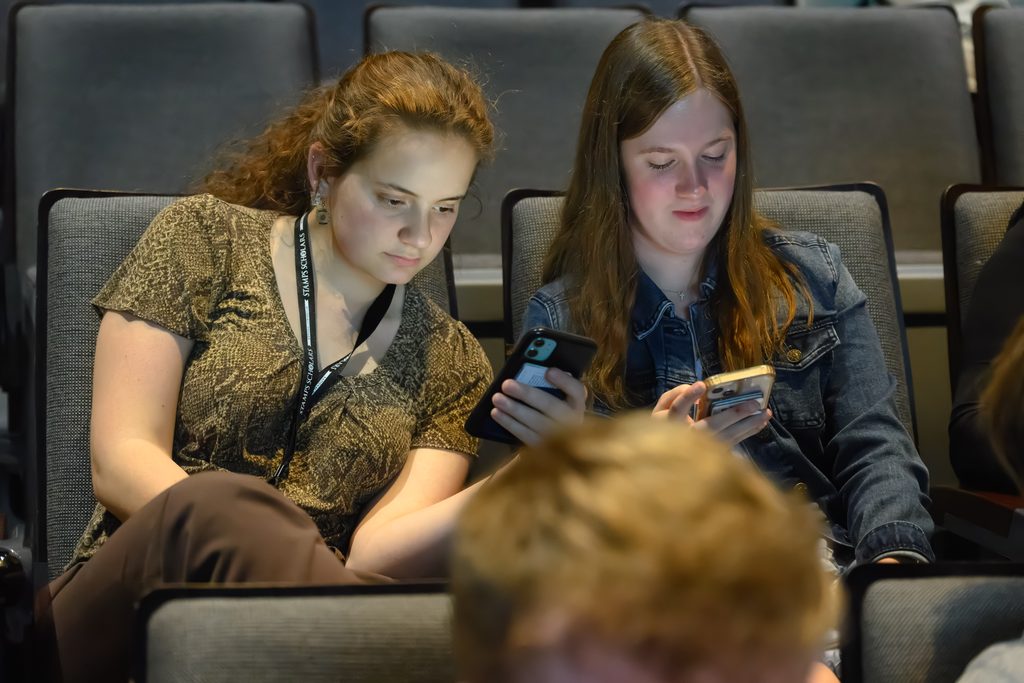
The goal isn’t to force everyone to consume your story in the format you prefer.
If your audience spends time on YouTube, learn how to communicate through video.
If they use LinkedIn to learn about businesses and professionals, make sure your stories work there.
If they subscribe to newsletters, give them something worth opening.
If they search Google, answer the questions they’re asking.
If they use AI tools to find answers, publish clear, authoritative information they can understand and reference.
If they visit your website, make it easy for them to understand who you are, what you do, and why it matters.
The platforms will continue to change.
There will be another social network.
Another search algorithm.
Another AI system.
Another device.
Another way of consuming information.
Don’t build your communication strategy around the technology.
Build it around the people.
The question I was asking in 2009 still matters
Looking back at that old article, I smile at some of the technology I thought was important.
Twitter seemed new.
The iPhone was still relatively new.
Text messaging was changing communication.
Podcasts were something many people were still discovering.
I couldn’t have predicted exactly how communication would evolve.
But the fundamental question was right.
Where is your audience, and what are they doing when they encounter your message?
Today, I’d add another question:
What question is your audience trying to answer when they encounter you?
Those two questions can change the way you communicate.
Because the goal isn’t simply to produce more content.
The goal is to create something useful enough, human enough, and relevant enough that the right person recognizes that your story is for them.
And that, after all these years, is still what good communication is about.