|
Getting your Trinity Audio player ready...
|
What the stock photography giant’s planned bankruptcy reveals about who creates value, who controls pricing, and who bears the risk.
On October 12, 2026, Getty Images announced plans to file for Chapter 11 bankruptcy protection as part of a major financial restructuring.
The company has reached an agreement that includes up to $533 million in new equity investment from Getty family affiliates and Koch Equity Development. The plan would reduce debt and return Getty Images to private ownership.
Getty says it expects to continue operating normally, including paying its contributors.
But the announcement raises a larger question for photographers:
What happens when the company controlling the sale of your work runs into financial trouble?
To understand why this matters, I want to talk about something that might seem completely unrelated.
Coffee.
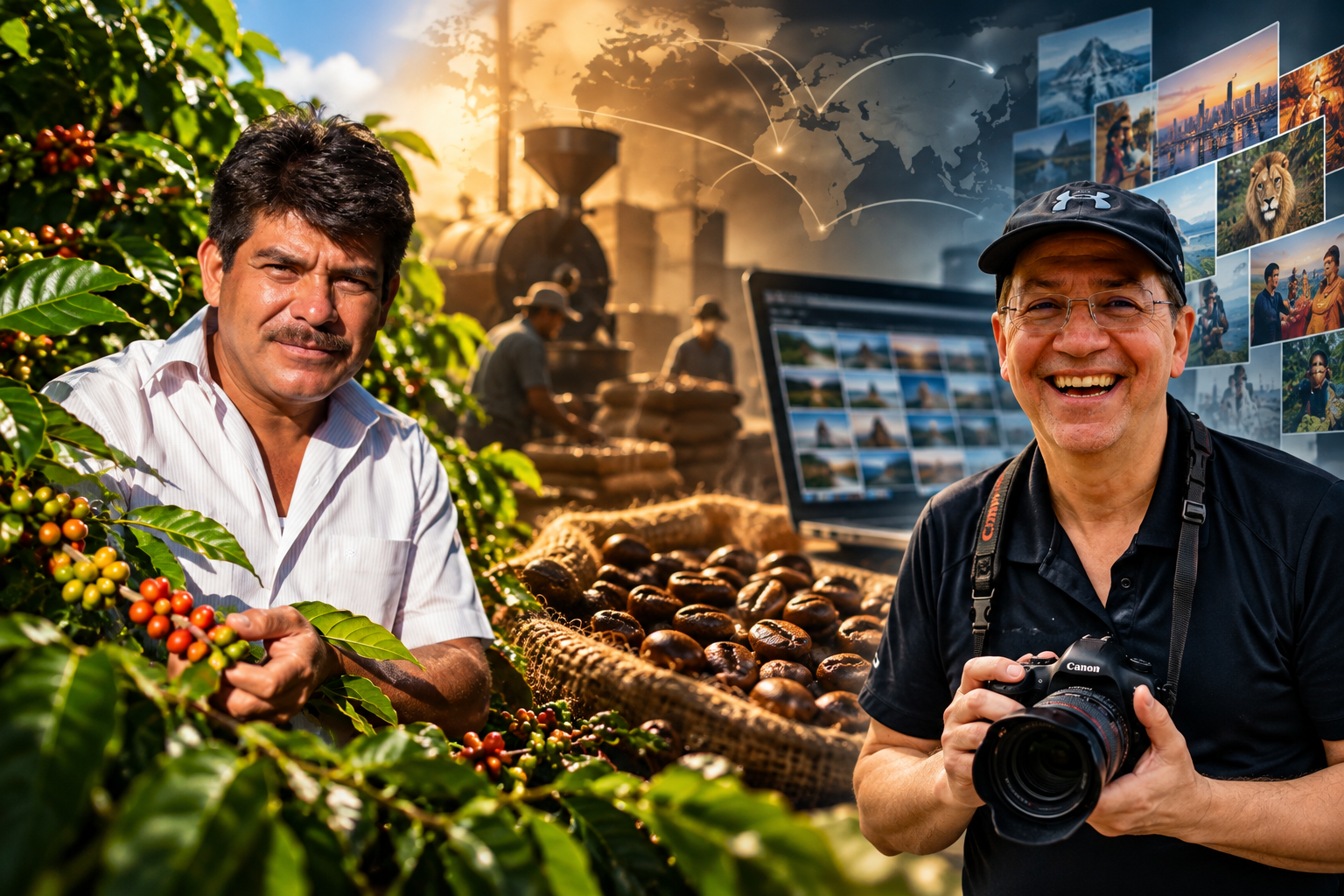
The Coffee Farmer and the Photographer
Think about what goes into producing your morning coffee.
A farmer invests in land, equipment, labor, and years of work before a buyer gets the coffee beans.
Those beans may pass through exporters, importers, roasters, distributors, and retailers before reaching the consumer.
Each business adds value, takes on costs, and expects to make money.
But the person who grew the coffee often has little control over what the customer ultimately pays.
Now consider stock photography.
The photographer invests in cameras, lenses, computers, software, travel, training, and experience. They create the image, process it, and prepare it for licensing.
A stock agency then markets that photograph to customers.
Like the coffee farmer, the photographer produces something valuable but often has little control over its final selling price.
The roaster and stock agency occupy similar positions in their respective industries: they connect producers with customers and exercise considerable influence over the commercial marketplace.
And that influence extends to how much the producer earns.
Who Determines What the Producer Gets Paid?
Suppose a coffee roaster sells a bag of coffee directly through its website.
Now suppose that same bag is sold through a grocery store.
The retailer needs a margin. The roaster may receive less revenue per bag through that distribution channel.
Depending on its business model, the roaster may negotiate what it pays suppliers to maintain profitability.
The farmer may eventually feel that pricing pressure.
Stock photography works somewhat differently.
Suppose an agency licenses a photograph for $100 and the photographer receives a 30% royalty.
The photographer earns $30.
Now imagine the agency offers a discounted subscription or enterprise arrangement that assigns a much lower revenue amount to that image.
If the royalty calculation produces a $6 payment, the photographer earns $6 for a license involving the same photograph.
These are hypothetical numbers, but they illustrate the business relationship.
The photographer’s production costs haven’t changed. The photograph’s quality hasn’t changed.
What changed was the marketplace’s pricing and compensation structure.
The agency controls many of the decisions that determine the photographer’s revenue.
The Important Difference: Their Contracts
This is where the coffee analogy needs some clarification.
A coffee farmer often sells a physical crop to a buyer at an agreed price. Once the transaction is complete and payment is made, the farmer generally doesn’t share in the profits or losses when the coffee is roasted and resold.
The farmer’s financial risk centers on growing the crop, negotiating the price, receiving payment, and producing the next harvest.
Some coffee arrangements involve cooperatives, revenue sharing, or longer-term contracts, but traditional sales transfer ownership of the physical product.
A stock photographer may have a very different relationship with an agency.
In many stock licensing agreements, the photographer retains copyright while authorizing the agency to license the work.
Rather than receiving one final payment when the photograph enters the agency’s collection, the photographer earns royalties when qualifying licensing transactions occur.
That means the photographer’s income remains tied to the agency’s future sales, pricing policies, accounting practices, and ability to pay.
The photographer may own the photograph while the agency controls much of its commercial distribution.
The coffee farmer often gets paid for the crop. The stock photographer may wait years to discover how much the photograph will ultimately earn.
That distinction matters most when an agency faces financial difficulties.
Getty Images and the Question of Risk
Getty Images isn’t a small photography business struggling to find customers.
According to its October 12 announcement, Getty works with more than 600,000 content creators and 360 content partners.
Its libraries represent an enormous collection of photographs, videos, and historical visual material.
Yet the company is preparing for bankruptcy restructuring.
Getty has faced substantial debt obligations, legal liabilities, and expenses tied to its failed proposed merger with Shutterstock. Competition from generative AI also presents challenges to parts of the stock photography market.
Its restructuring plan calls for reducing debt, extending repayment obligations, and bringing in new investment.
Getty says contributor payments should continue in the ordinary course of business, and the restructuring has not announced any change to contributor compensation.
That is important.
But it doesn’t eliminate the larger business lesson.
A photographer can do everything right—create excellent images, maintain professional standards, and fulfill every contractual obligation—and still depend on financial decisions a company they don’t control makes.
Who Actually Bears the Risk?
There are several kinds of risk in stock photography.
The photographer bears production risk.
They pay for the equipment, time, travel, research, and work required to create images before knowing whether those photographs will generate meaningful income.
The agency bears distribution and business risk.
It invests in technology, marketing, customer relationships, staff, infrastructure, and licensing systems. It also assumes the financial obligations of running and expanding the business.
But the photographer also bears continuing marketplace risk.
If licensing prices decline, royalty structures change under an agreement, or demand shifts, the photographer’s income may suffer.
If the agency faces financial trouble, the photographer may face uncertainty over unpaid royalties, contractual relationships, or future distribution.
Those risks aren’t identical, and the consequences of bankruptcy depend on the contracts and the restructuring plan.
Getty’s proposed restructuring currently seeks to preserve ordinary contributor payments and leave certain unsecured claims unaffected.
Nevertheless, the fundamental imbalance deserves attention.
The agency can make major decisions about pricing, financing, acquisitions, and business strategy.
The individual photographer usually has little influence over those decisions.
Yet those decisions can affect the value of the photographer’s work in the marketplace.
The people who control the business decisions and the people who create the product aren’t necessarily the same people. But both can suffer when those decisions go wrong.
What Happens When the Roaster Gets Into Trouble?
Imagine a coffee roaster that has borrowed heavily to expand its business.
It purchases other companies, invests in new facilities, and takes on substantial debt.
Eventually, it finds its financial obligations hard to manage.
If the roaster restructures, farmers who have already been paid for their crops may have limited exposure to its existing debt.
However, farmers still owed money could face financial uncertainty.
Others might lose an important buyer for future harvests.
Now consider the photographer.
The photographer may have hundreds or thousands of photographs represented by an agency. Those images could continue generating royalties for years.
The photographer hasn’t necessarily sold the underlying copyrights. Instead, the photographer has entered into an ongoing business relationship.
If the agency encounters trouble, the photographer cannot assume that copyright ownership automatically ends the licensing agreement or guarantees immediate access to unpaid royalties.
That is why contracts matter.
That’s why photographers should understand exclusivity, payment terms, termination provisions, and what happens to their work when a business relationship ends.
Direct Sales Change the Relationship
A coffee farmer who can sell directly to consumers or develop relationships with specialty buyers may gain greater influence over pricing.
But direct sales also require marketing, logistics, customer service, and additional investment.
The same is true for photographers.
When a photographer licenses an image directly to a client, they can negotiate the price, define usage rights, and establish payment terms.
No agency royalty percentage is deducted from the transaction.
However, the photographer must also find customers, manage licensing, collect payments, and handle the administrative responsibilities that agencies ordinarily provide.
Direct sales don’t eliminate risk.
They change which risks the photographer controls.
And that may be the most important distinction.
A photographer who controls customer relationships has more influence over their work’s value than one who depends entirely on someone else’s marketplace.
The Lesson From Getty Isn’t to Abandon Stock Agencies
Stock agencies provide legitimate value.
They connect photographers with customers worldwide, manage licensing, and create opportunities that individual photographers might struggle to develop on their own.
Getty’s financial restructuring doesn’t mean the agency model is inherently flawed or that contributors should abandon it.
But it does provide an opportunity to examine how dependent photographers have become on businesses whose financial decisions they cannot influence.
For photographers, I believe there are some important questions worth asking:
- Do I understand how my agency calculates royalties?
- How much control does the agency have over pricing and licensing arrangements?
- What happens to my photographs and unpaid royalties if the agency restructures or closes?
- Am I building relationships with customers who know me, or am I depending entirely on an agency to bring them to me?
- How much of my business depends on decisions made by companies outside my control?
These aren’t simply questions about stock photography.
They are questions about building a sustainable photography business.
The Bottom Line
When I buy coffee, I rarely know how much of the purchase price reaches the farmer who grew it.
When someone licenses a stock photograph, they may have no idea how much reaches the photographer who created it.
In both cases, intermediaries provide important services and help products reach customers.
But producing something valuable is different from controlling how that value is sold.
Getty Images’ planned bankruptcy restructuring is a timely reminder that even enormous companies can face financial difficulties.
The photographers who supply those companies cannot control every business decision that affects their livelihood.
They can understand their contracts, diversify their revenue, build direct customer relationships, and avoid putting their entire financial future in someone else’s hands.
The coffee farmer grows the beans. The photographer creates the image. Neither should confuse having a valuable product with controlling the business that sells it.
And perhaps the most important lesson is this:
When someone else controls your sales, you may share in the financial consequences of decisions you never had the opportunity to make.
Sources and further reading
- Getty Images — October 12, 2026 restructuring announcement
- Reuters — Getty Images plans bankruptcy filing and return to private ownership
- PetaPixel — How Getty’s Bankruptcy Affects Photographers: Payments, Contracts, and Next Steps
Reporting and company statements current as of October 13, 2026.