
|
Getting your Trinity Audio player ready...
|
A great book for those who want to learn more about Asperger’s.
This past week, I talked with a few people about Asperger’s. I have been transparent through the years about my Asperger’s. I have found that this has helped others understand me better and made my interactions with people more productive.
Whenever I speak at workshops, I like to tell my story, and I am surprised that almost every time I do, someone comes up saying they have it or have a family member with Aspergers.
I have been asked to talk to family members and help them understand Asperger’s a little better.

These are just some of the books I have on Asperger’s, and I recommend that anyone who wants to learn more get some of them.
Asperger syndrome is an autism spectrum disorder with generally higher functioning. People with this condition may be socially awkward and have an all-absorbing interest in specific topics. Communication training and behavioral therapy can help people with the syndrome learn to socialize more successfully.
I believe Teddy Roosevelt’s quote is critical for people with Asperger’s to understand as key to their success in living with Asperger’s.
“People won’t care how much you know until they know how much you care.”
The turning point for me in starting what I call the path to improved social skills was realizing I wanted relationships with people and that it wasn’t so much the other person’s responsibility to understand me as it was for me to understand them.

I believe most people with Asperger’s have a subject interest that, when paired with people, can be where social skills develop best.
For me, that subject was photography. To get better, I sought out experts. I stumbled upon a topic and mentors who helped me more than I ever would have with Asperger’s.
My mentor, Don Rutledge, and my uncle, Knolan Benfield, taught me how to improve my photos of people and required me to understand body language. Lucky for me, I majored in Social Work, which was my first real introduction to learning how to read people.
In Social Work, I had to be trained in interview skills. We were videotaped and analyzed with the help of teachers and classmates to see whether we were listening with our ears or with our eyes.
I don’t remember all the videos I watched on the topic in college, but there were a lot. Many of my professors also demonstrated and helped us learn to pay attention to the nuances.
Later, after I graduated from college and worked with Don Rutledge, his instruction really helped me take this to a different level.
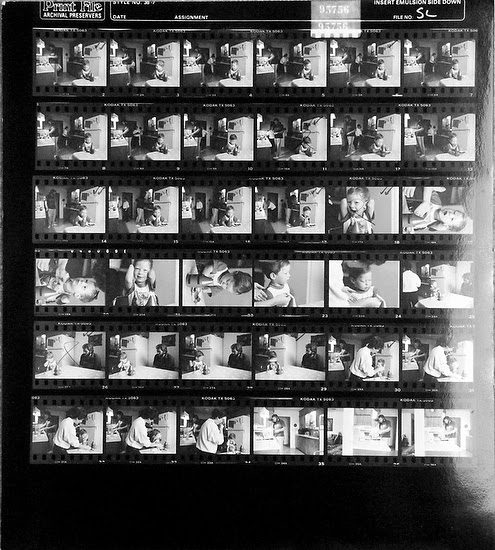
We were shooting a film when I worked with Don. He would take my contact sheets and his, then go frame by frame to explore body language and help me find the moments with the most emotion and impact. Little did I know I was being taught what had been my biggest struggle up to that point. I had struggled to read situations and recognize the visual cues people sent me in our interactions.
I don’t know many subjects that get to the core issues of what a person with Asperger’s struggles with more than one that requires you to recognize body language and predict it, rather than photojournalism.
If you have Asperger’s, or your friend or family member does, and you want to learn more, here are some books I have read that helped me learn more. Each one comes from a different perspective. Some aren’t about Asperger’s, but about reading people and body language. Those books will help you as well.
I love a few TV Shows where the main characters, in my opinion, exhibit Aspergers. The Big Bang Theory, with the character Sheldon, is a great show to watch someone struggle with relationships.
I just came across a BBC show on Netflix, Doc Martin, where the main character has limited social skills.
This is an excellent movie about Aspergers. By the way, all these links are to Amazon, and I get a small percentage of the sale, but the cost is the same for you.
Here are the books I recommend.
With all these resources, I still struggle. While I care for others, I am not always moved to empathy as quickly as I should. Often, my heart feels too mechanical.
My biggest supporter is my wife, Dorie, who has helped me grow beyond where I was when we first met. I have many friends today who know I care after getting to know me.
My greatest wish is to be a compassionate person who constantly looks for ways to serve others.
How about you? Do you want to know what you know or how much you care?