
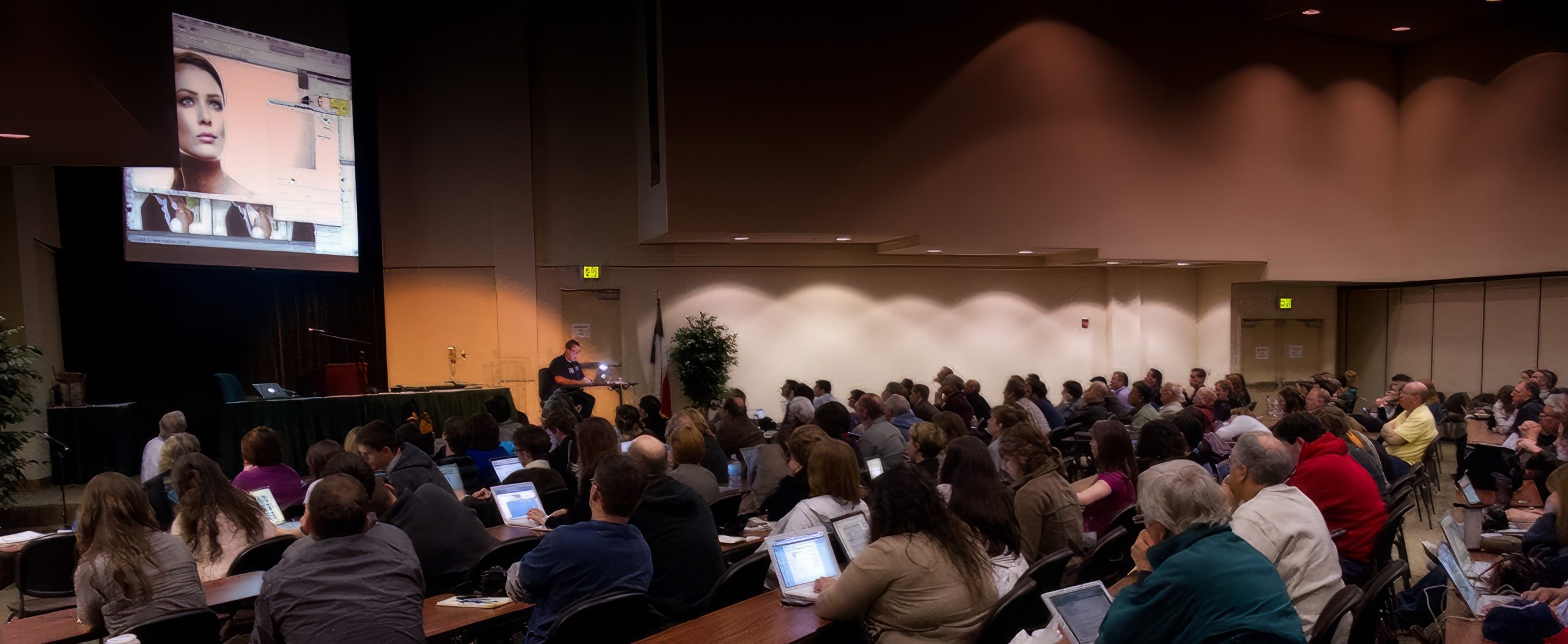
Scott Kelby walks everyone through the seven steps he does in Lightroom with all his photos.

To grow as a photographer, you must have someone check your work. There are two types of people to review your work_the general public and the professional. The professional can be another photographer, photo editor, graphic designer, or art director.
The public should be able to look at our photos and tell us what they get out of an image and therefore help us know if our intended message came across.
The advantage of a professional photographer who is further along in their journey than you is they can tell you if a photo is good or not, but can give you some tips on how they might improve the image.
Ground Rules:
- Let your photos speak for themselves—Be Quiet.
- Edit and show only your best
- Have everything needed to show your work
- Get multiple opinions
- Take the advice and change
- Go back and show them your changes.

Letting your photos speak for themselves will help you know if you were successful. For example, if you wanted a picture to show how much two people are good friends, then the audience will tell you.
If the person reviewing the images asks for more information, provide it. Too much information will hurt your critique. For example, if you tell the person this is a photo where you were trying to illustrate friendship, the person will ask if it worked, but you need to know what it says to them when they have no information other than the photo.
Sometimes you might have a powerful photo that is a failure. For example, it may be a successful photo in which the audience likes the picture but fails to deliver the message you were going for.
Edit and showing your best work will help the person reviewing your work. However, showing too much work will weaken your portfolio rather than strengthen it. Your portfolio is to show your skills. You may have a collection of subjects or a photo story. Either way, each photo should offer something different.
You only need one photo to show you know how to do something, so make it your best effort. Your second photo should offer something different about your abilities. For example, maybe the first photo was available light, and the second one shows you know how to use flash. Your third might be shooting in a studio.
Your photo stories must work like a written story, with a beginning, middle, and end. The face is often an establishing photo to help us understand the story. You must vary the images from wide to medium and then close up.
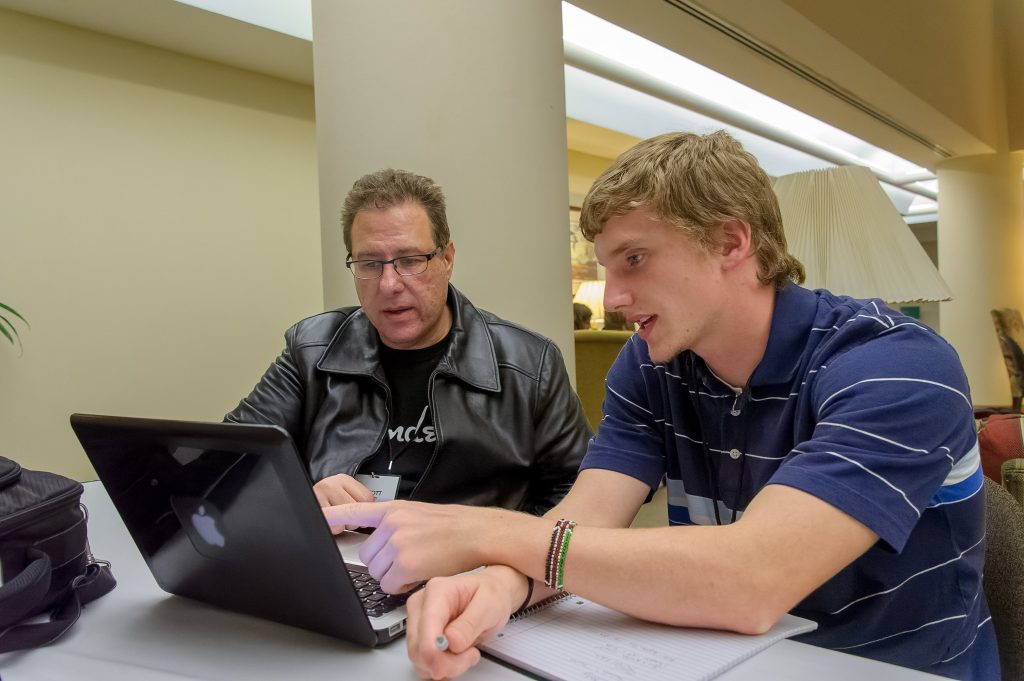
Have everything you need to show your work. Don’t show up with a USB drive; expect the person you see to have a computer. Be sure everything works and try it a few times to be sure all the photos load, for example, if it is on a laptop, iPad, or some other device.
Sometimes the best way to show your portfolio is in a book or prints. This way, you are not relying on technology that could quit. However, I don’t want that to happen at a once-in-a-lifetime meeting.
Get multiple opinions before making changes to your work. If you show your work to 3 or more folks and they all say there is something wrong with a photo_then you know it needs to go. What will not be so consistent is what they might sound like as a way to improve that photo. For example, one person may say to back up, and another might say to crop in closer.
Take the advice and change. Go out and make the changes to your portfolio. Take the photos out that almost everyone agreed on the need to come out. Go and crop the images that need cropping.
Go back into Lightroom or PhotoShop and re-edit those photos that can be improved.
Most of all, take the advice to heart as you shoot your following photos. Watch the edges of the image. Know what you want to say to your audience about the subject.
Go back and show your changes. Find those people and show them your revised portfolio after you have made the changes and shot some new material. See if you got what they were talking about. Often you will find out that you didn’t fully understand what they were saying, and by revisiting, you will discover this.
From the other side of the iPad here are talking points when reviewing a portfolio.
1) Look
First of all, take a close look at the photograph. Let your eyes scan it closely: Make sure that you’ve caught every possible detail of the photo. If something jumps out at you as being really good or really bad, note it, but don’t say anything
2) Interpretation
Now, talk about the photo for a little bit. This is the thing that is most frequently overlooked when doing critiques, but is actually one of the most useful things you can do to a photographer. For the interpretation, start off by saying “When I look at this photo, I feel…”. Explain what sort of emotional response the photo raises in you. Follow up with “I think this photo is about…”. Any symbolism you spot, tell the photographer. If you aren’t sure, let them know that.
3) Technical points
The next thing to take care of, is the technical points. Is the photograph technically okay? Did you spot challenges, is the exposure okay, is there any unwanted blur (wrong focus, motion blur, zoom blur etc)? Are the colors accurately represented? What’s the contrast like? Could the photographer have used lighting differently? Would a bigger or smaller aperture have been beneficial?
4) Artistic points
What do you think about the crop and aspect ratio? If the photo is in black and white, should it have been in color and vice-versa? Is there a good balance between the foreground and the background? Would the photo have worked better with a different prop / model?
5) Good points
This is where you point out what you like about the photograph, and why. The why bit is most important: If you can’t tell why you like X, Y, or Z, there’s no point in mentioning it. “I like the sky” is useless. “I like the color of the sky” is better. “I like the deep blue color of the sky because it contrasts nicely with the yellows and reds in the photo” is perfect. Put some thought into this.
6) Points worth improving
This point is saved for last, because you’ve made the photographer more confident about their photograph by now. It is still important to remember that the photo has been taken, and that this photo can’t really be changed anymore. As such, there’s no point in slating people for their photographs. Tell them one or two specific points that could be improved on this particular photo such as layering; emotion of subject; content/news value; overall storytelling and were you engaged and perhaps one or two points that you would have done differently, if you were the one taking the photograph. Remember to talk about multimedia and where it might pair with the visual package.
7) Overall
How did this photo appear to you overall?
From the other side of the iPad here are talking points when reviewing a portfolio.
1) Look
First of all, take a close look at the photograph. Let your eyes scan it closely: Make sure that you’ve caught every possible detail of the photo. If something jumps out at you as being really good or really bad, note it, but don’t say anything
2) Interpretation
Now, talk about the photo for a little bit. This is the thing that is most frequently overlooked when doing critiques, but is actually one of the most useful things you can do to a photographer. For the interpretation, start off by saying “When I look at this photo, I feel…”. Explain what sort of emotional response the photo raises in you. Follow up with “I think this photo is about…”. Any symbolism you spot, tell the photographer. If you aren’t sure, let them know that.
3) Technical points
The next thing to take care of, is the technical points. Is the photograph technically okay? Did you spot challenges, is the exposure okay, is there any unwanted blur (wrong focus, motion blur, zoom blur etc)? Are the colors accurately represented? What’s the contrast like? Could the photographer have used lighting differently? Would a bigger or smaller aperture have been beneficial?
4) Artistic points
What do you think about the crop and aspect ratio? If the photo is in black and white, should it have been in color and vice-versa? Is there a good balance between the foreground and the background? Would the photo have worked better with a different prop / model?
5) Good points
This is where you point out what you like about the photograph, and why. The why bit is most important: If you can’t tell why you like X, Y, or Z, there’s no point in mentioning it. “I like the sky” is useless. “I like the color of the sky” is better. “I like the deep blue color of the sky because it contrasts nicely with the yellows and reds in the photo” is perfect. Put some thought into this.
6) Points worth improving
This point is saved for last, because you’ve made the photographer more confident about their photograph by now. It is still important to remember that the photo has been taken, and that this photo can’t really be changed anymore. As such, there’s no point in slating people for their photographs. Tell them one or two specific points that could be improved on this particular photo such as layering; emotion of subject; content/news value; overall storytelling and were you engaged and perhaps one or two points that you would have done differently, if you were the one taking the photograph. Remember to talk about multimedia and where it might pair with the visual package.
7) Overall
How did this photo appear to you overall?