|
Getting your Trinity Audio player ready...
|
I recently listened to Alan Schaller on the Pangolin Podcast. He’s a London street photographer who shoots high-contrast black-and-white on a Leica Monochrome. On paper, we have little in common: he isolates a lone figure inside strong geometry, and I was taught to photograph people in relationship to others and to their place.
Yet I kept nodding. Underneath the different looks, we are solving the same problem: how to decide what a picture is about before the moment disappears.
Decide before you shoot
Alan says “pre-visualization and also preempting what might happen” are skills “not talked about enough.” Everyone talks about lenses and settings, but we’ve all seen images that are perfectly crisp and not particularly interesting.
His reasoning is practical: “if you don’t know what it is exactly you want, it’s quite hard to tell if you’ve got it or not.” When he saw a white swan on the dark side of a frame and a black swan approaching, he knew “something is about to happen.”
I teach a version of this. Before I raise the camera, I try to feel what is going on in the scene. Then my job is to distill it into an image. Too many experienced shooters, myself included on a bad day, lock onto the subject and forget everything else. Pre-visualization isn’t only about a pretty print. It’s deciding what the scene means.
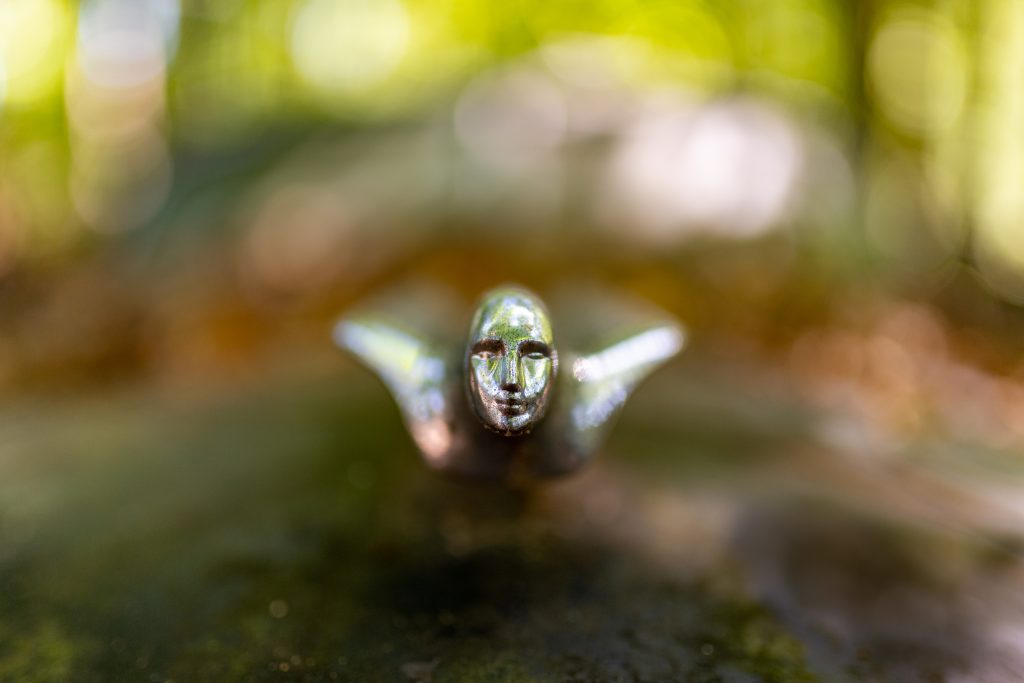
Feeling the scene doesn’t always happen through a viewfinder
Sometimes I’m not waiting to raise the camera at all. I’m waiting to hear something.
When I interviewed Gus at his barbershop for a video, I was listening for what to keep and what to cut. Then he mentioned that his mother was a single mother who raised him and his brother. Almost in passing, he connected that to how he prices his haircuts.
I knew right then that was the emotional center of his story.
It wasn’t about the haircuts, the shop, or even the prices. It was about why he runs the business the way he does. Everything else in the interview suddenly had a place to hang.
Because I was already listening that way, I could do two things at once. I could mark in my head what belonged in the final piece, and I could be ready with a follow-up question to dig deeper.
That’s the same skill as feeling a scene before you shoot it. You’re not rushing to capture. You’re paying attention to what is actually going on, and then deciding what to distill.
With a camera, the moment might be a glance or a gesture. In an interview, it might be a sentence. Either way, you have to be present enough to recognize it when it arrives, and quiet enough not to talk over it.
Limits are a gift
Alan shoots about 90% of his work with one prime lens, on a camera that can’t shoot color. He says that “makes a decision for me that I’ve already made.” Because he’s decided on black and white, a wide lens, and urban settings, he can focus on “the right moment, the right emotion.”
This is the opposite of gear anxiety. When fewer decisions compete for your attention, more of you is available for the person in front of you. I’d add that limits are not only technical. A story you commit to, or a place you return to again and again, also narrows the question usefully.
Where we part ways: the figure or the family?
Alan told the host that the Finnish photographer Pentti Sammallahti reminded him of his own approach to “geometry and isolating figures.” A lone person in the road, a distant farmhouse, haze and backlight. The isolation is the point. It makes you feel space and solitude.
My mentor Don Rutledge taught me something different: reveal people through their relationships and environment, not in isolation. The farmhouse in the distance would matter as much as the walker. Who is beside this person? What do the objects around them say? What is the room, the field, the church, the clinic telling me?
Neither is wrong. They answer different questions.
- Isolation asks: what does this moment feel like?
- Context asks: who is this person, and where do they belong?
For documentary, humanitarian, and corporate storytelling, the second question usually carries the story. But Alan reminded me that a clean, deliberate frame is also a choice, and that I should be making it on purpose.
Get the camera to the right place
“Anyone can take a photo if you tell them where to point the camera,” Alan said. “The trick is just getting the camera into the right place that allows you to execute the idea.” He held his camera above his head for the swans, and went low to the dogs, a perspective he credits to Elliott Erwitt.
I’d tell students the same thing in my own words: use your feet. Stop looking through the viewfinder first. Move, scan the edges of the frame, and when you’ve found the scene, stop and wait for the moment.
Start friendly, and let people say yes
Alan’s approach to strangers is disarming. He doesn’t announce he’s a professional or oversell. He asks, “Can I take a picture of your dogs?” His experience: “People are always happy.”
In my work, I call this talking your way in so you can shoot your way out. The shooting is often the easy part. The first minute, when a person decides whether you are safe, is where the story begins.
Where “talk your way in” came from
Alan’s opener is simple: “Can I take a picture of your dogs?” No résumé, no sales pitch. I learned why that matters from a group of students at the Georgia National Fair.
In 2018, I was coaching at the UGA photojournalism workshop in Perry, Georgia. Many of the students had been shooting with a DSLR for less than a year. They were smart and hardworking, walking six to ten miles a day, but I kept seeing the same thing in their photos. The pictures were distant, physically and emotionally.
They were shooting first and asking questions later. Then, when they asked people for their names, the people didn’t want to help.
On a coaching break, I tried a different approach with a few of them. “Forget the camera right now,” I said. “See how we’re sitting beside each other?” Then I moved my chair a few feet away. “Which feels more intimate?”
They got it right away. The distance between two chairs is the distance in your photographs.
That’s when the phrase came out of my mouth: talk your way in, then shoot your way out.
I had been teaching this for more than 30 years, and that was the first time I’d put it in one sentence. Here is why it works:
- People help you. If you introduce yourself first and say you’d like to take their photo, they’re more likely to give you their name and their story.
- You see more. Listening for a few minutes shows you what’s visual about someone’s story, beyond what a caption could say.
- You stop treating people as objects. A conversation makes it hard to forget there’s a person on the other side of the lens.
- Your wide-angle lens becomes possible. Once you’re standing or sitting next to someone, you can get close and make an intimate frame.
Alan found the same thing in London with a stranger and a dog. The camera is the last step, not the first.
Let the unplanned in
The swan image happened because Alan was stuck on a crowded bridge. “If I hadn’t been stuck on that bridge, I wouldn’t have taken the time to look over.” In Dubai, a woman walked into his frame, and he was annoyed until he realized it “could be really cool.”
A brief, a shot list, and a plan all matter. But the best frame is often just outside what you planned, and the lesson there is that preparation and openness work together.
Practice on your own time
Alan still goes out most days, sometimes just half an hour at lunch. He started photographing animals “for the love of it,” not for a client, and it became a book. He’s blunt about the cost: he once worked more than full time, six days a week, and still found the hours.
Personal projects are practice. They keep your eye sharp between assignments, and they teach skills you can later offer clients.
What I’m taking from this
Different looks, same discipline:
- Decide what you want before the moment arrives.
- Reduce the choices that don’t matter.
- Know whether this picture is about the person or about the person’s world.
- Put your body where the idea needs it.
- Be friendly first.
- Stay open to the surprise.
- Keep practicing when no one is paying you.
Next time you’re out, ask yourself: am I isolating this person, or including their world? Then make that choice on purpose.